A mushroom farm is not a garden, and it is not a greenhouse. It is a dark, damp indoor room where fungi do their work out of sight: spawn colonises a bag of substrate, the bag is moved into a fruiting room, and mushrooms push out of small slits in the plastic over a few days. There is no sun to chase, no soil to turn, and no season to wait for. The whole crop depends on the air around it staying humid, cool, and fresh, and on the substrate staying clean until the mycelium has taken hold. A startup that installs mushroom farms builds that controlled world from scratch, room by room, and the tools it chooses decide whether the first harvests are steady or a string of contaminated bags.
That is where the right software and equipment earn their keep. A mushroom farm installation startup needs tools that watch humidity around the clock, log temperature swings, time the fresh-air cycles, track each batch of substrate from inoculation to harvest, and turn all of that into quotes, invoices, and repeat orders. The best tools for the job are not the ones built for sunlit plants. They are the ones that understand darkness, damp, and sterile technique, and that keep working when a fruiting room sits at ninety percent humidity for weeks on end.
This guide compares nine tools that fit a mushroom farm installation startup in 2026, from automated fruiting chambers and open-source climate controllers to spawn suppliers, grow bags, foggers, and farm bookkeeping software. Each one is judged on the same four questions: does it handle substrate, humidity, darkness, and harvest, does it survive the damp, does it save the installer time on site, and does it help the business win the next job.
Key takeaways
- A mushroom farm grows fungi indoors in the dark, so its tools must manage substrate, humidity, darkness, and harvest, not sunlight, soil, or irrigation.
- Humidity control is the single most important system: a fruiting room that drifts below eighty-five percent relative humidity will stall pinning and shrink yields.
- Contamination is the biggest money leak, so sterile technique, sealed substrate bags, and batch tracking matter more than any single gadget.
- The nine tools below cover climate control, substrate and spawn, and business records, and none of them duplicates the grow-room, greenhouse, or vegetable-garden toolkits.
- Start small with one fruiting room and one crop, prove the harvest cycle, and only then add rooms, varieties, and automation.
What a mushroom farm installation actually builds
A mushroom farm installation is a sequence of rooms, each with a different job. The lab corner is the cleanest space, where spawn is handled, cultures are kept, and bags are inoculated with as little airborne contamination as possible. The incubation area is warm and dark, stacked with sealed substrate bags while the mycelium spreads through them over two to four weeks. The fruiting room is the star of the show: cool, very humid, gently ventilated, and dimly lit, with racks of bags fruiting through slits cut in the plastic. Finally there is a harvest and packing bench, a cold store, and a small office corner where orders and records live. An installer who understands that sequence can quote accurately, because every room has its own humidity, temperature, and airflow target.
The darkness is what surprises newcomers most. Mushrooms do not photosynthesise, so the fruiting room needs only enough light for the grower to see and for the mushrooms to know which way is up. That is the opposite of lit indoor grow rooms, where powerful lamps, light schedules, and canopy measurements dominate the design. A mushroom farm installer who copies a grow-room lighting plan will waste money on lamps the crop never needed, and will still have to solve the real problem, which is keeping the air wet and fresh at the same time. Darkness is a feature here, not a limitation, and it lets a farm run in windowless rooms, basements, and converted outbuildings that would be useless for sun-loving crops.
Substrate is the second thing that sets the trade apart. Mushrooms eat dead organic matter, so the growing medium is a bag of pasteurised straw, sawdust, coffee grounds, or a mix of the three, and the skill lies in preparing it, sealing it, and keeping it clean until the mycelium owns it. A single mould spore that lands in a bag before the mycelium colonises it can ruin the whole batch, which is why installers plan clean handling into the layout: a still-air box or flow hood in the lab corner, sealed bags with filter patches, and a strict rule that nobody opens a bag outside the clean zone. The substrate supply chain matters too, because a farm that cannot get consistent straw or sawdust cannot promise consistent harvests.
Humidity and fresh air are the daily balancing act, and harvest is fast and unforgiving of delay. Oyster mushrooms want relative humidity around eighty-five to ninety-five percent and a steady exchange of fresh air to sweep away the carbon dioxide the mycelium breathes out. Too little air and the mushrooms grow long, pale stems with tiny caps; too much dry air and the pins dry out. The installer therefore sizes a fogger, a humidity controller, an exhaust fan on a timer, and a sensor at bag height. Then the picking starts: oysters can go from pin to picking size in three to five days, and a flush left a day too long drops spores across the room and loses weight and shelf life.
The nine tools at a glance
Five tools run the fruiting room and its climate, three cover substrate, spawn, and sterile supplies, and one keeps the harvest records, sales, and books in order. Prices change, so treat the cost column as a rough guide.
| Tool | Best for | What it does | Rough cost |
|---|---|---|---|
| North Spore BoomRoom | First fruiting rooms | Automated fruiting chamber with humidity and fresh air built in | Mid-range, one-off |
| Mycodo | Custom climate control | Open-source controller that runs sensors, fans, and foggers | Low, plus hardware |
| Inkbird IHC-200 | Simple humidity control | Plug-in humidity controller for a mister or fogger | Low, one-off |
| House of Hydro | Fine misting | Ultrasonic foggers and misting kits for fruiting rooms | Low to mid-range |
| Govee WiFi Hygrometer | Remote monitoring | Wireless temperature and humidity logging with phone alerts | Low, one-off |
| MycoSupply | Spawn and lab supplies | Spawn, substrate, cultures, and sterile lab gear | Per order |
| Unicorn Bags | Substrate bags | Filter-patch grow bags in many sizes | Low, per bag |
| Fungi Perfecti | Spawn and cultures | Spawn, cultures, and mushroom growing supplies | Per order |
| Farmbrite | Records and sales | Farm management, harvest logs, orders, and accounting links | Monthly subscription |
Fruiting rooms and climate control
The fruiting room is where a mushroom farm earns its money, so this is where the tool budget should go first. The five tools in this section do different jobs inside the same room: a ready-made fruiting chamber, a custom automated system, a mister controller, a fogger, and a phone-based monitor. The contrast with greenhouse climate controls is sharp: a greenhouse chases sun and ventilation across a glasshouse, while a mushroom room seals the dark in and manages moisture instead.
North Spore BoomRoom: the best tool for a first fruiting room
The BoomRoom is North Spore’s automated fruiting chamber, and it is the closest thing this trade has to a fruiting room in a box. It is a tent-style chamber with shelving, a humidifier, a fan, and a controller that holds the humidity and fresh-air exchange steady without the grower standing over it. For an installer, that matters because it turns the hardest part of the first build into a known quantity: the chamber arrives, it goes up in a day, and the grower can start fruiting bags while the larger permanent room is still being planned. It is also a good demonstration tool, because a client who sees mushrooms fruiting in a BoomRoom understands the farm far faster than a client who is shown a drawing of ducting and foggers.
The BoomRoom suits oyster, lion’s mane, and other common gourmet varieties, and its size fits a spare room, a garage corner, or a small commercial unit. The installer’s job is to place it well, away from direct sun and draughts, to sort the water supply and drainage, and to show the grower how to clean it between flushes. Cleaning is the part beginners skip, and it decides whether the second crop is as clean as the first. A BoomRoom is a single chamber, not a warehouse, so price it as stage one: a quick first harvest and a photographed, working install to show the next client.
Mycodo: the best tool for custom climate control
Mycodo is an open-source environmental monitoring and control system that runs on a small single-board computer, and it is the most flexible climate tool a mushroom farm installer can offer. It reads temperature, humidity, and carbon dioxide sensors, switches fans, foggers, heaters, and lights on and off against rules the grower sets, and logs everything so the grower can see exactly what the room did overnight. For a startup that builds bespoke fruiting rooms, that flexibility is the point: no two converted rooms are the same size, and Mycodo lets the installer tune the control logic to the room rather than forcing the room to fit a fixed controller.
The practical value shows up in the details. A grower can set the fogger to run when humidity drops below ninety percent, the exhaust fan to run for two minutes every fifteen, and the heater to hold the night temperature above thirteen degrees, then watch a graph the next morning to see whether the room held steady. If a flush stalls, the log shows whether the cause was a dry afternoon or a cold night. Mycodo is not plug-and-play, so be honest about that: budget a full day for commissioning and a return visit after the first week to fine-tune the settings against real data.
Inkbird IHC-200: the best tool for simple humidity control
The Inkbird IHC-200 is a plug-in humidity controller, and its virtue is simplicity. The grower plugs a mister or fogger into it, sets the humidity target and the gap between switching on and off, and the controller does the rest, cutting power when the room reaches the target and restoring it when the air dries out. There is no software to configure, no network to join, and no subscription. For a small fruiting room, a home-scale farm, or a first install where the budget is tight, that simplicity is exactly right, and it is far better than a mister left running on a timer that has no idea what the room actually feels like.
An installer should treat the IHC-200 as a reliable building block rather than a whole system. It controls one device, so a room that needs both a fogger and an exhaust fan will need a second controller or a timer for the fan. The sensor should hang at bag height in the middle of the room, away from the direct blast of the mister, or it will read the mist rather than the room. It also works as a backup in larger builds, wired to a spare mister so a software fault does not leave pinning mushrooms to dry out overnight.
House of Hydro: the best tool for fine misting
House of Hydro makes ultrasonic foggers and misting kits, and in a mushroom fruiting room the quality of the mist is the quality of the crop. Ultrasonic foggers turn water into a fine, cool fog that hangs in the air and raises humidity without soaking the bags or the floor, which is exactly what pinning mushrooms need. A coarse mister that drips water onto the caps will spot them, encourage bacterial blotch, and leave puddles that breed contamination. The installer who specifies a proper fogger is therefore protecting the harvest, not just adding a feature, and the difference shows up in the first flush.
Sizing the fogger is the installer’s real skill here. A small single-disc fogger suits a tent or a BoomRoom-sized chamber, while a larger room needs a multi-disc unit or a fogger in a reservoir with ducting that spreads the mist evenly. Foggers last longer on filtered or distilled water, and a float valve that keeps the reservoir topped up stops the unit running dry. Test the kit in the real room before handover, running it for a full day and checking that humidity holds at bag height in every corner, not just next to the fogger.
Govee WiFi Hygrometer: the best tool for remote monitoring
The Govee WiFi Hygrometer is a small wireless sensor that logs temperature and humidity and sends the readings to the grower’s phone, with alerts when the room drifts outside the set range. It is the cheapest way to give a mushroom farm a night watchman. A grower who gets a phone alert at two in the morning that the fruiting room has dropped to seventy percent humidity can fix a failed fogger before the morning’s pins dry out, and that single save can pay for the sensor many times over. For an installer, fitting two or three of these sensors into a room is a low-cost upgrade that makes the whole build feel professional.
The value is in the log as much as in the alert. A grower who can scroll back through a week of readings can see the pattern behind a poor flush: the cold nights, the dry afternoons when the exhaust ran too long, the humid mornings after a fogger refill. That history turns troubleshooting from guesswork into a short conversation. The limits are worth stating: a Govee sensor watches the room, it does not control it, so pair it with a controller that can act, and test the WiFi connection from the actual sensor positions before leaving site.
Substrate, spawn and sterile supplies
Climate control gets the attention, but substrate and spawn decide whether there is anything to fruit at all. A mushroom farm lives or dies on clean, consistent bags: the right substrate, properly pasteurised, inoculated with vigorous spawn, and sealed in a bag that breathes just enough. The three suppliers in this section cover that chain. This is also where the farm’s running costs sit, so help the client compare bag, spawn, and delivery prices before the first order is placed.

MycoSupply: the best tool for spawn and lab supplies
MycoSupply is a long-established mushroom growing supplier selling spawn, substrate, cultures, and sterile lab equipment, and it is the kind of one-stop supplier a new farm needs. A startup can order grain spawn, sawdust spawn, plug spawn, and liquid culture from the same place as the petri dishes, agar, and scalpel blades the lab corner needs, which keeps the supply chain short and the paperwork simple. For the installer, that matters because the handover can include a real first order, placed and delivered, rather than a list of websites the grower still has to work through alone.
The range also lets the farm match the spawn to the crop. Oyster mushrooms fruit fast and forgive beginners, lion’s mane wants a steadier hand, and shiitake needs a longer colonisation before it will fruit at all. A supplier that stocks all three, with honest notes about colonisation time and temperature, helps the grower plan a realistic first year instead of promising every variety at once. Ordering discipline matters too: spawn has a shelf life, so help the client work out a small, regular ordering rhythm tied to the batch schedule.
Unicorn Bags: the best tool for substrate bags
Unicorn Bags makes the filter-patch grow bags that most small mushroom farms use, and the bag is more important than it looks. The filter patch lets the mycelium breathe and lets carbon dioxide out while keeping mould spores and fungus gnats from getting in, which is the whole sterile bargain in one small square of fabric. A bag without a proper filter is a bag that will contaminate, and a bag that is too thin will split when it is moved, spilling substrate across the incubation shelves. An installer who specifies Unicorn Bags is specifying the container the entire crop lives in, and that deserves the same care as the fogger or the fan.
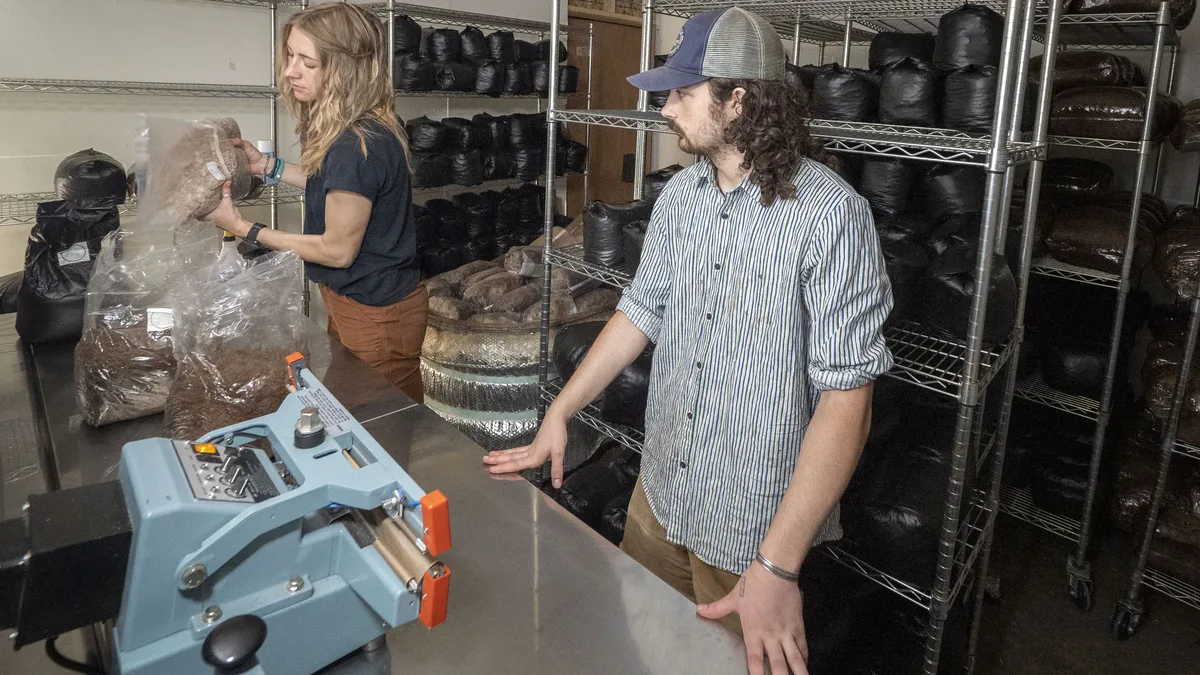
Size choice is the practical decision. Small three-pound bags suit a beginner learning the routine, five-pound bags suit a working farm’s weekly rhythm, and larger ten-pound bags suit a grower with the racking and the strength to handle them safely. Match the bag to the shelving, because a shelf built for five-pound bags will not hold ten-pound ones. Heat-sealing the bags after inoculation is the other detail to get right, and the handover should include a demonstration, so the grower seals the first bags with the installer watching.
Fungi Perfecti: the best tool for spawn and cultures
Fungi Perfecti is the mushroom company founded by mycologist Paul Stamets, and it supplies spawn, cultures, and growing supplies alongside a deep library of cultivation knowledge. For a startup, its value is twofold: the spawn itself, which covers the main gourmet and medicinal varieties a new farm is likely to grow, and the credibility that comes with it. A client who has read Stamets’ books will trust a farm built around his company’s spawn, and the installer who can talk honestly about strains, colonisation times, and fruiting temperatures will be taken seriously from the first meeting.
The practical use is in strain selection. Fungi Perfecti offers different strains of the same species, some bred for speed, some for size, some for cooler rooms, and the installer should help the client choose a strain that matches the actual room rather than the catalogue photograph. A warm-climate oyster strain will sulk in a cold stone outbuilding, and a cold-loving strain will fruit too fast in a warm room and go leggy. Confirm delivery times and cold-chain handling in advance, because a farm with empty shelves and no spawn has no income that week.
Harvest records, sales and the books
A mushroom farm that cannot track its harvests cannot price them, and a farm that cannot price its harvests cannot stay in business. Mushrooms are sold by weight, by the crate, and by the week, and the grower needs to know what each room produced, what each batch cost, and which customers paid on time. That is a bookkeeping job as much as a growing job.
Farmbrite: the best tool for records and sales
Farmbrite is farm management software that covers harvest logs, crop planning, orders, customers, and accounting links, and it fits a mushroom farm because it treats each batch as a crop with a start date, a cost, and a yield. A grower can log that a batch of oyster bags was inoculated on a Monday, fruited three weeks later, and produced a set weight over two flushes, and then see the true cost per kilo once substrate, spawn, and labour are counted. That number is the most important figure in the business, because it decides the selling price, and a farm that guesses it will either undercharge and lose money or overcharge and lose customers.
The order and customer side matters just as much. A mushroom farm sells to restaurants, farm shops, market stalls, and box schemes, and each of them wants a regular weekly delivery in a known quantity. Farmbrite keeps those orders, delivery days, and invoices in one place, so the grower knows on a Monday how many kilos to pick on a Thursday. For the installer, Farmbrite is a handover tool: setting up the first crop plan, batch records, and customer list with the grower takes an afternoon. The harvested crop still needs somewhere cool to wait for delivery, and the cold store plan belongs with the cool, dark, humid storage rooms every farm needs, but the records belong in Farmbrite, where they can be found in seconds.
What a first mushroom farm costs to install
A first mushroom farm does not need a warehouse. A sensible starter build is one incubation area and one fruiting room, with racking for a few hundred bags, a fogger and humidity controller, an exhaust fan, a small lab corner, and a harvest bench with a domestic fridge or a small cold room. The equipment in this guide fits that scale, and the installer’s quote should separate the one-off build cost from the running costs of substrate, spawn, bags, water, and electricity, because the client needs to see both. A quote that hides the running costs will look cheap and then disappoint, while an honest quote that shows the weekly bag cost builds trust.
Startup checklist
Use this checklist before the first bags are ordered. Each item is a decision that is cheap to make now and expensive to fix later, and a startup that works through it with the client will avoid most first-year mistakes.
- Choose one variety for the first crop, usually oyster, and prove the full cycle from inoculation to sale before adding a second variety.
- Map the four rooms on paper first: lab corner, incubation area, fruiting room, and harvest bench with cold storage, and confirm the humidity and temperature target for each.
- Specify the humidity system as a set, with fogger, controller, sensor position, and fresh-air routine agreed together, not bought one piece at a time.
- Order spawn, substrate, and bags for the first three batches only, and set a reorder point so fresh spawn arrives as the previous batch fruits.
- Set up harvest logging in Farmbrite on day one, with batch dates, weights, and costs, so the true cost per kilo is known from the first sale.
- Agree the daily round in writing: who checks the rooms, who picks the flushes, and who covers when the main grower is away.
Frequently asked questions
Do mushrooms need light to grow?
No, not in the way plants do. Mushrooms do not photosynthesise, so they do not need grow lamps or sunlight to build their bodies. A fruiting room needs only dim light so the grower can see and so the mushrooms can orient themselves, and too much light can dry the air and stress the crop. That is why mushroom farms work in windowless rooms and basements, and why the installer’s budget goes to humidity and fresh air instead of lamps.
How humid should a mushroom fruiting room be?
Most gourmet varieties fruit best at eighty-five to ninety-five percent relative humidity, with oyster mushrooms at the higher end of that range. Below eighty-five percent the pins can dry out and stall, and above ninety-five percent for long periods the caps can spot and bacterial blotch can spread. Hold the room around ninety percent, measure it at bag height rather than at the ceiling, and use a controller rather than a timer.
What substrate should a beginner start with?
Pasteurised straw is the classic beginner substrate for oyster mushrooms because it is cheap, widely available, and colonises fast. Sawdust blocks suit shiitake and lion’s mane but take longer, and coffee grounds work well for oyster mushrooms where a steady local supply exists. Keep the substrate consistent from batch to batch, because a farm that changes substrate every month cannot tell whether a poor flush was the substrate, the humidity, or the spawn.
How long does it take from inoculation to harvest?
Oyster mushrooms typically colonise their substrate in two to three weeks and then fruit within a week of being moved into the fruiting room, so the first harvest can come five to six weeks after inoculation. Shiitake takes longer, often eight to twelve weeks before the first flush, and lion’s mane sits in between. Build the business plan around the slower end of those ranges, because a client promised mushrooms in three weeks who gets them in six will lose faith in the build.
How do I stop contamination ruining my bags?
Contamination is stopped by a chain of small habits rather than one big fix: pasteurise the substrate properly, handle spawn in still air or in front of a flow hood, seal bags with a filter patch immediately after inoculation, keep the incubation area clean and dry, and never open a bag outside the clean zone. If a bag shows green or black mould, seal it in a bag and remove it without opening it, because opening it spreads spores across every other bag in the room.
Can a mushroom farm make money in its first year?
Yes, but only if the farm sells steadily rather than in bursts. A small farm fruiting a few hundred bags a week can supply a handful of restaurants and a market stall, and the margin depends on the true cost per kilo, which includes substrate, spawn, bags, power, water, and labour. Farms that track those costs from day one and price to cover them do well, while farms that price by guessing usually undercharge. Start with one variety and one reliable customer, and let the second room wait until the first one pays for itself.
Bottom line
A mushroom farm installation startup builds a dark, damp, carefully controlled world where fungi can do in weeks what a garden does in a season, and the tools in this guide cover that world end to end. Start with the humidity system, because a fruiting room that cannot hold its moisture cannot hold a crop, and build the substrate and spawn supply around it so clean bags keep arriving on schedule. Keep the records from day one, prove one variety before adding a second, and let the farm grow room by room as the harvests pay for the next rack.

Keep what speaks to you.
Leave room for your own perspective.