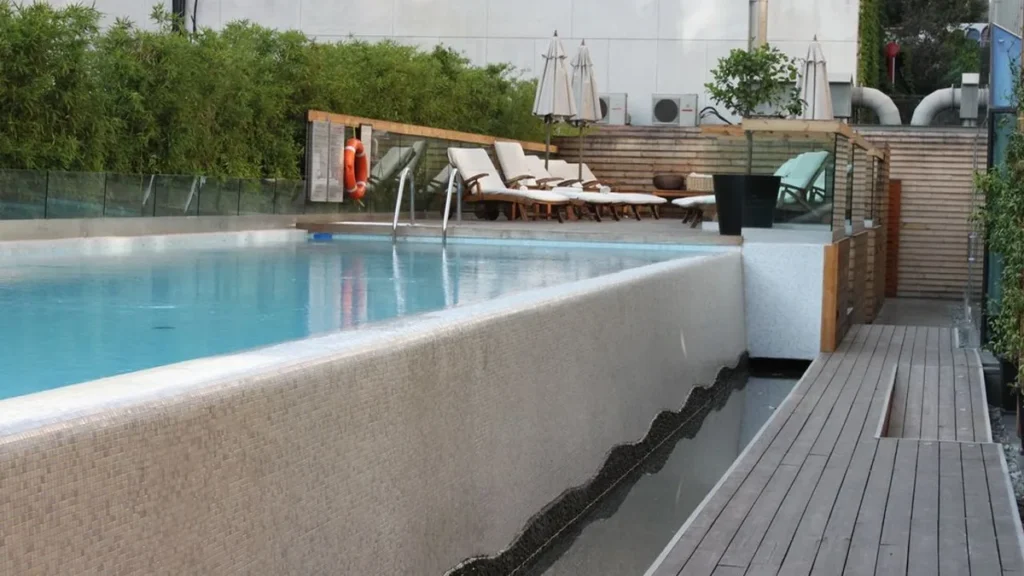
The best AI tools for lap pool installation startups in 2026 turn a long, narrow strip of garden into a business that measures once, digs once and hands over a pool that a swimmer can actually train in. A lap pool is not a decorative water feature and it is not a place to cool off on a hot afternoon. It is a long, narrow exercise pool built for swimming lengths, and every decision in the build, from the lane width to the pump size, follows from that one purpose. The swimmer needs a straight, unobstructed stretch of water, a consistent depth, clean water that stays clear lap after lap, and heating that keeps the water at a temperature where muscles stay loose rather than seizing up.
For a new installation startup, that focus is both the opportunity and the risk. Lap pool customers are serious buyers who know what they want, and they will compare your quote against builders who have been pouring concrete for decades. They will ask about the exact length, the turning space at each end, the filtration turnover rate and the running cost of heating a long body of water through the winter. If your numbers are vague or your drawings do not show the lanes clearly, the job goes to someone else. If your numbers are precise and your visuals show the finished pool sitting naturally in their garden, you win work that other startups never see.
This guide covers nine tools that fit the lap pool build specifically, rather than pool building in general. Each one earns its place by solving a problem that only a long, narrow exercise pool creates: surveying a thin strip of land, drawing lanes that are actually swimmable, sizing filtration for a high water volume, planning heating for a pool that loses warmth along its whole length, and keeping a long build on schedule when the crew is working in a trench rather than a wide open pit. Together they give a new startup the accuracy of an established firm without the overhead of one.
Key takeaways
- A lap pool is a long, narrow exercise pool built for swimming lengths, so lane width, overall length, filtration turnover and heating matter far more than decoration or depth.
- Design tools that handle precise dimensions and long, straight geometry save more money on a lap pool than any other single purchase, because a measuring error runs the full length of the pool.
- Filtration and heating must be sized for the whole water volume and the long surface area, not for the footprint alone, or the water will turn cloudy and cold at the far end.
- Realistic visuals win lap pool jobs, because the customer is buying a training pool they will use every day and needs to see exactly how it fits their garden.
- A small, focused tool stack of nine products covers design, survey, build management, water care and the business side without the cost or complexity of enterprise software.
What a lap pool really is, and why the tools differ
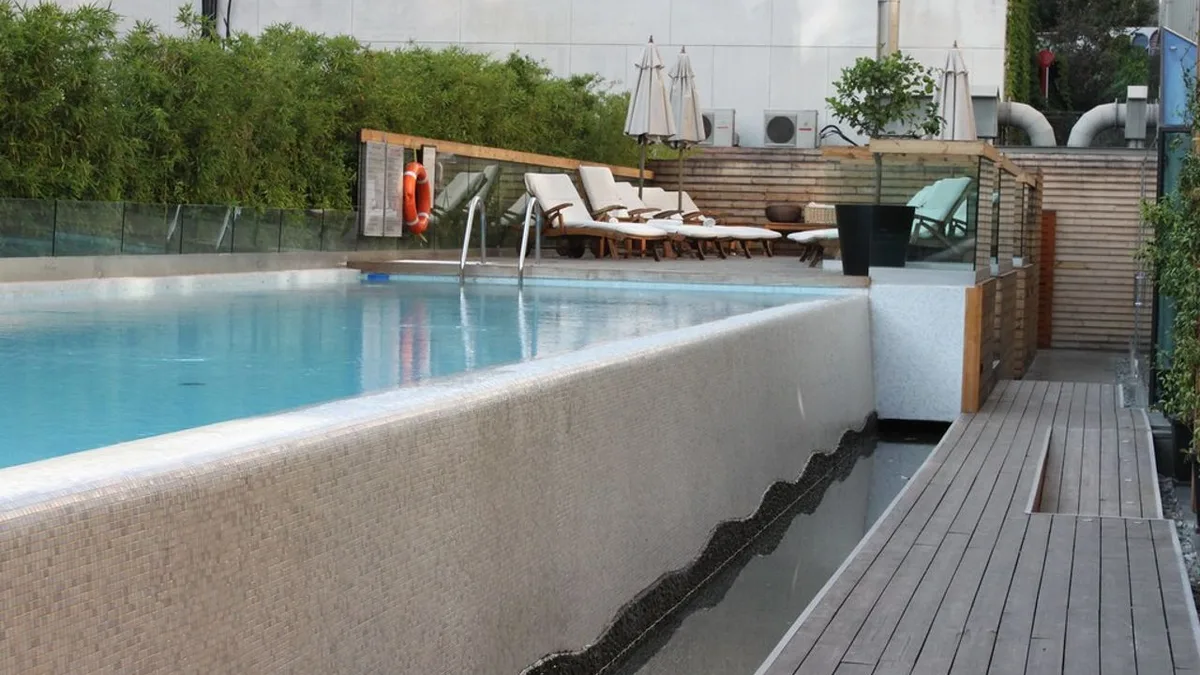
A lap pool is usually between ten and twenty-five metres long and between two and a half and four metres wide, with a consistent depth of around one point two to one point five metres. That shape is the whole point of the pool. The swimmer needs enough length to settle into a stroke, enough width for a comfortable lane, and a flat floor so the turn at each end feels the same every time. There is no deep end for diving and no shallow shelf for sitting, because neither helps someone who is swimming lengths. The walls are straight, the floor is level, and the waterline is clean, so the build is closer to a piece of sports infrastructure than to a garden feature.
That makes it a different build from the other pool types a startup might be tempted to treat as the same job. A plunge pool is small and deep, built for cooling off and relaxing in a tight space, so its design problems are about fitting a shell into a courtyard and keeping a small body of water balanced. The contrast is clear when you compare the two builds side by side, and the tools that suit plunge pool installation startups are chosen for compact shells and small gardens, not for long straight lanes. A lap pool, by comparison, is a linear build: everything runs in one direction, and a mistake at one end repeats itself all the way down the pool.
A swim spa is different again. It is a compact, self-contained unit with a powerful swim current that lets someone swim on the spot, and the installation is mostly about the crane lift, the concrete pad and sizing the current to the swimmer. The tools that suit swim spa installation startups are chosen for tight access and current sizing, not for excavating and lining a long trench. A paddling pool is a shallow pool for small children, where safety, drainage and a level base matter most. None of those three builds has to solve the lap pool problem, which is keeping a long, narrow body of water straight, level, clean and warm from one end to the other.
How the four pool builds compare
| Feature | Lap pool | Plunge pool | Swim spa | Paddling pool |
|---|---|---|---|---|
| Purpose | Swimming lengths for exercise | Cooling off and relaxing | Swimming against a current | Safe splashing for small children |
| Typical size | 10 to 25 metres long, 2.5 to 4 metres wide | Small and deep, fits a courtyard | Compact, self-contained unit | Shallow, small, garden scale |
| Water volume | High, because of the length | Low | Moderate | Very low |
| Filtration demand | High turnover across the full length | Modest, small volume | Built-in, dual zone | Simple pump and filter |
| Heating demand | High, long surface loses heat | Low, small surface | Moderate, insulated shell | Usually unheated |
| Biggest install risk | Length errors and uneven water quality | Fitting the shell into a tight site | Crane access and current sizing | Uneven base and poor drainage |
Design and survey tools
The design stage is where a lap pool startup wins or loses money. A pool that is ten centimetres too narrow at one end is a pool that cannot be fixed without breaking concrete, and a design that misjudges the length by a single tile course is a design that wastes a day of labour. The three tools in this section handle the geometry of a long, narrow build, and they pay for themselves the first time they catch an error that a tape measure and a sketch would have missed.
1. Structure Studios: Best for 3D Lap Pool Design
Structure Studios is pool design software built for installers rather than architects, and that shows in the way it handles a lap pool. You draw the pool to its real dimensions, set the depth profile, place the steps and the swim-outs, and the software builds a three-dimensional model that the customer can walk around on screen. For a lap pool, the value is in the straight lines: the lane width, the wall thickness and the coping line are all drawn to scale, so a customer can see whether two swimmers can pass comfortably or whether the pool is really a single-lane trainer.
The software also produces the construction documents a crew needs to build the pool as drawn. Cross-sections show the floor slope, the wall reinforcement and the pipe runs, so the excavator, the steel fixer and the plumber are all working from the same drawing instead of from three different sketches. That matters on a long build, because a pipe run that is misread at one end of a twenty-metre pool creates a problem that only shows up when the water is already in. Structure Studios keeps the design, the quote and the build documents in one place, which is exactly what a small startup needs when the founder is also the designer, the salesperson and the site manager.
2. AutoCAD: Best for Precise Lane and Length Plans
AutoCAD is the precision tool in this stack, and it earns its place on every lap pool where the dimensions are tight. Structure Studios shows the customer what the pool will look like; AutoCAD proves that it will fit, to the millimetre, in the space available. You draw the pool, the house, the boundaries, the drains and the access route on one plan, and you can measure any distance instantly. When a garden narrows at the far end or a tree root zone eats into the available length, AutoCAD shows the conflict before the digger arrives, not after.
The lane layout is where AutoCAD is most useful for a lap pool. You can draw the lane ropes, the turning markers and the cover reel position to scale, and check that the swimmer has a clear run without clipping a step or a light niche. You can also layer the filtration pipework and the heating runs onto the same plan, so the plumber can see exactly where the returns sit along the length of the pool. That level of detail is what separates a professional lap pool plan from a sketch, and it is what planning officers and building control expect to see when they ask for drawings.
3. Pix4D: Best for Drone Surveys of Long Narrow Sites
Pix4D turns drone photographs into accurate maps and three-dimensional models of a site, and a long, narrow garden is exactly the kind of site where it beats a tape measure. A lap pool site is often a strip of land that runs the full length of a garden, and measuring it by hand means walking the same line again and again while trying to keep the tape straight. A drone flight captures the whole strip in minutes, and Pix4D stitches the images into a survey that shows levels, boundaries, trees, drains and access points in their true positions.
The level data is the part that saves money. A lap pool needs a level floor and level coping, and a site that falls by half a metre along its length changes the excavation, the retaining design and the drainage plan. Pix4D shows that fall clearly, so the quote accounts for it instead of discovering it halfway through the dig. The survey also settles arguments about boundaries and access before work starts, which matters when the digger and the concrete lorry need a clear route along a narrow side passage.
Winning the job with realistic visuals
A lap pool is a major purchase, and the customer is buying something they will look at every day and swim in several times a week. They need to see it clearly before they sign, and a flat plan does not show what a long pool does to a garden. The tool in this section turns the technical design into a picture the customer can believe in, and it is often the difference between a quote that sits unread and a quote that gets signed.
4. Lumion: Best for Photorealistic Client Visuals
Lumion is rendering software that turns a three-dimensional pool model into a realistic image or video, complete with water, sunlight, planting and the house in the background. For a lap pool, that realism is decisive, because the customer is trying to judge proportion: will a twenty-metre pool dominate the garden, or will it sit quietly alongside the lawn? A rendered view from the patio answers that question in a way no plan can, and it lets the customer see the deck, the cover and the planting as one finished scene.
The software is fast enough to use during the sales process rather than after it. You can show the customer the pool in morning light and in evening light, with the cover on and with the cover off, and you can change the coping colour or the decking material while they watch. That kind of live feedback shortens the decision process, because the customer stops imagining the pool and starts reacting to it. It also reduces the changes requested after the build starts, which are the most expensive changes in any pool project.
Running the build
A lap pool build is a linear project. The excavation runs in one direction, the steel and the concrete follow it, and the plumbing, tiling and commissioning come after in a fixed order. If one stage slips, every stage after it slips too, and a startup with two crews cannot absorb that kind of delay. The tool in this section keeps the build moving in sequence and keeps a record of every stage, so the handover is a file of evidence rather than a handshake.
5. Fieldwire: Best for Crew Coordination on Long Builds
Fieldwire is a construction management app that puts the drawings, the task list and the site photos on the phones of everyone working on the job. For a lap pool, the plan markup is the feature that matters most. The site manager can mark up the pool plan with the exact location of a pipe, a light or a repair, attach a photo, and assign it to the right person, all from the side of the trench. The rest of the crew sees the same plan, so there is no version confusion between the drawing in the office and the drawing on site.
The task list keeps the long build in order. Excavation, steel, plumbing, concrete, waterproofing, tiling, coping and commissioning each become a checklist with a named owner and a deadline, and the app shows what is done and what is blocking the next stage. That visibility is what a small startup needs most, because the founder is often on site with a shovel in one hand and a phone in the other. Fieldwire also stores the daily photos in sequence, so the handover file shows the pool at every stage, from the first cut of the digger to the first fill.

Filtration, heating and water care
Water care is where a lap pool succeeds or fails in the eyes of its owner. A swimmer who trains every day notices cloudy water, cold spots and chemical smells immediately, and they will blame the installer long after the builder has left. The two tools in this section handle the two halves of the problem: the equipment that keeps the water moving, filtered and warm, and the monitoring that proves the water is right between service visits.
6. Pentair IntelliCenter: Best for Filtration and Heating Automation
Pentair IntelliCenter is a pool automation system that controls the pump, the filter, the heater and the lighting from one panel, and it is well suited to the demands of a long pool. A lap pool has a large water volume and a long surface, so the pump must run long enough to turn the whole volume over, and the heater must work hard enough to hold the temperature steady from one end to the other. IntelliCenter schedules the pump runs, manages the heating and lets the owner adjust everything from a phone, so the system is not left running flat out or switched off by mistake.
For the installer, the value is in the commissioning and the handover. You set the filtration schedule to match the pool volume, set the heating target for a training pool rather than a leisure pool, and show the owner how to change it for the seasons. The system logs its own operation, so if the owner reports a problem months later, you can see whether the pump ran as scheduled or whether someone changed the settings. That record protects the startup as much as it helps the customer, because it separates an equipment fault from a settings change.
Heating a long pool is also where running costs become a real sales conversation. A customer who understands the monthly cost of heating a twenty-metre pool is a customer who will not be surprised by the first bill, and a customer who is not surprised is a customer who recommends you. The same conversation applies to other ways of warming pool water, and the tools that suit solar pool heater installation startups are worth knowing about when a customer asks whether the sun can carry part of the heating load. IntelliCenter integrates with heat pumps and solar heating, so you can offer the customer a heating plan rather than a single heater.
7. iopool: Best for Ongoing Water Monitoring in Long Pools
iopool is a smart water sensor that floats in the pool and measures the chlorine level, the pH and the water temperature continuously, sending the readings to an app. For a lap pool, continuous monitoring solves a problem that spot testing cannot: the water at the far end of a long pool can drift away from the water at the pump end, and a weekly test at the steps will not catch it. A sensor that reports every day shows the trend, so the owner can act before the water turns cloudy or the chlorine drops.
The app also tells the owner exactly what to add and how much, which matters for a training pool that gets heavy daily use. A swimmer who trains for an hour puts far more load on the water than a family that dips in on a Sunday, and the chemical demand follows that load. iopool adjusts its recommendations to the readings rather than to a fixed weekly routine, so the water stays balanced without the owner guessing. For a startup, offering the sensor as part of the handover package turns a one-off installation into an ongoing relationship, because the owner has a reason to call you when the readings change.
The business side
8. Xero: Best for Startup Finances and Invoicing
Xero is cloud accounting software that handles quotes, invoices, expenses and bank reconciliation in one place, and it fits a lap pool startup because the jobs are large and the payments come in stages. A typical lap pool is paid in instalments: a deposit on signing, a payment at excavation, a payment at shell completion and a final payment at handover. Xero tracks each instalment against the job, so you always know what has been paid, what is due and what is overdue, without digging through a spreadsheet.
The expense tracking is equally useful on a long build. Materials, plant hire, subcontractors and fuel all go into the job, and Xero shows the real cost of each pool against the quote. That is how a startup learns whether its prices are right, and it is how you spot the jobs that look profitable on paper and lose money in practice. The bank feed reconciles the account automatically, so the monthly picture is current rather than three months out of date, and the accountant gets clean records instead of a box of receipts.
9. HubSpot: Best for Turning Enquiries into Booked Site Visits
HubSpot is a customer relationship tool that tracks every enquiry from the first message to the signed contract, and it earns its place because lap pool enquiries have a long sales cycle. A customer who asks about a lap pool in January may not sign until April, and in between they will ask about length, heating costs, planning rules and timescales. HubSpot keeps that whole conversation in one record, so nothing is lost when the enquiry goes quiet for a month and comes back with a new question.
The pipeline view shows where every potential job stands: new enquiry, site visit booked, design sent, quote sent, negotiation, signed. That view is what lets a startup plan its workload, because it shows how many site visits are coming and how many quotes are likely to convert. The email tools let you send the design and the quote from inside the record, and the reminders make sure no enquiry sits unanswered for a week while the founder is on site. For a business that lives or dies on a handful of large jobs a year, losing one enquiry to slow follow-up is expensive.
How much should a lap pool startup spend on software?
A sensible starting budget for the nine tools in this guide is a few hundred a month once the business is trading, with the design and automation tools as the largest items. That figure sounds like a lot to a new founder, until it is set against the value of a single lap pool job. One avoided re-measure, one prevented filtration mistake or one job won on the strength of a realistic visual covers the software bill for months, and the tools keep paying that return on every job after the first.
Resist the temptation to buy everything at once. A startup that spends its first month learning nine tools is a startup that is not selling pools, and the tools only earn their keep when they are used on real jobs. Buy two, use them until they are habit, then add the next one. By the end of the first year the full stack will feel like a normal part of the business rather than a burden, and the quality of the quotes, the builds and the handovers will show it.
Your first lap pool job checklist
- Survey the full length of the site with a drone or a measured survey, and confirm the levels, the boundaries and the access route before you quote.
- Draw the pool to scale with lane widths, turning space, steps and the cover reel position, and get the customer to sign the drawing before excavation starts.
- Size the filtration for the whole water volume and the heating for the long surface area, and put the running costs in writing so the customer is never surprised.
- Photograph every stage of the build in sequence, from excavation to the first fill, and keep the photos with the job record for the handover.
- Commission the automation system with the customer present, set the filtration and heating schedules together, and show them the water monitoring app on their own phone.
- Raise the deposit, the stage payments and the final invoice in your accounting system on the day each stage completes, and chase any overdue payment within a week.
Frequently asked questions
What is the best AI tool for a lap pool installation startup?
There is no single best tool, because a lap pool needs design, survey, build management, water care and business tools working together. Start with Structure Studios for the design and Xero for the money, because accurate drawings and accurate invoicing are the foundation of every profitable job. Add Pix4D for surveys and Lumion for visuals when the order book grows, and add the automation and monitoring tools as part of the handover package.
How is a lap pool different from a plunge pool to install?
A lap pool is a long, narrow exercise pool built for swimming lengths, so the design problems are about length, lane width, filtration turnover and heating across a large surface. A plunge pool is small and deep, built for cooling off in a tight space, so the design problems are about fitting a shell into a courtyard and keeping a small volume balanced. The excavation, the plumbing and the heating are all sized differently, and the tools that suit one build do not automatically suit the other.
How long does a lap pool installation take?
A straightforward lap pool usually takes between eight and twelve weeks from excavation to handover, depending on the length, the access and the weather. The excavation and the shell take the first few weeks, and the waterproofing, tiling, coping and commissioning take the rest. A long pool is more exposed to weather delays than a small one, because the open excavation runs the full length of the garden, so build a margin for rain into every schedule you give a customer.
What filtration does a lap pool need?
A lap pool needs a filtration system sized for its full water volume, with a turnover rate that keeps the water clear from one end to the other. That usually means a larger pump and filter than a leisure pool of the same footprint, because the long, narrow shape gives the water further to travel. An automation system that schedules the pump runs and a sensor that monitors the water continuously will keep the far end as clean as the pump end, which is the test the owner will apply every day.
How much does it cost to heat a lap pool?
Heating a lap pool costs more than heating a small pool, because the long surface loses heat along its whole length and the water volume is large. The exact figure depends on the length, the cover, the heater type and the local climate, but a good cover and a heat pump will cut the bill substantially compared with an uncovered pool on direct electric heating. Put the estimated running cost in the quote, and show the customer how the cover and the heating schedule affect it.
Which tool should I buy first?
Buy the design tool first, because every quote, every drawing and every customer conversation depends on it. Structure Studios will produce the visuals and the construction documents that win jobs and guide the crew, and it will pay for itself on the first two or three quotes. Add the accounting tool at the same time, because a startup that cannot invoice properly cannot stay in business long enough to enjoy the design work.
The bottom line
A lap pool installation startup succeeds on accuracy. The pool is long, straight and unforgiving, and the customer is a serious swimmer who will notice every error. The nine tools in this guide give a new business the accuracy of an established firm: precise designs, honest surveys, realistic visuals, disciplined builds, automated water care and clean finances. Buy them in order, learn them on real jobs, and let the quality of the pools do the selling. The market for lap pools is small and demanding, but a startup that builds them well will find that its customers become its best salespeople.

Keep what speaks to you.
Leave room for your own perspective.