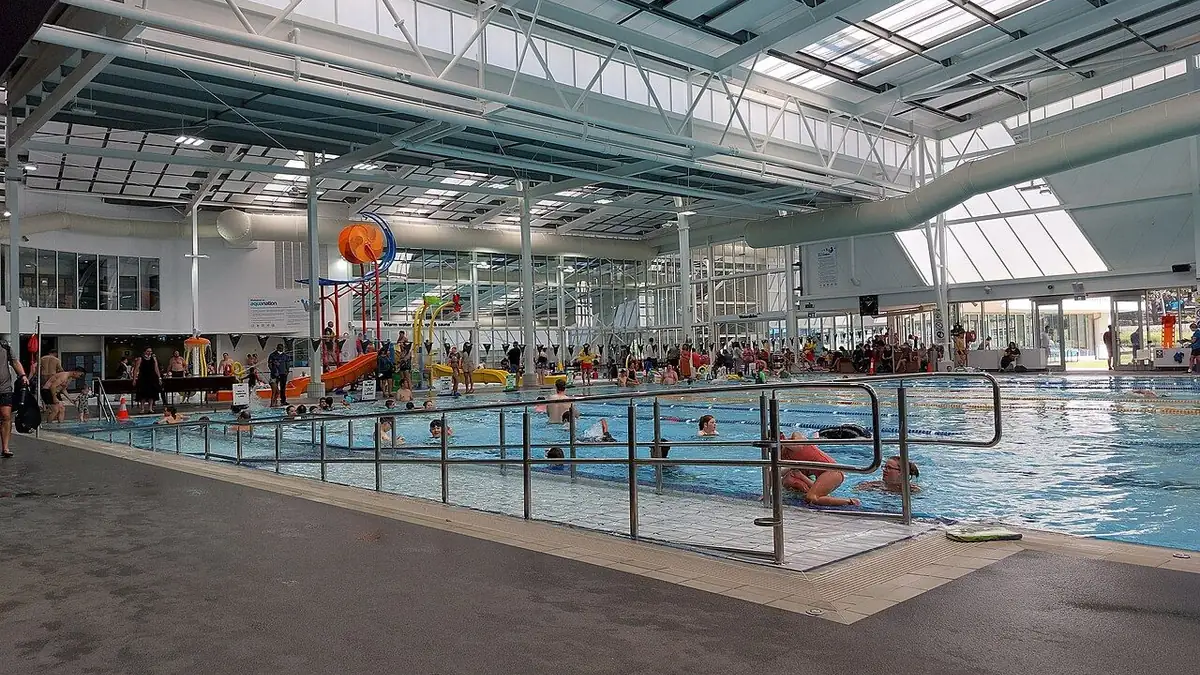
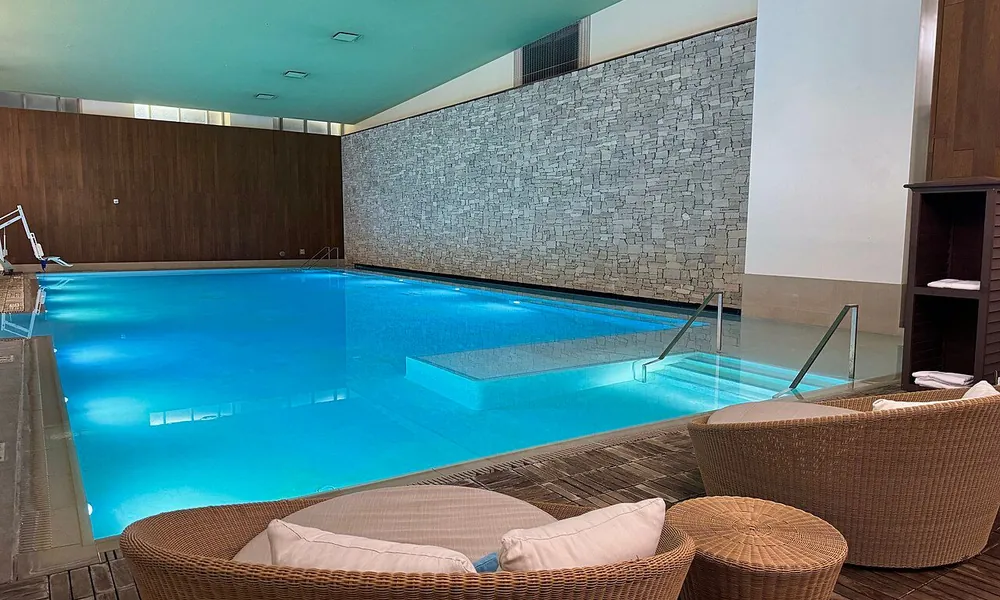
An indoor pool is a pool built inside a building, and that one fact changes the whole job. The water is only part of it. The room around the water is the real project: a warm, wet hall that has to stay dry on the outside, comfortable on the inside, and cheap enough to heat that the owner keeps using it. Get the shell right and the heating wrong, and the pool is a cold disappointment. Get the heating right and the ventilation wrong, and condensation eats the building from the inside out. An indoor pool installation startup is therefore not really a pool company that happens to work indoors. It is a building-services company that happens to build pools, and the tools that launch it have to cover the shell, the heating, the ventilation and the enclosure as one connected system.
That is where AI tools earn their keep. A new founder cannot afford to learn humidity physics, heater sizing, airflow modelling and chemical dosing by trial and error, because every error is hidden inside a finished room and costs thousands to fix. The tools in this guide do the maths before the digger arrives: they simulate how moist air will move through the pool hall, size the dehumidifier to the real evaporation rate, model the heat loss through the glazing, and keep the water balanced automatically once the pool is handed over. They turn a job that used to depend on one experienced engineer’s gut feel into a repeatable process a small crew can quote, build and support with confidence.
This guide compares nine tools that fit an indoor pool installation startup in 2026. Three handle design and simulation, three handle dehumidification and ventilation, and three handle heating, covers and water care. Each one is judged on the indoor build specifically: how it handles a sealed, humid room rather than an open-air site. Read the whole list before you buy anything, because the cheapest way to start is to buy the simulation tool first and the hardware second.
Key Takeaways
- An indoor pool is a building-services job first and a pool second: shell, heating, ventilation and enclosure must be designed as one system.
- Simulate the pool hall before you build it — airflow and humidity modelling prevents the condensation damage that ruins indoor pool rooms.
- Size the dehumidifier to the real evaporation rate, not a rule of thumb, and recover its heat back into the pool water and the air.
- An automatic cover is the cheapest running-cost tool in the whole list because it cuts evaporation, the main source of humidity and heat loss.
- Automated chemical dosing matters more indoors than anywhere else, because enclosed air concentrates every chemical smell and irritation.
The 9 Tools at a Glance
| Tool | Best for | Indoor-pool job |
|---|---|---|
| SimScale | Airflow and humidity simulation | Modelling moist air movement in the pool hall |
| IESVE | Whole-building energy and moisture modelling | Heat loss, glazing and year-round running costs |
| RoomSketcher | Pool-hall layout and client visuals | Room plans, sightlines and equipment placement |
| Dectron Dry-O-Tron | Indoor pool dehumidification | Removing moisture and returning heat to the pool |
| Desert Aire | Dehumidification with heat recovery | Balancing humidity, heating and fresh air |
| Seresco | Compact indoor pool climate units | All-in-one climate control for smaller pool halls |
| Raypak | Indoor pool water heating | Fast, reliable water heating sized to the pool |
| Cover-Pools | Automatic pool covers | Cutting evaporation, heat loss and humidity overnight |
| Chemtrol | Automated chemical dosing | Keeping enclosed pool water balanced without smells |
Design and Simulation Tools
Every indoor pool job starts on a screen, not on site. The room has to be drawn, the air has to be modelled, and the client has to see what they are paying for before a single wall comes down. These three tools cover that opening stage, and they are the reason a two-person startup can quote a job that used to need a consulting engineer.
1. SimScale: Best for Airflow and Humidity Simulation
SimScale is a cloud simulation platform that lets a small startup run the kind of airflow study that used to belong to large engineering firms. You build a model of the pool hall, set the water temperature, the air temperature and the ventilation rate, and the software shows you where moist air will go, where it will cool, and where condensation will form. That picture is worth more than any brochure, because condensation on a cold window or a steel beam is the failure that destroys indoor pool rooms quietly over two or three winters.
For an indoor pool installation startup, the practical value is in the quote. When a client asks why your ventilation system costs more than a rival’s, you can show them the simulation: the rival’s design leaves a damp corner behind the glazing, yours does not. SimScale runs in a browser, so there is no workstation to buy, and the pay-as-you-go model suits a startup that might run three simulations one month and none the next. The learning curve is real, and your first model will take longer than you expect, but the second one will be fast, and by the fifth you will have a template for the standard pool hall shapes you build most often.
Use it on every job where the pool hall has large glazed areas, a vaulted ceiling, or a timber or steel structure that cannot tolerate damp. Skip it only on the smallest domestic jobs where the room is already built and ventilated, and even then keep the template ready for the day a client asks for a glass roof. SimScale does not design the pool itself, and it does not pick your equipment, but it tells you the truth about the air, and in an indoor pool build the air is the product.
2. IESVE: Best for Whole-Building Energy and Moisture Modelling
IESVE is a building performance suite that models the whole pool building as a system: heat loss through walls and glazing, solar gain through the roof lights, moisture generated by the pool surface, and the energy used by the heating and ventilation plant across a full year. Where SimScale shows you the air moving through one room, IESVE shows you what the building will cost to run in January and in July, and that is the number the client actually lives with.
An indoor pool installation startup wins work with IESVE by talking about running costs instead of build costs. A client who sees that a better-insulated enclosure and a heat-recovery dehumidifier save a fixed amount every month is a client who stops shopping for the cheapest quote. The software also forces a useful discipline on your designs: you have to enter real U-values, real glazing areas and real occupancy patterns, so sloppy assumptions surface before the build rather than after handover. The output doubles as a handover document, because you can show the owner the expected humidity, temperature and energy use for each season and set the controls to match.
The cost is the honest drawback. IESVE is priced for professional practices, and a brand-new startup should budget for training time as well as the licence. The smart way in is to use it on your first two or three flagship jobs, build a library of modelled pool hall types, and then reuse those models as the basis for smaller projects. Once the library exists, each new quote gets faster and more accurate, and the software pays for itself in avoided callbacks alone.
3. RoomSketcher: Best for Pool-Hall Layout and Client Visuals
RoomSketcher is a floor-plan and 3D visualisation tool that a startup can learn in an afternoon and use on every single job. You draw the pool hall, place the pool shell, the plant room, the changing area, the glazing and the access routes, and the client gets a clear 3D view of the room they are about to pay for. That sounds simple, and it is, which is exactly why it matters: most indoor pool disputes are not about engineering, they are about a client who imagined the room differently from the builder.
The indoor-specific value is in the layout decisions that only exist inside a building. Where does the dehumidifier sit so its airflow reaches the glazing without blowing across the swimmers? Where does the plant room go so the pipe runs are short and the noise stays out of the hall? How wide is the walkway when the cover is rolled back? RoomSketcher lets you answer those questions with the client looking at the same picture, and it lets you move a wall on screen in thirty seconds instead of discovering the problem with a tape measure on site. The plans it produces are also good enough for early-stage discussions with building control and structural engineers, which keeps the job moving while the detailed drawings are prepared.
RoomSketcher will not size anything, and it will not warn you about humidity, so treat it as the communication tool, not the engineering tool. Pair it with the simulation tools above: model the air with SimScale, model the energy with IESVE, and show the room with RoomSketcher. Used that way, it is the cheapest client-facing tool in this guide and the one your customers will remember, because it is the first time they actually see their pool hall.
Dehumidification and Ventilation Tools
If the design tools are the brains of an indoor pool startup, the dehumidification and ventilation equipment is the lungs. A pool evaporates water all day and all night, and inside a building that moisture has nowhere to go except into the walls, the roof and the air the swimmers breathe. The three systems below are built specifically for indoor pool halls, and choosing between them is the single most important equipment decision a new startup makes.
The core idea is simple and worth repeating to every client: you do not fight humidity by opening a window, you fight it by removing moisture from the air and putting the heat from that moisture back into the pool water and the room. All three of these manufacturers build machines that do exactly that, and the differences between them are about size, layout and how much fresh air the hall needs. A steam room installation faces the same sealed, humid-room problem, which is why the climate logic transfers so well between the two trades.
4. Dectron Dry-O-Tron: Best for Indoor Pool Dehumidification
Dectron’s Dry-O-Tron is the established name in dedicated indoor pool dehumidification, and it is the machine many experienced pool builders specify by default. It pulls moist air from the pool hall, strips the water out of it, and returns the recovered heat to the pool water and the supply air, so the energy that would have been lost to condensation is recycled into keeping the pool warm. The units are built for continuous operation in a corrosive, chlorine-laden atmosphere, with coated coils and cabinets that survive an environment which destroys ordinary air-conditioning equipment in a few years.
For a startup, the Dry-O-Tron’s strength is that it is a known quantity. Suppliers know it, service engineers know it, and clients who have owned an indoor pool before will often ask for it by name. That familiarity shortens the sales conversation and simplifies the aftercare, because spare parts and service knowledge are widely available. The sizing process is also well documented: you work from the pool surface area, the water temperature and the hall conditions, and the manufacturer’s selection software confirms the model. A new founder can lean on that support heavily in the first year and still deliver a properly sized system.
The trade-off is that a dedicated dehumidifier is a serious capital item, and it needs proper ductwork and a plant space to live in. Do not try to hide one in a cupboard or undersize it to win a quote, because an undersized dehumidifier is worse than none at all: it runs constantly, costs a fortune, and still leaves the room damp. Quote it honestly, show the client the evaporation maths, and let the machine’s reputation do the persuading.
5. Desert Aire: Best for Dehumidification with Heat Recovery
Desert Aire builds indoor pool dehumidifiers with a strong focus on heat recovery and fresh-air management, and that combination suits the modern, airtight pool hall better than any other approach. The units remove moisture, recover the heat, and bring in controlled amounts of outdoor air, which keeps the hall fresh without throwing away the warmth you have already paid for. In a well-sealed new building, that fresh-air control is what stops the room feeling stuffy while keeping the energy bills under control.
The practical advantage for a startup is flexibility. Desert Aire offers a range of configurations, including units that can be ducted remotely so the machine itself sits out of sight, and the controls are designed to hold the hall at a steady relative humidity rather than cycling wildly between damp and dry. That steadiness is what protects the building fabric: timber, plaster and steel all suffer when humidity swings, and a controller that holds a flat line is worth more than a bigger machine that hunts. The company’s sizing support is also strong, which matters when you are still building your own calculation confidence.
Where Desert Aire earns its place on this list is the running-cost conversation. Because the heat recovery is integral rather than an add-on, you can show a client a credible year-round energy figure and compare it honestly against a cheaper machine with no recovery. The upfront price is higher, the monthly cost is lower, and a startup that can explain that trade-off in plain language will win the jobs that are worth winning.
6. Seresco: Best for Compact Indoor Pool Climate Units
Seresco makes compact indoor pool climate units that combine dehumidification, heating and ventilation in a single package, and that integration is exactly what a small domestic pool hall needs. Where a large leisure centre can justify a plant room full of separate machines, a home pool hall usually has one cupboard and one duct route, and a single unit that does the whole climate job is the only design that fits. Seresco’s units are built for that reality, with a small footprint and controls that manage humidity, air temperature and pool water heating together.
For a new installation startup, the compact unit changes which jobs you can take. Without it, small pool halls are hard to quote profitably, because the design and installation cost of a multi-machine system eats the margin. With a packaged unit, you can offer a clean, fixed-scope solution: one machine, one duct design, one control panel, one service visit a year. That simplicity also reduces the callback risk, because there are fewer interfaces between trades to go wrong, and when something does need attention, one manufacturer’s engineer can diagnose the whole climate system.
The limitation is scale. A compact unit suits a domestic or small hotel pool hall, not a large public leisure pool, so know your market before you standardise on it. Within its range, though, it is the most startup-friendly machine on this list, and it is the one most likely to turn a hesitant homeowner into a signed contract, because the proposal is easy to understand and the plant is easy to live with.
Heating, Covers and Water Tools
Once the air is under control, the water itself needs attention. An indoor pool loses heat through its surface, through evaporation, and through the building around it, and the owner pays for every degree. The three tools in this section attack that cost from three directions: heat the water efficiently, stop the heat escaping when the pool is not in use, and keep the chemistry stable so the enclosed air stays pleasant to breathe.
Heating is also where a startup’s credibility is tested most directly. A client will forgive a late tile delivery, but they will not forgive a pool that never reaches temperature. Size the heater from the pool volume, the desired temperature and the real heat loss, not from the size of the last job, and write the expected heat-up time into the handover so the owner knows what normal looks like.
7. Raypak: Best for Indoor Pool Water Heating
Raypak builds pool heaters that are widely used in indoor installations because they heat water quickly, hold temperature steadily, and fit the plant-room layouts that indoor jobs usually allow. The gas and electric models cover the common sizes for domestic and small commercial pool halls, and the controls are simple enough that an owner can understand them without a manual. For an indoor pool, that reliability matters more than headline efficiency, because the heater is the machine the owner notices every single day.
A startup benefits from Raypak’s broad installer support. The heaters are familiar to pool engineers, the parts network is established, and the installation guidance is clear about the clearances, flue routes and ventilation that an indoor plant room demands. That matters because an indoor heater lives in a room, not in a garden shed: the flue, the combustion air and the condensate all have to be routed through a finished building, and a heater designed with those constraints in mind saves hours of site improvisation. Pair the heater with a properly sized dehumidifier and the two machines share the load sensibly, with the heater warming the water and the dehumidifier returning recovered heat to it.
8. Cover-Pools: Best for Automatic Pool Covers
Cover-Pools makes automatic pool covers, and for an indoor pool the cover is not an accessory, it is the cheapest humidity and heating control you can buy. A pool that sits uncovered overnight evaporates water all night, and that evaporation is the moisture your dehumidifier has to remove and the heat your heater has to replace. Roll a cover across the water and both problems shrink at once: evaporation falls sharply, heat stays in the water, and the dehumidifier gets a rest. No other single purchase in this guide pays for itself as quickly.
The indoor-specific benefit goes further. An automatic cover also keeps the hall safer and cleaner, because the water is sealed when the room is empty, and it protects the water chemistry from the dust and debris that drifts in during building work or decorating. The systems are designed to fit inside the pool structure, with tracks set into the pool edge and a mechanism hidden below deck level, so the finished room looks clean rather than cluttered. That matters in a domestic pool hall, where the room is a living space as well as a plant room, and the client judges the job by how it looks as much as by how it performs.
For a startup, the cover is also a useful sales tool. It is easy to demonstrate, easy to explain, and easy to cost, and it gives the client a visible, daily reminder that the system is working for them. Include the cover in the original quote rather than offering it as an afterthought, because retrofitting a cover into a finished pool hall is far more expensive than building it in from the start. The enclosure around the pool and the cover over the water work as a pair, and a pool enclosure installation that is planned alongside the cover gives the client a room that stays warm, dry and usable in every season.
9. Chemtrol: Best for Automated Chemical Dosing
Chemtrol builds automated chemical controllers that test the pool water continuously and dose chlorine and pH correction exactly when needed, and indoors that precision is essential. In an enclosed hall, the air above the water is the air the swimmers breathe, and every chemical imbalance shows up as a smell, stinging eyes, or a film on the glazing. Manual dosing, however careful, always overshoots and undershoots; an automated controller holds a flat, correct line all day.
For a startup, Chemtrol changes the aftercare conversation completely. Instead of visiting a client to fix green water or a chlorine smell, you can check the controller’s readings, adjust the dosing remotely where the model allows, and visit only when the numbers say something is genuinely wrong. That is the difference between a reactive maintenance business and a professional service contract, and it is the service contract that keeps a new company alive between installations. The controller also protects the expensive parts of the job: balanced water does not corrode the heater, the dehumidifier coils or the cover mechanism, so the machines you installed last year are still in good condition next year.
The honest caveat is that a dosing controller is not a substitute for water testing. It needs calibration, its probes need cleaning, and the owner still needs a simple test kit and a weekly routine. Sell it as what it is: the machine that does the boring, precise work every hour of every day, with a human check on top. Clients who understand that will keep their water clear, their air fresh, and their expensive indoor pool hall in the condition you handed it over.
Your First Indoor Pool Job: A 6-Step Checklist
- Survey the building before the pool. Measure the hall, check the structure, find the cold surfaces, and confirm where the plant and ductwork can go before you quote a price.
- Model the air and the energy. Run the pool hall through a simulation tool, size the dehumidifier to the real evaporation rate, and give the client a written running-cost estimate.
- Design the shell, heating, ventilation and enclosure as one system. Agree the glazing, insulation and cover together, so no single element undermines the rest.
- Fix the equipment list early. Confirm the dehumidifier, heater, cover and dosing controller models in writing, with lead times, before the build starts.
- Commission the climate before handover. Run the pool to temperature, prove the humidity holds steady for several days, and record the readings for the owner.
- Hand over a service plan, not just a pool. Leave the owner with a dosing routine, a cover routine, a service schedule and a named contact for the first year.
Frequently Asked Questions
What is the best AI tool for an indoor pool installation startup?
Start with SimScale, because airflow and humidity simulation prevents the most expensive indoor pool failure, which is condensation damage inside the building. Once you can model a pool hall, add a dehumidifier manufacturer’s selection support and an automated dosing controller, and you have the core of a professional startup. The simulation tool is the one purchase that improves every job you quote, whatever equipment you eventually install.
How is an indoor pool different from an outdoor pool to install?
An indoor pool is built inside a building, so the room itself is part of the job. The shell, the heating, the ventilation and the enclosure have to be designed together, because the pool evaporates water into a sealed space all day. An outdoor build does not face that problem: the moisture and the heat simply leave into the open air. Indoors, every litre of evaporation has to be removed by a machine, and every degree of heat has to be paid for, which is why dehumidification and heat recovery dominate the equipment list.
Why does an indoor pool need a dehumidifier?
A pool evaporates water continuously, and inside a building that moisture condenses on the coldest surfaces: windows, steel beams, roof lights and the backs of walls. Left alone, it causes mould, rust, peeling paint and rotting timber, and it makes the room feel clammy even when the water is warm. A dehumidifier removes the moisture at the same rate the pool produces it and returns the recovered heat to the water and the air, so the room stays dry and comfortable and the building stays sound.
How much should an indoor pool installation startup spend on software?
Budget for one simulation tool and one visualisation tool in the first year, and use the manufacturers’ free selection and sizing support for the equipment itself. That keeps the software bill manageable while still letting you quote professionally. As the order book grows, add a full building-energy modelling licence, because the running-cost figures it produces are what win larger jobs. Avoid buying every tool at once: buy the tool that fixes your next quoting problem, and let the revenue from that job pay for the next one.
Can AI tools size a pool heater correctly?
Yes, when they are fed real numbers. A heater sized from the pool volume, the target water temperature, the hall temperature, the glazing area and the cover use will be accurate, and the simulation tools in this guide do exactly that calculation. What they cannot do is guess the inputs, so measure the room, confirm how the family will use the pool, and enter honest figures. A heater sized on guesses will be wrong no matter how good the software is, and the owner will feel the mistake every time they swim.
Which tool should I buy first?
Buy the simulation tool first, then the visualisation tool, then the dosing controller for your first live job. The simulation tool wins quotes, the visualisation tool wins clients, and the dosing controller protects the installation you have just built. The dehumidifier, heater and cover are job-specific purchases that belong in each project’s quote, not in your startup’s overhead, and the building that houses the pool shapes all of them, which is why a pool house installation is the closest companion trade to study before your first indoor pool contract.
The Bottom Line
An indoor pool installation startup succeeds by treating the pool hall as one system, not four separate trades. Simulate the air, model the energy, draw the room so the client can see it, size the dehumidifier to the real evaporation rate, recover its heat, heat the water with a reliable heater, cover the pool when it is not in use, and dose the chemistry automatically. Those nine tools, used in that order, turn a complicated building-services job into a repeatable business. Start with the simulation, quote honestly, commission the climate before you hand over, and your first indoor pool will become the reference site that wins your next five jobs.

Keep what speaks to you.
Leave room for your own perspective.