
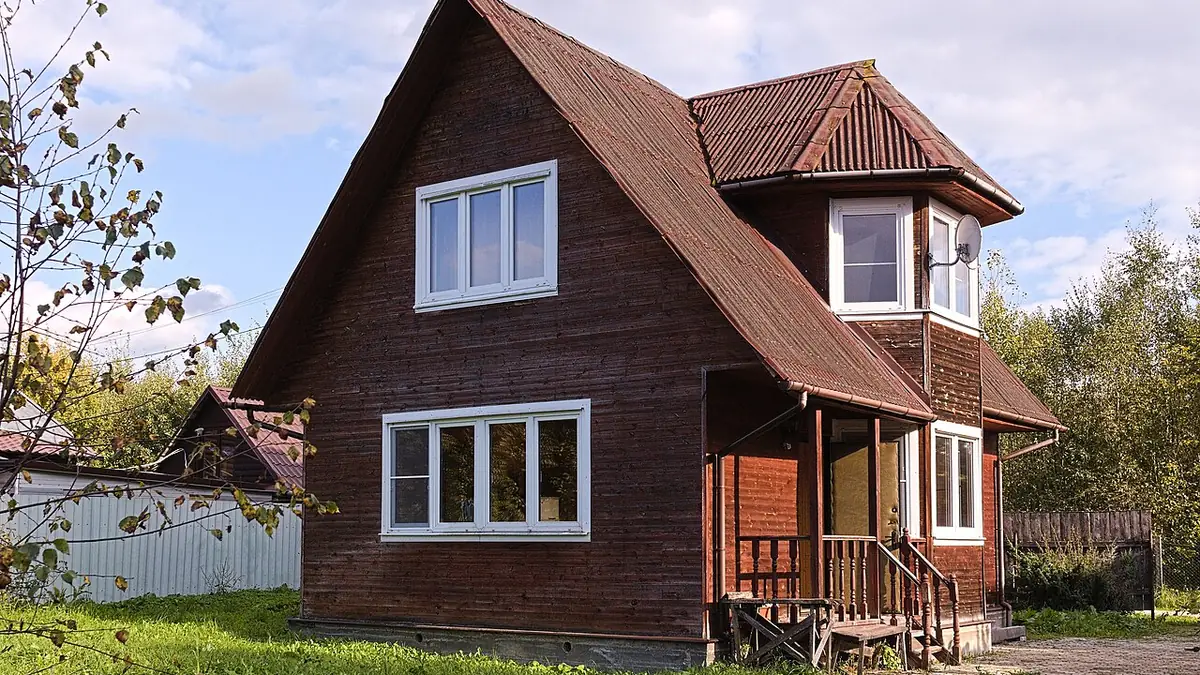
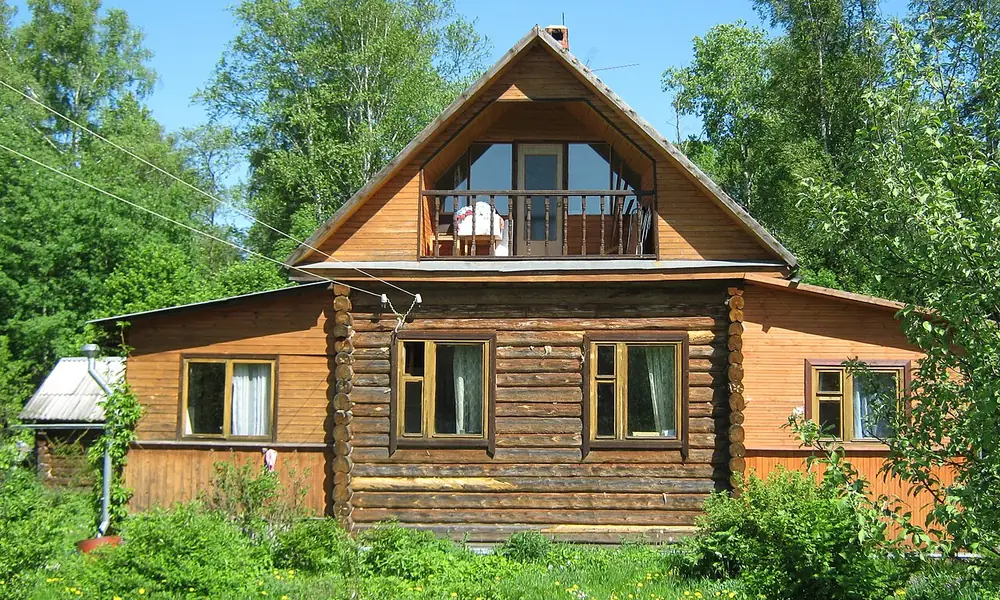
A dacha is a Russian country house, and a dacha installation startup is the small business that builds one from scratch on a plot outside the city. The house itself is modest: timber walls, a pitched roof, a wood-burning stove at its heart, a veranda where the family eats in summer, and a garden plot where they grow potatoes, cucumbers, currants and flowers. It is a seasonal second home, not a year-round mansion. The owners arrive in spring, live there through the warm months, and close the house up before the first hard frost.
That seasonal rhythm is what makes the dacha a distinct building job. The building season is short, the winters are long and cold, and the house has to survive months standing empty in snow. The logs have to be graded and jointed so they do not leak air in January. The stove has to heat the whole house from a single firebox, and the flue has to run safely through a timber roof. The water has to be drained properly in autumn or the pipes will split. A startup that gets these details right builds a house its owners love for decades; a startup that gets them wrong gets a call in the first cold snap.
This guide compares nine AI tools that cover the dacha build from end to end, in the order a real job runs. Each one is judged on what it does for a dacha specifically: a small timber house with a stove, a veranda and a garden plot, built for seasonal living. Together they form a working kit that a new startup can adopt in stages, starting with the survey and the stove, without buying software made for a different kind of house.
How a dacha differs from its nearest neighbours
A dacha is not a villa. A villa is a large detached house built for year-round living, with long walls, a wide roof span, many rooms and a garden that is laid out as a terrace. The tools for large detached villa builds are sized for that scale, and a dacha startup that borrows them will over-specify every part of a small timber house. A dacha is smaller, simpler and seasonal, and its tools have to match that.
A dacha is not a bungalow either. A bungalow is a single-storey, step-free house under one low roof, built for year-round living on a wide plot. The tools for single-storey bungalow builds are built around wide slabs, low roofs and step-free plans. A dacha often has an upper floor or a sleeping loft under the roof, and it is closed for the winter rather than lived in all year, so the design questions are different: how the stove heats two levels, how the loft stays warm, and how the house is shut down in autumn.
A dacha is not a longhouse. A longhouse is a long communal timber hall held up by rows of posts, with a central hearth row and a byre for animals at one end. The tools for long timber-hall longhouse builds plan bay spacing, post rows and turf roofs over a single great hall. A dacha is a family house, not a communal hall, and no animals live under its roof. Nor is a dacha a tower house — a fortified stone tower with vaults, a turnpike stair and slit windows — or an earth lodge, a domed timber frame buried under earth and sod. A dacha stands in the open, its timber walls and veranda in plain view.
Two more lines matter. A dacha installation startup builds new houses on empty plots; it does not convert an existing building into a dwelling, so no conversion angle belongs in this guide. And a dacha is a home for its owner, not a nightly booking: there is no rental desk, no guest turnover and no pool. The garden plot is for growing food, not for swimming, and the veranda is for summer evenings, not for guests checking in.
Key takeaways
- A dacha is a seasonal timber country house with a wood stove, a veranda and a garden plot — and the tools must fit that exact build.
- The stove is the heart of the house: size it and route the flue before the roof goes on, not after.
- The garden plot is part of the build, not an afterthought — lay out beds, paths and water before the fence goes up.
- The veranda is the room owners use most in summer, so design it as a room, with glazing, shade and a solid floor.
- Buy the survey tool and the stove tool first; the quoting and bookkeeping tools pay for themselves once the second job starts.
The nine tools at a glance
| Tool | Best for | First job on a dacha |
|---|---|---|
| DachaSite Survey AI | Plot survey and orientation | Mapping the plot, soil and sun path |
| TimberDacha AI | Log grading and wall detailing | Cutting lists for the log walls |
| DachaInsul AI | Insulation and frost protection | Sealing the shell before winter |
| StoveHeat AI | Stove sizing and flue routing | Placing the stove and its flue |
| VerandaFit AI | Veranda and glazing design | Sizing the veranda and its glazing |
| PlotPlan AI | Garden plot layout | Laying out beds, paths and water |
| SeasonPlan AI | Opening and closing the house | The autumn winterising checklist |
| DachaQuote AI | Quotes and materials lists | Pricing the first job honestly |
| DachaLedger AI | Bookkeeping across the season | Invoicing and seasonal cash flow |
Plot, timber and the shell
1. DachaSite Survey AI: best for mapping the plot, the soil and the sun before anything is cut
Every dacha job starts on the ground, and DachaSite Survey AI is the tool that turns a walk around an overgrown plot into a plan a crew can build from. It takes phone photos and a few measured points and builds a survey of the boundaries, the slope, the trees worth keeping and the wet corners where water sits after rain. It marks the access track for the timber lorry, which matters more than most first-time founders expect: a dacha plot is often reached by a narrow lane, and a delivery that cannot get in costs a day.
The survey also settles the two decisions that shape the whole house. The first is orientation: the tool models the sun path across the plot through the summer months, so the veranda faces the evening sun and the bedrooms do not bake at dawn. The second is the soil: it flags clay, sand and made ground, and recommends a foundation type for each, so the crew does not discover soft ground when the first trench is open. A dacha is a light timber building, but it still needs a footing that will not move when the ground freezes and thaws.
What makes it a dacha tool rather than a generic survey app is the way it treats the garden plot as part of the survey. It maps the sunny ground for the vegetable beds, the shaded corner for the compost heap, and the route for the water pipe from the standpipe to the beds. It also records the well or borehole position and the depth to water, because a dacha without reliable summer water is a house its owners cannot enjoy. The survey exports a single drawing the owner can understand at a glance, which makes the first meeting shorter and the quote easier to accept.
2. TimberDacha AI: best for grading logs, detailing corners and writing cutting lists that the crew trusts
The walls of a dacha are its structure, its insulation and its finish all at once, so the timber has to be right. TimberDacha AI grades each log and each board as it arrives, flagging knots, shakes and waney edges that would weaken a wall or open a draught line. It sorts the stock into wall logs, floor joists, roof timbers and veranda boards, so the best timber goes where it matters and the rest is used where it will not be seen. On a small job, that sorting alone can save a noticeable share of the timber bill.
The tool earns its place at the corners. A log wall stands or falls on its corner joints, and TimberDacha AI models each corner — saddle notches, dovetails, or a simple half-lap on a board house — and shows how the joint will sit as the logs shrink and settle over the first two winters. It calculates the settling allowance for the wall height, so the window frames and the veranda roof are fixed with gaps that close as the house settles instead of buckling. That is the kind of detail a general timber-frame app never models, because most modern timber houses are built from dried, engineered sections that barely move.
From the model, the tool writes the cutting list: every log numbered, every length given, every notch marked, in the order the crew will raise the walls. The list goes to the sawmill as well as the site, so the timber arrives cut to length and the crew spends its time building rather than measuring. For a startup working a short summer season, that speed is the difference between finishing before the frost and leaving a house half-roofed.
3. DachaInsul AI: best for sealing the shell, protecting the pipes and keeping the heat in on a cold night
A dacha has to be warm in spring and autumn, when the stove is lit in the evening and the temperature outside falls below freezing overnight. DachaInsul AI models the whole shell — log walls, floor, roof and windows — and shows where the heat escapes. It usually finds the same three culprits: the gap between the top log and the roof plate, the floor over the cold crawl space, and the old single-glazed windows the owner wanted to keep for the look of them. The tool prices each fix, so the owner can see that a new window costs less than a winter of extra firewood.
The tool also plans the draught sealing, course by course. It maps the joints between logs, the window and door frames, and the places where the veranda roof meets the house wall, and it specifies the sealant and the packing for each one. It does this with the settling of the logs in mind: a seal that is perfect in June can split by February as the wall drops, so the tool recommends compressible seals at the joints that move most. That is a small detail that saves a big complaint.
Its third job is frost protection. DachaInsul AI marks every pipe, tap and trap that could freeze when the house stands empty, and it writes the drain-down order for the autumn shutdown: which valve to open first, which trap to empty, and where to leave the taps open. It also sizes the insulation for the water tank and the shallow pipe runs, and it flags the pipes that should never be buried shallow in the garden. A burst pipe in an empty house can run for weeks before anyone notices, and this tool is the cheapest insurance a dacha startup can offer.
Stove, veranda and the garden plot
4. StoveHeat AI: best for sizing the stove, routing the flue and spreading the heat to every room
The stove is the heart of a dacha, and StoveHeat AI is the tool that makes sure it can do the job. It takes the volume of the house, the thickness of the log walls, the size of the windows and the coldest night the plot is likely to see, and it sizes the stove: how much heat it must give out, how big the firebox should be, and how long a single load of wood should burn. An undersized stove leaves the bedrooms cold; an oversized one roasts the living room and wastes wood. The tool finds the size in between, and it shows the owner why that size is right.
Then it routes the flue. The flue has to rise from the stove, pass through the roof or the wall, and clear the ridge by enough height to draw properly, all without setting the timber alight. StoveHeat AI models the route in three dimensions, checks the clearances to every combustible surface, and specifies the insulated sections and the flashing where the flue passes through the roof. It also checks the draught against the trees and buildings around the plot, because a flue that draws badly on a still evening will smoke the house out. Getting this right on paper is far cheaper than rebuilding a roof.
The third part of the job is heat spread. A dacha stove heats the room it stands in easily, but the bedrooms and the loft need help. The tool models the airflow through the doorways, the stairwell and the loft hatch, and it suggests where to leave a vent, where to fit a small fan, and where the stove should stand so the heat reaches the far rooms. It also sizes the firewood store: how much wood the house will burn in a season, how big the store must be, and where to put it so the wood stays dry and close to the door. A stove that is fed with damp wood is a stove that smokes, and the tool makes that plain in the handover notes.
5. VerandaFit AI: best for designing the veranda as a real room, with glazing, shade and a floor that lasts
The veranda is the room a dacha owner uses most. On a summer evening the family eats there, the neighbours drop in there, and the washing dries there. VerandaFit AI designs it as a room rather than a lean-to: it sets the depth so a table and chairs fit with room to walk past, it sizes the roof pitch so rain runs off instead of pooling, and it plans the steps and the handrail so the oldest member of the family can use them safely. A veranda that is too shallow is a corridor; a veranda that is too deep is a dark room. The tool finds the depth that works.
Glazing is the decision that changes the veranda most. An open veranda is lovely in July and useless in May; a glazed veranda is usable from the first warm weekend of spring to the last one of autumn. VerandaFit AI models the glazing options — fixed panes, sliding panels, or simple removable frames — and shows how each one changes the light, the wind and the temperature inside. It also models the shade: where the afternoon sun will fall, where a blind or a climbing plant will help, and where the glass will need a vent so the veranda does not become a hothouse by midday.
The floor is the part owners notice with their feet. The tool specifies the decking boards, the gaps between them, the fall that sheds rain, and the treatment that keeps the boards from rotting where they meet the posts. It also plans the mosquito screens, which matter more than most builders admit: a veranda without screens is a veranda the family abandons at dusk.
6. PlotPlan AI: best for laying out the garden beds, the paths and the water before the fence goes up
A dacha without a garden plot is just a small house in a field, and PlotPlan AI makes sure the plot is planned with the same care as the house. It takes the sunny ground from the survey and divides it into beds: potatoes and root vegetables in the open ground, cucumbers and tomatoes against the sunny fence, currants and gooseberries along the boundary, and flowers by the veranda where the family sees them. It sizes each bed for a family, not a farm, and it leaves room for the compost heap and the tool shed.
Paths matter more than they look. The tool lays out the paths between the beds wide enough for a wheelbarrow, and it surfaces them with something that does not turn to mud in a summer downpour. It plans the route from the gate to the front door, from the door to the beds, and from the beds to the compost heap, so nobody walks across a planted bed. It also marks the shady corner for the water butt and the sunny wall for the greenhouse corner, if the owner wants one: a small lean-to greenhouse against the south wall extends the growing season by weeks.
Water is the third part of the plan. PlotPlan AI maps the standpipe, the hose runs and the watering cans, and it sizes a simple drip system for the beds that need steady water. It also plans the drainage, so a heavy rain does not wash the beds out or flood the path to the door. The finished plan is a drawing the owner can walk around with the builder, moving a bed here and a path there, before anything is dug. Changing a line on a drawing is free; moving a bed after it is planted is not.
Seasons, quotes and the books
7. SeasonPlan AI: best for opening the house in spring and closing it properly in autumn
A dacha lives by the seasons, and SeasonPlan AI is the tool that keeps the startup on top of them. In spring it builds the opening list: check the roof for winter damage, air the house, test the stove and the flue, turn the water back on slowly and watch for leaks, and open the veranda glazing. Each item is ordered so the crew does not turn the water on before the frost-damaged pipe is found. The list goes to the owner as well, so they know what has been checked and what still needs attention.
In autumn the tool builds the closing list, which is the more important of the two. It orders the drain-down of the water system, the emptying of the traps, the removal of anything that will freeze or go mouldy, and the setting of the stove damper and the vents so the house breathes through the winter without letting the snow in. A house closed properly in October is a house that opens without surprises in May.
Between the two, SeasonPlan AI runs the summer calendar. It reminds the startup when to visit each house for the mid-season check — the roof after a storm, the stove before the first cold night, the veranda boards before they dry out and split. It also tracks the planting calendar for the garden plot, so the startup can offer a spring planting visit as a small extra service. For a young business, those repeat visits are the steadiest income it has, and they keep the owner in touch with the builder who knows their house best.
8. DachaQuote AI: best for pricing the job honestly, with a materials list the owner can check
Quoting a dacha is harder than it looks, because the job is a mix of survey, timber, stove, veranda and garden, and the owner will compare the quote with a neighbour who built theirs ten years ago for half the price. DachaQuote AI builds the quote from the survey, the timber list and the stove plan, so every line traces back to a measurement rather than a guess. It prices the logs by the cubic metre, the stove and flue as a package, the veranda by the square metre, and the garden work as a separate, clearly marked section.
The tool is honest about the allowances. It shows the owner where the price could move — the foundation if the ground is worse than the survey suggests, the stove if the flue route has to change, the garden if the owner adds beds — and it puts a figure on each one. That honesty is what wins the job: owners who have been given a low quote that doubled halfway through will pay for a quote they can trust. The tool also flags the jobs that are too small to take on and the ones that are too big for a young crew, which saves the startup from its two most expensive mistakes.
From the quote, DachaQuote AI writes the materials list: timber, insulation, stove, flue parts, glazing, decking, fencing and seed, with quantities and suppliers. The list goes to the sawmill and the stove supplier at the same time as the owner signs, so the materials arrive in the order the crew needs them. It also writes the payment schedule — a deposit for the timber, a payment when the walls are up, and the balance at handover — which keeps the cash flowing through a short season without asking the owner for everything up front.
9. DachaLedger AI: best for bookkeeping across a short season, when the money comes in bursts
A dacha startup earns its money in bursts: deposits in spring, progress payments through the summer, and a quiet winter when nothing comes in at all. DachaLedger AI is built for that shape. It tracks each job separately, so the founder can see which dacha made money and which one did not, and why. It separates materials from labour on every job, which matters when a timber price rises mid-season and the founder needs to know whether the quote still holds.
The tool also handles the supplier side. It records every invoice from the sawmill, the stove supplier and the glazing firm, matches them against the materials lists, and flags anything that was ordered but never arrived. It chases the owner payments on the schedule the quote set, sending a polite reminder before the money is late rather than after. And it keeps the tax records in order through the winter, when the founder finally has time to look at them: income, expenses, and the small tools and fuel that are easy to forget.
Its most useful feature is the season forecast. DachaLedger AI looks at the jobs booked for next spring, the deposits already taken, and the winter costs that will run while no work is coming in, and it tells the founder how much cash the business needs to carry through to April. That number decides whether the startup can afford a new saw, a bigger van, or another pair of hands next season.
Dacha installation checklist
- Walk the plot after rain, before you agree anything: the wet corners, the slope and the access track will decide the foundation and the delivery plan.
- Confirm the stove size and the flue route on paper before the roof goes on — moving a flue through a finished roof costs ten times as much as drawing it first.
- Price the veranda as a room, with glazing, shade and a proper floor, not as a lean-to added at the end.
- Lay out the garden beds, paths and water before the fence goes up, while the ground is still open and easy to change.
- Photograph every log course as it goes up, so the settling, the joints and the sealing are all on record at handover.
- Hand over a written winterising sheet with the keys: how to drain the water, set the vents and close the house for the cold months.
Frequently asked questions
What is a dacha installation startup?
It is a small building business that builds new dachas — Russian country houses — on plots outside the city. The startup surveys the plot, builds the timber house with its stove and veranda, lays out the garden plot, and hands over a seasonal home the owner opens in spring and closes in autumn. It is a building trade, not a rental business, and the house belongs to its owner from the day it is finished.
Is a dacha the same as a villa?
No. A villa is a large detached house built for year-round living, with long walls, many rooms and a garden laid out as a terrace. A dacha is smaller and simpler, built from timber, heated by a wood stove, and lived in seasonally. The two houses need different tools, different quotes and different crews, even though both sit on their own plots.
Is a dacha the same as a bungalow?
No. A bungalow is a single-storey, step-free house under one low roof, built for year-round living. A dacha often has an upper floor or a sleeping loft under the roof, and it is closed for the winter rather than lived in all year. The dacha’s design questions are about the stove heating two levels and the house surviving months empty in the cold, which a bungalow never faces.
How long does a dacha installation take?
A straightforward dacha takes one short building season, usually eight to fourteen weeks from the first trench to handover, depending on the size of the house and the weather. The timber walls go up fast once the foundation is set; the slow parts are the stove and flue, the veranda glazing and the garden work. A startup that orders the timber and the stove early, before the season starts, finishes before the frost.
Do dachas need planning permission?
It depends on the plot and the local rules, and the answer is different in every district. Some plots allow a small seasonal house with a simple notification; others need a full application with drawings. The survey and plan tools in this guide produce the drawings a planning application needs, but the startup should always check the local rules for the plot before promising the owner a start date.
Which tool should a new dacha startup buy first?
Buy DachaSite Survey AI first, because every job starts with the plot, and a bad survey poisons everything after it. Buy StoveHeat AI second, because the stove and its flue are the hardest part of the build to fix later. Add TimberDacha AI when the second job is booked, and bring in DachaQuote AI and DachaLedger AI as soon as the business has more than one job running at a time.
The bottom line
A dacha is a small house with a big job to do: keep a family warm on a cold spring evening, give them a veranda to eat on all summer, and grow their food in the garden plot out front. The nine tools in this guide cover that job in the order it happens — survey the plot, raise the timber, seal the shell, fit the stove, build the veranda, lay out the garden, plan the seasons, price it honestly and keep the books. A startup that buys the survey and stove tools first, and adds the rest as the jobs come in, can build dachas its owners will love for decades.

Keep what speaks to you.
Leave room for your own perspective.


