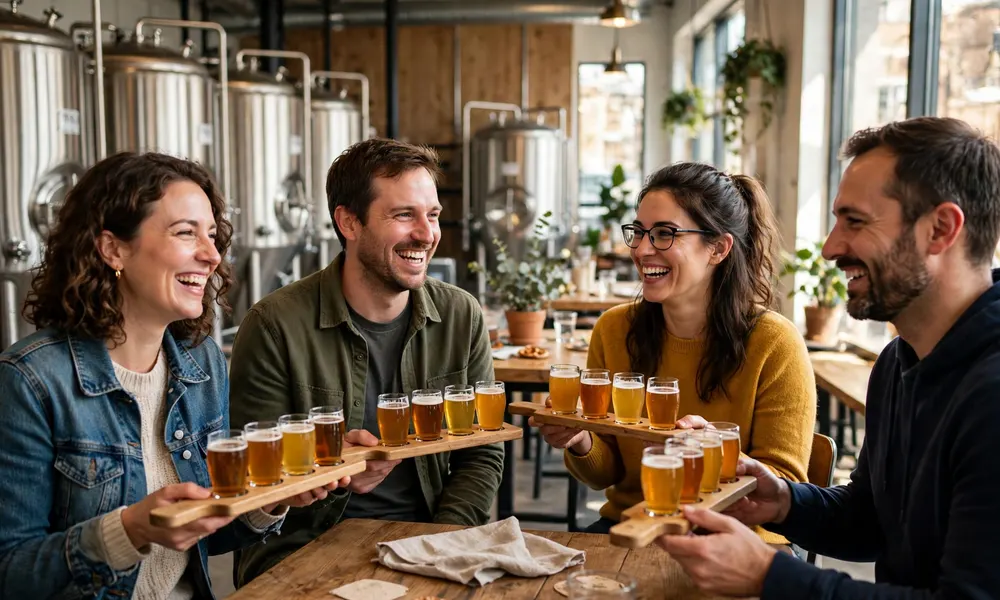
A craft beer tour startup sells an evening that guests remember long after the last glass is empty. A small group meets a guide outside a neighbourhood taproom, walks a short route between three or four independent breweries, compares tasting flights at each stop, and finishes the night with a beer-pairing snack and a story to tell at every corner. The best AI tools for craft beer tour startups in 2026 help a founder turn that crawl into a reliable business, covering bookings, taproom routes, tasting notes, guest messages, marketing, and money, without hiring a large team before the first tour has even sold out.
The first season of a craft beer tour company is unforgiving in quiet ways. There is no shopfront to catch passing trade, no second chance with a guest who waited at the wrong meeting point, and no way to fix a tasting once the group has already moved on to the next taproom. A route that is too long leaves guests tired before the final flight. A route that is too short leaves them feeling short-changed. A tour that ignores a guest who does not drink alcohol, a gluten allergy, a taproom that closes early, or a brewery that has run out of a featured beer can turn a happy group into a serious problem in minutes. Founders who guess at demand, price by instinct, or run a crawl they have never walked with real pours usually discover the mistake in their reviews, after the money is spent.
AI tools do not remove that risk, but they make it visible earlier, when it is still cheap to fix. They help a founder test demand in a neighbourhood, compare tasting fees across taprooms, write clear route notes, keep brewery partners paid on time, and reply to guests before a rival tour takes the booking. This guide compares nine tools that fit a craft beer tour business specifically, judged on what they do for a founder with a small team and a tight budget, how much they cost to start, and where they fit in the first ninety days. Use it to build a lean stack, spend only on tools that earn their cost back, and open with a crawl guests want to recommend to friends.
Key takeaways
- Start with one tool for bookings, one for taproom routes, and one for guest messages, and add more only when a clear bottleneck appears in your launch plan.
- Walk the full crawl with real flights and real timing before you spend on branding, because a beautiful website for a tour nobody wants is the most expensive mistake a founder can make.
- Lock in taproom partners, tasting fees, flight sizes, and opening hours in writing before you sell a single seat, and share a clear sheet with every guide and driver before each departure.
- Keep groups small enough that everyone can hear the guide, taste at every stop, and ask questions about hops, malt, and styles without holding up the route.
- Measure every tool by the same standard: hours saved each week, extra seats sold, and whether guests actually notice better timing, clearer directions, and smoother service.
Best AI Tools for Craft Beer Tour Startups at a Glance
| Tool | Best for | Standout feature |
|---|---|---|
| Peek Pro | Online bookings and tasting add-ons | Live availability with flight upgrades and private crawls |
| Zaui | Tour operations and guest manifests | One manifest for guides, drivers, and taproom partners |
| Tourwriter | Crawl itineraries and route notes | Polished itineraries with tasting times and meeting points |
| OptimoRoute | Multi-stop taproom route planning | Route optimisation that saves driving time and fuel |
| HubSpot | Guest relationships and follow-up | AI-assisted lead scoring and follow-up reminders |
| Mailchimp | Email marketing to past guests | Simple automation that turns one-time guests into repeat bookers |
| Copy.ai | Tour pages, tasting notes, and ads | AI drafting tuned to a consistent brand voice |
| Yelp | Reviews and taproom reputation | Automated review requests sent after each crawl |
| QuickBooks Online | Invoicing and small-business accounting | Clean invoicing with expense tracking for guides and drivers |
Why Craft Beer Tours Need AI in 2026
A craft beer tour company sells a guided evening built around beer, transport, and timing, and that simple fact shapes every tool choice. Unlike a software startup, you cannot fix a bad tasting with an update, and unlike a restaurant, your customers all arrive at the same meeting point at the same time and expect flights that are poured, a driver who knows the roads, and a guide who can talk about hops, malt, and styles without reading from a card. The founder needs tools that handle the business before the first tour, the creative work of building the crawl, and the daily rhythm of seats once guests start booking. A tool that only helps with one of those three jobs is a luxury; a tool that helps with two is a genuine asset.
The booking and operations side has much in common with other guided drinks experiences, and the lessons in the AI tools for brewery tour startups show how route-based businesses handle manifests, meeting points, and seasonal demand. A craft beer tour founder can borrow that discipline without copying the single-brewery model, because the differences matter. A brewery tour worries about one production floor, one tasting room, and one host; a craft beer tour founder worries about four taprooms in one evening, four tasting fees, four opening hours, beer-pairing stops, and partners who may be busy serving their own Friday customers when the group arrives. The crawl is a moving evening, not a visit to one place.
There is also a useful contrast with the spirits world. The AI tools for distillery tour startups cover still rooms, tasting fees, and transport licences, which is a different business from moving guests between taprooms. A tour founder does not need to know how to brew beer; the founder needs to know how to sell seats, keep a crawl on time, and make every taproom on the route glad the group came. Keeping that boundary clear stops a founder from buying production software when what is actually needed is a booking system and a good itinerary.
The 9 Best AI Tools for Craft Beer Tour Startups in 2026
The tools below are ordered the way a founder would actually adopt them: bookings first, then operations and routes, then the guest relationship, marketing, and money. Each one solves a specific problem inside a craft beer tour business, and each one works well alongside the others.
Peek Pro for Online Bookings and Tasting Add-Ons
Peek Pro is built for tour and activity operators, which shows in the details that matter on a craft beer crawl. Guests see live availability, pick a departure time, choose add-ons such as a premium tasting flight, a beer-pairing snack, or a private group option, and pay in the same flow. The system sends confirmations and reminders automatically, so the founder is not copying names from an inbox into a spreadsheet the night before a tour.
The part that matters most for a craft beer tour is capacity control. A crawl has hard limits: the van seats twelve, a taproom can host eighteen at the bar, the last tasting closes at nine. Peek Pro enforces those limits in real time, so two guests can never book the last two seats at the same moment. That single feature prevents the awkward phone call no founder wants to make, and it protects the relationship with each taproom, which will not forgive a group that arrives larger than agreed.
Peek Pro also handles the small jobs that pile up around bookings. Waivers can be collected at checkout, dietary and non-drinking notes can be captured on the booking form, and guides can see the day’s manifest on a phone. Reporting is straightforward, with clear views of which departure times sell out and which ones sit empty. There are trade-offs: Peek Pro is a booking platform first, so it does not try to be a full marketing suite or a route planner. Pricing is built around booking volume, which is fair for a growing company but worth checking against a quiet first season. For a craft beer tour startup that wants bookings to run themselves, though, Peek Pro is the most dependable starting point.
Best for: tour operators who want reliable online bookings with live availability. Standout feature: real-time availability with flight upgrades and automated confirmations.
Zaui for Tour Operations and Guest Manifests
Zaui is an operations platform for tour companies, and its strength is the way it keeps a moving crawl organised. A craft beer tour is not one venue: it is four taprooms, a driver, a guide, a meeting point, and a group that changes at every stop. Zaui gives the team one manifest for the whole evening, with guest names, add-ons, dietary notes, and payment status in a single view that a guide can check from a phone.
The manifest discipline matters because a beer crawl has more moving parts than a single-venue visit. One guest may have paid for the premium flight, another may be a non-drinker who needs a soft-drink pairing, and a third may have booked a private crawl for a birthday. Zaui keeps those details attached to the right person, so the guide does not have to remember them or ask the group to repeat them at every taproom. Check-in is quick, headcounts stay honest, and nobody is left guessing who has paid.
Zaui also supports the partnerships a crawl depends on. Agent logins let hotels and local partners book seats on the company’s behalf, with commission tracked automatically, and vouchers and gift bookings are built in, which suits a product people often buy as a present. The platform is broad rather than deep, so a founder who wants advanced marketing automation will still need a second tool. Done well, Zaui becomes the single source of truth for who is on which crawl, which is exactly what a growing craft beer tour company needs.
Best for: operators who run multi-stop crawls and need one accurate manifest. Standout feature: a single manifest for guides, drivers, and taproom partners.
Tourwriter for Crawl Itineraries and Route Notes
Tourwriter is an itinerary builder, and it fits a craft beer tour because the product is a route, not a room. A founder can build a standard crawl once, with each taproom, its tasting flight, its pairing snack, its meeting point, and its timing, then reuse it for every departure and adjust it when a taproom changes its hours or a beer sells out. The result is a polished itinerary that guests, guides, and drivers can all read without a phone call.
The value shows up in the details guests actually notice. A good itinerary tells them where to meet, how long each stop lasts, what they will taste, and what happens if the weather turns. Tourwriter makes those notes easy to write, update, and share, so the guide is not improvising the order of the stops or guessing which beer comes next. That consistency is what turns a pleasant evening into a tour guests recommend, because every departure feels planned rather than improvised.
Tourwriter is not a booking tool, and it does not try to be one. Its value shows up when it sits beside a booking platform, turning a list of confirmed guests into a smooth evening on the road. Founders who run crawls across a spread-out beer district will feel the benefit fastest, and the discipline of writing the route down in advance makes every other part of the day calmer. For a startup that wants its crawls to feel professional from the first departure, Tourwriter is a quiet but powerful choice.
Best for: founders who want polished, repeatable crawl itineraries. Standout feature: itineraries with tasting times, meeting points, and route notes.
OptimoRoute for Multi-Stop Taproom Route Planning
A craft beer tour lives or dies on its route. Four taprooms, one pickup point, a pairing stop, and a drop-off sound simple on paper, but the order matters enormously. A bad sequence means an extra hour in traffic, a rushed flight, and guests who arrive at the last taproom already tired. OptimoRoute exists to solve exactly this problem, and it is the most overlooked tool in this list.
The software takes the day’s stops and works out the most efficient order, accounting for drive time, taproom opening hours, and how long each tasting should last. A founder can build a standard route for each crawl, then adjust it when a taproom changes its hours or a road closes. The driver gets turn-by-turn directions, and the office can see where the group is if a guest calls to ask. That visibility matters on a Friday evening, when a delayed group can miss a tasting window entirely.
Route planning also protects the margin. Fuel, driver hours, and vehicle wear are real costs, and a tighter route trims all three. Over a season of daily departures, saving twenty minutes a day adds up to hours of driver time and a noticeable fuel saving. Guests notice the difference too, because they spend their time tasting beer rather than watching the inside of a van. OptimoRoute is not a booking tool, and it does not try to be one. Its value shows up when it sits beside a booking platform, turning a list of confirmed guests into a smooth crawl.
Best for: tour companies running multi-stop crawls across a wide beer district. Standout feature: route optimisation that saves driving time, fuel, and guest patience.
HubSpot for Guest Relationships and Follow-Up
Most craft beer tour startups do not lose guests because the beer was bad. They lose them because nobody followed up. A guest who enjoyed a Friday crawl is the easiest person in the world to sell a Saturday crawl to, but only if the company remembers them, knows which beers they liked, and reaches out at the right moment. HubSpot gives a small team a proper guest record without the complexity of an enterprise system.
The AI-assisted features do the quiet work: lead scoring that shows which enquiries are most likely to book, follow-up reminders that stop a warm lead from going cold, and a shared inbox so two guides never reply to the same guest twice. A founder can see every conversation with a guest in one place, from the first question about meeting points to the review they left after the tour. That history makes the next message personal instead of generic, which matters when the product is a night out rather than a commodity.
HubSpot is a larger platform than a startup strictly needs in month one, and the free tier covers the basics while the paid tiers add automation that a growing company will want later. The sensible approach is to start small, keep the guest record clean, and add automation only when the volume justifies it. For a craft beer tour founder who wants repeat bookings rather than one-off sales, HubSpot is the relationship tool that pays for itself.
Best for: founders who want repeat bookings from happy guests. Standout feature: AI-assisted lead scoring and follow-up reminders.
Mailchimp for Email Marketing to Past Guests
Mailchimp is the simplest way for a craft beer tour startup to stay in touch with people who have already tasted the product. A guest list built from real bookings is far more valuable than a bought list, and Mailchimp turns that list into repeat sales: a new seasonal crawl, a limited-edition flight night, a gift voucher before the holidays, or a private crawl offer for a birthday group. The automation does the sending, so the founder is not writing the same email from scratch every week.
The templates are easy to use, and the AI-assisted subject lines and send-time suggestions help a small team look professional without hiring a marketer. A founder can segment the list by what guests actually did: people who booked a Friday crawl, people who bought the premium flight, people who left a five-star review. Each segment gets a message that fits, instead of one generic blast that fits nobody. That targeting is what keeps open rates high and unsubscribes low.
Mailchimp is not a booking tool, and it should not be treated as one. Its job is to bring past guests back, and it does that job well at a price a startup can afford. The free tier covers the first few hundred contacts, and the paid plans grow with the list. Paired with a booking platform and a review tool, Mailchimp closes the loop: a happy guest becomes a repeat guest, and a repeat guest becomes the most reliable marketing a crawl company will ever have.
Best for: small teams who want simple, automated email to past guests. Standout feature: automation that turns one-time guests into repeat bookers.
Copy.ai for Tour Pages, Tasting Notes, and Ads
A craft beer tour startup needs a surprising amount of writing: tour pages, tasting notes, route descriptions, social posts, ads, and answers to the same guest questions every day. Copy.ai drafts that copy quickly, in a consistent brand voice, so a founder who is also the guide, the driver, and the accountant does not spend every evening staring at a blank page. The drafts are a starting point, not a finished product, and a founder who knows the beers should always edit them before they go live.
The tasting-note workflow is where Copy.ai earns its place on a beer crawl. A guide can turn a short list of hops, malt, and flavours into a clear, readable note for each flight, written in plain language that a casual drinker understands. The same tool can draft a route description that sells the evening, a social post that shows the taprooms, and an ad that targets people searching for a beer night out. Used well, it keeps the marketing consistent across every channel, which is hard to do when one person is writing everything.
There are limits. Copy.ai does not know your taprooms, your beers, or your guests, so its drafts can sound generic if they are published without editing. A founder should treat it as a fast first draft and a cure for blank-page delay, not as a replacement for real knowledge of craft beer. For a startup that needs a lot of good copy quickly, though, Copy.ai is the fastest way to sound professional from the first tour page.
Best for: founders who need fast, consistent copy for tour pages and tasting notes. Standout feature: AI drafting tuned to a consistent brand voice.
Yelp for Reviews and Taproom Reputation
Reviews decide the next booking for a craft beer tour, because guests choose a crawl the way they choose a restaurant: by what strangers said about it last week. Yelp is where many of those strangers look first, especially travellers who are already searching for beer, taprooms, and things to do in a city. A strong Yelp presence turns a happy guest into public proof while the experience is still fresh, and that proof sells seats a new website alone cannot.
The practical workflow is simple: after each crawl, the company asks guests to share their evening, and Yelp collects those reviews in one place where future guests can find them. The founder can reply to reviews, thank happy guests, and fix a problem before it becomes a pattern. A single thoughtful reply to a disappointed guest can matter more than ten five-star reviews, because it shows future guests that the company listens. Over a season, those reviews become the most trusted marketing the company has.
Yelp is not a booking tool, and it will not fill seats on its own. Its value is reputation, and reputation compounds: more reviews bring more bookings, which bring more reviews. A founder should never pay for reviews or pressure guests, because a fake review is easy to spot and hard to undo. For a craft beer tour startup that delivers a genuinely good evening, though, Yelp is the simplest way to let happy guests do the selling.
Best for: tour companies that want reviews where travellers already search. Standout feature: automated review requests sent after each crawl.
QuickBooks Online for Invoicing and Small-Business Accounting
Money is the least exciting part of a craft beer tour, and the part that causes the most trouble when it is ignored. Tasting fees, driver pay, guide pay, fuel, insurance, and taproom commissions all move at different speeds, and a founder who tracks them in a spreadsheet will eventually lose one. QuickBooks Online gives a small tour company clean invoicing and expense tracking without the complexity of a full finance department.
The daily workflow is practical: invoices for private crawls and corporate groups, expense records for fuel and tasting fees, and bank matching that keeps the books honest. A founder can see which crawls make money and which ones only look busy, because the costs are attached to the right departure instead of lumped together at the end of the month. That clarity makes pricing decisions easier, from whether a premium flight is worth its cost to whether a quiet Tuesday departure should be cut.
QuickBooks Online is a larger system than a startup strictly needs in week one, and the monthly price is worth weighing against a quiet first season. The sensible approach is to start with the simplest plan, keep every receipt, and let the reporting grow with the business. For a craft beer tour founder who wants to know, with confidence, whether the crawl is actually profitable, QuickBooks Online is the money tool that keeps the answer honest.
Best for: founders who want clean invoicing and honest profit figures. Standout feature: clean invoicing with expense tracking for guides and drivers.
Craft Beer Tour Launch Checklist
- Walk the full crawl with real flights and real timing, and time every stop, before you sell a single seat.
- Confirm every taproom partner, tasting fee, flight size, and opening hour in writing, and share the sheet with your guide and driver.
- Set group size, meeting point, and non-drinker options in the booking form, so no guest arrives surprised.
- Test your booking flow, reminders, and manifest on a phone, because that is where your guide will use them.
- Ask every guest for a review on the night, while the last tasting is still fresh in their mind.
- Review your costs after the first ten crawls, and cut or reprice any departure that does not cover its tasting fees and driver time.
Frequently Asked Questions
How much does it cost to launch a craft beer tour startup?
Most founders launch with a booking tool, a route tool, and an email tool, which together cost far less than one extra hire. The larger costs are tasting fees, insurance, transport, and guide pay, so test demand with a small number of departures before you commit to a full season. A lean stack that costs a few hundred dollars a month is enough to sell seats, run crawls, and learn what guests actually want.
Do I need a booking tool before my first tour?
Yes, because a craft beer crawl has hard capacity limits at every taproom. A booking tool stops double-booking, collects waivers and dietary notes, and sends reminders that cut no-shows. Without it, the founder spends the night before each tour copying names from an inbox into a spreadsheet, which is exactly when mistakes happen.
How many taprooms should a craft beer crawl visit?
Three or four taprooms is the right range for most crawls. Fewer than three feels short for the price, and more than four leaves guests tired and rushed, with too little time to taste properly at each stop. Walk the route yourself, time every flight, and leave room for a pairing snack and a short walk between stops.
What makes a craft beer tour different from a brewery tour?
A brewery tour visits one brewery and focuses on how beer is made, while a craft beer tour is a multi-stop crawl across several independent taprooms, built around tasting flights, beer-pairing stops, and the character of a beer district. The tools overlap, but the crawl needs stronger route planning, more partner coordination, and a manifest that works across four venues in one evening.
How do I get my first reviews?
Ask guests on the night, while the experience is still fresh, and make it easy with a short link or QR code. Reply to every review, thank happy guests, and fix problems quickly when they appear. A small number of honest, detailed reviews sells more seats than a large number of vague ones, so ask guests to mention a beer they loved and a stop they would return to.
Which tool should I buy first?
Buy the booking tool first, because it carries your calendar, payments, and guest details in one place. Add a route tool second, once you know your crawl, and add email and review tools third, once you have guests worth following up with. The AI tools for wine tour startups follow the same order, and that order works because it matches the way a tour business actually grows: sell seats first, then smooth the route, then bring guests back.
The Bottom Line
A craft beer tour startup does not need nine tools on day one. It needs one booking tool that stops double-booking, one route tool that keeps the crawl on time, and one way to bring happy guests back. Start with Peek Pro, OptimoRoute, and Mailchimp, walk the crawl with real flights, and add the rest only when a clear bottleneck appears. The beers will sell the evening, but the tools will decide whether the business behind it survives the first season.

Keep what speaks to you.
Leave room for your own perspective.