
Harvested corn comes off the field wet, and wet corn does not wait. At twenty-two to twenty-five per cent moisture, a trailer load of maize will heat, mould and spoil within days if nothing is done with it, and a farmer with a thousand tonnes in the yard cannot afford to watch it go. That is the problem a corn kiln solves, and it is the reason a corn kiln installation startup exists at all. The kiln is a heated chamber: a fire chamber burns fuel, hot air is pushed up through a perforated drying floor, and the grain sitting on that floor gives up its moisture until it reaches a safe storage level, usually around fourteen to fifteen per cent. It is simple physics, but it is not a simple build.
A startup that installs corn kilns is selling heat, draught and control, not just steel and brick. The fire chamber has to be sized to the batch, the flue has to draw properly, the drying floor has to let air through evenly so that no corner of the load stays wet while another scorches, and the whole thing has to be safe enough that a tired operator cannot set a barn full of grain alight at two in the morning. The margins are tight, the harvest window is short, and the customers are farmers who judge a kiln by one thing only: whether the grain that comes out of it stores cleanly through the winter. A kiln that dries unevenly is worse than no kiln at all, because it gives the farmer false confidence.
That is where the AI tools in this guide earn their keep. None of them dries a single kernel on its own. What they do is take the guesswork out of the parts of the job where guesswork is expensive: sizing the fire chamber, drawing the drying curve, proving the moisture, pricing the build before the builder does, and keeping a paper trail that proves the kiln was commissioned properly. The nine tools below were picked for a corn kiln installation startup specifically, not for a general farm business, and each one is judged on the heated grain-drying build: fire chamber, perforated drying floor, heat curves, grain moisture and fire risk. If a tool cannot help with one of those five things, it did not make the list.
Key takeaways
- A corn kiln is a heated grain-drying chamber, not a store: fire chamber, flue, perforated drying floor and moisture control are the build.
- Buy MaizeHeat Planner AI first, because the drying curve decides the fire chamber size, the floor area and the fuel bill before anything is built.
- Moisture is the whole job: harvested corn at twenty-two per cent or more must come down to around fourteen to fifteen per cent to store safely.
- Fire risk is the startup’s biggest liability, so hot-spot monitoring and a written commissioning record belong on every single job.
- Price the kiln with CornDry Estimator AI before the builder prices it for you, and keep the quote, the survey and the handover in one ledger.
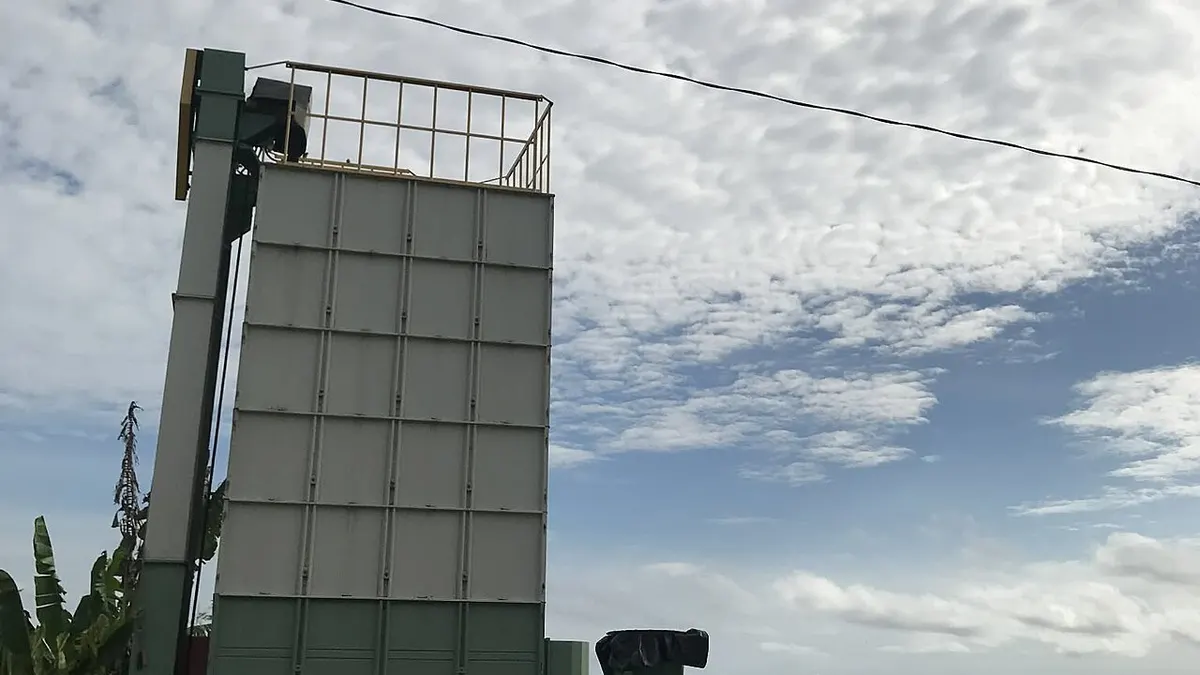
The 9 best AI tools for a corn kiln installation startup at a glance
| Tool | Best for | Buy it |
|---|---|---|
| MaizeHeat Planner AI | Drying curves and heat schedules for harvested maize | First |
| CobDry Moisture AI | Grain moisture sensing and target moisture control | First month |
| FireChamber Draft AI | Fire chamber, flue and draught design | Before the first build |
| PerforatedFloor Planner AI | Perforated drying floor layout and airflow | Before the first build |
| GrainFlow Intake AI | Corn intake, cleaning and conveying layout | With the first quote |
| KernelTemp Guard AI | Hot-spot and fire-risk monitoring in the drying chamber | Before commissioning |
| CornDry Estimator AI | Install costing, takeoffs and quote comparison | First month |
| HarvestYard Survey AI | Site survey and progress proof from photos | First month |
| KernelLedger AI | Quoting, invoicing and grain buyer payments | When work starts |
What a corn kiln installation startup actually installs
A corn kiln is a building with a furnace in it, and the furnace is the point. The fire chamber burns wood, oil, gas or biomass, and the heat it makes is carried by fans through ducting to the drying floor, where the grain sits in a deep bed on a perforated steel plate. Hot air rises through the perforations, picks up moisture from the kernels, and leaves through vents in the roof. The operator watches the temperature of the air going in and the moisture of the grain coming out, and the drying curve is the plan that links the two: how hot, for how long, and when to stop. Get the curve right and the grain comes out evenly dried at fourteen to fifteen per cent. Get it wrong and the top of the bed is still wet while the bottom is scorched, or the whole load is dried so hard that the kernels crack and lose value.
That heated process is what separates a corn kiln from the building most people confuse it with. A corn crib is a slatted store that dries maize on the cob with nothing but moving air, and its walls are spaced slats precisely so that the wind can do the work. A kiln does the opposite: it closes the building up, adds a fire, and forces hot air through the grain on purpose. The two buildings serve the same harvest, but they are different trades, different customers and different risks. A crib installer worries about slat gaps and roof overhangs. A kiln installer worries about combustion, draught, dust and fire, and that difference runs through every tool choice in this guide.
The other end of the job matters just as much. Once the grain is dried it has to go somewhere, and most farms send it to a store or a grain silo that holds it until it is sold or milled. A kiln that cannot feed its dried grain cleanly into the store is a kiln that creates a second job for the farmer, so intake, conveying and discharge belong in the design from the start, not as an afterthought. The same goes for dust: drying grain throws off fine dust, and fine dust near a fire chamber is a hazard that has to be designed out with extraction, separation and housekeeping, not wished away. A good kiln startup sells a system — fire, floor, fans, handling and safety — and the tools below are chosen to help a small team design, price and prove that system without a big office behind them. The same heat-and-airflow thinking shows up in other drying trades, and a crew that understands a corn kiln will recognise the drying schedules of a timber kiln, where boards are brought down to a target moisture instead of grain.
The 9 best AI tools for a corn kiln installation startup
1. MaizeHeat Planner AI: The best tool for drying curves and heat schedules
Every corn kiln job starts with the same question: how much heat, for how long, and at what temperature. MaizeHeat Planner AI answers it by building a drying curve for the specific load in front of you. You feed it the incoming moisture, the target moisture, the batch size and the fuel you plan to burn, and it returns a schedule: inlet air temperature by hour, expected drying rate, and the point at which the batch should be turned or rested. That curve is the document the rest of the build hangs on, because the fire chamber size, the fan capacity and the drying floor area all follow from it.
The reason this is the first tool to buy is that it stops the most expensive mistake a new startup can make, which is building a kiln around a guess. A fire chamber that is too small cannot hold its temperature on a cold, damp harvest night, and the drying stalls while the queue of trailers grows. A chamber that is too big wastes fuel and scorches the bottom of the bed, and the farmer pays for that in cracked kernels and lost weight. MaizeHeat Planner AI lets a two-person startup show a farmer a written curve before a single brick is ordered, and that written curve is worth more than any sales pitch. It also keeps a record of every curve the startup has run, so the second season starts from real data instead of from scratch.
It is worth saying what this tool is not. It is not a malt kiln planner, and it does not know anything about germinating barley or the kilning schedules a maltster uses. Malt is germinated grain dried for flavour and colour, and its curves are a different craft entirely. MaizeHeat Planner AI is built for harvested corn and maize going from field-wet to storage-dry, and that narrow focus is exactly why it is useful: it does one job, and it does it with the numbers a kiln installer actually needs.
2. CobDry Moisture AI: The best tool for grain moisture sensing and target moisture control
Moisture is the number the whole job is judged by, and CobDry Moisture AI is the tool that keeps it honest. It takes readings from handheld probes and fixed sensors in the drying chamber and turns them into a live picture of the bed: which zones are drying, which are lagging, and when the batch has actually reached its target. A single probe in the middle of a bed tells you almost nothing, because a deep bed dries unevenly by nature. CobDry Moisture AI maps the spread, so the operator can see the wet corner before it becomes a mould problem.
For a startup, the value is proof. A farmer who has paid for a kiln wants to know the grain is at fourteen to fifteen per cent, not that someone thinks it is. CobDry Moisture AI logs every reading against the batch, so the handover file for a job shows the moisture curve from intake to discharge, with the target hit and the time it took. That record settles arguments, supports the warranty, and gives the startup a baseline it can compare against next season. It also catches the quiet failures: a sensor that has drifted, a zone that never dries, a batch that was loaded too deep for the floor beneath it.
3. FireChamber Draft AI: The best tool for fire chamber, flue and draught design
The fire chamber is the most dangerous part of a corn kiln and the part where a design error costs the most, so FireChamber Draft AI is the tool that sizes it. It models the chamber volume against the fuel type, the burner rating and the air volume the fans will move, and it designs the flue and the draught path so that combustion gases go up the chimney and heated air goes into the drying floor, never the other way around. A flue that draws poorly will spill smoke into the chamber and taint the grain; a chamber that starves for air will burn dirty and waste fuel. Both failures are invisible until the grain is ruined or the fire alarm goes off.
What makes this tool worth its price is that it forces the startup to design the fire side and the drying side as one system. Too many first-time kiln builders treat the burner as a bought-in box and the chamber as a brick shell, and then wonder why the air temperature swings by twenty degrees every time the wind changes. FireChamber Draft AI shows the interaction: how the draught changes with flue height, how the chamber behaves when the fans ramp up, and what happens on a still, damp evening when the chimney barely draws at all. It also produces the drawings and the calculations a building control officer will ask for, which is the difference between a permitted installation and a long argument.
4. PerforatedFloor Planner AI: The best tool for perforated drying floor layout and airflow
The perforated drying floor is where the hot air meets the grain, and its layout decides whether the bed dries evenly or not. PerforatedFloor Planner AI designs the floor: the perforation pattern, the open area, the plenum depth beneath it, and the fan positions that push air up through it. The aim is even air across the whole floor, because a floor with dead corners produces a bed with wet patches, and wet patches produce mould. The tool models the airflow before the steel is cut, so the startup can see the dead zones on a screen instead of discovering them in a spoiled batch.
This is a tool that pays for itself on the first job by preventing rework. A drying floor is expensive to change once it is welded in, and a floor that has to be cut open and re-perforated will eat the profit on the whole installation. PerforatedFloor Planner AI also handles the practical details that a drawing alone misses: how the floor sections lift out for cleaning, where the grain will bridge and hang up, and how deep the bed can be loaded before the fans cannot push air through it. Those are the details a farmer notices on the second load, and they are the details that decide whether the farmer recommends the startup to a neighbour.
5. GrainFlow Intake AI: The best tool for corn intake, cleaning and conveying layout
A kiln is only as good as its intake. GrainFlow Intake AI plans the path the corn takes from the trailer to the drying floor and from the floor to the store: the intake pit, the cleaner that takes out leaves and broken kernels, the elevators and augers that move the grain, and the discharge that feeds the store without spilling half the load on the yard. A bad intake layout means trailers queueing, grain spilling, and an operator spending the harvest walking between machines that were never meant to work together.
For a startup, the value is in the quote. Intake and conveying are the parts of a kiln job where costs hide, because every bend, every extra metre of auger and every undersized elevator adds money and adds a failure point. GrainFlow Intake AI lays the route out in three dimensions, prices the kit, and shows the farmer exactly what is included, so the quote is a system rather than a list of boxes. It also flags the bottlenecks: an intake pit too small for the trailers the farm actually runs, a cleaner that cannot keep up with the elevator feeding it, a discharge height that does not clear the store door.
6. KernelTemp Guard AI: The best tool for hot-spot and fire-risk monitoring in the drying chamber
Grain dust and heat are a dangerous combination, and KernelTemp Guard AI is the tool that watches for the moment they meet. It takes temperature readings from sensors across the drying chamber and the plenum, and it flags the hot spots: a zone running hotter than the curve allows, a sensor climbing when the fans are off, a pocket of grain that is heating on its own. Spontaneous heating in a deep bed of damp grain is a real risk, and it gives little warning. A temperature that climbs a few degrees an hour, overnight, is the warning, and this tool is built to catch it.
The tool’s job is not just to sound an alarm. It tells the operator what to do about the reading: which fan to run, whether to turn the batch, whether to discharge the hot zone before it spreads. That guidance matters because a panicked operator with a hot kiln is a dangerous operator, and a startup that leaves a farmer with a sensor and no instructions has not finished the job. KernelTemp Guard AI also logs every alert and every response, so the commissioning file shows that the safety system was tested, that it works, and that the operator was trained on it.
7. CornDry Estimator AI: The best tool for install costing, takeoffs and quote comparison
Most kiln startups lose money on their first jobs, not because the work is hard but because the pricing is wrong. CornDry Estimator AI is the tool that fixes that. It takes the design — chamber size, floor area, fan and burner ratings, ducting, handling kit and controls — and turns it into a priced takeoff: materials, bought-in equipment, labour days and a contingency that reflects the real risks of the job. It compares supplier quotes line by line, so the startup can see which supplier is cheap on steel and expensive on fans, instead of comparing two totals that hide the difference.
The discipline this tool brings is the difference between a business and a hobby. A kiln job has a long tail of small costs — fixings, ducting bends, control wiring, commissioning days — and each one is small enough to forget and large enough, added together, to erase the margin. CornDry Estimator AI keeps the list honest, and it keeps the versions: when the farmer asks for a bigger floor or a different fuel, the tool reprices the job in minutes instead of the startup guessing at the difference over the phone. That speed matters in harvest season, when a farmer who waits a week for a revised quote will have found someone else.
8. HarvestYard Survey AI: The best tool for site survey and progress proof from photos
A corn kiln has to fit the yard it is built in, and HarvestYard Survey AI is the tool that proves the fit before the build starts. It takes phone photos and measurements from the site and builds a survey: the yard levels, the trailer turning circle, the distance from the intake to the store, the overhead lines and the drainage falls. A kiln that cannot be reached by the farm’s trailers is a kiln that will not be used, and a kiln built on a yard that floods in October is a kiln that will be blamed for the flood. The survey catches both before the ground is broken.
The second half of the tool’s job is progress proof. HarvestYard Survey AI compares site photos against the design as the build goes on, so the startup can show the farmer — and the building control officer — that the chamber, the floor and the flue were built as drawn. That record is worth its weight when a dispute arises, and disputes do arise on farm builds, usually about something small that was changed on site and never written down. A photo record with dates and measurements settles those arguments in minutes.
9. KernelLedger AI: The best tool for quoting, invoicing and grain buyer payments
The last tool in the list is the one that gets the startup paid. KernelLedger AI handles the money side of the business: quotes that turn into invoices, invoices that turn into payments, deposits taken before the build starts and retention held until commissioning is signed off. A kiln installation is a large job for a farm, and it is usually paid in stages, which means the startup’s cash flow depends on paperwork being right and on time. A quote that is late, an invoice that is wrong, or a stage payment that is forgotten will hurt a small business more than a bad week on site.
What makes KernelLedger AI fit a kiln startup rather than any other trade is that it understands the job’s shape. It links each payment stage to a commissioning milestone — chamber built, floor in, first drying run complete, moisture target proven — so the farmer can see exactly what each payment is for, and the startup can show exactly what has been delivered. That link between money and milestones is what keeps a large farm job friendly, and it is what protects the startup if a job stalls halfway through.
Your first-build checklist
- Measure the incoming moisture on three separate loads before you promise a drying time, because one wet load does not describe a harvest.
- Size the fire chamber and the flue from the drying curve, not from the size of the shed, and get the draught calculation checked by a qualified heating engineer.
- Walk the drying floor layout for dead corners and cleaning access before the steel is cut, because a floor that cannot be cleaned will choke with dust.
- Fit hot-spot sensors across the chamber and the plenum, test the alarm with the farmer present, and write down what the operator should do when it sounds.
- Price the intake, the cleaner and the discharge as part of the kiln, not as extras, and agree the payment stages against commissioning milestones.
- Hand over a file with the drying curve, the moisture log, the survey photos and the signed commissioning record, and keep a copy yourself.
Frequently asked questions
What does a corn kiln installation startup actually install?
It installs a heated grain-drying system: a fire chamber and burner, a flue and draught path, fans and ducting, a perforated drying floor, grain intake and discharge handling, moisture and temperature sensors, and the controls that tie them together. The building that houses it may be new or an existing barn, but the kiln itself is the system, not the shed. A startup that sells only the chamber and leaves the handling and the controls to someone else has sold half a kiln.
How is a corn kiln different from a corn crib?
A corn kiln dries grain with heat, and a corn crib dries it with moving air. The crib is a slatted store whose spaced walls let the wind pass through ears of maize on the cob, and it needs no fire, no fans and no fuel. The kiln is a closed chamber where a fire heats air that is forced up through a perforated floor under a deep bed of grain. The kiln dries faster, dries shelled grain as well as cobs, and works in still, damp weather when a crib stalls, but it costs more to build, more to run, and carries a fire risk the crib does not have.
What moisture content should kiln-dried corn reach?
For safe storage, harvested corn should come down to around fourteen to fifteen per cent moisture. Above that, mould and heating in store become likely, and the risk rises fast with temperature. Below that, the grain is safe but the farmer has paid to dry away weight that could have been sold, and over-dried kernels can crack. The exact target depends on how long the grain will be stored and what it will be used for, but fourteen to fifteen per cent is the figure most farm stores work to, and it is the target the tools in this guide are set around.
How long does it take to dry a batch of corn in a kiln?
It depends on the incoming moisture, the batch size, the air temperature and the depth of the bed, and any startup that gives a single number without asking those questions is guessing. As a rough guide, a batch coming in at twenty-two per cent and drying to fifteen per cent in a well-sized kiln takes roughly a day, sometimes less with high-temperature air and a shallow bed, sometimes more with a deep bed or a cold, damp night. The drying curve from MaizeHeat Planner AI gives the honest answer for a specific load, and it is the number the startup should quote, not a figure remembered from someone else’s farm.
Do I need a licence or permit to install a corn kiln?
It depends on the site, the fuel and the size of the installation, and the answer is different in different places. Planning permission, building control approval, and rules on flues, fuel storage and dust extraction can all apply, and a kiln that burns waste wood or biomass may face extra controls. A startup should check the local rules before quoting, build the permit work into the price, and never promise a farmer that permission is a formality. The permit tools in this guide help with the paperwork, but they do not replace a conversation with the local authority.
Which tool should a corn kiln startup buy first?
MaizeHeat Planner AI, because the drying curve decides everything else. Once the curve is known, the fire chamber size, the floor area, the fan capacity and the fuel bill all follow, and the quote can be written with confidence. CobDry Moisture AI should follow in the first month, because moisture is the measurement the whole job is judged by. The rest of the list can be added as the first jobs land, but the curve and the moisture reading are the two things a startup should never be without.
The bottom line
A corn kiln installation startup sells a simple promise: grain that goes into the store dry, stays dry, and sells at full value. The nine tools in this guide exist to make that promise keepable by a small team — a drying curve that sizes the build, moisture readings that prove the result, a fire chamber that draws properly, a floor that dries evenly, handling that feeds the store cleanly, hot-spot monitoring that watches the fire risk, a price that holds, a survey that proves the fit, and a ledger that gets the business paid. Buy the curve first, prove the moisture on every job, and never treat the fire side of the build as someone else’s problem. Do that, and the kiln will do the rest.

Keep what speaks to you.
Leave room for your own perspective.


