
A carrot farm is a root farm before it is anything else. The crop you sell grows underground, out of sight, in a straight row of deep, stone-free loam — and everything a new carrot farm installation startup does, from the first seed tape to the last crate, is about giving that root a clean run downwards. The seed is tiny, the rows are long, the thinning is fiddly, and the lifting has to happen in a narrow window when the roots are long, straight and sweet. Get any one of those four jobs wrong and the crop still grows, but it grows forked, stunted or snapped, and a forked carrot is a carrot nobody buys.
That is why a carrot farm needs its own tools, not a borrowed set from the vegetable garden next door. A general garden planner can draw a bed, but it cannot set a seed-tape rate for a 400-metre row, call the thinning day for a variety that germinates slowly, or tell a lifting crew which field to start on when the rain is coming. The nine tools in this guide do those carrot jobs: they lay out the rows, place the seed, thin the seedlings to final spacing, keep the loam deep and stone-free, water for steady swelling, watch the foliage, measure the roots, call the lifting window, and pack the crop for the buyer. Each one earns its place by solving a problem that only a carrot grower has.
This guide compares the nine best AI tools for carrot farm installation startups in 2026, with honest notes on what each one does well, where it falls short, and which job to buy first if the budget only stretches to three tools. The prices are first-year starting points, the jobs are the ones a founder does in the first season, and every tool here was chosen because it fits the carrot-growing build — seed, rows, thinning, lifting — rather than a generic farm template.
Key takeaways
- A carrot farm lives or dies on four jobs: precision seeding in straight rows, thinning to final spacing, steady watering for even root swelling, and lifting in a narrow window.
- Buy CarrotTape AI first for seeding, CarrotThin AI second for thinning, and CarrotLift AI third for the harvest — those three cover the jobs where a mistake costs the whole crop.
- Stone-free, deep loam matters more than fertiliser: a stone the size of a pea can fork a root, so CarrotLoam AI earns its keep before a single seed goes in.
- Carrots need little and often when it comes to water; a dry spell followed by a soaking is what splits roots, so drip scheduling beats flood watering every time.
- Lift on root length and shoulder size, not on the calendar — CarrotGauge AI scores the roots in the ground so the crew starts on the field that is ready, not the one that is nearest.
How a carrot farm installation actually works
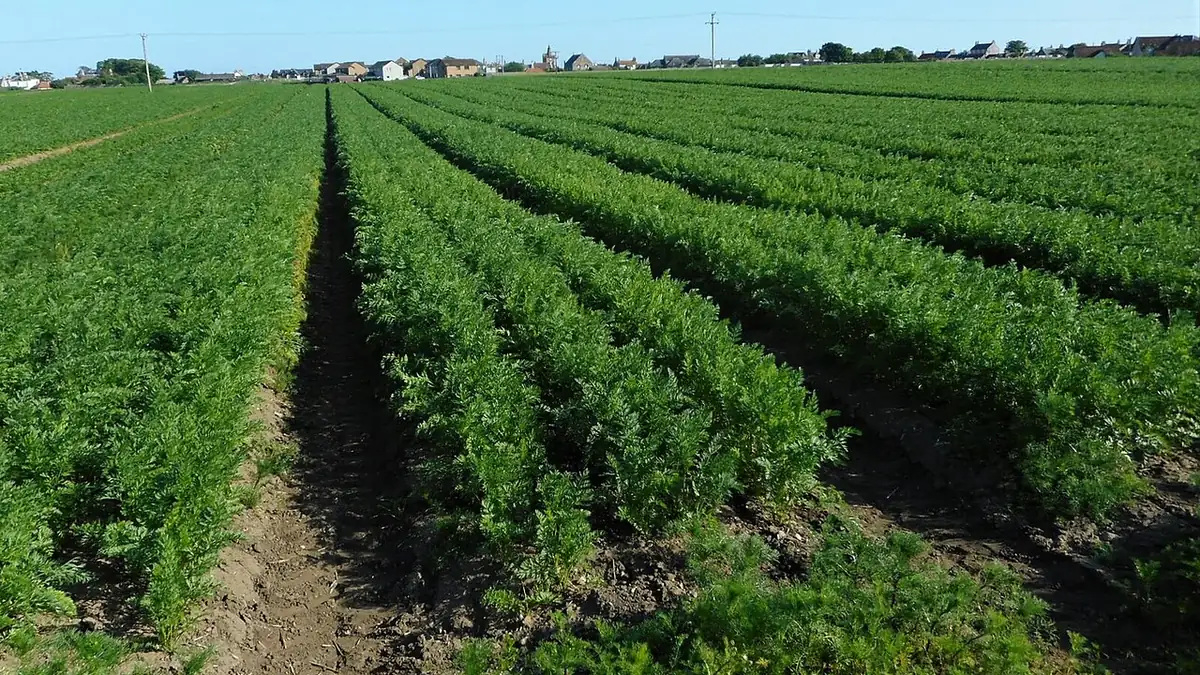
A carrot farm installation startup does not buy a farm and start sowing. It walks the ground first, tests the loam, clears the stones, and draws the rows before any seed is ordered. Carrots need soil that a root can push through without meeting resistance: deep, free-draining loam, worked fine at the top and stone-free for at least the length of the root. A field that grows good wheat can still grow forked carrots if the top 25 centimetres hide flints, so the first job is always the ground, and the first tool is always the one that reads it.
Then comes the seeding. Carrot seed is small, slow to germinate, and sown shallow, which makes it the most unforgiving seed on the farm: sow too thick and the thinning crew spends a fortune; sow too thin and the rows come up gappy and the yield never recovers. Most new growers sow on tape or with a precision drill, in rows set wide enough for a wheel hoe and narrow enough to pack the plants in. The rows run straight and long, because a straight row is what lets a machine thin, weed and lift without damaging the shoulders of the roots.
After germination, the work is thinning, watering and watching. Thinning takes a dense line of seedlings down to one plant every few centimetres, and the timing matters: thin too early and the remaining seedlings are fragile; thin too late and the roots have already started competing and forking. Watering must stay steady through the swelling weeks, because a dry spell followed by heavy rain is the classic way to split a root. And all the while the foliage is watched for the first signs of trouble, so a problem is caught while it is still a few plants and not a whole field.
At a glance: the nine tools compared
| Tool | Best for | First-season job |
|---|---|---|
| CarrotTape AI | Seed-tape laying and seed spacing in the row | Setting the seed rate so thinning stays affordable |
| CarrotRow AI | Row layout, bed width and wheel spacing | Drawing straight rows a machine can work |
| CarrotThin AI | Thinning seedlings to final spacing | Calling the thinning day for each variety |
| CarrotLoam AI | Deep stone-free loam and fork prevention | Finding the stones before the roots do |
| CarrotScout AI | Foliage and root-health scouting | Catching trouble while it is still a few plants |
| CarrotDrip AI | Drip watering for steady root swelling | Keeping moisture even through the swelling weeks |
| CarrotGauge AI | Root length, shoulder size and fork checks | Scoring roots in the ground before lifting |
| CarrotLift AI | Lifting window, crews and root damage | Starting the crew on the field that is ready |
| CarrotCrate AI | Washing, topping, grading and buyer sales | Turning a lifted crop into invoiced crates |
The nine best AI tools for a carrot farm installation startup
1. CarrotTape AI: the best tool for seed-tape laying and seed spacing in the row
CarrotTape AI starts where the crop starts: with the seed in the row. It takes the variety, the target root size and the field length, and works out the tape spacing and seed rate that puts one viable seed exactly where each root should grow. A founder types in the germination rate from the seed packet, and the tool adjusts the rate so a slow-germinating variety is sown a little thicker and a vigorous one is sown thinner, instead of sowing every variety at the same rate and paying for it later in thinning labour. For a startup sowing its first rows, that one calculation is worth more than any other feature on this list, because seed placed well is thinning avoided.
The tool also lays out the tape runs across the field, so the rows come out straight, evenly spaced and matched to the wheel hoe the startup already owns. It flags runs that are too long for even watering at the far end, and it keeps a record of which variety went into which row, so a gappy row in June can be traced back to a tape batch rather than blamed on the weather. Its weakness is that it assumes the seedbed is already fine and level; on a rough, cloddy seedbed the tape sits unevenly and the spacing the tool promised does not survive contact with the ground. Used on a well-prepared bed, though, it is the single most cost-saving tool a new carrot grower can buy, and it is the one to buy before any other tool on this list.
2. CarrotRow AI: the best tool for row layout, bed width and wheel spacing
CarrotRow AI draws the field. It takes the field boundary, the slope and the direction of the prevailing wind, and sets out the rows so water runs off the beds instead of pooling at the low end, and so the sun reaches the shoulders of the roots evenly through the day. It sets the bed width to match the tractor wheels and the row spacing to match the hoe, so the startup is not hand-weeding a gap its own machine cannot reach. A founder who has only ever gardened will find this the most eye-opening tool in the set, because it treats the field as a machine system rather than a patch of ground, and that is exactly how a commercial carrot row has to work.
The layout it produces also plans the headlands and the access tracks, which is the part most new growers forget until the first lifting day, when the trailer cannot turn without driving over the crop. CarrotRow AI keeps the turning circles clear and the tracks dry, and it staggers the sowing dates across the blocks so the rows do not all come ready on the same weekend. Its limit is that it works best on flat or gently sloping ground; on a steep or awkwardly shaped field the rows it draws need a human to walk them and adjust the corners. Even there, though, starting from its plan beats starting from a blank field, and the time it saves in the first week pays for the subscription before the seed is even in the ground.
3. CarrotThin AI: the best tool for thinning seedlings to final spacing
CarrotThin AI calls the thinning day, and the thinning day is the day the crop is made or lost. It watches germination counts and seedling height across each row, and tells the founder which rows are ready to thin, which need another few days, and which are so dense that they need a mechanical thinner rather than a hand crew. A row thinned at the right moment leaves single plants with room to swell; a row thinned a week late leaves roots that have already started pushing against each other, and no amount of later care straightens them out. The tool turns that judgement from a guess into a dated list, which is what a startup with a hired crew needs, because the crew has to be booked before the seedlings are ready, not after.
It also estimates the thinning labour per row, so the founder knows on Monday how many hands Tuesday needs, and it records the final spacing achieved, which is the number the yield forecast depends on. The honest weakness is that it cannot thin the crop itself: on a wet week when the crew cannot get onto the field, the tool can only say the window is closing, not hold it open. But knowing the window is closing is still far better than discovering it has closed, and a startup that thins on CarrotThin AI’s dates will lift straighter roots than one that thins when somebody happens to be free. The same thinning discipline that shapes a beetroot crop applies here too, and growers who have read about beetroot farm installation startups will recognise the shared logic: a root crop thinned well is a root crop half grown.
4. CarrotLoam AI: the best tool for deep stone-free loam and fork prevention
CarrotLoam AI reads the ground the root has to grow through. It maps the depth of the topsoil, the stone content at root depth, and the drainage across each block, and then tells the founder which blocks will grow long, straight roots and which will fork them. A stone the size of a pea, sitting at ten centimetres down, is enough to split a root into two legs, and a field can look perfect on the surface while hiding exactly that problem. The tool’s stone map is the cheapest insurance a carrot startup can buy, because it moves the sowing to the clean blocks and leaves the stony ones for a crop that does not mind stones.
Beyond the stone map, CarrotLoam AI plans the working of the seedbed: how deep to work, when the soil is dry enough to crumble rather than smear, and how much organic matter each block needs to hold moisture without going sticky. It warns against working wet ground, which is the fastest way to ruin a carrot bed, and it keeps a record of what was done to each block so the second season starts from knowledge rather than memory. Its weakness is that it needs good soil samples to work from; a founder who skips the sampling and lets the tool guess from satellite data alone will get a prettier map than the truth. Sample properly, though, and it is the tool that decides where the farm can actually grow carrots, which is a decision worth making before the seed order goes in.
5. CarrotScout AI: the best tool for foliage and root-health scouting
CarrotScout AI walks the rows with a camera and a checklist. It scores the foliage for colour, vigour and gaps, and it flags the early signs of the problems that cost carrot growers money: yellowing that points to a nutrient gap, wilting that points to a dry patch, and the first feeding signs of carrot fly, the pest that lays its eggs at the base of the plant while the damage stays hidden underground until lifting. The tool does not turn the farm into a pest-control operation — scouting is one job among nine here, and the crop is grown by seeding, thinning and watering, not by spraying — but it makes sure a problem is found while it is still a few plants at the edge of a field rather than a whole block at harvest.
The scouting reports feed straight into the other tools: a dry patch found by CarrotScout AI becomes a zone in CarrotDrip AI, and a weak block becomes a note in CarrotGauge AI to check the roots there first. That joining-up is the real value, because a standalone scouting app produces reports nobody reads, while a scouting tool that talks to the watering and lifting tools produces decisions. Its limit is that it reads the tops, not the roots: a root can be forking underground while the foliage looks perfect, which is why the tool is paired with CarrotGauge AI rather than trusted on its own. Used as the farm’s early-warning system, it earns its keep in the first season by catching the one problem that would otherwise have been found at lifting, when it is too late to fix.
6. CarrotDrip AI: the best tool for drip watering for steady root swelling
CarrotDrip AI keeps the water steady, and steady water is what makes a straight carrot. A carrot root swells week by week, and a dry spell followed by a heavy soaking makes the root split, while a field that dries out and stays dry makes it short and woody. The tool reads soil-moisture probes down the row and schedules short, regular drip runs that hold the moisture in the narrow band where roots swell evenly. It waters at night when the wind is low, it skips a run when rain is coming, and it waters each block differently, because the sandy end of a field dries days before the heavy end. That evenness is the whole job, and it is a job a timer cannot do.
The tool also keeps the water bill honest: it records every litre per block, so the founder knows what each row of carrots actually cost to water, and it flags a leaking line before the leak has watered a headland for a week. Its weakness is that it depends on the probes being placed in the root zone rather than in a wet patch by the track, and a misplaced probe will tell the tool the field is wet while the rows are dry. Placed well, though, it is the difference between a crop of even, unblemished roots and a crop of split ones, and a split root is a root that goes to stock feed instead of the shop. For a startup selling to buyers who grade on appearance, that difference is the profit.
7. CarrotGauge AI: the best tool for root length, shoulder size and fork checks
CarrotGauge AI measures the crop while it is still in the ground. It takes sample pulls from marked points in each block, records the root length, the shoulder width and the number of forked or split roots, and builds a picture of which field is ready, which needs another week, and which will never make the grade and should be lifted early for a different buyer. A founder who lifts on the calendar lifts the whole farm on the same day and hopes for the best; a founder who lifts on CarrotGauge AI’s scores lifts the best field first and lets the rest finish. That sequencing is worth real money, because the first field lifted is the one that makes the grade, and the last field lifted is the one that goes woody.
Its sample scores also predict the pack-out rate, so the founder can tell a buyer how many crates of first-grade carrots are coming instead of guessing. Sampling is only as good as the sample points, though: pull only from the best corner and the tool flatters the crop, so sample across the block, awkward corners included. It is the quietest tool here and the one experienced growers lean on most, because it replaces hope with a measurement.
8. CarrotLift AI: the best tool for lifting window, crews and root damage
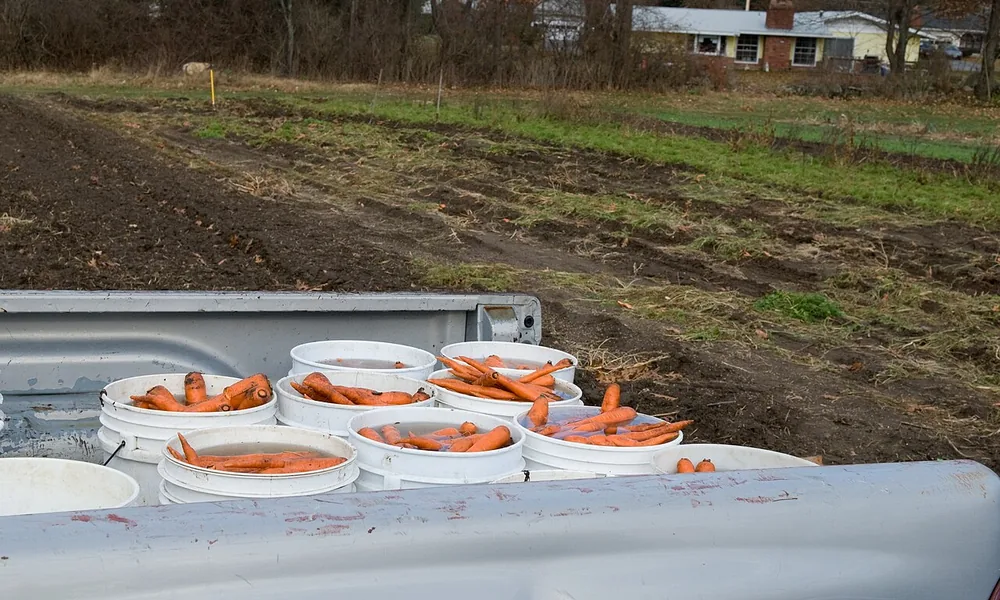
CarrotLift AI runs the harvest. It takes the scores from CarrotGauge AI, the weather forecast and the state of the ground, and sets the lifting order: which field first, how many hands, which machine, and what time to start so the roots come out of damp ground rather than baked ground. Lifting in dry, hard soil snaps roots; lifting in wet soil clogs the machine and bruises the shoulders, so the window is genuinely narrow, and the tool’s job is to put the crew in the right field on the right morning. It also plans the trailer movements, so the lifted roots are out of the sun and into the shade within the hour, because a carrot left in the sun goes limp before it reaches the shed.
The tool records the damage rate per field — snapped, bruised or forked roots as a share of the lift — which is the number that tells the founder whether the machine settings were right or whether the ground was too dry. That record is what improves the second season, because a lifting plan written from memory always blames the weather, while a lifting plan written from damage rates blames the settings, and settings can be changed. Its weakness is that it cannot conjure a crew: on a week when every grower in the district is lifting, the tool can only say which field matters most, not find the hands. Even so, a startup that lifts on CarrotLift AI’s order will bring in more first-grade roots from the same ground than one that lifts whichever field is nearest the gate. The lifting discipline is the closest parallel to the potato harvest, and growers who have read about potato farm installation startups will recognise the same trade-off: lift at the right moisture, or pay for it in damaged roots.
9. CarrotCrate AI: the best tool for washing, topping, grading and buyer sales
CarrotCrate AI turns a lifted crop into money. It takes the lifted roots from the field, plans the washing and topping line, grades the roots by length and shoulder size, and packs them into crates matched to each buyer’s specification, so the long straight roots go to the buyer who pays for length and the shorter ones go to the buyer who takes them for bunching. It keeps a record of every crate — which field it came from, which grade it is, and which buyer it went to — so a complaint about a crate can be traced back to a field rather than blamed on the whole farm. That traceability is what keeps a buyer coming back, because a buyer who can trust the label will order again.
The tool also prices the grades, raises the invoices, and shows which buyer pays best for which grade, so the second season can be planned around the buyer who pays rather than the variety that looks nicest in the catalogue. Its weakness is that it assumes the roots arriving at the shed are worth grading: a badly lifted crop still grades badly, and no software packs a snapped root into a first-grade crate. But a well-lifted crop, graded and invoiced through CarrotCrate AI, earns what it should. The deep-loam thinking behind a carrot farm has a close cousin in the parsnip field, and growers planning a root-crop rotation often study parsnip farm installation startups alongside their carrot plan, because the two long-rooted crops share the same ground rules even though they are grown as different crops.
What to buy first on a startup budget
If the budget only stretches to three tools, buy them in the order the crop needs them: CarrotTape AI first, because seed placed well saves more money than any other single decision; CarrotThin AI second, because thinning is the job where a missed week costs the whole crop; and CarrotLift AI third, because a well-grown crop lifted badly is a crop wasted. Add CarrotLoam AI before the second season, once the first season has shown which blocks grow straight roots and which fork them, and add CarrotDrip AI as soon as the first dry spell shows what uneven water does to a row. The remaining tools — CarrotRow AI, CarrotScout AI, CarrotGauge AI and CarrotCrate AI — can follow as the farm grows, and each one pays for itself fastest when it is bought for a job the founder is already doing by hand and already finding slow.
Your first-season checklist
- Test and map the loam before ordering seed, and keep the stony blocks for another crop until they are cleared.
- Order seed by variety and germination rate, and set the tape spacing from the target root size, not from last year’s habit.
- Draw the rows to match the tractor wheels and the hoe, with clear headlands for turning at lifting time.
- Book the thinning crew before the seedlings are ready, and thin on the date the crop calls for, not the date the crew happens to be free.
- Water little and often through the swelling weeks, and never let a dry spell end in a soaking.
- Sample roots across every block before lifting, and start the crew on the field that scores ready, not the one nearest the gate.
Frequently asked questions
How much does it cost to start a carrot farm installation business?
A small first season typically costs a few thousand pounds for the software in this guide, on top of the seed, tape, ground preparation and labour. CarrotTape AI, CarrotThin AI and CarrotLift AI together are the cheapest useful set, and most founders start there, adding the other tools as the acreage grows. The bigger costs are the ground preparation and the lifting crew, not the software, so budget the fieldwork first and buy the tools that protect it.
What is the first AI tool a new carrot farm installation startup should buy?
CarrotTape AI, because it sets the seed rate and the spacing that everything else depends on. Seed placed well keeps thinning affordable, keeps the rows even, and keeps the yield forecast honest. A founder who buys the lifting tool first and the seeding tool last has the order backwards: the crop is decided in the first week, and the harvest only reveals what the seeding decided.
How long does it take from sowing to lifting carrots?
Most varieties take around twelve to sixteen weeks from sowing to lifting, depending on the variety and the season, with early varieties ready sooner and maincrop varieties taking longer. The date on the packet is a guide, not a promise: lift when the roots have reached the length and shoulder size the buyer wants, and check them with sample pulls rather than trusting the calendar alone.
Why do my carrot roots fork or split?
Forking usually comes from stones or clods in the top 25 centimetres of soil, which force the young root to split around the obstacle, so deep stone-free loam is the main prevention. Splitting usually comes from uneven water — a dry spell followed by heavy rain or a soaking — which makes the root swell too fast for its own skin. Even moisture and a clean, fine seedbed prevent far more damage than any treatment applied afterwards.
Can AI tools really plan a carrot farm across whole fields?
Yes, for the jobs they are built for: row layout, seed rates, thinning dates, watering schedules and lifting order are all calculations, and a tool that does them from field measurements will beat a guess. What they cannot do is feel the soil, walk a wet headland, or spot a problem the camera has not been shown, so the best results come from a founder who uses the tools and still walks the rows every week.
Is a carrot farm the same as a parsnip farm?
No, although the two crops share the same ground rules: both are long-rooted crops that need deep, stone-free loam and careful lifting. Carrots are sown on tape or by precision drill in close rows, thinned to a few centimetres, and lifted for a buyer who grades on length and shoulder size; parsnips are sown differently, grown longer in the ground, and sweetened by frost before lifting. The shared pest, carrot fly, visits both crops, but it is a scouting note in a carrot grower’s season, not the crop itself — a carrot farm is built on seed, rows, thinning and lifting, and the tools in this guide are built for those four jobs.
The bottom line
A carrot farm installation startup succeeds on four jobs done well: seed placed precisely in straight rows, seedlings thinned to final spacing on the right day, water kept steady while the roots swell, and lifting done in the window when the roots are long, straight and sweet. The nine tools in this guide cover those four jobs and the ground, scouting, measuring and packing around them, and the cheapest useful set — CarrotTape AI, CarrotThin AI and CarrotLift AI — covers the three moments where a mistake costs the crop. Buy those three first, learn the ground in the first season, and add the rest as the farm grows.

Keep what speaks to you.
Leave room for your own perspective.


