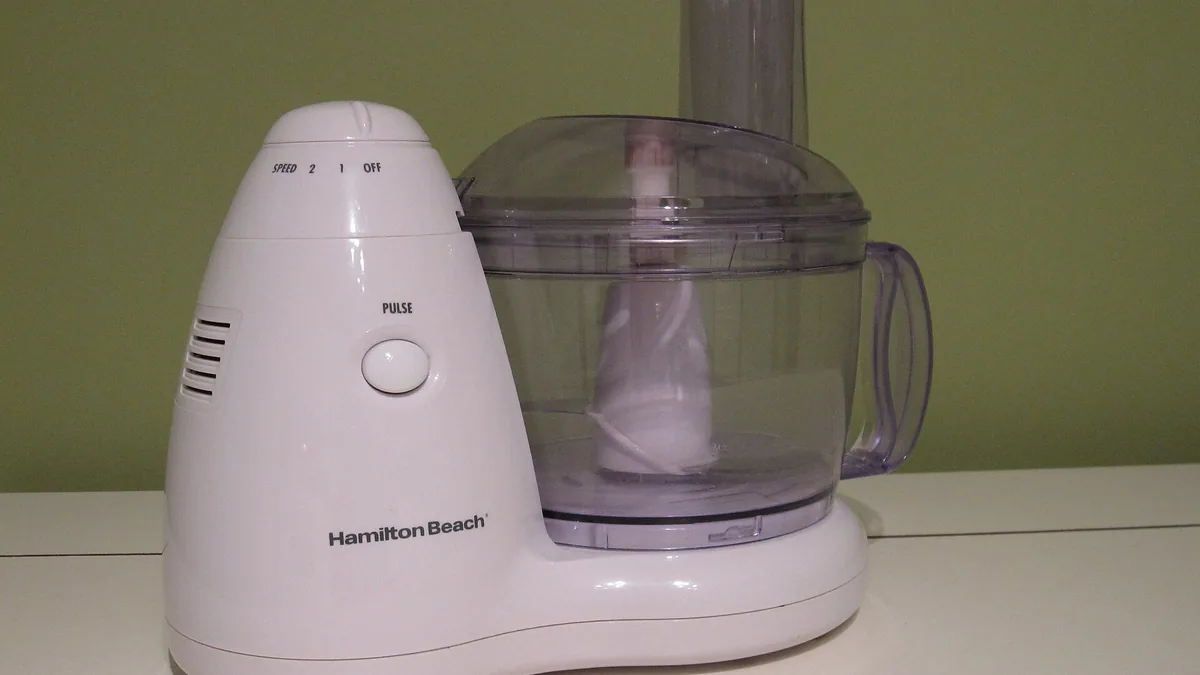
My food processor sat in the cupboard for two years, and I used it maybe four times. The rest of the time it took up a whole shelf, collected dust, and reminded me every time I opened the cupboard that I had bought a machine for a cook I was not. So one Saturday I took it out, cleaned it, and gave it away — and my kitchen has been simpler, quieter, and easier ever since.
This is why I stopped using a food processor, what it was really costing me, and what I do instead for chopping, slicing, and mixing.
The washing up
The first reason was the washing up. A food processor turns one job into five pieces to clean: the bowl, the lid, the blade, the pusher, and the base that always has food stuck underneath it. Chopping an onion took two minutes with the machine and ten minutes to clean afterwards, and the blade was sharp enough that washing it felt like a risk every single time. I counted once — eleven parts and pieces, against one knife and one board for the same onion. The story of why I stopped using a blender is the same shape: a machine that moves the work from cooking to cleaning, and cleaning is the part I hate most.
The noise and the fuss
The second reason was the noise and the fuss. A food processor at full speed is loud enough to wake the house, and getting it out of the cupboard, finding the right blade, and putting it together took longer than the job itself. I started avoiding it, and a machine you avoid is a machine you do not need. For small jobs it was absurd — dragging out a whole machine to chop two cloves of garlic — and for big jobs it was barely faster than a knife. The machine promised speed and delivered hassle, and I stopped believing the promise.
It made everything the same
The third reason was the food itself. A food processor makes everything the same texture: onions into mush, carrots into shreds, herbs into paste. A knife gives you control — a fine dice for a sauce, a rough chop for a stew, a thin slice for a salad — and the food tastes better for it. My cooking got blander when I used the processor, because every ingredient came out looking and tasting alike. The best ways to save money on groceries all start the same way: buy fresh ingredients and treat them properly, and a machine that turns them all into mush is not helping.
The space it took
The fourth reason was the space. The food processor was the biggest thing in the cupboard, and it crowded out the things I actually use: the mixing bowls, the baking trays, and the pots I reach for every day. Every time I cooked, I moved it aside; every time I cleaned, I cleaned around it. A kitchen works better with empty shelves, and a machine you use twice a year does not earn the biggest spot in the cupboard. Giving it away freed a whole shelf, and the kitchen feels bigger for it — the same room, with one less obstacle in it.
What I use instead
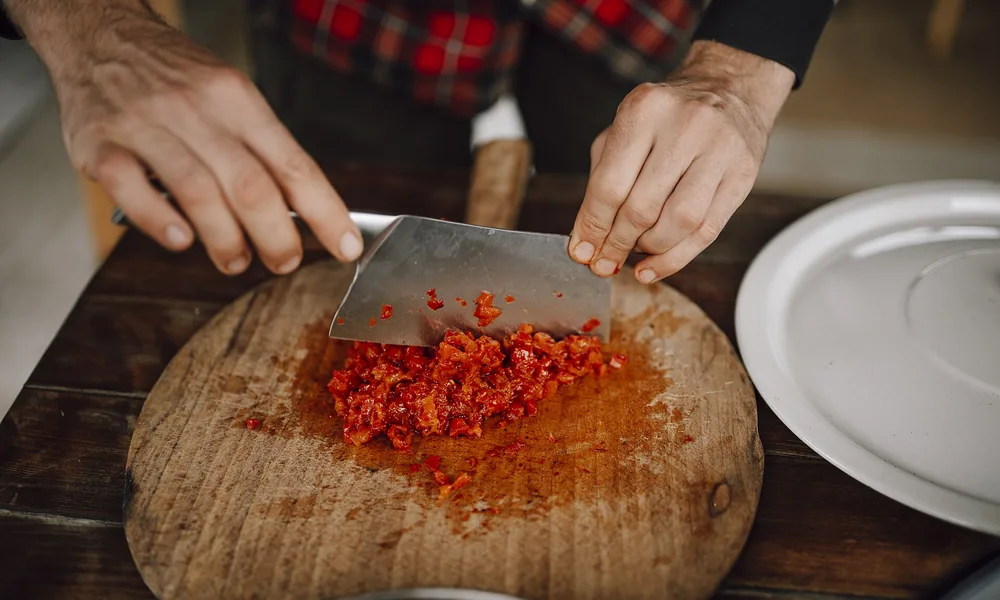
For chopping, I use a sharp knife and a wooden board: an onion takes a minute, a carrot takes two, and there is one board and one knife to wash. For slicing, I use a mandoline — careful with the fingers — or the knife, slow and steady. For mixing, I use a bowl and a wooden spoon, which has never needed a plug or a blade change. Nothing I made in the food processor needed a food processor; it needed a sharp knife and five minutes. The food is better, the kitchen is quieter, and the only machine left in the cupboard is the one I actually use.
What changed after a year
A year without the food processor, and three things have changed. First, my cooking tastes better — the knife gives me control over every cut, and the ingredients keep their character instead of turning into the same mush. Second, my kitchen is easier: one shelf freed, one less thing to dust, and the washing-up pile is smaller every single day, because every meal now leaves a board and a knife instead of eleven parts. Third, and most surprising, I cook more. Without the machine to drag out and clean, I reach for the knife without thinking, and the meals that used to feel like a chore now feel like ten minutes of quiet work. The food processor promised to make cooking faster. The year without it actually made cooking better — and simpler, and cheaper, and quieter.
The bottom line
I do not miss the food processor. I miss the idea of it — the cook who whips up perfect meals in minutes with a machine that does the work. That cook was never me. The real me chops with a knife, mixes with a spoon, and spends nothing on a machine that gathers dust. If yours is sitting in the cupboard, try a month without it. The story of why I stopped using a coffee maker taught me the same lesson: the thing you think you need is usually the thing you can stop paying for, and the knife you already own does the job better.
Frequently asked questions
Do you still make sauces and dips?
Yes — with a knife, a bowl, and a fork. A salsa takes five minutes by hand and tastes better than anything that came out of the processor, because the pieces keep their shape. The only thing I miss is hummus, and a tin of chickpeas and a fork get close enough.
What did you do with the food processor?
I gave it to a friend who bakes every weekend and uses hers three times a week. It cost me nothing to pass on, and she uses it more in a month than I did in two years — which is a better ending for it than my cupboard.
Was the food processor really that expensive?
The machine was $120, but the real cost was the shelf space and the habit: every recipe I looked up assumed I had one, and I kept buying ingredients for machine cooking I never did. The machine was a one-off cost; the cupboard it filled was a daily one.
Is a knife really faster than a food processor?
For most jobs, yes — once you count the getting-out, the assembly, and the washing up. A knife and a board take a minute to start and a minute to clean. The processor took five minutes to set up and ten to wash, and it made everything taste the same. The knife wins the morning outright.

Keep what speaks to you.
Leave room for your own perspective.