
A brick kiln installation startup builds the place where clay becomes a brick. That sounds simple until you stand in front of a half-built kiln with a lorry-load of wet clay, a client asking when the first firing will happen, and a chimney that draws so weakly the fire smoulders instead of burning. The kiln is a slow oven, not a bonfire: green bricks are stacked tight, dried until they stop shrinking, and fired for days until the clay turns to stone. Get the drying wrong and the bricks crack. Get the firing wrong and you get soft, pale bricks that crumble in the wall. Get the cooling wrong and you get a kiln that spalls, or a whole chamber of bricks that shatter when the door opens.
That is why the tools in this guide exist. None of them lights the kiln for you, and none replaces the person who has learned to read the colour of a fired brick. What they do is take the guesswork out of the parts that used to be pure experience: how good the clay is, how the moulding line should run, how long the firing should last, when the kiln is cool enough to open, and what the finished bricks are worth.
This guide compares nine AI tools built around the brick kiln itself: the clay pit, the moulding floor, the firing curve, the draught, the cooling, the grading, and the quote. Each one is judged on the same question — does it help a small installation crew deliver a kiln that fires evenly, cools safely, and produces bricks a builder will pay for? The answer, for most startups, is to start with two or three tools and add the rest as the order book grows.
Key takeaways
- A brick kiln fires clay into bricks, so the tools that matter most watch the clay, the firing curve, and the cooling — not the flames.
- Start with a clay-grading tool, a firing-curve planner, and an estimator: those three decide whether a job makes money before the first brick is moulded.
- Drying is where most new kilns fail, so plan the drying and the firing as one schedule and never rush green bricks into a hot kiln.
- Cooling cracks more bricks than firing does, so plan the cool-down with the same care as the burn and never open a kiln on a guess.
- Grading the finished bricks — by strength, colour, and breakage — is what turns a pile of red blocks into a product with a price.
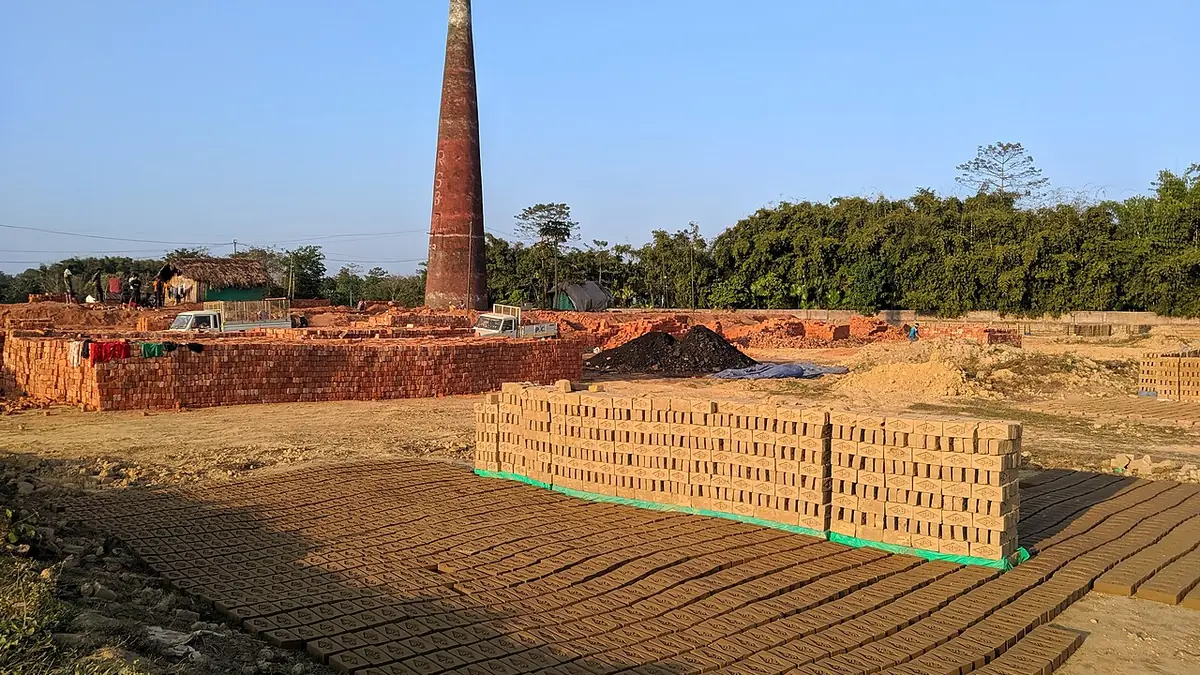
What a brick kiln installation startup actually does
A brick kiln installation startup does not sell bricks. It builds the kiln that makes them, and it hands the owner a working system: a prepared site, a clay pit that has been tested, a moulding floor that runs at a steady pace, a kiln body that holds heat, draught controls that can be trusted, and a first firing that proves the whole thing works. The client may be a small brickworks adding a second kiln, a builder who wants their own supply, or a community project firing bricks for local houses. In every case the startup is selling a kiln that fires true, not a pile of bricks.
The work breaks into five stages, and each one can sink a job on its own. First comes the clay: digging test pits, checking plasticity and shrinkage, and working out how far the good seam runs. Then the moulding floor, where green bricks are formed, dried, and stacked without warping. Then the kiln itself — the chamber, the fireboxes, the flues, and the chimney that pulls the draught. Then the firing, which runs for days and cannot be hurried. Then the cooling, the unloading, and the grading, where the bricks are sorted into firsts, seconds, and seconds that should never leave the yard.
That sequence is what makes a brick kiln different from every other kiln a startup might build. A ceramic kiln fires pots, and a lime kiln burns limestone, but a brick kiln fires clay into bricks at a scale no potter ever faces — thousands of identical units in a single firing, each one expected to match the next. The tools below are built for that job: the clay, the moulding, the firing, the cooling, and the grading. If you want to see how a smaller, garden-scale kiln is tooled up, our guide to the best AI tools for outdoor kiln installation startups shows the same thinking applied to ceramic firing, where the chamber is smaller but the firing curve matters just as much.
The nine tools at a glance
Use this table to find the tool that matches the problem in front of you. The nine tools follow the job in order, from the clay pit to the invoice, and each one earns its place by removing a guess that used to cost a firing.
| Tool | Best for | Start here if… |
|---|---|---|
| ClayPit Scout AI | Grading clay deposits before you dig | Your clay arrives mixed, sandy, or cracking |
| BrickMould Planner | Laying out the moulding and drying floor | Your green bricks warp or dry unevenly |
| FireCurve AI | Planning the firing curve hour by hour | Your firings finish soft, pale, or bloated |
| KilnDraft AI | Draught, flues, and chimney design | Your kiln smoulders or draws unevenly |
| BrickCool Sense | Planning the cooling phase safely | Your bricks crack when the kiln opens |
| BrickGrade AI | Grading finished bricks by strength and colour | Your bricks sell at one flat price |
| BrickWorks Estimator | Pricing an installation before the builder does | Your quotes keep missing the real cost |
| BrickSite Lens | Site survey and progress proof from photos | Your clients cannot see what they paid for |
| BrickPermit AI | Permits and compliance for a brickworks | Your paperwork holds up the first firing |
The nine tools, in job order
1. ClayPit Scout AI: best for grading clay deposits before you dig
ClayPit Scout AI starts where every brick job starts: the ground. It takes photos and simple field tests from the clay pit — a ribbon test, a shrinkage bar, a handful squeezed and left to dry — and turns them into a grade for the seam in front of you. Good brick clay is plastic enough to mould, lean enough not to shrink itself apart, and free of the lime nodules and stones that blow holes in a fired brick. The tool maps which parts of the pit are worth digging and which should be left alone, so the crew does not spend a week hauling clay that will never fire true.
That matters because clay is the one input you cannot fix later. A firing curve can be adjusted and a chimney can be rebuilt, but a bad clay will crack, bloat, or fire soft no matter what the kiln does. ClayPit Scout AI keeps a record of every test pit, so when the seam changes halfway through a job — and it usually does — the startup can show the client exactly why the blend changed and what the new mix will do. For a new startup, this is the cheapest insurance on the whole job: one bad load of clay can ruin a firing worth thousands of bricks.
2. BrickMould Planner: best for laying out the moulding and drying floor
BrickMould Planner takes the daily target — how many bricks the kiln needs, and when — and works backwards into a moulding floor that can actually deliver it. It lays out the moulding benches, the drying racks, and the covered yard so green bricks move in one direction, never double back, and dry at an even pace. It sizes the drying space from the local weather, because bricks dried too fast in a hot wind crack on the face, while bricks dried too slowly in damp air hold up the whole firing schedule.
The tool also keeps the moulding honest. It tracks mould wear, so a mould that has gone slack is retired before it starts turning out oversized bricks, and it plans the stacking pattern for the kiln chamber, so the green bricks go in with even gaps for the hot gases to pass through. A kiln loads badly is a kiln that fires badly, and most bad loads start on the moulding floor, not at the firebox. Get the floor right and the firing starts right.
3. FireCurve AI: best for planning the firing curve hour by hour
FireCurve AI is the heart of the whole kit. A brick firing is not one temperature but a curve: a slow warm-up that drives off the last drying water, a long soak that burns out the carbon, a climb to full heat where the clay vitrifies, and a hold at the top that evens out the chamber. Rush the warm-up and the bricks spall. Cut the soak short and black cores appear. Overshoot the top and the bricks bloat and stick together. FireCurve AI builds the curve from the clay grade, the kiln size, and the fuel, then watches the firing and tells the crew when to push, when to hold, and when to leave the dampers alone.
What makes it worth the money is the record it keeps. Every firing is logged against its curve, so when a chamber comes out uneven — pale at the front, dark at the back — the startup can see whether the curve, the loading, or the draught was at fault, and fix the right thing next time. Over a season that record is worth more than any single firing, because it turns a craft that lived in one person’s head into a system a whole crew can run. Kiln firing is a close cousin of other high-heat trades, and the same discipline shows up in our guide to the best AI tools for lime kiln installation startups, where the burning zone has to be held steady for days at a time.
4. KilnDraft AI: best for draught, flues, and chimney design
KilnDraft AI designs the part of the kiln nobody sees once it is built: the flues under the floor and the chimney that pulls the heat through. Draught is what makes a kiln fire evenly. Too little and the fire smoulders, the chamber stays cold at the far end, and the fuel bill doubles. Too much and the heat races up the chimney, the front bricks overfire, and the back bricks never catch up. The tool models the flue layout and chimney height from the kiln’s size and shape, then checks the design against wind, altitude, and the fuel the client will actually burn.
It earns its keep on retrofits as much as on new builds. Plenty of old kilns fire badly for one reason only — a flue that was laid wrong fifty years ago, or a chimney shortened by a storm and never rebuilt. KilnDraft AI takes measurements and photos of the existing flues and shows where the gases are stalling, so the startup can quote a targeted repair instead of a full rebuild. That is a useful thing to be able to offer: many brickworks would rather fix the kiln they have than pay for a new one, and a startup that can prove the fix will work wins that work.
5. BrickCool Sense: best for planning the cooling phase safely
BrickCool Sense watches the part of the job where impatience does the most damage. A brick kiln comes off full heat slowly, and the bricks inside are still moving — shrinking as they cool, and cracking if one side cools faster than the other. Open the door too early and cold air rushes in, the outer bricks chill and split, and a chamber that fired perfectly is ruined in an afternoon. BrickCool Sense tracks the cooling curve from temperature readings and tells the crew, in plain terms, when the kiln is safe to open and when it is not.
The tool also plans the cooling around the next firing. A kiln that cools too slowly holds up the whole yard, while a kiln that is forced cool with fans risks the bricks and the kiln lining both. BrickCool Sense balances the two, so the crew knows which chambers can be unloaded on which day and the client knows when the next load can go in. Cooling is the least glamorous stage of the job and the one where new startups lose the most money, because a cracked load is a load that was paid for twice: once to make, once to replace.

6. BrickGrade AI: best for grading finished bricks by strength and colour
BrickGrade AI turns the unloading bay into a sorting line that pays for itself. It photographs each batch as it comes out of the kiln and grades the bricks by colour, face quality, and visible faults — cracks, black cores, lime blows, and the pale wash that marks an underfired brick. From those grades it sorts the load into firsts for facing work, seconds for general building, and rejects that should never leave the yard. A buyer who gets a load of honest firsts comes back; a buyer who finds seconds mixed in does not.
The tool also closes the loop back to the firing. When a batch grades badly, BrickGrade AI ties the faults to the firing record — which chamber, which curve, which fuel — so the startup can show the client what went wrong and what will change next time. That record is also the basis for pricing: firsts earn a facing-brick price, seconds earn a common-brick price, and the difference across a season is often larger than the cost of the tool itself. Grading is where a brick kiln startup stops selling bricks by the thousand and starts selling them by their worth, a lesson shared with every other kiln trade — our guide to the best AI tools for charcoal kiln installation startups makes the same point about grading finished charcoal by size and density before it is bagged and priced.
7. BrickWorks Estimator: best for pricing an installation before the builder does
BrickWorks Estimator is the tool that keeps the startup in business. It prices a brick kiln installation from the site survey: the kiln size, the brickwork, the flues, the chimney, the drying sheds, the moulding floor, and the fuel store, each costed from current material and labour rates. It shows the client where the money goes, and it shows the startup where the margin is thin, so a quote is a plan rather than a guess. The worst jobs in this trade are not the hard firings but the cheap quotes — the ones where the drying shed was forgotten, the chimney was priced too short, or the clay testing was never costed at all.
The estimator also handles the awkward conversations. When a client asks for a bigger kiln than their clay pit can feed, or a cheaper kiln than their fuel can fire, the tool shows the trade-off in numbers instead of opinions. And when the job changes halfway through — a seam runs out, a chimney needs rebuilding — it reprices the change in minutes, so the startup is never left doing extra work for free. A startup that quotes well can afford to fire well; a startup that quotes badly spends the whole job trying to catch up.
8. BrickSite Lens: best for site survey and progress proof from photos
BrickSite Lens turns a phone camera into a survey tool. The crew photographs the site — the clay pit, the yard, the kiln walls as they rise — and the tool builds a measured record of what is there: levels, distances, wall plumb, and the state of the work at each visit. It flags a leaning wall or a flue laid out of line while there is still time to fix it, and it keeps a dated photo record that the client can see, so nobody has to argue later about what was built and when.
That record is worth real money on a brick kiln job, because the work disappears as it goes. The flues are buried under the floor, the fireboxes are bricked up, and the chimney is finished before the first firing. If something goes wrong a year later, the photos show whether the fault was in the build or in the use. BrickSite Lens also settles stage payments without a site visit: the client sees the dated photos, the work is plainly done, and the invoice is paid. For a small startup, that is the difference between steady cash flow and chasing money.
9. BrickPermit AI: best for permits and compliance for a brickworks
BrickPermit AI handles the paperwork that holds up more first firings than any technical fault. A brick kiln is a smoky, dusty business, and most places want to know about it before the first fire is lit: planning permission for the kiln and sheds, environmental permits for smoke and dust, fuel storage rules, and the chimney height that keeps the neighbours on side. The tool checks the site against the local rules, lists the permits the job needs, and drafts the applications from the site survey and kiln design, so the forms go in right the first time.
It also keeps the startup out of trouble after the kiln is running. Dust limits, smoke controls, and fuel records all need keeping, and a missed return can shut a kiln down faster than a cracked lining. BrickPermit AI tracks the deadlines and holds the records in one place, so an inspection is a calm afternoon rather than a crisis. Permits are the dullest part of the trade and the easiest to get wrong, which is exactly why they belong in a tool rather than in someone’s memory.
How to choose your first three tools
Do not buy all nine at once. A new brick kiln startup should start with the three tools that decide whether the first job makes money: ClayPit Scout AI, FireCurve AI, and BrickWorks Estimator. The clay tool stops you building a kiln for clay that will not fire. The firing tool stops you ruining the first load. The estimator stops you quoting a job that loses money. Those three cover the beginning, the middle, and the price of the work, and they pay for themselves on the first installation.
Add the next three once the order book grows: BrickMould Planner when the moulding floor becomes the bottleneck, KilnDraft AI when you take on a retrofit or a kiln that fires unevenly, and BrickCool Sense when you lose your first load to a rushed opening. Add the last three when the business, not the kiln, needs the help: BrickGrade AI when you are selling enough bricks to price them by grade, BrickSite Lens when clients start asking for proof of progress, and BrickPermit AI when the paperwork starts taking days instead of hours.
Judge every tool the same way: does it remove a guess that has already cost you money? If the clay has never been the problem, the clay tool can wait. If every firing comes out even, the firing tool is a luxury. But if the same fault keeps appearing — soft bricks, cracked loads, quotes that miss — buy the tool that watches that fault first. The tools are cheap next to a ruined firing, and a ruined firing is cheap next to a kiln that never fires right.
Your first-installation checklist
Run through this list before the first brick is moulded. If any item is missing, fix it before the build starts, not after the firing fails.
- Test the clay from at least three pits and grade every seam you plan to dig.
- Walk the moulding floor route on foot and check that green bricks never double back.
- Agree the firing curve in writing, with the fuel, the clay grade, and the hold time named.
- Check the flue layout and chimney height against the draught the kiln actually needs.
- Set the cooling plan before the firing starts, and agree who decides when the kiln opens.
- Price the drying sheds, the chimney, and the clay testing in the quote — not as extras later.
Frequently asked questions
What does a brick kiln installation startup actually install?
It installs the whole brick-making system, not just the kiln chamber: the tested clay pit, the moulding and drying floor, the kiln body with its fireboxes and flues, the chimney, the fuel store, and the unloading and grading bay. The handover is a kiln that has already fired once, with a firing record the owner can repeat. A startup that hands over a cold kiln with no first firing has not finished the job.
How long does a brick kiln firing take?
A full firing usually takes several days from lighting to opening, and the cooling takes as long as the heating. The warm-up alone can run for a day or more, because green bricks still hold water even after drying, and that water has to leave slowly or the bricks spall. Rushing any stage saves hours and costs a chamber of bricks, so the schedule in the firing plan is a promise, not a target.
Can AI really predict how a firing will turn out?
It can predict the risks, not the result. A firing tool reads the clay grade, the loading pattern, and the curve, and it warns when the combination has failed before — a fast warm-up on wet bricks, a short soak on carbon-rich clay, a draught that will leave the back of the chamber cold. The final call still belongs to the person watching the kiln, but they are watching with a record of every firing that came before.
Do I need a licence or permit to install a brick kiln?
In most places, yes — usually planning permission for the kiln and sheds, and an environmental permit for smoke and dust. The exact rules depend on the site, the kiln size, and the fuel, and they are the first thing to check, because a permit refused after the build starts is the most expensive mistake in the trade. Start the applications before the first brick is laid, not after the kiln is built.
What is the hardest part of running a brick kiln installation startup?
The hardest part is the gap between the build and the proof. The kiln is finished, the money is spent, and the only thing that shows whether the work was good is a firing that takes days and cannot be hurried. That is why the tools that record and prove — the firing record, the grading, the site photos — matter as much as the tools that build. A startup lives or dies on whether its first kilns fire true, and the proof has to be visible to the client.
Which tool should a brick kiln startup buy first?
Buy the estimator first if your quotes are losing money, the clay tool first if your firings are failing on bad clay, and the firing tool first if your firings are uneven on good clay. If you genuinely do not know which fault is costing you most, start with the estimator and the firing tool together: one fixes the price of the job, the other fixes the result of it, and between them they cover the two ways a new startup fails.
The bottom line
A brick kiln is a slow machine that rewards patience and punishes guessing. The clay has to be tested, the moulding floor has to run in one direction, the firing has to follow its curve, the chimney has to draw, and the cooling has to be waited out. The nine tools in this guide do not change any of that — they just make sure none of it is left to memory, hope, or a glance at the chimney. Start with the clay, the firing curve, and the quote. Add the rest as the order book grows. And never open a kiln on a guess.

Keep what speaks to you.
Leave room for your own perspective.


