
I did not set out to become the person who presses “no tip” on a tablet. I used to tip everywhere, on everything, without thinking. Coffee, takeaway, a haircut, a delivery, a self-service frozen yoghurt machine that did nothing but watch me serve myself. The screen would spin around, the tip options would glow, and my hand would tap 20 percent before my brain had finished reading the total.
Then one month I added it all up. The tips alone came to more than my grocery top-up for the week.
So I stopped. Not all tipping, and not out of spite. I stopped tipping on everything. I made a rule, I stuck to it, and my budget has been calmer ever since.
The moment the tablet broke me
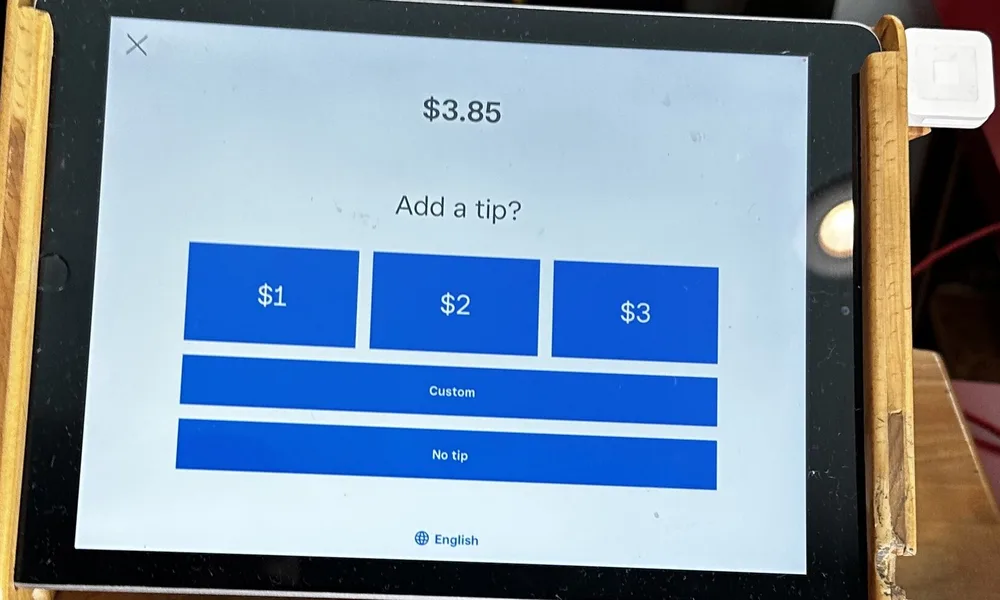
The turning point was a coffee. A four-dollar coffee, bought at a counter, from a person who handed me a cup and turned a screen toward me. The options were 20, 25, or 30 percent. There was no small option. The “no tip” button felt, in that moment, like a confession.
I paid the 25 percent because I did not want to be the person who did not. Then I sat down with my four-dollar coffee that had cost five dollars and asked myself a simple question: what exactly did I just pay extra for? I had ordered at a counter, waited for my name, and picked up a cup.
That is when I realised the tip screen had become a test. The screen is designed to make saying no feel rude, and the percentages are designed to make 20 percent feel like the minimum decent choice. It works because most of us would rather lose a dollar than feel awkward for three seconds.
Tipping used to mean something specific
I am not against tipping. I grew up understanding it as a thank-you for personal service: someone who brings food to your table, carries your bags, cuts your hair, or drives you somewhere in the rain. The tip was tied to a person doing something for you, and the amount reflected how well they did it.
Somewhere along the way, the meaning stretched. First it was the coffee shop counter. Then the bakery, the takeaway window, the food truck, the self-checkout screen at the airport, the online order I collected myself. A tip used to reward service, and now it often rewards the act of buying something. Those are not the same thing, and pretending they are is how a small daily habit quietly eats a noticeable slice of a monthly budget.
I still tip well for real service. A waiter who looks after a table for an hour gets a proper tip from me, every time. A delivery driver in bad weather gets more, not less. What I stopped doing was tipping for transactions, the ones where I did most of the work myself and a screen asked me to pay extra for it anyway.
My rule, and why it works
I tip when someone serves me personally. Sit-down meals, haircuts, taxis, delivery to my door, hotel help with bags. That is service, and I pay for it properly, usually 15 to 20 percent, more when the service is genuinely good.
I do not tip for counter service, takeaway I collect, self-service, or anything where I order on a screen and carry the result away myself. I do not tip on retail, on a bottle of water, or on a purchase where nobody did anything beyond ringing it up.
The rule works because it removes the decision. I do not stand there weighing my character against a glowing screen. I already decided, at home, in the calm, what I believe. At the counter I just follow my own rule, and the awkwardness lasts about two seconds. It also helped to remember something I learned when I stopped buying things I did not need: small, automatic spending is the hardest spending to see, and the easiest to change once you actually look at it.
What it did to my monthly budget
In the first month, I saved about sixty dollars. That was not a fortune, but it was real money, and it came from doing nothing except pressing a different button. Over a year, that is more than seven hundred dollars.
There was a knock-on effect I did not expect. Once I stopped auto-tipping, I started noticing my other automatic spending too: the subscriptions I had forgotten, the snacks by the till, the delivery orders I placed because cooking felt like too much effort on a Tuesday. Stopping impulse buying turned out to be the same skill: pause for three seconds, ask what you are actually paying for, and only then decide.
The guilt is the product
Let us be honest about why this is hard. It is not the money. It is the guilt, and the guilt is not an accident. Tip screens are designed to make you feel watched. The worker is standing right there. The next customer is behind you. The “no tip” button is small and grey, sometimes hidden behind an extra tap, while the big friendly percentages glow in blue.
I also had to face a harder question: was I tipping to be kind, or was I tipping to be liked? The honest answer was a bit of both, and mostly the second. I wanted the person on the other side of the counter to think well of me, and I was paying for that feeling a dozen times a week.
Where I still tip, gladly
This is not a story about becoming cheap. I still tip, and I tip well, in the places where it counts.
Full-service restaurants are first on the list. If someone takes my order, brings my food, refills my drink, and clears my table, they get 20 percent, more if the service is excellent. That is the deal as I understand it, and I am happy with it. Delivery drivers get a proper tip too, especially in rain or late at night, because they are doing the work of bringing something to my door.
Haircuts, too. A good haircut changes how you feel for weeks, and the person holding the scissors deserves more than the minimum. The same goes for a taxi driver who helps with luggage, or anyone whose job is personal service done well. In those cases, tipping is not a guilt payment. It is a genuine thank-you, and it feels good to give it. Real kindness is tipping well where tipping matters, and being a decent, patient customer everywhere else.
What I will not do any more is tip a screen for handing me a bag I ordered myself, or add 25 percent to a coffee I carried to my own table. There is a line, and I finally drew it. If you are trying to draw your own line, start with a budget you actually follow.
Stopping tipping on everything did not make me stingy. It made me deliberate. I tip where it matters, I tip well there, and everywhere else I pay the price on the menu and walk out with my head up. My budget is calmer, my spending matches my values, and the tablet screen has lost its power over me. That is a trade I would make again, every single time.

Keep what speaks to you.
Leave room for your own perspective.


