For almost two years, my Friday nights ran on a script I never wrote down. I would get home, drop my bag by the door, and open the delivery app before I had even decided whether I was hungry. By the time I had changed, the order was placed: a burger or a curry, chips on the side, a drink I did not need. It felt like the reward for surviving the week. It took me a long time to see it for what it actually was — the most expensive habit in my kitchen, dressed up as a treat.
It was not one big decision that kept me ordering. It was a hundred small ones, each too minor to question. I was tired, the fridge looked empty, and cooking felt like a second shift. The app made ordering take less thought than deciding what to cook, and the food arrived while I sat on the sofa. Convenience is a wonderful thing right up until you add up what it costs, and I had never once added it up — not even after I stopped eating out every weekend.
The receipt I stopped ignoring
The turning point was not dramatic. One Friday, the app showed me the full breakdown before I confirmed the order, and for once I actually read it instead of tapping past it. The meal itself was $15.80. Then came the delivery fee, $3.49. Then an unexplained service fee of $1.79. Then the tip, $2.50. The total was $23.58 for a single meal — a burger and chips that would have cost me about $4.85 to make at home.
I was ordering twice a week: Friday night, and one weeknight when work ran late and I could not face the stove. Two orders a week at $23.58 is $47.16 a week, $2,452.32 a year. The same two meals cooked at home would cost $9.70 a week, $504.40 a year. The gap is $1,947.92 a year — nearly two thousand dollars, spent on food I could have made better myself, faster than the delivery arrived.
The fees were the part that bothered me most, because they were the part I had trained myself not to see. The delivery fee and the service fee added $5.28 to every order before the tip — more than five dollars just for the privilege of not cooking. And then there was the minimum order. My usual place had a $12 minimum, so on the nights I only wanted a $9.40 noodle bowl, I would add a $4.20 side of garlic bread I did not want, just to unlock the checkout button. I was spending extra money to be allowed to spend money — the same trap as buying things I don’t need.
The food kept arriving cold
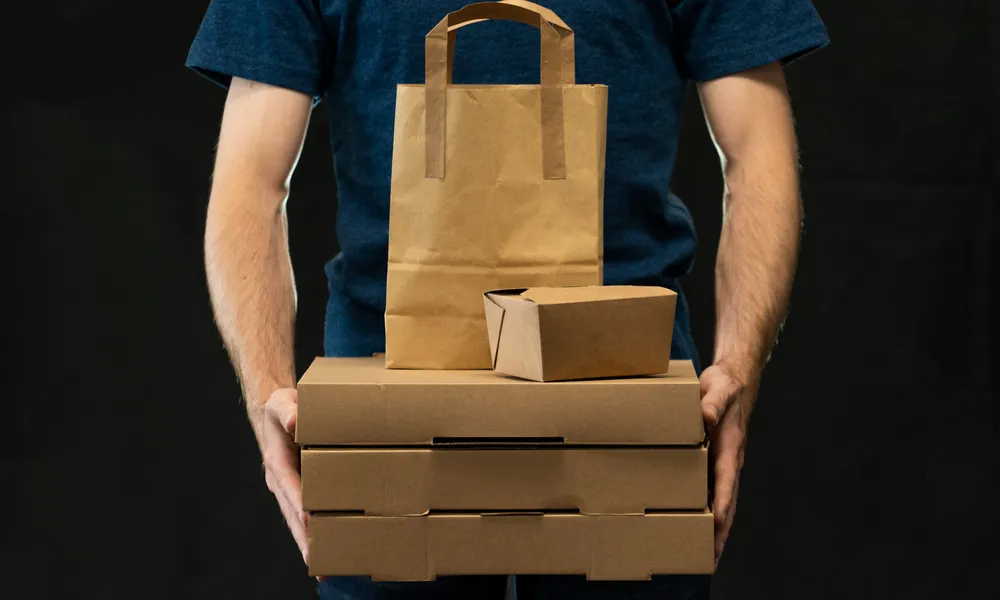
The money was only half the story. The other half was the food, which had been getting worse for months while I pretended not to notice. Delivery takes time, and time is unkind to hot food. The chips arrived soft and pale, steamed inside their own box. The burger bun went soggy where the sauce had sat against it for forty minutes. The curry arrived lukewarm, and I would stand at the microwave reheating a meal I had just paid $23.58 for, which felt absurd every single time.
Out of my last ten orders, seven arrived warm at best, and three arrived genuinely cold — cold enough that I heated them up before eating. Twice the order was wrong: the wrong sauce, a missing side. Each time, the app offered me a small credit toward my next order, which is a clever way of making sure the disappointment turns into another order.
What finally did it was a Friday in early autumn: fifty-two minutes, stone-cold food, inedible chips. I had paid $23.58 and waited nearly an hour for a meal I would not have served to a guest. That night I deleted the app.
What I cook instead
People assume that quitting takeaway means cooking elaborate meals every night, and that is the version of the story that keeps people ordering. Mine is much duller, and it works because it is dull. On Sunday afternoon, I cook two big batches — usually a stew or a curry, and a tray of roasted vegetables with rice. It takes about ninety minutes, most of it waiting while things simmer. I portion it into containers and freeze half.
On a Friday night now, dinner takes about twenty-five minutes: a container out of the freezer, rice in the pan, a salad thrown together while it heats. The meal costs about $4.85, it is hot all the way through, and it tastes like something I actually chose rather than something that survived a forty-minute journey in a cardboard box. The freezer does the work the delivery driver used to do.
The part I did not expect was how much I enjoy it. Cooking on a Sunday, music on and no rush, beats scrolling through a delivery app. And the food is better — not because I am a good cook, but because a meal eaten five minutes after it leaves the pan will always beat one that spent an hour in transit.
Where the $1,948 goes now
Saving money only counts if the money goes somewhere you can see it, so I gave the saving a job on the same week I stopped ordering. On the first of every month, I move $162 into a separate savings account — the $37.46 a week, averaged out — before I can spend it on anything else. After three months, it was $486. After a year, it will be $1,948.
That monthly transfer is why this has lasted where other money-saving attempts quietly died. A yearly figure is abstract; a monthly transfer is a habit with a receipt. It is the same trick I used when I stopped buying lunch at work — the saving only sticks when you move it somewhere it cannot leak back out of.
The two rules that keep it working
I have not banned takeaway from my life, because a ban is a promise I would eventually break. I have two rules instead, and they have held for months. The first is that guests change everything: if friends are coming over and nobody feels like cooking, we order in and I enjoy it without keeping score. Food shared with people you like is worth paying for, and a bill split four ways is a different thing from a solo order on the sofa.
The second rule is for the genuinely bad days — illness, or work running so late that cooking would mean eating at ten o’clock. On those days, I order without guilt, because the rule exists to protect the habit rather than punish me. Those two exceptions add up to about two orders a month, roughly $47. Against $188.64 a month in savings, that is a small price for a rule I can actually keep.
What I miss, honestly, is nothing about the food. I miss the Friday-night ritual — the small ceremony of choosing something, waiting for the knock at the door, eating on the sofa with a film on. So I kept the ceremony and changed the contents. Friday night is still my night off, still on the sofa, still with a film on. The meal is just one I made myself, still hot, for $4.85 instead of $23.58. The ritual was never about the delivery driver. It was about giving myself the evening off, and I can do that without paying a $5.28 fee for the privilege.

Keep what speaks to you.
Leave room for your own perspective.