
I did not stop eating out every weekend because I suddenly became a frugal person. I stopped because one ordinary Saturday night, sitting at a restaurant table I had sat at dozens of times before, I looked at the bill and felt embarrassed. Not at the restaurant, and not at the food, which was fine. At myself. I had spent a serious amount of money on a meal I would barely remember by Tuesday, and I had done the same thing the weekend before, and the weekend before that.
That was the night the habit stopped feeling like a treat and started feeling like a leak. I was not eating out because I was hungry, or because I had something to celebrate. I was eating out because it was the weekend, and eating out was simply what I did at the weekend.
The Bill That Finally Woke Me Up
The bill itself was not even the biggest one I had ever paid. It was two main courses, two drinks, a shared starter, and a tip. Nothing extravagant. But I had eaten lunch out that same day, and I had ordered takeaway the night before, and suddenly the weekend was not one meal out. It was three. I did the maths on the drive home, and the number for the weekend alone was more than I spent on groceries in a whole week.
What made it worse was how little I had enjoyed it. The restaurant was noisy, the table was small, and we spent half the meal waiting. I rushed through my food because the next table was hovering, and I left feeling full but not satisfied. I had paid restaurant prices for an experience I would honestly rate as average. That gap between the price and the pleasure was the thing that stayed with me.
How Eating Out Became My Whole Weekend
It started innocently enough. A Friday night takeaway felt like a reward after a long week. A Saturday lunch out felt like a break from cooking. A Sunday brunch felt like a proper end to the weekend. Each one, on its own, was easy to justify. Together, they became a routine so fixed that I stopped noticing it. Friday meant ordering in. Saturday meant a table somewhere. Sunday meant brunch. My weekends were planned around menus, not around what I actually wanted to do.
The habit fed itself in small ways. Because I ate out so often, my fridge was usually half empty, which made cooking at home feel like too much effort, which made eating out feel like the only option. Because I rarely cooked, I never got better at it, and because I never got better at it, home food felt like a poor second choice. I was stuck in a loop, and the loop was expensive.
What I Missed About Restaurants, and What I Did Not
When I first decided to stop, I worried I would miss restaurants terribly. I pictured myself stuck at home on a Saturday night, eating something dull while everyone else was out having fun. That picture was wrong, but it took me a few weekends to learn that.
What I did not miss surprised me more. I did not miss waiting for a table, or shouting over loud music, or paying extra for a drink I could have made at home for a fraction of the price. Most of all, I did not miss the vague, guilty feeling on Sunday night when I realised how much the weekend had cost and how little I had to show for it.
What I Cook at Home Instead
The change only worked because I replaced the habit instead of just removing it. I learned to cook the foods I actually craved at weekends, and I learned them properly. A slow stew on a Saturday afternoon, a proper breakfast on a Sunday morning, a batch of something I can reheat on Friday night when I am too tired to think. Once home food tasted good, the restaurant lost its main advantage.
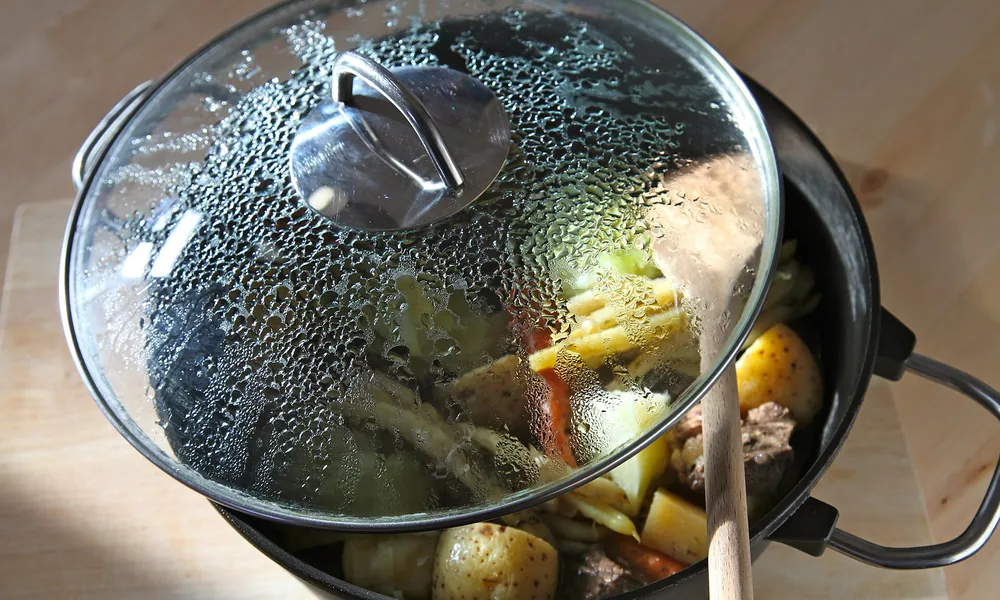
My rule is simple: the weekend meal has to be something I look forward to, not something I endure. That means I plan it. On Thursday I decide what I am cooking, and I shop for it properly, which also means I waste far less food than I used to. Learning how to save money on groceries helped more than any single recipe, because a well-stocked kitchen is what makes cooking feel easy instead of stressful.
I also stopped trying to cook like a restaurant. Home food does not need to be fancy. It needs to be hot, generous, and made without rushing. A stew, a roast, a big pan of pasta with good ingredients. I cook once and eat well twice Saturday’s dinner becomes Sunday’s lunch, and that alone cuts the weekend food bill in half.
How Much Money I Save Now
Before I stopped, a typical weekend of eating out cost me around $120 to $160: a Friday takeaway, a Saturday meal out, and a Sunday brunch, with drinks and tips on top. A weekend of cooking at home, even with good ingredients, costs me around $35 to $50 in groceries for the same three meals. The difference is roughly $85 to $110 a weekend
Over a month, that saving is about $340 to $440. Over a year, it is roughly $4,000 to $5,000. I want to be honest about that number: it is not pure profit. I spend more on groceries now, and I buy better ingredients, and I still eat out sometimes. But even after those costs, I keep most of the saving. The most useful step was giving that money a job. I worked out how to create a budget that treated the saved money as already spoken for, so it did not quietly drift into some other kind of spending. It goes to savings first, on the Monday after the weekend, before I can find another use for it.
What My Weekends Look Like Now
My weekends are slower now, and I mean that as praise. Saturday mornings are for the market or a proper shop, not for deciding which restaurant has a free table. Saturday afternoons are for cooking without rushing. The meal itself lasts longer, because nobody is waiting for our table, and the conversation is better because we are not shouting over a crowded room.
The Rule That Keeps It Working
I do not have a strict ban, and I think a strict ban would have failed. My rule is this: I eat out at the weekend only when there is a real reason, a birthday, a visitor, a place I genuinely want to try, and I decide that in advance, not in the moment when I am hungry and tired. One planned meal out a month, at most two. Everything else, I cook.
That rule works because it is a decision made once, not a battle fought every Saturday. I learned the same lesson when I faced my other spending habits: the pause matters more than the willpower. Writing about why I stopped buying things I don’t need taught me that naming the pattern takes away its power, and the same is true here. I was not eating out because I loved restaurants. I was eating out because I had no other plan for the weekend.
Stopping eating out every weekend did not make my life smaller. It made my weekends mine again, and it put thousands of dollars a year back in my pocket. The restaurant will still be there when I want it. The difference is that now, when I go, it is because I chose it, not because the weekend chose it for me.

Keep what speaks to you.
Leave room for your own perspective.


