Glaucoma is a group of eye conditions that damage the optic nerve, the bundle of nerve fibres carrying visual information from the eye to the brain. In most cases the damage is linked to higher than normal pressure inside the eye, known as intraocular pressure. Over time, if that pressure is not controlled, nerve fibres are gradually destroyed and vision is lost, usually starting at the edges.
What makes glaucoma especially serious is how quietly it develops. Most people with the commonest form feel no pain and notice no change in their sight for years, because the brain fills in the gaps and central vision is affected last. By the time someone realises something is wrong, much vision may already be gone, and the damage cannot be undone.
That is why eye specialists call glaucoma a leading cause of preventable blindness, and why regular eye examinations matter. It can be detected during a routine eye test long before symptoms appear, and early treatment can usually slow or stop it. This article explains what glaucoma is, the types, warning signs, risk factors, diagnosis and treatment.
Key takeaways
- Glaucoma damages the optic nerve, most often because eye pressure is too high.
- It usually causes no early symptoms, which is why it is called the silent thief of sight.
- Lost vision cannot be restored, but early treatment can slow or stop further loss.
- Age, family history, diabetes and high eye pressure increase the risk.
- Regular eye examinations catch glaucoma early, when treatment works best.
What Is Glaucoma?
Glaucoma is not a single disease but a family of related eye conditions that share one feature: damage to the optic nerve. The optic nerve is made up of more than a million nerve fibres connecting the retina to the brain. When these fibres are damaged, the signals they carry weaken, and parts of the visual field begin to disappear.
Inside a healthy eye, a clear fluid called aqueous humour is constantly produced and drained away, keeping pressure steady. In glaucoma, the drainage system does not work as it should: fluid builds up, pressure rises, and the nerve fibres at the back of the eye are squeezed and starved of blood. In some forms, though, damage happens even when pressure is normal. Glaucoma affects all ages, but it becomes much more common after forty, and most of the tens of millions of people who have it worldwide do not know it.
How Glaucoma Damages the Optic Nerve
The optic nerve passes through a small opening in the back wall of the eye, where the nerve fibres gather at a point called the optic disc. When pressure inside the eye rises, the tissues around this opening are pushed backwards, the fibres are compressed where they leave the eye, and blood flow to the nerve is reduced.
Nerve fibres that die do not grow back: the optic nerve cannot repair itself, so every fibre lost is lost for good. Treatment can protect the fibres that remain, but it cannot bring back the ones already gone. Vision is usually lost from the edges first, so side vision narrows gradually. Because the other eye compensates and central vision is affected last, this often goes unnoticed until it is advanced, when the field of vision can shrink to a narrow tunnel.
Why It Is Called the Silent Thief of Sight
The phrase “silent thief of sight” describes glaucoma very well. The commonest form, open-angle glaucoma, develops slowly and without pain, redness, or any obvious change in how the eye looks, so there is no warning sign most people would notice.
The brain is good at covering up the gaps: when small areas of the visual field are lost, it fills them in from the surrounding area and the other eye, so a person may drive and read without realising their side vision has been shrinking for years. Many people have already lost a large part of their visual field by the time glaucoma is diagnosed, which is why eye doctors urge everyone over forty to have regular eye examinations even when their vision seems fine.
Types of Glaucoma
There are several types of glaucoma, and they behave quite differently.
| Type | How it develops | Typical symptoms | Who it affects |
|---|---|---|---|
| Open-angle glaucoma | The drainage channels slowly become less efficient, so pressure rises gradually. | Usually none until the disease is advanced; gradual loss of side vision. | The commonest type, mostly in adults over forty. |
| Angle-closure glaucoma | The drainage angle becomes blocked, often suddenly, so pressure rises quickly. | Sudden severe eye pain, headache, blurred vision, halos, nausea; an emergency. | More common in older, long-sighted adults. |
| Normal-tension glaucoma | The optic nerve is damaged even though eye pressure stays normal. | Usually none early on; gradual loss of side vision. | People with a sensitive optic nerve; more common in people of Japanese descent. |
| Congenital glaucoma | The drainage system does not develop properly before birth. | Cloudy eyes, tearing, light sensitivity, enlarged eyes in a baby. | Newborns and young children; rare but serious. |
Open-angle glaucoma accounts for most cases. Angle-closure glaucoma is less common but more dramatic: pressure can rise very fast, causing severe pain and rapid vision loss, so it needs urgent treatment.
Symptoms to Watch For
In its early stages, open-angle glaucoma usually has no symptoms at all. The first sign is often a subtle narrowing of the visual field, such as bumping into objects at the side or struggling to see while driving at night. As it advances, people may notice blind spots in their side vision or difficulty adjusting to dark rooms. In the late stages, vision can become tunnel-like, and walking safely, reading and driving become very difficult.
Angle-closure glaucoma is different, and its symptoms are impossible to ignore. An acute attack can bring on sudden severe eye pain, headache, nausea, blurred vision and rainbow-coloured halos around lights. This is an emergency: pressure can rise to dangerous levels within hours. Anyone with these symptoms should seek medical help straight away, just as they would for any other sudden problem such as a nosebleed that will not stop.
Risk Factors
Several factors increase the chance of developing glaucoma, and some cannot be changed. Age is the strongest: the risk rises sharply after forty and keeps climbing with each decade. Family history matters too: if a parent, brother or sister has glaucoma, your own risk is several times higher than average.
Certain medical conditions raise the risk as well. People with diabetes are more likely to develop glaucoma, as are people with high blood pressure or poor circulation. Near-sighted people are more prone to open-angle glaucoma, long-sighted people to angle-closure glaucoma, and long-term steroid medicines can also raise eye pressure. Glaucoma is more common and often more severe in people of African or Caribbean descent, while angle-closure glaucoma is more common in people of East Asian descent. A previous eye injury, eye surgery or a very thin cornea can also add to the risk.
How Glaucoma Is Diagnosed
Glaucoma is diagnosed during a comprehensive eye examination, using several tests together, since no single test is enough on its own.
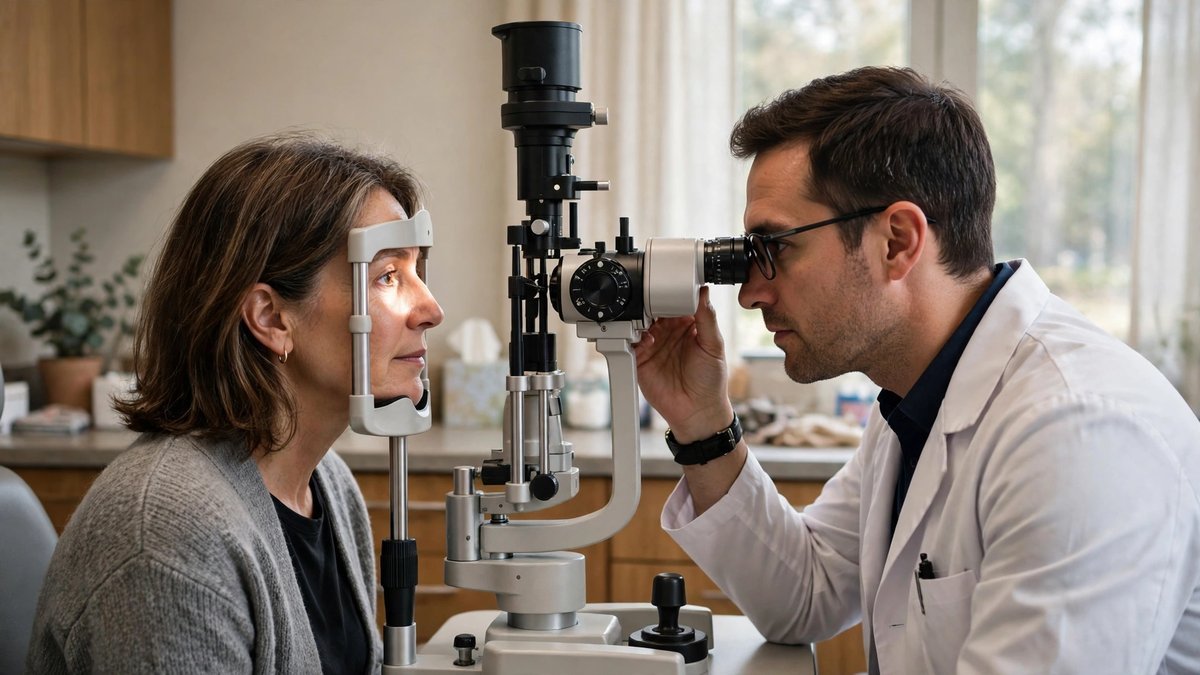
The first test most people remember is tonometry, which measures eye pressure, often with a small puff of air or a gentle instrument that touches the eye after numbing drops. A high reading does not by itself mean glaucoma, and a normal reading does not rule it out. The doctor will also examine the optic nerve directly, looking at the optic disc with a bright light and special lens. In glaucoma, the central cup of the disc grows larger as nerve fibres are lost, and this can be photographed over time. A visual field test maps out what you can see by asking you to press a button whenever a small light appears at the edge of your vision. Other tests may measure the cornea and nerve fibre layer and check the drainage angle, and the doctor may repeat tests over several visits before making a diagnosis.
Treatment Options
The aim of treatment is straightforward: lower the pressure inside the eye to a level where the optic nerve is no longer being damaged, and keep it there. Treatment cannot restore lost vision, but in most cases it can slow the disease greatly or stop it from getting worse. The choice depends on the type of glaucoma, how advanced it is, and how well the pressure responds.
Eye drops are the usual first step, and for many people they are all that is ever needed. If drops alone do not bring the pressure down enough, or cause side effects, laser treatment may be offered. Surgery is usually considered when drops and laser are not enough, or the glaucoma is advanced. Whatever the treatment, it is a long-term commitment: stopping it usually allows the pressure to rise again. Like other areas of health care, the cost of long-term treatment is something people think about, and understanding how much common health treatments can cost is a useful reminder to ask about prices and options. Treatment is tailored to the individual: two people with the same pressure reading may be given different target pressures, depending on the damage and how fast the disease is progressing.
Living With Glaucoma
A diagnosis can be frightening, but most people go on living full and active lives, especially when it is caught early. The most important habit is using the prescribed treatment exactly as directed, every day, even when the eyes feel fine.
Use eye drops correctly: one drop at a time, closing the eye gently afterwards, and pressing lightly on the inner corner for a minute to keep the medicine in. People who struggle with drops should tell their eye doctor: aids can make the bottles easier to squeeze and aim, and missing doses lets the pressure climb again. Good lighting helps with reading and moving around, and exercise, a balanced diet and not smoking support eye health. Many find the same habits that help them stay healthy and feel younger as they age also help manage a long-term eye condition. Tell family members about the diagnosis too, because their own risk is higher and they should be tested.
Prevention and Regular Eye Checks
There is no guaranteed way to prevent glaucoma, but much can be done to catch it early and limit the damage. Regular eye examinations are the single most effective step. Adults over forty should have their eyes checked every one to two years, and people with a family history of glaucoma, diabetes or other risk factors should be checked more often and from an earlier age.
Healthy habits support eye health. Regular activity can help lower eye pressure slightly, a diet rich in leafy greens and fruit provides nutrients for the eyes, and avoiding smoking protects the blood vessels supplying the optic nerve. Safety glasses during sport or DIY work also matter, since a serious eye injury can raise the risk years later. Use steroid medicines only as directed, with eye pressure checked regularly if they are used long term. And if you notice any change in your vision, especially sudden vision loss, severe eye pain or halos around lights, do not wait for your next routine appointment: get help quickly.
Your eye health checklist:
- Have a comprehensive eye examination every one to two years after forty.
- Tell your eye doctor if a close relative has glaucoma.
- Use prescribed eye drops every day, exactly as directed.
- Ask about your eye pressure and target pressure at each visit.
- Wear safety glasses during sport and DIY work.
- Seek urgent help for sudden severe eye pain, vision loss or halos.
Frequently Asked Questions
Can glaucoma be cured?
No, glaucoma cannot be cured, and lost vision cannot be restored. Treatment can lower eye pressure and slow or stop further damage in most people, which is why early detection matters so much.
Does glaucoma cause pain?
Usually not. Open-angle glaucoma is painless and symptom-free early on. Angle-closure glaucoma is the exception: an acute attack causes sudden severe eye pain and needs emergency treatment.
Will I go blind if I have glaucoma?
Most people diagnosed early who follow treatment do not go blind. The risk is highest when the condition is found late or treatment is not followed regularly.
Is glaucoma hereditary?
It often runs in families. Having a parent, brother or sister with glaucoma raises your risk several times over, so their relatives should have regular eye examinations.
Can eye drops alone control glaucoma?
For many people, yes. Eye drops are the first-line treatment and are enough on their own for a large share of patients. If they do not lower pressure enough, laser or surgery may be added.
How often should I have my eyes checked?
Adults over forty should have a comprehensive eye examination every one to two years. People with risk factors such as family history or diabetes should be checked more often, as their eye doctor advises.
Bottom Line
Glaucoma is serious, but manageable when found in time. It damages the optic nerve, most often because eye pressure is too high, and it usually does so silently, without pain or early symptoms. The vision it takes cannot be given back, yet early treatment can protect the sight that remains. The most powerful step is also the simplest: have your eyes examined regularly, know your risk factors, and if diagnosed, use your treatment every day.
Note: This article is for general information only and is not medical advice. It does not replace a professional eye examination or the advice of a qualified eye doctor. If you are concerned about your vision, see an eye doctor promptly.

Keep what speaks to you.
Leave room for your own perspective.