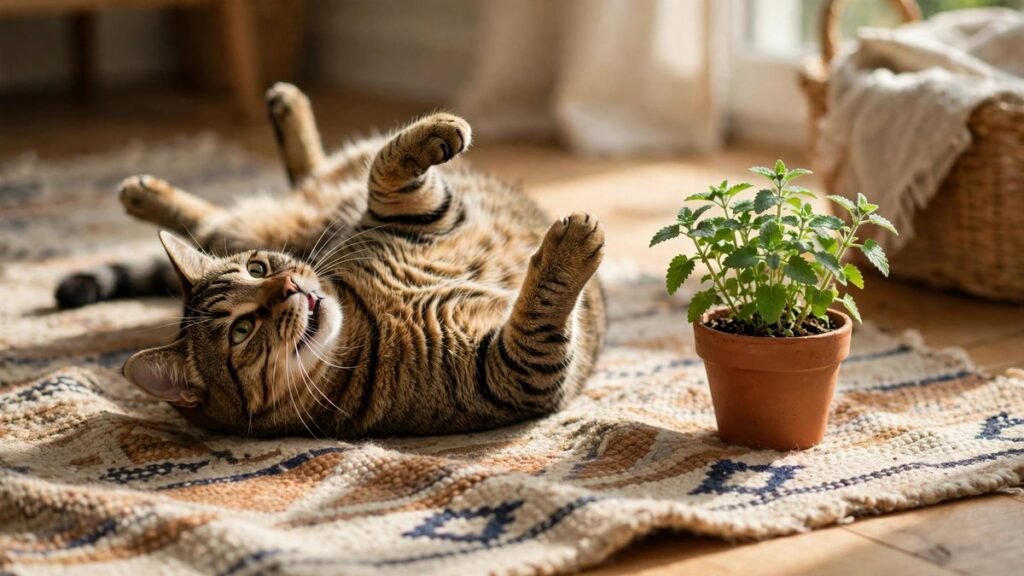
If you have ever watched a calm cat suddenly flop onto its back, rub its face along the carpet and kick a toy into the air, there is a good chance catnip was involved. The little green herb has a reputation for turning sensible cats into silly ones. The truth is simpler: catnip is an ordinary member of the mint family, and its power comes from a natural chemical that speaks directly to a cat’s sense of smell.
Not every cat reacts to it, and the ones that do react in very different ways. Some become bouncy and playful, chasing toys they had ignored for weeks. Others go soft and sleepy, purring loudly while they knead a cushion. A few simply sniff, sneeze and walk away. All of these responses are normal, and none of them means anything is wrong with your cat.
This guide from Face Zem explains what catnip is, the science behind the silliness, which cats respond and which do not, whether it is safe, and how to use it without overdoing it. It also covers what to try if your cat is one of the many who simply does not care about catnip at all.
Key takeaways
- Catnip is a mint-family herb, Nepeta cataria, and its active compound is called nepetalactone.
- It works through smell, triggering a short burst of playfulness, affection or relaxation that usually lasts five to fifteen minutes.
- About a third of cats do not respond at all, and the trait is inherited, so it is not a sign of a problem.
- Kittens under about three months old rarely react, while older cats may respond more gently or less often.
- Catnip is generally safe in small amounts, but it should be offered in moderation and never forced on a cat.
What Is Catnip, Exactly?
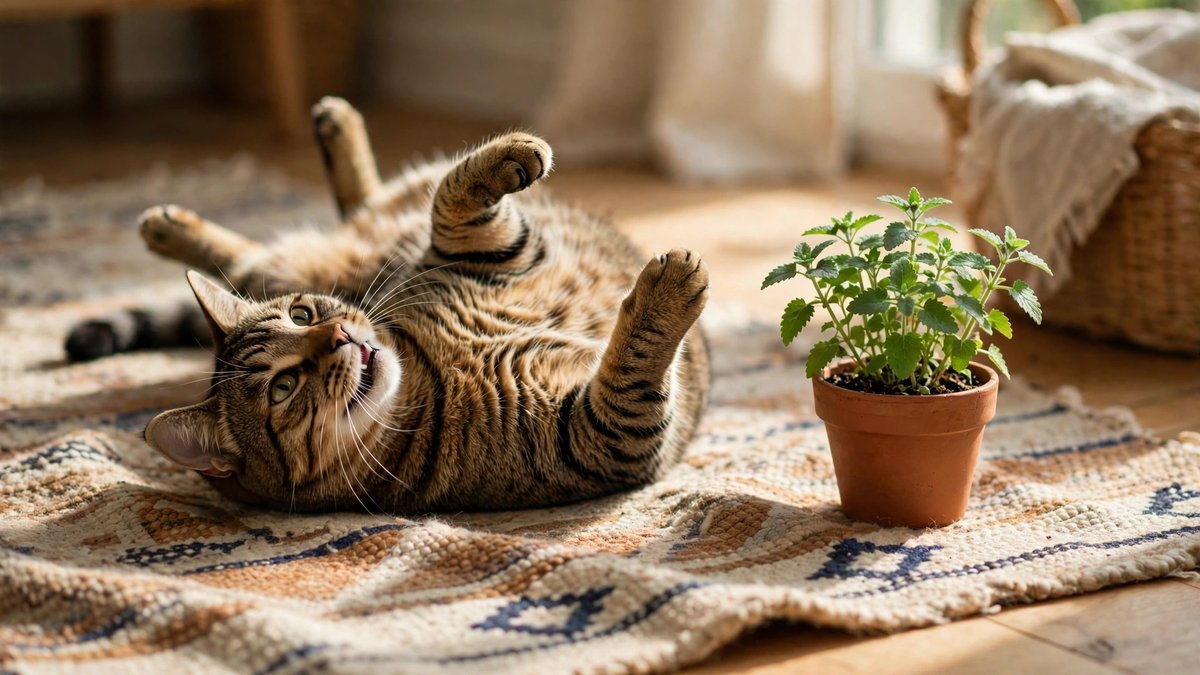
Catnip is a leafy green plant with soft, heart-shaped leaves and small white or pale purple flowers. Its scientific name is Nepeta cataria, and it belongs to the mint family, making it a relative of peppermint, spearmint and basil. It is sold as dried flakes, stuffed inside toys, sold as a spray, and grown as a living plant in a small pot. Fresh leaves are stronger than dried ones, but dried catnip keeps well in a sealed jar.
How Nepetalactone Works in a Cat’s Brain
The active compound in catnip is called nepetalactone, a type of chemical known as a terpenoid. It lives in tiny oil glands on the plant’s leaves, stems and seed pods. When those glands are disturbed by crushing, chewing or rubbing, nepetalactone is released into the air. A cat’s sense of smell is far sharper than ours, so even a small pinch carries a strong signal. Once the scent reaches the nose, it binds to smell receptors and sends a message to the olfactory bulb, the part of the brain that processes scent. From there the signal travels to areas linked to emotion and pleasure, which is why a cat’s reaction can look like a mix of play and contentment.
Why Cats Roll, Rub, Purr and Get Playful
A cat that responds to catnip usually shows it within a minute or two: sniffing, licking and chewing the catnip, then rubbing the face and chin against it, rolling on the floor, and kicking with the back legs. Some cats purr loudly, drool a little, or knead with their front paws, while others race around the room and pounce on toys with an energy they have not shown in days. Cats rub their scent glands, which sit on the cheeks, chin and forehead, against objects to mark them, and catnip seems to switch this behaviour on at full volume. The effect is short-lived: most cats lose interest after five to fifteen minutes.
Why About a Third of Cats Do Not Respond
Perhaps the most surprising fact about catnip is that a large minority of cats are entirely unbothered by it: researchers generally put the figure at around one in three cats. These cats will sniff a catnip toy, maybe chew it once, and then walk away without a flicker of excitement. If your cat is one of them, there is nothing wrong with it, and no amount of stronger catnip will change the result. The difference is genetic: sensitivity to catnip is an inherited trait. If a cat inherits the responsive version of the relevant gene from its parents, it will react; if not, it will not. It has nothing to do with how happy, healthy or well cared for a cat is.
Kittens and Older Cats: Age Matters
Very young kittens almost never respond to catnip. Kittens under about three months old usually ignore it completely, and many do not show a clear response until they are between three and six months old, because the brain pathways involved are still maturing. Waiting until a kitten is a few months old gives a much clearer picture of whether it will respond. Adult cats in their prime tend to show the strongest and most playful reactions. Older cats often respond more gently: a senior cat may sniff, rub its face on the toy and settle down for a purr instead of tearing around the room. Their sense of smell can fade with age, so a softer response is expected, and catnip should never be used to push a stiff or arthritic cat into vigorous play.
Is Catnip Safe for Cats?
For most cats, catnip is safe. It is not addictive, it is not toxic, and cats do not build up a tolerance to it. A cat cannot overdose on catnip in the ordinary sense, though eating a very large amount may cause a mild stomach upset. Offer it in small amounts, a pinch of dried leaves or a single toy at a time. Keep it away from cats that are pregnant, very young, or unwell. If your cat becomes overexcited or aggressive after catnip, which happens rarely, take the catnip away and give the cat space to calm down. The same habit of checking before you offer something new applies across pet care: many owners who keep both cats and dogs check guides such as the best dog breeds for families when planning a multi-pet home, since a treat that suits one animal may not suit another.
How to Use Catnip: Toys, Sprays and Fresh Leaves
The simplest way to use catnip is to sprinkle a small pinch of dried leaves on the floor, on a scratching post, or inside a cardboard box, and let your cat discover it. Rubbing a little onto a scratching post can teach a cat to scratch there instead of on the sofa. Catnip-filled toys are the most popular option, and they come in every shape, from mice and fish to balls and kicker pillows. A good toy will have a refillable pouch or a strong seam. When a toy stops exciting your cat, it is usually because the scent has faded, and storing it overnight in a sealed bag with a little fresh dried catnip will often revive it. Catnip spray is a convenient alternative for refreshing old toys, while fresh leaves are the strongest option of all.
How Often Should You Offer It?
Less is more with catnip. Once or twice a week is plenty for most cats, and it keeps the herb feeling special. Offering it every day can make the effect weaker, because the novelty wears off and the cat stops paying attention. Short sessions of ten minutes or so are ideal, and after that you can put the toy away until the next time. A session works best when your cat is already awake and in a playful mood, such as in the early evening. It also works well as a way to encourage a shy cat to explore a new bed or a new room. If you have more than one cat, give each cat its own toy or its own patch of catnip, since sharing can lead to squabbles.
Catnip vs Silver Vine vs Valerian vs Cat Grass
Catnip is the best-known cat herb, but it is far from the only one. If your cat ignores catnip, three other plants are worth knowing about, and a cat that shrugs at catnip may go wild for silver vine instead.
| Plant | Active compounds | How cats react | Share of cats that respond | Best form |
|---|---|---|---|---|
| Catnip (Nepeta cataria) | Nepetalactone | Playful, rolling, rubbing, purring; sometimes sleepy | About two in three cats | Dried leaves, filled toys, spray, fresh plant |
| Silver vine (Actinidia polygama) | Actinidine and nepetalactone-like compounds | Intense rolling, rubbing and drooling; often stronger than catnip | About four in five cats, including many that ignore catnip | Dried fruit gall powder, sticks to chew |
| Valerian (Valeriana officinalis) | Actinidine and valerenic acid | Excited rolling followed by deep relaxation and sleepiness | About half of cats | Dried root in toys or small pouches |
| Cat grass (usually wheat, oat or barley grass) | None that affect behaviour; rich in fibre and folic acid | Nibbling and chewing; no playful high, but aids digestion | Most cats will nibble it | Fresh pot of grass on a windowsill |
Silver vine deserves special attention because it works on many cats that do not respond to catnip at all. Its dried fruit is sold as a powder or in small chew sticks, and the reaction is often more intense than catnip, so a very small amount goes a long way. Valerian root is famous for its strong smell, but many cats love it, and it tends to end in a long nap. Cat grass does not change behaviour at all: cats chew it for the fibre and to help clear hairballs.
Alternatives for Cats That Do Not Respond
If your cat is one of the third that ignores catnip, do not worry, and do not keep buying stronger catnip in the hope that it will suddenly work. Silver vine is the first alternative to try, since it reaches a much larger share of cats, and a small packet of powder sprinkled on a toy is enough to test the reaction. Valerian root is the next option, found in specialist cat toys made for cats that do not respond to catnip. Other forms of enrichment can be just as rewarding as any herb: a puzzle feeder, a feather wand, a crinkly tunnel or a cardboard box with holes cut in it can give a non-responding cat the same excitement. Regular interactive play, even ten minutes a day, does more for a cat’s happiness and health than any plant. The same careful approach applies to food as well as to toys, which is why owners often look up guides such as whether dogs can have cinnamon before sharing a treat around the house.
A Simple Catnip Checklist
Use this short checklist the next time you offer catnip, and the experience will be smoother for both you and your cat.
- Start with a small pinch or one filled toy, and watch how your cat reacts.
- Offer catnip on a scratching post, a bed or a toy your cat already likes.
- Keep sessions short, around ten minutes, and put the toy away afterwards so the scent stays fresh.
- Give each cat its own toy or patch of catnip to avoid squabbles.
- Store dried catnip in a sealed jar away from light and heat, and refresh old toys overnight with fresh leaves.
- Try silver vine or valerian if your cat ignores catnip, and never force a cat to use a herb it does not enjoy.
Frequently Asked Questions
How long does catnip last?
The effect usually lasts between five and fifteen minutes, and most cats will not respond again for an hour or two.
Can cats overdose on catnip?
Cats cannot overdose on catnip in the way they could on a medicine or a poison. Eating a very large amount may cause mild stomach upset, but this passes quickly.
Why does my cat drool on catnip?
Drooling is a normal part of the catnip response for some cats: the scent stimulates the brain areas linked to pleasure, and the cat relaxes so deeply that a little saliva escapes.
Does catnip work on big cats like lions and tigers?
Yes, in many cases it does. Lions, tigers, leopards and jaguars have been observed rolling, rubbing and playing with catnip in zoos, just like a house cat.
Can I grow catnip at home?
Yes, and it is one of the easiest herbs to grow. Catnip likes a sunny spot, well-drained soil and a pot that keeps it contained, since it can spread quickly in a garden bed.
Is catnip the same as catmint?
Catnip and catmint are related but not identical. Catnip is Nepeta cataria, while catmint usually refers to other members of the Nepeta family, such as Nepeta faassenii. Catmint contains much less nepetalactone, so most cats show little interest in it.
Bottom line: Catnip is a safe, natural and inexpensive way to add play and comfort to a responsive cat’s life. A small pinch, offered once or twice a week, can encourage exercise and ease a shy cat into a new space. About a third of cats will not respond, and that is entirely normal, so if yours is one of them, silver vine, valerian and good old-fashioned play are excellent alternatives. Offer it gently, watch what your cat enjoys, and let the cat decide. As with any new food or product, it is always worth checking first, just as owners do when they ask whether dogs can have avocado before sharing a snack.
Note: This article is for general information only and is not a substitute for veterinary advice. If your cat seems unwell after catnip, contact your vet for guidance.

Keep what speaks to you.
Leave room for your own perspective.


