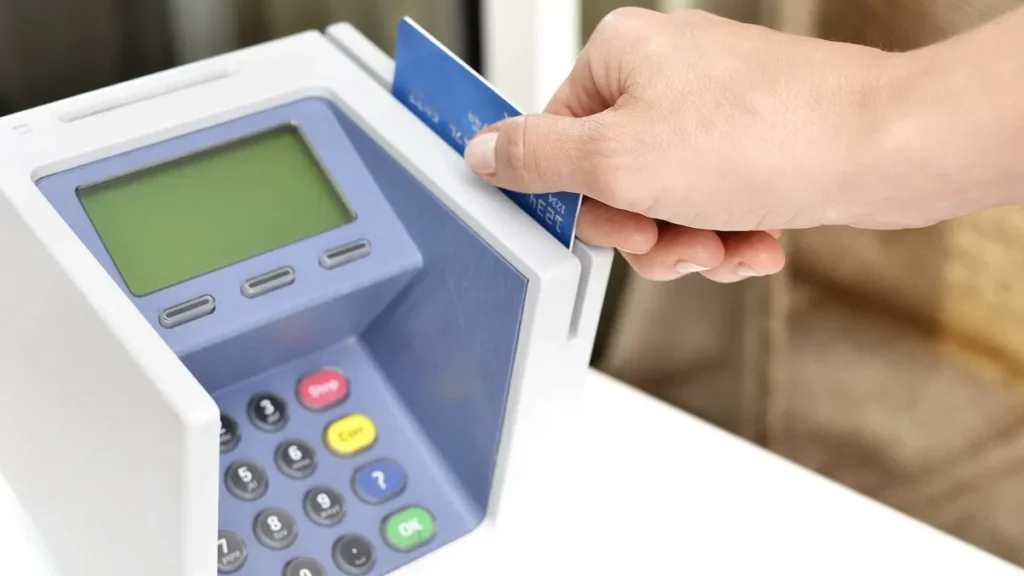
A credit card looks like a small piece of plastic, but it is really a short-term loan you can reuse. When you pay with one, you are not spending your own money. You are borrowing from the card issuer, and the issuer expects to be paid back. Pay in full on time and that loan costs you nothing. Fail to do so, and it can become one of the most expensive loans you will ever carry.
That split is the whole story of credit cards. Used well, a card is a convenient way to pay, a tool for building a credit history, and a safety net for emergencies. Used badly, it charges interest month after month until a small purchase costs far more than its price tag. This guide explains the limit, the statement, the interest, and the habits that keep you on the right side.
Key takeaways
- A credit card is a revolving loan: borrow, repay, and the credit becomes available again.
- Your credit limit is the most the issuer will let you borrow at once.
- Interest only starts when you carry a balance past the due date.
- The minimum payment keeps the account current, but it barely dents the balance.
- Treat a card like cash: only charge what you can pay off monthly.

What a credit card actually is
A credit card is a payment card linked to a line of credit, not to your bank account. A debit card pulls money straight out of your account; a credit card pulls money from the issuer’s pocket, and you settle up later. That is why a card works even when your bank balance is low — and why it can get you into trouble if you forget the money is borrowed.
Every card has a credit limit, an interest rate, and a billing cycle. The limit is the maximum you can borrow at once. The interest rate, usually shown as an annual percentage rate or APR, is the price of borrowing. The billing cycle is the roughly monthly period your purchases are added up into a statement, which you then have about three weeks to pay.
How a credit card works, step by step
It feels instant, but four parties are involved every time you tap or swipe: you, the shop, the shop’s bank, and the card issuer.
The purchase
When you pay, the terminal sends the amount to the issuer, which checks that you have enough available credit. Approval usually takes a second or two. The shop gets paid by its bank, and the purchase is added to your card balance. You have spent nothing from your own account — yet.
The statement
Once a month the issuer closes your billing cycle and sends a statement listing every purchase, payment, fee and charge. Three numbers matter most: the statement balance, the minimum payment due, and the payment due date. The statement balance is everything you owe from that cycle.
The payment
If you pay the full statement balance by the due date, you pay no interest on those purchases. This is the grace period at work, the single most valuable feature of a credit card. Pay only part and interest starts on what is left. Pay less than the minimum and you can be charged a late fee, and the missed payment may be reported to the credit bureaus.
Your credit limit, explained
Your credit limit is the ceiling on how much you can borrow on the card at once. It is set by the issuer based on your income, your credit history and your other debts. Every purchase reduces your available credit until you pay some of it back, which is why a card is called revolving credit.
Using a large share of your limit hurts your credit score even if you pay on time. Keep your balance below 30 percent of your limit — below 10 percent is better still. If your limit feels too low, there are ways to increase your credit limit, but a higher limit only helps if your spending does not rise to fill it.
Interest: how it works and how to avoid paying it
Interest is the cost of carrying a balance, and credit card interest is high compared with most other loans. A typical card charges an APR in the high teens or twenties, calculated daily, so the longer a balance sits, the more it costs.

The APR and the grace period
The APR is the yearly cost of borrowing, expressed as a percentage. Divide it by 365 and you have the daily rate applied to your balance. The grace period is the window between the end of your billing cycle and the due date, and it is interest-free as long as you paid the previous statement in full. Lose it, and new purchases gather interest from the day you make them.
The minimum payment trap
The minimum payment is usually around 2 to 3 percent of your balance. Paying only the minimum keeps your account in good standing, but it barely shrinks the balance. On a balance of a few thousand dollars, minimum-only payments can take years to clear and cost hundreds or thousands in interest. The minimum is a floor, not a plan.
What a credit card does to your credit score
A credit card is one of the fastest ways to build a credit history, for better or worse. Paying on time every month builds a record of reliability, and payment history is the single biggest factor in most credit scores. Keeping your balance low helps too, as does keeping an older card open.
That is why a first card, used carefully, is a genuine asset. Small regular purchases paid off in full each month show lenders you can handle credit responsibly. For a step-by-step plan, see our guide on how to improve your credit score fast.
Using a credit card without the debt trap
The safest way to use a credit card is to treat it like a debit card with a delay. Before you charge something, ask whether you could pay for it from your bank account right now. If the answer is no, the card is not making it affordable — it is just postponing the bill and adding interest.
A few habits make this easy. Set up autopay for the full statement balance so you never miss a due date. Check your statement monthly and question any charge you do not recognise. Keep everyday spending on one card so the balance is easy to watch. If a balance has grown beyond what you can clear in a month, make a plan to pay it down — our guide on how to pay off debt fast on a low income walks through exactly that.
The bottom line
A credit card is a tool, and like any tool it rewards the person who understands it. The issuer lends you money, gives you about three weeks to pay it back for free, and charges steep interest only when you do not. Keep your balance low, pay in full on time, and the card works for you: convenient payments, a growing credit history, and no interest at all.
The debt trap is not a mystery either. It starts with a balance carried past the due date, grows with minimum-only payments, and ends with interest costing more than the things you bought. Avoid that path, and the card in your wallet stays what it was meant to be: a way to pay, not a loan you can never finish repaying.

Keep what speaks to you.
Leave room for your own perspective.