Key Takeaways
- Sam Altman started his entrepreneurial career while studying at Stanford.
- He co-founded Loopt, a location-based social networking company.
- Loopt was part of Y Combinator’s Summer 2005 batch, its first batch.
- Green Dot acquired Loopt in 2012.
- After Loopt, Altman moved further into startup investing and advising.
- He became president of Y Combinator in 2014 and remained in the role through 2019.
- While leading YC, he helped expand its startup and investment activities and remained closely connected to the technology-founder ecosystem.
- Altman’s experience with startups and YC formed the immediate professional background for his move into OpenAI in 2015. OpenAI’s own legal filing says the initial idea for the AI lab was developed by Altman and Greg Brockman in 2015.
Before Sam Altman became the CEO of OpenAI, he had already spent more than a decade building startups, investing in technology companies and working with founders.
His pre-OpenAI career followed a fairly clear path: he studied computer science at Stanford, left college to build Loopt, joined Y Combinator as a part-time partner, moved into startup investing and advising, and eventually became president of Y Combinator. In 2015, he became one of the founding leaders of OpenAI.
Understanding those years gives a better picture of what Altman brought to OpenAI. He wasn’t coming directly from an AI research career. His earlier experience was primarily in startups, technology products, venture investing and founder development.
Sam Altman’s Career Before OpenAI at a Glance
| Period | What he did |
| Before 2005 | Studied computer science at Stanford |
| 2005 | Left Stanford and co-founded Loopt |
| 2005 | Loopt became part of Y Combinator’s first batch |
| 2011 | Joined Y Combinator as a part-time partner |
| 2012 | Loopt was acquired by Green Dot |
| 2012 onward | Became increasingly involved in investing and advising startups |
| 2014 | Became president of Y Combinator |
| 2015 | Co-founded OpenAI |
| 2015–2019 | Continued leading YC while also serving as an OpenAI co-chair |
The dates are supported by Y Combinator’s historical records, Green Dot’s SEC filings and OpenAI’s founding announcement.
Sam Altman Before Loopt
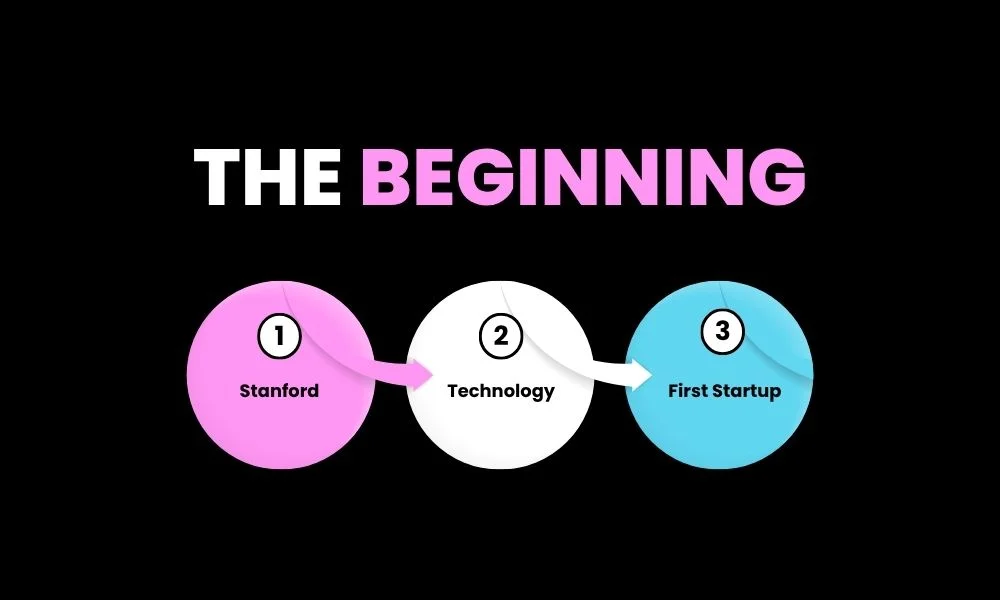
Altman’s technology career began at Stanford University, where he studied computer science and worked in the university’s AI lab. Y Combinator’s own archived biographies identify him as a Stanford computer science student who worked in the AI lab.
But he did not follow the traditional path of finishing college and then joining a large technology company.
Instead, he left Stanford in 2005 to work on a startup.
That startup became Loopt.
The decision is important because it established the pattern that would define much of Altman’s early career: rather than staying inside an academic or established-company environment, he moved toward building and operating a company himself.
Loopt Was Sam Altman’s First Major Startup
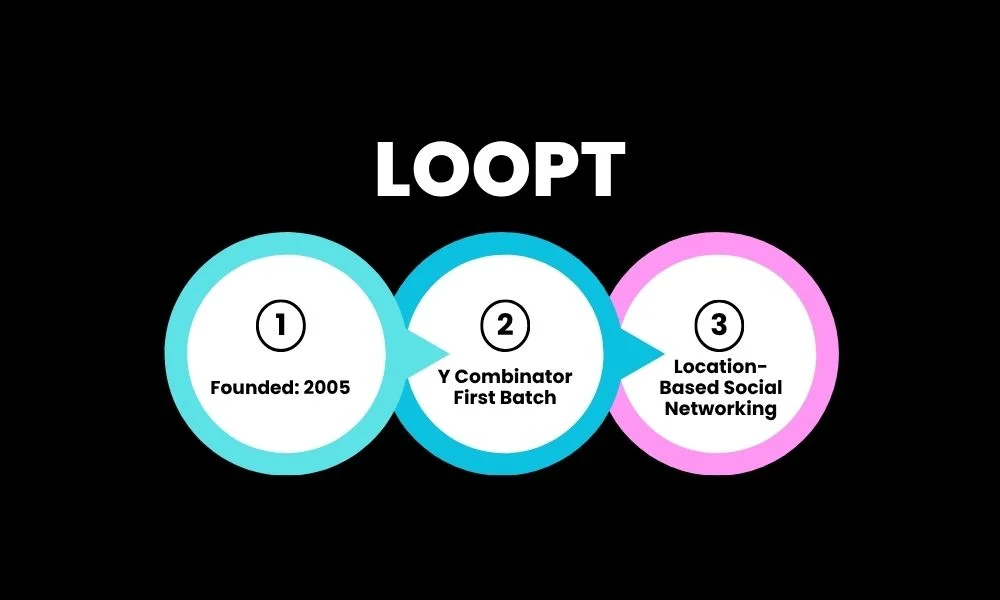
In 2005, Altman co-founded Loopt, a mobile location technology company.
Loopt was built around location-based services at a time when smartphones and mobile applications were still developing. Y Combinator’s company profile describes Loopt as a social-mapping service that allowed people to use their location to discover people, places and events around them.
Altman served as the company’s CEO.
There is another important detail about Loopt: it was part of Y Combinator’s very first batch in summer 2005.
That connection would become increasingly important later.
At this stage, Altman wasn’t an investor or accelerator executive. He was a young founder trying to make a mobile startup work.
Y Combinator later described him as one of the founders from its first batch, alongside other early YC alumni.
What Sam Altman Learned From Loopt
Loopt did not become one of the giant consumer technology companies of its generation, but it gave Altman several years of direct experience building a startup.
That included dealing with mobile operators, fundraising, product development and the practical problems involved in getting a young technology company to work.
In a 2015 Y Combinator interview, Altman discussed the importance of securing agreements with U.S. mobile operators during Loopt’s early development.
That kind of experience matters when looking at his later career.
At OpenAI, Altman would eventually be responsible for an organization operating at a vastly different scale. But the underlying work of dealing with technology, partners, hiring, financing and uncertainty had already been part of his career for years.
Loopt Was Acquired by Green Dot
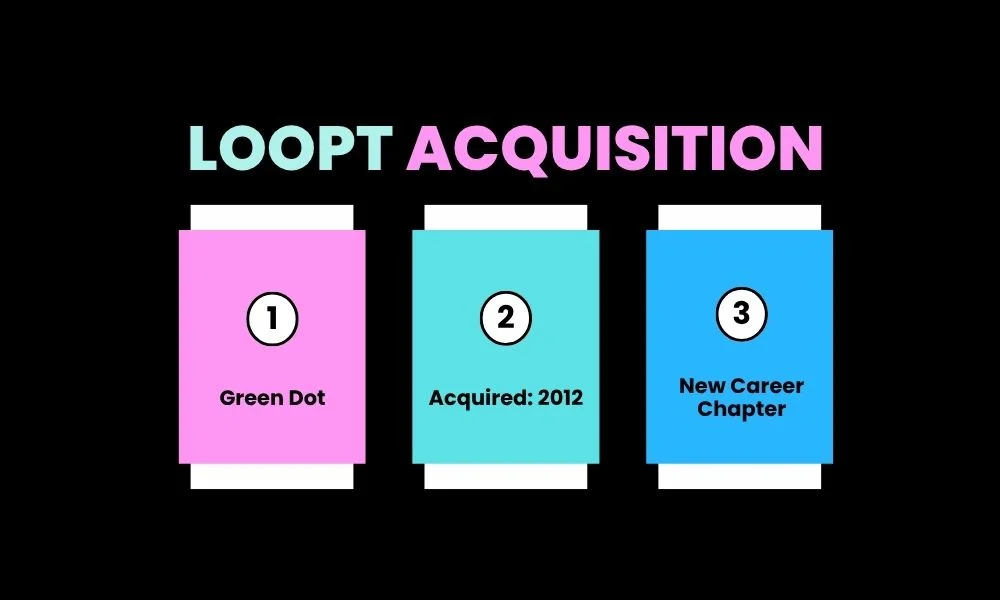
Loopt eventually reached an exit.
In March 2012, Green Dot announced that it would acquire Loopt for $43.4 million in cash, including approximately $9.8 million designated for employee retention. The acquisition ended Altman’s period as Loopt’s CEO. But it did not end his involvement with technology startups.
Instead, it opened the next phase of his career.
Following the acquisition, Altman joined Green Dot and held senior positions related to interactive products, technology and mobile products. Green Dot’s corporate filings documented his previous role as Loopt’s co-founder and CEO and his subsequent work at Green Dot.
The move also gave Altman a chance to step away from running one startup and spend more time thinking about other companies and founders.
From Startup Founder to Investor
After Loopt, Altman’s career increasingly moved toward startup investing and advising.
Y Combinator later summarized the transition simply: after Loopt was acquired by Green Dot in 2012, Altman began investing in and advising startups.
One vehicle associated with this period was Hydrazine Capital, a venture firm Altman co-founded with his brother Jack.
This was an important change in his professional role.
At Loopt, Altman’s job was to make one company work.
As an investor and adviser, he could work with multiple founders and companies at the same time.
That experience would become particularly valuable when he moved into leadership at Y Combinator.
Sam Altman Joined Y Combinator
Altman’s relationship with Y Combinator actually began before he became an executive there.
Loopt had been part of YC’s first batch in 2005. In 2011, YC brought Altman back as a part-time partner, along with other YC alumni. The organization said these founders would advise new startups while bringing a founder’s perspective to the accelerator.
This was a natural next step for Altman. He had already been through the experience YC founders were facing. He had started a company, raised money, worked on a technology product and eventually sold the business.
Now he could use that experience to advise other founders. The role also put him closer to the broader startup ecosystem that surrounded YC.
When Did Sam Altman Become President of Y Combinator?
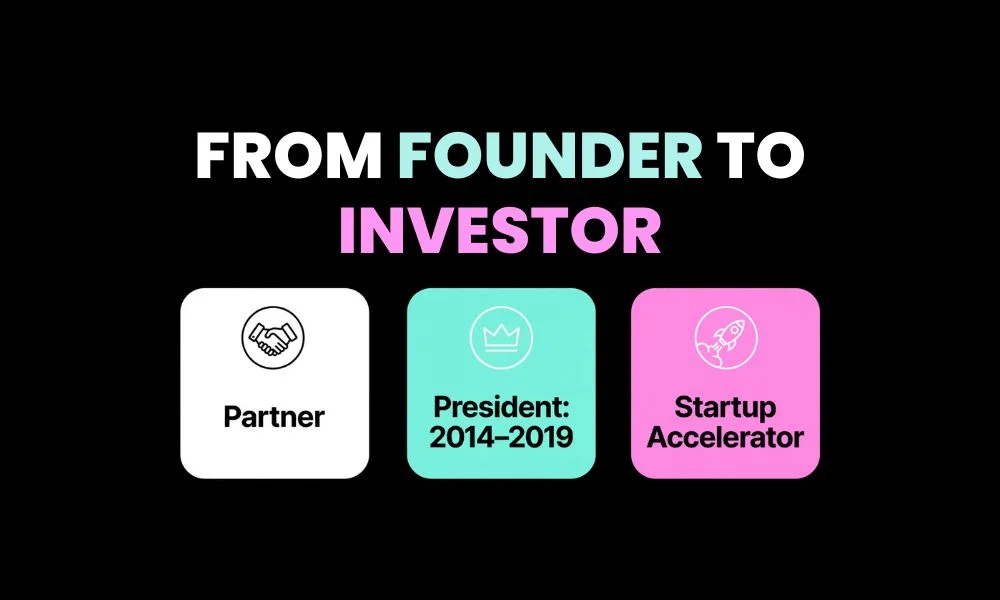
In February 2014, Y Combinator announced that Altman would become its president starting with the next batch.
Paul Graham, YC’s co-founder, explained that he wanted Altman to lead the organization as YC expanded. Graham also pointed out that Altman had been connected to YC almost from the beginning because Loopt was in its first funded batch.
Altman served as YC president from 2014 to 2019. Y Combinator’s archived material repeatedly identifies those dates.
This was arguably the biggest stage of Altman’s pre-OpenAI career. He was no longer responsible for only one startup. He was helping shape an organization that worked with hundreds of founders and early-stage companies.
What Did Sam Altman Do at Y Combinator?
As president, Altman worked on the growth and operation of Y Combinator and spent significant time advising startups.
YC’s own publications from the period show him involved in decisions about partners, investment activities and the kinds of companies the accelerator wanted to support.
One example is YC’s decision to bring in partners with different areas of expertise.
In 2014, YC announced new partners and described their roles in areas such as startup growth, enterprise companies and biotechnology.
This provides useful context for Altman’s role. His YC career wasn’t simply about giving occasional startup advice. He was helping operate and expand a platform that worked with founders across different industries. That gave him a much broader view of how startups were built, funded and scaled.
Why Y Combinator Mattered to Altman’s Career
The biggest change during Altman’s YC years was scale.
At Loopt, he learned how to build a startup.
As an investor, he began evaluating other startups.
At Y Combinator, he worked across an entire network of founders.
Those experiences gave him three different perspectives:
Founder: What is it like to build a company from the inside?
Investor: What makes a young company worth backing?
Accelerator leader: How can many founders be supported and developed at once?
That combination became an important part of Altman’s professional background before OpenAI.
Y Combinator itself described Altman in 2016 as its president and OpenAI co-chairman, noting his previous role as Loopt co-founder and his work investing in and advising startups.
Sam Altman and OpenAI Before He Left YC
OpenAI entered Altman’s career while he was still leading Y Combinator.
OpenAI was publicly introduced in December 2015 as a nonprofit artificial intelligence research organization. Altman and Elon Musk were listed as co-chairs, with Greg Brockman, Ilya Sutskever and other researchers and engineers among the founding group.
This is an important distinction:
Altman’s OpenAI career did not begin after a long period of working exclusively in AI research.
He entered the project with a background in startups, investing and startup ecosystem leadership.
By 2016, Y Combinator described him as both its president and OpenAI’s co-chairman. His career was therefore temporarily split between two major roles: leading YC and helping guide the newly established OpenAI.
When Did Sam Altman Leave Y Combinator?
Altman stepped away from the presidency of Y Combinator in 2019 as his work at OpenAI became his main focus. Y Combinator’s own historical material identifies his presidency as running from 2014 through 2019. That transition effectively closed the most important chapter of his career before OpenAI. By then, his professional path had moved through several different forms of technology leadership:
Loopt founder → investor and adviser → Y Combinator partner → YC president → OpenAI leader
The important point is that OpenAI was not an isolated break from his previous career. It came after years of working with startups and founders.
How Sam Altman’s Pre-OpenAI Career Led to OpenAI
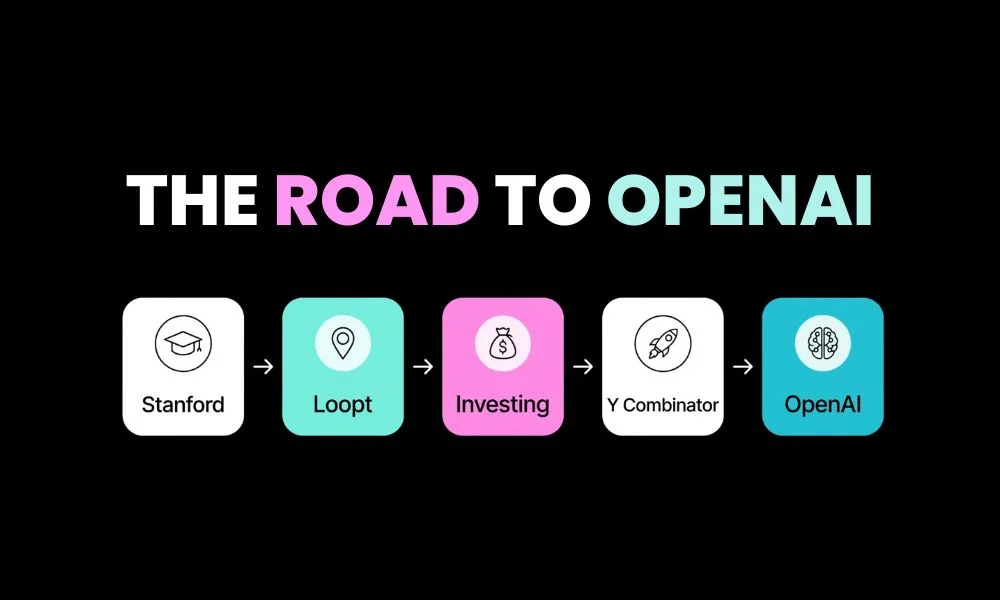
Looking at the timeline as a whole makes the progression easier to understand.
1. Loopt gave him founder experience
He learned what it meant to build and operate a technology company from an early stage.
2. Investing exposed him to many companies
Instead of working on one startup, he began evaluating opportunities across the broader technology ecosystem.
3. Y Combinator expanded his network
As a partner and later president, he worked with many founders and companies.
4. OpenAI combined those experiences
OpenAI gave him a much larger organization and a new technical mission to lead.
This doesn’t mean each stage was deliberately designed as preparation for the next one. Career paths rarely work that neatly.
But looking backward, the connection is clear: Altman accumulated experience as a founder, investor, adviser and startup ecosystem leader before taking on his long-term role at OpenAI.
Sam Altman Before OpenAI: Timeline
| Year | What happened |
| 2005 | Left Stanford and co-founded Loopt |
| 2005 | Loopt entered Y Combinator’s first batch |
| 2011 | Joined YC as a part-time partner |
| 2012 | Green Dot acquired Loopt |
| 2012 | Expanded his work in startup investing and advising |
| 2014 | Became president of Y Combinator |
| 2015 | OpenAI launched with Altman as a co-chair |
| 2016 | Continued as YC president while serving as OpenAI co-chair |
| 2019 | Ended his YC presidency and focused on OpenAI |
Final Takeaway
Sam Altman’s career before OpenAI was built around startups long before artificial intelligence made him a household name.
He began by building Loopt, gained experience as an investor and adviser after its acquisition, returned to Y Combinator as a partner, and eventually became the organization’s president. During those YC years, he also became involved in the creation of OpenAI.
So the simplest way to understand the pre-OpenAI career is:
Founder → Investor/Adviser → YC Partner → YC President → OpenAI
That progression explains the professional background Altman brought with him when OpenAI became the central focus of his career.
Frequently Asked Questions
What did Sam Altman do before OpenAI?
Before OpenAI, Sam Altman co-founded and led Loopt, worked at Green Dot after the company’s acquisition of Loopt, became involved in startup investing and advising, joined Y Combinator as a partner, and later became YC’s president.
Did Sam Altman go to Stanford?
Yes. Altman studied computer science at Stanford and worked in its AI lab before leaving the university to pursue his startup career.
What was Sam Altman’s first startup?
Loopt was his first major startup. He co-founded it in 2005 and served as CEO. The company later became part of Y Combinator’s first batch.
When did Sam Altman join Y Combinator?
Altman joined Y Combinator as a part-time partner in 2011. He became president in 2014.
How long was Sam Altman president of Y Combinator?
He served as president from 2014 to 2019.
Was Sam Altman involved with OpenAI while he was at Y Combinator?
Yes. OpenAI was launched in 2015 while Altman was still president of Y Combinator, and YC described him in 2016 as both its president and OpenAI co-chairman.