
Key Takeaways
- This article covers 12 documented stories, not fictional parables presented as fact.
- Each story includes a date, place, and source readers can check.
- The examples cover persistence, disability, illness, discrimination, education, and second chances.
- Every story includes one practical action to take from the person’s experience.
- Popular rejection stories are checked against available evidence instead of repeated as motivational facts.
- Persistence matters, but support, opportunity, preparation, and luck matter too.
AI Overview: What Makes a Real-Life Inspiring Story?
Real-life inspiring stories describe documented events in which people face serious challenges, make difficult choices, or work toward meaningful goals. This article uses named sources from official records, historical archives, and reputable organizations to check dates and key facts. The stories are grouped by challenge, and each ends with one realistic action readers can try.
The Flight That Had No Safe Runway
On January 15, 2009, US Airways Flight 1549 took off from New York’s LaGuardia Airport. About two minutes later, the Airbus A320 struck a flock of birds and lost almost all thrust in both engines.
Captain Chesley “Sully” Sullenberger and First Officer Jeffrey Skiles had to make a decision with very little time. Returning to the airport did not appear practical, so the crew ditched the aircraft in the Hudson River. All 155 people aboard evacuated, although one flight attendant and four passengers suffered serious injuries.
The landing became known around the world as the “Miracle on the Hudson.” But the real story is not that a pilot stayed positive and everything worked out. Sullenberger and Skiles relied on training, judgment, teamwork, and quick decisions under pressure. The crew and passengers also faced a dangerous situation with an outcome that could not be guaranteed.
That is what makes a true inspiring story worth reading. It shows what a person did when the situation was difficult, without pretending that determination can control every outcome.
Here are 12 documented stories of people who faced setbacks, disability, danger, discrimination, or long odds. Each includes the evidence behind the story and one practical lesson you can use in your own life.
What Are Real-Life Inspiring Stories?
Real-life inspiring stories are accounts of events that actually happened to identifiable people. They may describe a person recovering from a setback, challenging unfair treatment, learning a new skill, or working toward a difficult goal. Unlike fables or fictional motivational tales, true stories can be checked against records, interviews, autobiographies, or other reliable sources. Their value comes from what the evidence shows not from making a person’s life sound perfect.
1. Real-Life Inspiring Stories About Never Giving Up
1. Bethany Hamilton: Returning to Surfing After a Shark Attack
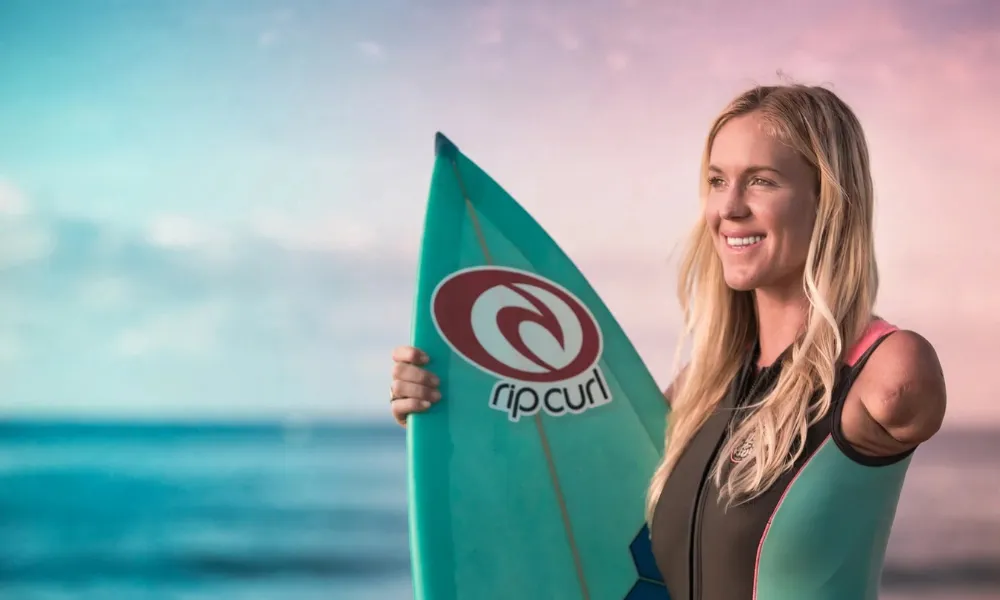
When and where: October 31, 2003, near Tunnels Beach, Kauai, Hawaii.
Bethany Hamilton was 13 when a shark attacked her while she was surfing with friends. She lost her left arm in the attack. For a young surfer who hoped to build a future around the sport, the injury changed almost everything about how she would approach the water.
Hamilton returned to surfing less than a month later, on November 26, 2003. She had to adjust her balance, paddling technique, and way of getting onto the board. In 2005, at age 15, she won the US National under-18 surfing championship. She later continued competing and sharing her experience through interviews, books, and films.
Her story is often reduced to “never give up.” A more useful lesson is that she returned to something she cared about and worked out new ways to do it. Her experience does not mean everyone should respond to a serious injury in the same way. Recovery looks different for each person.
What you can copy: If a setback changes your plan, identify one part of the goal you can still work toward. You may need a different method, extra help, or a new timeline.
2. James Dyson: Thousands of Prototypes Before a Product Worked

When and where: Development began in the late 1970s; the first mass-produced Dyson vacuum launched in Britain in 1993.
James Dyson became frustrated with the way his vacuum cleaner lost suction as its bag filled with dust. He began working on a different design that separated dust from the airflow using cyclonic technology.
According to Dyson’s company biography, it took 5,127 prototypes to develop a bagless vacuum cleaner that worked as intended. Established manufacturers rejected the design, partly because the new machine challenged a market built around replacement vacuum bags. Dyson eventually took the product to market himself.
This is a useful story about failure because it involves a specific problem, repeated experiments, and changes based on what did not work. It was not simply a matter of believing in an idea. It required engineering, time, money, and a willingness to revise the design.
What you can copy: When a project fails, write down what the result taught you. Change one part of your approach before trying again instead of repeating the same attempt without learning from it.
3. Chesley “Sully” Sullenberger: Staying Focused Under Pressure

When and where: January 15, 2009, over New York City and the Hudson River.
When Flight 1549 lost almost all thrust in both engines, the pilots had only minutes to assess their options. Captain Sullenberger and First Officer Skiles had to consider the aircraft’s condition, available landing areas, and the risk to the people aboard. The crew ultimately ditched the plane in the Hudson River.
All 155 people aboard evacuated. The outcome was remarkable, but it depended on much more than one person’s courage. Training, communication between the pilots, cabin-crew actions, and the response of nearby boats all contributed to the rescue.
The lesson is not that staying calm guarantees success. It is that preparation can help people make better decisions when they cannot afford to spend time guessing.
What you can copy: For an important task, prepare for the difficult part before it happens. Practise the steps, keep essential information accessible, and ask for help when the situation calls for it.
2. Real-Life Inspiring Stories of Overcoming Disability and Illness
These stories are about people’s work and choices not about treating disability as a tragedy that makes someone valuable only after they achieve something extraordinary. Access, teaching, support, and opportunity are part of the story too.
4. Helen Keller: Learning to Communicate and Becoming an Author
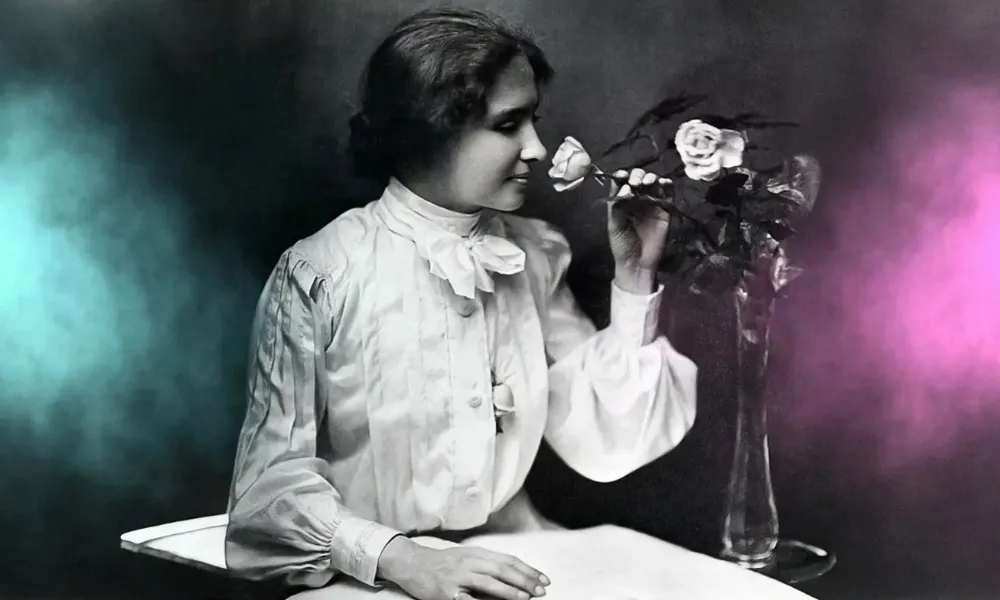
When and where: Tuscumbia, Alabama; March 3, 1887, marks Anne Sullivan’s arrival as Keller’s teacher.
Helen Keller lost her sight and hearing after an illness when she was about 19 months old. As a young child, she had no established way to communicate with the people around her. Her family sought help, and Anne Sullivan began teaching her in March 1887.
A breakthrough came on April 5, 1887, when Sullivan spelled “water” into Keller’s hand while water flowed over it at a pump. Keller began to understand that the hand movements represented words. This was the beginning of a much longer process of learning, not an instant solution to every barrier she faced.
Keller later attended Radcliffe College and graduated in 1904, becoming the first deafblind person to earn a Bachelor of Arts degree. She wrote books and essays and campaigned for the rights of people with disabilities. Her own autobiography, The Story of My Life, records her experiences and education.
Her life also depended on a teacher who worked closely with her and on institutions that helped make further education possible. That part matters: individual effort is powerful, but it does not replace access to learning.
What you can copy: If you are struggling to learn something, try a different way of receiving information. A tutor, a visual example, an audio explanation, or hands-on practice may make a difficult idea easier to understand.
5. Wilma Rudolph: From Childhood Illness to Olympic Gold

When and where: Born in 1940 in Saint Bethlehem, Tennessee; won three gold medals at the 1960 Rome Olympics.
Wilma Rudolph experienced serious illness as a child, including polio, and had difficulty walking. Her recovery involved family support and treatment, including help from her mother and siblings. She later became a track athlete and competed at the Olympic Games.
At the 1960 Olympics in Rome, Rudolph won gold medals in the 100 metres, 200 metres, and 4 × 100-metre relay. She became one of the best-known athletes of her generation and a significant figure in American sports history.
Her story is sometimes told as if an illness automatically turned into a sporting triumph. The fuller picture includes years of practice, coaching, family support, and the opportunities she had to compete. Not every child who experiences illness will become an Olympic champion, and that is not the standard anyone should be expected to meet.
What you can copy: Choose a small, measurable step toward a goal you care about. Repeat it consistently, and seek qualified support when the task requires it.
6. Erik Weihenmayer: Climbing Everest Without Sight

When and where: May 25, 2001, Mount Everest, Nepal–China border region.
Erik Weihenmayer began losing his sight as a child because of retinoschisis. He continued to attend school, later worked as a teacher, and developed an interest in climbing. Over time, he trained for increasingly difficult climbs with guides and teammates.
On May 25, 2001, he became the first blind person to reach the summit of Mount Everest. The achievement required preparation, equipment, navigation methods, and cooperation with a team. It was not a solo effort, nor does it suggest that every blind person should want to climb a mountain.
Weihenmayer’s story challenges assumptions about what a person can do, while also showing the importance of accessible methods and support. His work after Everest has included helping others take on challenges through the No Barriers organization.
What you can copy: When a task seems out of reach, break it into skills you can practise and people who can help. A team and the right tools may change what is possible.
3. Real-Life Inspiring Stories of Starting Over
7. José Hernández: From Migrant Farm Work to Space
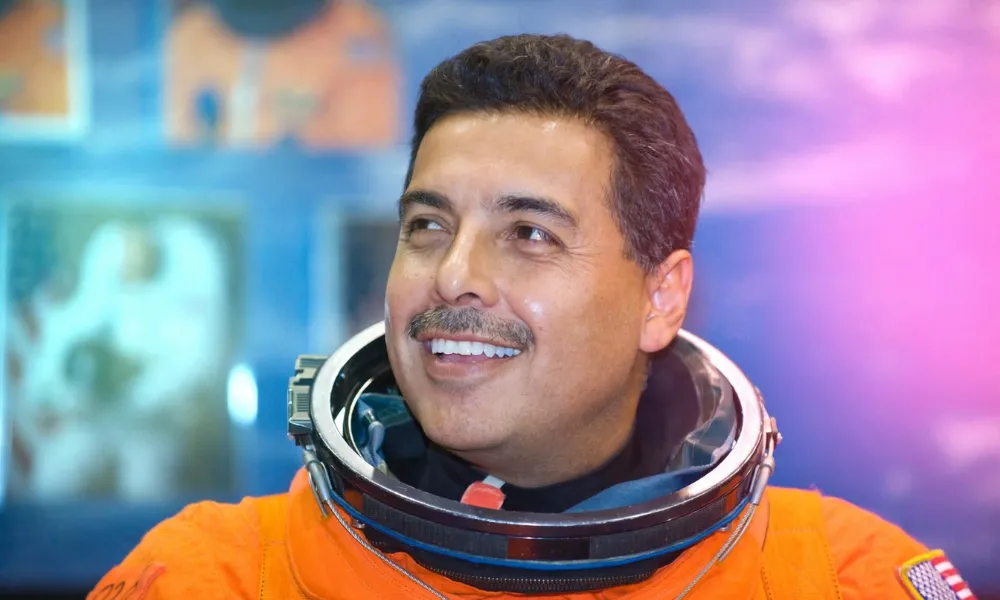
When and where: Born in 1962 in French Camp, California; flew aboard Space Shuttle Discovery in 2009.
José Hernández grew up in a migrant farmworker family. His family moved for agricultural work, and he spent part of his youth helping in the fields. Becoming an astronaut was not a simple jump from one life to another. He studied electrical engineering, earned advanced qualifications, and built a career as an engineer before joining NASA.
NASA selected Hernández as an astronaut candidate in 2004. In August 2009, he flew aboard Space Shuttle Discovery on mission STS-128 to the International Space Station. His path involved years of education, technical work, and repeated preparation.
His story is not proof that anyone can achieve any dream through effort alone. It shows how education, experience, persistence, and access to opportunities can build on one another over time. His path from agricultural work to space engineering connects directly to the core principles explored in our guide on traits of millionaires that build lasting wealth.
What you can copy: Find the next qualification or skill required for your goal. You do not have to complete the whole journey today; you need a realistic next step.
8. Malala Yousafzai: Continuing to Speak for Girls’ Education

When and where: Swat Valley, Pakistan; attacked on October 9, 2012, while travelling home from school.
Malala Yousafzai was a schoolgirl in Pakistan’s Swat Valley when the Taliban’s growing control restricted girls’ education. As a young teenager, she spoke publicly about girls’ right to attend school and wrote anonymously for BBC Urdu about life under Taliban rule.
On October 9, 2012, a Taliban gunman shot Malala on a school bus. She survived, received treatment in Pakistan and the United Kingdom, and returned to education in Birmingham in 2013. Rather than allowing her public work to end, she continued campaigning for girls’ access to education.
In 2014, Malala became the youngest Nobel Peace Prize laureate at age 17, sharing the award with Kailash Satyarthi. Her work is part of a wider campaign involving students, teachers, families, and organizations not the work of one person alone.
Her story also carries a serious reminder: people should not have to risk violence to claim an education. The responsibility for protecting students belongs to communities and governments, not to children who are targeted.
What you can copy: If an issue matters to you, start with a safe and useful action: learn from reliable sources, support an organization doing the work, or help someone access an opportunity.
9. Chris Nikic: One Small Step at a Time

When and where: November 7, 2020, Ironman Florida in Panama City Beach, Florida, USA.
Chris Nikic, an athlete with Down syndrome, set himself the goal of completing a full Ironman triathlon. The event included a 2.4-mile swim, a 112-mile bike ride, and a 26.2-mile run. It demanded endurance, training, planning, and support from his coach and guide, Dan Grieb.
Nikic completed the race in 16 hours, 46 minutes, and 9 seconds, 14 minutes inside the 17-hour cutoff. Guinness World Records recognized him as the first person with Down syndrome to complete a full Ironman triathlon.
The result was extraordinary, but his training was built around repeated practice rather than a single burst of motivation. He promoted the idea of becoming “1 percent better” each day. That phrase is useful as a reminder to focus on steady improvement, not as a rule that everyone must make measurable progress every day. Focusing on small daily improvements is a strategy detailed in our breakdown of success habits and daily routines of successful people.
What you can copy: Pick a task you can practise safely for ten minutes. Repeat it regularly, track your progress, and adjust the plan when you need rest or support.
4. Real-Life Inspiring Stories From History
10. Katherine Johnson: The Mathematician Who Helped Send Astronauts Into Space
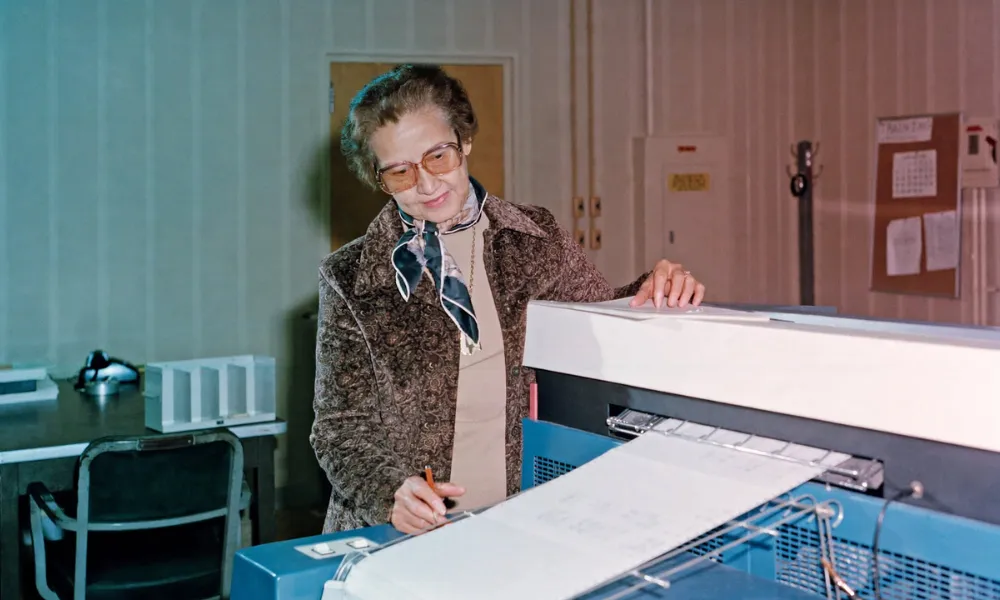
When and where: Born August 26, 1918, in White Sulphur Springs, West Virginia; joined the National Advisory Committee for Aeronautics in 1953.
Katherine Johnson showed an early talent for mathematics, but her career developed during a time when racial segregation and gender discrimination limited opportunities for many Black women. After studying mathematics and French at West Virginia State College, she taught school before joining the National Advisory Committee for Aeronautics, the agency that later became NASA.
Johnson calculated and checked flight trajectories for early American space missions. In 1962, astronaut John Glenn asked her to verify the electronic computer’s calculations before his orbital flight. Her work helped the mission team check that the numbers were reliable.
Johnson’s achievements became better known to a wide audience through the book and film Hidden Figures. Yet her story is not only about an individual overcoming barriers. It also points to the contributions of other women whose technical work was essential but often overlooked.
What you can copy: Take your skills seriously, even if others do not immediately recognize them. Build a record of your work, keep learning, and look for places where your skills can solve a real problem.
11. Nelson Mandela: Building a Political Future After Prison
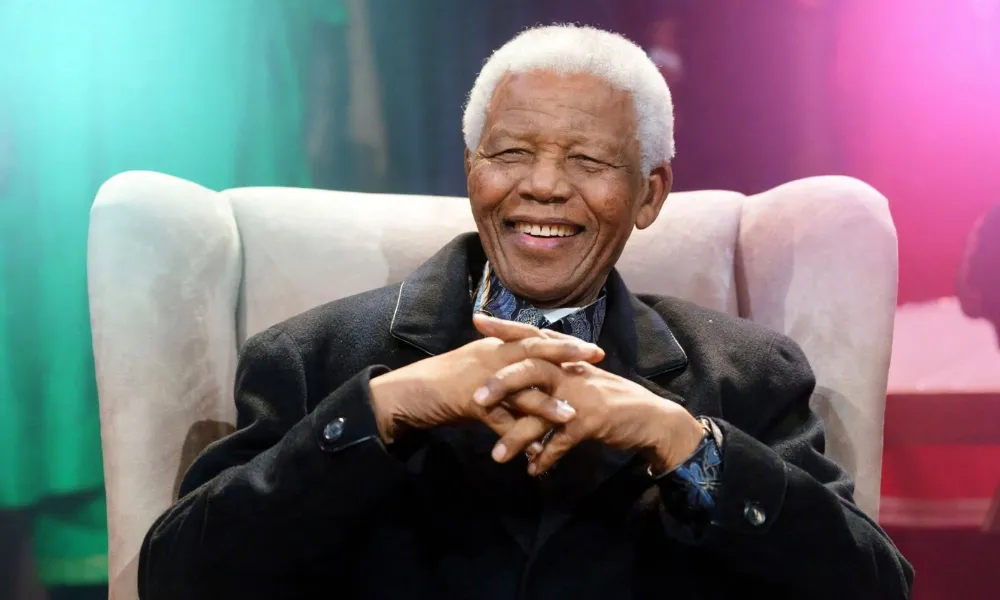
When and where: Arrested in South Africa in 1962; released on February 11, 1990; became president in 1994.
Nelson Mandela spent more than 27 years in prison under South Africa’s apartheid system. He lost years with his family, including the chance to attend his mother’s and eldest son’s funerals. His imprisonment was part of a wider system of racial oppression, and he was one of many people who fought against it.
After his release in 1990, Mandela took part in negotiations that helped end apartheid and move South Africa toward democratic elections. In 1994, he became the country’s first Black president, following its first democratic election in which people of all races could vote.
It would be misleading to describe this history as a simple lesson in forgiveness or positive thinking. Mandela’s political work involved collective action, negotiation, difficult compromises, and the efforts of many South Africans. His story is inspiring partly because it shows how a long struggle can change a country, even when the result is far from perfect.
What you can copy: When you face a long conflict, focus on the outcome you want to help create. Look for practical ways to move toward it while recognizing that lasting change often requires other people working together.
12. Claudette Colvin: The Teenager Who Challenged Bus Segregation
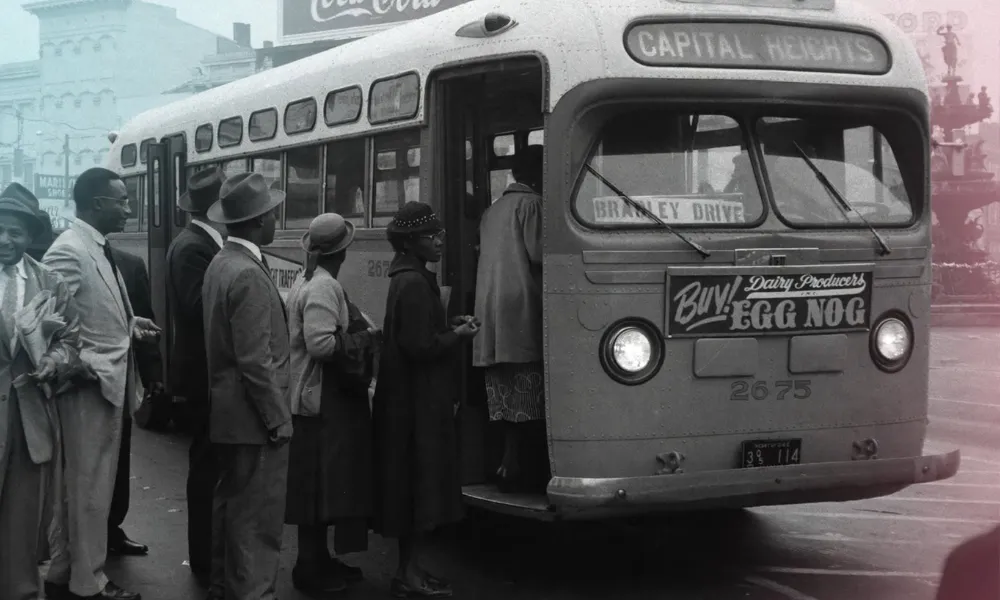
When and where: March 2, 1955, Montgomery, Alabama, USA.
Months before Rosa Parks became a central figure in the Montgomery bus boycott, 15-year-old Claudette Colvin refused to give up her seat to a white passenger on a segregated bus. Police arrested her. Colvin was young, and the risks of challenging segregation were serious, especially for Black residents living under discriminatory laws and practices.
Later that year, Colvin became one of the plaintiffs in Browder v. Gayle, a federal case challenging bus segregation in Montgomery. The case helped lead to a court ruling that the city’s segregated bus system was unconstitutional. Colvin’s role was less widely celebrated than Parks’s, but her participation was part of the legal challenge that helped change the system.
Her story matters because history often remembers a few famous names while overlooking others who took risks and contributed to the same change. Courage does not always lead to immediate recognition.
What you can copy: Do not assume that a contribution is meaningless because it is small or not widely recognized. Find a constructive, safe way to support a cause you believe is fair.
Popular Inspiring Stories That Aren’t Quite True

Motivational stories often become more dramatic each time someone retells them. A precise number or a sharp quote can make a story memorable, but that does not make it accurate. Here are three examples worth checking before repeating them.
Did Colonel Sanders face exactly 1,009 rejections?
The popular version says that Harland Sanders, who founded the KFC franchise business, was rejected 1,009 times before someone accepted his chicken recipe. The broad outline of his later-life business effort is real, but an exact tally of 1,009 rejections is not established by the official history available from KFC.
KFC’s own history records that Sanders began serving food at his Kentucky service station, later developed his fried chicken business, and opened his first franchise in 1952. That history does not document a list of 1,009 rejections.
What is safe to say: Sanders tried to grow his business and eventually found a franchise partner. Do not present the exact 1,009 figure as a proven historical fact unless you can find a reliable primary record for it.
Did Thomas Edison fail exactly 1,000 times before inventing the light bulb?
The Thomas Edison Papers project at Rutgers University explains that the familiar story of Edison making a precise number of failed attempts has been repeated in different forms. No one, including Edison, counted every experimental lamp in the way later versions of the story suggest. The records do document extensive experimentation, including hundreds of trials and thousands of experiments in the broader lamp-development work.
What is safe to say: Edison and his collaborators tested many designs and materials before developing a commercially useful electric lamp. The exact number of “failures” is not a reliable fact to use as a motivational statistic.
Was Harry Potter rejected exactly 12 times?
J. K. Rowling has publicly discussed receiving many rejections before Harry Potter and the Philosopher’s Stone was accepted. In a 2015 exchange with readers, she said the manuscript was sent to 12 publishers by the literary agent who eventually represented her before Bloomsbury accepted it.
That is different from saying that exactly 12 publishers rejected the book in every stage of the process. The number is often repeated without explaining what it refers to.
What is safe to say: Rowling faced rejection before publication, but the precise version of the story should match her account. The useful point is that a manuscript can be rejected and still find a publisher not that every writer should expect the same result.
What These Stories Don’t Tell You
Inspiring stories can offer useful ideas, but they can also create an unfair picture of how success works. There are three things worth remembering.
First, we hear more about people who succeeded. We know about the inventor whose product finally worked, the athlete who reached the finish line, and the student who became an astronaut. We hear less about people who worked just as hard but faced illness, financial pressure, discrimination, or circumstances they could not change. This is called survivorship bias: the visible examples are not the whole picture.
Second, support matters. Bethany Hamilton had medical care and a surfing community. Helen Keller had Anne Sullivan. Erik Weihenmayer climbed with a team. Katherine Johnson worked with other mathematicians and engineers. Their achievements were personal, but they did not happen in isolation.
Third, effort cannot control every outcome. Working hard may improve your chances, but it cannot guarantee recovery, wealth, recognition, or success. A person who needs rest, changes direction, or asks for help has not failed at being determined.
The point of these stories is not to make readers feel guilty for struggling. It is to show possible ways of responding to difficulty while respecting the reality of each person’s circumstances.
Turn an Inspiring Story Into One Action
You do not need to copy another person’s entire life. Choose one lesson and make it useful for the situation you are facing now.
Ask yourself these three questions:
- What was the first small step? Look beyond the final achievement. What did the person practise, learn, ask, or change first?
- What could I do in 10 minutes? Choose one manageable action, such as researching a course, writing a first paragraph, organizing a document, or making a plan.
- Who could help me? Think of a teacher, friend, family member, colleague, professional, or organization that could offer useful support.
Write down your answers. Keep the action small enough that you can begin without waiting for the perfect mood or a completely free day.
Conclusion: The Lesson Behind the Hudson River Landing
When Flight 1549 lost thrust in both engines, the crew did not have time to wait for certainty. Sullenberger and Skiles used their training, assessed the available options, and worked with the cabin crew to get people out of the aircraft. The safe evacuation was the result of preparation and teamwork under extraordinary pressure, not proof that a positive attitude can solve every problem.
The other stories in this article point to different lessons. Bethany Hamilton adapted her approach to surfing. Helen Keller learned through a new way to communicate. José Hernández built his career step by step. Claudette Colvin contributed to a legal challenge that helped change a discriminatory system.
Their lives were different, and their challenges cannot be compared as if every person starts from the same place. But each story gives us a question worth asking: What is one useful step I can take with the time, skills, and support I have today?
You do not have to make history to make progress. Sometimes the most meaningful first step is simply the one you are ready to take.
Frequently Asked Questions
1. What is the most inspiring true story?
There is no single answer. Some readers may find Bethany Hamilton’s return to surfing inspiring, while others may connect more with Helen Keller’s education or Claudette Colvin’s role in the fight against segregation. The most useful story is often the one that speaks to a challenge you understand.
2. Are inspirational stories true?
Some are, and some are fictional stories presented as if they happened. Check whether a story names the people involved, provides dates and locations, and links to reliable records, interviews, or autobiographies. Be careful with exact quotes and dramatic statistics that appear without a source.
3. What are real-life stories of overcoming adversity?
They are accounts of people facing serious challenges and finding ways to respond. Examples include Bethany Hamilton returning to surfing after a shark attack, José Hernández’s path from migrant farm work to NASA, and Malala Yousafzai’s continued advocacy for girls’ education after surviving an attack.
4. What are some short, real inspiring stories?
The story of Claudette Colvin is a short example of a teenager challenging an unfair rule. James Dyson’s development process offers a story about repeated prototypes, while Chris Nikic’s 2020 Ironman finish shows the role of training and support. Each can be summarized briefly, but the facts should remain accurate.
5. Who are the most inspiring people alive today?
That depends on the reader’s interests and values. People working in education, disability rights, science, public health, sports, and local communities can all be inspiring. Rather than choosing only famous figures, look for documented examples of people making a meaningful contribution.
6. How can inspiring stories support mental well-being?
A story may help someone feel less alone, consider a different response to a problem, or find language for a difficult experience. But people react differently, and a motivational story is not a substitute for professional mental-health support when someone needs it. A good story should offer perspective, not pressure people to hide their struggles.
7. What can I learn from real-life success stories?
Look at the process behind the result. Ask what the person practised, what support they received, what obstacles remained, and what they changed along the way. Then choose one action that fits your own situation instead of assuming you can copy the whole journey.
8. What are inspiring stories for students?
Students may connect with Katherine Johnson’s work in mathematics, Helen Keller’s education, or Malala Yousafzai’s advocacy for girls’ right to attend school. These stories can prompt discussions about learning, fairness, persistence, and the importance of teachers and other support.
9. Are famous stories about rejection always true?
No. Some are based on real events but include unsupported numbers or simplified details. The claims about Edison’s exact number of light-bulb failures and Colonel Sanders’s 1,009 rejections are examples of stories that need careful checking. Use primary records or reliable reporting before repeating a precise claim.
10. How do I write my own inspiring story?
Start with a real event, not a dramatic lesson. Explain what happened, what made it difficult, what you did, who helped, and what changed afterward. Be honest about what remains unresolved, protect other people’s privacy, and avoid adding details or dialogue that you cannot verify.
Sources and Official Records
To review the original documentation and research behind these real-life inspiring stories, consult the primary records below:
-
NTSB Flight 1549 Official Accident Report: Official federal aviation findings on the Hudson River emergency landing. You can read the full documentation at the NTSB official accident report archive.
-
Rutgers University Thomas Edison Papers: Archival research debunking common trial-count myths surrounding light bulb development. Explore the primary records through the Rutgers University Thomas Edison Papers project.
-
Guinness World Records – Chris Nikic: Official verification of the first person with Down syndrome to complete an Ironman triathlon. Read the official announcement on the Guinness World Records documentation page.