
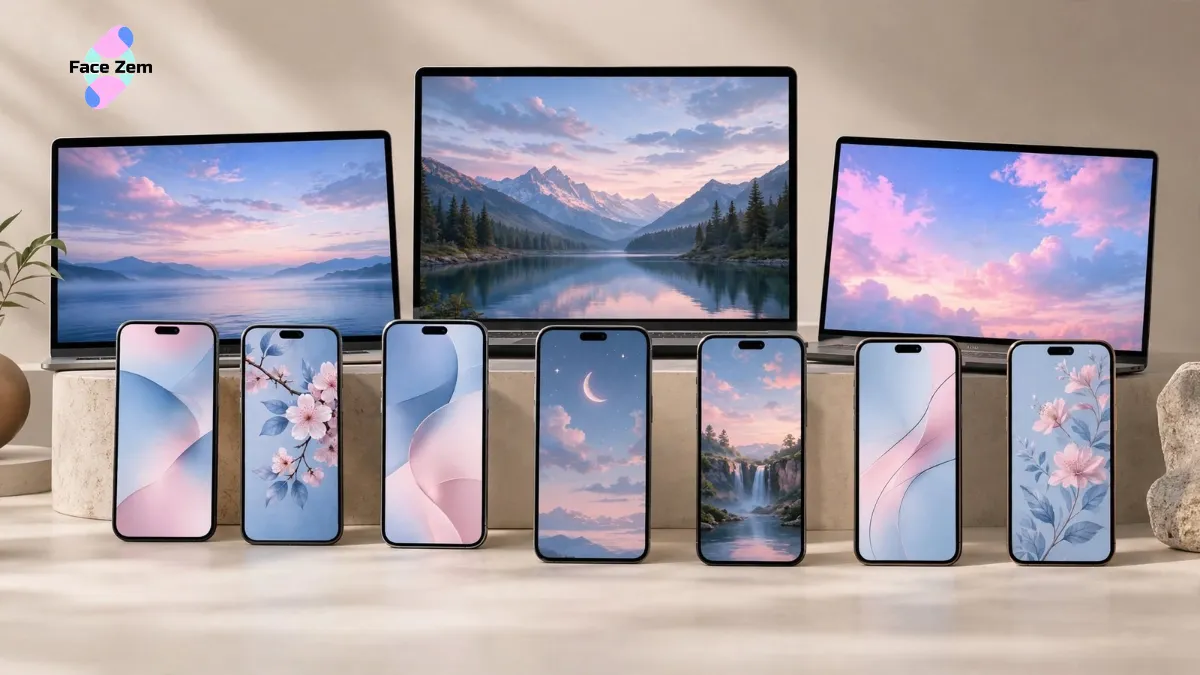
Looking for aesthetic wallpaper ideas can get messy fast. You open one gallery and suddenly you’re looking at pastel clouds, dark academia libraries, Y2K chrome, mountain photography and 50 versions of the same beige gradient.
So how do you pick one?
Start with the look you actually want. Your wallpaper should fit your mood and colors while leaving enough room for icons, widgets or the clock. Here are some aesthetic wallpaper styles worth trying along with a few practical tips that make choosing one much easier.
Key takeaways
- Minimalist wallpapers work well when you want a clean screen with plenty of empty space.
- Dark and celestial wallpapers suit darker setups and moody screens.
- Pastel and cute wallpapers give phones and lock screens a softer look.
- Y2K, abstract and retro styles work well when you want something more noticeable.
- Nature, cottagecore and floral wallpapers are good choices for a calmer feel.
- Check the wallpaper’s aspect ratio, resolution and subject placement before setting it.
- Leave some clear space for your icons, widgets and clock.
AI Overview answer
Aesthetic wallpaper ideas can range from simple minimalist designs and dark tones to nature scenes, soft pastels, cute patterns, Y2K graphics, dark academia, cottagecore, abstract art, celestial themes and floral designs. The best choice comes down to the mood you like, the colors you enjoy and where you plan to use it. For a phone or desktop, pick an image that leaves some open space around your icons or widgets and matches your screen shape so the main subject doesn’t get cut off.
What makes a wallpaper look aesthetic?
An aesthetic wallpaper usually has a clear visual style that feels good to look at without making the screen feel messy. Colors, lighting, composition and the amount of empty space all play a part. A soft sunset photo can give your phone a calm look while a dark abstract design can make a desktop feel more moody and clean.
What makes a wallpaper look aesthetic?
There isn’t one fixed look. Aesthetic wallpapers cover a lot of styles. Color usually gives you the first clue. Beige and cream can make a screen feel quiet while black, dark green or deep blue gives it a heavier look. Pastel pink, lavender and baby blue feel softer. Chrome and bright colors push things toward a Y2K style.
Then there’s composition. A wallpaper with one clear subject and some empty space usually works better as a background than an image where every corner is packed with detail. Your icons and widgets need somewhere to sit. And that’s the part people sometimes miss. You’re going to use the image as a background every day so it needs to work behind your interface too.
Aesthetic wallpaper ideas to try
1. Minimalist aesthetic wallpapers
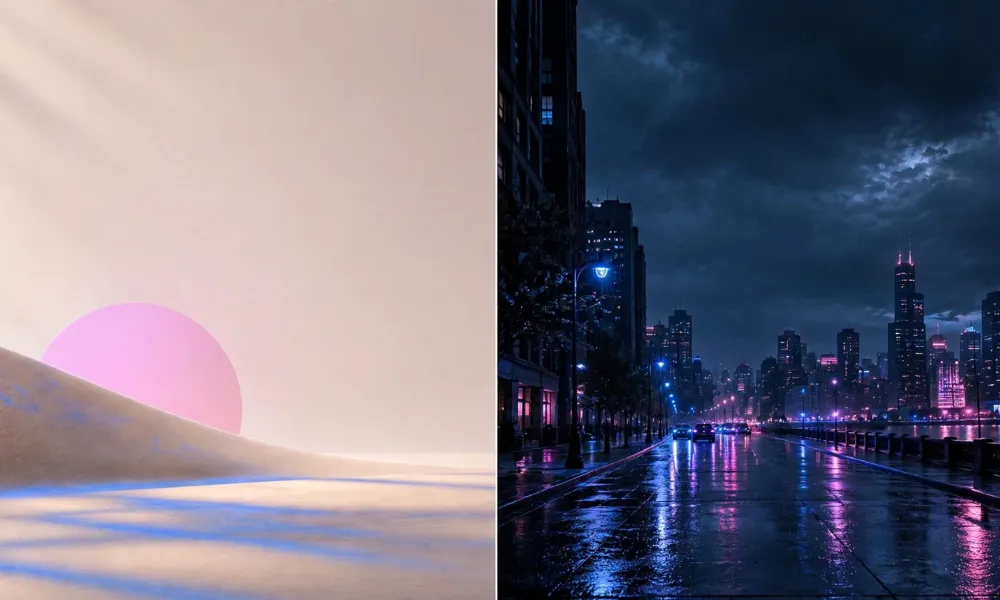
Minimalist wallpapers are a good starting point if you like a clean desktop or phone. Think soft gradients, simple shapes, line drawings, one small object or a quiet landscape. Beige, cream, gray, white, sage green and soft brown fit this style well. The extra empty space also makes these wallpapers practical. Your icons won’t be fighting with a dozen details in the background.
Try: beige gradients, simple line art, a single flower, small architectural details or one object surrounded by empty space.
2. Dark aesthetic wallpapers
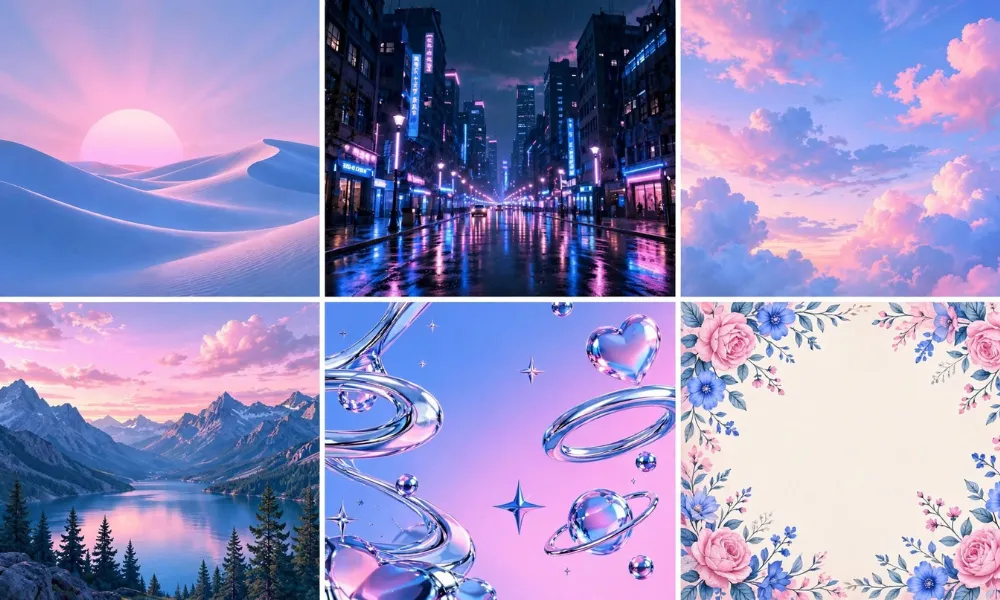
Dark wallpapers work especially well with dark mode and darker PC setups. Black is an obvious choice but you can get more depth with charcoal, deep blue, forest green, burgundy or dark purple. A rainy street or a dimly lit room can look far more interesting than a plain black background.For a phone lock screen, pay attention to where the clock sits. A bright subject directly behind the time can make the whole screen harder to read.
Try: rainy streets, night photography, dark gradients, silhouettes, moody rooms or shadowy architecture.
3. Nature aesthetic wallpapers
Nature gives you a lot of room to choose your own style.
A foggy forest can give your screen a really peaceful feel. Snowy mountains, empty beaches, wildflowers, leafy plants and cloudy skies work well too. If you want something calm, go for photos with softer lighting and fewer harsh details. Some easy ideas are misty forests, mountains, beaches, clouds, botanical photos and warm golden-hour scenes.
4. Pastel aesthetic wallpapers
Pastel wallpapers create a soft, cozy feel on your screen. If you prefer light shades, options like lavender, powder blue, gentle pink, mint, peach, and cream are obvious choices. You can go for a simple pastel gradient or add faint details such as clouds, flowers, watercolor patterns, or tiny illustrations just be mindful of contrast. When the background is extremely light and your icons or clock are white, they can become hard to see. Think about using pastel gradients, clouds, watercolor textures, small flowers, and minimal illustrations.
Cute aesthetic wallpapers
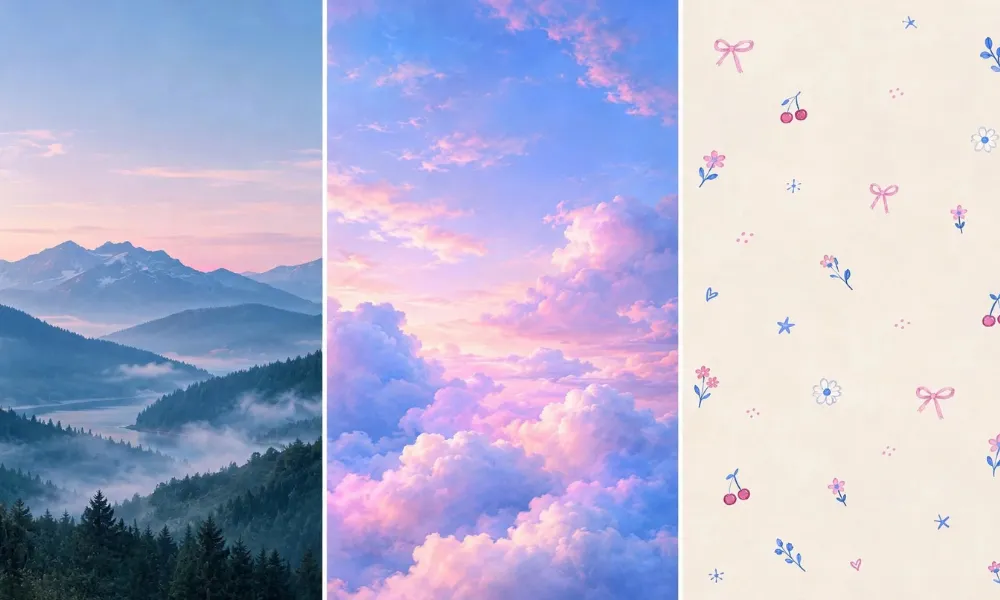
A cute wallpaper doesn’t have to be crowded with cartoon characters. Little accents, bows, cherries, flowers, tiny animals, or hand‑drawn doodles, can give your screen a sweet, personal touch. Keep the color palette limited so everything stays harmonious. A soft background with a few details generally looks cleaner than packing many different patterns into one wallpaper.
Try: cute animals, bows, cherries, tiny flowers, doodles or simple character art.
6. Y2K aesthetic wallpapers
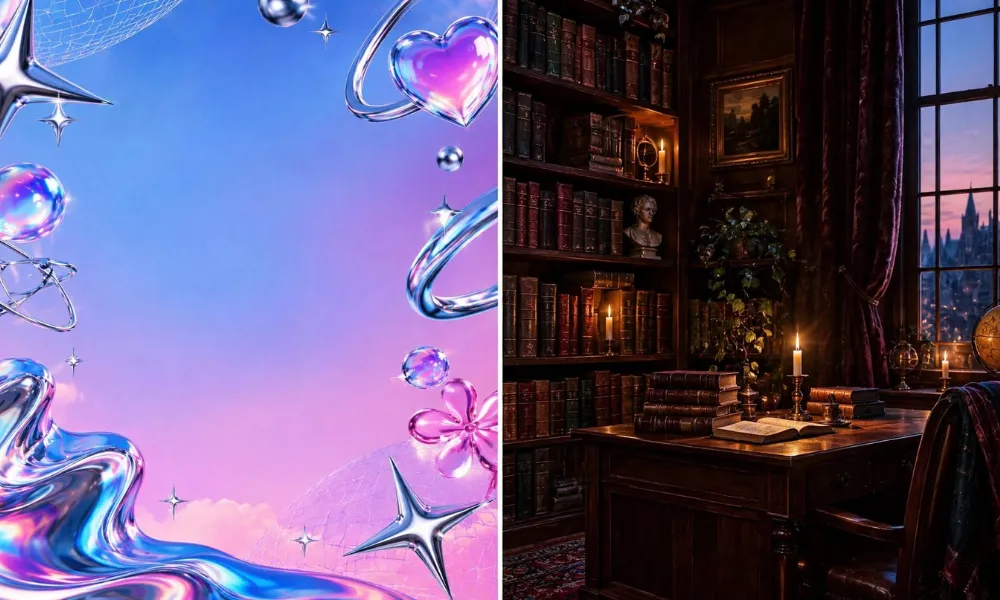
Y2K takes the screen in a completely different direction. Chrome, glossy textures, metallic surfaces, bright pink and blue, butterflies, sparkles and old-school computer graphics are common here. You can also mix those ideas with modern 3D shapes. This style can get busy quickly. A simpler composition usually makes it easier to live with every day.
Try: chrome objects, holographic gradients, glossy 3D shapes, retro computer graphics or metallic textures.
7. Dark academia wallpapers
Dark academia has a warm vintage feel. Old libraries, books, classical buildings, paintings, candles and leather textures fit naturally here. Brown, burgundy, forest green, cream and charcoal are common colors. This style works particularly well on desktops and laptops. Just leave some quieter areas for your icons.
Try: old libraries, bookshelves, candlelight, classical architecture, antique artwork or vintage paper textures.
8. Cottagecore wallpapers
Cottagecore embraces garden settings, pastoral vistas, and uncomplicated country touches. Typical elements include wildflowers, cozy cottages, fruit, gentle sunlight, and winding garden lanes. The palette tends toward muted, earthy tones. It’s an ideal choice when you’d like your display to feel inviting and calm without being overly minimalist.
Try: flower gardens, cottages, countryside paths, wildflowers, botanical illustrations or sunny kitchen scenes.
9. Abstract aesthetic wallpapers
Abstract wallpapers give you plenty of freedom because there doesn’t have to be a recognizable subject. You can use gradients, flowing shapes, blurred colors, geometric forms or glass-like textures. They work particularly well on large desktop displays where you have more space to play with composition. If your desktop already has a lot of icons, keep the background slightly quieter.
Try: mesh gradients, flowing shapes, geometric designs, blurred color or simple 3D forms.
10. Celestial aesthetic wallpapers
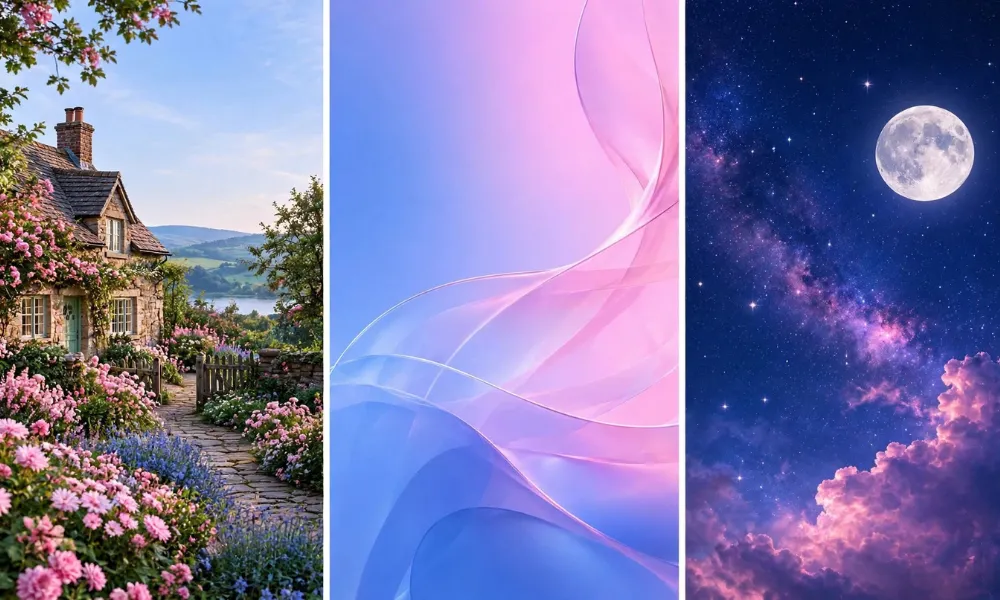
If you like the night sky, celestial wallpapers are an easy choice. Moon phases, stars, planets, eclipses and galaxies can give you a strong visual without needing dozens of different elements. A mostly dark celestial wallpaper also works nicely with a darker setup.
Try: a large moon, a simple star field, planets, an eclipse or a deep blue and purple night sky.
11. Floral aesthetic wallpapers
Floral wallpapers can look completely different depending on how you shoot or design them. A close-up rose gives you one strong focal point. A botanical drawing feels more vintage. A soft floral pattern can keep the screen subtle. For a busy desktop, I’d lean toward a lower-contrast floral image. You still get the color without turning the whole screen into visual noise.
Try: roses, wildflowers, botanical drawings, pressed flowers, soft-focus blooms or monochrome flowers.
Choose an aesthetic wallpaper based on your mood
Sometimes you know how you want your screen to feel before you know the name of the aesthetic.
For a calm screen
Try minimalist designs, muted nature photography, soft gradients or simple botanical images. Look for gentle colors and plenty of open space. Your wallpaper should sit quietly behind everything else you’re doing.
For a dark or moody setup
Go with dark gradients, night photography, celestial scenes, rainy streets or dark academia. You can keep most of the image dark while adding a little blue, green, purple or burgundy for depth.
For a cute or soft look
Pastels, flowers, simple illustrations, bows and small character designs are good places to start. Pick a small color palette and stick with it. It usually looks cleaner.
For a bold screen
Try Y2K, abstract, retro-futuristic or colorful graphic designs. These wallpapers can become the main visual element of your setup. If you have lots of desktop icons, though, keep the busiest details away from them.
How to choose an aesthetic wallpaper for your screen
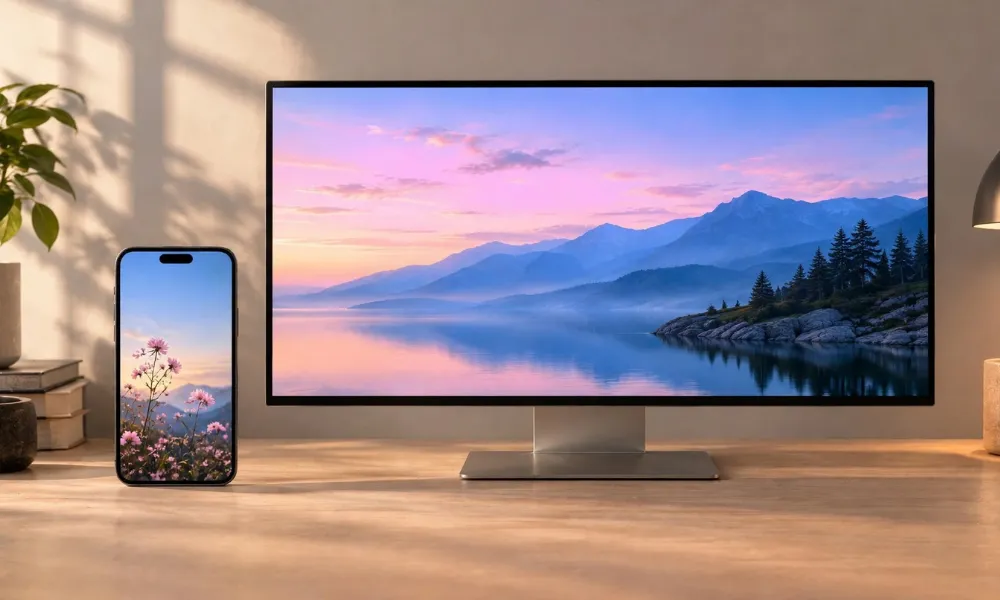
You’ve found a style you like. Now check whether the actual image will work on your device.
Check the screen shape
A wallpaper made for a tall phone can look strange on a wide desktop. The crop might cut off the person’s face, remove half a building or push the main subject right under your icons. Start with an image close to your screen’s aspect ratio whenever possible.
Leave room for icons and widgets
Look at where your icons actually sit. If the wallpaper has dark textural details in that same area, finding an icon can become annoying. A clear patch of sky or a simple section of color can make a huge difference. The same applies to your phone clock and widgets.
Match the wallpaper to your interface
Using dark mode? A dark or medium-tone wallpaper will usually fit naturally. Using a light interface? Make sure the background doesn’t get so bright that text and icons disappear into it. You don’t need perfect contrast across the entire image. Focus on the areas where your interface elements actually appear.
Check the resolution
A wallpaper can look perfectly sharp in a small preview and then turn blurry when you put it on a big monitor. Check the image size before using it, especially if you have a high-resolution display. On a 4K monitor, a low-resolution image will usually look soft or pixelated once it gets stretched across the screen.
Quick comparison of aesthetic wallpaper styles
| Style | Mood | Common look | Good for |
| Minimalist | Calm | Simple shapes and open space | Phones and desktops |
| Dark | Moody | Deep colors and shadows | Dark setups |
| Nature | Relaxed | Mountains, forests and skies | Any screen |
| Pastel | Soft | Pink, lavender, blue and cream | Phones and lock screens |
| Cute | Playful | Small illustrations and motifs | Phones |
| Y2K | Bold | Chrome, gloss and bright colors | Creative setups |
| Dark academia | Vintage | Books, libraries and architecture | Desktops and laptops |
| Cottagecore | Warm | Gardens, flowers and countryside | Phones and laptops |
| Abstract | Creative | Shapes, gradients and textures | Desktop screens |
| Celestial | Dreamy | Moon, stars and planets | Phones and desktops |
| Floral | Soft or elegant | Flowers and botanical art | Phones and lock screens |
Common mistakes when choosing an aesthetic wallpaper
Choosing an image that’s too busy
A beautiful photo can make a terrible desktop background. If every part of the image has strong detail, your icons have nowhere to breathe. The result can feel messy within a few minutes.
Ignoring icon placement
Look at the actual position of your icons before choosing the final image. A subject in the middle of the wallpaper might look perfect in a gallery. Then you set it as your background and discover that 8 desktop shortcuts are sitting across its face.
Using the wrong aspect ratio
Cropping can completely change an image. If you have to cut away a large part of the original just to make it fit, find another image. You’ll save yourself the headache.
Choosing only from the preview
A wallpaper can look amazing as a standalone picture and still annoy you after 2 hours of actual use.
Set it for a while. Open a few apps. Look at your icons. Check your lock screen. You’ll know pretty quickly whether the image works.
How to find the right aesthetic wallpaper for you
Keep the process simple.
- Pick the mood.
Decide whether you want calm, dark, cute, warm, vintage or bold. - Pick the style.
Choose something like minimalist, nature, Y2K, dark academia or abstract. - Pick your colors.
Stick with colors you won’t get tired of seeing every day. - Check the composition.
Look at where your icons, widgets and clock will sit. - Match the image to your screen.
Use the right orientation and a large enough image so the crop doesn’t ruin it.
That’s enough. You don’t need to scroll through 500 wallpapers to make a decision.
FAQ
What makes a wallpaper aesthetic?
An aesthetic wallpaper has a clear visual style with a consistent use of color, subject or composition. The style can be minimalist, dark, pastel, Y2K, nature-based or almost anything else.
What are some popular aesthetic wallpaper styles?
Popular choices include minimalist, dark, nature, pastel, cute, Y2K, dark academia, cottagecore, abstract, celestial and floral wallpapers.
What aesthetic wallpaper is good for a minimalist setup?
Minimalist wallpapers with muted colors and plenty of open space work well. Simple gradients, line art and quiet landscapes are good examples.
How do I choose an aesthetic wallpaper for my phone?
Start with the mood and colors you like. Then check the image against your lock screen clock, widgets and app icons before keeping it.
What makes a good aesthetic desktop wallpaper?
A good desktop wallpaper leaves enough visual space for your icons while still giving the setup some personality. Wide landscapes, gradients, abstract designs and simple compositions work well.
Should aesthetic wallpapers be dark or light?
Either works. Dark wallpapers fit moody setups while light and pastel designs give the screen a softer look. Your interface and room lighting can help you decide.