

Rags-to-riches stories document individuals transitioning from severe financial hardship to wealth, business success, or high social standing. While personal skill and hard work drive these journeys, empirical research shows that economic mobility also depends heavily on location, family resources, timing, access to capital, and structural opportunity. Examining documented milestones rather than motivational myths offers realistic, actionable lessons in skill development and financial management.
Key Takeaways
- These 12 stories are about business owners, performers, leaders, and people from history.
- Each story lists dates, milestones, or money numbers when reliable sources have them.
- Not everyone started with nothing; some had help from family, school, investors, or partners.
- Just because someone succeeded does not mean the same way will work for everyone.
- Studies show that moving from the lowest to the highest income level is rare, even where it is easier.
- The how‑to part talks about skills, saving, support, and small tests, not promises of getting rich.
The Father Who Kept Going
Some rags-to-riches stories start with a business idea. Chris Gardner’s journey began with a much bigger challenge: working toward a career while caring for his young son without a home.
During the early 1980s, Gardner lived in San Francisco with his toddler. Although he had managed to break into the competitive world of finance, he lacked a steady place to live. He often spent nights in shelters and public spaces, chasing professional opportunity by day while facing severe hardship at night.
Years of persistence eventually paid off when he secured a position at Bear Stearns. By 1987, he went on to launch his own Chicago brokerage firm, Gardner Rich & Co., inspiring the famous film The Pursuit of Happyness.
While his achievements are remarkable, they shouldn’t be viewed as a guaranteed blueprint. This article explores 12 individuals who overcame serious poverty, examining the key factors behind their success and the practical lessons their real-life journeys offer.
What do rags-to-riches stories actually have in common?
Rags-to-riches stories typically share common patterns rather than a single formula: developing high-value technical or communication skills, identifying unserved customer needs, leveraging early professional networks or support, executing calculated business risks, and adapting continuously over years of sustained effort.
What Is a Rags-to-Riches Story?
A rags-to-riches story is about a person who starts out poor or with almost no money and later becomes rich or gains high status. The words are linked to stories of personal change, like the famous Horatio Alger books from the late 1800s.
No one knows for sure who first used the phrase. One important point: rags-to-riches does not mean the person started with no money at all. It means there was a big shift in their life, and how it happened is important.
1. True Rags-to-Riches Stories of Entrepreneurs
1. Howard Schultz: From Brooklyn Public Housing to Starbucks

Howard Schultz grew up in Brooklyn, New York, in a working‑class family. He often worried about money, but he later went to Northern Michigan University and started working in sales. In 1982, he joined Starbucks.
At that time, Starbucks was a small store in Seattle. It sold coffee beans and equipment. Inspired by Italian espresso bars, Schultz envisioned a community-oriented gathering space where customers could sit and enjoy coffee. When the original Starbucks owners rejected this model, he left to launch his own competing café, Il Giornale, in 1985.
In 1987, things changed. Schultz and his investors raised $3.8 million to buy Starbucks’ assets – the name, the roasting plant, and six Seattle stores. Il Giornale then took the Starbucks name. The company’s own history records this deal and the money raised.
Schultz did not build Starbucks by himself. He had investors, a business team, an existing coffee brand, and a market that liked the idea. His success was seeing an opportunity and turning it into a business.
Lesson to copy: Spot a customer problem and try a small test before spending a lot. You don’t need to open a café to use this idea; you can try a service, product, or freelance offer with a few customers first.
2. Sara Blakely: Turning $5,000 Into Spanx

Sara Blakely wasn’t a fashion executive when she came up with the idea for Spanx. In the late 1990s, she worked in sales and struggled to find an undergarment that worked under a pair of cream trousers. She cut the feet off her pantyhose to get the effect she wanted.
Blakely used her own savings to develop the idea. A 2012 Forbes profile reported that she set aside $5,000 and spent about two years developing the product while keeping her sales job. She also researched hosiery patents and worked through the early challenges of bringing an unfamiliar product to market.
Spanx grew into a major shapewear brand, and Blakely became a billionaire. But the story isn’t simply “she had an idea and got rich.” It involved a product people wanted, savings to fund early development, time to work on the business, and a willingness to sell an unfamiliar product.
What you can copy: Look for a recurring problem you understand well. Before spending much money, ask potential customers whether they experience it and whether they’d pay for a solution.
3. Jan Koum: From Financial Hardship to WhatsApp

Jan Koum was born in Ukraine. He moved to the United States with his family when he was a teen. His family was poor. A 2014 WIRED article said they used public help, like food stamps, when they first lived in the U.S. Later, Koum learned computer skills and got a job in tech.
In 2009, he started WhatsApp with Brian Acton. The app was made for easy, reliable texting, not for a big social network.
In February 2014, Facebook announced an agreement to acquire WhatsApp for approximately $16 billion in cash and shares, with an additional $3 billion in restricted stock units for founders and employees. The transaction was completed in October 2014. These figures come from Facebook’s original announcement and SEC filing.
The deal illustrates the financial power of company ownership. Koum didn’t become wealthy simply by earning a salary; he owned a stake in a company that reached hundreds of millions of users.
What you can copy: Learn a skill that solves a real problem. Technical ability, customer understanding, and a clear product can create opportunities, although no skill guarantees wealth.
4. Do Won Chang: The First Forever 21 Store

Do Won Chang and his wife Jin Sook Chang moved from South Korea to California in 1981. They had little money, unlike many established business owners. Chang took several jobs while trying to find a good business area. He saw that people in the clothing business seemed to be doing well.
In 1984, they opened a small clothing shop in Los Angeles named Fashion 21. A 2010 Los Angeles Times story talked about the early shop and Chang’s choice to go into retail. Another report said they started the first store with about $11,000 of savings.
The store grew into Forever 21, a fast-fashion retailer with an international presence. Yet the company’s later difficulties also matter. Forever 21 filed for bankruptcy protection in 2019, showing that building a large company doesn’t guarantee that it will remain successful.
What you can copy: Study a market before entering it. Chang’s early observation gave him a direction, but his results also depended on retail demand, costs, competition, and business decisions over time.
2. Rags-to-Riches Stories in Entertainment and Media
5. Oprah Winfrey: Building a Media Career

Oprah Winfrey was born in Mississippi in 1954 and spent parts of her childhood in difficult financial circumstances. Her later career began in broadcasting, where her communication skills helped her move from local news and television work toward hosting.
In 1984, Winfrey moved to Chicago to host AM Chicago. The programme became a success, and in 1986 it was nationally syndicated as The Oprah Winfrey Show. She later founded Harpo Productions, giving her greater control over the programmes and projects associated with her name.
Winfrey’s story is often reduced to the idea that confidence alone made her wealthy. In reality, her rise involved professional experience, a strong connection with audiences, a growing media market, and ownership of production assets.
Her journey is already covered in greater depth on FaceZem. Read the Oprah Winfrey success story for more about her career milestones.
What you can copy: Communication is a useful skill in many fields. Practise explaining ideas clearly, listening to people, and developing a distinctive point of view. Those abilities can help, but they don’t guarantee fame or financial success.
6. Tyler Perry: Turning a Play Into a Career

Tyler Perry grew up in New Orleans and has spoken publicly about poverty and abuse during his childhood. He began writing down his experiences and turning them into creative work. In 1992, he staged his first play, I Know I’ve Been Changed.
His first show was not an instant hit. Perry kept writing and performing on stage to find fans before he moved into movies and TV. His official biography tells his story and the play that started his career.
Later, Perry created a big entertainment company, including Tyler Perry Studios in Atlanta. His story shows how important it is to own your work and connect directly with fans. It also shows that success can take a long time after the first try.
What you can copy: If you have a creative skill, make a small piece of work and show it to real people. Learn from their response, improve the next version, and keep track of what audiences actually value.
3. Rags-to-Riches Stories of Leaders and Executives
7. Ursula Burns: From Public Housing to CEO of Xerox

Ursula Burns grew up in public housing on Manhattan’s Lower East Side. Her mother worked several jobs to support the family and to pay for Ursula to attend a Catholic prep school.
Burns studied mechanical engineering and earned a bachelor’s degree in 1980 from the Polytechnic Institute of New York University. That same year she started as a summer intern at Xerox. She became a full‑time employee in 1981 and later worked in engineering, product development, and management for many years.
In 2009 she became Xerox’s CEO, making history as the first Black woman to lead a Fortune 500 company. NYU’s alumni profile lists her education, early life, and career steps. Her path is different from entrepreneurs who start their own companies.
Burns moved up inside a large organization by learning, gaining experience, and taking on higher‑level roles.
What you can copy: You don’t have to own a business to improve your financial position. Building specialised skills, learning how an organisation works, and taking on greater responsibility can also create career opportunities.
8. Chris Gardner: From Homelessness to His Own Brokerage Firm

Chris Gardner’s experience deserves a closer look because the popular version often focuses on hardship while skipping the steps between homelessness and business ownership.
Gardner was a working father in San Francisco in the early 1980s when financial problems left him and his young son without stable housing. He continued pursuing financial-services work and secured a place in a training programme at Dean Witter Reynolds.
He later worked at Bear Stearns from 1983 to 1987. In 1987, he founded Gardner Rich & Co., a brokerage firm based in Chicago. These milestones are described in biographical accounts of his life, including his own biography and this account from St. Christopher’s School.
Gardner’s progress involved more than determination. He found a route into the financial industry, acquired professional experience, and continued working toward a career while caring for his son. His story also shows how unstable housing can make even ordinary career steps much harder.
FaceZem’s inspiring life stories offers more stories of people who kept working through difficult circumstances.
What you can copy: Look for a practical next step, not an instant transformation. A training programme, entry-level job, recognised qualification, or reliable mentor may be more useful than trying to copy the final achievement.
4. Rags-to-Riches Stories From Everyday Working Life
9. John Yates: From School Custodian to Principal

Not every rags-to-riches story ends with a billionaire’s fortune. Some describe a major change in responsibility, income, or professional standing.
In a 2003 report, Education Week profiled John Yates, who entered education as a school custodian and later became a school principal. The article described a 26-year journey through school work and educational leadership.
Yates’s story offers a different picture of progress. Rather than launching a global company, he built experience in the same environment over many years. He learned how schools operated and took on responsibilities that led to leadership.
The report is a useful example of career mobility, but it doesn’t provide a complete financial record of his earnings over time. It’s more accurate to describe his journey as a rise in professional responsibility than to claim a specific fortune.
What you can copy: Treat your current job as a place to learn, even if it isn’t your final goal. Ask which skills, qualifications, or responsibilities would help you move into the next role.
10. John Paul DeJoria: A Business Started With $700

John Paul DeJoria experienced homelessness before building a career in business. In 1980, he partnered with hairstylist Paul Mitchell to launch a professional hair-care company.
The founders started with $700 and three products: Shampoo One, Shampoo Two, and The Conditioner. The company grew into John Paul Mitchell Systems, a brand used by professional salons. The company describes the early launch and its products in its own history.
DeJoria later co-founded Patrón tequila with Martin Crowley in 1989. The brand was sold to Bacardi in 2018. His business history involved partnerships and more than one venture, not a single lucky product.
The $700 figure is often used to make the story sound simple. It doesn’t mean that every later cost was covered by that amount or that the business grew without help. The partnership itself mattered, as did the founders’ knowledge of their industry.
What you can copy: If you want to start a small business, begin with a service or product you can deliver reliably. Find out what customers will pay for before committing money you can’t afford to lose.
5. Rags-to-Riches Stories From History
11. Madam C. J. Walker: From Laundry Work to a Beauty Business
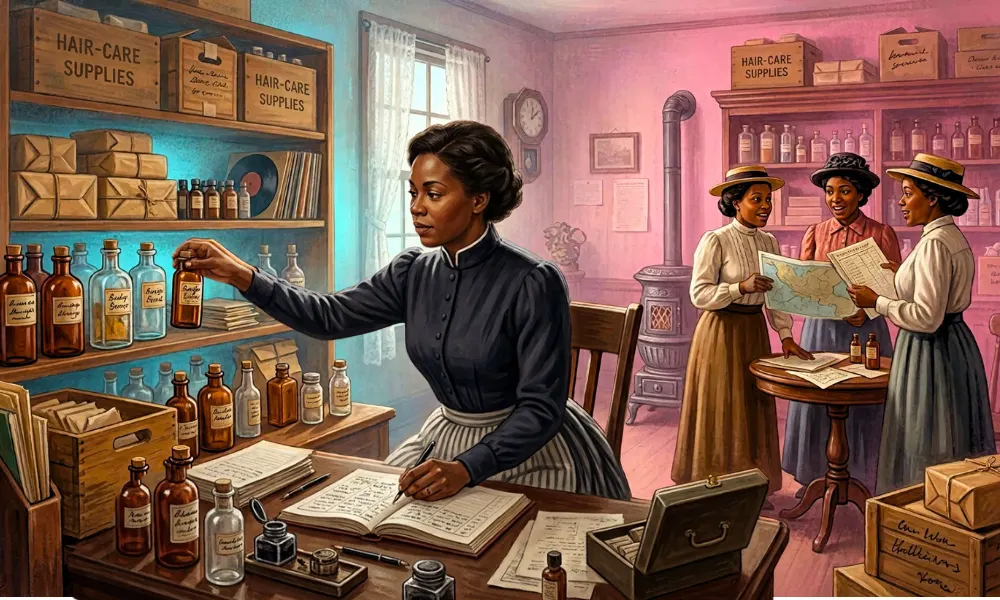
Madam C. J. Walker, born Sarah Breedlove in 1867, was the daughter of formerly enslaved parents. She faced poverty and worked as a washerwoman before building a business selling hair-care products for Black women.
In 1905, Walker moved to Denver and began developing and selling products, including her Wonderful Hair Grower. She later trained sales agents and built a wider distribution network. In 1910, she established her company’s headquarters in Indianapolis.
The National Park Service documents her early life, her initial business efforts, and the company’s growth. The Smithsonian also records her work as an entrepreneur and philanthropist.
Walker became one of the best-known self-made businesswomen of her era. Her success wasn’t only about selling a product; she built a sales network and created earning opportunities for other women. She also worked in a society shaped by racism and sexism, which makes her achievement more significant than a simple “work hard and get rich” lesson.
What you can copy: Understand a specific customer group and the problems it wants solved. Build trust with customers, and consider whether your business can also create opportunities for other people.
12. Andrew Carnegie: From a Mill Job to Industrial Wealth

Andrew Carnegie was born in Dunfermline, Scotland, in 1835. When industrial change weakened his father’s weaving business, the family emigrated to the United States in 1848. Carnegie was 13 when he began working as a bobbin boy in a cotton mill in Pennsylvania.
He later became a telegraph messenger and operator, then advanced into work with the Pennsylvania Railroad. He gained experience and contacts in the expanding railroad industry and eventually invested in businesses connected to railways and steel.
Carnegie became one of the wealthiest industrialists of the late 19th century. His rise was tied to the rapid growth of American industry, investment opportunities, and the development of the railroad and steel sectors. The Carnegie organisation documents his early wages and career progression.
His story is also a reminder that wealth can be built during periods of major economic change. Carnegie’s opportunities were shaped by the industries expanding around him, not just by his personal decisions. His later philanthropy funded libraries and other public causes, although his business success also formed part of the wider industrial system of his era.
What you can copy: Learn how your industry is changing. Skills that become more valuable as a market grows can improve your options, but you still need to consider who benefits and who bears the costs.
How Common Are Rags-to-Riches Stories?
 c
The 12 stories above are memorable partly because their outcomes were unusual. Research on economic mobility helps put them in perspective.
A 2014 study by Raj Chetty, Nathaniel Hendren, Patrick Kline, and Emmanuel Saez used administrative income records covering more than 40 million children and their parents to examine mobility in the United States.
By estimating the statistical probability of a child born into the bottom 20% of national earnings reaching the top 20%, researchers uncovered stark geographic disparities ranging from 4.4% in Charlotte to 12.9% in San Jose. These figures represent historical estimates for specific metro areas rather than a guaranteed forecast for individual mobility today.
They also measure movement between income groups, not the probability of becoming a billionaire.
| What the research measured | Finding | What it means |
| Bottom 20% to top 20% in Charlotte | 4.4% | Reaching the top income group was uncommon in this study. |
| Bottom 20% to top 20% in San Jose | 12.9% | The estimated chance was higher in this area. |
| National data used in the study | More than 40 million children and parents | The findings were based on a very large administrative dataset. |
The important point isn’t that progress is impossible. It’s that a person’s starting point and location can affect their chances. Education, networks, job access, housing, family resources, discrimination, and local economic conditions can all shape the opportunities available to them.
Rags-to-riches stories show what happened to particular people. They don’t tell us how often the same result happens to everyone else who faces similar circumstances.
Rags-to-Riches Myths That Don’t Hold Up

Myth 1: Every successful person became rich overnight
Most of the people in this article spent years building skills, testing ideas, or advancing in their careers. Howard Schultz’s path to Starbucks ownership involved launching Il Giornale in 1985 and arranging the acquisition in 1987. Ursula Burns worked at Xerox for nearly three decades before becoming CEO.
The moment a person becomes famous may arrive quickly. The work that made it possible usually takes longer.
Myth 2: They did everything alone
Business owners rely on customers, employees, suppliers, partners, and sometimes investors. Sara Blakely used her savings, but she also needed manufacturing, distribution, and retail relationships. John Paul DeJoria started his hair-care company with Paul Mitchell.
Recognising help doesn’t diminish an achievement. It makes the story more accurate and helps readers understand what a similar project might require.
Myth 3: They started with absolutely nothing
The phrase “started with nothing” is often an emotional shorthand, not a literal financial statement. DeJoria’s company began with $700, while the Changs’ first Forever 21 store reportedly used about $11,000 in savings.
Those were modest sums compared with the scale of the businesses they later built, but they weren’t zero. Even a small starting fund can make a difference, and access to a partner or a place to work can matter as much as cash.
Myth 4: Hard work guarantees wealth
Hard work can improve skills and increase the chances of finding opportunities. It cannot guarantee that a business will succeed, that a job will be available, or that a person will avoid illness, debt, or other setbacks.
The mobility research above shows why outcomes depend on more than effort. A useful story should encourage readers without suggesting that people who remain poor simply didn’t work hard enough.
Claims We Couldn’t Verify
| Popular claim | Responsible conclusion |
| “Every successful founder started with zero money.” | False as a general claim. Several documented founders began with savings, partners, or outside funding. |
| “A single idea is enough to become rich.” | Not supported. The stories also involve execution, customers, skills, and timing. |
| “Anyone can become a billionaire if they work hard enough.” | No reliable evidence supports this promise. Billionaire outcomes are exceptionally rare. |
| “A famous person’s path can be copied exactly.” | No. Markets, timing, resources, and personal circumstances differ. |
| “The final wealth figure tells the whole story.” | No. Net worth estimates may be uncertain, and they don’t reveal a person’s full financial history. |
What Rags-to-Riches Stories Have in Common
There isn’t one secret shared by every person on this list. But the documented journeys point to several useful patterns.
1. They developed a skill that had value
Ursula Burns studied mechanical engineering and built experience at Xerox. Jan Koum developed technical expertise before co-founding WhatsApp. Skills don’t guarantee wealth, but they can make a person more useful in a field and open up additional options.
2. They recognised a specific need
Sara Blakely saw a problem with an existing clothing product. Madam C. J. Walker developed and sold hair-care products for a customer group whose needs were not well served by the market. Both examples started with understanding a particular customer rather than trying to appeal to everyone.
3. They had support or access to opportunities
Carnegie benefited from access to a library opened to working boys by a local resident. Ursula Burns received an engineering education and entered Xerox through an internship. Their achievements included personal effort, but also access to learning and professional opportunities.
4. They took risks that were connected to a plan
Schultz left Starbucks to pursue his café idea, then raised money to buy the business’s assets. DeJoria partnered with Paul Mitchell to launch a small range of products. These were risks, but they were connected to a business direction rather than a promise of instant wealth.
5. They kept adapting
Tyler Perry continued developing his work after early setbacks. The Changs grew a small clothing store into a larger retailer, but Forever 21’s later bankruptcy also shows that adaptation isn’t guaranteed to succeed. Persistence is most useful when it includes learning and changing course.
Practical Application: Your First 30 Days

You don’t need to copy a billionaire’s life to learn from these stories. Start with actions that protect your finances and help you build useful skills.
| Time | Action | Why it helps |
| Days 1–7 | Track your spending and identify one small amount you can save safely. | You get a clearer view of where your money goes. |
| Days 8–14 | Choose one skill that people or businesses already pay for, such as basic design, writing, tutoring, repairs, or spreadsheet work. | A focused skill is easier to practise than a vague goal to “make money.” |
| Days 15–20 | Ask an experienced person for advice or feedback on your work. | A mentor may help you spot mistakes sooner, even if they can’t guarantee a job. |
| Days 21–25 | Test your skill with one small, low-cost task or project. | You can learn whether people find your work useful before spending more. |
| Days 26–30 | Review the results, expenses, and feedback. Decide what to improve next. | A review helps you avoid repeating a weak approach just because you’ve invested time in it. |
Don’t borrow money you can’t afford to repay to imitate a success story. If you test a small business idea, keep records of costs and income, check local requirements, and stop or adjust if the numbers don’t make sense.
The goal for the first month isn’t to become rich. It’s to finish with better information, one useful skill, and a clearer next step.
Conclusion: The Part of the Story That Doesn’t Fit in a Headline
Chris Gardner’s story is often told through its hardest image: a father caring for his young son while facing homelessness. The later milestones are real, too. Gardner worked in financial services, gained experience at Bear Stearns, and founded Gardner Rich & Co. in 1987.
But the distance between those moments matters. His story wasn’t a single lucky break that made every problem disappear. It was a difficult period followed by work, professional opportunities, and a career that developed over time. Not everyone facing homelessness has access to the same openings, and not every person who works hard will reach the same outcome.
That’s why the best rags-to-riches stories should leave us with more than motivation. They should help us understand how a person used the resources available to them, what obstacles they faced, and which parts of their path might be useful in a different life.
Maybe the lesson isn’t to aim for a billion-dollar business. Maybe it’s to build one skill, find one person who can help you learn, or test one idea without risking your savings.
A better future rarely begins with knowing exactly how everything will work out. It can begin with knowing what to try next.
Frequently Asked Questions
1. What is a rags-to-riches story?
A story about someone who rises from poverty or hardship to wealth or success.
2. Who is the best example of rags-to-riches success?
Madam C. J. Walker and Ursula Burns are notable examples of success despite difficult beginnings.
3. Are rags-to-riches stories true?
Some are well-documented, while others exaggerate events. Check reliable sources to confirm the facts.
4. How many billionaires started poor?
There’s no reliable global count because “started poor” lacks a consistent definition.
5. What do rags-to-riches stories have in common?
Many involve skills, hard work, opportunities, and support from others.
6. What is the most inspiring rags-to-riches story?
It depends on the reader. Chris Gardner and Sara Blakely offer different lessons about overcoming challenges.
7. Can anyone go from poor to rich?
It’s possible, but success depends on opportunities, circumstances, and many factors beyond effort alone.
8. What is a rags-to-riches story in a movie or book?
It follows a character rising from poverty to wealth or status. The Pursuit of Happyness is based on Chris Gardner’s life.
9. How long does it take to go from poor to rich?
There’s no fixed timeline. Building skills, savings, and financial stability can take years.
10. What is the opposite of rags to riches?
“Riches to rags” describes someone who loses wealth or social status.
Financial Disclaimer
This article is for educational and informational purposes only. It isn’t financial, investment, tax, or legal advice. The people featured had different circumstances, and their outcomes don’t predict what will happen to you. Consider your own financial situation and seek qualified advice before making major financial decisions.