Loitering Meaning: Definition and Rules
Loitering is a term most people have seen on a sign, heard in conversation, or read in the rules for a public place. It usually describes remaining in one place without a clear purpose, especially when that presence begins to affect other people or the normal use of the space.
In everyday language, loitering can mean waiting or standing around without doing anything in particular. In a formal setting, however, the term is narrower. It often refers to remaining in a public or private place without a lawful reason, sometimes in a way that blocks access or causes concern.
This guide from Face Zem explains the meaning of loitering in plain language. It covers the basic definition, the elements that usually matter, how loitering differs from trespassing, where the rules apply, and when it can become an offence.
Key takeaways
- Loitering generally means remaining in a place without a clear or lawful purpose.
- The meaning depends on the location, the length of time, and the behaviour involved.
- Simply waiting or standing in a public place is not always loitering.
- Loitering and trespassing are related ideas, but they are not the same thing.
- Signs, local rules, and the instructions of a property owner or authorised person often decide what is allowed.
What Loitering Means in Plain Language
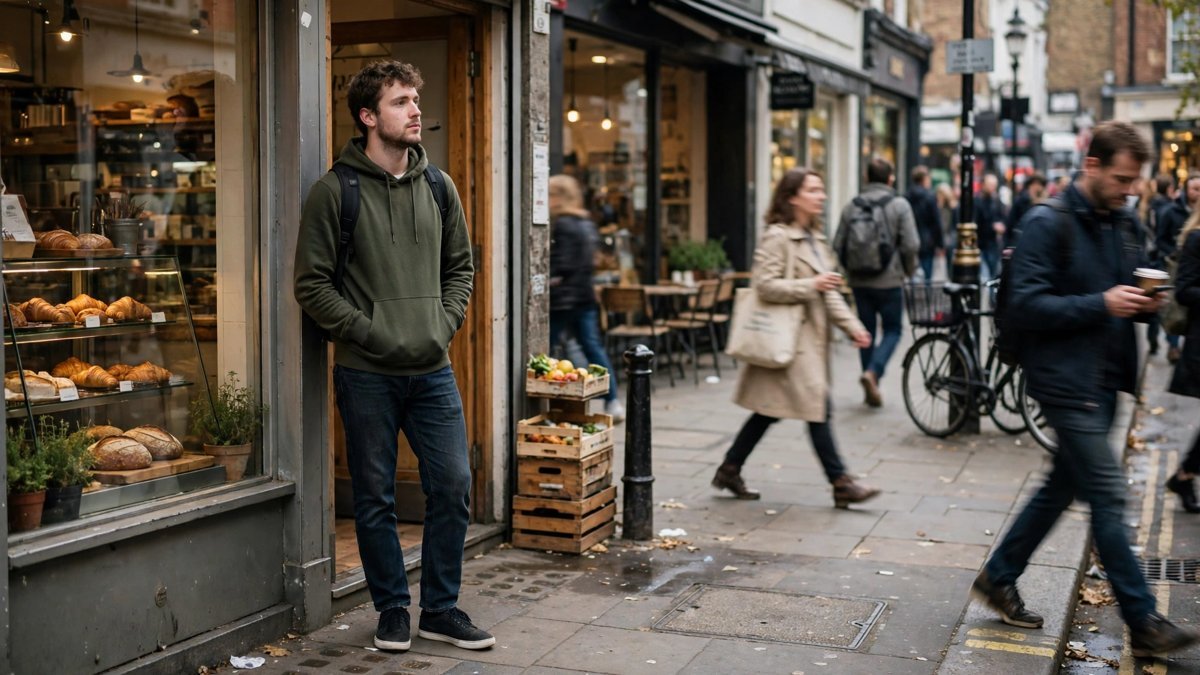
At its simplest, loitering means staying in a place for longer than is needed for an ordinary activity, without an obvious reason for being there. A person waiting for a friend, resting for a few minutes, or looking at a notice board is not necessarily loitering.
The idea usually becomes relevant when the stay is prolonged, purposeless, or connected with behaviour that makes others uncomfortable. It is often linked to streets, parks, stations, shopping areas, and building entrances, and it can also apply to private property open to the public, such as a shop or a car park, where visitors are expected to use the space for a particular purpose and then move on.
The Core Elements That Define Loitering
Although definitions vary from place to place, several elements tend to appear in most explanations of loitering. The first is presence in a particular place, and the second is time: loitering usually involves staying longer than would be expected for the activity at hand. There is no single time limit that applies everywhere, and the surrounding circumstances matter more than the clock alone.
The third element is purpose. A person with a clear reason to be present — waiting for transport, meeting someone, or using a facility — is in a different position from someone with no reason to be there. Understanding formal definitions helps in other areas too, from what is a grant to everyday rules that depend on clear conditions. The fourth element is behaviour: loitering is more likely to be a concern when it involves blocking a path, approaching people repeatedly, or making noise.
Loitering vs. Trespassing: Key Differences
Loitering and trespassing are often mentioned together, and they can overlap, but they describe different situations. Loitering is about remaining in a place without a clear purpose. Trespassing is about entering or remaining in a place without permission, or after permission has been withdrawn.
| Point of comparison | Loitering | Trespassing |
|---|---|---|
| Basic meaning | Remaining in a place without a clear or lawful purpose | Entering or remaining in a place without permission |
| Permission | The person may be allowed to be there at first | Permission is absent, or has been withdrawn |
| Main concern | Length of stay, purpose, and behaviour | Unauthorised presence itself |
| Typical response | A request to move on, a warning, or a fine in some places | A request to leave, removal, or legal action in some places |
For example, a person who stands outside a shop for a long time without buying anything or waiting for anyone may be seen as loitering. A person who enters a closed building or stays after being told to leave may be trespassing. In some cases, the same behaviour can involve both ideas.
Common Places Where Loitering Rules Apply
Loitering rules are most often associated with places shared by many people. Streets, pavements, parks, squares, bus stops, and railway stations are common examples. These are places where people are expected to move through, wait briefly, or use a facility, rather than remain for a long period without a reason.
Shopping centres, markets, and the areas outside shops and restaurants are also common locations. Owners and managers may want to keep entrances clear and make sure the space can be used as intended. Other places include schools, hospitals, libraries, transport hubs, car parks, and the common areas of residential buildings. In each case, the purpose of the place shapes what counts as reasonable.
When Loitering Becomes an Offence
Loitering does not automatically become an offence simply because a person is standing still. In many places, it becomes a legal issue only when certain conditions are met, and those conditions vary widely, so a general guide cannot replace the law of a particular area.
One common pattern is loitering with an apparent unlawful purpose, such as waiting in order to commit an offence or to approach people for an unlawful transaction. Another pattern is refusing to move on after a lawful request from a police officer, a security guard, or another authorised person. Just as other formal terms have a precise meaning — for example, what is coinsurance describes a specific cost-sharing arrangement — loitering also turns on precise conditions rather than a general impression. A third pattern is repeated behaviour, such as returning to the same place again and again after warnings.
What Loitering Is Not
It is useful to be clear about what loitering is not, because the term is sometimes used too broadly. Waiting for a bus, a train, or a friend is not loitering in the ordinary sense, even if the wait is longer than expected. Resting on a bench, eating lunch in a park, or sitting in a public square during a break are normal uses of public space.
Being in a public place without doing anything in particular is also not always loitering. A person who is simply present, quiet, and not obstructing anyone is in a very different position from a person who is blocking an entrance or approaching strangers repeatedly. Loitering is also not the same as being homeless, being young, or belonging to a particular group. The definition should turn on behaviour, purpose, and place, not on who a person is.
How Loitering Laws Are Usually Enforced
Enforcement usually starts with a conversation rather than a penalty. A police officer, a member of staff, or a security guard may ask what a person is doing, explain the rule for the area, and ask the person to move on. In many cases, that is enough to resolve the matter, especially when the person has a valid reason to be there and can explain it.
If the person has no clear reason to remain, or if the behaviour continues, a warning may follow. More formal action is usually reserved for repeated behaviour, refusal to comply, or conduct linked to another offence. A fine or a court appearance may be possible in some places, but the outcome depends on the facts and the law that applies. A surety bond is a different kind of formal undertaking, and Face Zem explains what is a surety bond for readers who want to understand another formal term in plain language.
Signs, Notices and Private Property Rules
Signs that say “No Loitering” are common in shops, stations, car parks, and residential areas. A sign is usually a clear statement of the rule for that location. It tells visitors that the owner or manager does not want people to remain in the area without a purpose related to the property.
On private property, the owner or occupier has a greater say over who may remain and for how long. A shop owner can ask a person to leave if that person is not a customer and has no reason to be there. On public land, the rules are usually set by a local authority or by law.
Loitering Checklist: How to Stay on the Right Side of the Rules
These six points are a practical summary. They are not legal advice, and they do not replace the rules of a particular place, but they cover the habits that usually keep a person within the expected use of a shared space.
- Have a clear purpose for being in the place, such as waiting for transport, meeting someone, or using a facility.
- Keep entrances, pavements, and passageways clear so other people can pass without difficulty.
- Move on after a reasonable time, especially if you have finished the activity that brought you there.
- Respect signs and notices, including “No Loitering” signs and the rules of a shop, station, or building.
- Follow a reasonable request to move on from a police officer, a member of staff, or a security guard.
- Avoid behaviour that alarms or disturbs others, such as repeated approaches, loud noise, or blocking a route.
Common Questions About Loitering
Is waiting in a public place the same as loitering?
No. Waiting is a normal use of a public place when it has a clear purpose, such as waiting for a bus, a train, a friend, or an appointment. Loitering usually involves a prolonged stay without a clear reason.
Can a person be asked to move on for loitering?
Yes. In many places, a police officer, a security guard, or a member of staff can ask a person to move on, especially on private property or where loitering is restricted. A person with a valid reason can often explain it and resolve the matter.
Does loitering always lead to a fine or arrest?
No. Most cases are dealt with by a request or a warning. A fine or other formal action is more likely when the behaviour is repeated, when a lawful direction is ignored, or when it is linked to another offence.
Is it loitering to sit in a park or on a bench for a long time?
Not usually. Parks and benches are provided for rest and leisure, so sitting there is a normal use of the space. The position may change if the person is blocking a path or causing a disturbance.
Can a shop owner stop people from loitering outside a shop?
A shop owner can set rules for the shop itself and can ask people to move away from an entrance that is being blocked. The owner has less control over a public pavement, but can report an obstruction or a disturbance.
What should a person do if they are accused of loitering?
The person should stay calm, explain the reason for being there, and follow a reasonable request to move on if one is made. If the matter becomes formal, the person should seek advice about the law in that place.
Why Loitering Rules Exist
Loitering rules exist to keep shared spaces usable for everyone. A pavement, a station entrance, or a shop doorway serves many people in a short period. If it is blocked, or if people feel unable to use it, the space stops working as intended.
The rules also play a part in safety and order. Clear rules give staff and officers a way to act before a small problem becomes a larger one, and they give the public a clear sense of what is expected.
Bottom line
Loitering means remaining in a place without a clear or lawful purpose, in a way that may affect others or the normal use of the space. It is not the same as waiting, resting, or using a public area in an ordinary way. The key questions are where the person is, how long they have stayed, what their purpose is, and how their behaviour affects those around them. Signs, local rules, and reasonable requests from staff or officers help to set the boundary, and respecting them is the simplest way to stay on the right side of the rules.
Note: This article is a general explainer from Face Zem. It is not legal advice, and the rules on loitering vary by place, so readers should check the law and local rules that apply where they are.

Keep what speaks to you.
Leave room for your own perspective.