A carport is one of the cheapest ways to protect a car from sun, rain, snow, and falling branches. It costs far less than a garage, goes up faster, and still keeps your vehicle out of the worst weather. The trouble is that a simple carport can quietly turn into an expensive project. A bigger roof, a fancier material, or a few extras you did not plan for can add hundreds to the bill.
Start With the Right Size, and Nothing Bigger
Size is the single biggest driver of carport cost. Every extra foot of roof means more posts, more beams, more roofing, and a bigger foundation. Measure your car, then add just enough room to open the doors. A single carport usually needs about 12 feet of width and 20 feet of length. A double carport needs about 20 feet of width. Anything beyond that is paying for empty space.
Think about height too. A carport only needs to clear your tallest vehicle by a comfortable margin. A roof built higher than that is wasted money and extra wind load.
Check what your local building rules allow before you settle on a size. Some areas limit how close a carport can sit to a property line or how tall it can be. Finding that out early is free. If you are weighing a carport against a full garage, our guide on how to save money on a new garage uses the same size-first thinking for a bigger build.
Pick the Cheapest Roof That Still Lasts
The roof is where many carport budgets go wrong. A basic flat or single-slope roof does the job well and uses the least material. A gabled or curved roof looks nicer, but it needs more framing, more roofing, and more labour. For a structure whose whole point is shelter, simple wins.
For roofing material, corrugated metal is usually the best value. It is light, lasts for decades, sheds rain and snow easily, and costs less than most alternatives. Polycarbonate panels let in light and look modern, but they cost more and can yellow or crack over time. Asphalt shingles need a solid deck underneath, which adds weight and cost. A plain metal roof on a simple frame is hard to beat on price.
Match the roof pitch to your climate as well. A gentle slope is fine where rain is light, while a steeper slope sheds heavy snow instead of holding it.
Choose Materials by Price, Not by Looks
Wood is the most common carport material. Pressure-treated timber is affordable, easy to cut and fix, and available at any lumber yard. Steel is stronger but costs more up front, and aluminium is light and never rusts, yet it is the priciest of the three. For most homeowners, treated wood posts with a metal roof give the best balance of price and life.
Buy standard lengths and standard sizes. Lumber yards price common sizes competitively, while odd sizes cost more and create waste. Design the carport around the lengths the yard already stocks, so you cut less and throw away almost nothing. Ask about offcuts or a damaged-pack discount too.
Do not pay extra for premium finishes on a structure that lives outdoors. A simple stain or sealant protects the wood for years at a fraction of the price of fancy cladding. The money you save on looks can go toward a better roof or a stronger foundation. The same thinking applies to the vehicle it shelters, so read our best ways to save money on a car before spending on upgrades you may not need.
Kit or Custom Build: Do the Math
A prefabricated carport kit is often the cheapest route. The parts are cut to size, the holes are pre-drilled, and the instructions tell you exactly what goes where. Kits are made in bulk, so the price per part is low, and many include the fixings and brackets you would otherwise buy separately. A basic single-car kit can cost well under half of a custom build.
A custom build makes sense only when a kit does not fit your space or your needs. If your driveway is an odd shape, if you need an unusual height, or if you want the carport to match your house exactly, a local builder can design around those limits. Get at least three quotes, and ask each builder to break the price down into materials and labour.
Compare the kit price against the custom quotes on the same basis. A kit price that excludes delivery, anchors, or a foundation is not really cheaper than a custom quote that includes them. Add up the full cost of each option before you decide.
Do the Work Yourself, Safely
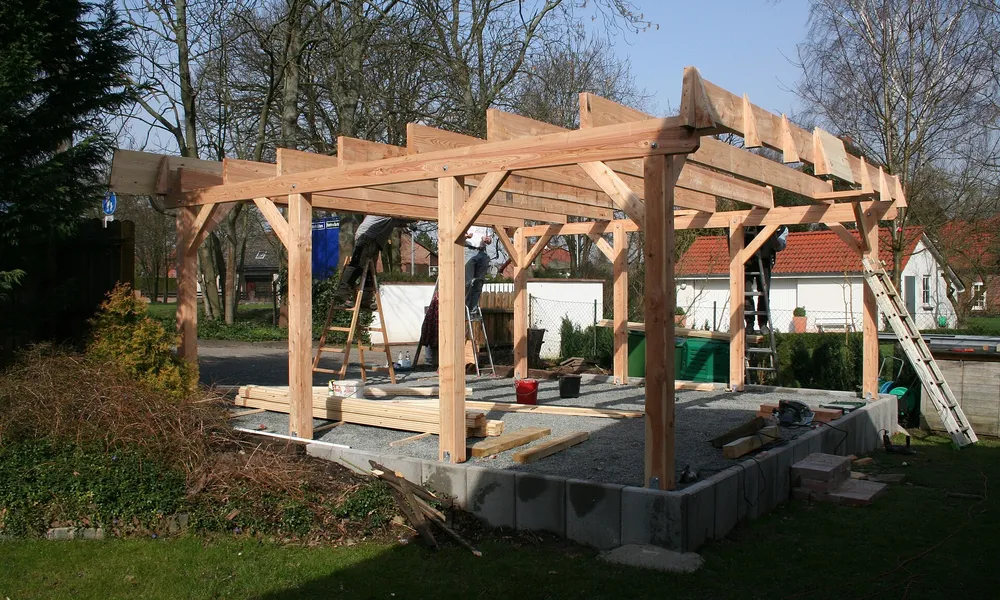
Labour is often half the cost of a carport. If you can handle basic tools, building a kit yourself can save you a large part of the budget. Most kits are designed for two people with a weekend to spare. Follow the instructions step by step, and do not skip the bracing, because that is what keeps the structure square and stable.
Some jobs are worth paying a professional for, even on a tight budget. Concrete footings and electrical work should be done by someone qualified. A footing poured wrong can tilt the whole carport, and fixing it later costs far more than hiring help at the start.
Rent tools instead of buying them. A post-hole auger, a concrete mixer, or a large drill costs a lot to buy and sits in the shed afterwards. A day’s rental is a small fraction of the purchase price.
Skip the Extras That Double the Bill
Extras are where carport budgets quietly double. Built-in storage, side walls, gutters, lighting, and a paved floor are all nice to have, but each one adds cost, and together they can cost more than the carport itself. Start with the basic shelter and add extras later, one at a time.
Side walls are a common trap. They turn a carport into a near-garage, but they add material, block airflow, and can trigger stricter building rules. If wind-blown rain is the worry, a single windbreak wall on the worst side is usually enough.
The same rule applies to the ground underneath. A gravel base is cheap, drains well, and is easy to repair. A full concrete slab is nicer to park on, but it can cost as much as the carport frame. If money is tight, start with compacted gravel and pour concrete later. Outdoor structures share this pattern, so the money-saving ideas in our guide on how to save money on a new pergola apply here too: build the simple version first, then improve it over time.
Time Your Build and Keep It Cheap for Years
When you build matters almost as much as what you build. Contractors are busiest in spring and summer, when prices and waiting times are highest. Late autumn or winter, when work is quieter, often brings better quotes and faster starts.
Always get at least three quotes for any work you hire out, and at least three prices for the kit or materials. A single quote tells you nothing about the market. Three quotes show you the range, and they give you something honest to negotiate with.
Get the permit sorted before you buy anything. Permit fees are usually small, but building without one can lead to a fine or an order to take the carport down. Then look after the finished carport: check the fixings once a year, clear leaves from the roof, and re-seal the timber every few years. The savings do not come from one clever trick. They come from a dozen small decisions, each one made before the money was spent.

Keep what speaks to you.
Leave room for your own perspective.