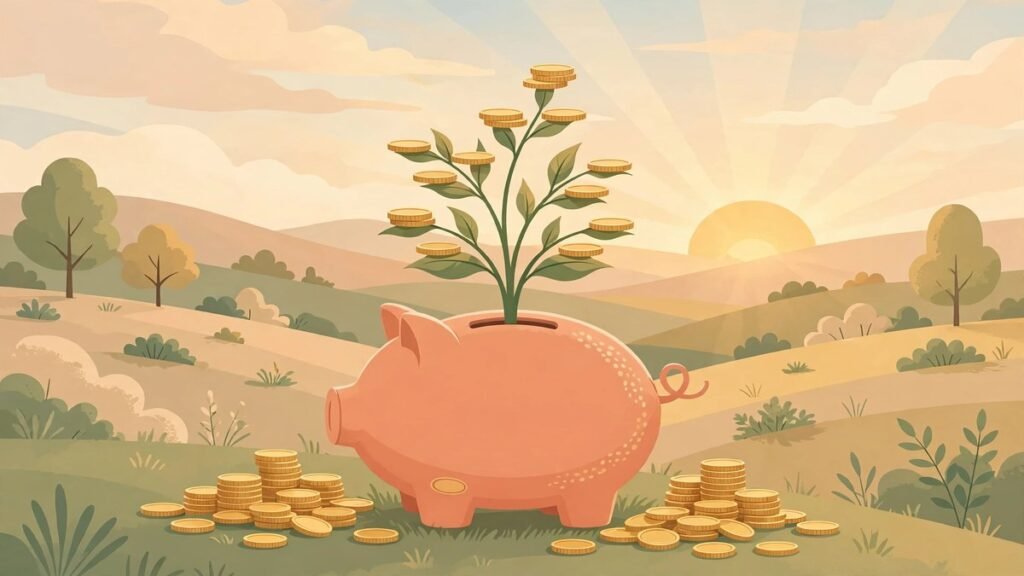
Retirement may feel like a distant milestone, but the way you save for it in 2026 will shape the freedom and comfort you enjoy for decades to come. Every pound or dollar you set aside today has years — sometimes decades — to grow, and the simple habit of saving consistently matters far more than any single clever investment decision. Whether you are in your twenties and just starting your first job, in your forties and catching up after years of putting other priorities first, or in your fifties and counting down the years, the principles of saving for retirement remain the same: start where you are, save what you can, invest wisely, and let time do the heavy lifting.
The good news is that saving for retirement in 2026 has never been more accessible. Workplace pensions, individual retirement accounts, and easy-to-use investment platforms mean that almost anyone can build a retirement fund with a few clicks. Automatic enrolment, employer matching, and tax relief all work in your favour, turning modest monthly contributions into a meaningful nest egg over time. The challenge is not a lack of options — it is knowing which options to choose, how much to save, and how to stay the course when life gets in the way.
This guide walks you through everything you need to know about how to save for retirement in 2026. You will learn how much you actually need, which accounts to use first, how to invest your savings so they grow faster than inflation, and how to build a plan you can stick to through every stage of life. By the end, you will have a clear, practical roadmap — and the confidence to start today, whatever your age or income.
Key takeaways
- Start saving as early as you can — even small monthly contributions grow enormously over decades thanks to compound interest.
- Always contribute enough to your workplace pension to get the full employer match, because that is free money you should never leave on the table.
- Aim to save 15 to 20 percent of your income for retirement, including employer contributions, and increase the rate by 1 percent each year.
- Invest your retirement savings in diversified, low-cost funds rather than leaving the money in cash, so it grows faster than inflation.
- Review your plan once a year, raise contributions after every pay rise, and avoid dipping into your retirement fund early.
Why Saving for Retirement Matters More Than Ever
People are living longer than any previous generation, which is wonderful news — but it also means your retirement could last thirty years or more. A retirement that long needs a serious amount of money behind it, and the old safety nets are no longer enough on their own. State pensions provide a foundation, but in most countries they are designed to cover the basics, not to fund the comfortable, active retirement most people imagine. The gap between what the state provides and the lifestyle you want is entirely your responsibility to fill.
At the same time, the world of work has changed. Fewer employers offer the generous final-salary pensions that previous generations relied on, and more people move between jobs, work freelance, or run their own businesses. That freedom is valuable, but it also means nobody is saving for your retirement unless you do it yourself. If you wait for someone else to sort it out, you will be waiting forever — the sooner you take ownership, the better your outcome will be.
Inflation is another reason to act now. Prices rise every year, which means the money sitting in a savings account slowly loses its buying power. Retirement savings invested in a diversified portfolio have historically grown well ahead of inflation, protecting your future purchasing power. The longer your money is invested, the more time it has to ride out market ups and downs and deliver that long-term growth.
How Much Do You Need to Save for Retirement?
The most common rule of thumb is that you will need around 70 to 80 percent of your pre-retirement income each year in retirement to maintain your standard of living. Some costs fall away — you may have paid off your mortgage and no longer commute — but others rise, such as healthcare and leisure. If you earn 50,000 a year, that suggests a retirement income of roughly 35,000 to 40,000 a year. Multiply that by the number of years you expect to be retired, and you start to see the scale of the task.
Another useful guide is the 25-times rule: aim to build a retirement fund worth roughly 25 times your annual spending in retirement. If you plan to spend 40,000 a year, that means a fund of around 1,000,000. That figure can look intimidating, but remember that it includes decades of investment growth and contributions, not money you need to have today. A 25-year-old saving 300 a month with average market returns could reasonably build a six-figure fund by their sixties, and larger contributions later in life add up quickly too.
Your personal target depends on when you want to retire, where you want to live, and the lifestyle you want. Someone planning a modest retirement in a low-cost area needs far less than someone dreaming of travel and a city lifestyle. The best approach is to work out your expected annual spending in retirement, subtract any state pension or other guaranteed income, and then calculate the fund needed to cover the difference. Online retirement calculators can help you run the numbers in minutes, and revisiting the calculation once a year keeps your plan honest.
Whatever your target, do not let a big number paralyse you. The perfect retirement fund is built one contribution at a time, and the worst plan is the one you never start. Even 50 or 100 a month is a meaningful beginning, and you can raise your contributions as your income grows. What matters is the habit, not the starting amount.
The Power of Starting Early
Compound interest is the single most powerful force in retirement saving, and it rewards early starters far more than generous late starters. When your investments earn returns, those returns earn returns of their own, and the effect snowballs over time. A person who saves 200 a month from age 25 to 35 and then stops will often end up with more at 65 than a person who saves 200 a month from 35 to 65, even though the second person contributed three times as much money. That is not a trick — it is simply what happens when money has ten extra years to compound.
This is why financial advisers repeat the same advice so often: the best time to start saving for retirement was ten years ago, and the second-best time is today. You cannot buy back the lost years of compounding, but every year you delay costs you more than the year before it. If you are in your twenties or thirties, even a modest pension contribution now will do more work than a much larger contribution made in your fifties.
If you are starting later, do not despair — you can still build a comfortable retirement. Older savers typically earn more, so they can contribute larger amounts, and many retirement accounts allow extra catch-up contributions from age 50 onwards. The maths is less forgiving, but a focused plan with higher contributions, sensible investing, and perhaps a slightly later retirement date can still deliver a strong result. The key is to start now and be consistent from here on.
Retirement Accounts Compared
Choosing the right account is one of the most important decisions in retirement saving, because different accounts offer different tax advantages. In general, you should take full advantage of your workplace pension first, then consider individual retirement accounts, and finally use ordinary investment accounts for anything extra. The table below compares the main options available to most savers in 2026.
| Account type | Best for | Tax treatment | 2026 contribution guide |
|---|---|---|---|
| Workplace pension | Employed savers | Tax relief on contributions; employer match | At least enough to get the full match |
| Personal pension (SIPP / IRA) | Self-employed and top-ups | Tax relief on contributions | Up to annual allowance limits |
| Roth-style account (Roth IRA / ISA) | Tax-free growth | Paid with after-tax money; withdrawals tax-free | Within annual ISA or Roth limits |
| General investment account | Extra savings beyond allowances | No special tax relief | No limit; flexible access |
| High-interest savings | Emergency fund, not retirement | Interest may be taxable | 3 to 6 months of expenses |
Your workplace pension should almost always be your first stop. Most employers match your contributions up to a certain percentage, and turning down that match is the equivalent of refusing a pay rise. Automatic enrolment means many workers are already in a scheme, but the default contribution rate is often too low to fund a comfortable retirement, so check your rate and raise it if you can.
Personal pensions, such as a self-invested personal pension or an individual retirement account, are ideal for self-employed workers and for anyone who wants to save more than their workplace scheme allows. Contributions attract tax relief, which means a basic-rate taxpayer effectively gets a 25 percent top-up on every contribution. Higher-rate taxpayers can claim even more relief, making these accounts one of the most tax-efficient ways to save.
Roth-style accounts work the other way around: you contribute after-tax money, but your investments grow tax-free and your withdrawals in retirement are tax-free too. They are especially attractive for younger savers who expect to be in a higher tax bracket later in life, and for anyone who wants tax-free income in retirement to complement a taxable pension.
How Much Should You Save Each Month?
A widely used guideline is to save 15 percent of your gross income for retirement, including any employer contributions. If your employer contributes 5 percent, you need to contribute 10 percent yourself. That rate is a good starting point for someone who begins saving in their twenties or early thirties. If you start in your forties, you may need to save 20 to 25 percent, and if you start in your fifties, 30 percent or more may be necessary to reach the same goal.
Another helpful rule is the age-based benchmark: aim to have one times your annual salary saved by 30, three times by 40, six times by 50, and eight to ten times by 60. These are rough targets, not pass-or-fail tests, but they give you a clear sense of whether you are on track. If you are behind, the answer is not panic — it is a plan: raise your contribution rate, cut a few expenses, and give your investments time to work.
The most effective way to increase your savings rate without feeling the pain is to automate it. Set your pension contribution to rise by 1 percent every year, or tie increases to your annual pay rise so your take-home pay never falls. Most people barely notice a 1 percent increase, but over a decade it transforms a retirement fund. Similarly, directing bonuses, tax refunds, and other windfalls into your pension can add thousands to your fund over a career.
How to Invest Your Retirement Savings
Saving money is only half the job — investing it well is the other half. Money left in cash loses value to inflation, while money invested in a diversified portfolio of shares and bonds has historically grown at several percentage points above inflation over the long term. The difference over a forty-year career can be hundreds of thousands, which is why what you invest in matters almost as much as how much you save.
For most people, the simplest and most effective approach is a diversified, low-cost index fund or a target-date fund that automatically adjusts as you approach retirement. Index funds spread your money across hundreds or thousands of companies, charge very low fees, and have consistently beaten most actively managed funds over long periods. Target-date funds go a step further by gradually shifting from shares to bonds as your retirement date approaches, reducing risk when you can least afford a market crash.
Your asset allocation — the split between shares, bonds, and other investments — should reflect your age and risk tolerance. A common guideline is to hold your age as a percentage in bonds, with the rest in shares: a 30-year-old might hold 30 percent bonds and 70 percent shares, while a 60-year-old might hold 60 percent bonds and 40 percent shares. Younger savers can afford to take more risk because they have decades to recover from market falls, while older savers should protect what they have built.
Finally, resist the urge to tinker. Markets rise and fall, and the temptation to sell during a downturn or chase the latest hot investment is strong. Study after study shows that investors who stay invested through market turbulence end up wealthier than those who try to time the market. Set your investment strategy, review it once a year, and otherwise leave it alone.
Saving for Retirement in Your 30s
Your thirties often bring the biggest financial pressures of your life: a mortgage, children, childcare costs, and the desire to enjoy life while you are young. It is the decade when retirement saving most often stalls, as competing demands squeeze every spare pound. That is understandable — but it is also the decade when catching up becomes noticeably harder, so protecting your retirement contributions matters more than ever.
If you have not started yet, your thirties are the time to begin in earnest. Aim for the 15 percent guideline, including employer contributions, and use every pay rise as an opportunity to increase your rate by 1 percent. If childcare or a mortgage makes 15 percent impossible right now, save what you can and commit to raising it as those costs fall. A written plan with a target date for reaching 15 percent keeps you honest.
Life insurance and an emergency fund deserve attention in your thirties too, especially if you have dependents. An emergency fund of three to six months of expenses protects your retirement savings from raids when the car breaks down or the roof leaks. Without that buffer, every unexpected bill becomes a reason to stop pension contributions or, worse, to withdraw retirement money early and pay the penalties.
Saving for Retirement in Your 40s
Your forties are often your peak earning years, which makes them the most important decade for retirement saving. Salaries are higher, children are older, and the mortgage is shrinking — all of which should free up money for your pension. If you have been saving steadily since your twenties, your forties are about staying the course and maximising contributions. If you are behind, your forties are about catching up with focus and urgency.
The first step is an honest review of where you stand. Add up all your retirement savings, project them forward to your planned retirement age, and compare the result with the income you will need. If there is a gap, you have time to close it — but only if you act now. Raising your contribution rate to 20 percent or more, directing bonuses into your pension, and delaying major lifestyle upgrades can all help close the gap faster than you might expect.
Your forties are also the time to get serious about tax planning. Higher-rate taxpayers can claim substantial tax relief on pension contributions, and using your full annual allowance becomes increasingly valuable as your income rises. If you have unused allowances from previous years, you may be able to carry them forward and make a larger contribution in a single year. A financial adviser can help you navigate the rules, and the cost of advice is often repaid many times over in tax saved.
Saving for Retirement in Your 50s and Beyond
Your fifties are the final stretch, and the decisions you make now have an outsized effect on your retirement. Catch-up contributions, available in many retirement accounts from age 50, let you save significantly more each year, and they are worth using to the full if you can afford them. Many people find that the departure of children and the end of mortgage payments frees up hundreds a month — directing that money straight into a pension, before lifestyle inflation absorbs it, is one of the smartest moves you can make.
This is also the decade to start thinking concretely about when and how you will retire. Working a few extra years has a triple benefit: you contribute for longer, your investments grow for longer, and you draw on your fund for fewer years. Even delaying retirement by two or three years can increase your sustainable retirement income by 20 percent or more. Part-time work or a phased retirement can be an attractive middle ground, letting you ease into retirement while your fund keeps growing.
As retirement approaches, gradually reduce the risk in your portfolio. Shifting from shares towards bonds and other stable investments protects your fund from a market crash just before you need the money. This does not mean abandoning growth entirely — your fund may need to last thirty years — but the balance should tilt towards preservation as your retirement date nears.
Common Retirement Saving Mistakes to Avoid
Even good savers make mistakes, and some of the most common ones are also the most costly. The first is starting too late, which we have already covered — but the second is stopping and starting. Pausing pension contributions during tough times feels harmless, yet every missed year is a year of lost growth and lost employer matching. If money is tight, reduce your contribution rather than stopping it entirely, and restore it as soon as you can.
Another costly mistake is withdrawing retirement money early. Early withdrawals usually trigger taxes and penalties that can consume a third or more of the amount taken out, and the money removed loses decades of future growth. A 10,000 withdrawal at age 35 could easily cost 50,000 or more in lost retirement wealth. Treat your retirement fund as untouchable except in genuine emergencies, and build a separate emergency fund so you never need to raid it.
Underestimating how long you will live is a quieter mistake with serious consequences. Many people plan for a twenty-year retirement and then live for thirty, which means their money runs out just when they need it most. Plan conservatively: assume you will live into your nineties, and make sure your fund and your withdrawal rate can support that. It is far better to have money left over than to outlive your savings.
Retiring Early: Is It Possible?
Early retirement captures the imagination, and for good reason: the idea of leaving work in your fifties — or even your forties — to travel, pursue passions, or simply enjoy life is deeply appealing. It is possible, but it demands a much higher savings rate than a conventional retirement. Where a standard retirement might require saving 15 percent of your income, retiring ten years early typically requires saving 30 to 40 percent or more, because you are both saving for longer and drawing on your fund for longer.
The maths of early retirement is unforgiving but straightforward. If you want to retire at 55 instead of 65, you need to fund ten extra years of spending while losing ten years of contributions and growth. That is why early retirees tend to combine high incomes with modest lifestyles, keeping their spending low so that a larger share of income can be saved and invested. The FIRE movement — financial independence, retire early — has popularised this approach, and its followers often save half their income or more.
Before committing to an early retirement goal, think carefully about what you would actually do with your time. Many early retirees discover that they miss the structure, purpose, and social contact that work provides, and some return to part-time work within a few years. A phased approach — reducing hours gradually, or switching to work you enjoy — often delivers more happiness than a sudden full stop. If early retirement is your dream, you can find a practical roadmap in our guide on How to Retire Early 2026, which covers the savings rates, investment strategies, and lifestyle choices that make it achievable.
Books That Will Sharpen Your Retirement Plan
Reading widely is one of the cheapest ways to improve your retirement outcome. The best books on retirement planning explain not just the mechanics of saving and investing, but the psychology of money — why we spend when we should save, why we panic when markets fall, and how to build habits that last a lifetime. A single insight from a good book can be worth thousands of pounds over a career.
For a deep dive into the strategies that work, our roundup of the Best Retirement Planning Books 2026 is a good place to start. It covers the titles that explain withdrawal strategies, tax planning, and how to turn a lump sum into a reliable monthly income — the topics that matter most once you have built your fund and need to make it last.
More broadly, the foundations of retirement saving are the foundations of personal finance: spending less than you earn, investing the difference, and letting time work for you. Our guide to the Best Personal Finance Books 2026 collects the books that teach those foundations best, from budgeting and debt to investing and building wealth. Reading even one or two of them can transform the way you think about money — and the way your retirement fund grows.
Your Retirement Saving Checklist
Use this checklist to make sure your retirement plan covers all the essentials. Work through it once a year, and tick off each item as you complete it.
- Join your workplace pension and contribute at least enough to receive the full employer match.
- Set a savings target of 15 to 20 percent of your income, including employer contributions, and automate annual increases of 1 percent.
- Build an emergency fund of three to six months of expenses so you never need to raid your retirement savings.
- Invest your retirement money in diversified, low-cost index or target-date funds, and check your fees at least once a year.
- Review your retirement plan every year, update your target, and raise contributions after every pay rise or bonus.
- Write down your retirement age, your target fund size, and your expected annual spending — and keep the plan somewhere you will actually see it.
Frequently Asked Questions
How much should I save for retirement each month?
There is no single figure that suits everyone, but a good starting point is 15 percent of your gross income, including employer contributions. On a salary of 3,000 a month, that means 450 a month in total. If you start late, aim higher — 20 to 25 percent is more realistic for someone starting in their forties. The most important thing is to start with an amount you can sustain and increase it gradually over time.
Is it too late to start saving for retirement at 50?
No — it is never too late to start, and starting at 50 is far better than not starting at all. At 50 you are likely earning more than ever before, you may have fewer expenses, and many retirement accounts allow catch-up contributions that let you save extra each year. Combined with a realistic retirement age and a sensible investment plan, fifteen years of focused saving can still build a substantial fund.
Should I pay off debt or save for retirement first?
Do both, in the right order. Always contribute enough to your pension to get the full employer match first, because that is an instant return no debt repayment can match. Then focus on paying off high-interest debt, such as credit cards, before increasing your pension contributions further. Low-interest debt, such as a mortgage, can usually be paid down gradually while you save for retirement at the same time.
What is the best age to start saving for retirement?
The best age is as early as possible — ideally as soon as you start earning. Money invested in your twenties has forty years to compound, and even small contributions made early can grow into large sums. That said, the second-best age is whatever age you are now. Every year of saving helps, and the worst decision is to keep waiting for the perfect moment to begin.
Can I rely on the state pension alone?
For most people, no. The state pension is designed as a safety net that covers basic living costs, not as a complete retirement income. It currently replaces only a modest share of average earnings, and the age at which you can claim it keeps rising. Treat the state pension as a foundation and build your own savings on top of it to fund the retirement lifestyle you actually want.
How often should I review my retirement plan?
Review your plan at least once a year, and also after any major life change — a new job, a pay rise, a house move, the arrival of children, or a change in your health. An annual review takes less than an hour: check your fund balance, confirm your contribution rate, review your investments and fees, and adjust your target if your circumstances have changed. Small annual corrections keep you on track far better than a major overhaul every decade.
The Bottom Line
Saving for retirement in 2026 comes down to a handful of simple truths: start early, save consistently, capture every bit of employer matching and tax relief available, invest in diversified low-cost funds, and review your plan once a year. None of this requires a finance degree or a large salary — it requires a decision, a plan, and the discipline to stick with it. The savers who retire comfortably are rarely the ones who earned the most; they are the ones who started earliest and stayed the course longest.
Your future self is counting on the choices you make today. Open your pension statement, check your contribution rate, and raise it by 1 percent this week. Set up an automatic increase for next year. Read one good book on retirement planning and apply a single idea from it. Each of these steps takes minutes, yet together they can add tens of thousands to your retirement fund. The best retirement plan is not the perfect one — it is the one you actually follow, starting today.
Note: This article is for general information only and does not constitute financial advice. Retirement rules, tax allowances, and pension regulations vary by country and change over time. Consider speaking to a qualified financial adviser before making major decisions about your retirement savings.

Keep what speaks to you.
Leave room for your own perspective.