Bonds are paying real income again. In late 2026, the 10-year US Treasury yields about 5.1 percent, the 2-year about 4.8 percent, and investment-grade corporate bonds average about 5.22 percent. For the first time in years, a saver can build a bond portfolio paying roughly 4.5 to 5 percent a year before inflation and tax.
Yet bonds still confuse new investors, because there are several ways to buy them. You can buy individual bonds through a broker, buy Treasuries directly from the government, or buy a bond fund or ETF that holds hundreds of bonds for you. Each route gives you the same basic deal, lending money in exchange for interest, but they differ in cost, control and minimums. This guide walks through the practical steps in order.
Key takeaways
- There are three routes into bonds: individual bonds through a broker, Treasuries directly from the government, and bond funds or ETFs.
- Bond funds and ETFs are the simplest starting point for most beginners, with instant diversification and low minimums.
- Match a bond’s maturity to the date you need the money: short-term for money needed soon, longer-term for income over many years.
- In late 2026, Treasuries yield roughly 4.3 to 5.1 percent depending on maturity, and investment-grade corporate bonds average about 5.22 percent.
- Hold bonds inside a tax-advantaged account where possible, keep costs low, and reinvest the income while you are still building wealth.
Step 1: Decide what job the bonds will do
Before buying anything, decide what the bonds are for, because the answer changes everything you buy. The three common jobs are steady income in retirement, stability that softens the falls when stocks drop, and a known future expense, like a house deposit in four years or university fees in three, where getting the money back on a set date matters most.
A 30-year-old saving for retirement in thirty years needs growth first and bonds as a stabiliser, so a broad bond fund suits them. The same person saving for a house deposit in four years needs the money back on time, so individual Treasuries maturing in four years, or a short-term bond fund, is the right tool.
It helps to read a little before you buy: the best books on investing in 2026 lists the titles that explain bonds, risk and portfolio building in plain language.
Step 2: Choose the right account
Where you hold bonds matters as much as which bonds you buy, because bond interest is usually taxed as ordinary income. Inside a tax-advantaged retirement account, such as an IRA or a 401(k), that interest compounds untouched by tax until you withdraw it. In a taxable brokerage account, you pay tax on the interest every year.
The rule is simple: fill tax-advantaged accounts with bonds first, and keep stocks, taxed more lightly, in taxable accounts. Municipal bonds are the exception: their interest is often exempt from federal income tax, so they suit taxable accounts, especially for higher earners. Treasury interest is exempt from state and local tax wherever you hold it.
Step 3: Buy Treasuries directly from the government
The simplest individual bonds to buy are US Treasuries, and you can buy them directly from the government with no broker and no fees. The Treasury sells bills, notes and bonds at regular auctions through its own online account system, TreasuryDirect. Most individuals place a non-competitive bid, accepting whatever yield the auction sets, and are guaranteed the amount they asked for.
Treasury bills mature in a year or less, in terms of 4, 8, 13, 17, 26 and 52 weeks, and they are the classic place to park cash for the short term. Treasury notes mature in 2 to 10 years, and Treasury bonds in 20 to 30 years. In late October 2026, the 6-month bill paid about 4.25 percent, while the 10-year note yielded about 5.1 percent. You can start with as little as 100 dollars.
Step 4: Buy corporate bonds through a broker
Corporate bonds pay more than Treasuries because companies can fail, and the extra yield compensates for that risk. To buy them, you need a brokerage account that offers bond trading. Most bonds trade over the counter, so your broker shows you the available inventory and you place an order.
Corporate bonds commonly have a 1,000-dollar face value, and prices are quoted as a percentage of face value, so a bond quoted at 98 costs 980 dollars per 1,000 dollars of face value. Check the credit rating, the yield and the maturity before you buy. Investment-grade bonds, rated BBB or higher, yielded about 5.22 percent on average in 2026. High-yield bonds pay more but carry a real risk of default, and a single default can wipe out years of extra yield.
Watch the costs: brokers charge a markup on bond trades, sometimes 1 percent or more on small orders, which is one reason many investors prefer bond funds for corporate exposure. If you buy individual corporate bonds, hold several different issuers, never put a large share in one company, and check whether the bond is callable, meaning the issuer can repay it early when rates fall.
Step 5: Buy a bond fund or ETF
For most beginners, a bond fund or ETF is the best first step. A bond mutual fund or bond ETF pools money from many investors to own a large basket of bonds, chosen by an index or a manager. Funds are grouped by what they hold: short, intermediate or long-term government debt, investment-grade corporates, high yield, municipal or inflation-linked bonds, and broad funds holding a mix.
Funds offer instant diversification, low minimums, easy buying and selling, and automatic reinvestment as bonds mature. Bond ETFs trade all day like a stock, while mutual funds trade once a day at net asset value. Most bond funds charge an expense ratio: a fund with a 0.10 percent expense ratio costs 1 dollar a year per 1,000 dollars invested. Broad, low-cost funds are the default choice.
Pick the fund by its holdings, not its past return. A short-term Treasury fund suits money needed soon, an intermediate-term fund suits a retirement portfolio, and a broad aggregate bond fund suits most people as a single holding. Check the fund’s average duration, which tells you how far its price falls if rates rise by 1 point, and its credit quality.
Step 6: Build a bond ladder for steady income
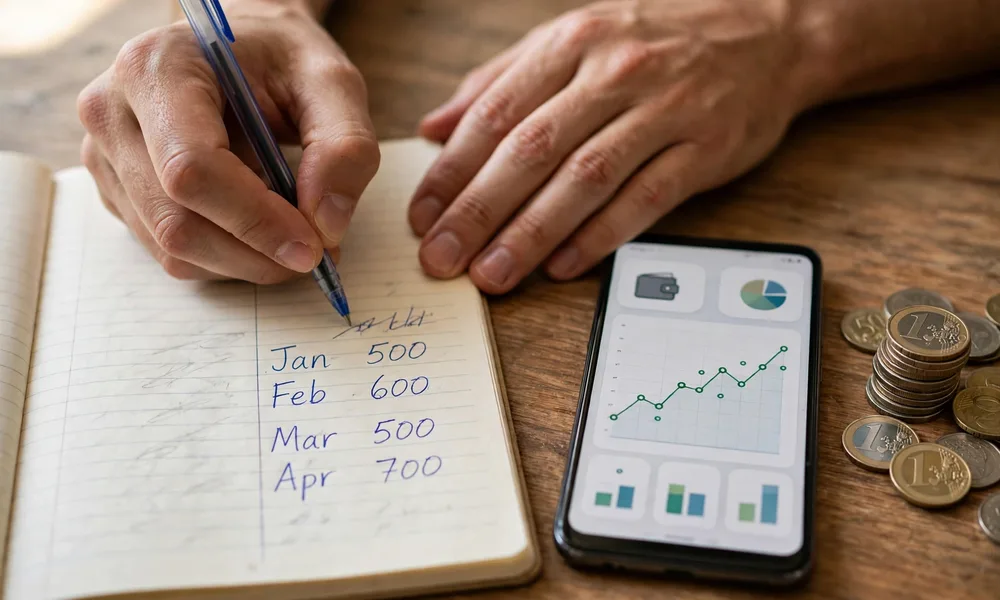
A bond ladder builds reliable income: you buy bonds maturing in successive years, so some money comes back every year. For example, buy equal amounts of bonds maturing in one, two, three, four and five years. Each year one bond matures, you collect the principal and reinvest it in a new five-year bond. After five years you receive principal back every single year.
Ladders solve two problems at once. First, they spread interest rate risk: if rates rise, only the maturing bond is reinvested at the new, higher rate, and the rest keep paying their old coupons. Second, they give you a known stream of maturing principal, which is useful if you need regular cash.
Step 7: Turn bonds into monthly income
Individual bonds usually pay interest every six months, but most people want monthly income, and that is where bond funds earn their place: they usually pay monthly, which is why retirees favour them. The maths is simple: a portfolio yielding 5 percent pays 5,000 dollars a year on 100,000 dollars, or about 417 dollars a month. On 250,000 dollars it pays about 1,042 dollars a month, and on 500,000 dollars about 2,083 dollars a month, before tax and inflation.
Those numbers show why bonds alone rarely fund a retirement: you need a large sum to live on 5 percent. Most retirees combine bond income with stock dividends, pensions and Social Security. While you are still working, reinvest the income automatically, so each payment buys more bonds and your income grows.
Make the habit automatic: a monthly contribution on payday, all distributions reinvested, and a review once or twice a year. The best money habits of millionaires in 2026 shows how automatic investing and reinvested income compound into serious wealth over decades.
How much should you invest in bonds?
There is no single right answer, but there are useful starting points. The old rule was to hold your age as a percentage in bonds: a 40-year-old holds 40 percent bonds. Many advisers now call that too conservative, and suggest holding 20 to 40 percent in bonds through your working years, then raising it toward 50 or 60 percent as retirement approaches.
Start small if you are unsure: a first investment of 1,000 dollars in a broad bond fund is enough to learn how it behaves, and you can add monthly from there. The amount matters less than the habit: regular contributions into a low-cost fund, reinvested, beat a large one-off investment you never add to.
The best books on wealth in 2026 covers the titles that explain how patient, diversified investing builds wealth over time, and why bonds have a place in almost every serious portfolio.
Costs, taxes and what to watch
Costs are the quietest drag on bond returns. A bond fund with a 0.10 percent expense ratio costs 10 dollars a year on 10,000 dollars, while a fund charging 0.75 percent costs 75 dollars, and the difference compounds over decades. Individual bonds carry markups instead, which can be 1 percent or more on small trades. TreasuryDirect has no fees at all.
Taxes come second. Corporate bond interest is usually taxed as ordinary income, Treasury interest is generally exempt from state and local tax, and many municipal bonds pay interest exempt from federal tax. Hold taxable bonds inside a retirement account, and keep municipal bonds in taxable accounts.
Common mistakes beginners make
The most expensive mistake is reaching for yield without checking the risk: a bond paying 9 percent pays 9 percent for a reason, usually a real chance of default. The second is buying long-term bonds with money needed soon, since a 30-year bond can fall 15 percent or more in a bad year for rates. The third is forgetting that bond funds never mature. The fourth is ignoring tax and holding taxable bonds in a taxable account while retirement space sits unused. The fifth is selling in a panic when rates rise: a bond that falls in price still pays its coupon, and holding to maturity returns your principal, assuming no default.
Frequently asked questions
How much money do I need to start investing in bonds?
You can start with 100 dollars through TreasuryDirect, or the price of one bond ETF share, often under 100 dollars. Individual corporate bonds usually need 1,000 dollars per bond, so funds are the cheaper way in.
Are bonds a good investment in 2026?
Yields are the highest in a generation, with Treasuries near 5 percent and investment-grade corporates above 5 percent, so bonds pay meaningful income again. They still carry interest rate, inflation and credit risk, and they grow more slowly than stocks.
Should I buy individual bonds or a bond fund?
Individual bonds suit a known future expense, because they return principal on a set date. Bond funds suit most people: they diversify across hundreds of bonds, need little capital and pay monthly income, but they never mature.
How do I buy Treasury bonds?
You can buy them directly from the government through TreasuryDirect at regular auctions, usually with a non-competitive bid, or through most brokers. Minimums start at 100 dollars.
Can I lose money investing in bonds?
Yes. If rates rise, bond prices fall, and selling before maturity can lock in a loss. Corporate issuers can default, and inflation can erode real returns. Holding a high-quality individual bond to maturity returns your principal, assuming no default.
Do bonds pay monthly?
Individual bonds usually pay every six months, while bond funds and ETFs usually pay monthly.
The bottom line
Investing in bonds in 2026 is straightforward: decide what job the bonds will do, choose a tax-advantaged account, and start with the simplest route that fits. For most people that is a low-cost, broad bond fund or ETF, bought monthly and reinvested. Treasuries bought directly from the government are the cheapest way to own individual bonds, and a ladder of maturing bonds is the cleanest way to build reliable income. Yields near 5 percent make bonds worth owning again, but they are the steady half of a portfolio, not the growth engine. Buy them for income and stability, keep costs low, and let the interest compound.

Keep what speaks to you.
Leave room for your own perspective.


