
A sensory room is not a playroom with the lights turned down. It is a therapeutic multi-sensory room fit-out, built deliberately around light, sound, texture, movement and safety, and it is usually commissioned by people who need the room to do a clinical or caring job: schools, care homes, hospitals, nurseries, charities and families supporting a child or adult with sensory processing differences, autism, dementia or a brain injury. The room has to calm one person and gently stimulate another, sometimes within the same hour, and it has to do that safely, with padded surfaces, wipe-clean materials, controlled sound and lighting that can be dimmed, slowed or switched off in seconds. That is a very different brief from a room built for play, and it is why a sensory room installation startup needs its own toolkit rather than a borrowed one.
The best AI tools for sensory room installation startups in 2026 cover the whole job, from the first survey to the handover. Design software turns a phone scan into a 3D sensory layout a headteacher or care manager can walk through on screen. Sensory equipment suppliers offer configurators that price bubble tubes, fibre optic strands, tactile panels and soft flooring as one system instead of a pile of separate orders. Lighting and sound tools let the installer programme scenes, so a room can shift from a bright, alert morning mode to a slow, low-sensory evening mode at the touch of a button. And job management software keeps the quotes, the safety checks, the install crew and the aftercare visits in one place, which matters when the client is a school business manager who expects paperwork as polished as the room itself.
This guide compares the nine tools that matter most for a founder launching a sensory room installation startup in 2026. Each one is chosen for the sensory fit-out itself: how it handles lighting, sound, texture and safety, how it helps a small crew price and install a room for vulnerable people, and how it earns repeat work from schools and care settings. Get the sensory core right and the business side tidy, and the second and third rooms are easier to win than the first.
Key takeaways
- A sensory room is a therapeutic fit-out built around light, sound, texture, movement and safety, not a playroom, a gym or a craft room, and it must be specified, priced and installed to that brief.
- Start with one design tool and one sensory equipment supplier, and learn their configurators properly before adding more products to your range.
- Lighting and sound are the heart of the room: programmable scenes that shift from alert to calm are what clients remember and recommend.
- Safety is a selling point, not a cost: padded walls, soft flooring, wipe-clean surfaces and documented checks win school and care contracts.
- Price the whole system, including aftercare and staff training, because a sensory room that nobody knows how to use is a room that never gets reordered.
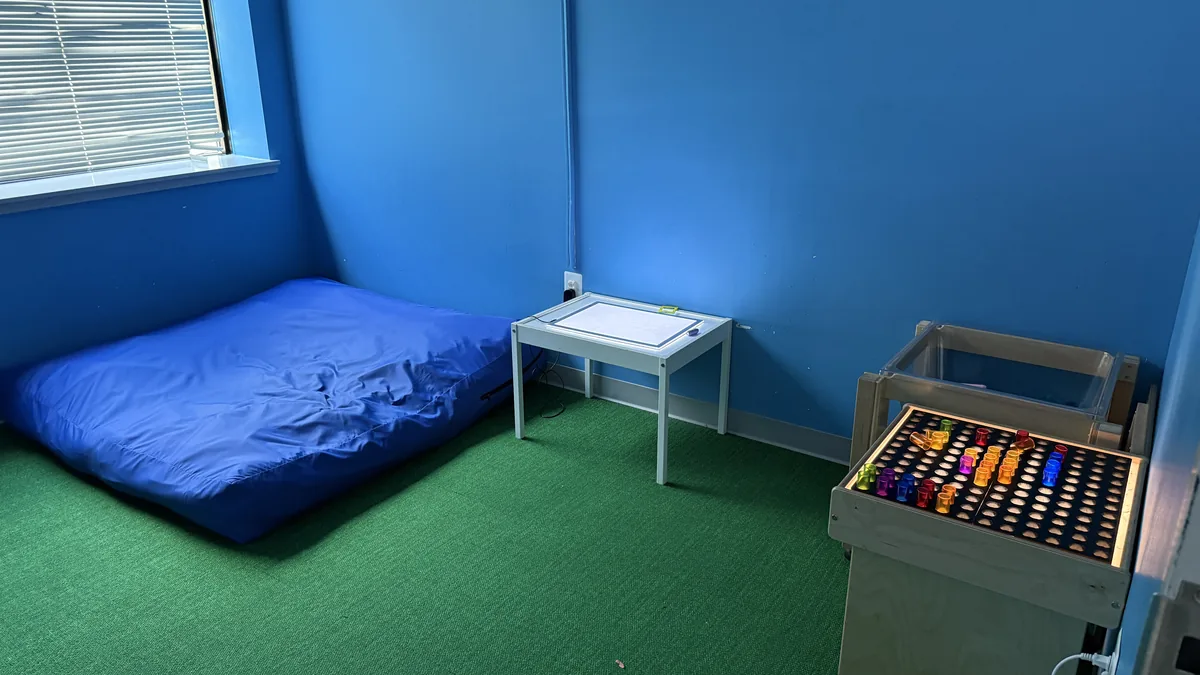
What makes a sensory room different from a playroom
The fastest way to lose a sensory room contract is to treat it like a playroom. A playroom installation startup designs for play, storage and durability, with bright colours, toy storage and furniture that survives daily use by energetic children. A sensory room installation startup designs for regulation: the room must help a person who is overwhelmed to settle, and help a person who is under-stimulated to engage, and it must do both without creating new hazards. That changes every decision, from the lighting to the flooring to the way the room is handed over.
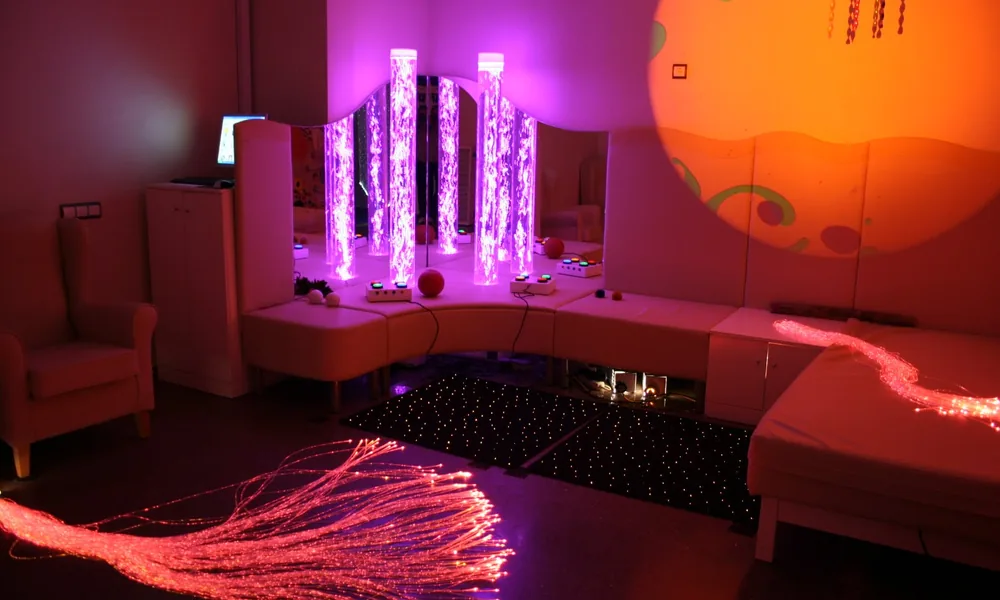
Lighting is the clearest example. A playroom wants even, bright light so children can see what they are doing. A sensory room wants controllable light: dimmable panels, colour-changing fibre optics, a bubble tube that glows gently, and blackout options so the room can go dark enough for a projector or a star panel to work. Sound is the same story. A playroom tolerates noise; a sensory room manages it, with acoustic panels, soft flooring that absorbs footfall, and a sound system that plays low, predictable audio at a capped volume rather than anything loud or sudden. Texture matters more too, because tactile panels, soft wall padding and varied floor surfaces are the point of the room, not decoration.
Safety is the other dividing line. Sensory rooms are used by people who may fall, bite, pull or climb, and by people who cannot always say what hurts. That means rounded corners, wall padding at fall height, no exposed fixings, no small parts that can be pulled loose, wipe-clean surfaces for infection control, and equipment that is fixed to the wall or floor so it cannot topple. A founder who documents all of this, with a written safety check at handover, looks like a specialist. A founder who skips it looks like a decorator, and schools and care homes can tell the difference within minutes of the first site visit.
The 9 tools at a glance
| Tool | What it does | Best for | Starting point |
|---|---|---|---|
| Homestyler | AI room design and 3D visualisation | Client presentations and layouts | Free plan, then paid tiers |
| Experia | Sensory room design and equipment supply | Complete sensory room packages | Quote per room |
| Rompa Snoezelen | Sensory equipment and Snoezelen systems | Bubble tubes and fibre optics | Quote per system |
| TFH Special Needs Toys | Tactile panels and sensory equipment | Texture walls and sensory kits | Per-item pricing |
| Sensory Guru Magic Carpet | Interactive floor projection | Movement and engagement | Quote per system |
| Soundbeam 6 | Gesture-controlled sound and music | Sound without touchscreens | Quote per unit |
| Southpaw Enterprises | Sensory integration and movement equipment | Swings, crash mats and soft play | Per-item pricing |
| Lutron Caseta | Smart lighting and scene control | Programmable calm and alert scenes | Per-switch pricing |
| Jobber | Quoting, scheduling and invoicing | Running the install business | Monthly subscription |
Plan and design the sensory fit-out
Every sensory room starts with a survey, and the survey is where a startup wins or loses the job. The client is usually not a homeowner choosing colours; it is a headteacher, a care home manager or a therapy lead who needs to justify the spend to a board or a budget holder. They want to see the room before it exists, understand what each piece of equipment does, and know exactly what it costs. The discipline is similar to the way a craft room installation startup plans around worktops, storage and light, but the sensory brief adds sound, texture and safety to every decision. The two tools in this section exist to make that survey fast, visual and credible, so a two-person startup can present like a company ten times its size.
1. Homestyler
Homestyler is an AI room design tool that turns a floor plan or a phone scan into a 3D room a client can walk through on screen, and it is the fastest way for a sensory room startup to show a finished room before a single panel is ordered. The founder measures the room, builds the layout, drops in soft flooring, padded wall sections, a bubble tube corner, a fibre optic curtain and a seating area, and then renders the result in realistic light. The client sees where the calm corner sits, how much clear floor is left for movement, and whether the room still feels spacious once the equipment is in.
What makes Homestyler useful for sensory work, rather than general interior design, is the control over light and colour. A sensory room lives or dies on its lighting, and the software lets the founder test a bright, alert scheme against a dim, low-arousal one in the same model, then show the client both. That is a powerful sales moment: a headteacher who has only ever seen a catalogue photo suddenly understands that one room can serve a child who needs calming in the morning and a child who needs waking up after lunch. The founder can also test colour choices against the brief, keeping walls soft and neutral so the glowing equipment does the sensory work instead of competing with loud paint.
2. Experia
Experia is a sensory room specialist that designs and supplies complete sensory rooms, and for a new startup it is the closest thing to a partner in the trade. Where a general supplier sells individual products, Experia works in whole rooms: the founder describes the space, the users and the budget, and the company helps configure a package of lighting, sound, tactile equipment, soft furnishings and safety padding that works as one system. That matters because sensory equipment is not interchangeable in the way furniture is. A bubble tube needs the right pump, the right fixing and the right space around it; a fibre optic curtain needs a light source that can be controlled from the same panel as the rest of the room.
For a startup, the practical value is in the configuration and the paperwork. Experia supplies room plans, equipment lists and guidance on installation, which a small crew can use to price a job accurately and install it without guessing. The founder can also lean on the supplier’s experience with schools and care settings, asking what has worked in a similar room for similar users, rather than learning every lesson on a paying client’s floor. That kind of support shortens the learning curve dramatically, and it lets a new business take on its first school contract with confidence instead of turning it down.
Light, sound and texture: the sensory core
If the design tools sell the room, the sensory core is the room. Lighting, sound and texture are the three senses a sensory room is built around, and they are the reason the client is buying a specialist fit-out instead of redecorating. A founder who understands how these three work together can specify a room that calms, engages and rewards, and can explain each choice to a client in plain language. The four tools in this section cover the core between them: glowing light, tactile texture, interactive movement and sound that responds to the body.
3. Rompa Snoezelen
Rompa is one of the best-known names in sensory equipment, and its Snoezelen range is the classic sensory room system: bubble tubes, fibre optic strands, star panels, projectors and the controllers that run them as one room. Snoezelen, which began as a Dutch approach to sensory care, is built around gentle, controllable stimulation in a safe environment, and Rompa’s equipment is designed to deliver exactly that. A bubble tube glows, changes colour slowly and gives a soft vibration a person can feel through the tube; fibre optic strands can be held, draped and watched as the light moves through them; a projector throws slow-moving images onto a wall or ceiling.
For an installer, the value of a Rompa system is that it is engineered to work together. The controller runs the bubble tube, the fibre optics and the projector from one panel, so a member of staff can start a calm scene with a single button instead of switching on five separate devices. The equipment is also built for the setting it will live in: shatterproof tubes, wipe-clean surfaces, secure wall fixings and pumps that are quiet enough not to become a sensory problem of their own. That engineering is what separates specialist sensory equipment from decorative lighting bought online, and it is what a school or care home is paying for.
4. TFH Special Needs Toys
TFH Special Needs Toys, often known simply as TFH, supplies the tactile side of a sensory room: textured wall panels, sensory kits, weighted products, chew-safe items and the small pieces of equipment that turn a lit room into a room people can touch, explore and settle with. If Rompa provides the glow, TFH provides the texture, and texture is the sense most often forgotten by founders who fall in love with lighting. A tactile wall with different surfaces, a panel of switches that light up and play sounds, or a set of textured balls and fabrics gives a person something to do with their hands, which is often what regulates them.
For a startup, TFH is useful because it sells at per-item prices, which makes it easy to build a tactile package to any budget. A small room for a nursery might need one tactile wall and a sensory kit; a larger room for a special school might need three walls, a switch panel, a set of weighted lap pads and a dark den for quiet time. The founder can show the client the options, agree the package, and order exactly what was quoted, without the waste of buying a fixed kit that includes items the room will never use. TFH also supplies many of the consumables and replacement parts a room needs over time, which gives the founder a natural reason to stay in touch with the client after handover.
5. Sensory Guru Magic Carpet
The Sensory Guru Magic Carpet is an interactive floor projection system, and it is the tool that turns a sensory room floor into a place to move, play and learn. A projector mounted on the ceiling throws games and scenes onto the floor, and a sensor tracks movement, so a person can splash virtual puddles, pop bubbles, scatter leaves or play a simple cause-and-effect game just by moving across the room. For users who need movement to regulate, or who learn best through their bodies, that is a powerful addition to a room that might otherwise ask them to sit still.
For the installer, the Magic Carpet is a straightforward fit-out item with a big visual payoff. It needs a clear floor area, a ceiling mount, a power supply and a dark enough room for the projection to read well, and the founder should plan for all four during the design stage rather than discovering the ceiling is too low on installation day. The system comes with a library of apps and games, including options designed for different ages and abilities, and the founder should spend time learning the library so the handover training shows staff the five or six apps that suit their users, rather than overwhelming them with dozens.
6. Soundbeam 6
Soundbeam 6 is a gesture-controlled sound and music system, and it solves one of the hardest problems in a sensory room: how to let a person make music without needing fine motor control, a touchscreen or any musical training. The system uses sensors that detect movement in the air, and turns that movement into sound, so a wave of the hand, a nod of the head or a shift in a wheelchair can play a note, trigger a chord or start a rhythm. For users with limited mobility, that is not a gimmick; it is access to music-making that no ordinary instrument can offer.
For a startup, Soundbeam is a specialist item that sets a sensory room apart from a room full of lights. The founder installs the sensors, connects the sound system, and works with staff to set up the sounds that suit the users, from gentle chimes for a calm room to brighter tones for an alert session. The system is designed to be used by people with a wide range of abilities, and it can be operated with switches, buttons or body movement, which means it can be adapted to the person rather than asking the person to adapt to it. That adaptability is exactly what a therapy lead wants to hear when they are choosing between two installers.
Movement, safety and calm
7. Southpaw Enterprises
Southpaw Enterprises supplies sensory integration and movement equipment: swings, hammocks, crash mats, soft play shapes, climbing structures and the suspension hardware that holds them safely. Movement is a core part of sensory regulation, and many users need to swing, spin, bounce or crash into something soft before they can settle and focus. A sensory room without movement equipment is a room that only serves the people who can sit still, and that is rarely the group the client had in mind.
For an installer, Southpaw is the supplier to call when the brief includes vestibular and proprioceptive work, which is the therapy language for movement and body awareness. The company designs equipment for clinics and schools, and its products come with clear guidance on weight limits, fixing requirements and safe use, which the founder needs before drilling into a ceiling or a wall. A swing is only as safe as its fixing, and a founder who asks the supplier about the structure, gets the fixing specified in writing, and documents the check at handover is a founder who will sleep well after the job is done.
8. Lutron Caseta
Lutron Caseta is a smart lighting control system, and it is the tool that turns a sensory room’s lighting from a set of switches into a set of scenes. With Caseta, the founder can programme scenes such as calm, alert, story time and tidy-up, each with its own brightness and colour settings, and a member of staff can switch between them from a wall keypad, a remote or a phone. That is the difference between a room that happens to have dimmable lights and a room that is designed to change state on demand, which is what a sensory room is for.
For an installer, Caseta is practical because it works with a wide range of lights and does not need a full rewire in most rooms. The founder can retrofit it into an existing room, which is how many sensory rooms start, or specify it from scratch in a new build. The system is also reliable, which matters in a room used by vulnerable people: a lighting scene that fails halfway through a session is not a minor fault, it is a disruption to someone’s regulation. Lutron’s reputation for reliability is a large part of why installers specify it, and it is worth explaining that to a client who wonders why a lighting control costs more than a dimmer switch from a hardware store.
Run the business like a business
9. Jobber
Jobber is job management software for small trade businesses, and it fits a sensory room installation startup because the work is project-shaped: a survey, a quote, a deposit, an install, a handover and an aftercare visit, each with its own date, crew and paperwork. Jobber keeps that sequence in one place, so the founder can see which quotes are waiting, which installs are booked, which invoices are overdue and which clients are due a six-month check, without digging through emails and notebooks. For a business that sells to schools and care homes, that kind of order is visible: a client who gets a professional quote, a clear schedule and a tidy invoice is a client who trusts the installer.
The quoting side is where Jobber earns its fee. A sensory room quote has many lines: equipment, flooring, padding, fixings, labour, delivery, commissioning, training and aftercare, and a missed line is profit lost. Jobber lets the founder build quote templates for the common room sizes, so a small room, a medium room and a large room each start from a tested template rather than a blank page, and the founder adjusts the lines to the job. The client gets a clear, itemised quote, and the founder gets a record of what was quoted, which makes the install and the invoice match. That discipline is what keeps a small crew profitable.
What a sensory room installation costs
Clients always ask what a sensory room costs, and the honest answer is that it depends on the size of the room, the users and the equipment, but a founder should be able to give ranges with confidence. A small sensory corner in a nursery, with soft flooring, a tactile wall, a fibre optic curtain and a bubble tube, might cost a few thousand pounds or dollars. A medium room for a special school, with a full Snoezelen system, an interactive floor, movement equipment and programmed lighting, is a much larger job, and a large multi-sensory suite for a hospital or a care home, with several zones and specialist sound, is larger still. The founder who gives ranges early, and explains what drives the price, is trusted more than the founder who refuses to discuss money until the quote arrives.
The equipment is usually the largest cost, followed by the fit-out: flooring, wall padding, acoustic treatment, electrical work and fixings. Labour is the next line, and it should never be underestimated, because a sensory room is not a one-day job. The founder needs time to survey, to design, to order, to install, to commission and to train staff, and each of those stages needs to be in the price. Aftercare is the final line, and it should be offered as a clear option: a six-month check, an annual service, a training refresher and a replacement parts service. Clients who understand the full cost are far less likely to be surprised by it, and far more likely to budget for the next room.
How to choose the right tools for your first three jobs
For the first three jobs, keep the toolkit small. Choose one design tool, one sensory equipment supplier, one lighting control and one job management system, and learn them properly before adding anything else. Homestyler for design, Experia or Rompa for the sensory core, Lutron Caseta for lighting and Jobber for the business is a complete starter stack, and it covers every stage from survey to aftercare. Adding more tools before the first three jobs are done usually creates confusion rather than capability, and it spreads the founder’s learning time across products the business does not yet need.
Choose equipment by the users, not by the catalogue. A room for young children with autism needs different equipment from a room for adults with dementia, and a room for a hospital needs different materials from a room for a nursery. The founder should ask the client who will use the room, what they need it to do, and what has and has not worked before, and then specify from those answers. A supplier who asks the same questions is a good supplier; a supplier who offers a fixed package without asking is selling boxes, not rooms. The best founders are the ones who listen longest at the survey.
Launch checklist
- Survey three rooms for free or at a low cost, and use the surveys to learn what schools, nurseries and care homes actually ask for before you set your prices.
- Build one starter package with your chosen supplier, price it fully including install, commissioning, training and aftercare, and use it as the base for every early quote.
- Fit out a demonstration corner, even a small one, so clients can touch the equipment, see the lighting scenes and hear the sound before they commit.
- Write your safety checklist, your handover form and your training guide before your first paid job, and use them on every room from day one.
- Set up your quoting and scheduling system, and quote every job from a template so no line is missed and every client gets the same professional standard.
- Ask every finished client for a short testimonial and a photograph of the room in use, and use both to win the next room.
Frequently asked questions
What is a sensory room?
A sensory room is a specially designed space that uses controlled light, sound, texture, movement and smell to help people regulate their senses. Schools, care homes, hospitals and families use them to support people with autism, sensory processing differences, dementia or brain injuries, with soft flooring, padded walls, bubble tubes, tactile panels and lighting that can be dimmed or changed.
How much does a sensory room installation cost?
A small sensory corner can cost a few thousand pounds or dollars, while a full room for a school or care home costs considerably more. The main costs are the equipment, the flooring and padding, the electrical work, the labour, and the commissioning and training. A good installer gives a clear, itemised quote so the client can choose between a core package and an extended one.
Who buys sensory room installations?
The main buyers are special schools, mainstream schools with sensory provision, nurseries, care homes, hospitals, therapy centres, charities and families. Schools and care settings usually buy through a business manager or therapy lead, and they need a professional quote, a safety assessment and a handover with staff training.
Do I need qualifications to install sensory rooms?
There is no single licence for installing sensory rooms, but a founder needs trade skills, an understanding of sensory needs and a disciplined approach to safety. Electrical work must be done by a qualified electrician, fixings must be specified and checked, and the founder should work with occupational therapists and suppliers to specify rooms correctly.
How long does a sensory room installation take?
A small sensory corner can be installed in a few days, while a full room usually takes one to three weeks from survey to handover, including design, ordering, fit-out, commissioning and training. Equipment lead times are often the longest part, so order early and agree a realistic schedule with the client.
How do I win my first sensory room clients?
Start with the settings nearest to you: visit local special schools, nurseries and care homes, offer a free survey and show them the equipment in action. A short video walkthrough, a clear starter package and a testimonial from an early client are the most persuasive tools a new startup has, and referrals from therapists and suppliers help too.
The bottom line
A sensory room installation startup is a specialist trade, not a decorating business, and the founders who succeed treat it that way. Learn the sensory core first: light, sound, texture, movement and safety. Build a starter stack of one design tool, one sensory supplier, one lighting control and one job system, price the whole room including training and aftercare, and document your safety checks. The first room becomes the reference that wins the second.

Keep what speaks to you.
Leave room for your own perspective.


