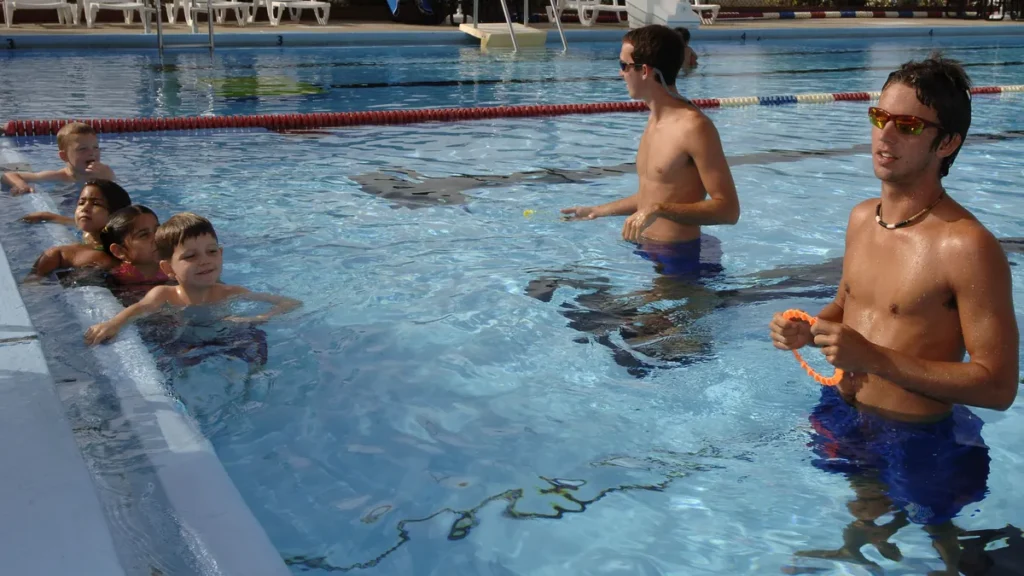
Teaching people to swim is one of the most satisfying ways to earn a living in the water. Every lesson has a visible result: a nervous child putting their face in the water, an adult swimming a full length, or a young swimmer beating a personal best. Demand is steady. Parents book lessons for their children year after year, adults sign up to learn a skill they missed, and schools and clubs need qualified instructors. Swim teaching shares much with other instructor careers — our guide to the Best Ways to Make Money as a Dance Instructor covers a similar path on dry land. Group lessons typically earn $20 to $35 per hour, private lessons $40 to $80, and specialist coaching more still. Pay varies by location, so treat the figures below as typical ranges.
Key takeaways
- Group lessons at a swim school are the most reliable starting income, usually $20 to $35 per hour.
- Private lessons pay the most per hour, often $40 to $80.
- Baby, toddler, and adult beginner classes are the fastest-growing niches.
- Specialist clinics, open-water coaching, and squad coaching pay the highest rates.
- Mixing term-time teaching, holiday courses, and online coaching keeps income steady all year.
1. Teach Group Lessons at a Swim School
Group lessons are the most common way to make money as a swim instructor, and the best place to start. Swim schools and leisure centres run classes at every level, from first splash to advanced stroke work, usually with four to eight swimmers following a set syllabus. Expect $20 to $35 per hour, with evening and weekend classes paying a little more. Fifteen to twenty hours a week can bring in $1,200 to $2,800 a month.
2. Offer Private One-to-One Lessons
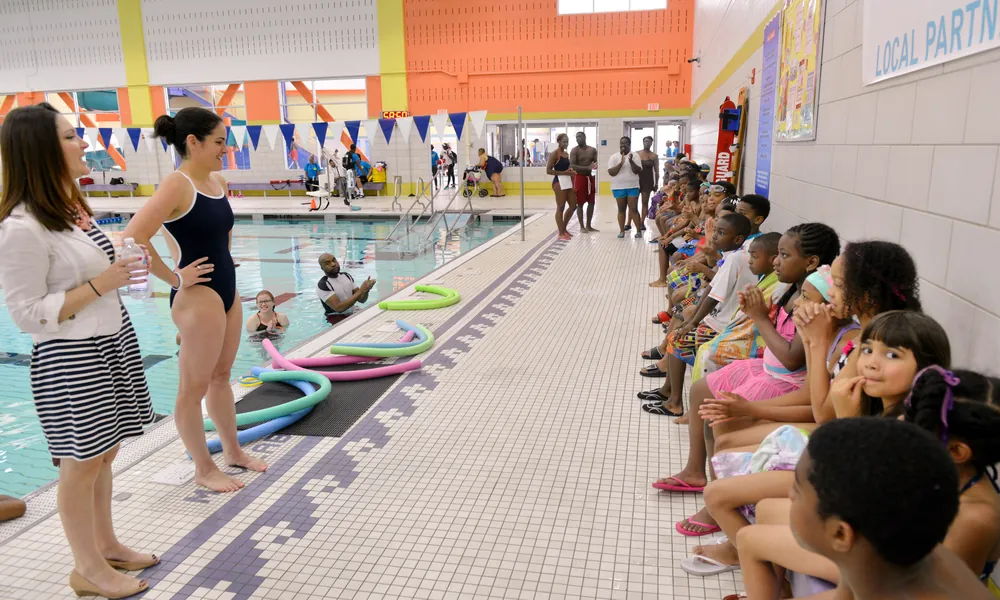
Private lessons are the best-paying option for most swim instructors. Parents pay a premium for one-to-one lessons for their children, especially if a child is anxious in the water or has fallen behind their class. Adults who never learned to swim will pay even more for a patient teacher who makes them feel safe. Rates typically run from $40 to $80 per hour, so six lessons a week can add $960 to $1,920 a month.
3. Teach Baby and Toddler Classes
Baby and toddler classes are one of the fastest-growing niches in swim teaching, and they suit instructors who enjoy working with very young children and their parents. Classes are built around water confidence, floating, gentle submersion, songs, and games, with a parent in the water alongside each child. Pay typically runs from $25 to $40 per hour, and the real value is loyalty: families often stay with the same teacher for two or three years.
4. Teach Adults Who Never Learned to Swim
Around one in five adults cannot swim, and many of them want to learn — they simply never found a teacher who understood their fear. Adult beginner lessons are a large and underserved market, and they reward patience more than speed. Lessons move slowly, start in the shallow end, and focus on breathing, floating, and confidence before any stroke work. Rates run from $40 to $75 per hour, and most adults book a regular weekly slot for months.
5. Coach a Swim Team or Squad
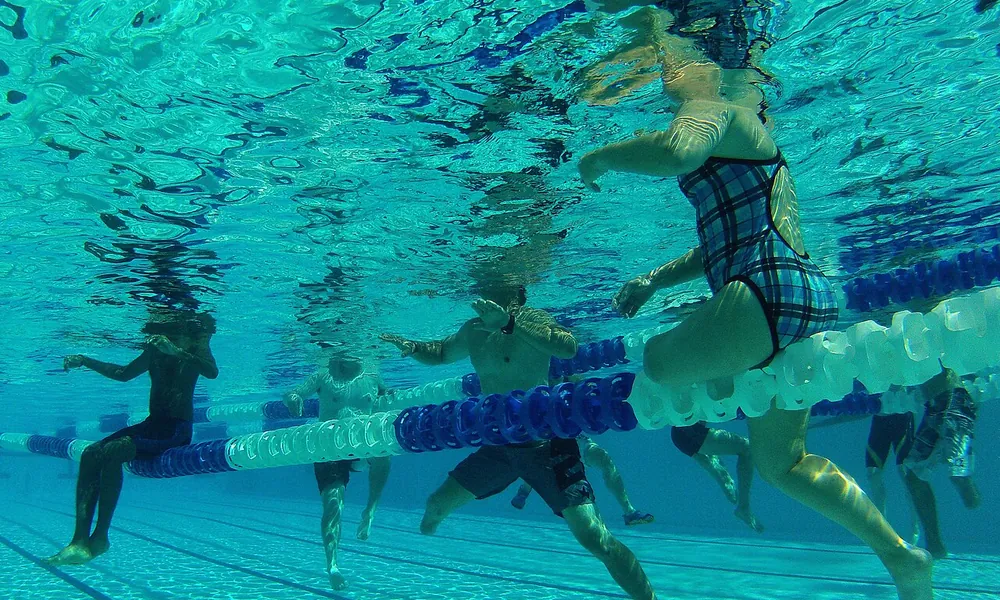
If you swam competitively, coaching a team or squad is a natural next step. School teams, swim clubs, and community programmes hire coaches for age-group squads, valuing someone who has raced and understands the sport from the inside. Coaching pays $25 to $45 per hour on a regular weekly schedule, so the income is predictable. The work is less about teaching basics and more about planning sessions, correcting technique, and keeping young swimmers motivated. Like other coaching work, it rewards a personal approach — our guide to the Best Ways to Make Money as a Personal Trainer shows the same idea in a different field.
6. Run Technique Clinics and Stroke Workshops
Technique clinics are short, focused sessions that pay well because swimmers get a lot of value in a short time. A two-hour weekend clinic might focus on freestyle breathing, breaststroke timing, or starts and turns, with video review and feedback for each swimmer. Charge $50 to $100 per swimmer, and a group of eight brings in $400 to $800 for a morning’s work. Triathletes are a particularly good audience: they often have the fitness but not the swim technique, and they will pay for expert help.
7. Coach Open-Water Swimming
Open-water coaching is a growing niche as triathlons and open-water events keep getting more popular. Swimmers who are comfortable in a pool still need to learn wetsuit swimming, sighting, drafting, mass starts, and coping with cold water and currents. Coaching usually takes place at lakes, reservoirs, or the sea in the warmer months, often early in the morning. Rates run from $50 to $90 per hour for one-to-one coaching, and group sessions of six to ten swimmers can earn $300 to $600 for a session.
8. Teach School Swimming Programmes
Schools are a steady source of teaching work. Many schools are required to teach swimming as part of the curriculum, and they contract qualified instructors to deliver it, either at the school’s own pool or at a local leisure centre. Pay typically runs from $25 to $40 per hour, and contracts usually cover a full term or school year, so the income is reliable. Teaching in schools pairs naturally with other classroom work — our guide on How to Make Money as a Teacher covers the wider ways teachers earn.
9. Offer Online Video Technique Coaching
You do not have to be at the poolside to earn from swim teaching. With online video coaching, a swimmer films themselves swimming, sends you the video, and you return a detailed analysis with drills and a training plan. Charge $30 to $60 per analysis, fitting the work around your pool hours or evenings. Competitive swimmers, triathletes, and adult improvers worldwide will pay for expert eyes on their stroke. The key is a clear report: slow-motion clips, marked-up stills, and two or three drills the swimmer can practise straight away.
10. Run Intensive Holiday Swim Courses
School holidays are a golden opportunity for swim instructors. Intensive courses run daily for a week — usually 30 minutes a day for five days — and children progress far faster than they do in weekly lessons. Parents love the visible progress, and the format suits families who cannot commit to a term of weekly classes. Charge $150 to $300 per child for a week, and a class of six earns $900 to $1,800 for five short sessions. Run two or three classes a day and a single holiday week can bring in several thousand dollars.
How to Earn All Year Round
The biggest challenge in swim teaching is the calendar. Group lessons and school programmes run in term time, open-water coaching peaks in summer, and holiday courses cluster around school breaks. The instructors who earn most plan for all four seasons: term-time group lessons and school work as the base, intensive holiday courses in the breaks, open-water coaching in summer, and online video analysis in winter when pool time is tightest.
What You Need to Get Started
Start with a recognised swim teacher qualification from your national swimming body, plus a current first aid certificate and a background check for working with children. Public liability insurance is essential if you teach privately. Then apply to local swim schools and leisure centres: they are the quickest route to regular paid hours and the experience that makes private clients trust you.

Keep what speaks to you.
Leave room for your own perspective.


