
The best AI tools for transmission shop startups in 2026 decide whether a new specialist workshop becomes the place drivers trust with the most expensive repair their car will ever need, or just another garage that turns transmission work away. A transmission is not a routine service item. When a car slips out of gear, shudders on the motorway, or refuses to engage reverse, the owner is frightened, the repair bill is large, and the diagnosis has to be right the first time. A shop that guesses wrong orders the wrong parts, ties up a bay for days, and loses a customer who will tell every neighbour what happened.
A transmission-specialist shop runs on a different rhythm from a general garage. Jobs are longer, parts are more specific, and the work is split between quick fluid services, careful electronic diagnostics, valve body and solenoid repairs, torque converter work, and full rebuilds that can take a week. Each of those jobs needs its own parts list, its own labour time, and its own warranty promise. At the same time, the owner is answering worried calls, explaining why a rebuild costs what it does, ordering clutch packs and solenoids that must fit one exact gearbox, and keeping customers informed while their car sits in pieces on a bench.
Artificial intelligence helps a transmission shop not by replacing the technician who can feel a worn clutch pack or read a pressure test, but by taking over the repetitive work around that technician. It can read transmission fault codes and rank the most likely causes, pull the correct rebuild kit for one exact gearbox code, draft a clear estimate that explains the work in plain language, remind a customer that a fluid service is due, and flag a rebuild that is running late before the customer starts to worry. This guide compares the best AI tools for transmission shop startups across the jobs that matter most in 2026: transmission diagnostics, rebuild information, parts and core management, estimates and warranties, bay scheduling, customer messaging, and the numbers that show whether the shop is actually making money.
Key Takeaways
- Start with one transmission information source, one diagnostic scanner, and one shop management system. Those three carry most of the daily work for a new transmission shop.
- Choose tools that understand gearboxes by exact transmission code, not just by year, make, and model, because a wrong clutch pack or solenoid wastes days and destroys a rebuild warranty.
- Send every customer a clear written diagnosis with photos before asking for approval on a rebuild. Evidence builds trust faster than any discount when the bill is large.
- Automate estimate follow-ups, fluid service reminders, and review requests first. Fast, honest follow-up wins local transmission customers who are already anxious.
- Measure first-time fix rate, rebuild comeback rate, average repair order value, and bay utilisation every week, and keep only the tools that move those numbers.
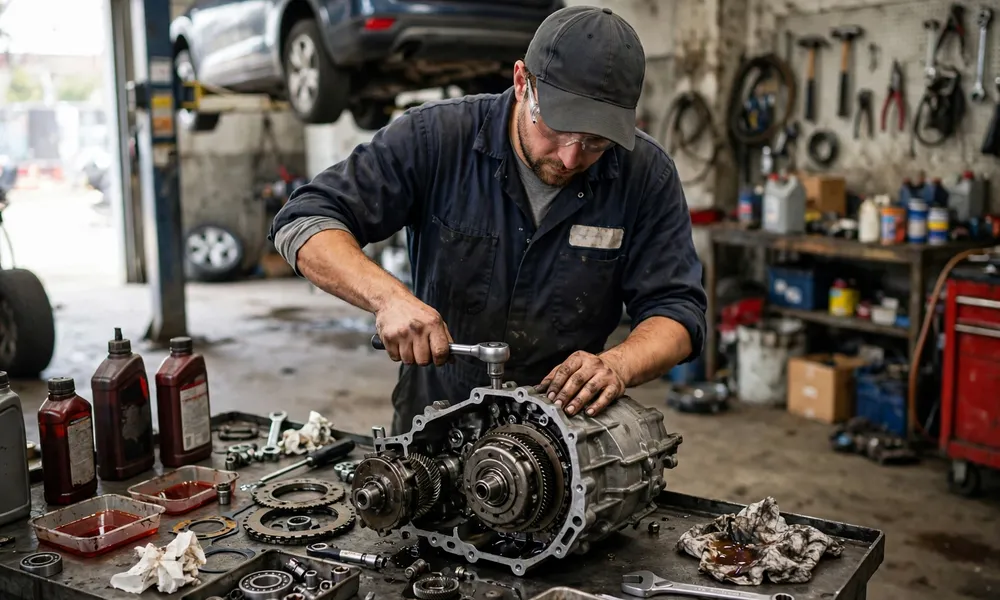
Best AI Tools for Transmission Shop Startups at a Glance
| Tool | Main job | Best for | Watch for |
|---|---|---|---|
| ATSG | Transmission technical information and diagnostics | Shops rebuilding many gearbox types | Depth varies by gearbox family |
| Sonnax | Transmission parts, valve body and technical guidance | Valve body and hard-part repairs | Parts must match the exact unit |
| Transtar | Transmission parts sourcing and catalogues | Fast rebuild kit ordering | Stock depends on the local branch |
| Autel MaxiSys Ultra | AI diagnostics and live data | Electronic and shift-quality faults | Needs regular software updates |
| Launch X431 PAD VII | Diagnostics, coding and service functions | Shops covering many makes | Some functions need a subscription |
| ZF Aftermarket [pro]Tech | Transmission training and technical support | ZF gearbox specialists | Narrower outside ZF units |
| Shop Boss | Shop management, estimates and scheduling | Small teams that want one system | Fewer transmission-specific features |
| Steer | AI customer messaging and reviews | Keeping anxious customers informed | Messages need a human check |
| UVeye | AI vehicle inspection at intake | Fast, documented intake checks | Upfront cost for a small shop |
The table above gives a quick view of where each tool helps most in a transmission shop startup. The sections that follow explain how to use each one in a real workshop, what to look for before you pay, and where small teams usually go wrong. No single tool does everything well, so use the table to spot the gaps in your own shop first, then read the sections that follow for the detail behind each row.
How to Choose AI Tools for a Transmission Shop Startup
Choosing AI tools for a transmission shop startup starts with an honest map of how your shop actually works. A shop that lives on fluid services and solenoid repairs has different needs from one that rebuilds five gearboxes a week or one that specialises in continuously variable transmissions. A one-bay startup has different needs from a team of six. Before looking at any demonstration, write down the five jobs that eat the most of your week, the five mistakes that cost you the most money, and the five moments when a customer was unhappy. The tools that fix those specific problems are the ones worth paying for, and everything else can wait.
Fitment data is the first thing to test, and it matters more here than in almost any other repair trade. Transmissions change in small ways between model years, and a clutch pack, a solenoid, a valve body, or a torque converter that fits a 2021 gearbox may not fit the 2022 version of the same car. Ask any parts or information tool to look up a rebuild kit, a solenoid, and a fluid specification for three of the gearboxes you actually see most often, including one older or unusual unit. If the tool guesses, shows the wrong year, or cannot find the transmission code at all, it will create the kind of errors that cost a specialist shop its reputation. The best tools in this space are built around real transmission data, not adapted from general car software that has never seen a valve body apart.
Price also needs a clear-eyed check, because transmission tools charge in different ways. Some charge per user, some per bay, some per repair order, and some per diagnostic session, and those costs add up fast when job volume rises, so read the pricing tiers before signing. The best tools for a startup are honest about cost, easy to cancel or downgrade, and simple enough that a new technician can learn them in a single shift. Finally, check that every tool stores vehicle and customer data properly, exports it cleanly if you ever leave, and works well on a phone, because much of transmission work happens away from a desk. Owners who want the wider picture can compare notes with the best AI tools for auto repair shop startups, since the estimating and customer messaging lessons carry over well, even though the transmission work itself is far more specialised.
The Best AI Tools for Transmission Shop Startups in Detail
1. ATSG
The Automatic Transmission Service Group, known as ATSG, is the technical library most transmission specialists reach for first. It publishes detailed service information, diagnostic guides, and rebuild procedures for a very wide range of automatic gearboxes, including common domestic, European, and Asian units. For a startup, that depth matters, because a new shop cannot afford to learn every gearbox by trial and error, and one wrong clearance or torque setting can turn a rebuild into a comeback.
In daily use, ATSG helps a technician confirm the exact transmission code, find the correct overhaul procedure, check clutch clearances and end play, and trace a fault code to the most likely internal cause. The material is written for working technicians rather than for sales pages, so it reads as a set of steps to follow on the bench. A startup should build its standard rebuild checklists from ATSG procedures, then add its own notes for the gearboxes it sees most often, so every technician follows the same process.
2. Sonnax
Sonnax is a transmission parts and engineering specialist, and its value to a startup goes beyond the parts themselves. The company designs upgraded valve body components, bushings, and repair kits for known weak points in popular gearboxes, and it publishes clear technical explanations of why those parts fail. For a shop that wants to fix the cause of a fault rather than simply replace the same weak part, that guidance is genuinely useful.
In daily use, Sonnax helps a technician diagnose valve body wear, choose the correct repair kit for a specific complaint such as a harsh shift or a delayed engagement, and explain to a customer why an upgraded part costs more but lasts longer. The product pages and technical articles are detailed enough to use as training material for a new technician, and the parts catalogue is organised by transmission type, which keeps ordering mistakes down. A startup should keep a short list of the Sonnax kits it uses most often, with the gearbox codes they fit, pinned beside the parts bench.
3. Transtar
Transtar Industries is one of the largest transmission parts distributors, and for a startup its catalogue and ordering system are the practical backbone of rebuild work. A rebuild cannot start until the kit, the torque converter, the solenoids, and the hard parts are on the bench, and a day lost waiting for parts is a day a bay earns nothing. Transtar brings a very wide range of kits, converters, and components together in one place, with branch stock that a local shop can often collect the same day.
In daily use, Transtar helps a shop build a complete rebuild kit from one order, check availability before promising a completion date, and keep a small stock of the fast-moving kits for the gearboxes it sees most often. The catalogue tools help a parts person match a kit to a transmission code, and the ordering history shows which kits the shop actually uses, which makes reordering faster and reduces dead stock. A startup should agree its standard kit list with its Transtar branch in the first month, so the parts person is not starting from scratch on every job.
4. Autel MaxiSys Ultra
The Autel MaxiSys Ultra is a professional diagnostic scanner with strong artificial intelligence features, and it earns its place in a transmission shop because most modern gearbox faults start as electronic problems. Shift quality, slip, delayed engagement, and limp-home mode are often caused by a sensor, a solenoid command, or a software issue before any metal has worn out, and a good scanner separates those faults from a mechanical failure in minutes.
In daily use, the MaxiSys Ultra reads transmission fault codes, shows live data such as line pressure, solenoid commands, input and output speeds, and fluid temperature, and records that data during a road test so a technician can see exactly when a shift goes wrong. Its guided diagnostics suggest the most likely causes and the tests to run next, which saves a junior technician from guessing. A startup should use it on every transmission job at intake, save the live data with the job record, and compare the before and after readings as proof that the repair worked.
5. Launch X431 PAD VII
The Launch X431 PAD VII is a broad-coverage diagnostic tablet that suits a transmission startup covering many different makes. A specialist shop rarely sees only one brand, and a scanner that handles a wide range of cars keeps the shop from turning work away. The PAD VII offers deep diagnostics, service functions, coding, and online programming support on many models, which matters when a gearbox control unit needs a relearn after a repair.
In daily use, the PAD VII helps a technician run clutch adaptations, reset transmission learned values after a rebuild, perform fluid temperature checks during a service, and verify that a solenoid or sensor is responding correctly. Its service functions cover the routine jobs that surround a rebuild, such as oil reset and electronic parking brake release, so the shop does not need a second tool for every small task. A startup should keep the tablet charged and updated, and give every technician a short training session on the transmission functions it will use most.
6. ZF Aftermarket [pro]Tech
ZF Aftermarket [pro]Tech is the technical support and training service for ZF transmissions, and it matters because ZF gearboxes are fitted to a very large number of cars, from family saloons to premium models. A startup that can rebuild and service ZF units properly has a steady stream of work, but those gearboxes have their own procedures, fluid specifications, and mechatronic units, and guessing at them is expensive.
In daily use, [pro]Tech gives a shop access to ZF technical information, training courses, and expert support for the 6HP, 8HP, and other ZF families. That support helps a technician choose the correct fluid, follow the correct fill procedure, diagnose a mechatronic fault, and decide whether a unit needs a repair or a full rebuild. A startup should send at least one technician through ZF training in its first year, and keep the [pro]Tech guidance beside the bench whenever a ZF car is in the shop.
7. Shop Boss
Shop Boss is a shop management system built for small repair businesses, and it suits a transmission startup because it keeps the whole job in one place without the complexity of a large enterprise system. A rebuild involves a long job card, a parts list, a customer approval, a warranty record, and an invoice, and when those live in different places, mistakes follow. Shop Boss brings them together so the owner can see every job at a glance.
In daily use, Shop Boss helps a shop write clear estimates, track a rebuild through its stages, schedule bay time around long jobs, send invoices, and keep a customer and vehicle history that makes the next visit faster. Its reporting shows which jobs make money and which do not, which is vital when a rebuild can tie up a bay for a week. A startup should set up its standard estimate templates for fluid services, solenoid repairs, and full rebuilds in the first week, so every quote looks professional and covers the same items.
Before signing up, check the monthly cost per user, confirm that estimates and invoices can be customised for transmission work, and test the system on a real rebuild job from intake to invoice. The watch-out is that Shop Boss is a general shop system, so it will not diagnose a gearbox or choose a rebuild kit, and it works best paired with a transmission information source.
8. Steer
Steer, formerly known as Mechanic Advisor, is a customer communication platform with artificial intelligence features, and it matters in transmission work because customers are anxious. A driver facing a large rebuild bill wants regular updates, a clear explanation, and a reason to trust the shop, and a missed call or a vague message can lose the job before it starts. Steer helps a small team answer quickly and keep every customer informed without a full-time receptionist.
In daily use, Steer helps a shop answer common questions automatically, send estimate links and approval requests, remind customers about fluid services, and ask for a review after a successful repair. Its messaging keeps a record of every conversation, so a technician can see what was promised before calling a customer back. A startup should set up its standard messages for diagnosis updates, approval requests, and completion notices in the first month, and let a person check anything that carries a price or a completion date.
Before signing up, check the monthly cost, confirm that messages can be personalised for transmission jobs, and test how it handles a customer who replies with a new symptom. The watch-out is that automated messages can sound cold if they are left untouched, so review them regularly and keep the tone honest and human.
9. UVeye
UVeye is an artificial intelligence vehicle inspection system that scans a car as it drives through a gantry, and it gives a transmission shop a fast, documented intake check. A customer often arrives with a vague complaint, and a clear record of the car as it arrived protects both the shop and the customer. UVeye captures underbody, tyre, and exterior images and flags visible issues, which helps a technician focus on the real problem.
In daily use, UVeye helps a shop record the condition of every car at intake, spot leaks, damage, or worn tyres that a customer may not have mentioned, and share a clear inspection report that supports the diagnosis. For a transmission shop, that record is useful when a customer later claims a fault was caused by the repair, because the intake scan shows what was already there. A startup should use the report as part of every intake, and keep it with the job record alongside the diagnostic data.
Before buying, check the installation cost, the space needed for the gantry, and the monthly fee, because this is the most expensive tool on this list. The watch-out is that UVeye inspects the outside and underneath of a car, not the inside of a gearbox, so it supports the diagnosis rather than replacing it.
How AI Fits a Transmission Rebuild Workflow
A rebuild follows a clear sequence, and artificial intelligence helps at each step. At intake, the scanner reads fault codes and live data, the inspection system records the car, and the shop management system opens a job card with the exact transmission code. That first hour decides whether the shop quotes a fluid service, a solenoid repair, or a full rebuild, and a wrong call here wastes the most time.
During strip-down, the information source guides the technician through the correct procedure, the parts catalogue confirms the kit, and the shop system tracks which parts have arrived and which are still on order. A good system flags a missing torque converter or solenoid before the technician reaches that stage, rather than after the gearbox is already in pieces. That single habit saves more days than any other change a new shop can make.
During assembly, the technician follows torque settings and clearances from the information source, records the parts fitted, and notes any worn components found along the way. After assembly, the scanner runs adaptations and relearns, the road test records live data, and the shop system sends the customer a completion message with the warranty terms. Shops that handle heavy vehicles can compare notes with the best AI tools for truck repair startups, since the rebuild discipline and fleet communication lessons carry over, even though the gearboxes are very different.
What a Transmission Shop Startup Should Pay
A new transmission shop should expect to spend more on information and diagnostics than a general garage, because the work is more specialised. A realistic first-year budget covers one information licence, one professional scanner, one shop management system, and one messaging tool, with the inspection system added later when volume justifies it. Many tools charge monthly, which keeps the starting cost manageable, but annual scanner updates and training courses are real costs that should be budgeted from the start.
Judge every tool by cost per recovered hour rather than cost per month. A diagnostic scanner that saves an hour of fault tracing on every job pays for itself in weeks, while a dashboard nobody opens is wasted money however cheap it looks. Work out what one recovered hour of bay time is worth to your shop, then compare it with the monthly fee. If a parts ordering tool saves one day of waiting each month, it has already paid for itself. Run that simple calculation for every candidate, and keep the result beside the feature list when you decide.
Common Mistakes New Transmission Shop Startups Make
The most common mistake is quoting a rebuild before a proper diagnosis. A fault code alone does not prove a gearbox needs a rebuild, and a shop that quotes the largest job first loses trust when a smaller repair would have fixed the car. Always run live data, a pressure test where appropriate, and a road test before quoting, and show the customer the evidence.
The second mistake is ordering parts from the car model instead of the transmission code. Two cars that look identical can carry different gearboxes, and a kit ordered for the wrong unit wastes days and money. Always read the code from the gearbox itself, confirm it in the catalogue, and double-check it before ordering. The third mistake is promising a completion date before the parts are confirmed in stock, which turns a small delay into a broken promise.
The fourth mistake is skipping the relearn and adaptation steps after a repair. A rebuilt gearbox that has not been adapted will shift badly, and the customer will assume the rebuild failed. Always follow the scanner procedure, record the live data, and road test the car before handover. The fifth mistake is failing to explain the warranty in plain language, which causes arguments later. Write the warranty terms on the invoice, explain what is covered, and keep a copy with the job record.
Your First Ninety Days With AI Tools
In the first thirty days, set up the information source, the scanner, and the shop management system, and use them on every job. Write your standard estimates for fluid services, solenoid repairs, and full rebuilds, and agree your standard kit list with your parts supplier. Train every technician on the scanner and the information source, and save diagnostic data with every job record so you can prove what was done.
In the next thirty days, add customer messaging and review requests, and start measuring first-time fix rate, rebuild comeback rate, and average repair order value every week. Review the numbers with the team, fix the weakest step first, and drop any tool that nobody uses. Owners planning to serve business customers can compare notes with the best AI tools for fleet maintenance startups, since fleet work rewards the same clear records and planned servicing that a transmission shop needs.
In the final thirty days, review your costs against the time saved, negotiate better terms with the suppliers you use most, and plan your first training course. By day ninety, the shop should have a short list of tools that every technician uses daily, a clear rebuild process, and customers who return because the work was explained well and done right the first time.
Checklist: Choosing AI Tools for Your Transmission Shop Startup
- Confirm every tool covers the exact transmission codes you plan to rebuild, not just the car makes.
- Test each tool on a real gearbox fault with your real parts suppliers and labour rates before paying.
- Set up standard estimates for fluid services, solenoid repairs, and full rebuilds in the first week.
- Save diagnostic live data, photos, and the intake record with every job, so every repair can be proved.
- Automate estimate follow-ups, fluid service reminders, and review requests, and check any message that carries a price.
- Measure first-time fix rate, rebuild comeback rate, bay utilisation, and average repair order value every week.
Frequently Asked Questions
What is the best first AI tool for a new transmission shop startup?
Start with a transmission information source such as ATSG and a professional diagnostic scanner such as the Autel MaxiSys Ultra. Those two tools carry most of the daily work, because they answer the two questions every job starts with: what gearbox is this, and what is actually wrong with it. Add a shop management system next, then messaging and parts tools as volume grows.
Can AI tools diagnose a transmission fault on their own?
No. Artificial intelligence can read fault codes, rank the most likely causes, and suggest the tests to run next, but it cannot see inside a gearbox. A proper diagnosis still needs live data, a pressure test where appropriate, a road test, and a technician who understands how a gearbox works. Use AI to plan the diagnosis, then prove the repair with real data.
How much should a transmission shop startup spend on AI tools?
A realistic first-year budget covers one information licence, one professional scanner, one shop management system, and one messaging tool, with training and annual scanner updates on top. Judge each tool by cost per recovered hour rather than cost per month, and avoid long contracts in the first year until you know which tools your team actually uses every day.
Do customers trust a transmission rebuild quote from an AI-assisted estimate?
Customers trust a quote when they can see the evidence behind it. A written diagnosis with fault codes, live data, and photos of the worn parts builds trust far faster than a verbal price. Show the customer what was found, explain the options in plain language, and put the warranty terms in writing, and most customers will accept a fair price.
What is the difference between a transmission shop and a general auto repair shop?
A general repair shop covers many different jobs across a whole car, while a transmission shop specialises in gearboxes: diagnostics, fluid services, valve body and solenoid repairs, torque converter work, and full rebuilds. The work is longer, the parts are more specific, and the diagnosis has to be exact, which is why a transmission shop needs information and parts tools built for gearboxes rather than general car software.
Will AI tools replace transmission technicians?
No. Artificial intelligence takes over the repetitive work around a technician, such as reading codes, finding information, ordering parts, and messaging customers, so skilled people spend their day with gearboxes instead of paperwork. The hands-on work of stripping, measuring, assembling, and testing a gearbox still needs a trained technician, and that will not change.
The Bottom Line
The best AI tools for transmission shop startups in 2026 are the ones that help a small specialist team diagnose correctly, order the right parts, rebuild to the correct procedure, and keep anxious customers informed. Start with transmission information, a professional scanner, and a shop management system, then add messaging and parts tools as volume grows. Test every tool on a real gearbox, measure first-time fix rate and rebuild comeback rate every week, and keep only the tools that move those numbers. A transmission shop that diagnoses honestly, rebuilds carefully, and communicates clearly will earn the trust that turns one large repair into a customer for life.

Keep what speaks to you.
Leave room for your own perspective.


