
The best AI tools for taco truck startups in 2026 solve a problem that no fixed restaurant ever faces: the whole kitchen moves, the menu is built around a handful of fillings, and the day is won or lost by being in the right place at the right hour. A taco truck founder starts the morning by checking the weather, the event calendar, and the stock of tortillas, then drives to a pitch where the crowd may be hungry office workers, late-night revellers, or families at a weekend festival. The truck has room for one grill, one flat top, and a small cold store, so every decision about what to cook, how much to prep, and what to charge has to be made before the serving window opens.
That pressure is exactly where artificial intelligence earns its place in a taco truck. AI cannot grill the carne asada or fold a tortilla, but it can take the guessing out of the working week. It can predict which taco sells best at a lunch pitch and which one sells after midnight, warn you when salsa ingredients are running low, plan a route that covers two pitches without wasting fuel, and write the social post that tells regulars where the truck will be tonight. For a team of one to five people, that kind of help is the difference between a steady week and a week of waste, missed pitches, and empty queues.
This guide compares the nine strongest AI tools for a taco truck startup in 2026, judged on the jobs that decide whether the truck earns or loses: taking orders at a build-your-own taco counter, planning late-night and event routes, winning festival bookings, costing tortillas and salsa ingredients, scheduling a small night-time crew, writing menus and replies, and keeping the books straight. Every tool below was chosen because it works from a phone in a car park, pays for itself quickly, and fits a business that lives on tacos, not on office software.
Key takeaways
- Start with a mobile point of sale, route planning, and salsa bar inventory, because they touch money, movement, and food cost every single day.
- Keep the taco menu short and build it around a few fillings, so the grill stays fast and the stock stays simple.
- Choose tools that work offline or on a weak signal, since festival fields, late-night streets, and market pitches rarely have reliable Wi-Fi.
- Let AI draft taco descriptions, captions, and customer replies, but keep a person in charge of prices, refunds, and anything a customer complains about.
- Measure success in tacos sold per pitch, food cost percentage, miles driven per order, and repeat customers, not in how many features a tool lists.
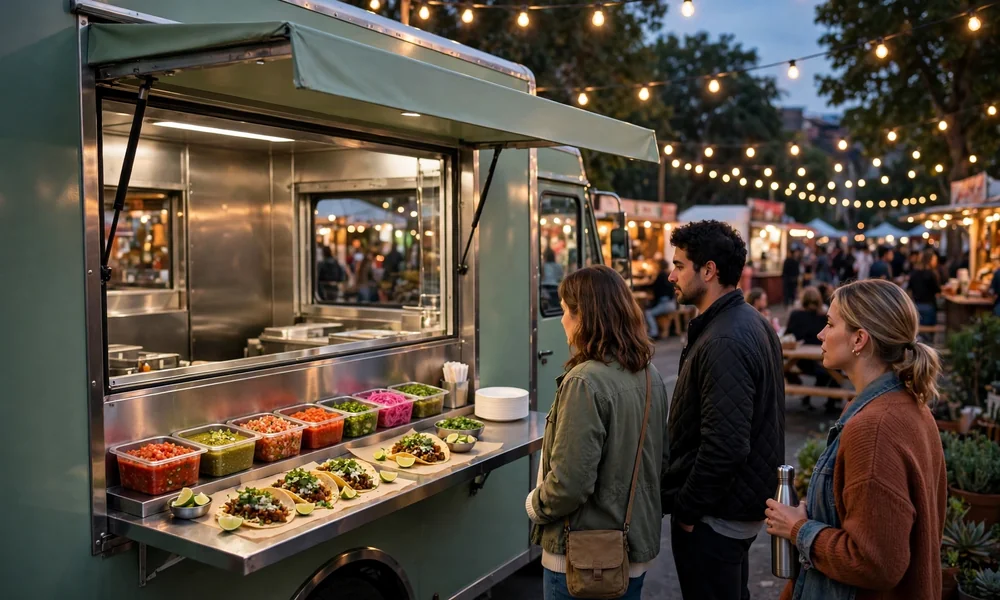
Best AI Tools for Taco Truck Startups at a Glance
| Job | Tool | What it does best | Best for | Typical starting price |
|---|---|---|---|---|
| Point of sale and ordering | Square for Restaurants | Fast till, build-your-own taco ordering, and sales reports | Trucks taking orders before opening day | Free plan, paid plans from around $69 per month |
| Late-night routes | Circuit | Smart multi-stop routes with live ETAs | Trucks serving several pitches in one night | From around $20 per month |
| Festival bookings | Eventeny | Event discovery, applications, and booking management | Trucks chasing festivals and private events | Free to browse, paid plans from around $49 per month |
| Inventory and food cost | xtraCHEF | Recipe costing, invoice scanning, and stock counts | Trucks where salsa and tortilla costs are the biggest leak | From around $99 per month |
| Crew scheduling | 7shifts | AI-assisted rotas, shift swaps, and labour cost tracking | Small crews working nights and weekends | Free plan, paid plans from around $34 per month |
| Writing and ideas | ChatGPT | Taco descriptions, salsa notes, captions, and customer replies | Every truck with no marketing team | Free plan, paid plans from around $20 per month |
| Text alerts | SlickText | SMS alerts that tell fans where the truck is tonight | Trucks that move daily and need a queue fast | Free trial, paid plans from around $29 per month |
| Social scheduling | Later | AI-planned posts, reels, and taco drop announcements | Trucks building a regulars list on social media | Free plan, paid plans from around $25 per month |
| Bookkeeping | QuickBooks Online | Invoicing, expenses, permits, and tax-ready records | Founders who want the numbers honest from day one | From around $35 per month |
What Makes a Taco Truck Different From a Food Truck
A taco truck is a food truck, but it is not a general food truck, and the difference shapes every tool choice in this guide. A general truck can change its whole menu from one week to the next, while a taco truck lives or dies on a short list of fillings, tortillas, and salsas. The grill cooks the same proteins in different combinations, the salsa bar turns a small set of ingredients into a dozen choices, and the customer builds the taco they want at the counter. That means the point of sale must handle build-your-own orders quickly, the inventory system must track tortillas and salsa by the batch, and the menu must be short enough to cook fast during a rush.
The working day is different too. Many taco trucks earn their best money late at night, outside bars and music venues, or at weekend festivals where the crowd arrives in waves. A lunch pitch needs speed and a short queue, a festival needs stamina and a plan for restocking mid-event, and a late-night pitch needs a route that gets the truck home safely after the last order. Tools that only plan daytime delivery routes or only manage a fixed restaurant dining room miss the point. The tools in this guide were picked because they understand movement, short menus, and small crews, and the wider picture of mobile food is covered in the best AI tools for food truck startups, which this guide builds on with a taco-first focus.
Finally, a taco truck is a social business. Customers follow the truck, not the address. They check social media at five in the afternoon to find out where the truck will be at nine, they text friends when the truck parks near them, and they come back for a taco they cannot get anywhere else. That is why this guide gives as much weight to text alerts and social scheduling as it does to tills and stock counts. A truck with a great salsa bar and no way to tell anyone where it is will serve an empty street.
How We Chose the Tools in This Guide
We judged every tool on five tests that matter to a taco truck founder. First, it must work from a phone in a car park, because the office is the cab and the counter. Second, it must handle a short, build-your-own menu rather than forcing the truck into a long restaurant menu. Third, it must pay for itself quickly, either by saving food waste, saving miles, or bringing in more orders per pitch. Fourth, it must fit a team of one to five people, with no training course and no full-time administrator. Fifth, it must share data with the rest of the stack, so a sale at the counter updates the stock count and the sales report without anyone typing numbers twice.
Square for Restaurants: The Fastest Till for a Build-Your-Own Taco Counter
Square for Restaurants is the fastest way for a new taco truck to start taking orders, because it is built around a simple idea: the customer chooses a filling, a tortilla, and a salsa, and the till turns that into a kitchen ticket without slowing the queue. Modifiers handle corn or flour tortillas, extra salsa, no onions, and double meat, and the kitchen display shows the order in the sequence the grill needs it. That matters at a taco counter, where a ten-second delay per order becomes a twenty-minute queue by the end of the lunch rush.
The sales reports are the real prize for a taco founder. Square shows which taco sells best at each pitch, which salsa runs out first, and which hours earn the most money, so the next week can be planned on evidence instead of memory. If al pastor outsells chicken three to one at a late-night pitch but loses at lunch, the prep list changes to match. Online ordering works the same way, so regulars can order ahead and collect at the window, which keeps the queue short and the grill steady.
Circuit: Late-Night Routes That Put the Truck Where the Crowd Is
Circuit is a route planning tool that fits the taco truck working day, because a taco truck rarely drives one route and stops. A typical Friday might start at a commissary kitchen, move to a lunch pitch near offices, then to a brewery in the early evening, and finally to a late-night spot outside a music venue. Circuit takes that list of stops, orders them into the fastest route, and gives live ETAs that can be shared with the crew and, when needed, with an event organiser waiting for the truck to arrive.
The AI in Circuit learns from traffic and from the time each stop actually takes, so the plan gets better week by week. It can warn you that the road past the stadium closes on match nights, or that the Friday evening route needs an extra twenty minutes because of roadworks. For a taco truck, that warning is worth real money: arriving late to a pitch means the best hours are already gone, and driving extra miles between pitches burns fuel and food that could have been sold.
Eventeny: Festival and Event Bookings Without the Spreadsheet Chase
Eventeny is the booking tool that turns festival season from a scramble into a plan. Taco trucks earn some of their best money at food festivals, street markets, college events, and private parties, but winning those pitches means applying early, sending the right documents, and keeping track of fees, dates, and requirements. Eventeny brings event discovery, applications, and booking management into one place, so the founder can see which events are open, what each one costs, and which ones are worth the pitch fee.
The value for a taco truck is in the detail. Eventeny helps the founder prepare the documents events ask for, such as permits, insurance, and menu lists, and keeps the conversation with each organiser in one thread instead of scattered across email and messages. That matters when a festival wants to know the truck dimensions, the power requirements, and the salsa bar setup, because a slow or incomplete reply can lose the pitch to another truck. The tool also shows past events and reviews, so the founder can judge whether a festival is a genuine crowd or a quiet field with a high fee.
xtraCHEF: Salsa Bar Inventory and Tortilla Costing in a Tiny Kitchen
xtraCHEF is the inventory tool that fits a taco truck kitchen, because the food cost problem in a taco truck is not the protein alone. It is the tortillas, the salsa ingredients, the limes, the onions, the cilantro, and the cheese, all bought in small quantities, stored in a tiny cold store, and used across a dozen different tacos. xtraCHEF scans supplier invoices, matches them to recipes, and shows the true cost of each taco, including the salsa bar that customers help themselves to. That is the number most taco founders guess at, and guessing wrong is how a busy week can still lose money.
The recipe costing is where xtraCHEF earns its fee. A founder can see that the fish taco costs more than the price suggests once lime, cabbage, and chipotle crema are counted, or that the salsa verde is cheap to make but expensive to waste when a batch goes off. The tool tracks stock counts and flags the ingredients that are running low, so the shopping list for the commissary is built from real usage rather than a guess made in the cab. Waste tracking shows which salsa is thrown away most often, which is usually the sign that the batch size is wrong, not that customers dislike it.
7shifts: Crew Scheduling for a Truck That Works Nights and Weekends
7shifts is the scheduling tool for a taco truck crew, because a taco truck does not work office hours. The crew might be two people at lunch, four at a festival, and three on a late-night shift that ends after midnight. 7shifts builds rotas around those patterns, lets staff swap shifts from their phones, and tracks labour cost against sales, so the founder can see whether a fourth person on a Friday night actually earns their wage or just stands in a small kitchen getting in the way.
The AI in 7shifts helps by suggesting rotas based on past sales, so a busy Saturday festival gets a full crew while a quiet Tuesday lunch gets two people and a shorter shift. Staff can request time off, pick up open shifts, and receive reminders, which cuts the messages the founder has to send every week. For a small team where one person calling in sick can ruin a pitch, that reliability matters as much as the rota itself.
ChatGPT: Taco Menu Writing, Salsa Descriptions, and Customer Replies
ChatGPT is the writing assistant that gives a taco truck a marketing team of one, without hiring anyone. A founder can ask it to describe a new taco in three ways, write the salsa bar signs, draft a social post about tonight’s pitch, or reply politely to a customer who asks whether the truck caters for vegans. The drafts are fast, and the founder keeps control by editing them into the truck’s own voice before anything is published.
The taco-specific value is in the menu. A taco truck menu has little room, so every word has to work. ChatGPT can turn a list of ingredients into a short, appetising description that fits on a menu board, suggest names for a weekly special, and write the allergen and dietary notes that customers ask about at the window. It can also draft replies to reviews, thanking a happy customer and handling a complaint calmly, which is a job that often gets left until late at night when the founder is tired.
SlickText: Text Alerts That Fill the Queue When the Truck Parks
SlickText is the text messaging tool that solves the taco truck’s biggest marketing problem: the truck moves, and the customers need to know where it is tonight. A customer who joins the truck’s text list gets a short message when the truck parks nearby, with the pitch, the hours, and the special of the night. That message arrives on the phone the customer is already looking at, and it works even when social media algorithms hide the truck’s post.
The strength of SlickText for a taco truck is its simplicity and its timing. The founder can set up a keyword, such as the truck’s name, that customers text to join the list, and can send a message to everyone near a particular pitch or to the whole list before a festival. A message sent at five in the afternoon, when people are deciding where to eat, can fill a queue by seven. The tool also handles replies, so a customer can ask a question and get an answer without the founder watching a phone all day.
Later: Social Posts That Announce the Next Taco Drop
Later is the social scheduling tool that keeps a taco truck visible without keeping the founder on a phone all day. The truck’s social feed is its shop window: photos of fresh tacos, the salsa bar, the queue at a festival, and the map pin for tonight’s pitch. Later lets the founder plan those posts in advance, schedule them for the hours when followers are deciding where to eat, and reuse the best photos across the week, so the feed stays active even on a day when the truck is closed for prep.
The AI features in Later help with the parts of social media that take the most time. It can suggest the best time to post, draft a caption for a taco photo, and turn a single photo into a post for several platforms. For a taco truck, the most useful feature is the link in bio and the scheduled story, which can carry tonight’s location and hours even when the main feed is showing a photo from yesterday. A follower who opens the profile at six in the evening should find tonight’s pitch in seconds, not after scrolling through a week of old posts.
QuickBooks Online: Bookkeeping That Keeps Permits and Taxes Straight
QuickBooks Online is the bookkeeping tool that keeps a taco truck legal and honest from the first week. A taco truck has the same bookkeeping duties as any food business, with the extra complication that money comes in at several pitches, costs include fuel, commissary rent, event fees, and permits, and the founder needs to know whether the business is actually making money. QuickBooks brings sales, expenses, invoices, and bank transactions into one place, and produces the reports that show the real profit per week.
The practical value is in the daily routine. The founder can photograph a receipt for tortillas at the supplier, log the fuel for a festival trip, and record the pitch fee for a Saturday event, all from a phone. At the end of the month, the records are ready for the accountant, and at the end of the year, the tax return is built from real numbers rather than a box of receipts. The tool also tracks the permits and licences that a taco truck needs, by keeping the costs and renewal dates visible instead of buried in email.
Taco Menu Engineering: Pricing Tacos, Combos, and the Salsa Bar
Taco menu engineering is the quiet skill that decides whether a taco truck makes money, and AI tools make it much easier to do well. The menu should be short: four or five tacos, one or two specials, and a small number of sides and drinks. Every taco should use the same core ingredients in different combinations, so the grill stays simple and the stock stays low. A truck that offers twelve tacos needs twelve sets of prep, while a truck that offers five tacos with a salsa bar can give customers a dozen choices from the same ingredients.
Pricing needs the same discipline. The till reports show which tacos sell and which ones sit, the inventory tool shows what each one costs, and the founder can then price the popular taco a little higher, bundle a slow taco into a combo with a drink, and remove the taco that nobody orders. Combos work well for taco trucks because they raise the average order without slowing the queue: three tacos, a drink, and a side is one ticket instead of three separate decisions. The salsa bar is part of the price, not a free extra, and the costing tool should include it in every taco, so a generous salsa bar never quietly eats the profit.
The wider food business faces the same menu questions at a larger scale, and the best AI tools for food startups show how fixed food businesses use the same kind of data to plan menus and prices. For a taco truck, the lesson is simpler and stricter: a short menu, costed properly, cooked fast, and changed only when the sales data says to change it. A weekly special keeps regulars interested without breaking the system, and a seasonal taco, such as a fish taco in summer or a slow-cooked beef taco in winter, gives the social feed something new to talk about.
Choosing Your Taco Truck AI Stack: A Checklist
The right stack for a taco truck is the smallest one that covers money, movement, and food cost, and it should be built in that order. Start with the till, because without a till there is no record of what sold. Add route planning and a booking tool, because without pitches there is no business. Then add inventory costing, because without it a busy week can still lose money. Marketing and bookkeeping come next, and they should be added only when the first three are working. A founder who buys ten tools before the first pitch will spend the launch week learning software instead of serving tacos.
When choosing between tools, test them at a real pitch, not at a desk. A tool that looks good in a demo but fails on a weak signal at a festival is the wrong tool for a taco truck. Check that the till works offline, that the route planner updates when a road closes, and that the inventory tool can be updated from a phone in the commissary. The best AI tools for restaurant startups cover the fixed-restaurant side of the same choices, and the contrast is useful: a restaurant can afford a slow system, because the customers are already seated, while a taco truck cannot, because the queue will walk away.
- Pick a mobile till that handles build-your-own tacos, works offline, and reports sales by taco and by pitch.
- Add a route planner that covers lunch, evening, and late-night pitches in one plan, with live ETAs.
- Choose a booking tool that tracks festival applications, fees, permits, and organiser messages in one place.
- Set up inventory costing that includes tortillas, salsa ingredients, and the salsa bar in every taco price.
- Schedule the crew around sales data, with a full team for festivals and a small team for quiet lunches.
- Use text alerts and social scheduling to tell regulars where the truck is tonight, and keep the books honest from day one.
Frequently Asked Questions
What is the best AI tool for a new taco truck?
The best first tool is a mobile point of sale, because it records every sale, handles build-your-own taco orders, and produces the sales reports that every other decision depends on. Square for Restaurants is the strongest starting point in this guide, and it should be followed quickly by a route planner and an inventory costing tool, so the truck knows where to go and what each taco costs.
How much should a taco truck spend on AI tools each month?
A new taco truck can start with around $100 to $200 a month, using free plans for writing and social scheduling and paying for a till, a route planner, and a messaging tool. As the pitches become regular, the budget can rise to $300 to $500 a month, with inventory costing and crew scheduling added. The test is always the same: each tool should save more in waste, miles, or lost orders than it costs.
Can AI take taco orders by phone?
AI can draft replies and handle simple questions, and some phone agents can take orders, but a taco truck should keep a person in charge of orders at the window. Build-your-own tacos involve choices about tortillas, fillings, and salsa that are faster to handle face to face, and a customer with an allergy or a complaint needs a person, not a script. AI is best used for the messages around the order, not the order itself.
Do taco trucks need a separate route planning tool?
Yes, once the truck serves more than one pitch a day. A navigation app can guide the driver to a single address, but it cannot plan a day that covers a commissary, a lunch pitch, an evening brewery, and a late-night spot, or warn about road closures and event traffic. A route planner saves fuel, saves time, and makes sure the truck arrives before the crowd does.
How does AI help with salsa bar and tortilla stock?
AI inventory tools track how much of each ingredient is used, cost each taco including its salsa, and flag the items that are running low. That stops the two classic taco truck failures: running out of tortillas halfway through a festival, and throwing away salsa that was made in too large a batch. The stock list for the next shopping trip is built from real usage, not from a guess.
Should a new taco truck use a marketplace or its own ordering page?
A new taco truck should start with its own ordering page through its point of sale, because it keeps the customer relationship and avoids commission on every order. Marketplaces can bring extra orders, but they take a share of each sale and the customer belongs to the marketplace, not the truck. Once the truck has regular pitches and a text list of followers, its own ordering page and its own alerts will bring in more orders at a lower cost.
The Bottom Line
The best AI tools for taco truck startups in 2026 are the ones that respect how a taco truck actually works: a short menu, a small kitchen, a moving pitch, and a crowd that follows the truck rather than the address. Start with a till that handles build-your-own tacos, a route planner that covers late nights and festivals, and an inventory tool that costs the salsa bar properly. Add festival bookings, crew scheduling, text alerts, and social scheduling as the pitches become regular, and keep the books honest from the first week. A taco truck that plans its week with data, cooks a short menu well, and tells its regulars where to find it will earn more, waste less, and grow faster than a truck that relies on luck and a good location alone.

Keep what speaks to you.
Leave room for your own perspective.


