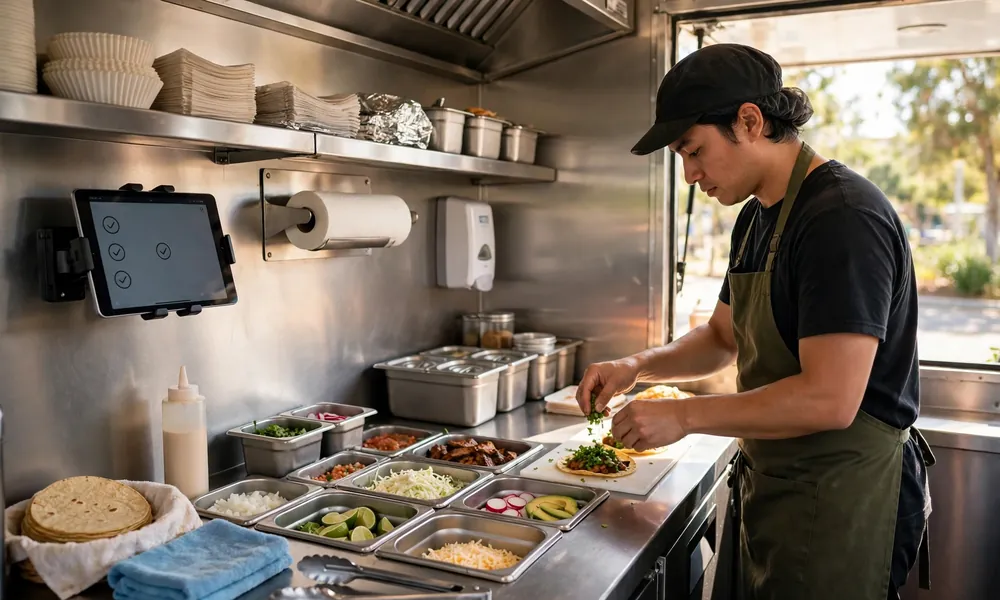
The best AI tools for food truck startups in 2026 solve a problem no fixed restaurant ever faces: the whole business moves. A food truck founder wakes up to a different pitch every day, a different crowd, a different set of permits, and a kitchen the size of a wardrobe. The menu must be short enough to cook fast, the stock must fit in a handful of fridges, and the truck must be in the right place at the right hour or the day earns nothing. Artificial intelligence cannot drive the truck or cook the food, but it can take the guessing out of where to park, what to prep, how much to charge, and who to tell.
That matters because a food truck runs on thinner margins than most people realise. Fuel, commissary rent, event fees, generator power, and food waste all come out of the same small till, and a quiet Tuesday in the wrong car park can wipe out a good Saturday at a festival. The founders who do well in 2026 are not the ones with the biggest trucks or the flashiest wraps. They are the ones who plan each week with data: which neighbourhoods bought what last month, which events are worth the pitch fee, how many portions to prep before the lunch rush, and which regulars are most likely to come back if they get a message at the right time.
This guide compares the strongest AI tools for a mobile food business in 2026, across the jobs that decide whether a truck earns or loses: point of sale and payments on the move, route planning and scheduling, finding pitches and events, inventory and food cost in a tiny kitchen, menu writing, marketing to regulars, and the bookkeeping that keeps permits and taxes straight. If you are still mapping the wider food business, the best AI tools for food startups cover the broader picture, while this guide stays on wheels, where routes, permits, festivals, and commissary kitchens decide the week. Every tool below is judged on whether it works from a phone in a car park, whether it pays for itself quickly, and whether it fits a team of one to five people.
Key takeaways
- Start with a mobile point of sale, route planning, and inventory tools, because they touch money, movement, and food cost every single day.
- Choose tools that work offline or on a weak signal, since festival fields and street corners rarely have reliable Wi-Fi.
- Let AI draft menus, captions, and replies, but keep a person in charge of prices, refunds, and anything a customer complains about.
- Measure success in sales per pitch, food cost percentage, miles driven per order, and repeat customers, not in how many features a tool lists.
- Keep the stack small at first, with three or four tools that share data, and add more only when a clear gap appears in the week.
Best AI Tools for Food Truck Startups at a Glance
| Job | Tool | What it does best | Best for | Typical starting price |
|---|---|---|---|---|
| Point of sale and payments | Clover | Fast mobile checkout, tips, and sales reports | Trucks that need a rugged counter setup | From around $14 per month plus hardware |
| Route planning | Routific | Smart multi-stop routes for the week | Trucks serving several pitches a day | From around $49 per month |
| Routes and scheduling | OptimoRoute | Route optimisation with live tracking and ETAs | Teams running events and private hire | From around $35 per driver per month |
| Bookings and discovery | Roaming Hunger | Event bookings and hungry-customer discovery | Trucks chasing festivals and corporate gigs | Free to list, commission on bookings |
| Location publishing | StreetFoodFinder | Live location, menus, and schedules for fans | Trucks that move daily and need fans to find them | Free basic plan, paid plans from around $25 per month |
| Inventory and food cost | MarketMan | Recipe costing, stock counts, and supplier prices | Trucks where food cost is the biggest leak | From around $199 per month |
| Writing and ideas | ChatGPT | Menu descriptions, captions, and customer replies | Every truck with no marketing team | Free plan, paid plans from around $20 per month |
| Menu boards and signage | Canva Magic Studio | AI-designed boards, flyers, and social posts | Trucks that need a fresh look every season | Free plan, paid plans from around $15 per month |
| Email and text marketing | Mailchimp | AI-assisted campaigns and customer segments | Trucks building a list of regulars | Free plan, paid plans from around $13 per month |
| Bookkeeping | QuickBooks Online | AI categorisation, receipts, and tax reports | Founders who dread the paperwork | From around $30 per month |
What Makes an AI Tool Right for a Food Truck Startup
A food truck is not a small restaurant, and tools built for a dining room often fail on the road. The first test is whether the tool works from a phone, in the rain, with one bar of signal. If it needs a desktop computer, a stable Wi-Fi connection, or a long setup process, it will be abandoned by the second week. The best tools for trucks open fast, sync when the signal returns, and let one person do in seconds what used to take an evening at the kitchen table.
The second test is whether the tool understands movement. A fixed restaurant worries about tables and covers; a truck worries about miles, pitch fees, generator fuel, and whether the lunch crowd at the office park is bigger than the evening crowd at the brewery. A tool that treats every day as identical is useless to a truck. The useful ones learn from where the truck has been, which pitches paid, and which menus sold out, then help plan the next week instead of repeating the last one.
The third test is price against a small till. Most food truck startups begin with one truck and a tight budget, so a tool must earn its monthly fee in saved food, saved fuel, or extra orders within the first month. A free plan or a short trial is a good sign, and a tool that charges by the truck rather than by the seat usually fits better. If the price only makes sense once you own three trucks, it is a tool for later, not for now.
How We Chose the Tools in This Guide
We kept the angle firmly on mobile food businesses: trucks, trailers, permits, routes, events, festivals, and commissary kitchens. A fixed restaurant worries about reservations and table turns, and the best AI tools for restaurant startups cover that world well, but a truck founder needs different answers. Where does the truck park on Thursday? How many portions fit in the fridge? Which festival is worth a four-hundred-dollar pitch fee? Those are the questions this guide answers.
We also kept the shortlist fresh. Tools that serve delivery platforms and cloud kitchens have their place, and the best AI tools for foodtech startups cover that technology-first world, but a truck is neither a delivery brand nor a fixed kitchen. The ten tools below were chosen because they help a moving kitchen directly, because they work well on a phone, and because a small team can set each one up without hiring a consultant. Prices below are typical starting ranges for a single truck in 2026 and should be confirmed with a quote, since most tools price by users, stops, or monthly volume.
Clover: Mobile Point of Sale That Keeps Up With a Queue
Clover is a strong starting point for a food truck because it is built for fast, face-to-face selling. The countertop and handheld devices take card, contactless, and mobile payments quickly, handle tips and split bills, and keep selling when the connection drops, syncing orders once the signal returns. That offline strength matters at festivals and markets, where hundreds of people share one weak network and a stalled card reader can lose a queue in minutes.
Its AI-assisted features help a founder see the day clearly: which items sell fastest at each pitch, which hours are busiest, and which menu changes lifted the average order value. The sales reports are simple enough to read from a phone while the generator hums, and the inventory tools flag when a key ingredient is running low. For a truck that serves a hundred customers in a two-hour lunch window, that speed and clarity are worth more than any single feature on a list.
Routific: Route Planning for a Week of Different Pitches
Routific takes the weekly puzzle of a food truck and turns it into a plan. A founder enters the pitches, the prep time at the commissary, the fuel stops, and the event windows, and the tool builds routes that cut driving time, respect opening hours, and keep the truck on schedule. For a truck serving two office parks and an evening brewery in one day, that planning can save an hour of driving and a tank of fuel across the week.
The AI learns from the routes the truck actually drives, so over time its suggestions get closer to how the city really moves. It can balance the week so that heavy prep days sit next to light driving days, and it can re-plan quickly when an event is cancelled or a road is closed. The result is fewer missed windows, less stress at the wheel, and more time spent cooking and serving instead of sitting in traffic.
OptimoRoute: Routes, Schedules, and Live Tracking in One Place
OptimoRoute suits trucks that take private hire, weddings, and corporate events alongside their regular pitches. It plans multi-stop routes, assigns jobs to drivers, and sends customers live tracking and arrival times, so a client waiting for a truck at a wedding venue knows exactly when it will arrive. That professionalism wins repeat bookings, because event organisers remember the truck that turned up on time and communicated well.
The scheduling tools also help a small team share the work. One person can cook while another drives, and both can see the same plan on their phones, with changes pushed instantly. The analytics show which events took longest, which routes cost most in fuel, and where the schedule regularly slips, so the founder can price private hire properly instead of guessing. For a truck growing from street pitches into events, that discipline is what turns a busy calendar into a profitable one.
Roaming Hunger: Bookings and Hungry Customers Finding You
Roaming Hunger is the marketplace where food trucks meet the people who want them. Event organisers, offices, schools, and wedding planners search for trucks by cuisine, location, and date, and trucks list their menus and availability to win bookings. For a new truck with no reputation yet, appearing where organisers already look is far more effective than cold-calling venues one by one.
The AI side helps both directions. Organisers get matched with trucks that fit their crowd size and budget, while truck owners see which kinds of events book most often and what they pay. A founder can study that demand before committing to a festival, checking whether similar trucks earned well at the same event last year. It is not a replacement for a good menu or a smart route, but it is one of the cheapest ways for a new truck to fill its calendar with paying gigs.
StreetFoodFinder: Telling Fans Where the Truck Is Today
A food truck lives or dies by whether its fans can find it, and StreetFoodFinder solves exactly that. The truck publishes its live location, hours, and menu, and customers check the app or the website to see where it is parked right now. That matters most for trucks that move daily, because a regular who drives to yesterday’s pitch and finds an empty car park may not try again.
The tool also builds a following over time. Fans can follow a truck, get notified when it is nearby, and leave reviews that bring in new customers. The AI features help a founder spot patterns, such as which neighbourhoods produce the most followers and which days bring the biggest crowds, and plan the week around them. For a truck with a loyal local following, a free listing here can be worth more than a paid advertisement anywhere else.
MarketMan: Food Cost and Stock in a Tiny Kitchen
MarketMan tackles the cost that quietly decides whether a food truck survives: food cost in a kitchen with almost no storage. It costs every recipe against real supplier prices, tracks stock across the truck and the commissary, and flags waste before it happens. When the price of chicken rises, the tool recalculates the margin on every dish that uses it, so the founder can adjust a price or a portion before the week loses money.
The stock counts are designed for speed, which matters when the fridge holds two days of food and the prep window is short. A quick count at the end of service shows what is left, what must be ordered, and what will spoil if it is not used tomorrow. Over a month, that discipline can save hundreds of dollars in wasted food, and it stops the most expensive mistake a truck can make: running out of the bestseller at noon on a busy Saturday.
ChatGPT: A Writing Assistant for Menus, Captions, and Replies
ChatGPT is the most flexible tool on this list, because a food truck founder writes constantly: menu descriptions, social media captions, replies to reviews, pitches to event organisers, and the weekly location post. The AI drafts all of it in minutes, in the voice of the truck, and the founder edits rather than starting from a blank page. That saves hours every week for a team that would rather be cooking.
The best way to use it is to give it real detail: the dishes, the prices, the pitch for the week, and the tone the truck uses with customers. Then check every draft before it goes out, especially anything about allergens, prices, or opening hours, because the AI can invent details that sound confident and are wrong. Used that way, it is like a part-time copywriter who never sleeps, and it costs less than a single hour of a freelancer’s time each month.
Canva Magic Studio: Menu Boards and Signage That Look Professional
Canva Magic Studio helps a food truck look as good as its food tastes. The AI tools design menu boards, flyers, loyalty cards, and social posts from a few words about the truck, and the founder can change prices, swap a dish, or refresh the look for a season without hiring a designer. That matters because a truck’s menu board is its shopfront, and a faded, cluttered board costs sales every single day.
The practical strength is speed and consistency. A new special can go from idea to printed board in an afternoon, and the same design can be resized for the truck, for Instagram, and for a flyer at the event. The photo tools clean up phone pictures of dishes, so the board shows food that looks like the real thing. For a startup with no design budget, that polish helps the truck stand out in a row of ten others at a festival.
Mailchimp: Turning One-Time Customers Into Regulars
Mailchimp helps a food truck build the asset that matters most after the truck itself: a list of regulars. Its AI-assisted campaigns write subject lines, suggest the best time to send, and segment customers by what they order and how often they visit. A founder can tell the regulars where the truck will be on Friday, offer a quiet Tuesday discount to people who have not visited in a month, and leave the weekly crowd alone.
The text message features are particularly useful for trucks, because a short message sent an hour before the truck arrives in a neighbourhood brings people out in a way that a social post often does not. The reports show which messages brought customers back and which were ignored, so the founder learns what the regulars actually want. Over a season, that list becomes a reliable source of sales that does not depend on an algorithm or a festival organiser.
QuickBooks Online: Bookkeeping That Keeps Permits and Taxes Straight
QuickBooks Online is the least glamorous tool on this list and one of the most important. Its AI categorises transactions, matches receipts to expenses, and chases unpaid invoices, so the founder can see whether the truck actually made money last month instead of guessing. Fuel, pitch fees, commissary rent, and supplier bills all land in the right place, and the reports are ready when the accountant asks.
For a food truck, the real value is in the details the founder would otherwise lose: permit renewal dates, event deposits, and the true cost of each pitch once fuel and fees are counted. The receipt capture works from a phone photograph, which suits a business run from a cab and a kitchen. It will not make the food better, but it will stop the paperwork from eating the profit, and it makes tax season a short job instead of a long panic.
Routes, Permits, and the Weekly Plan
The weekly plan is where a food truck succeeds or fails, and AI tools help most when they are used to plan rather than to replace judgement. The route planner can suggest the best order for the day’s pitches, but the founder still needs to know that the office park empties early on Fridays and that the brewery crowd arrives late. The inventory tool can say how many portions to prep, but the cook still needs to judge the weather, the local football match, and the festival down the road.
Permits deserve a place in the plan too. Every city has its own rules for where a truck can park, how long it can stay, and what health inspections it needs, and the rules change by neighbourhood. A founder should keep a simple record of every permit, its expiry date, and the pitches it covers, and check it every Sunday before the week is planned. No AI tool removes that responsibility, but a calendar reminder and a tidy set of records stop the most painful mistake in the business: driving to a pitch the truck is not allowed to serve.
Commissary kitchens are the other fixed point in a moving week. The truck must return to prep, clean, restock, and store food safely, and the best weeks are planned around the commissary’s hours and the truck’s fridge space. A founder who plans prep in batches, uses the inventory tool to order exactly what the week needs, and keeps the truck’s menu short will waste less food and spend less time driving back and forth. Short menus also cook faster, which is what a queue at a festival rewards.
Menu Engineering on Wheels
A food truck menu must be short, and AI menu analysis helps keep it that way. Every dish has a popularity score and a profit score, and the four combinations tell the founder what to do. Popular and profitable dishes are the stars and deserve the best place on the board. Popular but low-profit dishes need a price rise, a cheaper preparation, or a smaller portion. Profitable but unpopular dishes need a better name, a better photograph, or a bundle. Unpopular and unprofitable dishes should leave the menu and free up prep time and fridge space.
The mobile angle changes the details. A dish that needs a long cooking time slows the whole queue, so speed matters as much as margin. A dish with many toppings needs many containers in a small fridge, so simplicity matters too. The best truck menus have eight to twelve items, with one or two signatures that people cross town for, and the AI tools in this guide help the founder test small changes, such as a new special for one weekend, and judge the result by sales rather than by guesswork.
Marketing a Truck That Moves Every Day
Marketing a food truck is different from marketing a restaurant, because the location changes daily and the audience must be told where to go. The weekly location post is the most important piece of marketing a truck produces, and it should go out at the same time each week, on the same channels, with the same clear format: where, when, and what is on the menu. The AI writing and design tools in this guide make that post quick to produce and consistent to read.
Costs and a Sensible Starting Budget
A sensible starting stack for one truck costs around two hundred to four hundred dollars a month across three or four tools, which is small next to the cost of wasted food, empty pitches, and missed bookings. The point of sale and the route planner should come first, because they touch money and movement every day. Inventory and food cost should follow as soon as the menu is settled, because food waste is the largest avoidable cost in a mobile kitchen. Marketing and bookkeeping tools can join once the truck has a regular route and a list of customers worth keeping in touch with.
The founder should measure each tool for a month before deciding whether to keep it. Did the route planner cut driving time? Did the inventory tool cut waste? Did the email list bring people back? A tool that does not change a number the founder can see is a tool to cancel, however impressive its demonstration looked. The goal is a small stack that earns its keep, not a large one that impresses other founders. A truck that spends wisely on software has more money for the things customers actually taste: better ingredients, a better generator, and a better pitch.
Choosing Your Food Truck AI Stack: A Checklist
- Pick the point of sale first, and test it at a real pitch with a real queue before committing.
- Choose a route planner that handles your actual week, including commissary trips and event windows.
- List the truck on a discovery platform so fans and organisers can find it without a phone call.
- Cost every recipe and count stock weekly, so food cost is a number you know rather than a guess.
- Set up one marketing list and one weekly location post, and send them at the same time every week.
- Review every tool monthly against a number you can see, and cancel anything that does not earn its fee.
Frequently Asked Questions
What is the best AI tool for a food truck startup?
There is no single best tool, because the answer depends on the truck’s biggest problem. A truck losing money on food waste should start with inventory and recipe costing, while a truck struggling to fill its calendar should start with a discovery and bookings platform. Most founders begin with a mobile point of sale and a route planner, since those two touch money and movement every day, and add marketing and bookkeeping tools once the route is steady.
How much do AI tools cost for a food truck?
A sensible starting stack costs around two hundred to four hundred dollars a month for three or four tools, with several offering free plans for the basics. The point of sale usually costs least, while inventory and route tools cost more, and the total should be weighed against the waste, fuel, and missed bookings the tools prevent. A founder should trial each tool for a month and keep only the ones that change a number they can measure.
Do food trucks need route planning software?
Yes, once the truck serves more than one pitch a day or takes private events. A route planner cuts driving time, respects event windows, and re-plans quickly when a booking changes, which saves fuel and stops missed arrivals. A truck with a single fixed pitch may not need one yet, but any truck chasing festivals, office parks, and evening events will earn the fee back within weeks.
Can AI help a food truck with permits and regulations?
AI tools can organise the paperwork, remind the founder of renewal dates, and draft applications, but they cannot replace checking the actual rules with the city. Permit rules change by neighbourhood and by city, and the founder is responsible for knowing where the truck may legally park. The safest approach is to keep a simple record of every permit and expiry date, and to confirm any new pitch with the local authority before driving there.
How can a food truck use AI for marketing?
A truck can use AI to write the weekly location post, design the menu board, draft replies to reviews, and send targeted messages to regulars. The most effective habit is a consistent weekly post that says where the truck will be, when, and what is on the menu, sent at the same time each week. A list of regulars built through email and text messages is worth more than a large social following, because it brings people out on a specific day.
What should a food truck menu look like in 2026?
A strong food truck menu has eight to twelve items, with one or two signatures that customers travel for, and every dish should be fast to cook and easy to hold in a small kitchen. AI menu analysis helps by showing which dishes earn the most profit and which slow the queue, so the founder can retire weak items and promote the stars. Prices should be tested in small steps, and the menu should change with the seasons rather than staying fixed all year.
The Bottom Line
The best AI tools for food truck startups in 2026 do not try to run the truck. They take the repetitive planning, counting, writing, and remembering off the founder’s plate, so the small team can spend its time cooking well and serving quickly. Start with a mobile point of sale, a route planner, and an inventory tool, add a discovery listing so fans can find the truck, and build a list of regulars who come back week after week. Keep the stack small, measure every tool against a number you can see, and let the truck’s reputation do the rest. A truck that is in the right place, with the right food, at the right hour, will always beat a truck with more software and a worse plan.

Keep what speaks to you.
Leave room for your own perspective.