The best AI tools for shade sail installation startups in 2026 give a brand-new shade sail company something that once took years to build: a complete design studio, a wind engineering desk, a pricing office and a customer service team, all working from the first week. A founder with one van, a small crew and a handful of local jobs can now show a homeowner exactly how a fabric sail will shade their patio at three in the afternoon in January, price the posts, footings, fabric and fixings accurately, book the install crew and chase the invoice with the same polish as a company ten times its size.
That matters because the first year of a shade sail business is won or lost on the work around the install, not on how well the fabric is tensioned. The sewing, the rigging and the fixing can be learned. The shade design, the wind load checks, the quoting, the permits, the scheduling, the fabric orders and the cash flow are what sink new firms. A shade sail is not a fixed roof. It is a tensioned membrane that catches the wind like a wing, moves with every gust, and has to shed rainwater instead of pooling it, so every job carries engineering questions that a pergola or a patio never raises.
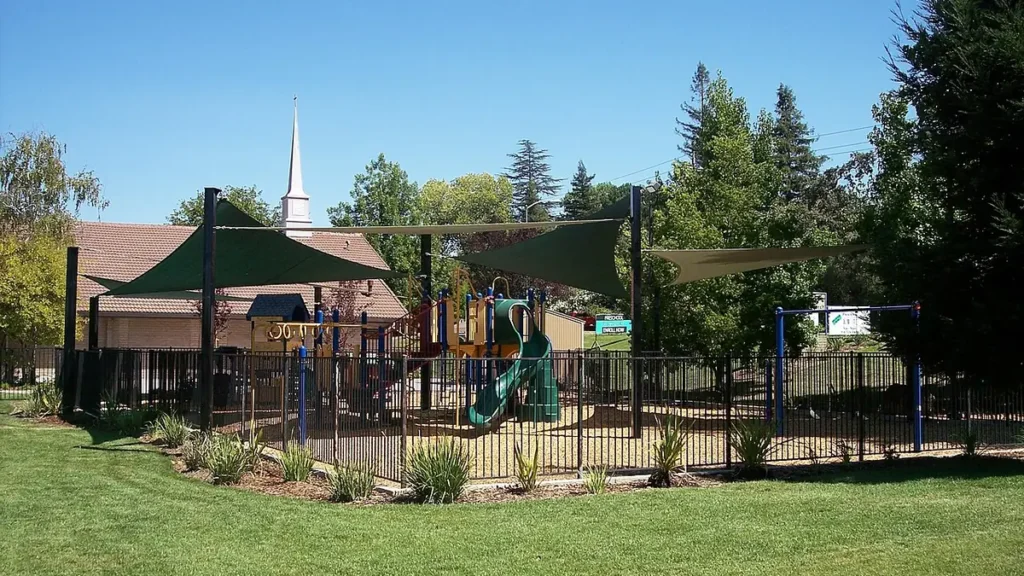
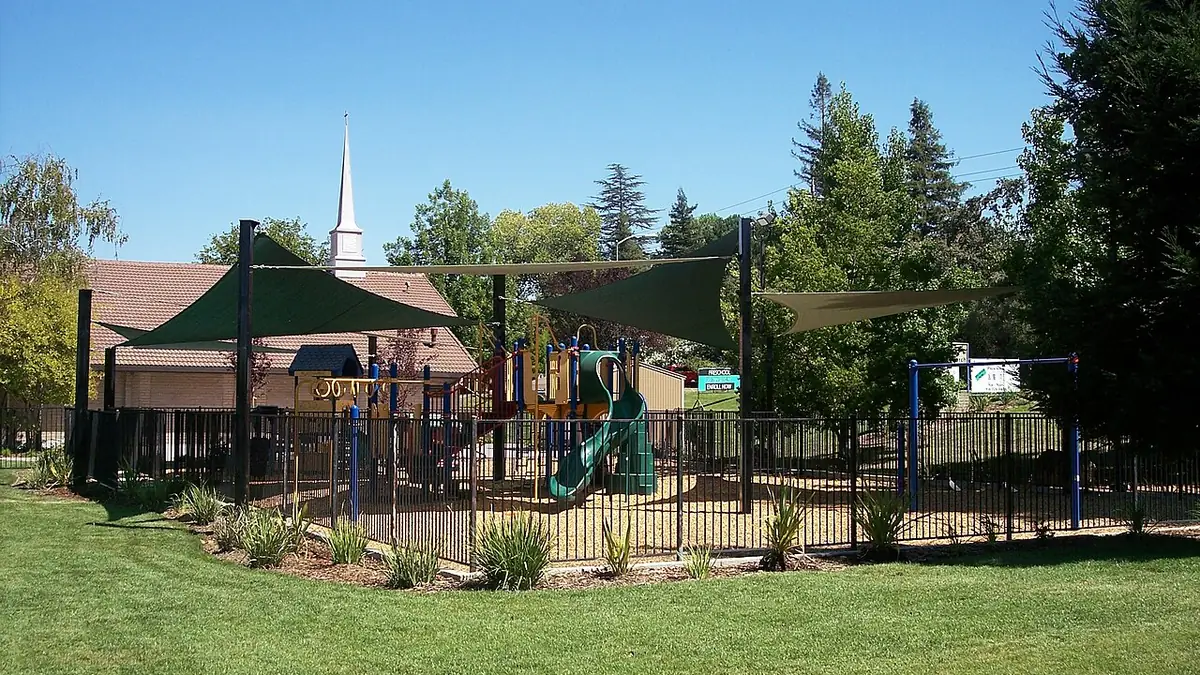
A shade sail startup is a very particular kind of trade business. Every project is different in shape, size, height, fabric, fixing method and exposure to wind, and every homeowner wants to see the finished sail before they agree to pay for it. A simple triangular sail over a sandpit, a large four-point sail over a school playground and a set of overlapping hypar sails over a cafe courtyard are entirely different jobs, yet they all arrive through the same phone number and the same inbox. Meanwhile the founder is measuring the garden, checking the sun path, ordering fabric and hardware, managing a crew and trying to keep the next three weeks of work booked. A missed call becomes a lost booking, a quote that forgets the footings or the turnbuckles becomes a loss, and a sail that pools water in the first storm becomes a warranty call that eats the profit.
Key takeaways
- Shade sails are tensioned membranes, so the tools that matter most are the ones that model fabric shape, sun paths and wind load, not generic design apps.
- A startup can run its whole first year on nine tools: membrane design, 3D visualisation, sun tracking, wind engineering, aerial measurement, quoting and scheduling, marketing, bookkeeping and AI writing.
- Show the client a realistic picture of the sail and its shadow before asking for a deposit, because shade is the product and a photo sells it better than any brochure.
- Never quote a sail from a phone photo alone. Measure the fixing points, check the wind exposure and confirm the footings, or the quote will be wrong.
- Keep the monthly software bill under control in year one. Start with free tiers and one paid tool per job type, then add tools only when a job pays for them.
Best AI tools for shade sail installation startups at a glance
| Tool | Best for | What it does for a shade sail startup |
|---|---|---|
| Rhino 3D with Grasshopper | Membrane form-finding | Models catenary curves and tensioned fabric shapes before a single piece of cloth is cut. |
| SketchUp | 3D sail design and shadow studies | Builds a quick 3D model of the sail, posts and shadow so the client can see the result. |
| Sun Surveyor | Sun path and shade timing | Shows exactly where the sun sits and where the shadow falls at any hour and any date. |
| SkyCiv Structural 3D | Wind load and footing checks | Checks wind uplift on the sail and the loads on posts and footings. |
| DroneDeploy | Aerial site measurement | Maps large sites from the air and measures distances between fixing points. |
| Jobber | Quoting, CRM and scheduling | Turns an enquiry into a quote, a booking and an invoice without retyping anything. |
| Canva | Marketing and local search | Turns job photos into flyers, social posts and a Google Business profile that wins calls. |
| Xero | Bookkeeping and cash flow | Tracks invoices, fabric and hardware costs, and shows whether the month made money. |
| ChatGPT | AI drafting and follow-ups | Drafts quotes, emails, follow-ups and social captions in the founder’s own voice. |
Why AI matters more for a shade sail startup than for an established firm
An established shade sail company has something a startup does not: a library of past jobs. A startup has none of that. Its first ten jobs are its education, and every mistake is paid for in rework, warranty visits and unhappy clients. AI tools close that gap, letting a new founder borrow the judgement of an experienced firm before the first sail goes up.
The second reason is trust. A shade sail is a permanent structure and a safety item: if a post pulls out of the ground in a storm, somebody can be hurt. Homeowners know this, and they look for signs that a new company takes the engineering seriously. A quote that arrives with a 3D model, a shadow study and a wind load summary looks like a company that has done its homework.
The third reason is speed. In the first year the founder is the salesperson, the measurer, the designer, the installer and the bookkeeper, and the jobs that pay are the ones that get quoted first. A founder who answers within the hour, sends a visual quote the same day and books the site visit before a competitor calls back will win work a slower firm never sees. AI compresses the office work between jobs so the founder can spend the day on site, where the money is made. It also protects the margin: a sail quote has many moving parts, and estimating tools that pull real measurements and real supplier prices into the quote stop the under-pricing that kills young firms.
How to choose AI tools for a shade sail startup
Start with the job, not the software. A shade sail job has five stages: measure the site, design the sail, check the engineering, quote the price, and install and get paid. Pick one tool for each stage before buying anything else.
Next, check whether the tool understands fabric. Most generic design apps draw flat rectangles and fixed roofs. A shade sail is neither: a curved membrane under tension whose shape changes with the load. A tool that cannot model a catenary curve or show how the fabric sags and stretches will produce drawings that look good and build badly.
Then look at the learning curve and the price. A tool that takes three weeks to learn costs three weeks of selling time, so prefer tools with templates and good mobile apps, since much of the work happens on site with a phone in one hand. Price the tool per job, not per month: divide the monthly cost by the number of jobs it touches, and drop it if the answer is more than a small share of the profit on one sail.
Finally, remember that no tool replaces an engineer. AI can model a sail and estimate a wind load, but the final call on a post size, a footing depth or a fixing method belongs to a qualified engineer or to the local building rules. Treat the software as a sharp pencil, not as a signature. A startup that knows the limit of its tools is safer than one that trusts them blindly.
The 9 best AI tools for shade sail installation startups in detail
These nine tools cover the whole job, from the first site visit to the final invoice. They were chosen because they handle the things that make shade sails different: fabric under tension, wind, sun and tall posts in real ground. Each one earns its place by saving time, preventing a costly mistake, or winning a job a slower firm would lose. The AI tools for pergola startups cover similar ground for rigid timber and aluminium structures, but a sail needs membrane thinking, and that is where this list starts.
1. Rhino 3D with Grasshopper: best for membrane form-finding
Rhino 3D with Grasshopper and its Kangaroo physics solver is the closest thing a small firm can get to a sailmaker’s loft floor. It lets a founder model a sail as a real membrane: a piece of fabric pulled between fixing points, sagging into catenary curves, stretching under load and shedding water along its low edges. That matters because a shade sail that looks flat on paper will pool rainwater in real life, and a sail that pools water will stretch, tear or dump a bucket of water on whoever is standing underneath it.
In practice, the founder enters the fixing points measured on site, sets the fabric type and the amount of pre-tension, and lets the solver find the shape the cloth will actually take.
The learning curve is real, so budget a few weekends of practice, or start with the simpler tools below and add Rhino once the first jobs are paying. But for large commercial sails, school playgrounds and cafe courtyards, where the fabric area is big and the wind load is serious, it is the tool that separates a professional sailmaker from a handyman with a sewing machine, and it produces drawings an engineer can check.
2. SketchUp: best for 3D sail design and shadow studies
SketchUp is the fast sketchbook of the shade sail world. Where Rhino is the engineering loft, SketchUp is the tool a founder opens on a laptop at the kitchen table to show a homeowner what their garden will look like with a sail over it. The client can walk around it on screen, see the sail from the kitchen window, and understand the size of the thing they are buying.
Its shadow tools are the real selling point. SketchUp can show the shadow of the sail at any time of day and any date of the year, so the founder can prove that the patio will be shaded at three in the afternoon in midsummer, when the family actually uses it.
SketchUp is easy to learn, runs on an ordinary laptop, and has a large library of ready-made models for posts, furniture and plants that make a presentation look finished. It does not do real membrane physics, so it should not be used to cut fabric or to judge wind loads, but for selling the job and agreeing the design with the client it is the best value tool on this list.
3. Sun Surveyor: best for sun path and shade timing
Sun Surveyor is a phone app that answers the most important question in shade sail work: where exactly will the sun be, and where exactly will the shadow fall? The founder stands on site, points the phone at the sky, and sees the sun’s path overlaid on the camera view, with the position of the sun at any hour and any date. It turns a vague promise about shade into a measurement the client can watch happen.
This matters because shade sails are sold on shade, and shade moves. A sail that covers a sandpit at noon in December may leave it exposed at four in the afternoon, when children are actually playing on it. A sail over a cafe terrace that shades the tables at lunch may miss them entirely by late afternoon. Sun Surveyor lets the founder place the sail so the shadow lands where people sit, at the hours they sit there, and to show the client the proof on the phone screen while standing in their garden.
4. SkyCiv Structural 3D: best for wind load and footing checks
A shade sail is a wing. When the wind hits it, the fabric lifts, the posts bend, and the footings are pulled sideways and upwards. SkyCiv Structural 3D lets a small firm check those forces before the posts go in the ground. The result is a post size and a footing size that can be defended, not guessed.
This is the tool that keeps a startup out of trouble. The most common failure in shade sail work is a post that leans or pulls out because the footing was sized for a fence, not for a sail. A fence catches wind along its face; a sail catches wind across its whole area and multiplies the force through tension. SkyCiv makes that difference visible in numbers, and it gives the founder a document to show the client, the council or the engineer.
5. DroneDeploy: best for aerial site measurement
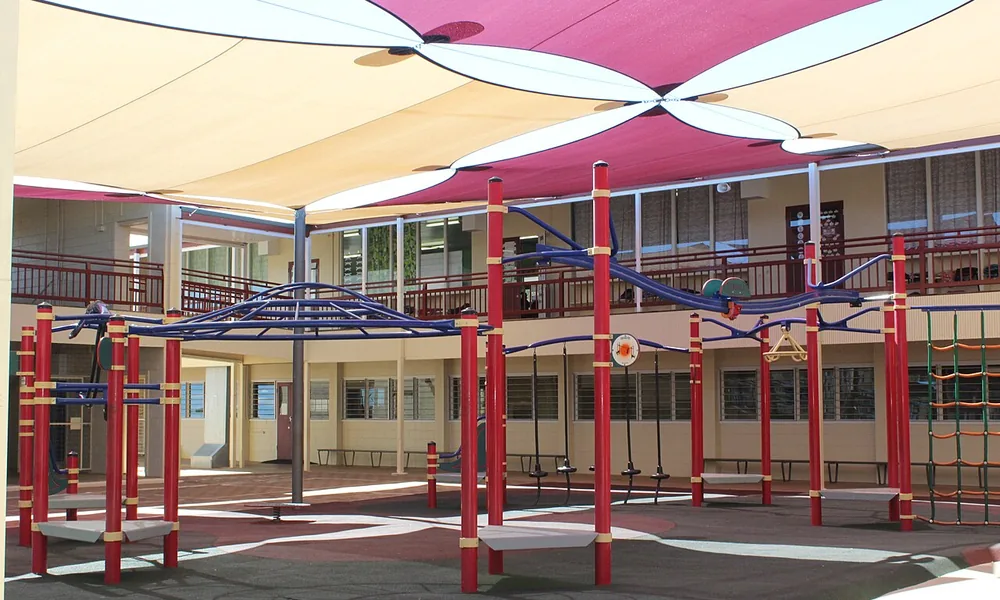
Some shade sail sites cannot be measured with a tape measure. A school playground, a caravan park, a resort pool area or a large cafe courtyard may be fifty metres across, with fixing points on buildings, trees and poles that are hard to reach. DroneDeploy flies a drone over the site and builds an accurate map and 3D model from the photos, with distances, heights and areas measured on screen. The founder can measure the span between two fixing points, check the height of a wall bracket, and see the whole site from above without climbing anything.
There are rules to respect: drone flying is regulated, and a founder must check the local rules, keep the drone in sight, and stay clear of airports and crowds. A short training course is money well spent. But for a startup that wants commercial work, where the sites are big and the clients are committees, a drone is a genuine advantage. It also creates a record of the site before the work starts, which settles any later argument about what was there before the posts went in.
6. Jobber: best for quoting, CRM and scheduling
Jobber is the office that a shade sail startup cannot yet afford to hire. An enquiry comes in from the website or the phone, and Jobber turns it into a client record, a site visit, a quote, a booking and an invoice, each step flowing into the next without retyping.
For shade sail work, the quoting features matter most. A sail quote has many lines: fabric, posts, footings, hardware, turnbuckles, labour and travel. Jobber keeps those lines as templates, so a quote for a standard four-point sail can be built in minutes and adjusted for size and fabric, instead of being written from scratch every time. It also tracks which quotes were approved, which were ignored, and which clients need a follow-up call, so no warm lead goes cold while the founder is up a ladder. The same quote-to-invoice flow works across outdoor trades, and the AI tools for patio installation startups show how it looks for a different kind of outdoor job.
7. Canva: best for marketing and local search
A shade sail startup lives or dies on local trust, and Canva is how a one-person firm produces marketing that looks like it came from a much bigger company. Every finished sail is a photograph waiting to happen: the fabric against a blue sky, the shadow on the patio, the family sitting underneath it. Canva turns those photos into before-and-after posts, flyers for the local noticeboard, a price guide for the website, and a Google Business profile that shows up when a neighbour searches for shade sails.
The AI features do the heavy lifting. The founder uploads a job photo, and Canva suggests layouts, writes a caption, removes a distracting background and resizes the image for every platform at once. That speed matters because the best time to post a job is the day it is finished, while the client is still delighted and willing to share it. A firm that posts every job builds a portfolio that sells the next job.
8. Xero: best for bookkeeping and cash flow
Xero is the tool that tells a shade sail founder the truth about the business: whether the month actually made money. Fabric, hardware, posts, concrete, fuel, wages and software all come out of the same bank account, and without proper bookkeeping it is easy to feel busy while going backwards. Xero connects to the bank, matches the payments to the invoices, and shows the profit on each job and the cash in the bank at a glance.
For a startup, the job costing features are the most important. Xero tracks what each job really cost against what it was quoted at, so the founder can see which sail sizes make money and which ones quietly lose it. A triangular sail over a sandpit and a large commercial sail may look similar on the invoice, but their margins are very different, and only the books reveal that.
9. ChatGPT: best for AI drafting and follow-ups
ChatGPT is the junior office assistant a shade sail startup cannot yet afford. It drafts the emails, the quote cover notes, the follow-up messages and the social captions, and it does it in minutes. The founder gives it the facts, the measurements, the fabric and the price, and it returns a clear, polite message in the firm’s own voice. The founder reads it, fixes anything that sounds wrong, and sends it.
Its best use is follow-ups. Most shade sail quotes are not rejected; they are forgotten. The client meant to reply, then life intervened. A short, friendly follow-up a week after the quote wins a surprising number of those jobs back, but few founders find the time to write them. ChatGPT drafts a follow-up that reminds the client of the shade, the price and the next step, without sounding pushy. It can also draft answers to common questions, such as how long a sail lasts, what happens in a storm, and whether the fabric can be removed in winter, so the founder is not typing the same reply for the twentieth time.
Putting the shade sail AI stack together
The nine tools work best as a chain, not as a pile. The chain starts on site with Sun Surveyor and DroneDeploy, which measure the sun and the site. Those measurements go into SketchUp for the client presentation and into Rhino for the fabric shape. SkyCiv checks the wind load on the result. Jobber turns the approved design into a quote, a booking and an invoice. Canva markets the finished job, Xero records what it earned, and ChatGPT writes the words at every step. Each tool hands its output to the next, and no fact is typed twice.
A startup does not need to buy all nine on day one. The sensible order is to start with the tools that win jobs: Sun Surveyor, SketchUp and Jobber, with ChatGPT on its free tier for the writing. Those four will carry the first ten jobs. Add SkyCiv when the sails get bigger or the sites get windier, and add Rhino when the firm starts cutting its own fabric or bidding on commercial work. Add DroneDeploy when commercial sites arrive, and add Canva and Xero as soon as there is a single job to photograph and a single invoice to track, which is from the very first week.
Keep one habit above all: photograph every job, record every measurement, and file every quote in the same place. The tools are only as good as the data fed into them. A firm that keeps clean records in its first year has a price list, a portfolio and a reputation by its second. A firm that keeps its jobs in its head has to start over every Monday morning. The AI tools for outdoor bar installation startups follow the same discipline for a different outdoor trade, and the lesson is identical: the system is the business, and the tools are only how the system is kept.
Common mistakes shade sail startups make with AI tools
The first mistake is trusting a 3D model more than a tape measure. A model built from guessed measurements will produce a sail that does not fit, and no software can fix a wrong measurement. Always measure the fixing points twice, on site, with a real tape or laser, and build the model from those numbers. The model is a check on the measurement, not a replacement for it.
The second mistake is designing a flat sail. Beginners draw a rectangle between four posts at the same height, and the result is a sail that holds rainwater like a paddling pool. Real sails need height differences between the corners, so water runs off, and they need curved edges, so the fabric can tension properly. If the design tool shows a flat sheet, the design is wrong, whatever the software says. Learn the hypar shape early: high corners opposite each other, low corners opposite each other, and the fabric will shed water and hold tension.
The third mistake is skipping the wind check on a sheltered site. A garden that feels calm can still funnel wind between houses, and a sail on a hill or near the coast can see gusts far stronger than the forecast suggests. Run the wind check on every job, not just the exposed ones, and size the footings for the gust, not for the average day. The cost of a bigger footing is a bag of concrete. The cost of a failed footing is the whole job, plus the repair, plus the reputation.
Shade sail startup checklist
- Measure every fixing point twice on site, record the sun path with Sun Surveyor, and photograph the site from all four corners before designing anything.
- Model the sail in SketchUp for the client and in Rhino for the fabric shape, and check that the design has enough height difference to shed rainwater.
- Run the wind load check in SkyCiv, size the posts and footings for the gust, and send large or exposed sails to an engineer for sign-off.
- Quote the job in Jobber from a template that lists fabric, hardware, footings and labour separately, and send the visual quote the same day as the site visit.
- Photograph the finished sail, post it with Canva the same day, and ask the client for a review while they are still delighted with the shade.
- Record the real costs in Xero, compare them with the quote, and adjust the price list before the next job so the margin only improves.
Frequently asked questions
What are the best AI tools for a shade sail installation startup in 2026?
The best starting stack is Rhino 3D with Grasshopper for membrane design, SketchUp for 3D visuals and shadow studies, Sun Surveyor for sun paths, SkyCiv for wind loads, DroneDeploy for large sites, Jobber for quoting and scheduling, Canva for marketing, Xero for bookkeeping and ChatGPT for drafting.
How much should a shade sail startup spend on AI tools each month?
Most startups can run on a modest monthly bill in the first year by using free tiers for the writing and marketing tools and paying only for the tools that touch every job, such as quoting and scheduling. Divide the monthly total by the number of jobs to get the cost per job, and keep it a small fraction of the profit on one sail. Add a paid tool only when a real job needs it.
Can AI design a shade sail that is safe to build?
AI can model the fabric shape, show the shadow and estimate the wind load, but it cannot sign off a structure. The final call on post sizes, footing depths and fixing methods belongs to a qualified engineer or to the local building rules. Use the software to prepare a proper design and to catch mistakes early, then get the engineering checked where the rules require it.
Do shade sail startups need a permit for every job?
It depends on the size of the sail, the height of the posts and the local rules, and the answer changes from one council to the next. Large sails, tall posts and commercial sites are more likely to need approval than a small sail over a backyard sandpit. Check the local rules before quoting, and build the time for any approval into the price and the schedule, so a permit delay does not become a broken promise.
How long does a shade sail last?
A well-made sail from quality HDPE shade cloth or PVC fabric, properly tensioned and installed on sound posts, commonly lasts around ten years, with premium fabrics lasting longer. The life depends on the fabric quality, the amount of sun and wind it faces, and whether it is cleaned and re-tensioned from time to time. Tell clients the honest range for the fabric you actually supply, and put it in writing.
How can a small shade sail startup win work against larger firms?
Win on speed, visuals and proof. Answer the enquiry within the hour, visit the site quickly, and send a visual quote the same day with a 3D model, a shadow study and a clear price. Large firms are often slower and more formal, and a homeowner who can see the shade their sail will cast is far more likely to choose the small firm that showed it to them first.
The bottom line
A shade sail startup does not need a big team to look like a big company. It needs nine good tools, used in the right order: measure the sun and the site, design the fabric properly, check the wind, quote quickly, install well, and record what it earned. The sail itself is fabric, posts and tension, but the business is the system around it, and AI is what lets a one-person firm run that system from the first week.

Keep what speaks to you.
Leave room for your own perspective.