
An outdoor pool table looks like a simple garden purchase until a crew is asked to install one. The table arrives in heavy pieces, the slate or composite bed has to sit perfectly flat, the legs have to hold that level on ground that is rarely level, and the whole table then has to survive rain, sun, frost and years of players leaning on the rails. A customer sees a place for evening games with friends. An installer sees a delivery route that may not fit a van, a patio that slopes towards the lawn, a cover that has to go on every night, and a playing surface that will show every millimetre of error the first time a ball rolls across it.
An outdoor pool table is a weatherproof billiard table, not a garden ornament and not a swimming pool accessory. The bed may be slate, in one piece or three, or a weatherproof composite that resists moisture and warping. The cloth is a UV-resistant synthetic that fades far more slowly than indoor felt. The frame is usually aluminium, so it cannot rust, and the cushions are sealed so they keep their bounce through damp winters. The work of installing one is part joinery, part masonry and part logistics: the base has to be firm, level and drained, the bed has to be levelled with a spirit level and leg levellers, and the cloth, cushions and pockets have to be fitted so the table plays true from its first game.
The best AI tools for outdoor pool table installation startups in 2026 help a small crew handle that gap between how simple the finished table looks and how much planning the installation actually takes. They help a founder measure a real patio or garden, pick a table that will last outside, price the groundwork honestly, and finish the job without a return visit. They do not replace a spirit level or a spanner. They take the measuring, the quoting, the scheduling and the follow-up off the founder’s shoulders, so the crew can spend its time installing tables instead of chasing paperwork. This guide compares nine tools that fit an outdoor pool table installation startup, from the weatherproof table systems themselves to the measuring, quoting and job-management software around them. Five are the tables a crew will actually install, chosen for different sites and budgets. Four are the software tools that keep a busy week of small jobs on schedule. Every tool was judged on the same questions a founder actually asks: does it save time on a real table job, does it work from a phone in a garden or on a patio, does it pay for itself within the first few jobs, and can a small crew learn it without a training course.
Key takeaways
- Outdoor pool table installs are levelling and weatherproofing jobs first: the bed, the cushions and the cover decide whether a table plays true after a wet winter, so measuring and quoting tools have to work together.
- Table choice is a site decision, not a catalogue decision: heavy slate tables suit permanent patios and hotels, while lighter composite tables suit private gardens where access is tight and the table must move.
- Playcraft Extera and Playcraft Santorini are the strongest starting pair for a new startup: the Extera for dependable all-round outdoor installs, and the Santorini for customers who want real slate and a dining top.
- Magicplan and Housecall Pro are the best measuring and quoting pair for selling the install before it happens, with measured site plans a customer can understand and clean quotes that list the table, the base and the levelling as separate lines.
- Start with three tools, not nine: one table system, one measuring tool and one quoting tool, then add the rest only when a real job shows you need them.
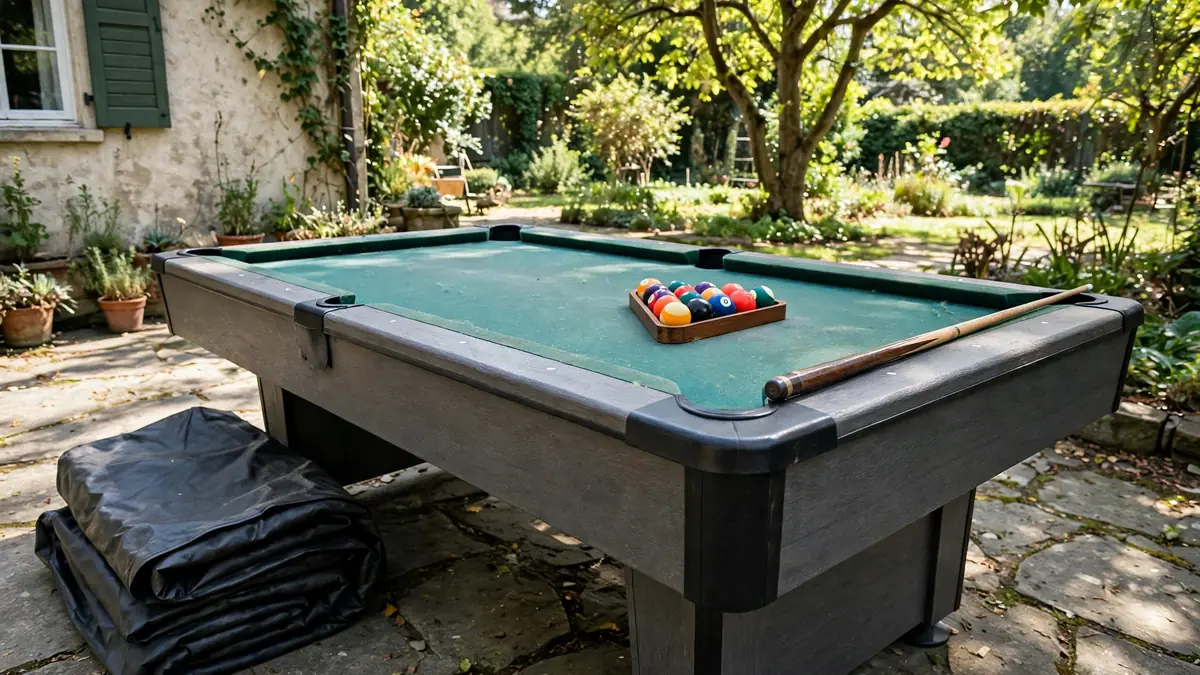
The nine tools at a glance
The table below gives a quick view of the nine tools in this guide. The sections that follow explain how to use each one on real outdoor pool table jobs, what to look for before you pay, and where small teams usually go wrong.
| Tool | Best for | What it does on a pool table job | Starting cost |
|---|---|---|---|
| Playcraft Extera 8’ | All-round outdoor installs | Weatherproof table with a composite bed, aluminium frame and true cushion bounce | Premium |
| Playcraft Santorini 7’ | Slate tables with a dining top | Real one-piece slate bed outdoors, converts to a dining table when not in play | Premium |
| Imperial 8’ Outdoor | Premium aluminium installs | All-aluminium table with a waterproof bed built to stay outside all year | Premium |
| Hathaway Montecito 7’ | Covered patios and family gardens | Composite outdoor table with a driftwood look at a mid-range price | Mid-range |
| GoSports 7-Foot Billiards | Budget-friendly first installs | Affordable table that keeps quotes competitive on sheltered sites | Budget |
| Magicplan | Site measuring and plans | Turns phone photos into a measured plan of the patio, access and cueing space | Free plan, then subscription |
| Housecall Pro | Quoting, scheduling and invoicing | Runs quotes, bookings, crew days and payments in one place | Free trial, then subscription |
| Xero | Accounting and job costing | Tracks income, expenses and profit per pool table job | Free trial, then subscription |
| ClockShark | Crew time tracking | Records crew hours per job so levelling and fitting time is costed honestly | Free trial, then subscription |
Costs are approximate starting prices for small teams in 2026 and vary by region, plan and number of users. Always confirm the current price and what is included before you buy, and prefer monthly billing until the tool has proved itself on real jobs.
What makes an outdoor pool table installation startup different
An outdoor pool table installation startup is not a general building firm, and it is not a sports shop either. It sits in a narrow space where product knowledge, groundwork, levelling and customer service all meet in one small patch of patio or lawn. The customer is usually a homeowner who wants a table for family games, a hotel that needs a table that survives hundreds of guests, or a holiday let that needs a table that will still play true after a season of rain. They expect the installer to handle everything they have not thought about: the slope, the drainage, the surface, the cueing space, the cover and the delivery.
The ground decides everything on a table job. A patio that looks flat to the eye can fall by fifty millimetres across the length of a table, and that gap will show up as a ball that rolls to one side or a table that slowly settles after the first wet winter. A heavy slate table needs a base that is level, firm and drained, because once a table of that weight is set down, nobody wants to move it to fix the ground underneath. A lighter composite table on soft ground needs feet or pads that spread the load, or the legs will sink after rain. The same outdoor games-table family logic applies across the neighbours in this trade: the measuring, levelling and weatherproofing skills transfer directly, and comparing outdoor ping pong table installation tools is a useful way to see how another weatherproof table is quoted, levelled and covered before choosing a first pool table system.
Space is the second thing customers forget. An eight-foot pool table is roughly two and a half metres long, but a player needs about one and a half metres of cueing space on every side, so the finished area is closer to five and a half metres by four metres. A garden that fits the table may not fit the game. The installer has to measure the whole playing area, check the gate and the path for the delivery, and tell the customer honestly when a seven-foot table is the right answer for their patio.
Weather is the third difference, and it never stops mattering. Rain finds every gap in a cover, sun fades cloth that was never rated for UV, and frost lifts a base that was never drained. A table that plays badly in its first winter is a table the customer will blame on the installer, even when the table itself was the problem. The installer’s job is to pick a table built for the weather it will actually face, fit a cover that stays on in wind, and leave the customer with a short care routine: brush the cloth, keep the cover on when the table is not in use, and wipe the rails after rain.
How to choose AI tools for an outdoor pool table installation startup
Start with the physical job, not the software. A tool earns its place only if it helps on a real pool table install: measuring a patio, levelling a slate bed, fitting cushions, or pricing a base that has to be built before the table arrives. A tool that looks clever in a demo and slows a crew down on site is a cost, not an asset. Test every tool on a real job before paying for a year of it, and keep the test simple: did it save an hour, did it stop a mistake, or did it win a job that would otherwise have gone to a competitor.
Choose tools that work from a phone in a garden. The crew makes its decisions on site, standing on the patio with the customer, not back at a desk. A measuring tool that needs a laptop, a quoting tool that cannot send a quote before the crew leaves, or a time-tracking tool that needs an office computer will be ignored within a week. The best tools in this guide all work from a phone, sync when the signal returns, and keep a single record per job that the whole crew can see.
Price the whole job, not just the table. A quote that lists only the table price will lose money the first time a base needs building, a gate needs widening, or a slate bed needs three people to lift. The quoting tool has to list the table, the base, the delivery, the levelling, the cover and the accessories as separate lines, so the customer can see exactly what they are paying for. The same discipline applies when comparing other heavy outdoor tables, and the way outdoor chess table installation tools handle stone, concrete pads and anchoring is a useful check on how a quote should separate the table from the groundwork underneath it.
Finally, keep the stack small. A new startup needs one table system it knows well, one measuring tool and one quoting tool. Everything else can wait until a real job shows the gap. A crew that knows one slate table inside out will install it faster and better than a crew that has five tables it has never levelled, and a founder who can quote cleanly from a phone will win more work than a founder with six apps and no time to answer the phone.
The nine best AI tools for outdoor pool table installation startups in detail
The nine tools below are grouped the way a startup actually buys them: five table systems first, then four software tools. Each section explains what the tool does on a pool table job, who it suits, and what to check before spending money on it.
1. Playcraft Extera 8’: best for all-round outdoor installs
The Playcraft Extera is the table to measure every other outdoor pool table against, and it is the strongest first table for a new startup. It is a full-size eight-foot table built for the weather from the start: extruded aluminium top rails, aprons, legs and a square tubular beam sub-frame, with an anti-rust coating that holds up in damp conditions. The one-inch composite playfield is weatherproof and UV-resistant, so it stays flat through humidity swings that would warp a cheaper board, and the K-66 profile cushions keep a crisp, true response instead of going dead after a wet season.
On a real job, the Extera plays like a real pool table outdoors: the cloth fades slowly, the balls roll true, and the leg levellers take out the last few millimetres of slope. Its drawback is price, so a startup must be ready to explain why that money buys seasons of play instead of one summer.
2. Playcraft Santorini 7’: best for slate tables with a dining top
The Playcraft Santorini is the answer when a customer says slate is non-negotiable. It is a seven-foot table with a real one-piece slate playfield in an outdoor package, on an aluminium frame that cannot rust, with weather-resistant cloth that holds up far better than standard felt outdoors. It also ships with a dining top and benches, so the table converts to a dining table when nobody is playing, which makes it an easy sell to customers who need the patio to do two jobs.
For an installer, the Santorini is a heavier, slower job than the Extera, and that must be priced in: a one-piece slate bed needs more hands, a firmer base and more time to level. The reward is indoor-grade ball response outdoors, which suits hotels, holiday lets and family gardens where the table will be used daily.
3. Imperial 8’ Outdoor: best for premium aluminium installs
The Imperial 8-foot Outdoor pool table is a statement piece built entirely around aluminium, from the rails to the feet, so corrosion is simply not a problem. The playing area uses a thick waterproof board bed, made from many layers of resin-bonded sheet, which is waterproof, fire retardant and stays level for excellent gameplay. The tan finish and clean lines suit modern patios and hotel terraces, where the table is part of the look of the space as well as a game.
On site, the Imperial rewards a crew that measures well: the waterproof bed holds its level only if the base underneath is level and drained. It is a premium table, so it fits quotes where the customer has decided on quality and wants the installer to handle the base, the cover and the accessories as well.
4. Hathaway Montecito 7’: best for covered patios and family gardens
The Hathaway Montecito is the mid-range sweet spot in this guide. It is a seven-foot outdoor pool table with a composite playfield, an aluminium frame and a driftwood outdoor look that suits covered patios and family gardens far better than a heavy commercial table. It was built for outdoor conditions, with materials chosen to resist moisture and sun, and it plays well enough for family games while costing far less than a premium slate or aluminium table.
For a startup, the Montecito keeps quotes competitive: it is lighter to deliver, quicker to level and easier to sell. Its limits are honest ones: it is best on a covered patio or sheltered garden, and it will not play like a one-piece slate table. Tell the customer that plainly and fit the best cover available.
5. GoSports 7-Foot Billiards: best for budget-friendly first installs
The GoSports 7-foot billiards table is the budget option in this guide, and it has a clear place in a new startup’s range. It is an affordable full-game table that lets a founder quote a low first price, win early jobs, and build a portfolio of finished installs without asking every customer to pay premium money. For a sheltered patio, a games room that opens onto a garden, or a customer who wants to try outdoor pool before committing to a bigger table, it is a sensible first step.
The trade-off is that a budget table needs the most honest selling of any table here. It is not a slate table and it is not built for an exposed site in all weathers, so say so before the sale, fit a proper cover, and make sure the base is level and drained.
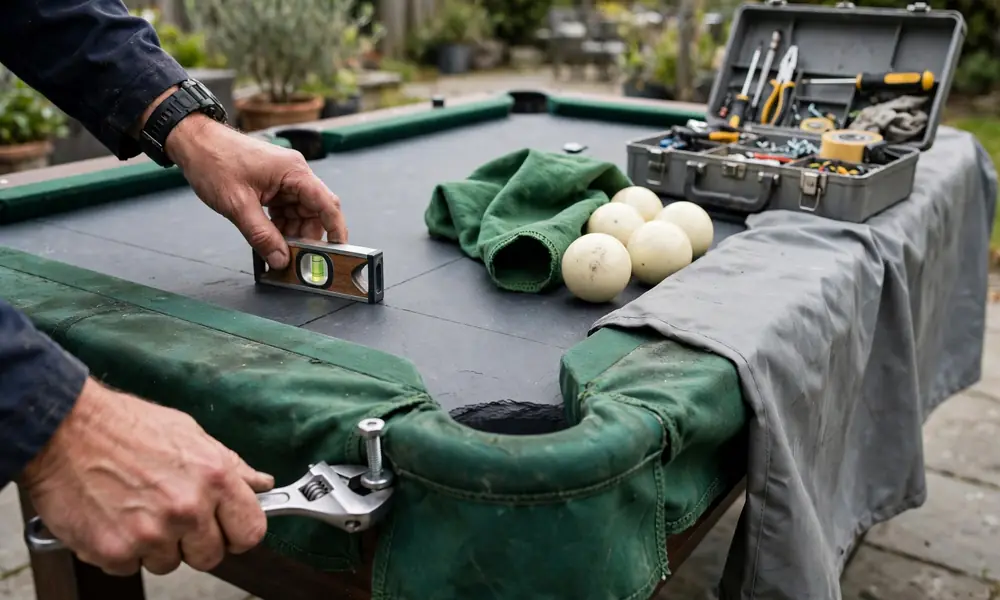
6. Magicplan: best for site measuring and plans
Magicplan turns phone photos into a measured plan of the patio, the access route and the cueing space, and that plan is what stops most pool table mistakes before they happen. The crew walks the site, captures the patio, the gate, the path and the playing area, and the app builds a dimensioned plan the customer can understand at a glance. A customer who can see the table drawn to scale on their own patio, with the cueing space marked around it, is a customer who will not be surprised on delivery day.
On a pool table job, Magicplan proves whether a seven-foot or eight-foot table fits with room to cue, records the slope, steps and narrow gate so the quote can include the base work honestly, and gives the crew a plan to work from on the day. Always check its measurements against a tape on the ground.
7. Housecall Pro: best for quoting, scheduling and invoicing
Housecall Pro runs the business side of a pool table startup in one place: quotes, bookings, crew days, job notes and payments. A founder can take an enquiry in the morning, send a clean branded quote before lunch, book the install, assign the crew, and invoice the same day, all from a phone. The customer sees a professional document with the table, the base, the delivery, the levelling and the cover listed as separate lines, and the crew sees the same job with the same notes, photos and access details.
The reason it fits pool table work is that every job is small, local and time-sensitive, and a missed message or lost quote is a lost job. Housecall Pro keeps one record per customer, so a returning customer who wants a cover replaced or a table re-levelled is a two-minute job to quote. It needs proper price lists and templates set up before the first busy week.
8. Xero: best for accounting and job costing
Xero is the accounting tool for a startup that wants to know, job by job, whether it is actually making money. It tracks income, expenses and profit per pool table install, connects to the bank, and turns quotes and invoices into a clear picture of which tables, which sites and which kinds of job pay best. A founder who knows the true cost of a slate install, including the extra hands and the levelling time, can price the next one with confidence instead of guessing.
Pool table work has costs that are easy to hide: delivery fuel, extra crew hours on a difficult base, a replacement cover, a second visit to re-level. Xero makes those costs visible, because every expense is tied to a job and every job has a margin. Reconcile weekly and cost every job honestly.
9. ClockShark: best for crew time tracking
ClockShark records crew hours per job, and on pool table work that matters more than it looks. Levelling a slate bed, fitting cushions, stretching cloth and waiting for a base to settle are all hours that a flat day rate hides, and a startup that does not know how long each stage takes cannot price the next job. ClockShark lets the crew clock in on site from a phone, log time against a specific install, and give the founder a true record of where the day went.
Used well, it turns experience into pricing: after ten installs, a founder can see that a composite table takes half a day, a slate table a full day, and a job with a new base a day and a half. It only works if the crew actually uses it, so clock in on arrival and review the hours weekly.
Common mistakes to avoid
The most expensive mistake on a pool table job is promising a table before measuring the site. A table that fits the patio but leaves no room to cue is a table that will never be played on, and a table that cannot get through the gate is a table that goes back on the van. Measure the playing area, the gate, the path and the base before quoting, and tell the customer honestly when a smaller table is the right answer. A second common mistake is quoting the table and forgetting the base. A slate bed on soft ground will settle, and a base built as an afterthought will cost twice as much as a base priced into the quote. A third mistake is selling an indoor table for an outdoor site. Indoor felt fades, indoor timber swells, and indoor cushions go dead in damp weather, and the customer will blame the installer for all of it. The same care applies across the outdoor games-table trade, and the way outdoor foosball table installation tools handle weatherproofing and covers is a useful reminder that the cover and the cloth are part of the table, not an optional extra.
Smaller mistakes add up just as surely. Skipping the final level check after the cloth is fitted is how a table ends up with a slow roll in one corner. Leaving the customer without a cover routine is how a good table becomes a faded one in a single summer. And forgetting to book the return visit, to check the level after the ground has settled, is how a small adjustment becomes a bad review. The tools in this guide help with all of these, but only if the crew uses them on every job, not just on the difficult ones.
Outdoor pool table installation checklist
- Measure the full playing area, including one and a half metres of cueing space on every side, and check the gate and delivery path.
- Check the base for slope, firmness and drainage, and price any base work as a separate line on the quote.
- Confirm the table specification in writing: bed type, cloth, cushions, frame material and cover included.
- Level the bed with a spirit level and leg levellers, then check it again after the cloth and cushions are fitted.
- Fit the cover, show the customer how to put it on and take it off, and leave a short written care routine.
- Book a return visit to re-check the level after the ground has settled, and record the job, the hours and the margin.
Frequently asked questions
Can any pool table be used outdoors?
No. An indoor pool table is not built for rain, sun or frost: its felt fades, its timber swells, and its cushions lose their bounce in damp weather. An outdoor pool table uses a weatherproof bed, UV-resistant cloth, sealed cushions and an aluminium or otherwise rust-proof frame, and it still needs a cover when it is not in use. If a customer already owns an indoor table, the honest answer is to keep it indoors and buy a proper outdoor table for the garden.
How much space does an outdoor pool table need?
An eight-foot table needs a playing area of roughly five and a half metres by four metres, because a player needs about one and a half metres of cueing space on every side. A seven-foot table needs slightly less, but the cueing space does not shrink much, so measure the whole area rather than just the table. Check for walls, planters, steps and low branches that will block a cue, and tell the customer before ordering if the space only fits a smaller table.
Does an outdoor pool table need a concrete base?
It needs a firm, level and drained base, and concrete is the most reliable way to get one, especially for a heavy slate table. A well-laid patio of large slabs on a compacted, drained sub-base can also work, provided it is truly level and will not move. Soft lawn, loose gravel and small slabs that rock are not suitable, because the table will settle unevenly and the balls will roll. Whatever the base, check it with a long spirit level before the table arrives, and price any base work separately.
How long does an outdoor pool table install take?
A seven-foot composite table on a ready base usually takes half a day for a two-person crew, including levelling, fitting and a first game to check the roll. A slate table takes a full day, because the bed is heavier, the levelling is slower, and the cloth and cushions need more care. A job that also needs a new base, a widened gate or a long carry from the van can take a day and a half. Quote the time honestly, and do not promise a morning install that needs a full day.
What maintenance does an outdoor pool table need?
Brush the cloth regularly, keep the cover on whenever the table is not in use, and wipe the rails after rain. Check the level after the first winter, because the ground settles, and re-level with the leg levellers if a ball starts to drift. Store cues and balls indoors or in a dry box, and replace a torn cover promptly, because a cover that lets rain through is worse than no cover at all.
Which AI tool should a new pool table startup buy first?
Buy one table system you know well, one measuring tool and one quoting tool. For most new startups that means the Playcraft Extera, Magicplan and Housecall Pro: a dependable outdoor table, a measured plan the customer can understand, and a clean quote that lists the table, the base and the levelling separately. Add accounting and time tracking once the jobs are coming in, and add a second table system only when a real customer asks for something the first one cannot do.
The bottom line
An outdoor pool table installation startup succeeds on the same things its tables do: a level bed, honest measuring, and weatherproofing that lasts. Pick a table built for the weather it will actually face, measure the site before quoting, price the base and the levelling as part of the job, and leave every customer with a cover routine and a return visit booked. Start with three tools, learn them on real jobs, and let the work, not the software catalogue, decide what to add next.

Keep what speaks to you.
Leave room for your own perspective.


