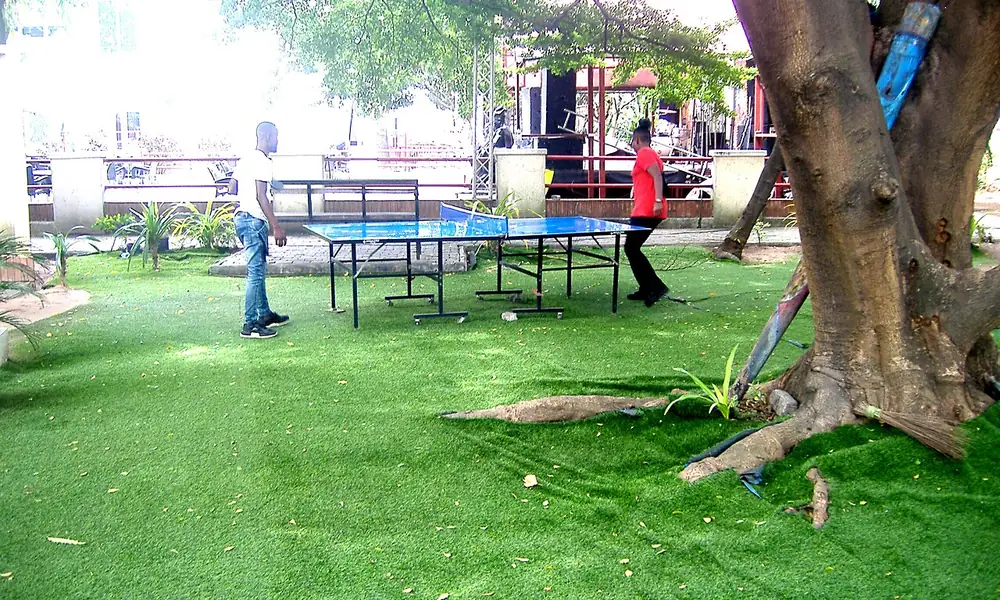
An outdoor ping pong table looks like the easiest install a crew will ever do. It arrives in a box, folds out, and stands on its own legs. Then the crew reaches the site and finds the patio slopes towards the lawn, the only flat spot is under a dripping tree, the customer bought a table with a warped top, or the net posts do not fit the table they ordered. A ping pong table that plays badly in its first week is a table the customer will blame on the installer, even when the table itself was the problem.
An outdoor ping pong table installation startup lives in the gap between how simple the finished table looks and how many small decisions sit underneath it. The table has to survive rain, sun, frost and teenagers. The net has to sit straight and stay tight. The legs have to hold a level playing surface on ground that is rarely level. The best AI tools for outdoor ping pong table installation startups in 2026 help a small crew measure a real patio or garden, pick a table that will last outside, price the groundwork honestly, and finish the job without a return visit. They do not replace a spirit level or a spanner. They take the measuring, the quoting, the scheduling and the follow-up off the founder’s shoulders, so the crew can spend its time installing tables instead of chasing paperwork.
This guide compares nine tools that fit an outdoor ping pong table installation startup, from the weatherproof table systems themselves to the measuring, quoting and job-management software around them. Five are the tables a crew will actually install, chosen for different sites and budgets, from compact garden tables to heavy park-grade units. Four are the software tools that keep a busy week of small jobs on schedule. Every tool was judged on the same questions a founder actually asks: does it save time on a real table job, does it work from a phone in a garden or a park, does it pay for itself within the first few jobs, and can a small crew learn it without a training course. The result is a practical stack, not a wish list, built for a business that earns its money outdoors, one table at a time.
Key takeaways
- Outdoor ping pong table installs are weatherproofing and levelling jobs first: the playing surface, the net and the legs decide whether a table plays true after a wet winter, so measuring and quoting tools have to work together.
- Table choice is a site decision, not a catalogue decision: heavy weatherproof tables suit parks and schools, while lighter folding tables suit private gardens where access is tight and the table must move.
- JOOLA and Cornilleau are the strongest starting pair for a new startup: JOOLA for dependable outdoor tables at a fair price, and Cornilleau for premium weatherproof tables that suit parks, schools and busy family gardens.
- Polycam and Joist are the best measuring and quoting pair for selling the install before it happens, with 3D site scans a customer can understand and clean quotes that list the table, the base and the levelling as separate lines.
- Start with three tools, not nine: one table system, one measuring tool and one quoting tool, then add the rest only when a real job shows you need them.

The nine tools at a glance
| Tool | Best for | What it does on a ping pong table job | Starting cost |
|---|---|---|---|
| JOOLA Nova Pro Plus Outdoor | All-round outdoor installs | Weatherproof table with a true bounce and folding legs | Mid-range |
| Cornilleau 500M Crossover Outdoor | Premium park and school installs | Heavy weatherproof table built to stay outside all year | Premium |
| Kettler Outdoor 10 | Family gardens and clubs | Sturdy outdoor table with a weatherproof top and net set | Mid-range |
| STIGA XTR Outdoor | Budget-friendly first installs | Affordable outdoor table that keeps quotes competitive | Budget |
| Butterfly Compact Outdoor Rollaway | Tight spaces and quick setups | Compact folding table that fits narrow gates and small patios | Mid-range |
| Polycam | 3D site measuring | Turns phone photos into a measured 3D model of the site | Free plan, then subscription |
| Joist | Quoting and invoicing | Builds clean branded quotes and turns them into invoices | Free plan, then subscription |
| CompanyCam | Photo records and crew updates | Captures before-and-after photos tied to each job | Free trial, then subscription |
| FreshBooks | Accounting and job costing | Tracks income, expenses and profit per table job | Free trial, then subscription |
Costs are approximate starting prices for small teams in 2026 and vary by region, plan and number of users. Always confirm the current price and what is included before you buy, and prefer monthly billing until the tool has proved itself on real jobs.
What makes an outdoor ping pong table installation startup different
An outdoor ping pong table installation startup is not a general building firm, and it is not a sports shop either. It sits in a narrow space where product knowledge, groundwork, levelling and customer service all meet in one small patch of patio or lawn. The customer is usually a homeowner who wants a table for family games, a school that needs a table that survives hundreds of children, or a park manager who needs a table that will still play true after five winters outdoors. They expect the installer to handle everything they have not thought about: the slope, the drainage, the surface, the net and the cover.
The ground decides everything on a table job. A patio that looks flat to the eye can fall by fifty millimetres across the length of a table, and that gap will show up as a ball that rolls to one side, a net that sits crooked, or a table that slowly settles on one side after the first wet winter. A heavy weatherproof table needs a base that is level, firm and drained, because once a table of that weight is set down, nobody wants to move it to fix the ground underneath. A folding table on soft ground needs feet or pads that spread the load, or the legs will sink unevenly and the playing surface will twist. Measuring the ground properly, and quoting for the levelling it actually needs, is the difference between a one-visit install and a job that eats a whole week.
Weatherproofing is the second difference, and it is the one customers misunderstand most. An indoor table left outside will swell, warp and rust within a season, and the customer will blame the installer for a table that was never meant to live outdoors. A proper outdoor table uses a weatherproof top, rust-resistant legs and a net system built for rain, and the installer has to explain that difference in plain language before the customer buys the cheapest table they can find online. The best crews carry a short list of tables they trust, and they are honest about what each one can and cannot survive. That honesty is what turns a one-off install into repeat work, because schools and parks remember the installer who warned them, and they forget the one who nodded and took the money.
The net and the legs are the third difference, and they are the parts customers notice first when a game starts. A net that sags, a post that will not clamp, or a leg that wobbles will ruin a game within minutes, and the customer will judge the whole install by those small failures. A good installer checks the net tension, the post clamps and every leg adjuster before leaving, and shows the customer how to fold the table, fit the cover and adjust a leg when the ground settles. The work has more in common with other outdoor table installs than most founders realise at first, and reading a guide to outdoor chess table installation tools is a useful way to compare pad preparation, anchoring and sealing across two kinds of table before choosing a first table system.
How to choose AI tools for an outdoor ping pong table installation startup
Start with the job, not the software. A startup that installs three folding tables a week for homeowners needs a different stack from one that installs twenty heavy weatherproof tables a month for schools and parks. The homeowner jobs are won on a friendly quote, a clear drawing and a tidy finish. The school and park jobs are won on durability, safety paperwork and a price that holds up when a committee reads it. Pick tools that fit the customers you actually have, not the customers you hope to have in two years.
Test every tool on a real job before you pay for it. A free trial that only shows a demo is not a test. Run one genuine install through it: measure the site, pick the table, send the quote, book the crew and invoice the customer. If the tool slows any of those steps down, or if the crew reaches for a notebook instead, it is not the right tool yet, however good it looks in a sales video. The best tools in this guide all offer a free plan or a trial, which means a new startup can test the real workflow on a real job before paying anything.
Keep the stack small and connected. Three tools that share the same customer, quote and job record beat nine tools that each hold a different piece of the job. A measuring tool that cannot hand its dimensions to the quoting tool creates double entry, and double entry creates mistakes. A quoting tool that cannot hand the job to the scheduling tool means the crew turns up without the right table. Choose tools that export, share or integrate cleanly, and add a new one only when a real job shows a gap. The same lesson shows up in other outdoor furniture work, and the crews that win are the ones whose tools talk to each other, as the guide to picnic table installation tools shows at a similar scale.
The nine best AI tools for outdoor ping pong table installation startups in detail
Each tool below is judged on what it does for a ping pong table install specifically: measuring a real site, picking a table that will survive outside, levelling the playing surface, and keeping a fast-moving week of small jobs on schedule. Pick three or four to start, learn them properly, and add the rest only when the jobs demand it.
1. JOOLA Nova Pro Plus Outdoor: best for all-round outdoor installs
JOOLA makes one of the most dependable outdoor table tennis tables a new startup can install, and that dependability is exactly why it belongs at the top of this list. The Nova Pro Plus is built for outdoor play, with a weatherproof top that resists warping, a sturdy undercarriage and folding legs that make delivery and setup straightforward for a two-person crew. For a founder taking on first jobs in private gardens, that combination means the first installs can be profitable from day one, because the crew is not fighting the table itself.
The table works best where the customer wants a proper game outdoors without paying a premium price. A family patio, a sheltered garden or a small club all suit it well. The playing surface gives a true, even bounce, which matters more than most customers realise until they play on a cheap table that sends the ball in random directions. The crew should still prepare a proper base, because even a good table plays badly on soft or sloping ground, but the base can be a level patio slab or a compacted pad rather than the deep footing a park-grade table demands. That keeps most jobs to a single visit, which is a useful selling point when the customer is comparing quotes.
2. Cornilleau 500M Crossover Outdoor: best for premium park and school installs
Cornilleau builds outdoor tables to a different standard, and the 500M Crossover is the table a startup reaches for when the site is public, busy and exposed to weather all year. The resin laminate top is weatherproof, the frame is heavy and stable, and the table is designed to stay outside permanently without a cover. For a school, a park or a holiday site, that permanence is the whole point: the customer is buying a table that will still play true after hundreds of games and five winters.
The install itself needs more planning than a folding garden table. The 500M is heavy, so the crew needs a clear delivery route, a firm level base and enough hands to position it safely. The quote has to include the base work, the delivery and the levelling, because a customer who compares a bare table price with a full installed price will always pick the cheaper number and then complain about the result. A good installer shows the base, the levelling and the net setup as separate lines, so the customer can see exactly what they are paying for.
3. Kettler Outdoor 10: best for family gardens and clubs
Kettler has made table tennis tables for decades, and the Outdoor 10 is a solid middle choice for family gardens and small clubs. The weatherproof top handles rain and sun, the undercarriage folds for storage, and the net set is included, which removes the common problem of a net that does not fit the table it was bought for. For a startup, a complete table with a matching net means fewer surprises on install day and fewer return visits.
The table suits customers who want a proper game at home without the weight or the price of a park-grade unit. A patio, a deck or a large garden all work well, and the folding design means the customer can move the table against a wall when the garden is needed for something else. The crew should still check the ground before promising a level game, because a folding table on a sloping patio will play badly no matter how good the top is. A short levelling check with a spirit level, and honest talk about pads or shims, turns a good table into a good install.
4. STIGA XTR Outdoor: best for budget-friendly first installs
STIGA’s XTR Outdoor is the table a startup buys when the quote has to be competitive and the customer is watching every pound. It is an affordable outdoor table with a weatherproof top, a folding frame and a net set, and it lets a new business win its first jobs without asking the customer to pay a premium before the crew has a reputation. For a founder, that low price is a real advantage, because the first ten jobs are about reviews and referrals, not about margin.
The table works best in sheltered gardens and patios, where the customer wants a fun table for family games rather than a tournament-grade surface. The crew can install it in a single visit, show the customer how to fold it and fit the cover, and leave with a happy customer and a photo for the portfolio. The installer should be honest about the limits, though: a budget table needs a cover in heavy weather, and the top will not forgive a base that is soft or sloping. The quote should include the cover and a short levelling check, because those small items are what stop the customer calling back in a month.
5. Butterfly Compact Outdoor Rollaway: best for tight spaces and quick setups
Butterfly is a name every table tennis player knows, and its compact outdoor rollaway suits the jobs other tables cannot reach. Narrow gates, small patios, roof terraces and courtyards all favour a table that folds small, rolls through a standard doorway and sets up quickly. For a startup, that access advantage wins jobs that heavier tables lose before the quote is even written, because the customer has already been told by another installer that a table will not fit.
The table works best where space is the deciding factor. A compact patio, a balcony or a small club room all suit it, and the rollaway wheels mean a two-person crew can position it without a van full of lifting gear. The crew should still measure the site properly, because a compact table still needs a level surface and enough room around it for a real game. A table that fits the patio but leaves no room to play is a table the customer will regret, and the installer who measures the playing area, not just the table footprint, is the one who avoids that mistake.
6. Polycam: best for 3D site measuring
Polycam turns an ordinary phone into a 3D scanner, and that is exactly what a ping pong table installer needs on a first site visit. The crew walks around the patio or garden with a phone, captures the space in a few minutes, and ends up with a measured 3D model that shows slopes, steps, fences and access routes. That model answers the questions that decide a quote: is the ground level enough, will the table fit through the gate, and where will the delivery van park.
The tool works best on jobs where the customer sent a photo and the installer has to price the work before visiting. A scan shared by the customer, or taken on a short first visit, replaces guesswork with measurements, and the quote can list the levelling work with confidence instead of a provisional allowance. The model also helps the customer understand the job, because they can see their own garden with the table placed in it, rather than trying to imagine a drawing.
7. Joist: best for quoting and invoicing
Joist is built for small contractors who need a clean quote fast, and a ping pong table installer is exactly that kind of contractor. An enquiry becomes a branded quote in minutes, with the table, the base work, the levelling, the delivery and the cover listed as separate lines. The customer can approve it on their phone, and the approved quote turns into an invoice without retyping anything. That speed matters, because a customer who asked three installers for a price will usually hire the one who replies first with a clear number.
The tool works best on the small, fast jobs that make up most of a startup’s week. Three installs a day means three quotes, three invoices and three payments to track, and Joist keeps them all in one place. The crew can add photos of the site to the quote, which helps the customer see why the levelling line is there, and the payment link means the deposit arrives before the table is ordered, which protects the startup from customers who change their minds.
8. CompanyCam: best for photo records and crew updates
CompanyCam is the photo record for a ping pong table install, and it solves the problem every small crew knows well: the before photo is on one phone, the after photo is on another, and nobody can find either when the customer calls. Every photo taken in CompanyCam is tied to the job, stamped with the time and place, and shared with the whole crew, so the record of a job is complete before the van leaves.
The tool works best on jobs where proof matters. A school or a park manager wants to see the base before the table goes down, the levelling check, the net setup and the finished table, and CompanyCam captures all of it in order. Those photos also protect the installer, because a customer who claims the table was never levelled can be shown the dated photo of the level on the playing surface. The crew can also use the photos to brief the next job, because a photo of a tricky gate or a sloping patio is worth more than a paragraph of notes.
9. FreshBooks: best for accounting and job costing
FreshBooks is the accounting tool that tells a ping pong table startup whether it is actually making money. Every table, every delivery charge and every hour of labour goes into a job, and the profit per job is visible without a spreadsheet. For a founder who has been guessing at margins, that clarity is the difference between a business and a busy hobby.
The tool works best when the startup starts winning regular work. Ten installs a month means ten invoices, ten sets of expenses and ten customers to chase, and FreshBooks tracks them all, sends reminders for late payments and shows which table systems earn the best margin. The crew can log expenses from a phone on site, so the cost of a cover, a set of pads or a delivery is recorded the day it happens, not reconstructed at the end of the month.
Outdoor ping pong table installation checklist
Use this checklist on every job, from the first garden install to the fiftieth park table. Outdoor games courts face the same levelling and surfacing questions, and the way pickleball court installation startups plan their bases is a useful comparison when a ping pong site needs more groundwork than expected.
- Measure the playing area, not just the table, and leave room to move around all four sides.
- Check the ground with a spirit level in both directions before promising a level game.
- Confirm the table is a genuine outdoor model, with a weatherproof top and rust-resistant legs.
- Test the net, the post clamps and every leg adjuster before the customer plays the first game.
- Photograph the base, the levelling check and the finished table for the job record.
- Show the customer how to fold the table, fit the cover and adjust a leg when the ground settles.
Frequently asked questions
Can any table tennis table be used outdoors?
No. An indoor table left outside will swell, warp and rust within a season, and the playing surface will lose its true bounce. A proper outdoor table uses a weatherproof top, rust-resistant legs and a net system built for rain. The installer should always confirm the model is rated for outdoor use before quoting, and should warn the customer in plain language if the table they bought online is an indoor model.
How much space does an outdoor ping pong table need?
The table itself is about 2.74 metres long and 1.53 metres wide, but a real game needs room to move around all four sides. A good rule is at least a metre and a half of clear space at each end and a metre at each side, on a surface that is level and firm. The crew should measure the playing area on the first visit, not just the table footprint, and should say so honestly if the space is too tight for a full-size table.
Does an outdoor ping pong table need a concrete base?
Not always. A light folding table can sit well on a level patio slab or a compacted gravel pad, while a heavy park-grade table needs a firm, level and drained concrete base. The deciding factors are the weight of the table, the softness of the ground and how much use the table will get. A quote that lists the base work as a separate line is the honest way to handle it, because the customer can see exactly what the groundwork costs.
How long does an outdoor ping pong table install take?
Most garden installs take a single visit of two to three hours, including delivery, assembly, levelling and a net check. A park or school install with a heavy table and a new concrete base takes longer, because the base needs time to set before the table goes down. The crew should give the customer a clear timetable before the work starts, and should never promise a one-day install when the base work needs a second visit.
What maintenance does an outdoor ping pong table need?
Very little, if the table is a genuine outdoor model. A cover in heavy weather, a wipe-down after storms, a check of the net tension and a look at the leg adjusters twice a year is enough for most tables. The installer should show the customer how to do each of these on handover day, and should leave a short written note with the cover and the adjuster instructions, so the customer is not guessing in six months.
Which AI tool should a new ping pong table startup buy first?
Start with one table system, one measuring tool and one quoting tool. Polycam for measuring the site and Joist for quoting are the strongest pair in this guide, because they turn a customer enquiry into a priced, measured quote within a day. Add photo records and accounting only when the job count justifies them, and add a second table system only when a real customer asks for a table the first one cannot serve.
The bottom line
An outdoor ping pong table installation startup wins on the small things: a level playing surface, a net that sits straight, a table that survives the winter, and a quote that arrives before the competitor’s. The nine tools in this guide cover those small things from every angle, from the weatherproof table itself to the measuring, quoting, photo records and accounting around it. Start with three tools, learn them properly on real jobs, and add the rest only when a real job shows you need them. A crew that measures honestly, levels carefully and photographs every install will earn the reviews that fill the diary, one table at a time.

Keep what speaks to you.
Leave room for your own perspective.