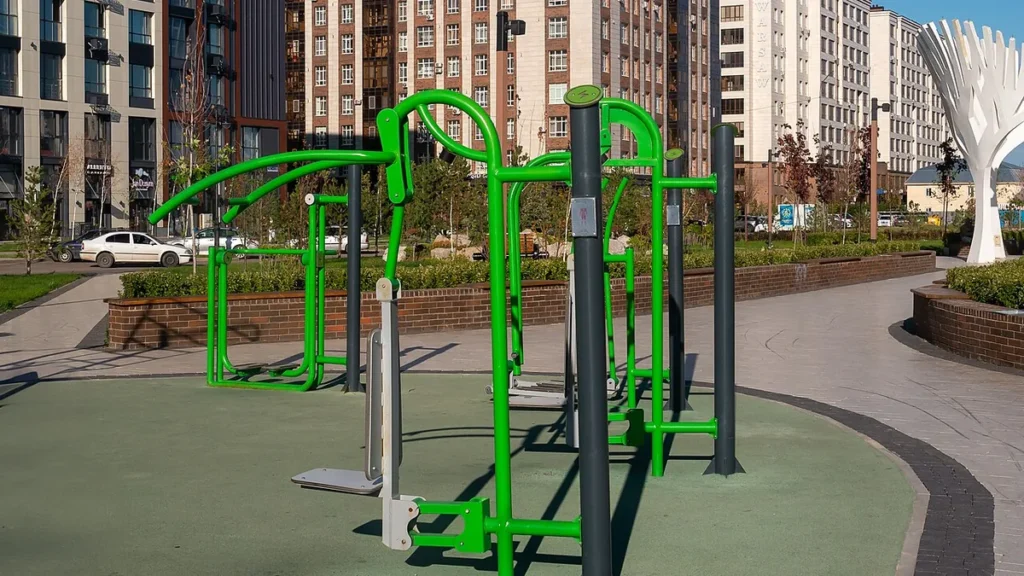
The best AI tools for outdoor gym installation startups in 2026 help a small crew turn an empty patch of park, school ground, or housing-estate green into a training space that still works after a wet winter, a hot summer, and a year of daily use. An outdoor gym installation startup is a trade business first and a fitness business second. The customer buys equipment that will not rust, a surface that drains, fixings that hold in concrete and soil, and shade that keeps the metal cool enough to touch in July. The installer is the person who makes all of those pieces behave as one system, outdoors, in weather that changes by the hour.
That is a very different job from fitting a gym inside a house. Indoors, the walls, the floor, and the roof are already there, and the weather never gets in. Outdoors, every part of the job is exposed. Rain finds the joints, sun fades the paint, frost lifts a poorly set post, and a surface that looked flat in June can hold a puddle in November. A crew that treats an outdoor gym like an indoor gym with a roof missing will be back within a year, fixing rust, re-levelling posts, and replacing a surface that has cracked or come loose. The tools that matter here handle site surveys, drainage, layout, quoting, crew days, parts, and follow-up, and the equipment lines that matter are the ones your crew can install cleanly again and again, in mud as well as in sunshine.
This guide compares nine tools that fit an outdoor gym installation startup at launch. Five are the equipment and building systems your crew will actually fit: weatherproof fitness stations, park gym systems, functional training rigs, safety surfacing, and shade. Four are the planning and business tools that run the office side: aerial surveys, 3D site capture, photo records, and job management. Together they form a stack a new founder can start with and grow without rebuilding it, judged on install quality, weather resistance, quoting speed, crew scheduling, and price.
Key takeaways
- Start with one job-management system and one site-survey tool. That pair covers quoting, scheduling, and ground conditions before you spend anything else.
- Weatherproofing, surfacing, anchoring, and shade decide the call-backs. Get those four right on every job and most complaints never happen.
- Survey the ground twice and anchor once. A post set in properly cured concrete, with drainage underneath, is the difference between a safe install and a liability.
- Design for the worst weather the site will see, not the weather on installation day. Rain, frost, sun, and wind all test an outdoor gym in its first year.
- Budget around $150 to $400 a month for software in year one, plus your first surfacing and equipment stock, and pilot every tool on real installs before you commit.
What Makes Outdoor Gym Installation Different
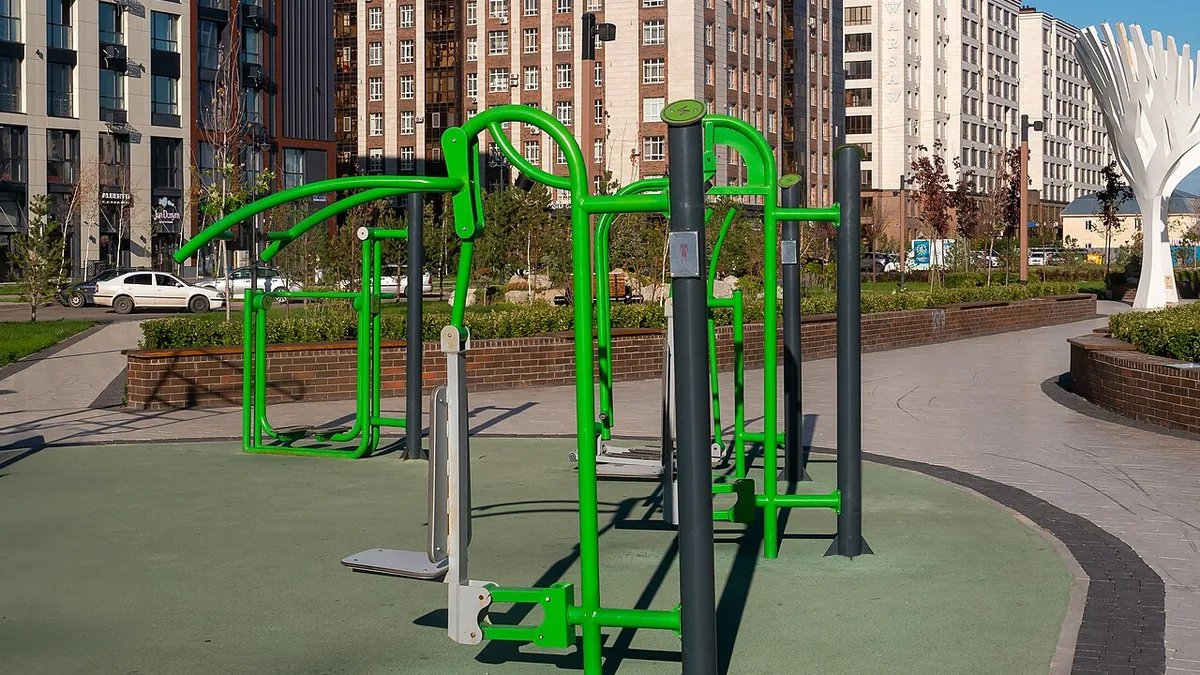
An outdoor gym is not an indoor gym moved outside. The equipment has to survive rain, frost, sun, and wind without rusting, cracking, or becoming too hot to touch. Steel needs a galvanised or powder-coated finish that can take years of weather. Moving parts need sealed bearings that keep water and grit out. Instruction panels need to stay readable after a summer of sun and a winter of rain. Software that cannot handle materials, fixings, and ground conditions will fight your crew on every job, so look for tools that record the site properly rather than treating it as a generic appointment.
Surfacing is the first difference. An outdoor gym surface is a system, not a mat. Poured-in-place rubber, rubber tiles, or bonded gravel protect users who fall, drain rainwater away, and give grip underfoot in wet weather, and the thickness you need depends on the fall height of the equipment above it. A low balance beam needs a thin layer. A tall pull-up frame needs deep, impact-absorbing surfacing over a prepared base. The best installers photograph the existing ground, note the soil, slope, and drainage, and record the surfacing choice on the quote, so there is no argument later about what was included. A surface poured in the wrong weather, or on ground that was never levelled, fails its impact test and has to be redone at your expense.
Anchoring is the second difference. Outdoor gym posts, rigs, and frames live or die by their fixings. A concrete footing, a ground anchor, and the right bolt are as important as the equipment itself, and every site is different. Soft topsoil, clay, sand, and old tarmac each need a different footing, and a crew that guesses will either under-fix a frame or hit a buried cable or drain. Your tools should record the ground type, the footing depth, the anchor used, and a photo of the finished fixing on every job. That record is also your protection if a client later asks why a post moved, because it shows the work was done to the drawing.
Shade and sun are the third difference, and they are easier to forget than they should be. Metal equipment in direct sun can burn skin in summer, and a gym with no shade gets used far less in hot weather. A shade sail, a canopy, or a well-placed tree changes the whole feel of the space, and in a school or a park it is often the difference between a gym that gets used every day and one that stands empty at midday. The smart move is to treat shade as part of the install, not an afterthought, and to record the shade coverage and the sun path on the job sheet. Wind matters too: a tall sail in an exposed site needs stronger posts and deeper footings than the same sail in a sheltered courtyard.
Drainage is the fourth difference. An outdoor gym without drainage becomes a muddy, slippery patch after rain, and standing water feeds moss on the surface, rust on the fixings, and rot in any timber edging. A gentle fall, a French drain, or a permeable surface changes the whole feel of the space, and on a sloping site it is often the difference between a gym that stays safe and one that has to be closed after a storm. Good installers measure the slope, check where the water goes, and order the surfacing to suit the ground rather than hoping a flat layer will do. Finally, the customer is usually a council, a school, a housing association, or a park manager, not a homeowner. They care about safety certificates, public liability, vandal resistance, and whether the gym still looks tidy when hundreds of people use it. That means your software must feel simple and trustworthy to a busy officer on a phone: clear quotes, honest dates, tidy work, and photos that show the finished gym.
This is also where the trade differs from indoor work. If you want the comparison from the indoor side, our guide to home gym installation startups shows how a crew fits racks, mirrors, and flooring inside a house, and the gaps in it are exactly where outdoor work begins. The indoor crew worries about studs and ventilation. The outdoor crew worries about weather, ground, and drainage, and the tools in this guide are chosen for that outdoor list.
How We Compared the Tools
We judged every tool on the work an installer actually does in a week. Install fit came first: does it solve a problem specific to an outdoor gym, such as weatherproof equipment, surfacing choice, anchoring, shade, or drainage, or is it a generic product with a new label? Quoting speed came second, because the installer who replies first with a clear price, a drawing, and a start date usually wins the job. Crew scheduling came third, because outdoor work moves with the weather and a good tool reschedules a surfacing day without losing the rest of the week.
Price came fourth, and it was judged on the first year, not the first month. A tool that looks cheap but charges extra for every user, every photo, or every quote soon costs more than a dearer tool that includes them. Ease of use on site came fifth: a tool that only works on a desktop is useless to a crew standing in a muddy field with gloves on, so every tool here had to work on a phone, offline if possible, with big buttons and simple forms. Finally, we looked at the paper trail. A council or a school will ask for a design, a risk assessment, a surfacing certificate, and a final inspection report, and the tools that produce those documents as a by-product of doing the job properly are worth paying for.
The Best AI Tools for Outdoor Gym Installation Startups at a Glance
| Tool | Best for | Main strength |
|---|---|---|
| KOMPAN Outdoor Fitness | Weatherproof calisthenics stations | Galvanised steel built for parks |
| Greenfields Outdoor Fitness | Park and council gym systems | Complete outdoor gym packages |
| MoveStrong | Outdoor functional training rigs | Modular rigs for all abilities |
| No Fault Sport Group | Poured-in-place rubber surfacing | Impact-absorbing, free-draining surface |
| USA SHADE | Shade sails and canopies | Engineered shade for exposed sites |
| DroneDeploy | Aerial site surveys | Maps slopes, drainage, and shade |
| Matterport | 3D site capture | Client walkthroughs before work starts |
| CompanyCam | Photo records | Anchoring and fixing evidence on every job |
| Housecall Pro | Quoting and scheduling | Quotes, crew days, and invoices in one place |
The Tools in Detail
1. KOMPAN Outdoor Fitness: Best for Weatherproof Calisthenics Stations
KOMPAN makes outdoor fitness stations that are built to live in a park, not in a shed. The frames are galvanised steel with a powder-coated finish, the grips are shaped for bare hands in rain and sun, and the moving parts are sealed against water and grit. A KOMPAN station is the kind of equipment a council trusts, because it has been tested for public use, it carries clear safety markings, and it looks the same after three winters as it did on installation day. For a startup, that matters: the first jobs a new installer wins are usually judged by the equipment they fit, and a recognised outdoor brand makes the quote easier to defend.
On site, KOMPAN equipment is straightforward to install if the groundwork is right. The posts go into concrete footings, the fixings are standard, and the drawings give clear footing depths for different ground types. The weak point is the same as with any heavy steel kit: delivery and handling. A full station arrives in long, heavy sections, and a two-person crew needs a van, a trolley, and a clear access route to the site. Price is at the higher end for outdoor equipment, and lead times can stretch in spring, when councils place their orders for the summer. Order early, confirm the delivery date in writing, and never promise a client a start date before the equipment is on your yard.
2. Greenfields Outdoor Fitness: Best for Park and Council Gym Systems
Greenfields Outdoor Fitness supplies complete outdoor gym systems, from single resistance stations to full multi-user gyms with a dozen pieces of equipment on one site. The range is wide enough that a startup can quote a small neighbourhood gym and a large park gym from the same catalogue, which keeps the learning curve short. The equipment is designed for unsupervised public use, with simple movements, clear instruction panels, and no loose parts that can be stolen or broken. That simplicity is a selling point for park managers, who want equipment that works for a teenager, a pensioner, and a wheelchair user without a coach standing beside it.
The strength of a Greenfields package is that it arrives as a system. The layout is planned as a whole, the surfacing area is sized to the equipment, and the shade and seating can be added to the same order. That makes quoting faster, because the founder is pricing a gym, not a pile of separate parts. The trade-off is flexibility: a client who wants one unusual piece, or a layout that does not fit the standard plan, will need a custom drawing, and custom work costs more and takes longer. A new installer should learn the standard layouts first, win a few jobs with them, and only then take on bespoke designs.
3. MoveStrong: Best for Outdoor Functional Training Rigs
MoveStrong makes modular outdoor rigs for functional training: pull-up bars, climbing frames, balance beams, and strength stations that can be joined together into a single structure. The modular design is the main attraction for a startup, because the same parts can build a small rig for a school playground and a large rig for a public fitness trail. The steel is hot-dip galvanised for outdoor use, the joints are bolted rather than welded on site, and the system can be extended later if the client wants more stations. That matters for repeat work: a client who starts with a small rig and comes back for an extension is the cheapest sale a startup will ever make.
On site, a MoveStrong rig rewards careful setting out. The posts must be square, level, and at the right centres, or the bars will not sit true and the whole frame will look wrong. A laser level, a string line, and a patient morning are worth more than speed here. The weak point is the same as with any modular system: the more parts there are, the more fixings there are to check, and a crew that rushes the torque checks will be back within a month. Build a simple checklist for every rig, torque every bolt, photograph the finished joints, and sign the sheet before you leave.
4. No Fault Sport Group: Best for Poured-in-Place Rubber Surfacing
No Fault Sport Group supplies poured-in-place rubber surfacing, the seamless, impact-absorbing surface that sits under most modern outdoor gyms and playgrounds. The surface is mixed and poured on site, so it follows the shape of the ground, covers awkward corners, and drains rainwater through its pores instead of holding puddles. For an outdoor gym, that drainage is the point: a surface that stays grippy in the wet keeps the gym open after rain, and a surface that absorbs falls keeps the client safe and the installer out of trouble. The colour range is wide, which helps a founder sell a gym that looks like part of the park rather than a black mat dropped on the grass.
Surfacing is also the part of the job most likely to go wrong if the weather is ignored. Poured rubber needs a dry, prepared base and a clear window of dry weather to cure. A shower halfway through a pour can ruin a whole bay, and a cold snap can slow the cure for days. A good installer checks the forecast, books the surfacing crew for a dry spell, and keeps a tarpaulin and a backup day in reserve. The base matters just as much: a surface poured on soft, uncompacted ground will crack and sink, so compact the base, check the levels, and photograph it before the pour starts.
5. USA SHADE: Best for Shade Sails and Canopies
USA SHADE designs and supplies shade sails, canopies, and fabric structures for outdoor sites, including gyms, playgrounds, and sports areas. A shade sail over an outdoor gym does three jobs at once: it keeps the metal cool enough to touch, it protects users from the sun, and it makes the gym look finished rather than thrown together. The fabric blocks most ultraviolet light, sheds rain, and comes in colours that suit a park or a school. For a startup, shade is also a useful upsell: a client who has already agreed to a gym is often willing to add shade once they see how hot the equipment gets in summer.
Shade is an engineering job, not a decoration, and that is where a new installer must be careful. A sail in an exposed site catches the wind like a sail on a boat, so the posts need deeper footings, stronger steel, and proper tensioning. A sail that is too flat holds rainwater and sags; a sail that is too steep sheds water but gives less shade. USA SHADE provides engineered drawings for its structures, and those drawings are the document a council will ask for before it signs. Follow them exactly, do not guess the footing size, and do not fit a sail to posts that were never designed to take the load.

6. DroneDeploy: Best for Aerial Site Surveys and Drainage Mapping
DroneDeploy turns a drone flight into a measured site map, with heights, slopes, and drainage lines that a tape measure and a photograph cannot show. For an outdoor gym, that map answers the questions that decide the price: how steep is the ground, where does the water run, where is the shade at midday, and where can the delivery lorry actually reach? A founder who quotes from a drone map is far less likely to discover on site that the ground falls away, that a drain runs under the gym, or that the only access is through a narrow gate.
7. Matterport: Best for 3D Site Capture and Client Walkthroughs
Matterport captures a site in three dimensions, so a client can walk through the finished gym on a screen before any digging starts. For a council committee or a school governor who will never visit the site, that walkthrough is often what wins the job. The founder can show the equipment in place, the surfacing area, the shade, and the paths around it, and the client can ask for changes while they are still cheap to make. That is far better than a paper drawing that only the installer understands.
8. CompanyCam: Best for Photo Records of Anchoring and Fixings
CompanyCam is a photo app built for trade crews. Every photo is stamped with the job, the date, and the location, so a picture of a footing, a fixing, or a finished joint becomes a proper record rather than a random image on a phone. For an outdoor gym, that record is the proof that the footings were dug to depth, the anchors were set correctly, and the surfacing base was prepared before the pour. If a client, a council, or an insurer ever asks, the answer is in the job file, not in a memory.
The app is simple to use on site, which is why crews actually use it. Take a photo at each stage, add a short note, and move on. The weak point is discipline: a crew that photographs the finished gym but not the footings has missed the point. Make the photo list part of the job sheet, check it before you leave site, and share the finished set with the client as part of the handover. That handover pack is also good marketing: a client who sees clean, documented work is far more likely to recommend you.
9. Housecall Pro: Best for Quoting, Scheduling, and Invoicing
Housecall Pro is the office system for a small installation business. It holds the enquiry, the quote, the crew schedule, and the invoice in one place, so a founder is not chasing the same job across a notebook, a spreadsheet, and an email inbox. A quote can be sent from site, a client can accept it on a phone, and the crew day can be booked against the same job. For outdoor work, the scheduling matters most: a surfacing day that moves because of rain should move without losing the equipment delivery, the shade install, and the final inspection.
Building Your Outdoor Gym Installation Stack
A good launch stack is small, and it follows the order of the job. Start with Housecall Pro for quoting and scheduling, and DroneDeploy for site surveys on the larger jobs. That pair covers the enquiry, the price, the crew day, and the ground conditions. Add CompanyCam next, because the photo record protects every job you do, and add Matterport when you start quoting for committees that need a walkthrough to say yes. The equipment lines come last in the buying order but first in the selling order: learn one or two ranges properly, such as KOMPAN and Greenfields, and quote them with confidence before you add a third.
On the ground, the stack is surfacing, shade, and equipment, in that order. Get the drainage and the base right, set the shade posts to the engineered drawing, and only then fit the equipment. A crew that fits the equipment first and thinks about drainage afterwards will be digging it up again. Keep the monthly software cost between $150 and $400 in year one, and spend the rest of the budget on stock, tools, and a van that can carry long steel sections. Pilot every tool on a real install before you pay for a year of it, and drop any tool the crew does not use within a month.
The closest cousin to this work is the outdoor play trade, and our guide to playground installation startups shows how a similar crew handles safety surfacing, council paperwork, and final inspections. The outdoor gym adds the fitness angle on top: weatherproof equipment, shade, and a surface that must work for adults training hard, not only for children playing. The paperwork, the surfacing, and the scheduling are much the same, and a founder who can do one well can learn the other.
Checklist: Launching Your Outdoor Gym Installation Startup
- Survey the ground, the slope, the drainage, and the access before you quote, and record it all on the job sheet.
- Choose one equipment range, one surfacing system, and one shade supplier, and learn them properly before you add more.
- Set up Housecall Pro, CompanyCam, and a drone or 3D capture tool, and test them on a real job.
- Price the base preparation, the footings, and the surfacing as separate lines, so the client can see what each part costs.
- Photograph every footing, fixing, and surfacing base, and hand the client a clean record with the finished gym.
- Book the surfacing for a dry spell, keep a backup day in reserve, and never pour rubber in the rain.
Frequently Asked Questions
What is the best AI tool for an outdoor gym installation startup?
There is no single best tool, because the job has two halves. For the office, Housecall Pro covers quoting, scheduling, and invoicing. For the site, DroneDeploy covers surveys and drainage, and CompanyCam covers the photo record. Start with those three, and add equipment ranges such as KOMPAN or Greenfields once you have a few jobs booked.
How much does an outdoor gym installation cost?
A small outdoor gym with a few stations, surfacing, and shade usually costs a client several thousand pounds or dollars, and a large park gym can cost far more. The price depends on the equipment, the surfacing area, the groundwork, and the shade. Quote the groundwork and surfacing separately, so the client understands why two similar-looking gyms can cost very different amounts.
Do I need planning permission to install an outdoor gym?
It depends on the site, the landowner, and the local rules. A gym in a private garden is usually simpler than one in a public park or a school, where the council may need to approve the design, the surfacing, and the safety certificates. Check with the local authority and the landowner before you quote, and put the answer in writing on the job sheet.
What surfacing is best for an outdoor gym?
Poured-in-place rubber is the usual choice under tall equipment, because it absorbs falls, drains rainwater, and follows the shape of the ground. Rubber tiles suit smaller gyms and repairs. The right thickness depends on the fall height of the tallest piece of equipment, so match the surfacing to the equipment, not to the cheapest price.
How do I anchor outdoor gym equipment safely?
Set the posts in concrete footings dug to the depth on the equipment drawing, for the ground type on that site. Record the ground type, the footing depth, and the anchor used, and photograph each footing before the concrete sets. Never guess a footing size, and never fit equipment to posts that were not designed to take the load.
Should an outdoor gym installation startup offer maintenance plans?
Yes. Outdoor equipment needs regular checks for rust, loose fixings, worn surfacing, and faded instruction panels, and a maintenance plan turns a one-off install into repeat income. Offer a simple annual check, with a written report and a list of anything that needs attention, and price it so the client sees it as cheaper than a call-out after something breaks.
The Bottom Line
An outdoor gym installation startup succeeds on the parts of the job that never appear in a photograph of the finished gym: the drainage under the surface, the concrete around the posts, the shade above the equipment, and the paperwork that proves it was all done properly. The nine tools in this guide cover those parts, from weatherproof equipment and surfacing to surveys, photo records, and quoting. Pick a small stack, learn it on real jobs, and let the quality of the groundwork do the selling.
That is also where this trade differs from running a fitness business. A bootcamp fitness startup sells sessions, coaching, and community, and its tools handle bookings and programming. An outdoor gym installer sells a finished, weatherproof gym, and its tools handle ground, fixings, and surfacing. Both work outdoors, but only one of them has to make steel, concrete, and rubber last through a winter. Get the outdoor half right, and the gym will still be earning its keep long after the installer has left.

Keep what speaks to you.
Leave room for your own perspective.


