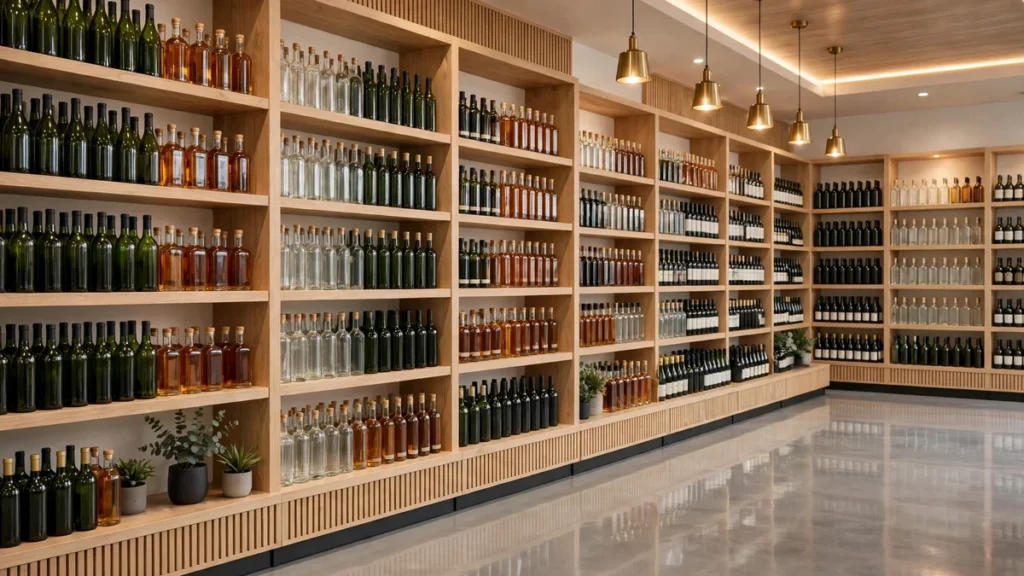
The best AI tools for liquor stores in 2026 help owners know exactly what to stock, when to reorder, and which customers are most likely to return. A liquor store carries thousands of bottles across wine, beer, spirits, and ready-to-drink cocktails, and every shelf decision ties up cash. When a popular bourbon runs out on a Friday evening, that sale is lost. When a slow-moving liqueur sits for six months, that money is stuck on the shelf. Artificial intelligence turns sales history, seasonal patterns, local events, and supplier lead times into clear buying decisions, so a small team can run a large store with confidence.
Liquor retail is different from most other retail because demand is seasonal, regulated, and highly local. Holiday weekends, sports events, weddings, and weather all change what people buy. A bottle that sells well in one neighbourhood may barely move a few streets away. The best AI tools for liquor stores recognise those patterns instead of treating every product the same. They flag the wines that sell before Thanksgiving, the canned cocktails that move in summer, and the premium whiskies that need a smaller, steadier order. Owners spend less time guessing and more time serving customers.
This guide compares the AI tools that matter most for liquor stores, from inventory forecasting and point-of-sale systems to delivery planning, customer marketing, pricing, age verification, and sales reporting. Each section explains what the tool does, who it suits, and what to check before paying for it. The goal is practical: choose one or two tools that solve your biggest problem first, prove the return in a few weeks, and only then add more. A liquor store does not need every AI product on the market. It needs the right ones, used well, every day.
Key takeaways
- Start with inventory forecasting, because stockouts and overstock are the two most expensive problems in a liquor store.
- Choose tools that connect to your existing point-of-sale system, so sales data flows in automatically and forecasts stay accurate.
- Use AI for demand, pricing, and marketing, but keep final buying decisions with a person who knows the local customers.
- Check age-verification and local alcohol rules before adopting any tool that handles customer data, deliveries, or online orders.
- Measure success in the first month by tracking stockouts, waste, delivery time, and repeat purchases, not by the number of features you bought.
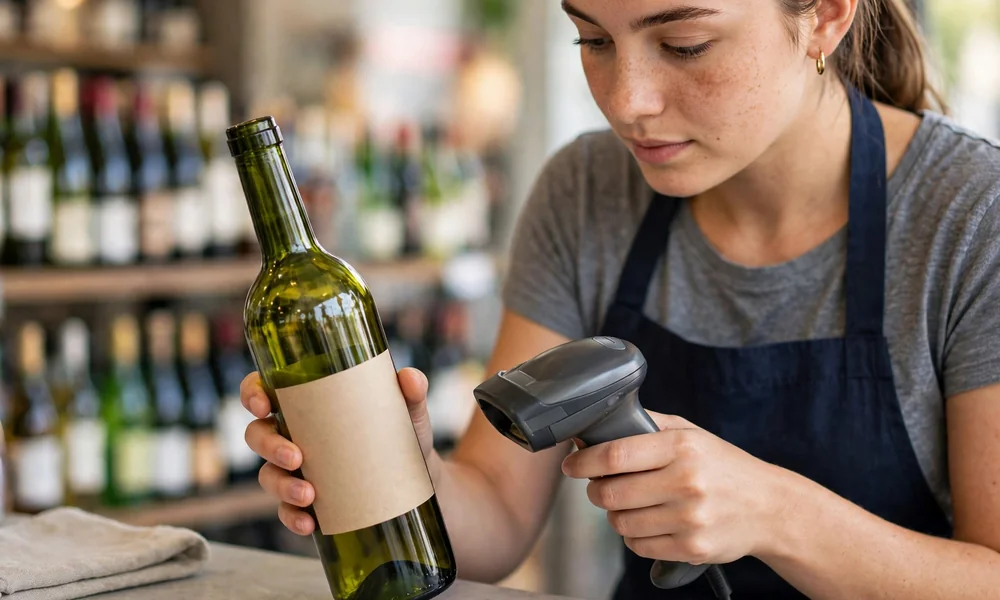
How AI Helps a Liquor Store Day to Day
Most liquor store owners already collect the data AI needs. Every scan at the till records a product, a price, a time, and often a payment method. Delivery records show which streets order most. Loyalty records show which customers buy wine every week and which only visit before a party. The problem is not a lack of data. The problem is that the data sits in separate places and nobody has time to study it. AI tools pull those records together and turn them into a short list of actions: reorder this, discount that, promote this case, and hold off on that new line.
Inventory is the clearest example. A good forecasting tool looks at the last twelve months of sales, separates normal weeks from holiday spikes, and estimates how much of each product will sell in the next two weeks. It can warn that a popular vodka will run out before the weekend if no order is placed by Wednesday. It can also show that three similar gins are competing for the same customers, so the store can keep the best two and use the freed shelf space for a product with stronger demand. That kind of decision is hard to make from memory alone, especially in a store with several thousand products.
Customer service improves in quieter ways. An AI ordering assistant can answer common questions after hours, such as opening times, delivery areas, and whether a specific bottle is in stock. A marketing tool can group customers by taste, so wine lovers receive wine offers and whisky buyers receive whisky news, instead of everyone receiving the same generic message. A pricing tool can spot when a competitor has lowered the price of a popular beer and suggest a matching move before sales drift away. None of these tools replaces the knowledge of a good shop assistant. They give that assistant better information at the moment it is needed.
Comparison Table: The Best AI Tools for Liquor Stores
Use this table to compare the main types of AI tools at a glance. The best choice depends on the size of the store, whether it delivers, and whether inventory or marketing is the bigger problem right now.
| Tool type | Best for | Main benefit | Typical starting point |
|---|---|---|---|
| Inventory forecasting | Stores with frequent stockouts | Fewer empty shelves and less dead stock | Connect sales history first |
| AI point of sale | Stores replacing an old till | Live stock, sales, and customer records in one place | Choose a liquor-ready system |
| Delivery and route planning | Stores that deliver locally | Faster deliveries and lower fuel costs | Map delivery zones first |
| Customer marketing and loyalty | Stores with repeat customers | Offers matched to taste and buying habits | Start with email and loyalty data |
| Price optimisation | Competitive local markets | Prices that protect margin without losing sales | Track ten key products first |
| Age verification and compliance | Online orders and delivery | Safer checks and clearer records | Confirm local rules first |
| AI ordering assistant | Busy stores and after-hours questions | Instant answers and more completed orders | Limit it to stock and hours at first |
| Sales analytics and accounting | Owners who need clear profit figures | True margin by product, not just total sales | Link sales to purchase costs |
Best AI Inventory Forecasting Tools for Liquor Stores
Inventory forecasting is the most valuable AI tool for most liquor stores, because stock is the largest cost and the hardest to manage by feel alone. A forecasting tool studies past sales, seasonality, promotions, and supplier lead times, then suggests how much to order and when. It does not need to be perfect to be useful. Even a forecast that prevents two stockouts a week and cuts one over-order a month can pay for the software many times over.
The strongest forecasting tools for liquor retail handle the details that make this trade unusual. They understand that wine sells in cases before holidays, that beer demand rises sharply in warm weather, and that a new craft spirit may sell fast for a month and then settle to a steady level. They also handle supplier minimums, so the suggested order is not a theoretical number but a practical one that can actually be placed. Look for a tool that shows its reasoning in plain language, such as which past weeks it used and which event it expects to repeat. A forecast you cannot explain is hard to trust when money is on the line.
Before choosing a forecasting tool, check three things. First, it must connect to your point-of-sale system without manual exports every day, because a forecast built on last week’s data is already out of date. Second, it must handle your full product list, including products with short sales histories and products that sell only at certain times of year. Third, it must let you override its suggestions easily, because a local event, a road closure, or a supplier promotion can change demand in ways no software can predict. The best setup is a clear suggestion from the tool and a quick yes or no from the owner.
How to Use Forecasts Without Over-Ordering
A forecast is a guide, not an order. Start by using it for your twenty best-selling products, where the data is strongest and the cost of a stockout is highest. Compare the suggested order with what you would have ordered anyway, and note where the tool is right and where it misses. After a month, extend it to the next fifty products. This gradual approach builds trust and avoids a sudden change in buying habits that could leave the store overstocked.
Pay attention to slow movers as well as fast sellers. A forecasting tool should flag products that have not sold in sixty or ninety days, so the owner can decide whether to discount them, move them to a better shelf, or stop ordering them. Dead stock is quiet: it does not cause complaints, but it ties up cash that could buy products customers actually want. A monthly review of slow movers is one of the simplest ways to free up money in a liquor store.
Best AI Point-of-Sale Systems for Liquor Stores
The point-of-sale system is the heart of a liquor store, and an AI-ready till makes every other tool work better. A modern system records each sale, updates stock instantly, tracks customer purchases with permission, and produces reports that show which products earn money and which only look busy. When the till is accurate, the forecast is accurate. When the till is messy, every tool built on top of it will struggle.
Look for a point-of-sale system that understands liquor retail. It should handle age prompts at the till, bottle deposits where they apply, case pricing, mixed cases, and supplier-specific barcodes. It should also handle returns and damaged stock cleanly, so those bottles do not stay on the system as available stock. A system built for general retail can be forced to work, but a liquor-ready system saves hours of workarounds every week. Ask other liquor store owners what they use before choosing, because their experience with support and reliability matters as much as the feature list.
AI features in a point-of-sale system usually appear as suggestions rather than separate products. The system may suggest a related product at the till, such as tonic with gin or a second bottle of a wine a customer buys regularly. It may warn when a product is selling faster than expected and suggest an early reorder. It may also flag unusual sales patterns, such as a sudden rise in a product that could signal a pricing error or a data problem. These small prompts are useful because they appear during normal work, not in a separate report that nobody opens.
What to Check Before Changing Your Till
Changing a point-of-sale system is a bigger decision than adding a forecasting tool, so take time over it. Check that your product list, supplier records, and customer data can move across cleanly, and ask the supplier to show a test import with your real data. Check that staff can learn the new system quickly, because a till that slows down a Friday evening queue will cost sales. Check also that the system works when the internet drops, because a liquor store cannot stop selling while a connection is restored.
Best AI Delivery and Route Planning Tools for Liquor Stores
Delivery has become a normal part of liquor retail, and customers now expect clear arrival times and careful age checks at the door. AI route planning helps a store meet that expectation without hiring extra drivers. The software groups orders by area, orders the stops in the most efficient sequence, and adjusts the plan when a new order arrives or a road is closed. On a busy evening, that difference can mean five completed deliveries instead of three, with the same driver and the same vehicle.
Before choosing a delivery tool, check that it fits local alcohol delivery rules. Some areas limit delivery hours, require the recipient to be present, or restrict which products can be delivered. The tool should make it easy to follow those rules, not easy to ignore them. Check also that it connects to your ordering system, so orders do not need to be typed in twice. Double entry is where delivery mistakes usually begin.
Best AI Marketing and Loyalty Tools for Liquor Stores
Most liquor stores depend on repeat customers, and AI marketing tools help a store stay in touch without sending the same message to everyone. The software groups customers by what they buy, how often they visit, and how much they spend, then suggests offers that fit each group. Wine buyers might receive news of a new vintage. Whisky buyers might receive an invitation to a tasting. Customers who have not visited for a month might receive a gentle reminder and a small offer. Each message feels more personal because it is based on real buying habits.
Loyalty programmes work best when they are simple. A customer should understand the reward without reading a long set of rules. AI can help by tracking points automatically, suggesting the right reward at the right time, and spotting customers who are drifting away before they stop visiting altogether. A store that notices a regular customer has not visited for six weeks and sends a friendly message has a better chance of winning that customer back than a store that only notices when the customer is already gone.
Marketing tools also help with new product launches. When a new gin or a limited-edition bourbon arrives, the store can tell the customers most likely to enjoy it, rather than advertising it to everyone. That targeted approach usually sells more bottles with fewer messages, and it avoids annoying customers with offers they will never use. The best AI tools for liquor stores in this area are the ones that help the owner send fewer, better messages.
The same thinking applies to beverage businesses of other kinds. Lessons from the best AI tools for craft breweries are useful here, because breweries also sell to repeat customers who care about taste, new releases, and local events. A liquor store can borrow the idea of small, well-chosen tastings and limited releases, and use AI to invite the right customers to each one.
Best AI Price Optimisation Tools for Liquor Stores
Pricing a liquor store is a balancing act. Price too high and customers buy elsewhere. Price too low and the store gives away margin on products that would have sold anyway. AI price optimisation tools help by studying sales, competitor prices, and demand patterns, then suggesting prices that protect profit without driving customers away. They are most useful for the products that sell in volume, where a small price change makes a real difference over a month.
A good pricing tool starts with the products that matter most. For most stores, that means the ten or twenty best-selling wines, beers, and spirits. It tracks how sales change when the price changes, and it learns which products customers will pay more for and which they will switch away from. Premium whiskies, for example, often hold their sales at a higher price because buyers choose by taste and reputation. Everyday beers are more price-sensitive, because buyers compare them directly with the shop down the road.
Price suggestions should always be reviewed by a person. A tool may suggest raising the price of a product before a holiday, but the owner may know that a local competitor is running a promotion on the same product that week. A tool may suggest lowering a price to clear stock, but the owner may prefer to move the product to a better shelf first. The best approach is to treat the suggestion as a starting point, test small changes, and watch the results for a week before making a bigger move.
Best AI Age Verification and Compliance Tools for Liquor Stores
Age verification is a legal duty, not a nice extra, and AI tools can make it faster and more consistent. Modern systems can scan an identity document, check that it looks genuine, and record the check without storing more information than necessary. For online orders and deliveries, they can also verify the buyer before the order is accepted, which reduces the risk of a failed delivery at the door. The aim is a check that is quick for honest customers and hard to get past for anyone else.
Compliance goes beyond age checks. Liquor stores must follow rules on licensing, trading hours, advertising, and record keeping, and those rules vary by area. A good compliance tool keeps records in one place, reminds the owner when a licence or certificate needs renewal, and produces clear reports if an inspector asks for them. It does not replace legal advice, but it does reduce the chance of a missed deadline or a lost record causing a serious problem.
When choosing an age-verification tool, check how it stores data and how long it keeps it. The tool should collect only what is needed for the check, protect it properly, and delete it when it is no longer needed. Ask the supplier to explain this in plain language before signing up. If the answer is unclear, choose a different supplier. A tool that handles identity documents must be trustworthy above all else.
Best AI Ordering Assistants for Liquor Stores
An AI ordering assistant answers customer questions and takes orders when staff are busy or the shop is closed. It can tell a customer whether a bottle is in stock, suggest a similar bottle if the first choice is unavailable, and help with delivery times and minimum orders. For a small store, that means fewer missed calls and fewer lost orders. For a larger store, it means staff can focus on customers in the shop while the assistant handles routine questions online.
The best assistants are narrow and honest about what they can do. They should answer questions about stock, hours, delivery areas, and prices, and pass anything else to a person. An assistant that guesses at an answer is worse than no assistant at all, especially when the question is about a product, an allergy, or a delivery time. Set clear limits from the start: if the assistant is not sure, it should say so and offer to connect the customer with a member of staff.
Training the assistant on your own stock list is essential. A generic assistant that talks about products you do not sell will confuse customers and waste their time. A well-trained assistant knows your best sellers, your current promotions, and your delivery rules, and it uses that knowledge in every answer. Review its conversations every week at first, correct its mistakes, and remove any answer that is wrong or unclear. That weekly review is what turns a basic chatbot into a useful member of the team.
Best AI Sales Analytics and Accounting Tools for Liquor Stores
Sales analytics tools turn till records into clear answers about profit, not just turnover. They show which categories earn the most, which products sell well but earn little, and which days and hours are most profitable. They also show how promotions, weather, and local events affect sales, so the owner can plan staffing and ordering with real evidence instead of habit.
Accounting integration matters here. When sales data flows into the accounting system automatically, the owner can see the true cost of each product, including purchase price, delivery, waste, and discounts. That makes it possible to compare products fairly and to spot problems early, such as a supplier price rise that has eaten into the margin on a popular product. Without that link, the owner may be working from total sales figures that hide the real picture.
For a broader view of how AI can help a small business keep its books in order, the best AI accounting tools for small business are a useful comparison. The principles are the same: automate the routine recording, keep the figures accurate, and spend the saved time on decisions that grow the business. A liquor store that knows its true margin on every product can buy with confidence and price with purpose.
How to Choose the Best AI Tools for Your Liquor Store
Choosing AI tools is easier when the store’s biggest problem is clear. A store that runs out of popular products every weekend needs forecasting first. A store that delivers late needs route planning first. A store with loyal customers but quiet weekdays needs marketing first. Start with the problem that costs the most money or the most time, and choose the tool that solves that problem directly. A tool that solves a problem you do not have is a distraction, however impressive it looks.
Integration is the next test. A tool that connects to your point-of-sale system, your accounting software, and your delivery system will save hours of manual work. A tool that needs daily exports and manual uploads will soon be ignored, because nobody has time for that on a busy day. Before buying, ask the supplier to show the connection working with a system like yours, and ask what happens when the connection fails. A clear, honest answer is a good sign.
Cost should be judged on return, not on price alone. A cheap tool that nobody uses is expensive. A dearer tool that prevents stockouts, saves staff time, and increases repeat sales can be good value. Work out the monthly cost, the time it saves, and the sales it could protect, and compare those figures honestly. Most suppliers offer a trial period, and a trial with real data is the best way to judge whether a tool will work in your store.
It also helps to look at how AI tools work for small businesses in general, because many of the lessons carry over. The best AI tools for small business cover the same foundations: clean data, simple workflows, and tools that staff will actually use. A liquor store is a small business first, and the tools that work for other small retailers often work well here too, as long as they respect the specific rules of alcohol retail.
Checklist: Choosing AI Tools for a Liquor Store
- Identify the store’s biggest problem first, whether it is stockouts, late deliveries, quiet weekdays, or unclear margins.
- Check that each tool connects to the existing point-of-sale system without daily manual exports.
- Confirm that the tool follows local alcohol rules on age checks, delivery hours, and advertising.
- Test the tool with real store data during a trial, and judge it on time saved and sales protected.
- Train staff properly, keep the old records available, and review the tool’s results after one month.
- Keep customer data safe, collect only what is needed, and give customers a clear way to opt out.
Frequently Asked Questions
What is the best AI tool for a small liquor store?
For most small liquor stores, inventory forecasting is the best place to start, because it tackles the most expensive problem: having the wrong stock at the wrong time. A forecasting tool that connects to the point-of-sale system can reduce stockouts and over-ordering within a few weeks. Once forecasting is working, a store can add marketing or delivery tools based on its next biggest problem. The best tool is the one that solves the store’s most costly problem first, not the one with the most features.
How much do AI tools for liquor stores cost?
Costs vary widely, from a small monthly fee for a single forecasting or marketing tool to a larger fee for a full point-of-sale system with AI features. Most stores should expect to pay a monthly subscription, and some tools charge extra for additional users or locations. The right way to judge cost is by return: if a tool prevents a few stockouts a week, saves several hours of staff time, or brings back repeat customers, it can pay for itself quickly. Always use a trial with real data before committing to a long contract.
Can AI help a liquor store sell more wine and spirits?
Yes, AI can help a liquor store sell more by matching the right products to the right customers at the right time. It can suggest wines to customers who buy wine regularly, flag a new spirit to the customers most likely to enjoy it, and time promotions for the weeks when demand is highest. It can also prevent lost sales by warning when a popular product is about to run out. The increase usually comes from better stock, better timing, and better recommendations, rather than from a single clever feature.
Do AI tools replace staff in a liquor store?
No, AI tools are best used to support staff, not replace them. They handle routine work such as forecasting, route planning, and answering common questions, so staff have more time for customers. Recommendations, tastings, and advice about food pairings still need a person who knows the products and the local customers. A store that uses AI well feels more personal, not less, because staff have better information and more time to use it.
Is AI safe to use for alcohol delivery and age checks?
AI age-verification tools can make checks faster and more consistent, but they must be used carefully and in line with local rules. The tool should verify age before an order is accepted and again at delivery where required, and it should keep clear records of each check. Only collect the information needed for the check, protect it properly, and delete it when it is no longer needed. If you are unsure about the rules in your area, check with your licensing authority before using a new tool.
How long does it take to see results from AI tools?
Most stores see early results within a month, especially from forecasting and delivery tools. Stockouts usually fall quickly once forecasts are based on real sales data, and delivery times usually improve once routes are planned properly. Marketing results take longer, because repeat visits build over several weeks. Give each tool at least a month of proper use before judging it, and measure the results against clear figures such as stockouts, delivery times, and repeat purchases.
The Bottom Line
The best AI tools for liquor stores in 2026 are the ones that keep the right bottles on the shelf, get orders to customers on time, and help owners understand what their customers actually want. Start with inventory forecasting, choose a point-of-sale system that shares clean data, and add delivery, marketing, pricing, and analytics tools one at a time as the need proves itself. Keep staff at the centre of every decision, follow local alcohol rules carefully, and judge each tool by the time it saves and the sales it protects. A liquor store that uses AI in that steady, practical way will run more smoothly, waste less money on dead stock, and give customers a better reason to come back.

Keep what speaks to you.
Leave room for your own perspective.