A hay barn is not a shed with a roof. It is a working store where a whole season of feed sits for months, and the difference between hay that feeds a herd all winter and hay that smoulders, moulds or loses its feed value comes down to three things: how dry the bales were when they went in, how much air moves through the stack, and how quickly anyone notices when a bale starts to heat. Hay looks harmless stacked in a barn, but a damp bale keeps respiring, gives off heat, and can climb past 60 degrees Celsius while the outside of the stack still feels cool. A barn that cannot move that heat away will lose the crop, and in the worst case it will lose the barn itself. That is why hay barn installation is a specialist trade: the building, the ventilation, the drying, the loading bay and the monitoring all have to work as one system, and the founder who understands the crop wins the work.
The best AI tools for hay barn installation startups in 2026 help a small team design that system before a single post is set. They lay out a clear-span barn with eaves high enough for a telehandler and doors wide enough for a loaded wagon, size ridge vents and eave inlets so moist air leaves the stack instead of condensing on the roof, plan bale handling that gets a full wagon unloaded before the rain arrives, and put temperature probes in the stack so a hot bale is found on a phone screen instead of by smell. A hay barn startup lives or dies on details other builders rush past: the moisture of the bales at intake, the air gap between the stack and the wall, the drying air that finishes a borderline load, and the loading bay that keeps trailers turning on a busy baling day. AI tools do not set the posts, but they make every one of those details visible before the work starts, when fixing a mistake still costs nothing.
This guide compares nine tools across the jobs that decide whether a new hay barn installation company survives its first year: barn design and estimating, ventilation and drying, moisture testing, temperature monitoring, bale handling and running the business. Every tool below is judged on what it does for a founder with a small team and a tight budget, how much it costs to start, and where it fits in the first ninety days. Use it to build a lean stack, spend only on tools that earn their cost back, and open with barns that keep hay dry, cool and saleable all winter. A potato barn installation stores a crop that breathes and sweats just like hay, but hay is the harder store: it is baled in the field, it arrives at whatever moisture the weather allowed, and it can heat itself from the inside, so the barn has to be designed around the bale, not around the building.
Key takeaways
- Design the barn around the bale, because eave height, door width, stack layout and airflow decide the size of the building before any steel is ordered.
- Test moisture at intake, since a bale that goes in too wet is the one that heats, moulds and puts the whole stack at risk.
- Build ventilation into the roof, not onto it, because ridge vents and eave inlets that work with the stack are cheaper than fans added after the first damp winter.
- Put temperature probes in the stack, because a hot bale found on a phone screen costs a visit, while a hot bale found by smell costs a barn.
- Start with one design tool, one moisture tool and one job-management platform, and add handling and drying tools only when a clear bottleneck appears in your launch plan.
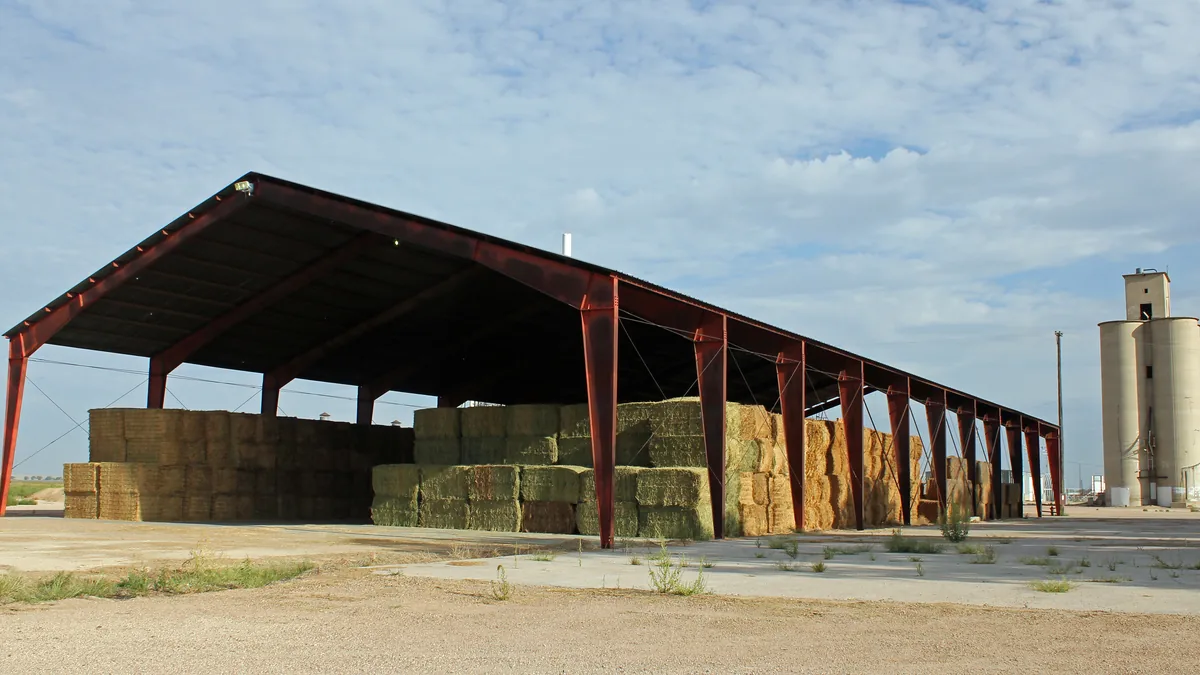
How the nine tools compare
| Tool | Best for | What it does for a hay barn startup |
|---|---|---|
| Morton Buildings Design Studio | Hay barn design and layout | Configures a clear-span post-frame barn with the eave height, door width and lean-tos a hay store needs. |
| STACK | Estimating and takeoff | Measures plans and builds material takeoffs so a hay barn quote covers steel, lumber, roofing and concrete. |
| Polycam | Site capture | Scans the site with a phone and builds a measured 3D model for layout, access and as-built records. |
| Harvest Tec | Moisture and preservative | Fits balers with moisture sensors and preservative applicators so only dry enough hay reaches the barn. |
| Munters | Ventilation and dehumidification | Supplies climate systems that dry barn air and keep the stack cool through damp weather. |
| Delmhorst F-2000 | Moisture testing at intake | Tests bale moisture on the wagon with a handheld probe before a load is stacked. |
| Barn Owl Wireless | Stack temperature monitoring | Watches temperatures deep in the stack and alerts the owner before a hot bale becomes a fire. |
| Kuhns Mfg | Bale handling and loading | Accumulates small square bales into loads a grapple can lift, so wagons unload fast and cleanly. |
| ServiceTitan | Running the business | Runs quotes, scheduling, dispatch, invoicing and customer records for a growing installation team. |
Designing the barn and the quote
A hay barn starts as a layout problem, not a building problem. The farmer knows how many bales the barn must hold, how the wagons arrive, and whether the loader is a telehandler or a tractor with a spike. The installer has to turn those answers into a building with enough clear height to stack, doors wide enough for a loaded wagon, a floor that drains, and a roof that vents. The three tools in this section cover that job from different angles: one designs the barn itself, one prices it, and one captures the site it will stand on. A founder who can show all three at the first meeting sells a barn the farmer can already see working.
Morton Buildings Design Studio: The Best Tool for Hay Barn Design and Layout
Morton Buildings Design Studio is the configurator that lets a startup lay out a post-frame hay barn with the customer watching. Morton Buildings has built post-frame farm buildings for over a century, and its design tool turns that experience into a working session: pick the width, length and eave height, place the sliding doors and lean-tos, choose the roof pitch and cladding, and see the barn in three dimensions before anyone talks about price. For a hay barn, that matters more than for most farm buildings, because the dimensions are set by the crop. A clear span with no internal posts lets bales stack in straight runs, high eaves let a telehandler place the top layer, and a wide door on the gable end lets a wagon drive through instead of reversing in.
Use the design session as the sales meeting. Walk the farmer through the stack layout on screen, show where the air gaps run between the bales and the walls, and agree the door positions against the way wagons actually arrive at the yard. That conversation is often the moment a farmer chooses your firm over a general builder, because it proves you have thought about the hay rather than just the frame. Keep the agreed design, the dimensions and the options in the quote file, and price the lean-to for machinery and the extra eave height as separate lines so the farmer can see what the storage really costs. A pole barn installation uses the same post-frame structure, but a hay barn is the stricter version of it: the same frame, with the height, the doors and the ventilation decided by the bales inside.
STACK: The Best Tool for Hay Barn Estimating
STACK is cloud estimating software that turns a barn plan into a priced takeoff without a spreadsheet full of guesses. Upload the drawings, measure the roof, walls, posts and concrete on screen, and build the quantities for steel, lumber, cladding, fixings and slab in one place. For a startup, the value is accuracy under pressure: hay barn quotes are won and lost in the weeks after harvest, when every farmer in the parish wants a barn before winter, and a quote that misses the concrete or undercounts the cladding is a job that loses money from the first day on site.
Build one takeoff template for your standard hay barn sizes and reuse it on every quote. Set the template with the post spacing, the roof pitch, the door sizes and the ventilation you always fit, then adjust only the length, the height and the options for each farm. That discipline keeps quotes fast and comparable, and it stops the quiet drift where one job gets a ridge vent and the next does not. Price ventilation, drying and monitoring as separate lines, just like the building, so the farmer can see what protects the hay and what can wait. A quote that shows the ridge vent, the temperature probes and the drying fans as choices is a quote that sells the whole system, not just the shell.
Polycam: The Best Tool for Site Capture and As-Built Records
Polycam is a phone app that turns LiDAR and photo capture into a measured 3D model of a farmyard. Walk the site with a phone or tablet, scan the yard, the access track and the ground where the barn will stand, and come away with dimensions, levels and a model you can measure from the office. For a startup, that replaces a second site visit and a page of hand measurements that nobody can read a week later. It also settles the arguments that cost hay barn jobs: whether a loaded wagon can turn in the yard, whether the telehandler can reach the far bay, and whether the ground falls the right way for drainage.
Use Polycam at the first survey, not after the contract is signed. Capture the yard before the ground is disturbed, mark the barn footprint, the door approaches and the drainage runs on the model, and share the scan with the farmer so the layout is agreed on evidence rather than memory. Keep the scan as the as-built record when the barn is finished, with the post positions, the door openings and the vent locations measured against it. That record is what you hand over with the barn, and it is what you work from when the farmer calls two years later asking for a lean-to on the same wall. A barn built from a scan fits the yard it stands in, and a farmer notices the difference every time a wagon turns.
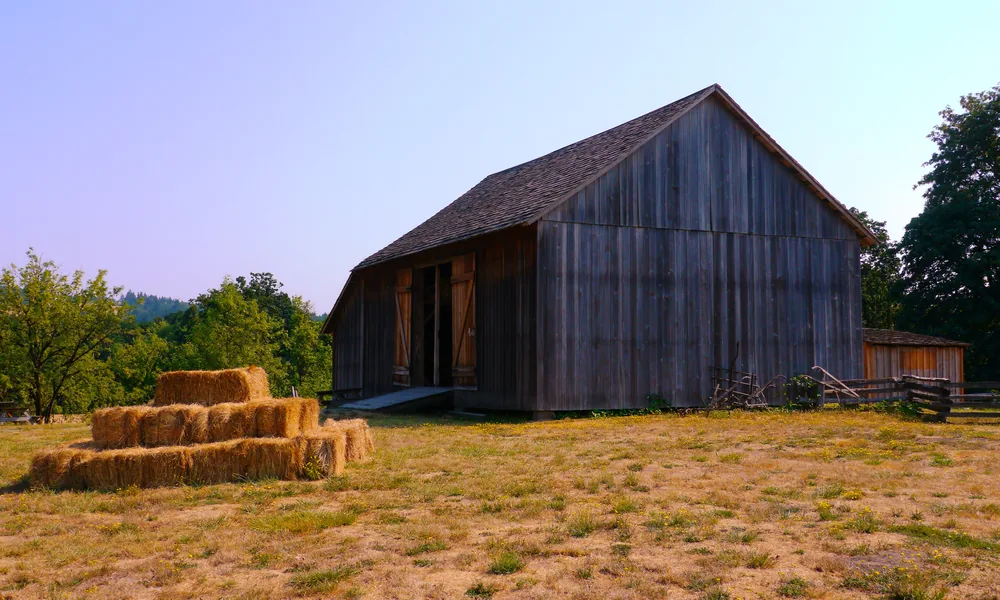
Ventilation, drying and moisture
A hay barn is a machine for moving air. Moist air has to leave the stack and the roof space before it condenses, dries the top bales unevenly or feeds mould. Fresh air has to reach the bales without driving rain onto them, and damp weather has to be handled without opening the doors to a storm. The three tools in this section cover that job from different angles: one keeps wet hay out of the barn, one dries the air inside it, and one tests every load at the door. A founder who can talk confidently about all three wins the trust of farmers who have lost hay to a damp barn before.
Harvest Tec: The Best Tool for Moisture and Preservative
Harvest Tec builds the moisture sensors and preservative applicators that fit onto balers, and they are the first line of defence for any hay barn. Its sensors read the moisture of the hay as it passes through the baler, and its applicators spray a measured dose of preservative onto hay that is slightly too damp to bale dry. For a startup, that matters because the barn cannot fix hay that arrived too wet: no amount of ventilation will save a load baled at 30 percent moisture. A founder who can offer moisture testing and preservative application as part of the service is selling a barn that starts working in the field, not at the door.
Offer the service at baling time, not as an afterthought. Work with the farmer or their contractor during the first cut, check the readings across the field, and agree a moisture limit for every load that goes into the new barn. That agreement protects both sides: the farmer knows what the barn is expected to store, and you know the stack will not heat in the first month. Keep the readings in the handover pack, with the dates, the fields and the moisture levels, so the farmer has a record of what went in and when. A granary installation faces the same problem with grain, so the language of moisture limits, drying and safe storage transfers directly, and a founder who can explain it for hay can explain it for any stored crop.
Munters: The Best Tool for Ventilation and Dehumidification
Munters builds climate systems that dry air and move it where it is needed, and its dehumidifiers are the tool to call when a hay barn has to dry a borderline load or hold a stack through a damp autumn. Desiccant dehumidification pulls moisture out of barn air even when the air is cool, which is exactly when a hay barn struggles: cold, damp weather is when the stack needs dry air most and when ordinary ventilation brings in more damp. For a startup, Munters is the supplier that turns a barn from a roof over bales into a drying system, and that is a promise a farmer understands after one wet harvest.
Size the system against the barn, not against the catalogue. A dehumidifier that is too small runs all winter and never catches up, while one that is too large costs more to run than the hay it protects. Ask Munters for a calculation from the barn volume, the tonnage and the worst moisture you expect, then put the ducting and the air paths into the drawings before the roof goes on. Drying air has to reach the stack, not just the roof space, so the ducts, the inlets and the fan positions are part of the design, not an addition after handover. Price the system honestly: it costs more up front than vents alone, but it protects the farmer against the wet years that ruin a season, and it gives you a reason to return for servicing.
Delmhorst F-2000: The Best Tool for Moisture Testing at Intake
The Delmhorst F-2000 is a handheld hay moisture meter with a probe that pushes into a bale and reads its moisture in seconds. It is a small, simple tool, and that is why it belongs in this guide: the most expensive ventilation system in the world cannot undo a wet bale, but a probe at the barn door can stop that bale from going into the stack. For a startup, the F-2000 is the tool that makes the intake rule real. Every load gets tested at the door, every reading gets written down, and every bale over the limit goes to the drying bay instead of the stack.
Make the test part of the handover, not part of the sales pitch. Show the farmer how the probe works, agree the moisture limit for the barn, and leave the meter with a written intake routine: test three bales from every load, test the centre of the bale rather than the edge, and retest anything that reads high before it is stacked. That routine is worth more than any sensor in the roof, because it catches the problem while the bale is still on the wagon. Keep a spare probe and batteries in the van, and test the meter against a known dry bale at the start of each season. A founder who tests every load is a founder farmers trust with their winter feed, and trust is what brings the next barn.
Monitoring, loading and running the business
The last three tools decide whether the barn keeps working after the builders leave. Temperature probes watch the stack through the winter, bale handling gets the crop in and out without damage, and a proper job system keeps the quotes, the crews and the customers in order. These are the tools that turn a well-built barn into a profitable business, and they are the ones a startup should learn to sell after the first few barns are built.
Barn Owl Wireless: The Best Tool for Stack Temperature Monitoring
Barn Owl Wireless makes wireless temperature sensors built for hay and grain stores, with probes that sit deep in the stack and send readings to a phone. A haystack heats from the inside, so a sensor on the wall tells you nothing: the temperature that matters is the temperature in the middle of the bales, where the air cannot reach and the heat builds up. Barn Owl puts the sensor where the heat is, and its alerts tell the farmer the moment a part of the stack starts climbing, while there is still time to pull bales out and save the rest.
Fit the probes as part of the build, not as an accessory sold later. Place them in the centre of each bay, at the height where the stack is deepest, and wire the system into the handover so the farmer leaves with the app working and the alert levels set. Walk the farmer through what each reading means, what temperature triggers a check, and what to do when it does: which bales to pull, where to put them, and when to call you. That walkthrough is the cheapest insurance a hay barn ever gets, because a stack that is watched does not burn. Include a first-winter check in the quote, and use the readings from that first season as your best sales material for the next job.
Kuhns Mfg: The Best Tool for Bale Handling and Loading
Kuhns Mfg builds bale accumulators that gather small square bales into tidy loads a grapple can lift in one bite. Anyone who has loaded a hay barn by hand knows the problem: a wagon of loose bales takes a crew all afternoon, and a wet afternoon is the one that matters most. An accumulator changes the maths. The baler drops bales onto the accumulator, the accumulator groups them into a pack, and the loader lifts the whole pack into the barn in a single movement. For a startup, that speed is what makes the loading bay work: wagons turn faster, crews finish before the rain, and the barn fills in days rather than weeks.
Plan the handling before you plan the barn, because the accumulator decides the door width, the yard layout and the stack pattern. Walk the yard with the farmer, find where the wagons come in and where the loader turns, and put the accumulator and the grapple on the same drawings as the barn. A loading bay that is too tight costs the farmer hours on every load for the life of the barn, while a bay that works pays for itself in the first harvest. Price the accumulator and the grapple with the barn, not as an afterthought, and include operator training in the handover. A barn that loads fast is a barn the farmer recommends, and a farmer who recommends you is worth more than any advert.
ServiceTitan: The Best Tool for Running the Business
ServiceTitan is the field-service platform that runs the business side of a trade startup: quotes, scheduling, dispatch, invoicing, customer records and follow-up, all in one place. A hay barn startup that is still quoting from a notebook and invoicing from memory will lose jobs to the firm that answers first, confirms the date, and sends the invoice before the farmer has to ask. ServiceTitan closes that gap. The quote goes out the same day as the survey, the crew sees the job on a phone, and the farmer gets a reminder before the build and a thank-you after it.
Set it up before the first barn, not after the tenth. Load your standard barn sizes, your ventilation options and your monitoring packages as price book items, so every quote is built from the same numbers and no job is priced from memory. Use the scheduling board to keep baling season straight, when three farmers all want a barn in the same fortnight, and use the customer records to remember what each farm stores, what moisture limit was agreed, and when the first-winter check is due. That memory is the business: a farmer who gets a call from you in the first month of storage, asking how the temperatures look, becomes a farmer who recommends you to every other farmer in the parish.
Building your first-season stack
Do not buy all nine tools at once. A hay barn startup in its first season needs three things: a way to design and price the barn, a way to test and control moisture, and a way to run the business. Pick Morton Buildings Design Studio or STACK for the design and estimating side, Delmhorst F-2000 or Harvest Tec for the moisture side, and ServiceTitan for quotes, scheduling and invoicing. That is a stack you can learn, sell and support with a small team. Add Munters drying, Barn Owl monitoring and Kuhns handling once you have two or three barns built and farmers asking for them by name.
Budget honestly. The building is the biggest cost, the concrete slab is the second, and the ventilation and drying are the third. The moisture meter and the temperature probes are small by comparison, but they are the parts the farmer notices every day, so do not cut them to win a quote. Price them as separate lines, and offer a first-winter support visit as part of the handover.
Your first-season checklist
- Survey the site before you quote, because access for wagons, drainage and power supply decide the price of a hay barn far more than the size of the building.
- Design the barn around the bale, with eave height for the loader, door width for the wagon, and air gaps between the stack and the walls.
- Agree a moisture limit with the farmer before the first load, and test every load at the door with a probe, not by feel.
- Build ventilation into the roof from the start, with ridge vents and eave inlets sized to the barn, not added after the first damp winter.
- Fit temperature probes in the centre of each bay, because the temperature that matters is the temperature inside the stack.
- Hand over a written storage routine with the barn, covering intake testing, stack checks, drying and loading out, so the farmer knows what the barn should do in every month.
Frequently asked questions
What is a hay barn?
A hay barn is a barn built to store hay for months after baling. It has a clear-span frame, high eaves, wide doors for wagons and loaders, a dry floor, and ventilation that moves moist air out of the stack and the roof space. Unlike a general farm shed, every part of a hay barn exists to keep the bales dry, cool and safe from heating until they are fed.
How dry does hay need to be before it goes into a barn?
Small square bales are usually safe at 15 to 18 percent moisture, and large round or square bales should be drier, often below 15 percent, because their centres cannot lose heat as easily. Hay baled wetter than that keeps respiring, heats up, and can mould or catch fire. Test every load with a probe at the door, and dry or treat anything over the limit before it is stacked.
How much ventilation does a hay barn need?
It depends on the size of the barn, the tonnage and the moisture of the hay, but a hay barn always needs a clear path for moist air to leave through the ridge and fresh air to enter at the eaves. The roof design sets the airflow, so the vents are sized from the barn dimensions and the stack, not from a rule of thumb. Never rely on open doors for ventilation: a barn that depends on its doors for air is a barn that gets wet in the first storm.
How do you stop hay heating up in the barn?
Stop it before it starts. Bale at the right moisture, test every load at the door, stack with air gaps so air can move through the bales, and put temperature probes in the centre of the stack. If a probe shows the temperature climbing, pull the hot bales out, spread them to cool, and check the rest of the stack the same day. A watched stack rarely becomes a dangerous one.
What size hay barn should a startup build first?
Build the size the farmer’s herd needs, not the size that looks impressive. Work out how many bales the farm feeds in a winter, add room for the loader to work and for air gaps around the stack, and size the barn from that number. A barn that is too small forces hay outside, and a barn that is too big costs the farmer money for empty space. Start with one well-sized barn and let the next job be bigger.
How much does it cost to build a hay barn?
There is no single figure, because the cost depends on the size, the frame, the slab, the ventilation and the handling equipment. The building and the concrete are usually the largest costs, followed by ventilation and drying. Get a priced design from the barn supplier and the ventilation supplier before you quote, and show the farmer the costs as separate lines so they can see what protects the hay and what can wait until a later season.
Bottom line
A hay barn startup succeeds when it sells a working store, not an empty building. The barn has to be sized around the bale, the ventilation has to move moist air out of the stack, the moisture has to be tested at the door, the temperature has to be watched through the winter, and the loading bay has to get the crop in before the rain. The nine tools in this guide cover those jobs, and a founder who learns them in order, design first, moisture second and monitoring third, can quote with confidence, build barns that keep their hay, and win the next job on the reputation of the last one. Start with one barn, commission it carefully, and let the first winter of dry, cool hay do your selling for you.

Keep what speaks to you.
Leave room for your own perspective.