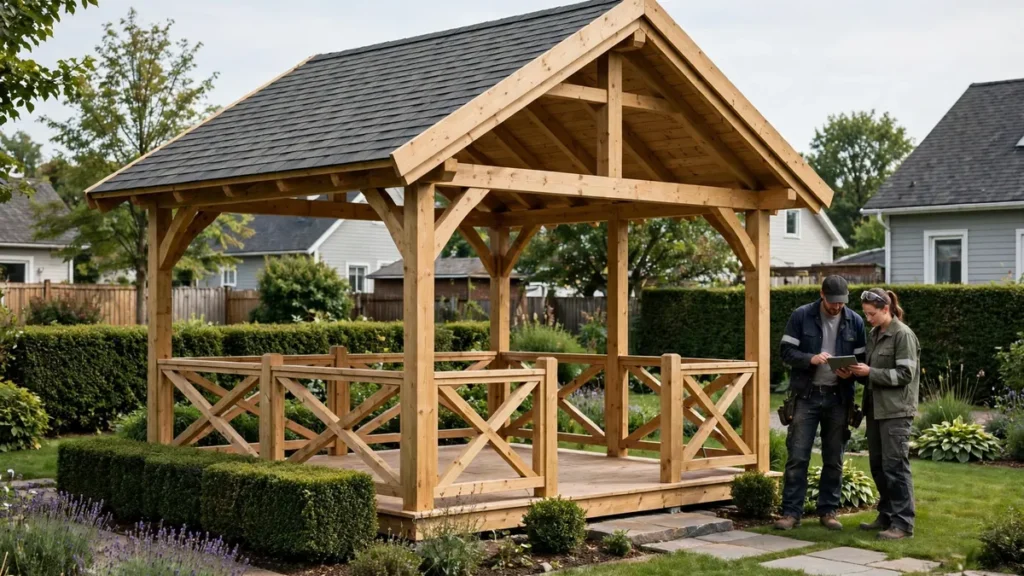
The best AI tools for gazebo startups in 2026 give a brand-new gazebo company something that used to take years to build: a complete office, a design studio, a pricing team and a customer service desk, all working from the first week. A founder with one truck, a small crew and a handful of local jobs can now answer every enquiry, design a gazebo a homeowner can picture in their own garden, price the job accurately, book the crew and chase the invoice with the same polish as a company ten times its size. That matters because the first year of a gazebo business is won or lost on the work around the build, not on how well the posts are set. The carpentry is the part a good founder already knows. The quoting, the footings, the roofing, the scheduling, the material orders and the cash flow are what sink new firms.
A gazebo startup is a very particular kind of trade business. Every project is different in shape, size, roof style, materials and ground conditions, and every homeowner wants to see the finished gazebo before they agree to pay for it. A simple square kit gazebo on a flat patio and a custom octagonal cedar gazebo with a shingled hip roof, screens, lighting and a stone base are entirely different jobs, yet both arrive through the same phone number and the same inbox. Meanwhile the founder is measuring the site, checking the slope and the drainage, ordering posts and rafters, confirming the footing depth, managing a crew and trying to keep the next three weeks of work booked. When any part of that chain is handled in a notebook, a spreadsheet and a phone full of unread messages, the whole week wobbles. A missed call becomes a lost booking, a quote that forgets the roofing or the footings eats the margin, a permit filed late pushes the build into bad weather, and a homeowner who waited days for a design will sign with the competitor who showed them a picture the same afternoon.
This guide is written for founders, not for large established contractors. Every tool below is judged on what a gazebo startup actually needs: low starting cost, no long contract, useful from the first week, and able to grow with the business from one person to a first crew and then to several crews. The focus is on the whole startup journey, from winning the first twenty gazebo projects to surviving the first quiet winter, and the tools are grouped by the job they do, so you can buy only what you need now and add the rest later. You will find a comparison table, a startup checklist and answers to the questions new gazebo builders ask most often, all judged on simple setup, honest pricing, tools that work from a phone on a job site, and software that grows without forcing a painful switch.
Key takeaways
- Start with three tools only: AI gazebo design and visualisation, AI estimating and material takeoffs, and AI customer messaging. Everything else can wait until the diary is full.
- Pick tools that charge per project or per month with no long contract, so a quiet winter month does not punish a young business.
- Use AI design visualisation to win higher-value custom gazebo work, which is where a startup makes its real margin.
- Footings and roofing are where gazebo quotes go wrong most often, so the estimating tool must handle both, not just timber and labour.
- Keep the human in charge of pricing judgement, hiring and customer relationships. AI should speed those decisions up, never make them alone.
What a gazebo startup actually sells
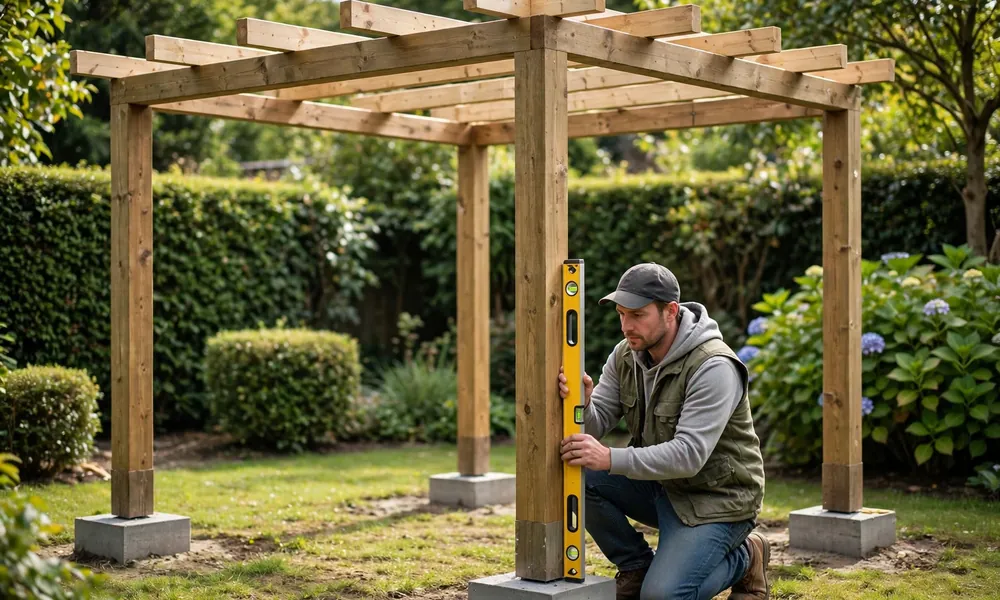
A gazebo startup does not sell timber and shingles. It sells a finished outdoor room that a homeowner can trust to stand straight, stay dry and look good for decades. That promise covers far more than the build itself. It covers the first phone call, the site visit, the design the homeowner falls in love with, the honest price, the tidy install and the follow-up visit that sorts out a sticking screen door. A founder who understands that will choose tools that support the whole promise, not just the cutting list. The tools that matter most are the ones a customer feels, even if they never see them: a fast reply, a clear drawing, a price that does not change halfway through, and a crew that arrives when it said it would.
Most gazebo work falls into three kinds of job, and each one needs different support from software. Kit installs are the fastest work. A homeowner buys a standard gazebo kit, and the startup assembles it on a prepared base, usually in one or two days. The margin is thin, the schedule is tight, and the profit comes from volume and from doing the job cleanly with no return visits. Custom builds are the opposite. The startup designs the gazebo from scratch, sources the timber, builds the footings, frames the roof and finishes the details. The margin is much better, the job takes longer, and the customer needs far more reassurance before signing. Repairs and upgrades sit in between: replacing a rotted post, re-roofing a tired gazebo, adding screens or lighting, or rebuilding a deck base under an existing structure. These smaller jobs fill gaps in the diary and often turn into full replacements later.
A startup that tries to do all three kinds of work from day one needs tools that can tell them apart. A kit install should be quoted in minutes from a fixed price list, with a short checklist and a one-day slot. A custom build needs a proper design, a detailed takeoff, a staged payment plan and a longer diary hold. A repair needs a quick site note, a photo record and a simple invoice. If the same slow quoting process is used for all three, the quick jobs become unprofitable and the big jobs get quoted too loosely. The best AI tools for gazebo startups understand that difference, or at least let the founder set up separate templates for each kind of work, so the right process follows the right job without extra thinking every time.
How to choose AI tools for a gazebo startup
Choosing software for a new gazebo business is simpler than most founders expect, because the test is always the same: does this tool save time on a real job this week, or does it only promise to save time later? A tool that needs a weekend of setup, a training course and a monthly fee before it does anything useful is the wrong tool for a startup. The right tool can be tried on the next enquiry that arrives, even if that enquiry is only a phone message asking for a rough price. Founders should trial tools on live jobs, not on demo data, and keep the ones that make the next quote faster, the next design clearer or the next invoice paid sooner.
Price matters, but the structure of the price matters more than the number. A gazebo startup has a seasonal pattern, with busy springs and summers and quiet winters, so a tool that charges a large fixed monthly fee all year round will hurt in January. The best choices for a new firm charge per project, per user or on a low monthly plan that can be paused or reduced, with no annual contract and no charge for adding a second crew member later. Founders should also check what happens to their data if they cancel. Customer records, designs and quotes belong to the business, and a tool that locks them away or charges to export them is a trap. A simple export test before signing up is worth more than any sales promise.
The best AI tools for gazebo startups in 2026
The tools below are grouped by the job they do, not by brand size. Some are well-known business platforms with AI features added, and some are smaller specialist tools built for outdoor builders. What they share is that a small gazebo startup can start using them in the first week, afford them in the first month, and keep using them as the business grows. Each one is judged on the same four questions: how fast is the setup, how honest is the pricing, how well does it work from a phone on a job site, and how well does it handle the specific details of gazebo work, such as footings, roofing, kits and custom designs.
AI design and visualisation tools
Design and visualisation is the single most valuable category for a gazebo startup, because it is the tool that wins the job. A homeowner who can see their own garden with a finished gazebo in it will sign far faster than one who is asked to imagine it from a sketch. Modern AI design tools let a founder photograph a garden, mark the position and size of the gazebo, and generate a realistic image of the finished structure in place, with the right roof shape, timber colour and proportions. The best of them allow quick changes during the site visit itself, so a customer who asks for a wider gazebo or a different roof pitch can see the new version before the founder leaves the driveway.
A good design tool also keeps the drawing honest. It should work from real measurements, not just from a pretty picture, so the gazebo that is shown is the gazebo that can actually be built on that ground. Tools that link the visual design to a materials list are especially valuable, because they stop the common startup mistake of designing a beautiful gazebo that costs far more to build than the price quoted. Founders should also look for tools that produce a simple plan the crew can build from, not only a sales image. A design that impresses the customer but confuses the installer is worse than no design at all. For a broader view of how AI design fits outdoor work, the guide to the best AI tools for landscape designers shows the same visualisation ideas applied to whole gardens, which helps when a gazebo is part of a larger garden project.
AI estimating and material takeoff tools
Estimating is where gazebo startups make or lose their money, and AI takeoff tools are built to stop the quiet losses. A founder measures the site, enters the gazebo size, roof type, timber species and footing details, and the tool produces a full materials list: posts, beams, rafters, roofing, fixings, concrete, screens and finishes, with quantities and current prices. The best tools flag the items founders forget most often, such as the extra concrete for deeper footings on a slope, the flashing where the roof meets the posts, or the delivery charge for a long timber order. That single feature can save a startup hundreds of pounds on a single custom job.
AI quoting and customer management tools
Quoting and customer management tools turn enquiries into signed jobs, and for a gazebo startup that is the whole business. The AI features that matter here are simple: a fast first reply, a quote that follows up automatically, and a clear record of every conversation. When a homeowner sends an enquiry at nine in the evening, the tool can acknowledge it at once, ask the three questions that matter most, and book a site visit into the diary. That speed alone wins jobs, because most homeowners contact two or three gazebo builders and choose the one who replies first with a clear next step.
AI scheduling and crew planning tools
Scheduling is the hidden difficulty of gazebo work, because a build depends on weather, deliveries, permits and the ground drying out after rain. AI scheduling tools help a small crew plan around those realities instead of pretending every day is the same. They can suggest the best order for jobs across a week, group site visits by area to save driving time, and warn when a two-day build has been booked into a week with only one dry day. They also make it easy to move a job when the weather turns, sending the customer a clear message with the new date instead of leaving them to wonder why nobody arrived.
AI marketing and local search tools
A gazebo startup lives or dies on local visibility, because almost every customer searches for a builder near their own home. AI marketing tools help a small firm appear in those searches without hiring an agency. They can draft service pages for each kind of gazebo work, suggest the phrases local homeowners actually use, and keep the business profile updated with fresh photos of finished gazebos. The best tools also track which enquiries came from search, from a review site or from a neighbour’s recommendation, so the founder can see where the marketing money is actually working.
AI bookkeeping and cash flow tools
Bookkeeping is the least exciting tool a gazebo startup will buy, and the one that saves it most often. Gazebo work has uneven cash flow: deposits arrive before the build, material bills arrive during it, and the final payment sometimes arrives weeks after the job is finished. AI bookkeeping tools track that pattern automatically, matching invoices to jobs, flagging overdue payments, and showing the founder how much cash is actually available after the next timber order is paid. That picture is far more useful than a simple bank balance, which can look healthy the day a deposit lands and empty the day the roofing is delivered.
AI customer messaging and review tools
Customer messaging is where small gazebo firms lose jobs without realising it, because enquiries arrive at all hours and from every channel. A homeowner may send a message through the website at midnight, follow up on a social page in the morning, and then call at lunchtime, and if those three messages land in three different places, the reply will be slow or duplicated. AI messaging tools bring every enquiry into one inbox, draft a sensible first reply, and keep the conversation in one thread. The founder still makes the decisions, but never has to hunt for the message again.
AI kit ordering and supplier tools
Kit ordering is a distinct part of gazebo work, and AI supplier tools help a startup handle it without tying up cash in stock. For kit installs, the tool can compare suppliers for the same gazebo kit, check delivery times, and warn when a kit is out of stock or when a delivery date would clash with the booked install day. For custom builds, it can track timber and roofing prices across suppliers and flag when a price has risen since the quote was written, so the founder can order early or adjust the price before the job starts.
Comparing the best AI tools for gazebo startups
The table below compares the eight categories above on the four questions that matter most to a new gazebo firm. No single tool does everything well, and a startup should not expect it to. The point of the comparison is to show where each category earns its place, and where a founder should keep the decision in human hands. Prices change often, so the cost column describes the pricing pattern to look for rather than a fixed number, and founders should confirm the current price with a free trial before committing to any monthly plan.
| Tool category | Main job | Best for | Pricing pattern |
|---|---|---|---|
| AI design and visualisation | Showing the finished gazebo in the garden | Winning custom builds | Monthly plan or per project |
| AI estimating and takeoffs | Materials lists and accurate prices | Footings, roofing and timber | Monthly plan, per estimate |
| AI quoting and customer management | Turning enquiries into signed jobs | Fast replies and follow-ups | Monthly plan, per user |
| AI scheduling and crew planning | Planning builds around weather | Crews of one to three people | Monthly plan, per user |
| AI marketing and local search | Being found by local homeowners | New firms with no reputation yet | Monthly plan, free tools to start |
| AI bookkeeping and cash flow | Tracking money per job | Deposits, materials and tax | Monthly plan, low starter tier |
| AI customer messaging and reviews | Answering every enquiry once | Evening and weekend enquiries | Monthly plan, per conversation |
| AI kit ordering and suppliers | Ordering kits and tracking prices | Kit installs and repeat builds | Free or monthly plan |
A starter stack for the first twenty gazebo jobs
The simplest starter stack for a gazebo startup has three tools: a design and visualisation tool, an estimating tool, and a quoting and messaging tool. With those three, a founder can answer an enquiry the same evening, visit the site the next day, show the homeowner a design on the spot, send a priced quote that evening, and book the build into the diary. That is the whole sales process, and it can be run by one person with a phone and a truck. Everything else can be added once the diary is full and the founder knows which part of the business is actually slowing down.
The second stage of the stack adds scheduling and bookkeeping, usually after the first ten jobs. By then the founder has a crew to coordinate, deposits to track and material bills arriving faster than final payments, and a spreadsheet is no longer enough. Scheduling keeps the crew in the right garden on the right day, and bookkeeping shows whether the business is actually making money or simply staying busy. A founder who adds these two tools at the right time will feel the business get calmer, not more complicated, because the tools take over the jobs that were previously done late at night. Homeowners thinking about the cost of a gazebo often start by reading how to save money on a new gazebo, and a startup that understands those cost worries will quote more honestly and win more of those careful buyers.
Mistakes gazebo startups make with AI tools
One common mistake is trusting the AI price without checking it against the garden. An estimating tool can only work with the measurements and conditions it is given, and if the founder enters a flat garden when the real garden slopes, the price will be wrong. The same applies to designs: a visualisation that shows a gazebo on level ground will not warn the founder about the retaining work the real site needs. The founder must still walk the garden, test the soil, check the access for deliveries and look at the drainage. AI is a calculator and a sketchbook, not a site survey, and a startup that forgets that will learn the lesson on a job where the footings cost twice what was quoted.
Another mistake is letting the tools do the talking with customers. An automated reply is a good start, but a homeowner who is spending thousands on a gazebo wants to speak to the person who will build it. A startup that hides behind chatbots and templated messages will lose jobs to a competitor who picks up the phone. The right balance is simple: let AI handle the first reply, the reminder and the paperwork, and let the founder handle the site visit, the design conversation and the price discussion. Customers remember the person, not the software, and the reputation of a gazebo startup is built one garden at a time. Trade builders face the same balance, and the guide to the best AI tools for deck builders makes the same point for deck firms that also live on site visits and personal trust.
Startup checklist for gazebo founders
Use this checklist before buying any AI tool for a gazebo startup. Each item should be answered honestly, and any tool that fails more than one item should not be bought yet, no matter how good its demonstration looks.
- Can the tool be tried on a real enquiry this week, with no long setup and no annual contract?
- Does the estimating tool ask about footings, soil, slope, roofing and access before it calculates a price?
- Does the design tool produce both a sales image for the homeowner and a buildable plan for the crew?
- Can the founder photograph a site, send a quote and check the diary from a phone with a weak signal?
- Can all customer records, designs and quotes be exported in full if the business cancels the tool?
- Does the monthly cost still make sense in a quiet winter month, when only one or two jobs are booked?
Frequently asked questions
How much should a gazebo startup spend on AI tools in the first year?
A sensible first-year budget is the cost of one small gazebo job, spread across the year, and no more. Start with three tools on low monthly plans or free tiers, and only add a tool when the diary is full enough to justify it. The most expensive mistake is paying for a full stack before the first job is won. The cheapest tools are often the best at the start, because they are simple, and a founder can move to a stronger tool later without losing customer records if the export test was done first.
Can AI design tools really show a gazebo in a real garden?
Yes, and this is now the most reliable part of the whole stack. A founder photographs the garden, enters the gazebo size and roof style, and the tool generates a realistic image of the finished structure in place. The image is not a guarantee of the final build, and it must be based on real measurements, but it helps the homeowner understand scale, proportion and roof shape far better than a sketch. The best results come from clear daylight photos taken from the angle the homeowner will actually see the gazebo from, usually the back door or the patio.
Do gazebo startups need permits, and can AI tools help with them?
Many gazebo builds need a permit or at least a check with the local authority, depending on size, height, location and whether the structure is close to a boundary. AI tools cannot apply for a permit on the founder’s behalf, but they can keep a checklist of what each local area requires, store the approved drawings, and remind the founder when a permit must be filed before the build can start. A startup should always confirm the current rules directly with the local authority for each job, because rules vary and a tool’s checklist can go out of date.
What is the hardest part of pricing a custom gazebo?
The hardest part is the ground, not the timber. Footings on a slope, poor drainage, tree roots, rock or a deep frost line can all add days of work and large amounts of concrete, and none of that is visible in a photograph of a finished gazebo. The second hardest part is the roof, because a shingled hip roof takes far longer than a simple flat roof and uses more material. A founder who prices the timber carefully but guesses the footings and the roofing will lose money on the jobs that look the most profitable.
Should a new gazebo startup offer kits, custom builds or both?
Most successful startups offer both, but in the right order. Kit installs bring fast cash flow, simple scheduling and a steady flow of reviews in the first months. Custom builds bring better margins and stronger word of mouth, but they need more design time, more estimating care and a longer diary hold. A founder who starts with kits, builds a reputation, and then takes on one custom build at a time will grow more safely than one who takes on three custom builds in the first month and discovers the footing work was underestimated on all of them.
How long does it take to build a gazebo startup that earns a living?
A realistic answer is one full season to learn the work and a second season to earn steadily from it. The first season teaches the founder which jobs make money, which gardens cause trouble and which tools actually help. The second season is when repeat customers, reviews and referrals start to fill the diary without constant advertising. AI tools shorten that learning time, because they make the quoting, design and scheduling faster from the start, but they do not replace the experience of building gazebos in real gardens through a wet spring and a dry summer.
The bottom line
The best AI tools for gazebo startups in 2026 are the ones that help a small firm win the job, price it honestly and build it on time. Start with design and visualisation, estimating and takeoffs, and quoting and messaging, and add scheduling, bookkeeping, marketing and ordering only when the diary proves they are needed. Test every tool on a real garden, from a phone, with a sloping site and a proper footing question, and keep the tools that pass that test. A gazebo startup that follows that simple order will spend its first year building gazebos and a reputation, not managing software, and that is the foundation every lasting outdoor building business is built on.

Keep what speaks to you.
Leave room for your own perspective.