
A garage installation startup builds a brand-new garage from bare ground. The crew arrives to an empty patch of garden or driveway, and weeks later the homeowner has a finished structure standing on its own slab: concrete footings, a framed shell, a roof that keeps the rain out, a sectional or up-and-over door that opens and closes properly, and the electrics wired in safely. Nothing existed before, and everything the customer pays for has to be measured, priced, ordered, and built in the right order. That is the whole job, and it is a very different job from fixing what is already there.
The difference matters because the tools are different too. A repair business lives on call-outs and quick fixes. A conversion business takes an existing garage and turns it into a room. A garage installation startup lives on drawings, takeoffs, permits, slab pours, framing crews, roofers, and door fitters — and the money is made or lost before the first concrete truck arrives.
This guide covers nine tools that fit a new-build garage business in 2026, organised by the build itself: siting and feasibility first, then measuring and takeoff, then estimating, scheduling, and tracking the build, and finally getting paid. Every tool here was chosen because it helps with a slab, a frame, a roof, or a door.
Key takeaways
- A garage installation builds a new garage from the ground up — slab, frame, roof, and door — which is a different business from converting an existing garage into a room or repairing a broken door.
- Most of the profit is decided before the build starts, so takeoff and estimating tools such as Togal.AI and Beam AI matter more than any other purchase a new founder makes.
- Site-feasibility tools such as TestFit stop the most expensive mistake in this trade: quoting a detached garage that cannot legally fit on the plot.
- Jobsite-capture tools such as OpenSpace and Buildots replace the daily drive to site with a photo record that shows the slab, the frame, and the roof as they actually stand.
- Start with three tools — one for takeoff, one for running the job, and one for money — and add the rest only when a second crew or a second build makes the gaps hurt.
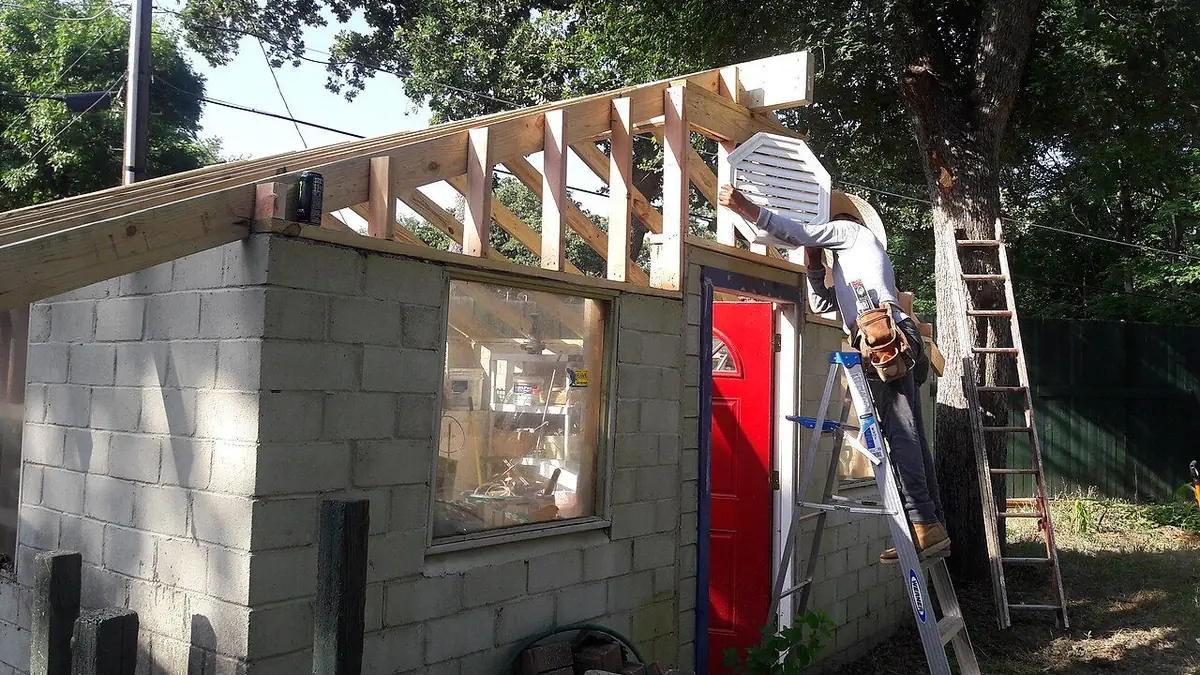
The nine AI tools at a glance
| Tool | Best for | Build stage |
|---|---|---|
| TestFit | Checking a detached garage fits the plot | Siting and feasibility |
| Togal.AI | AI takeoff from plans in minutes | Slab and frame quantities |
| Beam AI | Automated estimating and takeoff | Pricing the build |
| Procore | Running the whole build in one place | Project management |
| OpenSpace | 360-degree photo record of the site | Slab, frame, and roof progress |
| Buildots | AI progress tracking against the plan | Build tracking |
| SmartBid | Managing subcontractor bids | Roofers, electricians, and door fitters |
| Fieldwire | Tasks, drawings, and punch lists on site | Day-to-day site work |
| QuickBooks Online | Invoicing, expenses, and cash flow | Getting paid |
What makes a garage installation startup different
A new garage is a small building, and it behaves like one. The ground is surveyed and dug, footings are poured, the slab cures, then the frame goes up, then the roof, the door, and the electrics. Each stage depends on the one before it, and a delay at the slab pushes every trade behind it. A startup that cannot sequence those stages will pay a framing crew to stand on a plot with no slab to build on.
That sequence is what separates installation from the neighbouring trades. A garage conversion startup turns an existing garage into living space, working inside walls and a roof that already exist, with no foundations to dig and no new structure to weatherproof. A garage installation startup does the opposite: it creates the structure itself. The same split applies to the other garage trades. Fitting a heater or fixing a broken door spring are jobs inside a finished building; building the building is the installation trade, and the tools below are picked for that job.
The closest cousin is the carport, and the difference there is instructive too. A carport installation startup builds an open-sided shelter — posts, a roof, and a slab, with no walls, no door, and no electrics to speak of. A garage adds walls, a working door, insulation, and power, which means more drawings, more materials, more trades, and a permit file that is roughly twice as thick. The estimating has to be tighter and the scheduling has to be better, because there are simply more things that can go wrong.
So the tool stack has a clear shape: a way to check the plot before quoting, a way to measure the plans and price the materials, a way to keep the slab, frame, roof, and door stages in order, and a way to prove each stage was done properly. The nine tools below cover that shape, in the order a founder actually needs them.
The 9 best AI tools for garage installation startups
Each tool below is judged on one question: does it make a specific stage of a new garage build cheaper, faster, or less risky? Tools that only help with general office work did not make the list. Prices change, so treat any figure here as a starting point and check the current plan before you buy.
1. TestFit: AI site feasibility for a detached garage
TestFit is the tool that stops the most expensive mistake in this trade. A customer asks for a detached garage, the founder quotes from a rough sketch, and only after the deposit is paid does someone discover that the garage cannot sit where the customer wants it: a setback rule, a drainage easement, a tree protection zone, or a driveway that cannot turn a car into the door. TestFit lets a founder test a garage footprint against the real constraints of a plot in minutes, before any money changes hands. It generates feasible layouts from the site boundaries and the local rules, so the quote that goes out is for a garage that can actually be built.
The practical use is simple. At the first site visit, the founder takes the plot dimensions and the key constraints and runs a quick feasibility pass. The output is a realistic footprint with the door facing the right way and the slab sitting where the ground allows it — and that drawing becomes the basis for the quote and the first thing the customer sees.
TestFit is not a tool every garage startup needs on day one. If all your early work is attached garages on straightforward suburban plots, a tape measure and the local planning rules will do. It earns its place the moment you start quoting detached garages on awkward plots, where a wrong guess about siting can cost a whole job.
2. Togal.AI: AI takeoff from plans in minutes
Togal.AI is the takeoff tool, and takeoff is where a garage installation startup makes its money. A garage build is a long list of quantities: cubic metres of concrete for the footings and slab, lengths of timber for the frame, sheets of sheathing, square metres of roofing, fixings, insulation, and the door itself. Measured by hand from paper plans, that list takes hours and invites exactly the kind of small error that eats margin — a missed course of blocks, a roof area measured flat instead of pitched. Togal.AI reads the plans and produces the quantities automatically, with the measurements tied to the drawing so they can be checked.
The speed matters because garage quotes are competitive. A homeowner typically asks three builders for a price, and the first accurate quote back often wins the job. A founder doing takeoffs by hand can price perhaps two garages a week properly; with an AI takeoff, the same founder can price five or six, and each one is measured the same way, which means the prices are comparable and the mistakes are consistent rather than random. The tool also keeps a record of what was measured, so when the customer asks why the price changed after a plan revision, the founder can show exactly which quantities moved.
The habit that makes Togal.AI pay for itself is to run the takeoff before the site visit, not after. The quantities tell the founder what questions to ask on site, and the visit then corrects the takeoff instead of starting the pricing from scratch. Used that way, the tool turns quoting from a weekend of measuring into a same-day job — and same-day quotes win garage work.
3. Beam AI: Automated estimating and takeoff for the whole build
Beam AI sits next to Togal.AI in the stack, and the two overlap enough that a small startup should pick one of them first rather than buying both. Beam AI takes the plans and produces quantities and an estimate together, with the emphasis on speed: upload the drawings, and the software measures the slab, the frame, and the roof and prices them against the rates the founder has set. For a garage installation startup that prices the same kinds of build again and again — a single detached garage, a double, a garage with a room above — that repeatability is the point. The tenth garage prices like the first, and the founder stops reinventing the estimate every time.
Where Beam AI earns its keep is in the details that are easy to forget on a garage. The slab needs hardcore, membrane, mesh, and concrete, not just concrete. The roof needs felt, battens, tiles or sheets, ridge pieces, and gutters, not just a roof area. The door opening needs a lintel, and the electrics need a consumer unit, cable, and fittings. An automated takeoff that is set up with a proper garage template catches those items every time, while a manual estimate forgets one of them on roughly every third job. Over a year of builds, the forgotten items are the difference between a healthy margin and a busy year with nothing to show for it.
The honest limitation is setup time. Beam AI is only as good as the price library behind it, and a new founder has to load real supplier prices for concrete, timber, blocks, roofing, and doors before the estimates mean anything. Do not skip that day of work: an estimate built on default rates is a guess with good formatting, and it will misprice the slab by enough to matter.
4. Procore: Project management for the slab, frame, roof, and door
Procore is the system that holds a garage build together once the quote is accepted. A new garage touches several trades in sequence — groundworks, bricklayers or framers, roofers, door fitters, and an electrician — and each one needs to know when to arrive, what to bring, and what the previous trade left behind. Procore keeps the schedule, the drawings, the change orders, and the messages in one place, so the founder is not running the job from a phone full of text messages and a van full of paper drawings. When the roofer asks whether the frame is ready, the answer is in the system rather than in a phone call.
The most useful part of Procore is how it handles change. Garage jobs change constantly: the customer adds a side door, the ground turns out to be clay, the door supplier pushes delivery back a week. Each change moves the price and the schedule, and if it is not written down, the founder ends up paying for it. Procore records change orders against the job, so the customer signs for the extra work before it happens.
Procore is a big tool, and a one-crew garage startup will find parts of it unnecessary at first. Start with the schedule, the drawings, and the change orders, and ignore the rest until a second crew makes it necessary. Buy it for the structure it gives a growing business, not for features a one-van operation will never open.
5. OpenSpace: A 360-degree photo record of every stage
OpenSpace turns a walk around the site into a complete visual record of the build. The founder or a crew member walks the plot with a 360-degree camera, and the software stitches the walk into a navigable record that is pinned to the plan of the garage. Anyone — the founder, the customer, the building inspector — can then look at the slab before it was covered, the frame before the sheathing went on, or the roof before the covering, without driving to the site. For a garage installation startup, that record is worth more than it first appears.
The reason is that most of what matters in a garage disappears. The footings are buried, the slab is covered by the floor, the frame is hidden by sheathing and cladding, and the roof structure is hidden by its covering. When a problem appears later — a crack in the slab, damp at the base of a wall, a door that does not sit square — the question is always what was underneath, and without a record the answer is a guess. OpenSpace keeps the answer. It also keeps the customer calm: a homeowner who can see the slab pour and the frame going up from their phone stops phoning the founder for updates, and a founder who can show the work is spending less time reassuring and more time building.
The practical habit is to capture at the end of each stage, not every day: footings dug, slab poured, frame up, roof covered, door fitted. Five walks per garage, each taking ten minutes, produce a record that covers every dispute a garage startup is likely to face — and the first time a customer questions whether the insulation went in, the answer is a photo, not an argument.

6. Buildots: AI progress tracking against the plan
Buildots answers a question every garage founder asks at least once a week: are we actually on schedule, or does it only feel that way? The software compares 360-degree site captures against the project plan and reports, automatically, how much of the slab, the frame, the roof, and the finishes is genuinely complete. It flags the gap between what was planned for this week and what is standing on the plot, and it does it without anyone filling in a progress report. For a startup running two or three garages at once, that automatic answer replaces the Monday morning round of phone calls to each site.
The value is in the early warning. A frame that is two days behind does not look like a problem on a Tuesday, but it means the roofer arrives on Friday to a garage with no roof structure to cover — and still charges for the wasted visit. Buildots spots the slippage while there is still time to move the roofer or warn the customer before the customer notices.
Buildots is the most specialised tool on this list, and it makes sense only once a startup has more than one build running at the same time. A single garage, built by a crew the founder supervises in person, does not need software to report its own progress. The right moment to adopt it is the second simultaneous build.
7. SmartBid: Managing bids from roofers, electricians, and door fitters
SmartBid manages the subcontractors, and subcontractors are where a garage installation startup either makes its margin or loses it. A garage needs a roofer, an electrician, and a door fitter at minimum, and sometimes a groundworks crew and a plasterer as well. Each one needs the drawings, the specification, and a deadline, and each one needs to be chased, compared, and confirmed. Done by email and phone, that is a week of admin per garage. SmartBid puts the bid packages in one place, sends them out together, tracks who has replied, and keeps the comparison on one screen.
The practical benefit is coverage. The classic failure in a garage build is the trade that never replies, discovered three days before it is needed. SmartBid shows the gaps while there is still time to fill them, and it keeps a record of who bid what on which garage, so the founder learns which roofer is reliable and which electrician always comes in high. Over a year, that record becomes a preferred list of trades, and a preferred list is what lets a small startup quote confidently: the founder knows the roofer will turn up, the price will be close to the bid, and the door fitter will fit the door on the day the roof is finished.
SmartBid earns its subscription when a startup is pricing garages faster than it can manage the trades by hand, which is usually around the fifth or sixth build. Before that, a spreadsheet and a phone will do. The tool is also only as good as the bid list behind it, so keep the details of every local roofer, electrician, and door fitter current.
8. Fieldwire: Tasks, drawings, and punch lists on site
Fieldwire is the tool the crew actually opens on site. It holds the current drawings, the task list for the day, and the punch list of snags, all on a phone, and it works even where the signal does not. For a garage installation crew, that matters because the drawings change: the door size moves, the window position shifts, the customer adds a socket. Fieldwire makes sure the crew is working from the current drawing rather than the one printed last Tuesday, and it records who marked each task done and when.
The punch list is where Fieldwire pays for itself. The last ten per cent of a garage build is a long list of small things — a bead of sealant, a misaligned door sensor, a scuffed panel — and those are what the customer sees on handover day. A punch list in Fieldwire, with a photo attached to each item and a name against it, gets finished; one on the founder’s notepad gets lost.
Fieldwire is deliberately simple, and that is its strength. Crews adopt it because it does not ask them to learn project management; it asks them to look at the drawing, do the task, and tick it off. The founder’s job is to keep the drawings current and the task list short — no more than a day’s work at a time — and to check the punch list before the customer does. Used that way, it is the cheapest tool on this list per hour of frustration saved.
9. QuickBooks Online: Invoicing, expenses, and cash flow
QuickBooks Online is the money tool, and it sits last on this list because a garage installation startup that cannot price and build properly has no money to manage. But once the jobs are coming in, the money side is where small builders quietly fail. A garage build has stage payments — a deposit, a payment at slab, a payment at roof, and the balance on handover — and each one has to be invoiced on time, chased if late, and matched against the materials bought for that job. QuickBooks Online handles the invoicing, tracks the expenses per job, and shows the founder whether the business is actually making money or merely staying busy.
The job-costing habit is the part that matters. Every bag of cement, every delivery of timber, and every subcontractor invoice should be tagged to the garage it belongs to, so that at the end of each build the founder can see the real margin. With job costing in place, the founder learns quickly which jobs make money and which ones do not — and the next year’s quotes reflect it.
QuickBooks Online also keeps the tax side honest, which matters for a business that buys materials in bulk and gets paid in stages. Receipts are captured by photo, expenses are categorised as they happen, and the tax estimate updates through the year instead of arriving as a surprise — saving the hour a week a founder would otherwise spend on bookkeeping on a Sunday evening.
How to choose your garage installation tool stack
Do not buy all nine tools at once. A garage installation startup needs three things on day one: a way to measure and price the job, a way to run the job, and a way to get paid. That is one takeoff tool, one site tool, and one money tool. Togal.AI or Beam AI for the pricing, Fieldwire for the site, and QuickBooks Online for the money will carry a founder through the first five garages, and the rest of this list can wait until the business grows into it.
The order to add tools is the order the pain arrives. When quoting starts taking too long, the takeoff tool is already there; when the founder cannot remember which garage is at which stage, Procore or Buildots earns its place; when the subcontractors start slipping through the cracks, SmartBid arrives; and when the founder stops visiting every site every day, OpenSpace replaces the driving. Buying a tool before its pain exists is how a startup ends up paying for five subscriptions while still pricing jobs on the back of a delivery note.
One final test before buying anything: ask whether the tool knows what a garage is. A generic construction tool will treat a garage like a small house, and a garage is not a small house — it has a slab that carries a car, a door opening wider than any room in the house, and a roof that has to clear that door.
Garage installation startup checklist
- Check the plot first: confirm the detached garage fits, the access works, and the setbacks and permits are understood before quoting a price.
- Run an AI takeoff from the plans and price the slab, frame, roof, and door as separate lines, so a change in one does not hide inside the total.
- Confirm the door size, type, and delivery date in writing before the frame goes up, because the opening is built around the door, not the other way round.
- Photograph every stage — footings, slab, frame, roof — before it is covered by the next stage, and keep the record with the job file.
- Keep a written punch list from the first snag to handover, with a photo and a name against every item, and do not hand over until it is empty.
- Tag every cost to its garage and review the real margin at handover, then use that number — not a feeling — to price the next build.
Frequently asked questions
What is the difference between a garage installation and a garage conversion?
A garage installation builds a new garage from the ground up — slab, frame, roof, and door — where no garage existed before. A garage conversion takes a garage that already exists and turns it into a room, such as a bedroom or a home office. Installation needs foundations and structural work; conversion works inside an existing shell.
How much does it cost to start a garage installation startup?
The tools in this guide cost a few hundred dollars a month in total once the business is running, but the real startup cost is the equipment, the vehicle, the insurance, and the working capital to buy materials before the first stage payment arrives. Most founders start with one crew, keep the tool stack to three subscriptions, and add tools only when a second build makes the gaps obvious.
When should the garage door be ordered?
The door should be ordered as soon as the frame dimensions are fixed, and always before the frame goes up. The door opening is built around the door, so a late change to the door size means rebuilding the opening. Lead times for sectional and up-and-over doors run to several weeks, which makes the door the longest-lead item on a garage build after the roof covering. Specialist garage door installation tools help founders measure, quote, and schedule the door as its own job inside the wider build, rather than treating it as an afterthought.
Do I need a permit to build a new garage?
In most places, yes — a new detached garage needs a building permit, and sometimes planning permission as well, depending on its size, its position on the plot, and local rules. The permit file needs drawings, dimensions, and a site plan, which is one reason the feasibility and takeoff tools in this guide matter. Never start digging before the permit is in hand.
How long does a garage installation take?
A straightforward single garage typically takes four to eight weeks from breaking ground to handover, depending on the ground, the weather, and how quickly the trades can be scheduled. The most common cause of delay is not the building work itself but the gaps between trades, which is why the scheduling and tracking tools in this guide earn their keep.
What is the biggest mistake new garage installation startups make?
The biggest mistake is under-pricing the slab. The footings and the slab are the most expensive single stage of a garage build, and they are also the hardest to estimate from a quick look at a garden. Ground conditions vary, spoil has to go somewhere, and concrete is ordered by the cubic metre with no room for a guess. Founders who price the slab properly, measure it with a takeoff tool, and confirm the ground with a site visit protect their margin on every job. Those who guess the slab price spend the year building garages for free.
The bottom line
A garage installation startup is a small-building business, and its tools should match the build: feasibility before quoting, takeoff before pricing, scheduling before the first trade arrives, a photo record before each stage disappears, and honest job costing at handover. The nine tools in this guide cover that sequence, from TestFit on the plot to QuickBooks Online in the office.
Start with three — one for takeoff, one for the site, and one for the money — and add the rest as the business grows. A garage that is priced properly, built in the right order, and handed over with an empty punch list is a garage that makes money, and a founder who can repeat that a dozen times a year has a business worth building.

Keep what speaks to you.
Leave room for your own perspective.


