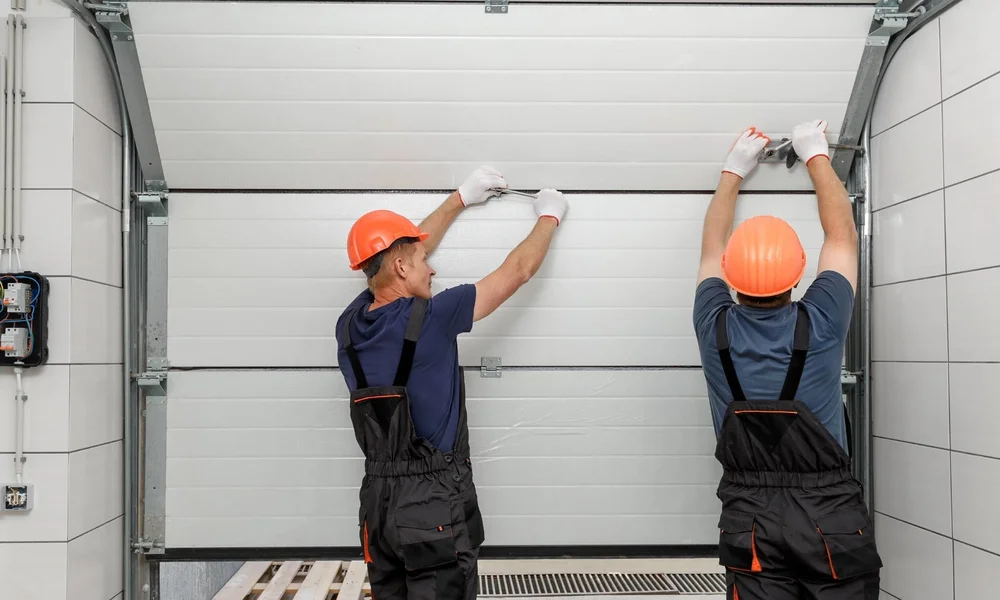
A new garage door installation is the most satisfying job in the trade and the easiest one to lose money on. When the door is right, the homeowner gets a quieter house, a warmer garage, and a frontage that looks ten years younger. When the door is wrong, the problem shows up every single day: a panel that rubs, a seal that lets in draughts, an opener that strains, or a spring that was never matched to the weight of the door. The difference between those two outcomes is rarely the door itself. It is the measuring, the ordering, the scheduling, and the checks that happen before the van ever leaves the yard.
That is why a garage door installation startup is a different business from a general repair round, even though the two share a van, a ladder, and many of the same customers. An installation is a planned, two-person, half-day job with a made-to-order product at its centre. The door is measured weeks in advance, built to that opening, delivered on a set day, and fitted in a fixed sequence of tracks, springs, panels, and opener setup. There is no room for improvisation on the day, because a door that is a few millimetres out cannot be trimmed to fit, and a spring ordered for the wrong door weight is a safety risk, not a delay.
This guide compares nine AI tools built for that installation workflow in 2026: door visualizers that sell the finished look before a deposit is paid, measurement tools that turn photos into accurate opening sizes, scheduling and crew tools that protect a two-person install day, photo records that prove the work was done properly, and opener and review tools that turn one installation into repeat work and referrals. Every tool was judged on the same practical questions: does it make a new-door installation faster, safer, or easier to sell, does it work from a phone on a job site, and can a small team afford it in the first year?
Key takeaways
- Sell the finished door with a visualizer before you ask for a deposit. A photo of the new door on the customer’s own home closes sales that a price list never will.
- Measure twice with software, not memory. AI measurements from photos catch the out-of-square openings and low headroom that cause most installation-day failures.
- Protect the install day. A two-person crew, a fixed arrival window, and a parts checklist matter more than any extra feature in your software.
- Match the spring to the door, every time. Torsion spring sizing is a safety calculation, not a guess, and the record should be kept by address.
- Photograph every stage of the fit. Track brackets, spring tension, opener limits, and the final safety checks are your proof of work and your best marketing.
Best AI Tools for Garage Door Installation Startups at a Glance
The table below gives a quick view of all nine tools, what each one does best on an installation job, and what it costs to start. The sections that follow explain how to use each one on a real new-door installation, what to check before paying, and where small teams usually go wrong.
| Tool | Main job | Best for | Starting price | Standout feature |
|---|---|---|---|---|
| Clopay Door Imagination System | Door design and visualisation | Selling the finished look | Free to use | Realistic door preview on a photo of the home |
| Amarr Garage Door Designer | Door configuration | Style, colour and window choices | Free to use | Side-by-side style comparisons |
| Wayne Dalton Garage Door Design Center | Door configuration | Carriage house and modern styles | Free to use | Designs saved and shared with the customer |
| Hover | Measuring from photos | Accurate opening sizes | Custom pricing | 3D measurements from smartphone photos |
| CompanyCam | Photo records | Proof of work per address | From about $29 per user per month | Time-stamped photos tied to each job |
| FieldPulse | Scheduling and dispatch | Two-person install crews | From about $69 per month | Install-day checklists and customer updates |
| ClockShark | Crew time tracking | Job costing per installation | From about $40 per month | GPS clock-ins from the job site |
| Podium | Reviews and messaging | Winning local trust | Custom pricing | Review requests sent after handover |
| LiftMaster myQ | Smart opener setup | Opener pairing and handover | Free app; opener hardware extra | Phone control and alerts for the homeowner |
Why a New-Door Installation Business Is Different
A repair business lives on speed. A spring snaps, a cable comes off, or a door comes off its track, and the customer needs someone today. An installation business lives on sequence. The sale, the measure, the order, the delivery, and the fitting day all depend on the step before them, and a mistake early in the chain is expensive to fix later. A door ordered half an inch too wide cannot be fitted at all. A door ordered without the right headroom clearance leaves the crew standing in a driveway with a product that will not go in. That is why installation startups need tools that protect the order of work, not just tools that answer the phone faster.
The product itself is the second difference. A garage door is the largest moving part of a home, and it is made to order in a way that few other home products are. Sectional doors, roller doors, side-hinged doors, and carriage-house styles each need different tracks, different springs, and different clearances. Insulated steel, timber-effect, aluminium, and glass-panel doors behave differently in wind, cold, and daily use. The installer has to translate a homeowner’s taste into a specification that the factory can build, and then translate that specification back into a price the homeowner understands. Tools that show the finished door, record the exact measurements, and keep the specification attached to the job are worth more here than any generic quoting template.
The third difference is the crew. A new-door installation is almost always a two-person job: one person holds, levels, and steadies while the other fixes, tensions, and tests. That makes scheduling harder than a one-technician repair round, because both people, the van, and the door delivery have to arrive together, and a delay for one person delays the whole day. The best AI tools for garage door startups cover the wider business, including emergency repairs and opener servicing, and they are a useful companion read. This guide stays narrow on purpose: everything here is judged on whether it helps a new door go in correctly, safely, and on schedule.
The 9 Best AI Tools for Garage Door Installation Startups in 2026
Each tool below was chosen because it solves a specific installation problem, from the first sales visit to the final safety check. You do not need all nine on day one. Start with a visualizer, a measuring tool, and one scheduling system, then add the rest as your install diary fills up.
1. Clopay Door Imagination System: The Best Tool for Selling the Finished Door
Most homeowners cannot picture a new garage door. They know their old door looks tired, and they know they like a neighbour’s door, but they cannot tell whether a carriage-house style, a modern flush panel, or a glass-and-aluminium design will suit their own house. The Clopay Door Imagination System closes that gap by placing a realistic image of the chosen door onto a photograph of the customer’s own home. The effect on a sales visit is immediate: the conversation moves from price to preference, and the customer starts choosing between two doors they like instead of asking whether they need a new one at all.
For an installation startup, the practical value is in the deposit. A customer who has seen their home with the new door is far more willing to pay a deposit on the spot, and a deposit is what turns a quote into a confirmed order. Use the visualizer at the first visit, save the two or three designs the customer likes best, and attach those images to the quote. When the door arrives weeks later, the same images remind the crew exactly which style, colour, and window layout was agreed, which removes the most common source of installation-day arguments.
2. Amarr Garage Door Designer: The Best Tool for Style, Colour, and Window Choices
Choosing a garage door is a design decision as much as a building decision, and the Amarr Garage Door Designer is built for the part of the sale where taste matters most. It lets a homeowner work through panel styles, colours, window shapes, and decorative hardware in a structured way, comparing options side by side instead of flipping through a paper brochure. That structure helps a new installer too, because it turns a vague request for something that looks nice into a short list of concrete choices.
The designer works best when the installer guides the session rather than leaving the customer alone with it. Ask about the house style first, then narrow the choices to two or three designs that suit the property and the budget, and use the tool to show the differences clearly. A customer who understands why an insulated steel door costs more than a basic single-skin panel is less likely to be surprised by the quote, and more likely to accept it. Save the final design with the customer’s name and address, and treat it as part of the order record, not as a sales toy to be forgotten after the visit.
3. Wayne Dalton Garage Door Design Center: The Best Tool for Carriage House and Modern Styles
Some houses need a door with character, and the Wayne Dalton Garage Door Design Center is strongest where style is the selling point. Carriage-house designs, with their crossbuck patterns and decorative hardware, suit older and traditional homes, while the clean lines of the modern aluminium and glass ranges suit new builds. The design center lets customers see those styles on a home photograph, which matters because a carriage-house door that looks charming in a catalogue can look wrong on the wrong house, and a modern glass door can look cold on a cottage.
For an installation startup, the design center is also a quoting aid. When the customer has settled on a style, the saved design becomes the specification the installer works from: the model, the finish, the windows, and the hardware are all recorded in one place. That record travels with the job from the sales visit to the order and then to the fitting day, so the crew does not have to guess which of three similar designs was agreed. Share the saved design with the customer by message or email, and ask them to confirm it in writing before the order goes to the factory.
4. Hover: The Best Tool for Measuring Openings from Photos
Measuring a garage opening sounds simple until you meet the real thing. Openings are rarely square, brickwork is rarely level, headroom is often lower than the homeowner thinks, and side room can disappear behind pipes, shelving, or a fuse box. A tape measure in inexperienced hands records what the measurer expected to find, not what is actually there. Hover takes a different approach: the installer photographs the outside of the property with a smartphone, and the software builds a three-dimensional model with measurements for the openings, the walls, and the roofline.
For a garage door installation startup, that model is valuable twice over. First, it gives an accurate opening size before the order is placed, which is the single most important number in the whole job. Second, it creates a visual record of the property that the installer can check from the office, which means a second opinion on a tricky opening does not need a second visit. Low headroom, a sloping driveway, or a lintel that needs attention can all be spotted on the model before the door is ordered, and the price can be quoted with the real work included instead of discovered on the day.
Hover uses custom pricing, so ask for a quote based on how many properties you expect to measure each month, and trial it on real openings before committing. It is not a replacement for a final on-site check with a tape and a level before the door is fitted, because no software can feel a wall for plumb or test whether a floor is level. Treat it as a measuring aid that makes the first measure far more accurate, and always confirm the critical dimensions by hand before the order leaves your desk.
5. CompanyCam: The Best Tool for Photo Records of Every Installation
A new garage door installation is judged for years, and the installer’s best protection is a clear record of how it was fitted. CompanyCam is a photo documentation app built for trade crews: every photo is time-stamped, tagged to the job and the address, and stored where the whole team can find it. On an installation, that means a record of the opening before work starts, the track brackets as they are fixed, the spring tension settings, the opener limits, and the finished door from inside and out.
The practical payoff shows up in three places. First, if a customer reports a problem weeks later, the installer can check the photos and see whether the issue is a fitting fault, a part failure, or damage after handover, instead of guessing. Second, the photos become a training record for new installers, who can see exactly how a tidy installation should look at each stage. Third, before-and-after photos are the most convincing marketing a garage door startup has, because they show real work on real houses rather than catalogue images.
6. FieldPulse: The Best Tool for Scheduling Two-Person Install Crews
An installation diary is a puzzle. Two installers, one van, a door delivery, and a customer who has taken the morning off work all have to line up, and a single overrun can push the next job into the next day. FieldPulse is a field service platform that handles that puzzle properly: jobs are scheduled with their crew size, travel time, and duration, the customer gets updates as the day approaches, and the install-day checklist travels with the job so nothing is forgotten on site.
For a garage door installation startup, the checklist feature is the quiet winner. A new-door fit has a fixed sequence: check the opening, fit the tracks, hang the panels, tension the springs, fit the opener, set the limits, test the safety reverse, and walk the customer through the finished door. When that sequence lives in the job record, a less experienced second installer can follow it without asking, and the lead installer can see at a glance which steps are done. The customer updates matter too, because a homeowner who knows the crew is on the way is far more patient about a half-hour delay than one who has heard nothing.
7. ClockShark: The Best Tool for Knowing What Each Installation Really Costs
Most new installation businesses guess their job costs. They know the door price and the day rate, but they do not know how long each type of installation actually takes, how much travel time each job absorbs, or which crew combinations are fastest. ClockShark answers those questions with GPS time tracking built for field teams: installers clock in from the job site on their phones, the time is tied to the job and the address, and the owner can see the true labour cost of every installation.
That matters because installation pricing is where young businesses quietly lose money. A standard single sectional door might take three hours with an experienced pair, while a double door with a low headroom track can take six, and a timber-effect door with glass panels can take longer still. If all three are priced as a standard half-day job, the difficult ones are done at a loss. ClockShark turns those differences into numbers, so the next quote for a similar door reflects the real time, and the business can see which jobs are profitable and which are not.
8. Podium: The Best Tool for Turning Installations into Reviews
A garage door installation is a high-trust purchase, and most customers choose their installer by reading reviews from neighbours. Podium is a messaging and review platform that makes that process simple: after the handover, the customer gets a short message with a link to leave a review, and any reply or question comes back into one inbox the installer can answer from a phone. The timing matters, because a customer asked on the day the new door is working beautifully is far more likely to leave a detailed review than one asked three weeks later.
For an installation startup, Podium’s value is in local search. Garage door work is won street by street, and a steady stream of recent reviews mentioning new doors, tidy fitting, and fair prices does more for the next month’s diary than any paid advert. The messaging side helps too: customers ask about opener remotes, safety sensors, and maintenance, and a quick answer in the same thread keeps the relationship warm for the service visit a year later.
9. LiftMaster myQ: The Best Tool for Smart Opener Setup and Handover
Most new garage doors are fitted with a smart opener, and the handover is where many installations fall short. The door works, the remote works, but the homeowner’s phone was never paired, the safety sensors were never explained, and the app was never opened. LiftMaster myQ is the app that pairs with LiftMaster openers, giving the homeowner phone control, open and close alerts, and schedules for the door, and it is the tool the installer should set up before leaving the property.
For an installation startup, myQ changes the handover from a wave goodbye into a short demonstration. Pair the homeowner’s phone, show them the open and close alert, test the safety reverse together, and show them how to add a family member or a delivery driver. That ten-minute demonstration prevents the two most common aftercare calls: the door that was left open overnight and the remote that was never the problem in the first place. It also creates a natural moment to mention the annual safety service, which is the repeat work that keeps an installation business steady between new-door jobs.
Building Your Installation Starter Stack
You do not need nine tools in the first month. The starter stack for a garage door installation startup has three layers, and each layer earns its place by solving one problem well. The sales layer is a visualizer and a measuring tool: Clopay Door Imagination System or Amarr Garage Door Designer to sell the finished look, and Hover to measure the opening accurately. The delivery layer is scheduling and records: FieldPulse to protect the install day and CompanyCam to prove the work. The aftercare layer is Podium for reviews and myQ for the opener handover. Everything else can wait until the diary is full.
That order matters because each layer pays for the next. A visualizer wins deposits, and deposits fund the scheduling tool. Accurate measurements prevent the wrong door, and preventing one wrong door pays for a year of measuring software. Photo records prevent disputed call-backs, and prevented call-backs pay for the review tool. If a tool cannot point to the money it saves or the work it wins, it does not belong in a small stack, however impressive its demonstration looks. The best AI tools for door installation startups cover the wider fitting trade, including entry and interior doors, and they show how the same three-layer pattern works when the product is a different kind of door.
What a New Garage Door Installation Really Costs to Run
The price of a new garage door is the part the customer sees, but the cost of installing it is the part the business has to manage. The door itself, the tracks, the springs, the opener, and the fixings are the obvious costs. The hidden costs are the measure visit, the delivery wait, the two-person crew for half a day, the travel, the disposal of the old door, and the aftercare calls. A startup that prices only the visible parts will work hard and still lose money, because the hidden costs arrive on every job.
Spring sizing deserves special attention, because it is both a cost and a safety issue. Torsion springs are matched to the weight and height of the door, and the wrong spring makes the door heavy to lift, hard on the opener, and dangerous if it fails. Winding a torsion spring is the most hazardous part of the installation, and it should only be done by a trained installer with the right winding bars and a clear procedure. Record the spring size, wire gauge, and number of turns for every door by address, because that record is what makes the first service visit quick and safe a year later.
Customers often treat a new door as the start of a wider garage improvement, sorting, shelving, and storage once the old door is gone. The best AI tools for garage organization startups cover that side of the garage, from layout design to heavy storage, and they are worth knowing about if your customers start asking for the full tidy-up as well as the new door. For the installation business itself, the pricing rule stays simple: quote the door, the fitting, the opener, the disposal, and the aftercare as separate lines, and review the true time per job every month until the price list matches reality.
Garage Door Installation Startup Checklist
- Measure the opening twice, by hand and with software, and record width, height, headroom, side room, and whether the opening is square.
- Confirm the door specification in writing with the customer, including style, colour, windows, insulation, and opener, before ordering.
- Match the torsion spring to the door weight and height, and record the spring size and turns by address.
- Schedule the two-person crew, the van, and the door delivery together, with travel time and a buffer for overruns.
- Photograph every stage of the fit, from the bare opening to the final balance test and safety reverse check.
- Pair the smart opener with the customer’s phone, demonstrate the alerts, and book the first annual safety service before leaving.
Frequently Asked Questions
How much do AI tools cost for a garage door installation startup?
A starter stack costs very little. The door visualizers are free, a measuring tool and a photo record app start from about $30 to $70 a month each, and a scheduling platform starts from about $69 a month. A realistic first-year budget is $150 to $300 a month for software, which is less than the cost of one wrong door order. Add review and time-tracking tools once the diary is full, and judge each one on the money it saves rather than the features it lists.
Can AI really measure a garage door opening accurately?
AI measuring tools are accurate enough to quote and order with confidence on most standard openings, especially when the photos are taken carefully in daylight. They are not a replacement for a final hand check with a tape and a level, because they cannot feel whether a wall is plumb or a floor is level. Use software for the first measure and the quote, then confirm the critical dimensions on site before the order is placed and again on the morning of the fit.
Do I need a separate tool for smart opener installation?
Yes, in practice. The opener has its own setup, limits, safety sensors, and phone pairing, and it deserves its own step in the handover. The maker’s app, such as myQ for LiftMaster openers, handles pairing and alerts, while your job record should note the opener model, the remote count, and the safety test results. Never leave a smart opener unpaired, and always test the safety reverse with the customer watching.
How long does a new garage door installation take?
A standard single sectional door usually takes three to four hours with an experienced two-person crew, while a double door or a low-headroom installation can take five to six hours. The first door on a new estate can take longer if the opening needs preparation, and a timber-effect or glass-panel door takes longer than a plain steel panel. Quote the time honestly, leave a buffer in the diary, and never promise a morning finish on a job you have not measured.
Should a garage door installation startup also do repairs?
Many do, and repairs are a useful way to fill quiet days and meet future installation customers. The two kinds of work need different diary rules, though: repairs are short, urgent, and often one-person, while installations are long, planned, and two-person. Keep installation days protected, take repair work around them, and never let an emergency repair push a booked installation into the next day without telling the customer first.
What is the single most important tool for a new garage door installation company?
A measuring tool you trust. Everything in the business depends on the opening size: the door order, the spring, the track, the price, and the fitting day. A visualizer wins the sale, but a wrong measurement loses the job. Measure twice, record the numbers by address, and confirm them by hand before ordering, and the rest of the stack becomes far easier to run.
The Bottom Line
A garage door installation startup wins on accuracy, not on speed alone. Sell the finished door with a visualizer, measure the opening with software and confirm it by hand, protect the two-person install day with a proper diary, and finish every job with photos, a paired opener, and a demonstrated safety check. Start with three tools, keep one record per household, and add to the stack only when a real job shows the gap. Do that consistently, and each new door becomes the advertisement for the next one.

Keep what speaks to you.
Leave room for your own perspective.