
The best AI tools for farmers in 2026 do far more than collect data. They turn satellite images, soil sensors, weather forecasts, and animal records into clear daily decisions about when to plant, water, spray, feed, and sell. For a working farm, that shift matters because every decision carries a cost, and a wrong call on irrigation or harvest timing can erase a whole season of careful work.
Farming has always depended on reading the land, and experienced growers can spot trouble in a field long before it shows up in a yield report. What has changed is the scale of what one person can watch. A single farm may now cover hundreds of acres, several crops, and a herd of animals, and no one can walk every row every day. The best AI tools for farmers fill that gap by watching everything at once and flagging only the fields, animals, or machines that need attention right now.
This guide compares the leading tools by what they actually do on a real farm, not by their marketing claims. You will find honest strengths and limits for crop monitoring, livestock care, weather planning, soil and irrigation management, machinery, and market pricing, plus a comparison table, a buying checklist, and answers to the questions farmers ask most before spending money on new technology.
Key takeaways
- Start with one clear problem, such as irrigation timing or herd health, and choose a tool built for that job rather than a platform that promises everything.
- Satellite and drone imagery pay for themselves fastest on larger fields, while soil sensors and weather tools help farms of almost any size.
- Livestock tools earn their keep by catching illness days earlier than a visual check, which cuts treatment costs and losses.
- Free trials and small pilot areas are the safest way to test a tool before paying for a full season.
- No AI tool replaces walking the field, so use the alerts as a shortlist and confirm the important ones in person.
How the Best AI Tools for Farmers Compare
Farm technology comes in many shapes, from a phone app that reads a photo of a leaf to a full platform that tracks every acre, animal, and invoice. The table below gives a quick side-by-side view of the main types of tools, what each one does best, and who it suits. Use it to narrow the field before reading the detailed sections that follow.
| Tool type | Best for | Typical strength | Watch out for |
|---|---|---|---|
| Crop monitoring | Large arable farms | Early stress and disease alerts | Needs clear imagery and ground checks |
| Livestock monitoring | Dairy, beef, and poultry farms | Early illness and heat detection | Sensor and tag costs add up |
| Weather and forecasting | Almost every farm | Field-level rain and frost alerts | Accuracy varies by region |
| Soil and irrigation | Irrigated crops and orchards | Water savings and even growth | Sensor placement takes care |
| Machinery and equipment | Mechanised farms | Less downtime and fuel waste | Works best on newer machines |
| Market and pricing | Farms selling direct or forward | Better timing for sales | Prices move for many reasons |
| Farm management | Mixed and multi-field farms | One record for the whole farm | Setup takes real time |
What Makes a Farm AI Tool Worth Paying For
A good farm tool earns its place by saving time, saving inputs, or preventing a loss that would cost far more than the subscription. The clearest test is simple: after one season, can you point to a decision the tool changed and a number attached to it? If the answer is yes, the tool is working. If the answer is a vague feeling that the farm is more modern, the money may be better spent elsewhere.
Accuracy matters more than the number of features. A disease alert that is right eight times out of ten is useful because it tells you where to look first. An alert that cries wolf every week is worse than no alert at all, because it trains everyone to ignore the system. Ask vendors for real accuracy figures from farms like yours, and ask what happens when the tool is wrong.
Ease of use matters just as much. The best tools work from a phone in the field, need little training, and keep working when the signal is weak. If a tool needs a desktop computer, a long manual, and a perfect connection, it will sit unused during the busiest weeks of the year, which is exactly when it should be helping most.
Finally, check how the tool handles your data. Your field maps, yield history, and animal records are valuable, and you should know who can see them, whether you can export them, and what happens if you cancel. A tool that locks your own farm records behind an export fee is a poor long-term partner, however good its first season looks.
Crop Monitoring: Seeing Problems Before They Spread
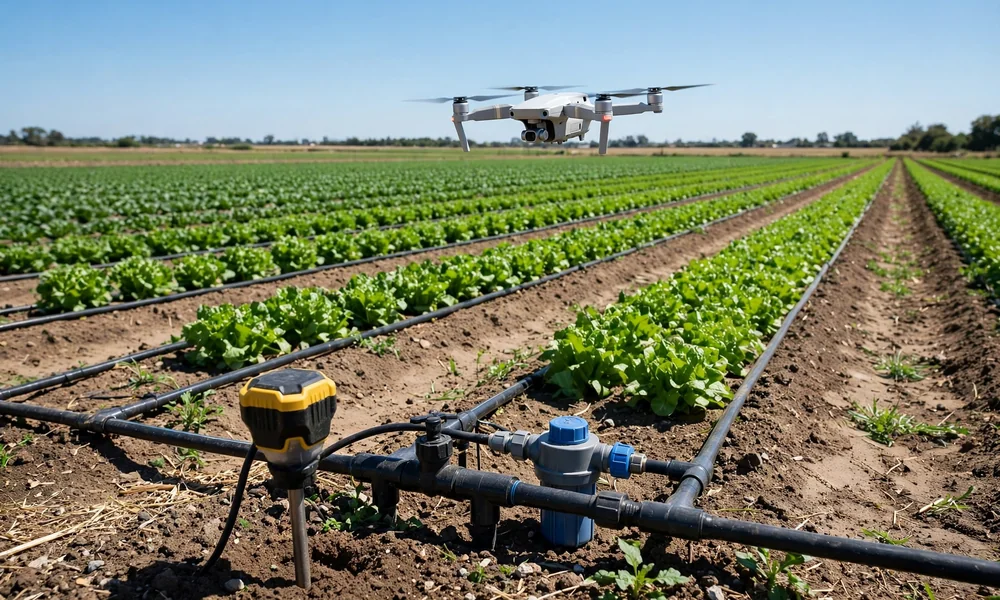
Crop monitoring tools use satellite images, drone flights, and phone cameras to track how plants are growing across every field. They turn those images into maps that show which areas are thriving, which are stressed, and which are falling behind. Instead of walking every acre, a farmer can open a map in the morning and see the five spots that need a visit that day.
The most useful feature is early stress detection. Changes in leaf colour and growth that are invisible to the naked eye often show up in imagery days before a problem becomes obvious. That early warning can mean the difference between treating a small patch and losing a whole field to disease or pests. The tools work best when flights or satellite passes happen regularly, so a weekly rhythm matters more than a single perfect image.
Many crop tools also estimate yield and suggest variable-rate application maps, so fertiliser and spray go where they are needed instead of being spread evenly across strong and weak ground alike. Used well, this can cut input costs and reduce waste, and it can also improve the evenness of a crop at harvest. The savings are real, but they depend on having machinery that can follow a variable-rate map.
Phone-based tools that identify diseases and pests from a photo are a good starting point for smaller farms. They cost little, need no drone, and give a useful second opinion when a leaf looks wrong. They are not a replacement for an agronomist, and their accuracy drops on unusual varieties or in poor light, but as a quick check in the field they are hard to beat for the price.
Livestock Monitoring: Healthier Animals, Fewer Surprises
Livestock tools track animals with sensors, cameras, and smart tags, watching movement, feeding, temperature, and behaviour around the clock. When a cow eats less, moves less, or spends more time lying down, the system flags it, often a day or two before a person would notice. That early warning is the main reason these tools pay for themselves on dairy and beef farms.
Heat detection is another strong use. Missed heats cost money in lost breeding days, and sensors that track activity and mounting behaviour can catch heats that happen overnight or in a busy shed. For dairy farms, even a small improvement in detection rates can add up to a meaningful gain over a year, and the same sensors often double as health monitors.
Camera systems in barns and poultry houses can count animals, watch feeding behaviour, and spot lameness or distress without anyone entering the building. This is valuable because frequent human visits can stress animals, and because problems often appear first in the quiet hours. The best systems learn what normal looks like for each group and only alert when something genuinely changes.
For farmers who keep animals alongside crops, the animal-health side of farm technology deserves the same careful look as the crop side. The principles are the same: early detection, fewer losses, and better use of labour. Readers who want a closer look at animal-focused technology can explore the best AI tools for veterinarians, which cover the diagnostic and monitoring systems that many livestock tools build on.
Weather Tools: Planning Around Rain, Frost, and Heat
Weather is the one factor no farmer controls, so tools that forecast it well are useful on almost every farm. Modern farm weather tools go beyond a general regional forecast and give field-level predictions for rain, temperature, wind, and humidity. That detail matters when deciding whether to spray today, cut hay tomorrow, or protect a crop from frost tonight.
Spray timing is one of the clearest wins. Spraying just before rain wastes product, while spraying in strong wind drifts it onto the wrong ground. A tool that gives an hour-by-hour window for each field helps a farmer pick the right moment and avoid a wasted pass. Over a season, those saved passes add up to real money and less chemical use.
Frost alerts are equally valuable for fruit growers and vegetable farms. A warning sent the evening before a cold night gives time to start frost protection, cover crops, or run irrigation. Without that warning, the first sign of trouble is often damaged blossom in the morning, when it is already too late to act.
Good weather tools also track growing degree days, soil temperature, and disease risk based on humidity and leaf wetness. These numbers help with planting dates, harvest planning, and deciding when a fungicide is actually needed rather than spraying on a fixed calendar. The result is fewer wasted applications and better timing.
Soil and Irrigation: Watering Only Where It Is Needed
Soil sensors measure moisture, temperature, and sometimes nutrients at different depths, and irrigation tools use that data to decide when and how much to water. Instead of watering on a fixed schedule, a farmer waters when the soil actually needs it, which saves water, energy, and pumping costs while keeping growth even across the field.
The savings can be large on irrigated farms, especially where water is expensive or limited. Overwatering does more than waste money: it can wash nutrients away from the roots, encourage disease, and compact the soil. Underwatering at a critical growth stage can cut yield sharply. A sensor-based system helps avoid both mistakes by showing what is happening below the surface.
Placement is the part most farmers get wrong at first. A sensor in the wettest corner of a field will say everything is fine while the dry end suffers, and a sensor in a wheel track will give readings that mean nothing. Most suppliers recommend several sensors across different soil types and positions, and it is worth following that advice even if it costs more at the start.
Smart irrigation controllers can automate valves and pumps, turning water on and off by zone based on sensor readings and the weather forecast. This is a major time saver on large irrigated farms, where manual irrigation can take hours each day. Automation also helps at night, when watering is often more efficient but nobody wants to be out in the field.
Land care and ground management follow similar logic on a smaller scale, and the same habit of watching conditions field by field applies to lawns, turf, and amenity land as well. Farmers who also manage grassland, gardens, or turf areas may find the best AI tools for lawn care companies useful for that side of the work, since they cover scheduling, condition monitoring, and route planning for outdoor ground care.
Machinery and Equipment: Less Downtime, Lower Fuel Bills
Farm machinery is expensive to buy and expensive when it breaks down at the wrong moment. AI tools that monitor tractors, harvesters, and other equipment watch engine data, fuel use, and wear patterns, and warn when a part is likely to fail. A warning a week before harvest is worth far more than a repair in the middle of it.
Telematics systems track where machines are, how hard they are working, and how much fuel they use. This helps a farm manager spot an inefficient route, a machine idling for hours, or a job that could have been done with a smaller tractor. Small changes in how machines are used can cut fuel bills noticeably over a season.
Guidance and autosteer systems use satellite positioning to drive straight, even lines, which reduces overlaps and missed strips. Less overlap means less seed, fertiliser, and fuel wasted on ground that has already been covered. For large arable farms, the savings from guidance alone can justify the investment within a year or two.
Older machines can often be fitted with aftermarket sensors and guidance kits, so a full fleet replacement is rarely necessary. Ask vendors which machines they support and what the installation involves. A system that only works on the newest models is a poor fit for a farm running a mix of ages.
Market and Pricing Tools: Selling at the Right Moment
Growing a good crop is only half the job, and selling it well is the other half. Market tools track prices for grain, livestock, fruit, and vegetables, and use trends, weather, and demand signals to suggest when to sell and when to hold. They cannot predict the future, but they can stop a farmer from selling on the worst day of the month by accident.
The best market tools are honest about uncertainty. They show a range of likely prices rather than a single confident number, and they explain what is driving the market. A tool that simply says prices will rise, without saying why, is not giving a farmer anything useful to act on.
Direct-selling farms benefit from tools that track customer demand, manage orders, and forecast how much to plant for a farm shop, market stall, or subscription box. Knowing that demand for one vegetable is rising while another is falling helps a grower plan next season instead of guessing. This is especially useful for small farms where every bed of ground counts.
Contract and forward-selling features help larger farms lock in prices for part of a crop while keeping the rest open to the market. This spreads risk, and a tool that tracks contracts, delivery dates, and payment terms in one place reduces the chance of a costly mix-up at harvest.
Farm Management Platforms: One Record for the Whole Farm
Farm management platforms bring field records, animal records, staff tasks, inventory, and finances into one system. Instead of keeping spray records in a notebook, animal treatments on a whiteboard, and invoices in a drawer, a farmer can see the whole operation in one place. That single view is the main benefit, and it grows more valuable as a farm gets bigger or more complex.
Task management is where these platforms earn their keep day to day. A manager can assign jobs to staff, track what has been done, and see what is still outstanding, all from a phone. This reduces missed jobs and duplicate work, and it gives a clear record of who did what and when, which matters for audits and certifications.
Compliance is another strong reason to use a management platform. Many farms must keep records for food safety, environmental rules, or buyer schemes, and a digital record is easier to search, share, and back up than paper. A platform that exports clean reports can save hours before an inspection.
The risk with management platforms is buying too much software too soon. A platform with fifty features sounds impressive, but if a farm only uses five of them, the rest is clutter that slows everyone down. Start with the records and tasks that cause the most trouble today, and add features only when the first ones are working well.
Costs, Return on Investment, and What to Budget For
Farm AI tools range from free phone apps to platforms costing thousands per year, and the right budget depends on the size of the farm and the size of the problem. A small vegetable farm may need only a weather app, a disease-identification app, and a simple record system, which together cost very little. A large arable farm may spend far more on satellite imagery, guidance, and variable-rate tools, and still see a return within a season.
The honest way to judge cost is to compare it with the loss it prevents or the input it saves. A livestock sensor that costs a few pounds per animal per year is cheap if it prevents one serious illness. A satellite service that costs several hundred pounds is cheap if it saves one wasted spray pass across a large farm. Work out the number for your own farm before signing up, and write it down so you can check it at the end of the season.
Watch for hidden costs beyond the subscription. Sensors need replacing, drones need batteries and repairs, and some tools charge extra for additional users, fields, or data exports. Ask for the total first-year cost, including hardware, installation, training, and any per-field or per-animal charges, so the comparison between tools is fair.
Many vendors offer a free trial or a pilot on a small area, and this is the safest way to test a tool. A pilot on ten acres or twenty animals gives a real sense of accuracy and ease of use without committing the whole farm. If a vendor will not offer a trial, that is worth noting, because confident suppliers usually will.
How to Choose the Right Tool for Your Farm
Choosing well starts with a clear problem, not a catalogue. Write down the three jobs that cost the most time or money on your farm right now, and look for tools that solve those jobs first. A tool that solves your biggest problem is worth more than a platform that solves ten problems you do not have.
Next, test the tool on your own ground. A demo on the vendor’s perfect example farm tells you little about how it will work on your fields, your animals, or your internet connection. A short trial on your own farm, with your own staff using it, is the only test that really counts.
Talk to other farmers who use the tool, and ask them what surprised them after the first season. Vendors will tell you the best-case story, while other farmers will tell you about the sensor that kept failing, the support call that took a week, or the feature that never worked as promised. Those details matter more than any brochure.
Check support before you need it. Farming problems do not wait for office hours, and a tool that fails during harvest needs help the same day, not next week. Ask what support is included, how fast the response is, and whether there is a real person who understands farming on the other end of the line.
Common Mistakes Farmers Make With AI Tools
The most common mistake is buying technology before defining the problem it should solve. A farm ends up with several apps and sensors that do not talk to each other, and nobody is quite sure which one to trust. Starting with one problem and one tool avoids that clutter and makes it easier to judge whether the tool is working.
A second mistake is trusting the alert without checking the ground. AI tools are good at flagging where to look, but they can be fooled by a shadow, a wet patch, or a sensor that has slipped. The farmers who get the most from these tools treat every important alert as a reason to visit the field, not as a final answer.
A third mistake is underestimating the time needed to set a tool up properly. Field boundaries must be drawn accurately, animals must be tagged, and historical records must be entered before the tool can give useful advice. Rushing that setup leads to poor results, and poor results lead to a tool being abandoned before it has had a fair chance.
A fourth mistake is ignoring the people who will actually use the tool. If the staff who work in the fields every day find a system confusing or slow, they will stop using it, however good the manager thinks it is. Involving staff in the choice and the trial makes adoption far more likely, and their feedback often spots problems that a demo never shows.
Learning from people who have already worked in agriculture can also help a farmer think about new skills and income alongside new technology. For example, the best side hustles for retired agricultural engineers show how farming knowledge can be put to work in new ways, and that kind of practical thinking is useful when weighing whether a new tool is worth the time it takes to learn.
Checklist: Before You Buy Any AI Tool for Your Farm
- It solves one specific, expensive problem on your farm, and you can name that problem in one sentence.
- You have tested it on your own fields or animals, not only seen a vendor demonstration.
- At least two other farmers like you use it and would recommend it after a full season.
- It works from a phone in the field and keeps working when the signal is weak.
- You know the full first-year cost, including hardware, replacements, and extra users.
- You can export your own farm data at any time, without paying an extra fee.
Frequently Asked Questions
Are AI tools for farmers worth the money?
They can be, when they solve a real problem on your farm. A livestock sensor that catches illness early, an irrigation system that saves water, or a crop tool that prevents a wasted spray pass can each pay for themselves within a season. The key is to measure the result: pick one problem, try the tool on a small area, and check whether it saved money or time. Tools bought without a clear problem in mind often end up unused.
Do I need a drone to use AI on my farm?
No, a drone is only one way to gather images, and many farms do fine without one. Satellite imagery covers large areas regularly and costs less, while phone apps can identify diseases and pests from a single photo. Drones are most useful when you need very detailed images of a specific field quickly, or when satellite passes are too infrequent for your crop. Start with satellite or phone tools, and add a drone only if you find a gap they cannot fill.
Will AI tools work on a small farm?
Yes, and some of the best value is on small farms, where one person does many jobs and time is short. Weather apps, disease-identification tools, simple soil sensors, and farm record apps all help small farms without a large investment. The tools to be careful with are the ones priced for very large farms, where the subscription assumes hundreds of acres. Look for tools with per-acre or per-animal pricing that fits a smaller operation.
How accurate are AI disease and pest alerts?
Accuracy varies a lot by tool, crop, and region, and honest vendors will give figures from real farms rather than perfect laboratory tests. A good tool is right most of the time and clearly says when it is uncertain. Treat alerts as a shortlist of places to check in person, not as a diagnosis, and confirm the important ones before spraying or treating. Over time, you will learn which alerts on your farm are reliable and which need a closer look.
What happens to my farm data?
That depends on the tool, which is why it is worth asking before you sign up. Your field maps, yield records, and animal data are valuable, and you should know whether the vendor can use them, share them, or sell them. Look for clear terms that say you own your data, that you can export it at any time, and that deleting your account removes it. If those terms are unclear or missing, take that as a warning sign.
Can AI tools replace walking the fields?
No, and the best farmers use them as a complement to walking the fields, not a replacement. AI tools are excellent at watching everything at once and pointing to the spots that need attention, but they cannot smell a problem, feel the soil, or notice the small detail that a camera misses. The strongest approach is to use the tool to plan the morning walk, visit the flagged spots first, and let your own judgement make the final call.
The Bottom Line
The best AI tools for farmers in 2026 are the ones that solve a real problem on your farm, work reliably in the field, and pay for themselves in saved time, saved inputs, or prevented losses. Start with one clear job, test the tool on your own ground, and judge it by the decisions it changes, not by the number of features it lists. Used that way, farm AI is a practical working tool, not a gadget, and it can help you grow a smarter, more profitable farm season after season.

Keep what speaks to you.
Leave room for your own perspective.


