
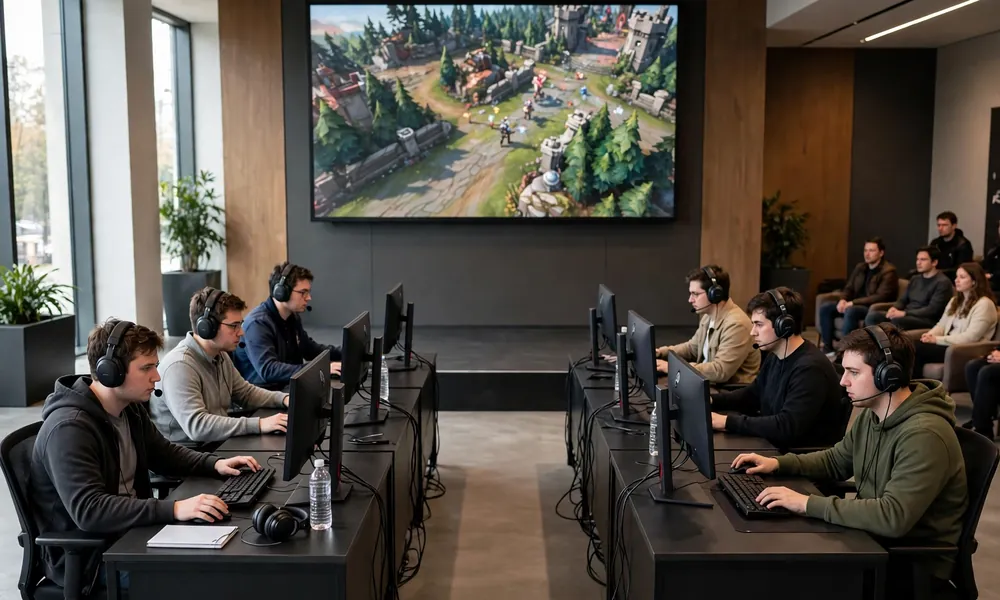
The best AI tools for e-sports arena startups in 2026 turn a room full of gaming stations into a venue that pays its rent, fills its leagues, and keeps players coming back week after week. An e-sports arena startup is not a shop that sells games, and it is not a team that competes online from home. It is a physical place where players arrive, sit down at a PC or console station, join a league or a tournament, watch matches on a big screen, and stay for the atmosphere as much as for the games. That simple idea hides a long list of moving parts: stations that must be ready on time, bookings that must not overlap, leagues that need brackets and standings, tournaments that need referees and schedules, members who expect a discount, and a small retail corner that needs stock on the shelves. AI tools help a small venue team handle all of that without hiring a large staff, and they do it while the owner is still free to walk the floor, talk to players, and build the community that makes an arena worth visiting.
For a new arena, the first year is won or lost on utilisation. A station that sits empty on a Tuesday evening earns nothing, a league night that starts late because the bracket was built by hand loses players to a rival venue, and a customer who cannot get a clear price and a confirmed booking will simply play at home instead. An e-sports arena is a different kind of business from a games shop or a streaming channel. You do not sell your stock and you do not perform for an audience somewhere else. You sell time on your floor, seats at your events, memberships that bring people back, and merchandise that reminds them of the place. Every week brings a different mix of work: a school group that wants ten stations for a birthday party, a local team that wants a regular practice slot, a sponsor that wants its logo on the big screen during a final, and a casual player who walks in on a Friday night and wants a station for two hours. When any part of that mix is handled in a separate notebook, a separate spreadsheet, or a separate inbox, the whole week wobbles.
This guide compares the best AI tools for e-sports arena startups in 2026 for a fixed venue with PC and console stations, online bookings, leagues and tournaments, watch parties, memberships, and a small merch retail corner. It covers booking and station management, league and tournament software, broadcast and watch party tools, membership and loyalty, retail and concessions, marketing, customer support, and the day-to-day operations that keep stations clean, games updated, and events starting on time. Every tool is judged on what it does for a venue owner, not on how clever its technology sounds, so you can build a shortlist that fits your floor plan, your budget, and the kind of players you want to welcome through the door.
Key takeaways
- Start with booking, station management, and payments, because those three decide whether a station starts on time and gets paid for.
- Choose tools that talk to each other, so a booking updates the station schedule, the league bracket, and the reminder message without anyone retyping it.
- Use AI for league schedules, tournament brackets, and follow-up messages, and keep a human referee and host in charge of the atmosphere on the floor.
- Track utilisation per station and per hour, and let the numbers decide your prices, your opening hours, and your league nights.
- Build memberships and repeat visits early, because an arena that fills its quiet hours with members is far steadier than one that depends on walk-ins alone.
What an E-sports Arena Startup Really Needs
An e-sports arena is a timed experience business. Players pay for time on a station, a seat at an event, or a place in a league, not for a product they take home, so every hour of every station matters. If a group arrives late, the next group waits. If a PC is still updating when a league match is due to start, the whole evening slips. If a booking is double-booked, two groups arrive for the same stations and only one can play. The tools that matter most are the ones that protect the schedule, protect the equipment, and protect the player experience, in that order, because a venue that cannot be trusted with a booking will not keep its players for long.
Bookings are the heart of the venue. Most players book online before they arrive, often on a phone, often late at night, and often for a group with mixed games and mixed experience. A good booking tool shows clear station types, clear session lengths, clear prices, and clear party options, takes payment or a deposit, sends a waiver to sign, and sends a reminder before the session. It also stops a player from booking a station that is already taken, and it lets staff move a booking without breaking the rest of the day. When bookings work well, the front desk becomes a welcome desk instead of a queue, and staff spend their time helping players rather than untangling a diary.
Station management is the second pillar. Each PC or console needs the right games installed, the right accounts signed in, the right settings applied, and the right peripherals working. A station management tool lets staff see every station on one screen, start and stop sessions from the desk, reset a station between players, and spot a machine that needs an update before it becomes a problem during a match. For a venue with dozens of machines, this is the difference between a smooth evening and a night of running around with a keyboard under one arm while a league match waits to start.
Leagues and tournaments are what turn a room of computers into a community. A weekly league gives players a reason to return on the same night every week, a tournament gives them something to aim for, and a watch party gives them a reason to bring friends who do not play. The software behind those events needs to handle sign-ups, brackets, standings, results, and disputes without eating the whole evening. AI helps here by seeding brackets fairly, scheduling matches around station availability, and flagging results that look wrong, so a small team can run a professional-feeling competition without a full-time administrator.
How to Choose AI Tools for Your Arena
Choosing tools for an arena starts with the jobs, not with the software. Write down the ten jobs that eat the most staff hours in a normal week: answering booking questions, resetting stations, building brackets, updating standings, posting results, chasing payments, answering messages, planning parties, ordering stock, and reporting on the week. Then look for tools that remove or shorten those jobs. A tool that saves two hours a week is worth paying for, and a tool that saves nothing is not worth installing, however impressive its demonstration looked. This simple test keeps a new venue from collecting subscriptions it never uses.
Integration matters more than any single feature. A booking tool that does not talk to the station manager will force staff to copy times from one screen to another, and a league tool that does not talk to the booking system will schedule matches on stations that are already sold. Look for tools with open connections, shared calendars, and simple exports, and test the connection before you commit to a year of payments. The goal is one flow of information: a player books, the station is reserved, the payment is taken, the reminder is sent, and the visit is recorded, all without anyone retyping the same details.
It also helps to learn from the wider world of competitive gaming before you buy. The AI tools built for competitive esports teams show how performance analysis, broadcast production, and sponsorship reporting work for small organisations, and several of those ideas translate directly to an arena, especially around match data and streamed finals. An arena is not a team, but the two businesses share players, matches, and audiences, so borrowing the best ideas from team software saves a new venue from repeating mistakes that other people have already paid to learn from.
Best AI Tools for E-sports Arena Startups at a Glance
The table below gives a quick shortlist before the detailed reviews. It covers the jobs that matter most to a new arena, from the first booking of the day to the last match of the night. Use it to pick two or three tools to trial first, then add the rest as the venue grows and the gaps become clear.
| Tool | Best for | Starting point |
|---|---|---|
| SimplyBook.me | Online station bookings and party packages | Free tier, then paid plans |
| ggLeap | PC station management and timed sessions | Free trial, then per-station pricing |
| Battlefy | Leagues, brackets, and tournament sign-ups | Free tier, then paid plans |
| Toornament | Tournament brackets and live standings | Free tier, then paid plans |
| Streamlabs | Broadcast overlays and streamed finals | Free tier, then paid plans |
| Restream | Streaming finals to several platforms at once | Free tier, then paid plans |
| Square | Retail, merch, and concessions payments | Free to start, then transaction fees |
| Mailchimp | League emails and player newsletters | Free tier, then paid plans |
| Intercom | AI customer support and booking questions | Free trial, then paid plans |
| Deputy | Staff rotas and shift planning | Free trial, then per-user pricing |
Booking and Station Management Tools
SimplyBook.me is a strong starting point for arena bookings because it was built for businesses that sell time. A new arena can set up station types, session lengths, party packages, and prices, then let players book and pay online without calling the venue. The system sends automatic confirmations and reminders, takes deposits, and shows staff a clear daily diary. Its AI features help with the messages that follow a booking, suggesting reminder wording and follow-up offers based on what a player booked before. For a small team, the value is simple: fewer phone calls, fewer no-shows, and a diary that stays accurate even on a busy Saturday.
For the machines themselves, ggLeap is the best-known PC cafe management platform, and it fits an arena with rows of gaming PCs. Staff can see every station on one screen, start and stop timed sessions, move a player to another machine, and reset a station between sessions with one click. The system handles accounts, game libraries, and per-station settings, and it records how long each station was used and what was played. That data feeds directly into pricing decisions, because it shows which hours are busy, which games draw the longest sessions, and which stations earn their keep.
Smartlaunch is a third station management option, popular with gaming centres that want a clean player-facing timer and a simple staff dashboard. Players can see how much time they have left, top up a session, and switch games without asking staff for help, which keeps the desk free for new arrivals and party hosts. The system also handles member accounts and balances, so regular players can load credit and spend it across visits. For an arena that wants a low-friction experience for casual players, that simplicity is a genuine advantage.
League, Tournament and Bracket Tools
Battlefy is the most complete league and tournament platform for a new arena, because it handles sign-ups, brackets, standings, and results in one place. An owner can create a weekly league, invite teams to register, publish the schedule, and let results update the standings automatically. Its AI-assisted scheduling helps fit matches around station availability, so a league night does not clash with a birthday party that booked the same stations. Players can follow their team, check the next fixture, and see the table on their phones, which keeps them engaged between match nights and brings them back the following week.
Toornament is a strong alternative for tournaments, especially for one-off events and finals. It supports many tournament formats, from single elimination to round robin and Swiss, and it publishes live brackets and standings that spectators can follow on the big screen or on their phones. The system flags results that look inconsistent, which helps a small referee team catch mistakes before they become arguments. For a venue that runs a monthly tournament alongside its weekly league, Toornament gives the event a professional feel without demanding a full-time administrator.
League scheduling is where AI earns its keep in an arena. A human can build a bracket for eight teams in an evening, but a league with twenty teams, three games, and stations that are also sold to casual players needs software that checks availability, balances home and away fixtures, and reschedules around a cancelled match. The tools above do this automatically, and they also send fixtures to players, so nobody turns up at the wrong time. That reliability is what turns a first league season into a second one, and a second season into a regular community.
Broadcast, Streaming and Watch Party Tools
Streamlabs is the best starting point for broadcasting arena finals, because it combines overlays, alerts, and chat management in one package that a small team can learn quickly. An arena can build a branded overlay with team names, scores, and sponsor logos, then stream the final to its audience with a professional look. The AI features help with clipping highlights, so a great play during a final can be shared on social media within minutes of happening. For a venue that wants its finals to reach people who could not attend, Streamlabs makes the broadcast look like it belongs to a much larger organisation.
Restream solves a different problem: reaching players wherever they watch. Instead of streaming to one platform, an arena can send its final to several platforms at once, so fans on different services all see the same match. The system also gathers chat from every platform into one feed, so the host can answer questions without watching five screens. For a venue that is still building its audience, that reach matters, because it stops the broadcast from depending on a single platform that the audience may not use.
The wider streaming world has useful lessons for an arena that wants to broadcast well. The AI tools for streaming startups cover multi-platform broadcasting, clip creation, and audience growth in detail, and several of those ideas apply directly to arena finals and watch parties. An arena does not need to become a streaming company, but a final that is streamed well reaches sponsors, attracts new players, and gives the venue content to share all week, so the broadcast tools deserve the same care as the booking tools.
Membership, Loyalty and Community Tools
Memberships turn casual visitors into regulars, and regulars are what keep an arena open in quiet months. A good membership tool lets an arena sell monthly plans with station hours included, offer discounts on leagues and parties, and track who is using their hours and who is not. AI helps by spotting members who have not visited for two weeks and suggesting a friendly message or a small offer to bring them back. It also helps by showing which membership tiers actually sell, so an owner can drop the plan nobody buys and improve the plan that fills the floor on weekdays.
TeamUp is a practical membership option for venues that sell class-style sessions and regular slots, because it handles recurring bookings, member credits, and waitlists in one system. A player can book their regular Tuesday league slot, see their remaining hours, and move a booking without calling the venue. For an arena, that self-service matters, because it keeps the desk free and it lets members manage their own visits at midnight, when the venue is closed and nobody is there to answer the phone.
Retail, Merch and Concessions Tools
Square is the most practical retail tool for a new arena, because it handles the till, the card reader, and the online shop in one system. An arena can sell headsets, merchandise, snacks, and drinks at the desk, take card payments quickly, and see stock levels at the end of the day. The system also records what sells and when, so an owner can see that energy drinks sell out on final nights and that a particular headset sells best after a league match. That information is worth more than any guess, because it stops the venue from ordering stock that sits on a shelf.
Lightspeed is a stronger option for an arena with a larger retail corner, because it handles suppliers, purchase orders, and stock across more than one location. If the venue plans to sell a wide range of merchandise, from team jerseys to gaming chairs, Lightspeed keeps the stock accurate and the reordering simple. Its reporting shows which products earn the most profit, not just the most sales, so an owner can focus the shelf space on the items that actually pay for themselves.
Marketing and Customer Support Tools
Mailchimp is a sensible marketing starting point for an arena, because it handles league emails, newsletters, and event announcements without demanding a marketing team. An owner can send a weekly email with fixtures, results, and the next tournament date, and the system shows who opened it and who clicked through to book. Its AI features help with subject lines and send times, suggesting the wording and the hour that are most likely to reach players. For a venue that lives or dies by its weekly league, that email is one of the most valuable tools it owns.
Customer support is the job that most often pulls staff off the floor, because the same questions arrive every day: how much is a station, what ages are allowed, can we bring a birthday cake, and do you have a station free on Friday. Intercom handles those questions with an AI assistant that answers from the venue’s own prices and rules, and passes the unusual questions to a human. That keeps the desk free for the people standing in front of it, and it gives online visitors an answer in seconds instead of hours. A venue that answers quickly wins bookings from players who are comparing two venues at midnight.
Zendesk is a strong alternative for a venue that wants a proper support inbox, with tickets, assignments, and a record of every conversation. It suits an arena that runs corporate hire and school bookings alongside casual play, because those customers expect a written answer and a clear record. Its AI features suggest replies, summarise long conversations, and route urgent messages to the right person, so a complaint about a broken station does not sit unread while the venue answers a question about party prices.
Pricing, Staffing and Daily Operations Tools
Pricing is the decision that most affects an arena, and it should be based on utilisation data, not on copying a rival. The booking and station tools in this guide show which hours sell out and which hours sit empty, and an owner should use that data to price accordingly. Quiet weekday afternoons can be cheaper to attract students and casual players, while Friday evenings and final nights can carry a higher price because demand is proven. AI forecasting can suggest those prices by looking at past bookings, local events, and school holidays, but the owner should always check the suggestion against what the floor actually looks like on a normal week.
Staffing is the second daily cost, and Deputy is a practical tool for planning rotas around the real shape of the week. An owner can build a rota that puts more staff on league nights and finals, and fewer on quiet weekday mornings, then let staff swap shifts and confirm their hours from their phones. The system also tracks hours and costs, so the owner can see whether a quiet shift is costing more than the stations earned that evening. For a small team, that clarity is the difference between a rota that works and a rota that slowly drains the business.
The physical venue also has lessons to borrow from similar businesses. The AI tools for virtual reality arcade venues cover the same daily problems an esports arena faces, from timed sessions and party hosting to headset and station care, and the venue thinking in that guide translates well to a floor full of PCs and consoles. An arena owner who reads it will recognise the same diary, the same quiet Tuesdays, and the same need to protect the schedule, which is why the two kinds of venue can learn from each other even though the games are different.
Building Your Arena Tool Stack
A tool stack is not a shopping list, it is a sequence. Buy the tools in the order that fixes the biggest weekly problem first, and do not buy the next tool until the first one is working properly. The checklist below gives that order for a new arena, from the first booking to the first full league season.
- Set up online booking and payments first, so players can book and pay without calling the venue.
- Add station management next, so staff can see, start, and reset every station from one screen.
- Choose one league and tournament platform, and run a full season on it before judging the result.
- Add a broadcast tool for finals, and stream at least one final before spending money on promotion.
- Set up memberships and loyalty, so regular players have a reason to return in quiet weeks.
- Connect retail, marketing, and support, and review the numbers monthly to drop any tool that is not earning its place.
Frequently Asked Questions
How much do AI tools cost for a new e-sports arena?
Most arenas can start with free tiers and trials for booking, brackets, and broadcasting, then move to paid plans as revenue grows. A realistic starting budget is a few hundred pounds or dollars a month for the core tools, with station management priced per machine. The right test is whether a tool fills station hours or saves staff hours, because a tool that does neither is a cost with no return, however cheap it looks on paper.
Do I need station management software if I only have twelve stations?
Yes, because twelve stations still need games updated, accounts reset, and sessions timed, and doing that by walking the floor takes longer than most owners expect. Station management software pays for itself on the first busy league night, when every station must be ready at the same time. It also gives you utilisation data, which is the evidence you need to set prices and opening hours.
Which games should an e-sports arena focus on first?
Start with the games your local players already play, not with the games that look impressive on a poster. Ask the first fifty visitors what they play, run a small tournament in the most popular title, and let the league grow from there. Two games with full leagues are worth more than six games with empty lobbies, and a venue can always add a new title when players ask for it.
How do leagues make money for an arena?
Leagues make money through regular station bookings, entry fees, memberships, and the food, drink, and merchandise that players buy on league nights. A weekly league also fills the same hours every week, which makes staffing and stock planning far easier than relying on walk-ins. The real value is the habit: a player who plays every Tuesday is far more likely to bring friends, buy merchandise, and stay a member.
Should an arena stream its finals?
Yes, because a streamed final reaches sponsors, attracts new players, and gives the venue content to share all week. Start simply, with one camera and a branded overlay, and improve the production as the audience grows. A final that looks professional on a stream also makes the players feel like professionals, which is exactly the feeling that brings them back for the next season.
What is the biggest mistake new e-sports arenas make with software?
The biggest mistake is buying too many tools before the venue opens, and then spending the first month learning software instead of serving players. Start with booking, station management, and one league platform, run them on real nights with real players, and add the next tool only when a clear gap appears. A small stack that works is worth far more than a large stack that nobody fully understands.
The Bottom Line
The best AI tools for e-sports arena startups in 2026 are the ones that protect the schedule, fill the quiet hours, and let a small team run a professional-feeling venue without a large staff. Start with booking and station management, add one league and tournament platform, stream your finals, and build memberships that bring players back every week. Choose tools that talk to each other, test them on real league nights, and drop anything that does not fill station hours or save staff hours. Do that, and the arena becomes more than a room full of computers: it becomes the place where local players meet, compete, and return, week after week, season after season.

Keep what speaks to you.
Leave room for your own perspective.


