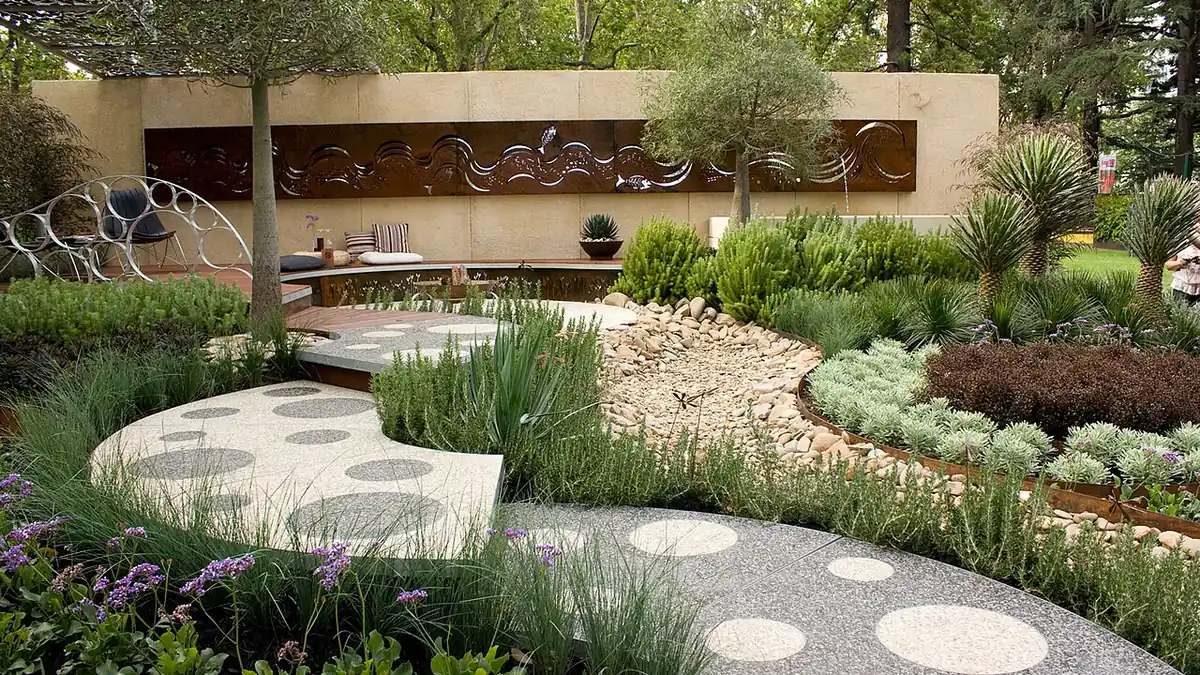
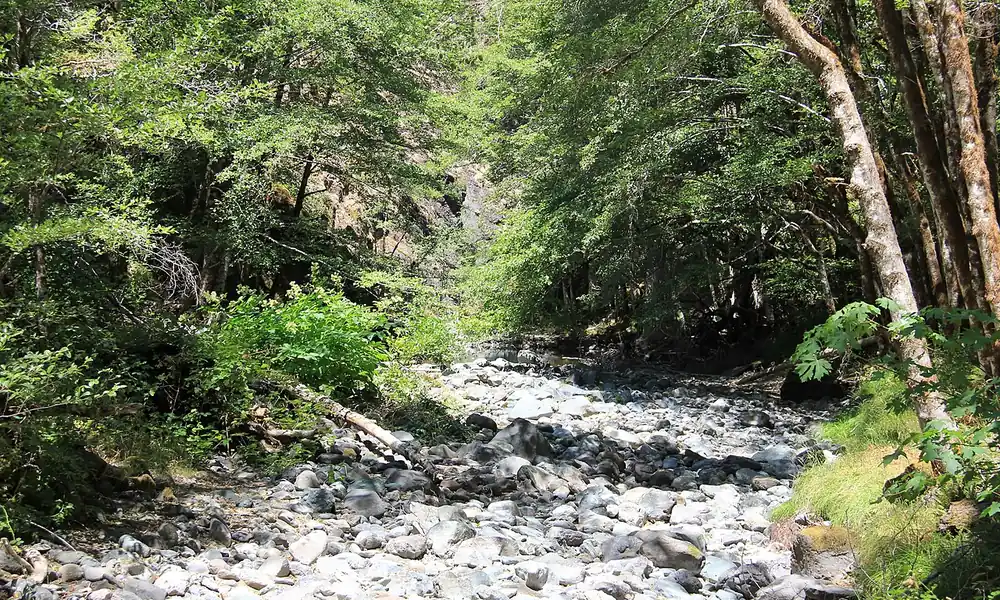
A dry creek bed looks simple from the kerb. A winding channel of stone, edged with grasses and boulders, carrying rainwater away from a house while looking as though it had always been there. The reality on site is far less simple. The channel has to fall at a steady gradient, the stone has to be sized so that it stays put in a storm instead of washing into the lawn, the fabric underneath has to let water through while stopping soil from clogging the bed, and the whole shape has to sit naturally in a garden that was never flat to begin with. Get any one of those wrong and the feature either ponds, erodes, or looks like a pile of gravel that was tipped out of a truck.
For a new installation startup, that gap between how a dry creek bed looks and how it is built is exactly where money is won or lost. A founder is usually pricing jobs from a phone on a muddy site, ordering tonnes of stone by the cubic yard, and trying to explain to a homeowner why one channel costs twice as much as another. The measuring, the stone quantities, the grading, the photographs of the fabric and the edging before they disappear under rock, and the follow-up after the first heavy rain all have to happen while the crew is still digging. When that work runs on memory and paper notes, quotes go out late, stone orders are guessed, and the proof of what was actually built disappears under the first layer of river rock.
This guide compares the nine best AI tools for dry creek bed installation startups in 2026. Each one is judged on the work a young stone-and-drainage company actually does: measuring a garden and its fall, designing a channel that looks natural, calculating stone, fabric and edging quantities, documenting each layer before it is covered, routing a small crew and a tipper truck, and following up with customers whose drainage problem only shows itself when it rains. Together they form a starter stack a founder can run from a phone on a job site, at a cost the first twenty jobs can carry.
Key takeaways
- Start with three tools only: an AI measuring tool, a landscape design tool, and an estimating tool. Those three carry most of the revenue and most of the risk for a new dry creek bed startup.
- Measure the fall before you price the job. A dry creek bed that does not fall steadily will pond, and a channel that falls too steeply will wash its stone downhill in the first storm.
- Price stone by volume and weight, not by eye. River rock, boulders and gravel are ordered by the tonne, and a small error in depth or width becomes a large error in the invoice.
- Photograph every layer before it is covered. Fabric, edging and the graded sub-base are invisible once the stone goes in, and the photos are the only proof you have.
- Keep the human in charge of grading judgement, stone selection and customer relationships. AI should speed those decisions up, never make them alone.
The best AI tools for dry creek bed installation startups at a glance
| Tool | Best for | What the AI does | Typical cost |
|---|---|---|---|
| Pix4Dmapper | Drone mapping and grading | Builds elevation maps and cut-and-fill volumes from drone photos | From about $300 a month |
| EagleView | Aerial measurement | Measures channel length, catchment and roof area from aerial imagery | Pay per report |
| Realtime Landscaping Architect | 3D channel design | Turns a site plan into a realistic 3D dry creek bed preview | One-off licence, from about $400 |
| DynaSCAPE Design | Professional design and takeoffs | Draws the channel and produces stone and material quantities | From about $100 a month |
| LMN | Estimating and job costing | Prices stone, fabric and labour from measured quantities | From about $100 a month |
| Aspire | Running the whole job | One system for estimates, schedules, crews and invoices | From about $200 a month |
| SingleOps | Landscape business management | Manages leads, proposals, crews and payments for landscape firms | From about $100 a month |
| magicplan | On-site measuring and sketching | Creates measured site sketches from phone photos on the job | Free plan, then from about $15 a month |
| iNaturalist | Planting the edges | Identifies plants on site so the planting suits the local climate | Free |
What makes a dry creek bed installation startup different
A dry creek bed is a drainage feature dressed as a garden feature, and that double job is what makes the startup different from a general landscaping firm. The channel has to move water, so the fall, the width and the stone size are engineering decisions, not decoration. At the same time it has to look natural, so the edges must curve, the boulders must sit as though water placed them, and the planting must soften the stone without blocking the flow. A crew that only understands drainage will build a ditch. A crew that only understands planting will build a feature that floods. A startup has to do both, on every job, from the first site visit.
Stone is the third difference. Most landscaping materials are bought by the bag or the roll. Dry creek bed stone is bought by the tonne, delivered by tipper truck, and moved by wheelbarrow and shovel. A channel twenty metres long, a metre wide and fifteen centimetres deep needs several tonnes of river rock before a single boulder is counted, and the price of that stone can be half the job. Estimating by eye is how a profitable job turns into a loss, because the eye always underestimates depth. The estimating and takeoff tools below exist to stop that happening, by turning a measured channel into a stone quantity a supplier can price.
How the tools in this guide were judged
Every tool below was judged on five questions that matter to a founder, not to a large established contractor. First, does it solve a real dry creek bed problem, such as measuring a fall, sizing stone, or designing a channel that looks natural, rather than a generic business problem dressed up in garden language? Second, can a one-person startup afford it and use it from the first week, with no long contract and no training course? Third, does it work on a phone on a job site, in mud and rain, rather than only on a desktop in an office? Fourth, does it produce something the customer can see, such as a design preview, a priced quote, or a photo record, on the day of the visit? And fifth, does it grow with the business, from one founder to a first crew and then to several crews, without forcing a painful switch to a different system?
The 9 best AI tools for dry creek bed installation startups in 2026
1. Pix4Dmapper
Pix4Dmapper turns drone photographs into the maps a dry creek bed startup actually needs: an elevation model of the garden, a contour plan showing where water will run, and a cut-and-fill volume for the channel itself. A founder flies a small drone over the property, the software stitches the photographs together, and the result is a measured surface that shows the fall from the house to the lowest point of the garden in centimetres. That matters because the fall is the whole job. A channel that drops too slowly will hold water. A channel that drops too fast will scour its bed. Guessing the fall by eye is how both mistakes happen.
2. EagleView
EagleView measures a property from aerial imagery, without anyone visiting the site, and that makes it a powerful tool for the first stage of a dry creek bed quote. From high-resolution aerial photographs, it can report the roof area feeding the channel, the paved area shedding water, the length of a proposed channel, and the slope of the garden. A founder can therefore give a customer a realistic price range before the site visit, and can arrive at the visit already knowing where the water comes from and how much of it there is likely to be.
3. Realtime Landscaping Architect
Realtime Landscaping Architect, from Idea Spectrum, is the design tool that sells a dry creek bed before it is built. It turns a site plan into a three-dimensional garden the customer can walk through on screen, with the stone channel winding between planting, boulders placed along its edges, and water shown flowing along it in a storm. For a homeowner choosing between a plain gravel strip and a proper dry creek bed, that preview is often the difference between a yes and a polite refusal.
The strength of the software is its library of stone, plants and landscape materials, and the way it renders them realistically. A founder can show the same channel in three different stone colours, with large boulders or small river rock, with grasses or with shrubs along the edges, and the customer can see the difference immediately. That matters because stone is expensive and hard to change once it is tipped. A customer who has seen the design is far less likely to ask for the stone to be changed halfway through the job, and far more likely to accept the price when they can see what they are paying for.
4. DynaSCAPE Design
DynaSCAPE Design is the professional drawing tool for a dry creek bed startup that wants its plans to look as good as its stonework. It is built for landscape designers, and it draws the channel, the edging, the boulders and the planting to scale, with a clean plan the crew can follow and the customer can understand. Unlike a sketch on the back of a quote, a DynaSCAPE plan shows the exact line of the channel, its width at each point, and the position of every boulder, so the crew does not have to guess on site.
The real value for a startup is in the takeoffs. Once the channel is drawn, DynaSCAPE can report the area of fabric needed, the length of edging, the volume of stone, and the number of plants along the edges. Those quantities feed directly into the estimate, which means the quote is built from the drawing rather than from a separate guess. When the customer asks for the channel to be a metre longer, the founder redraws it, the quantities update, and the revised price follows in minutes. That speed matters, because the installer who replies first with a revised price usually wins the job.
5. LMN
LMN, the Landscape Management Network, is the estimating and job-costing system that stops a dry creek bed startup from losing money on stone. It takes the measured quantities from the site, which are the channel length, width and depth, the stone type and the fabric area, and turns them into a priced estimate that includes materials, labour, delivery and margin. The estimate is built from the founder’s own rates, so the price of river rock, the cost of a tipper delivery, and the day rate of the crew are all entered once and used on every job.
The strength of LMN is that it tracks the job against the estimate after the work starts. The crew records its hours, the stone deliveries are logged, and the system shows whether the job is on budget while there is still time to fix it. A dry creek bed job can drift badly if the excavation hits clay, or if the stone delivery is short, or if the channel has to be lengthened to reach a drain. LMN shows that drift as a number, not as a feeling, so the founder can talk to the customer about a variation before the job is finished, rather than discovering the loss when the invoice is written.
6. Aspire
Aspire is the all-in-one system for a dry creek bed startup that has grown past the stage where a phone and a spreadsheet are enough. It handles the whole job in one place: the estimate, the schedule, the crew, the materials, the customer messages and the invoice. A founder enters the job once, and Aspire carries it through from the first enquiry to the final payment, without the same information being typed into three different apps.
For a dry creek bed business, the most useful part of Aspire is the way it links the estimate to the schedule and the crew. The estimate says the job needs two people for three days and four tonnes of stone. Aspire turns that into a diary entry, assigns the crew, orders the stone, and reminds the founder to confirm the delivery the day before. If the weather turns, the job can be moved, and the crew and the customer are told at the same time. That sounds simple, but it is the work that consumes a founder’s evenings, and it is the work that goes wrong when it is done from memory.
7. SingleOps
SingleOps is built for landscape businesses, and it fits a dry creek bed startup because it understands that the work is seasonal, the crews are small, and the customer is buying a garden feature as well as a drainage solution. It manages leads, proposals, scheduling, crews and payments in one system, with a proposal builder that turns a site visit into a branded document the customer can accept on their phone.
The proposal builder is the part that matters most. A dry creek bed is a considered purchase, often costing several thousand pounds, and the customer will usually get more than one quote. The installer who sends a clear, professional proposal first, with photographs of the site, a drawing of the channel, and a price broken down by stone, fabric, labour and delivery, is the installer who is most likely to win the work. SingleOps makes that proposal in minutes, from the measurements taken on site, and it tracks whether the customer has opened it, so the founder knows when to follow up and when to leave them alone.
8. magicplan
magicplan is the simplest measuring tool in this guide, and for many dry creek bed startups it will be the first one they use. It creates a measured sketch of a site from photographs taken on a phone, using the phone’s camera and sensors to measure distances, angles and areas. A founder walks the garden, photographs the corners of the proposed channel, and magicplan turns those photographs into a plan with the channel length, width and area marked on it.
The value is speed. A full drone survey is accurate, but it takes time to plan, fly and process. A magicplan sketch takes minutes, on the site visit, while the customer is still standing in the garden. The founder can show the customer the sketch, agree the line of the channel, and note the access for the tipper truck, all in one visit. The sketch then becomes the basis for the stone quantity, because the area of the channel multiplied by its depth is the volume of stone needed, and that volume is the largest cost on the job.
9. iNaturalist
iNaturalist identifies plants from a photograph taken on a phone, and for a dry creek bed startup it answers the question that decides whether the planting along the channel will survive: what is already growing here, and what will grow here? The edges of a dry creek bed are planted with grasses, shrubs and perennials that have to tolerate both a soaking when the channel runs and a dry spell when it does not. A plant that cannot handle both will die in the first year, and the customer will remember the dead planting long after they have forgotten the stone.
On site, iNaturalist is used in two ways. First, the founder photographs the plants already growing in the garden, and the app identifies them, which shows what the soil and the climate already support. Second, the founder photographs the plants proposed for the edges, and checks that they are suited to the local conditions. The app is backed by a large community of naturalists, so the identification is usually reliable, and the records show where each species grows naturally. That local knowledge is worth more than a catalogue photograph, because a plant that thrives in one county can fail in the next.
How to build your first dry creek bed software stack
A new founder should not buy all nine tools on day one. The stack should be built in the order the work happens, starting with the tools that win jobs and price them correctly. The first three tools are the ones that carry the business: magicplan for fast measured sketches on site, Realtime Landscaping Architect for a design preview the customer can see, and LMN for an estimate built from measured quantities. Those three together cost less than a single underestimated stone order, and they cover the visit, the sale and the price.
The question of whether a dry creek bed needs its own tools at all is worth answering directly, because a founder could reasonably ask why a general landscaping stack is not enough. The answer is that the general stack is a good starting point, and the best AI tools for landscaping startups cover estimating, scheduling and customer messaging well. But a general landscaping tool does not measure a channel fall, size stone by volume, or design a winding stone bed that looks natural. The tools in this guide are the ones that do the dry creek bed work specifically, and they are worth buying on top of the general stack, not instead of it.
What a dry creek bed startup should budget for AI tools
A realistic first-year budget for AI tools is between fifty and two hundred pounds a month, depending on which tools are in use. The free tools, which are iNaturalist and the free plan of magicplan, cost nothing. The low-cost tools, which are magicplan’s paid plan and the one-off licence for Realtime Landscaping Architect, cost a small amount each month when spread over the year. The mid-range tools, which are LMN, SingleOps and DynaSCAPE Design, cost around a hundred pounds a month each. The expensive tools, which are Pix4Dmapper and Aspire, cost several hundred pounds a month, and they should only be bought when the volume of work justifies them.
Mistakes to avoid with AI tools in dry creek bed installation
The first mistake is trusting a design that has never been checked on the ground. A three-dimensional preview is a selling tool, not a survey, and a channel that looks perfect on screen can still have the wrong fall. Every design should be checked against a measured elevation, whether from a drone map, an aerial report, or a level and a tape on site. A founder who skips that check is building a garden feature, not a drainage feature, and the first storm will show the difference.
The fourth mistake is confusing a dry creek bed with the drainage features around it. A dry creek bed carries water across a garden on the surface, in a stone channel that is dry most of the time. A French drain carries water underground, in a perforated pipe buried in gravel, and it is a different job with different tools. The best AI tools for French drain installation startups are built around trench depths, pipe lengths and gravel volumes, not around stone channels and planting. A founder who prices a dry creek bed as though it were a French drain will order the wrong materials and dig the wrong shape. Know which feature the customer needs, and use the tools built for it.
Dry creek bed installation startup checklist
- Measure the catchment first: roof area, paved area and the fall from the house to the lowest point of the garden.
- Draw the channel on a measured plan, check the fall along its whole length, and agree the line with the customer before digging.
- Calculate stone, fabric and edging quantities from the measured length, width and depth, not from a photograph or a guess.
- Price the job from those quantities, including delivery, labour and margin, and send the quote the same evening as the visit.
- Photograph the graded sub-base, the fabric and the edging before the stone goes in, and keep the photos with the job record.
- Check the channel after the first heavy rain, top up any stone that has moved, and ask the customer for a review while the work is fresh.
Frequently asked questions
What is the best AI tool for a dry creek bed installation startup?
There is no single best tool, because the job has three distinct parts: measuring, designing and pricing. For measuring, magicplan is the best place to start, because it is fast and cheap. For designing, Realtime Landscaping Architect is the best choice, because it shows the customer the finished garden. For pricing, LMN is the best choice, because it builds the estimate from measured quantities. A startup that buys those three first will have the core of its stack in place, and the other tools can be added as the jobs get bigger.
How much do AI tools cost for a dry creek bed installation startup?
A realistic budget is between fifty and two hundred pounds a month in the first year. The free tools cost nothing, the low-cost tools cost a small amount, and the expensive tools should only be bought when the volume of work justifies them. The cost should be judged against the mistakes the tools prevent, which are a short stone order, a channel that ponds, and a quote that goes out late. Each of those mistakes costs more than a month of software.
Can AI tools measure the fall of a garden accurately?
Yes, if the right tool is used. A drone map from Pix4Dmapper can measure the fall to within a few centimetres, and an aerial report from EagleView can give a good estimate of the overall slope. A phone sketch from magicplan is less accurate, but it is good enough for a small, straightforward garden. No AI tool can replace a level and a tape on a difficult site, so the measurement should always be checked on the ground before the final price is given.
Do I need a drone to start a dry creek bed business?
No. A drone is useful for large and complex gardens, but most dry creek beds are built in ordinary gardens where a phone, a tape and a level are enough. Start with magicplan and EagleView, and add a drone and Pix4Dmapper when the jobs get bigger and the fall gets harder to judge. A founder who buys a drone before they have a diary full of jobs is spending money on hardware instead of on winning work.
How does a dry creek bed differ from a rain garden?
A dry creek bed is a stone channel that carries water across a garden on the surface, and it is dry most of the time. A rain garden is a shallow planted basin that catches runoff and lets it soak into the ground, and it is a garden in its own right. The two features solve the same problem, which is water that has nowhere to go, but they do it in different ways, and they need different tools. The best AI tools for rain garden installation startups are built around basin sizing, stormwater modelling and native plant selection, while the tools in this guide are built around channel grading, stone quantities and a natural stone finish. A founder who understands both can offer the customer the right feature for their garden.
Should a dry creek bed startup use the same software as a landscaping company?
Partly. A general landscaping stack covers estimating, scheduling and customer messaging well, and a dry creek bed startup should use those tools. But the dry creek bed work itself, which is measuring a fall, sizing stone, designing a natural channel and documenting the layers underneath it, needs the specialist tools in this guide. The best stack is a general landscaping system with the dry creek bed tools added on top, so the business is organised and the feature is built properly.
The bottom line
A dry creek bed installation startup succeeds on three things: a channel that falls steadily, stone that is priced by volume, and a record that proves what was built underneath it. The AI tools in this guide exist to make those three things easier, by measuring the garden, designing the channel, calculating the stone, and keeping the job organised from the first visit to the final invoice. None of them can replace the founder standing in the garden, judging the soil, choosing the stone, and talking to the customer. But a founder who uses them well will price faster, build better, and lose less money on the jobs that go wrong.

Keep what speaks to you.
Leave room for your own perspective.