
A dining room installation startup does not sell a single fixture. It sells a finished room where a family can sit down together, and every part of that room has to work at the same time. The table has to fit the space with enough room to pull a chair out. The chairs have to match the table height and survive daily use. The storage has to hold plates, glasses and table linen without crowding the walkway, and the lighting has to make the food and the faces around the table look good in the evening. When any one of those pieces is wrong, the whole room feels wrong, even if the individual pieces are expensive.
That is why the tools that matter most to a new dining room installation business are the ones that keep the whole room in view. A good layout tool stops a startup from ordering a table that is too long for the room. A good rendering tool lets a customer see the finished room before any money is spent on furniture. A good sourcing tool keeps table, seating, storage and lighting prices in one place, so a quote does not fall apart halfway through the job. The nine tools in this guide were chosen for exactly that job: fitting out a complete home dining room, from the first measurement to the final chair pushed in.
This is a different job from fitting one component in a room that is already finished. An outdoor dining set installation is about weatherproof furniture on a patio, while a home dining room is an indoor room used every day, in every season, for meals, homework, work calls and family gatherings. The startup that understands that difference wins the jobs that a single-fixture installer cannot take on, because it can promise a room that is ready to live in, not just a product that is screwed to a wall.
Key takeaways
- A dining room installation is a whole-room fit-out: table, seating, storage and lighting must be planned together, not bought one at a time.
- Start with a layout tool and a rendering tool, so the customer approves the finished room before furniture is ordered.
- Measure the real room first, including door swings, radiator positions and the space behind every chair.
- Price the full room in one quote, with delivery, assembly and lighting included, so there are no surprises.
- Keep the stack small at first: two design tools, two sourcing tools and two business tools are enough for the first ten jobs.

How a Dining Room Installation Startup Really Works
A typical job starts with a visit, not a catalogue. The founder measures the room, photographs the walls and the floor, and asks how the room is actually used. A couple who eat at the table every night need a different room from a family that hosts twelve people at Christmas and uses the table as a desk the rest of the year. The number of regular seats, the number of occasional seats, the storage the household already owns and the light the room gets in the evening all change the plan. A startup that skips this conversation ends up installing a beautiful room that does not fit the life lived in it.
The next step is a plan the customer can understand. That means a floor plan with the table drawn to scale, the chairs drawn around it, and the storage drawn against the wall, with the walking space marked in plain numbers. Most customers cannot read a technical drawing, so a simple three-dimensional view matters more than a perfect one. When a customer can see that six chairs fit with room to walk behind them, and that the sideboard door opens without hitting a chair, they approve the job faster and change their mind less often once work has started.
Then comes ordering, delivery and assembly. Dining furniture is bulky, heavy and easy to damage, and deliveries often arrive on different days from different suppliers. The table may come from one supplier, the chairs from another, and the lighting from a third. A small startup has to track every delivery, check every piece for damage on arrival, and keep the customer informed when something is late. The installation itself is the shortest part of the job for most rooms: position the table, assemble and level it, place the chairs, fix the storage to the wall where it needs fixing, hang and test the light, and walk the room with the customer. The reputation of the business is built in that final walk, when the customer sits down for the first time and decides whether the room feels right.
How the Best AI Tools for Dining Room Installation Startups Were Compared
Every tool in this guide was judged against the same five tests, and all five had to be passed for a tool to make the list. First, does it help with the whole room, not just one component? A tool that only designs lighting, or only sells chairs, is useful, but it cannot carry a dining room fit-out on its own. Second, can a small startup afford it and learn it in a week? A tool that needs a month of training or a large monthly fee is the wrong choice for a business doing its first jobs. Third, does it produce something the customer can see and approve? A plan that only the installer understands does not prevent changes and disputes.
Fourth, does it save time on a real job, rather than adding a new step for its own sake? The best tools replace a slow manual task, such as drawing a room by hand or pricing a job from scattered notes, with a faster one that leaves a record. Fifth, does it work with the other tools on the list? A layout tool that cannot share its measurements with a quoting tool, or a sourcing tool that cannot export a list of parts, creates extra work. The nine tools below pass those tests in different ways, and together they cover design, sourcing and running the business.
Best AI Tools for Dining Room Installation Startups at a Glance
| Tool | Best for | What it does for a dining room job |
|---|---|---|
| Planner 5D | Room layout | Draws the table, chairs and storage to scale in 2D and 3D |
| Coohom | Photorealistic renders | Shows the customer the finished room before ordering |
| DecorMatters | Style direction | Builds moodboards and tests colour and material choices |
| IKEA Kreativ | AR fit check | Places furniture in a scan of the real room on a phone |
| Wayfair Professional | Trade sourcing | Sources tables, seating and storage at trade prices |
| Lumens | Dining lighting | Sources pendants and fittings sized for the table |
| Article | Tables and seating | Supplies solid dining tables and matching chairs |
| HoneyBook | Client management | Handles proposals, contracts and payments in one place |
| FreshBooks | Money and job costing | Tracks invoices, expenses and the profit on each job |
The 9 Best AI Tools for Dining Room Installation Startups
1. Planner 5D: The Best Tool for Dining Room Layout and Clearance
Planner 5D is the tool to open first on every job, because it answers the question that decides everything else: does the furniture fit, with room to use it? The startup draws the room to its real measurements, then drops in a table, chairs and a sideboard at their real sizes. The three-dimensional view shows at once whether a chair can be pulled out without hitting the wall, whether the sideboard door can open, and whether there is a clear path from the kitchen door to the table. That is the kind of mistake that is cheap to fix on a screen and expensive to fix after a table has been delivered.
For a dining room, the numbers that matter are simple and unforgiving. A person needs about 60 centimetres of table width and about 90 centimetres of space behind the chair to stand up and push it back. A walkway that will be used while people are seated needs at least 90 centimetres as well. Planner 5D lets the founder test those numbers with the customer watching, moving the table a few centimetres at a time and showing the effect on the walkway. That shared decision is worth more than any brochure, because the customer has already agreed the layout before the order is placed.
2. Coohom: The Best Tool for Showing the Finished Dining Room
Coohom takes the layout and turns it into a picture the customer can believe in. A floor plan proves that the furniture fits, but a render shows what the room will feel like at dinner: the wood of the table against the wall colour, the chairs around it, the sideboard with plates on its shelves, and the light falling across the table in the evening. Customers who have seen a good render change their minds far less during the job, because they have already lived in the room in their imagination.
For a dining room startup, the practical value is in the choices a render makes visible. A dark table in a small north-facing room can look heavy once it is rendered, while a lighter wood opens the same room up. A sideboard that looks fine on a plan can look too tall or too deep once it is shown next to the table. Coohom lets the founder test two or three versions of the same room, with different table finishes or chair fabrics, and send the customer the one that works best, rather than describing the difference in words.
3. DecorMatters: The Best Tool for Dining Room Style and Moodboards
DecorMatters is where the style of the room is decided before any furniture is bought. The tool builds moodboards from a photograph of the customer’s room, testing wall colours, table finishes, chair fabrics and rug patterns together, so the founder and the customer can see whether the pieces belong in the same room. A dining room is a small space with a few large pieces, so a single wrong choice, such as chairs that clash with the table or a rug that fights the floor, dominates the whole room. Testing those choices on a board is far cheaper than testing them with delivered furniture.
The tool is most useful for customers who know they want the room to feel warm or modern or calm, but cannot name the colours and materials that will do it. The founder can show three boards with the same table in three different settings, and the customer’s reaction to each one narrows the choice in minutes. That conversation also reveals practical facts, such as whether the household has small children who will stain pale chair fabric, or a dog that will scratch a soft wood floor, and those facts change the materials the startup should recommend.
4. IKEA Kreativ: The Best Tool for Checking Furniture Fit in the Real Room
IKEA Kreativ uses the camera on a phone to scan the customer’s actual dining room, then places furniture in that scan at real size. For a startup, that is a different kind of proof from a drawing: the customer sees the table standing on their own floor, against their own wall, with their own window light. A table that looks right in a showroom can look too long in a narrow room, and a chair that looks small in a photograph can look bulky once it is placed beside a sideboard. The scan shows both problems before anything is ordered.
The tool is best used as a check, not as the whole design. The founder should first draw the room properly and agree the layout, then use the scan to confirm the sizes and to show the customer how the finished room will sit in their home. It is especially useful for the two questions customers ask most often: will this table fit, and will these chairs look right with it? A scan answers both in a way that a measurement on paper cannot, because the customer trusts what they can see in their own room.
5. Wayfair Professional: The Best Tool for Sourcing Tables, Seating and Storage
Wayfair Professional is the trade side of a large furniture marketplace, and for a dining room startup its value is breadth: tables, chairs, benches, sideboards and storage from many suppliers in one place, with trade pricing and a single order history. A whole-room fit-out needs pieces that match in finish and scale, and a marketplace that carries all of them lets the founder build a room from parts that are actually in stock, rather than designing a room around a table that cannot be delivered for three months.
The practical work is in the filtering, not the browsing. The founder should filter by the real dimensions first, then by finish, then by delivery time, and only then by price. A table that is five centimetres too long is not a bargain at any price, and a sideboard that arrives six weeks after the table leaves the customer with a half-finished room. Wayfair Professional’s trade account also keeps the paperwork tidy, with orders, invoices and delivery tracking in one place, which matters when three deliveries for one room are arriving on different days.
6. Lumens: The Best Tool for Dining Room Lighting That Fits the Table
Lumens is a lighting retailer with a deep range of pendants, chandeliers and wall lights, and for a dining room startup its value is in sizing the light to the table rather than to the room alone. The light over a dining table has a specific job: it should light the food and the faces, hang low enough to feel intimate, and stay high enough that nobody hits their head when they stand up. Lumens lists the dimensions, drop lengths and light output of its fittings, so the founder can choose a fitting that matches the table width instead of guessing from a photograph.
Lighting is one part of a whole-room fit-out, and this guide treats it that way. The fitting is chosen after the table size and the ceiling height are known, not before, and it is shown in the render with the table underneath it, so the customer can judge the whole arrangement. A single pendant over a small round table, a row of two over a long table, or one wide fitting over a large table are all sensible answers in different rooms, and the right one depends on the table, not on the catalogue. A founder who understands chandelier installation as part of the room, rather than as a separate job, will hang the fitting at the right height and wire it on a dimmer, so the same room works for a family dinner and for a late evening with friends.
The startup should also plan the practical side of the light: the ceiling fixing, the weight of the fitting, and whether the existing wiring can carry it. A heavy fitting needs a proper fixing, and a fitting that needs a dimmer needs the right switch, not just a bulb. Lumens helps with the choice of fitting; the founder is responsible for checking that the ceiling and the wiring can carry it, and for testing the light with the customer in the room before the job is signed off.
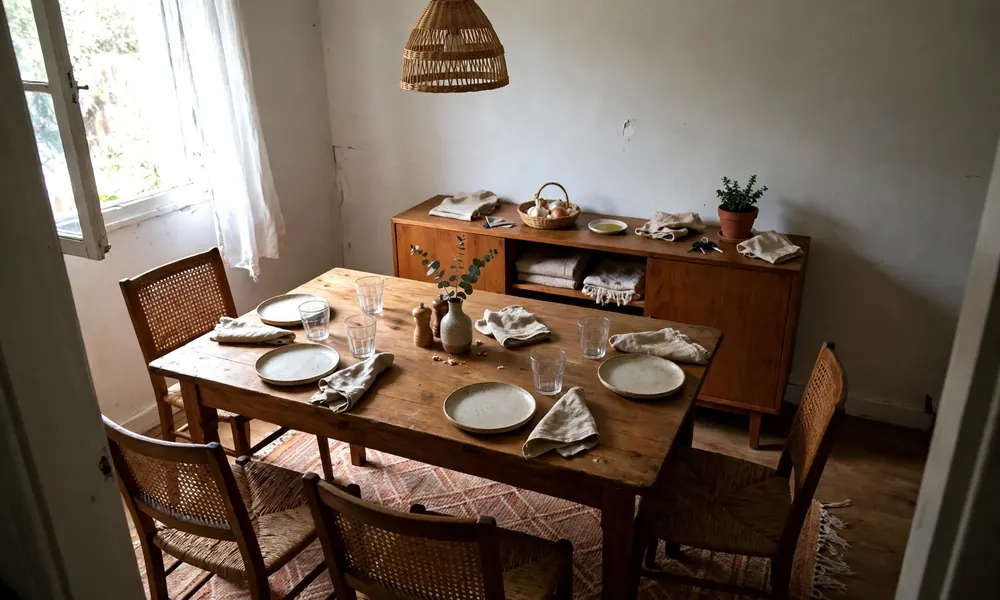
7. Article: The Best Tool for Dining Tables and Matching Seating
Article is a furniture maker that sells dining tables and chairs directly, and its strength for a startup is consistency: a table and its matching chairs are designed together, in the same wood and the same finish, at sizes that are stated clearly. A dining room where the chairs were designed for the table looks settled in a way that a room assembled from unrelated pieces rarely does, and the customer can see that difference the first time they sit down. For a startup, ordering a matched set also removes one of the most common sources of error, which is chairs that are the wrong height for the table.
The range is best used for the centrepiece of the room: the table and the chairs that will be used every day. The founder should choose the table size from the layout, not from the showroom, and check the seat height against the table height before ordering. A difference of two centimetres in seat height changes how comfortable a chair is for a long meal, and a chair that is too low will make the table feel too high, however good the table itself is. Article’s clear dimensions make that check easy, and the startup should do it on every job, even when the customer has chosen the set themselves.
8. HoneyBook: The Best Tool for Proposals, Contracts and Payments
HoneyBook is the tool that turns an agreed design into a job with a paper trail. It builds a proposal from the layout, the render and the sourcing list, sends it to the customer to approve and sign, takes a deposit, and schedules the work, all in one place. For a small startup, that matters because the most common disputes in this trade are not about the quality of the work; they are about what was agreed, what was included, and when the money was due. A proposal that lists the table, the chairs, the storage, the lighting, the delivery and the assembly, with a price for each, leaves very little room for that kind of argument.
The tool is also the startup’s memory. Every message, every approved render, every change and every payment sits against the same job, so when a customer asks six weeks later whether the sideboard was included in the price, the answer is in the file, not in somebody’s memory. That record protects both sides, and it lets the founder hand a job to a second installer without a long briefing, because the file already says what was promised.
9. FreshBooks: The Best Tool for Invoicing and Job Costing
FreshBooks is the tool that tells the founder whether the business is actually making money. It raises invoices, chases late payments, records expenses, and shows the profit on each job once the cost of furniture, delivery, assembly time and travel are counted. A dining room startup can look busy and still lose money if it under-prices the time spent measuring, designing and chasing deliveries, and FreshBooks is where that loss becomes visible, job by job, before it becomes a problem for the whole business.
The habit that matters most is recording the true cost of each job. The founder should log the furniture cost, the delivery charges, the hours spent on site and the hours spent on design and administration, and then compare that total with the price the customer paid. The first few jobs will show where the pricing is wrong, usually in the time that was given away for free: the second visit to re-measure, the afternoon spent chasing a late delivery, or the evening spent revising a render. Once those hours are counted, the next quote can price them honestly.
Choosing the Right Combination for Your Startup
A new dining room installation startup does not need all nine tools on the first day. It needs a combination that covers the three stages of a job: design it, source it, and run it. A sensible first stack is Planner 5D for the layout, Coohom for the render, Wayfair Professional for sourcing, and HoneyBook plus FreshBooks for the business side. That is five tools, and it covers every stage without a monthly bill that eats the profit from the first jobs. DecorMatters, IKEA Kreativ, Lumens and Article can be added as the work grows, when the founder knows which of them will be used on every job.
The order matters more than the number. Buy the layout tool first, because a wrong layout wastes everything that follows. Add the render next, because a customer who has approved a picture is a customer who will not change the order halfway through. Add the business tools before the tenth job, because by then the paperwork will be the part that takes the most time. And keep the sourcing tools under review: after ten jobs, the founder will know which suppliers deliver on time and undamaged, and the stack should be built around those suppliers, not around the widest catalogue.
Dining Room Installation Startup Checklist
- Measure the room with a tape measure, including door swings, radiators and the space behind every chair, and photograph every wall.
- Draw the layout to scale, with the table, chairs and storage in place, and check the walkways with the customer.
- Agree the style on a moodboard, then render the finished room and get the customer’s written approval.
- Price the full room in one quote, with furniture, delivery, assembly and lighting included, and take a deposit before ordering.
- Check every delivery for damage on arrival, and confirm the table fits through the front door and up the stairs before delivery day.
- Walk the finished room with the customer, test the light, level the table, and check every chair and storage door before handover.
That last walk is also the time to talk about care and assembly. Dining furniture needs its fixings checked after the first weeks of use, as wood settles and joints loosen, and a startup that offers a short return visit to tighten and adjust the furniture earns the recommendation that brings the next job. The furniture assembly work does not end when the last chair is pushed in; it ends when the room has been lived in for a few weeks and still feels solid.
Frequently Asked Questions
What is the best AI tool for a dining room installation startup in 2026?
Planner 5D is the best first tool, because a dining room job succeeds or fails on the layout. Once the layout is agreed, Coohom is the best tool for showing the customer the finished room, and HoneyBook is the best tool for turning that agreement into a signed job. A startup that buys those three first has the design, the approval and the paperwork covered, and can add sourcing tools as the order book grows.
How much does a dining room installation cost?
The cost depends on the size of the room, the table and chairs chosen, and the storage and lighting included, so a startup should never quote a single price without measuring the room first. A small room with a four-seat table and a simple sideboard costs far less than a large room with an extending table, eight chairs, fitted storage and new lighting. The honest answer to a customer is a measured quote for their room, with each item priced separately, rather than a round number that hides what is included.
How long does a dining room installation take?
The installation itself usually takes a day, sometimes two for a large room with fitted storage. The full job takes longer, because measuring, designing, ordering and delivery come first, and furniture delivery times vary from a few days to several weeks. A startup should give the customer two dates: the date the furniture will be ordered, and the date the installation will happen, and should update both dates the moment a delivery changes.
Do I need planning permission to fit out a dining room inside my house?
In most cases, fitting out a dining room inside an existing house does not need planning permission, because it is interior work that does not change the outside of the building. The exceptions are listed buildings, flats with lease restrictions, and work that changes the structure, such as removing a wall or moving a doorway. A startup should ask about those cases on the first visit and, if there is any doubt, tell the customer to check with the local planning office before work is booked.
What size table should a dining room have?
The table should leave about 60 centimetres of width per person and about 90 centimetres behind every chair, so a six-seat table needs a room that can hold the table plus that clearance on every side where a chair will be pulled out. An extending table is a good answer for a room that hosts large gatherings only a few times a year, because it stays compact for daily use and grows when it is needed. The founder should test the size on the layout, not guess it from the showroom.
Should a dining room installation startup sell the furniture or only install it?
Selling the furniture as part of the job gives the startup control over the sizes, finishes and delivery dates, and it is the model most customers prefer, because they deal with one business for the whole room. A startup that only installs furniture chosen by the customer will still find work, but it will spend more time fixing problems caused by pieces that do not fit or do not match. The supply-and-install model earns more per job and produces a better room, provided the startup prices the furniture honestly and stands behind it.
The Bottom Line
A dining room installation startup succeeds by treating the room as one job, not as a list of separate products. The table, the seating, the storage and the lighting have to be planned together, approved together, and installed together, and the tools in this guide are the ones that make that possible for a small new business. Start with a layout that fits, show the customer the finished room before ordering, price the whole room honestly, and walk the finished room with the customer before handover. Do those four things on every job, and the room will feel right the first time a family sits down in it, which is the moment the next job is won.

Keep what speaks to you.
Leave room for your own perspective.


