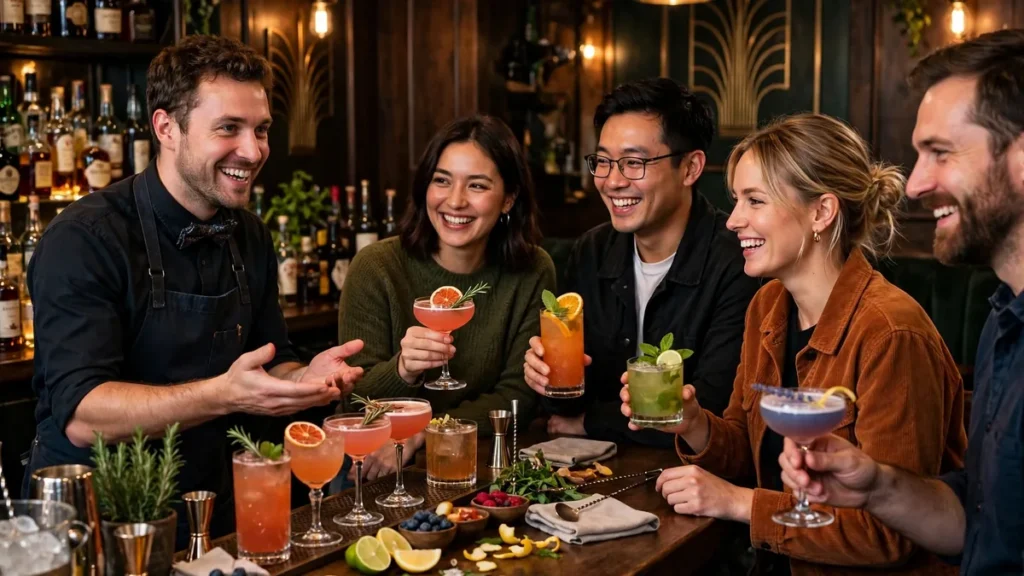
A cocktail tour startup sells an evening that guests remember long after the last glass is empty. A small group meets a guide outside a hidden bar, slips through an unmarked door into a speakeasy, watches a bartender shake a signature drink, and then walks to the next stop with a story to tell at every corner. The best AI tools for cocktail tour startups in 2026 help a founder turn that evening into a reliable business, covering bookings, routes, bar partners, guest messages, tasting notes, marketing, and money, without hiring a large team before the first tour has even sold out.
The first season of a cocktail tour company is unforgiving in quiet ways. There is no shopfront to catch passing trade, no second chance with a guest who waited at the wrong meeting point, and no way to fix a tasting once the group has already moved on. A route that is too long leaves guests tired before the final stop. A route that is too short leaves them feeling short-changed. A tour that ignores a guest who does not drink alcohol, a nut allergy, or a bar that closes early can turn a happy group into a serious problem in minutes. Founders who guess at demand, price by instinct, or run a route they have never walked with real pours usually discover the mistake in their reviews, after the money is spent.
AI tools do not remove that risk, but they make it visible earlier, when it is still cheap to fix. They help a founder test demand in a neighbourhood, compare tasting fees, write clear route notes, keep bar partners paid on time, and reply to guests before a rival tour takes the booking. This guide compares nine tools that fit a cocktail tour business specifically, judged on what they do for a founder with a small team and a tight budget, how much they cost to start, and where they fit in the first ninety days. The focus throughout is strictly cocktails: bar crawls, mixology demos, speakeasy routes, and tasting flights, not beer production or spirit making. Use it to build a lean stack, spend only on tools that earn their cost back, and open with a tour guests want to recommend to friends.
Key takeaways
- Start with one tool for bookings, one for guest messages, and one for marketing, and add more only when a clear bottleneck appears in your launch plan.
- Walk the full route with real pours, real timing, and real bar opening hours before you spend on branding, because a beautiful website for a tour nobody wants is the most expensive mistake a founder can make.
- Lock in bar partners, tasting fees, and opening hours in writing before you sell a single seat, and share a clear sheet with every guide before each departure.
- Offer a proper non-alcoholic tasting flight at every stop, collect dietary needs and allergies at booking, and keep groups small enough that everyone can hear the guide and taste at every stop.
- Measure every tool by the same standard: hours saved each week, extra seats sold, and whether guests actually notice better timing, clearer directions, and smoother service.

Best AI Tools for Cocktail Tour Startups at a Glance
| Tool | Best for | Standout feature |
|---|---|---|
| Peek Pro | Online bookings and waivers | Live availability with tasting-flight add-ons |
| Regiondo | Ticketing and distribution | Listings that reach travellers on major channels |
| Zaui | Tour operations and manifests | One manifest shared with every guide and bar |
| HubSpot | Guest relationships and follow-up | AI-assisted lead scoring and follow-up reminders |
| Mailchimp | Email marketing to past guests | Simple automation that turns one-time guests into repeat bookers |
| Adobe Express | Cocktail menus and marketing visuals | Quick, polished drink menus and social posts |
| Jotform | Tasting preferences and feedback | Smart forms guests actually finish |
| Otter.ai | Guide scripts and training notes | AI transcription of guide briefings and tastings |
| QuickBooks Online | Accounting and bar partner payouts | Clean invoicing with expense tracking for guides |
Why Cocktail Tours Need AI in 2026
A cocktail tour company sells a guided evening built around drinks, walking, and timing, and that simple fact shapes every tool choice. Unlike a software startup, you cannot fix a bad tasting with an update, and unlike a restaurant, your customers all arrive at the same meeting point at the same time and expect drinks that are ready, a guide who knows the stories, and a route that moves at a comfortable pace. The founder needs tools that handle the business before the first tour, the creative work of building the route, and the daily rhythm of seats once guests start booking. A tool that only helps with one of those three jobs is a luxury; a tool that helps with two is a genuine asset.
The booking and operations side has much in common with other guided drinks experiences. The lessons in the AI tools for brewery tour startups show how route-based businesses handle manifests, meeting points, and seasonal demand, and a cocktail tour founder can borrow that discipline without copying the beer-first model. The difference is the cocktail itself. A brewery tour worries about taprooms, flights, and food pairings; a cocktail tour founder worries about bar opening hours, tasting fees, responsible service of alcohol, mixology demos, and partners who may be busy serving their own Friday-night customers when the group arrives. A speakeasy is a working bar, not a stage, so the tour has to fit around real service.
There is also a useful contrast with the venue side of the drinks world. The AI tools for cocktail bar startups cover menus, stock, and running a single bar, which is a different business from moving guests between bars. A tour founder does not need to know how to run a bar; the founder needs to know how to sell seats, keep a route on time, and make every bar on the route glad the group came. Keeping that boundary clear stops a founder from buying venue software when what is actually needed is a booking system and a good itinerary. The same care applies to the view from above the bar scene, since the AI tools for rooftop bar startups show how weather, views, and seasonal demand shape a drinks business, and a cocktail tour founder can borrow the seasonal thinking without copying the single-venue model.
The 9 Best AI Tools for Cocktail Tour Startups in 2026
The tools below are ordered the way a founder would actually adopt them: bookings first, then operations, then the guest relationship, marketing, and money. Each one solves a specific problem inside a cocktail tour business, and each one works well alongside the others.
1. Peek Pro for Online Bookings and Waivers
Peek Pro is built for tour and activity operators, which shows in the details. Guests see live availability, pick a departure time, choose add-ons such as a premium tasting flight, a private group option, or a non-alcoholic flight, and pay in the same flow. The system sends confirmations and reminders automatically, so the founder is not copying names from an inbox into a spreadsheet the night before a tour. That matters on a cocktail tour, where the group size is small, the bars expect an exact headcount, and a single no-show changes the economics of the whole evening.
The part that matters most for a cocktail tour is capacity control and guest information. A tour has a hard limit: the speakeasy seats fourteen, the walk between stops takes twelve minutes, the last bar closes at midnight. Peek Pro enforces those limits in real time, so two guests can never book the last two seats at the same moment. It also collects the details a guide actually needs at booking: age confirmation, dietary notes, allergies, non-drinking guests, and celebration notes for birthdays and hen parties. The guide opens one manifest and knows who is coming, who needs a mocktail, and who is celebrating.
Best for: tour operators who want reliable online bookings with live availability and clear guest details. Standout feature: real-time availability with tasting-flight add-ons, waivers, and automated confirmations.
2. Regiondo for Ticketing and Distribution
Regiondo pairs a solid ticketing system with distribution that a small startup could never build alone. A cocktail tour listed through Regiondo can appear in front of travellers who are already planning a trip, comparing evening activities, and booking experiences days or weeks ahead. For a new company without a large audience, that reach is the main attraction. Inside the platform, the day-to-day tools are practical. Availability, pricing, group sizes, and meeting-point notes sit in one place, and changes flow through to every channel at once.
For a cocktail tour, distribution needs care. A speakeasy route is not a generic sightseeing ticket, so the listing has to explain the pace, the number of stops, the size of each tasting, and the non-alcoholic option, or guests arrive with the wrong expectations. Regiondo handles that with clear product pages, add-on options, and voucher handling, so a guest who books through a partner channel arrives with the same information as a guest who books direct. The founder can also set different prices for weekday and weekend departures, private tours, and festive-season routes, without rebuilding the product each time.
The trade-off is control. A marketplace listing brings guests, but it also brings commission and channel rules, and the founder gives up some of the direct relationship that a first-party booking builds. Regiondo is best used as a second channel, not the only channel, with direct bookings carrying the repeat guests and the private hires. Used that way, it fills quiet Tuesdays and brings in travellers who would never have found a small cocktail tour on their own. For a founder who wants reach without hiring a sales team, Regiondo earns its place in the stack.
Best for: founders who want ticket sales through travel channels as well as their own website. Standout feature: listings that reach travellers on major channels with one shared inventory.
3. Zaui for Tour Operations and Manifests
Zaui is the operations layer that keeps a cocktail tour honest once bookings start coming in. It holds the manifest, the route, the timing, the bar contacts, and the guide notes in one place, so the evening does not depend on one founder remembering everything. A guide opens the day sheet and sees the meeting point, the group size, the tasting fees already agreed with each bar, the allergy list, and the phone number for the bar manager at stop three. When a bar runs late or a guest is lost, the guide has the information to fix it in minutes, not after the tour.
The cocktail-specific value is in the handover between stops. Each bar needs a different arrival time, a different drink, and a different story, and the guide needs to know which guests are drinking alcohol and which are not before the glasses arrive. Zaui lets a founder build that handover into the manifest, with per-stop notes, per-guest flags, and a clear record of what was served. That record also protects the business: if a bar disputes a tasting fee, the founder has the numbers; if a guest raises a concern, the founder has the notes from the night.
Zaui is not the prettiest tool in this list, and it takes a little setup before the first tour. A founder who only runs one departure a week may find a spreadsheet is enough at first, and that is a fair judgement. Once the company runs three or four departures a week, with two guides and five bar partners, the spreadsheet breaks, and Zaui is the tool that replaces it. It is the quiet backbone of a cocktail tour that runs on time, pays its partners correctly, and keeps its guides confident.
Best for: operators running several departures a week who need one reliable manifest. Standout feature: one manifest shared with every guide and bar, with per-stop notes and guest flags.
4. HubSpot for Guest Relationships and Follow-Up
HubSpot turns a one-night guest into a repeat customer, which is where a cocktail tour makes its real money. A guest who enjoyed a Friday speakeasy crawl is the most likely buyer of a festive-season tour, a private hire, or a gift voucher, but only if the company remembers them and follows up at the right moment. HubSpot holds the guest record, the tour they took, the tasting flight they chose, and the feedback they left, and it uses AI-assisted lead scoring and follow-up reminders to tell the founder who is most likely to book again.
For a cocktail tour, the follow-up has to feel personal, not automated. A short thank-you message the morning after, a photo from the night, and a gentle suggestion for the next route work far better than a generic newsletter. HubSpot supports that with simple sequences, templates that a founder can personalise, and a clear view of who opened, clicked, and booked. It also helps with private hires and corporate groups, where the sale takes several messages, a quote, and a deposit, and where losing track of a conversation means losing a booking worth ten times a single seat.
The trade-off is price and complexity. HubSpot is a full customer platform, and a small startup will only use a fraction of it at first. The free and starter tiers cover the essentials, and a founder should stay on those tiers until the guest list is large enough to justify more. The discipline matters more than the features: record every guest, tag every tour, and follow up every time. A cocktail tour that does that will fill its calendar from past guests long before it needs to pay for new ones.
Best for: founders who want repeat bookings and private hires from past guests. Standout feature: AI-assisted lead scoring and follow-up reminders tied to each guest record.
5. Mailchimp for Email Marketing to Past Guests
Mailchimp is the simplest way for a cocktail tour startup to stay in touch with past guests without becoming a full-time marketer. A founder can build a short monthly email with the next departures, a new speakeasy on the route, a seasonal tasting flight, and a gift-voucher offer, and send it to everyone who has toured before. The AI-assisted subject-line and send-time suggestions help a small team sound polished, and the automation turns one-time guests into repeat bookers with very little weekly effort.
The cocktail-specific advantage is seasonality. Cocktail tours sell differently in summer, when rooftop stops and long evenings work, and in winter, when cosy speakeasies and festive routes sell out. Mailchimp lets a founder segment the list by the tour guests took, the season they booked, and whether they chose the alcoholic or non-alcoholic flight, and then send the right offer to the right group. A guest who loved a summer gin route gets the new summer route first; a guest who booked a festive crawl gets the festive dates before they go on general sale. That targeting lifts bookings without discounting.
Best for: small teams who want one simple email habit that fills seats. Standout feature: simple automation that turns one-time guests into repeat bookers.
6. Adobe Express for Cocktail Menus and Marketing Visuals
Adobe Express gives a cocktail tour startup polished visuals without hiring a designer. A founder can build a tasting menu for each stop, a social post for a new route, a gift-voucher graphic, and a simple flyer for a hotel partner, all in the same style, in an afternoon. The AI-assisted design suggestions, background removal, and quick resize tools mean a small team can produce work that looks like it came from a studio, even when the only camera is a phone.
For a cocktail tour, the visuals have to sell the drink and the place together. A tasting menu that names each cocktail, its garnish, and its story helps guests remember the night and helps guides keep the tasting on track. A short social post with a real photo from the bar, a clear departure time, and a booking link does more than a clever caption alone. Adobe Express keeps those assets consistent, so the tour looks like one brand across the website, the emails, and the bars themselves, rather than a different flyer at every stop.
Best for: founders who need tasting menus and social visuals without a designer. Standout feature: quick, polished drink menus and social posts in one consistent brand style.
7. Jotform for Tasting Preferences and Feedback
Jotform collects the information a cocktail tour cannot run safely without, and it does so in a way guests actually finish. At booking, a short form asks for age confirmation, allergies, dietary needs, non-alcoholic preferences, and celebration notes. After the tour, a second short form asks what guests loved, which cocktail stood out, and whether they would recommend the tour. The conversational layout, smart conditional questions, and AI-assisted form building keep both forms short, and short forms get answered.
The cocktail-specific value is in the detail. A guest with a nut allergy needs a different garnish; a guest who does not drink needs a proper mocktail flight, not a glass of water; a guest celebrating a birthday wants the guide to know before the group sings. Jotform puts those details into the manifest in a structured form, so the guide does not have to hunt through email threads on the night. The feedback form is just as important: it tells the founder which bar is slipping, which cocktail guests remember, and which guide earns the best reviews, while the evening is still fresh.
Jotform is not a booking system, and it should not be used as one. It is the layer that sits beside bookings and makes them safer and more useful. A founder who pairs it with a booking tool gets the best of both: clean payments and clean guest information. The free tier covers a small tour company, and the paid tiers add the volume and integrations a growing company needs. For a business where one missed allergy note can end a tour, Jotform is cheap insurance.
Best for: founders who need clean allergy, preference, and feedback data from guests. Standout feature: smart forms guests actually finish, with conditional questions and structured answers.
8. Otter.ai for Guide Scripts and Training Notes
Otter.ai records and transcribes the parts of a cocktail tour that usually live only in a guide’s head. A founder can record a walk-through of a new route, a tasting with a bartender, or a briefing before a departure, and Otter.ai turns the conversation into searchable notes, a script, and a training document. New guides can read how the best guide tells the speakeasy story, which details guests ask about, and where the timing slips, without shadowing five tours first.
For a cocktail tour, that training matters more than it looks. The difference between a good tour and a great one is often a single story told well: why the bar is hidden, who designed the cocktail, what the garnish means. Otter.ai captures those stories as they are told, so they can be polished, shared, and kept consistent across guides. It also captures the practical notes: how long each stop really takes, which bar needs a reminder call, and which tasting guests find confusing. A founder who reviews those notes each week improves the route faster than a founder who relies on memory alone.
The trade-off is that transcription is only as good as the recording, and a noisy bar is a hard place to record cleanly. Otter.ai works best for briefings, walk-throughs, and tastings recorded in a quiet moment, not for a live tour in a crowded room. A founder should also ask guides and bartenders before recording them, and keep the recordings private. Used with that care, Otter.ai turns experience into a written playbook, which is exactly what a growing cocktail tour needs when it hires its second and third guide.
Best for: founders training new guides and keeping route stories consistent. Standout feature: AI transcription of guide briefings, tastings, and route walk-throughs.
9. QuickBooks Online for Accounting and Bar Partner Payouts
QuickBooks Online keeps the money straight, which is the job a cocktail tour founder is most likely to put off until it becomes a problem. It records ticket sales, tasting fees, guide pay, transport costs, and bar partner payouts in one place, and it uses AI-assisted categorisation and bank matching to keep the books current without a weekly spreadsheet session. A founder can see at a glance which route makes money, which departure loses money, and which bar partner is owed what, before the end of the month.
The cocktail-specific value is in partner payouts. Each bar on a route charges a tasting fee, and those fees change with the season, the group size, and the drinks served. QuickBooks Online lets a founder record each fee against the right departure, invoice private hires cleanly, and pay guides and drivers on time, with a clear record for tax season. It also handles the small costs that add up on a tour: garnishes, printed menus, water, snacks, and the occasional taxi for a guest who needs to get home safely. A tour that tracks those costs knows its real margin, not just its ticket price.
QuickBooks Online is not free, and a very small startup may manage with a simpler tool at first. The monthly plan is worth it once the company runs regular departures, pays several partners, and needs clean records for tax and insurance. The discipline matters more than the software: record every sale, every fee, and every payout, and reconcile every week. A cocktail tour that does that can grow without the money surprises that end many small tour companies in their second year.
Best for: founders who need clean books and on-time partner payouts. Standout feature: clean invoicing with expense tracking for guides, drivers, and bar partners.
Cocktail Tour Launch Checklist
- Walk the full route with real pours, real timing, and real bar opening hours, and fix every timing problem before you sell a seat.
- Lock in bar partners, tasting fees, and opening hours in writing, and share a clear sheet with every guide before each departure.
- Set up one booking tool with live availability, age confirmation, allergy notes, and a non-alcoholic tasting flight at every stop.
- Write the guide script for each stop, including the speakeasy story, the cocktail story, and the garnish, and train every guide on it.
- Plan responsible service from day one: water and food breaks, a clear plan for guests who have had enough, and safe transport home.
- Launch the follow-up habit on the first tour: a thank-you message, a feedback form, and a gentle offer for the next route.
Frequently Asked Questions
What is the best AI tool for a cocktail tour startup?
Peek Pro is the best starting point for most cocktail tour startups, because bookings, availability, waivers, and guest details are the foundation everything else depends on. Add an operations tool such as Zaui once you run several departures a week, and add email marketing once you have past guests worth following up with. The best tool is the one your guides and guests actually use without a manual, not the one with the longest feature list.
How much do AI tools for cocktail tour startups cost?
Most founders can start with a booking tool on a volume-based plan, a free or starter tier for email and forms, and a modest monthly plan for accounting. Expect the core stack to cost less than a single full departure in most months, and judge each tool by the seats it fills or the hours it saves. Free tiers cover the first season well, and paid tiers become worth it once departures are regular and partners need to be paid on time.
Do I need a booking tool if I only run one tour a week?
Yes, even one departure a week benefits from live availability, automatic confirmations, and a clear guest list. A booking tool prevents double bookings, collects allergy and non-alcoholic notes, and sends reminders that cut no-shows. A spreadsheet can work for a handful of friends, but it breaks the first time two guests book the last seats at the same moment or a bar asks for an exact headcount.
How do I handle guests who do not drink alcohol?
Offer a proper non-alcoholic tasting flight at every stop, with the same care, garnish, and story as the alcoholic drinks. Collect the preference at booking, flag it on the manifest, and brief the guide and each bar before the tour. Guests who do not drink should feel like full members of the group, not an afterthought, and a good mocktail flight is often the detail they remember and recommend.
How many bars should a cocktail tour visit?
Three to four bars works best for most routes, with a tasting at each stop and enough walking time between them to enjoy the neighbourhood. Fewer stops can feel short for the price, while more stops rush the tastings and tire the group. Walk the route yourself with real pours and real timing, and cut any stop that does not earn its place with a distinct drink, a distinct story, or a distinct room.
Can AI tools help with responsible service of alcohol?
AI tools help with the planning and the records, but responsible service still depends on people. Use booking forms to collect age confirmation and allergy notes, use the manifest to track who is drinking and who is not, and build water, food, and transport into the route from the start. Train guides to spot guests who have had enough, give them a clear plan for ending a guest’s drinking gracefully, and never let a tool replace a guide’s judgement on the night.
The Bottom Line
A cocktail tour startup succeeds on the strength of its evening: a clear meeting point, a route that moves at a comfortable pace, bars that are glad the group came, and a guide who tells stories worth remembering. The nine tools in this guide support that evening from different angles, from bookings and manifests to guest follow-up, tasting menus, feedback, training, and money. Start with bookings, add operations when departures multiply, and keep the stack small enough that every tool earns its place. Walk the route, lock in the partners, look after the guests who do not drink, and follow up after every tour. Do that consistently, and the tools will do what they are meant to do: keep the logistics invisible, so guests can simply enjoy the cocktails, the stories, and the walk between them.

Keep what speaks to you.
Leave room for your own perspective.


