A chilli farm is a heat farm. Everything about the crop — where it is planted, when it is picked, how it is graded and what it is sold as — is decided by heat. Chillies are a hot nightshade fruiting crop that wants warm soil, long sunny days and a slow, careful harvest by hand, and the startup that treats them like any other field vegetable will lose its margin in the first season. The fruit does not wait for a machine, it does not ripen evenly across a bed, and a single picking round can hold five different heat levels on one plant.
That is why the tools that launch a chilli farm installation startup look different from the tools that launch a grain farm or a salad farm. A grain startup plans drilling dates and a combine pass; a chilli startup plans picking rounds, heat grading and drying capacity. The beds have to hold warmth into the evening, the water has to arrive in small steady doses rather than floods, and the harvest has to be scheduled around the hands available, because every pod is pulled off the plant by a person, graded by its heat, and sent either to the drying racks or to the sauce kettle. Get the picking wrong and the best pods go soft in the crate; get the drying wrong and a whole week of picking turns to mould.
This guide compares the nine AI tools that matter most when a chilli farm is being set up from bare ground in 2026. Each one covers a different part of the build — choosing varieties by heat, laying out the beds, mapping heat across the field, organising the picking crew, grading by Scoville level, watching pod set, drying the harvest, mashing for sauce and planning sauce batches. Together they turn a hot, fiddly, hand-picked crop into a business with a plan, a picking calendar and a product that buyers can trust. The contrast with a tomato farm installation startup is sharp: tomatoes are grown for size, colour and a packing shed, while chillies are grown for heat, and heat is measured, graded and sold.
Key takeaways
- Chillies are graded by heat on the Scoville scale, not by size or weight — pick the grading tool before the first seed goes in.
- Hand picking is the biggest cost on a chilli farm, so the picking calendar and the crew plan decide whether the season pays.
- Drying capacity has to match picking capacity, or ripe pods pile up and spoil before they reach the racks.
- Sauce is the second income stream: pods too hot, too small or too split for the fresh trade still make good sauce.
- Warmth is the limiting factor — beds, water and variety choice all serve the same job of keeping the plants hot.
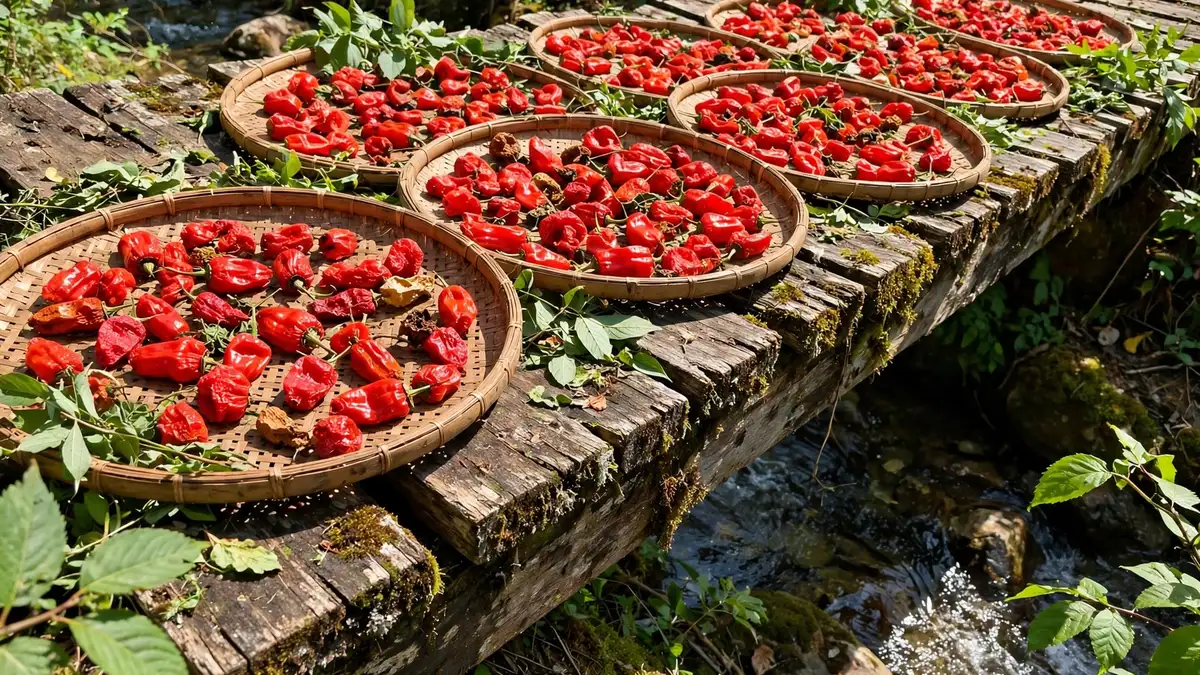
The nine tools at a glance
| Tool | What it does | When it earns its keep |
|---|---|---|
| ChilliSeed Select AI | Matches varieties to heat, market and season length | Before ordering seed |
| ChilliRow Planner AI | Lays out beds, rows and paths for hand picking | At the site plan stage |
| HeatMap Chilli AI | Maps warmth and sun across every bed | Before planting and through the season |
| PickHand Planner AI | Schedules picking rounds and crew days | From first flowers to last picking |
| ScovilleGrade AI | Grades picked pods by heat level | At every picking and at sale |
| PodSet Sense AI | Watches flowering and pod set per plant | Through flowering and fruiting |
| ChilliDry Curve AI | Sets drying times and rack loads | From first harvest to final drying |
| ChilliMash AI | Plans mashing and fermenting for sauce | When sauce pods come in |
| SauceBatch AI | Costs and schedules sauce batches | Before the first sauce run |
Heat, beds and varieties
A chilli farm starts with a decision about heat, and that decision is made twice: once for the plants, which need warmth to grow, and once for the pods, which need a heat level that buyers actually want. A variety that is too hot for the local market will sit unsold, and a variety that is too mild will fetch the price of a sweet pepper. The three tools in this section handle the first half of the build — picking the varieties, laying out the ground and keeping the beds warm enough for the plants to thrive.
ChilliSeed Select AI
ChilliSeed Select AI is the variety tool, and it is the first purchase a chilli startup should make, because every other decision follows from the varieties chosen. The tool holds a library of chilli varieties with their heat ranges, days to picking, plant height, pod size and best use — fresh sale, drying or sauce — and it matches that library against the startup’s season length, soil type and target buyers. A short season points to early varieties that set pods fast; a long hot season opens the door to the slow, very hot types that need months on the plant. A buyer who wants dried chillies needs varieties that dry well and hold their colour; a buyer who wants sauce needs varieties with thick flesh and a steady heat that does not swing from pod to pod.
The tool also stops the most common beginner mistake, which is planting too many varieties at once. A new farm with twelve varieties has twelve different picking calendars, twelve different heat levels to grade and twelve different buyers to find, and the crew spends more time learning the plants than picking them. ChilliSeed Select AI narrows the list to three or four varieties that cover the market — one mild, one medium, one hot and one for drying or sauce — and it spaces their picking windows so the crew is never faced with everything ripening in the same week. It also flags varieties that dislike the local soil or need more heat than the site can give, which saves a season of watching stunted plants struggle.
For a startup, the practical value is a seed order that matches the business plan rather than a catalogue. The tool prices the seed, works out how many plants each variety needs to fill the beds, and shows what the harvest is worth at each heat level. That turns variety choice from a guess into a budget line, and it gives the founder something solid to show a buyer or a lender: these varieties, this heat, this many pods, this price.
ChilliRow Planner AI
ChilliRow Planner AI lays out the ground. A chilli farm is picked by hand, so the layout has to serve the pickers first and the plants second. Rows that are too long tire the crew; paths that are too narrow mean crates get knocked and pods get bruised; beds that are too wide mean the middle plants never get picked properly. The tool draws the field as a picking plan rather than a planting plan: bed widths a picker can reach across, paths wide enough for a crate trolley, turning points at the ends of rows, and a picking order that moves the crew through the field without backtracking.
The tool also handles the spacing that decides how big the plants grow. Chillies planted too close together shade each other, stay damp and set fewer pods; planted too far apart, they waste ground and let weeds in. ChilliRow Planner AI sets the spacing variety by variety, because a tall hot variety needs more room than a compact mild one, and it staggers the planting so that early and late varieties do not crowd each other. It marks where the water lines run, so that every bed gets the same steady supply, and it leaves room at the field edge for the drying racks and the sorting table, so picked pods travel a short distance from plant to rack.
The difference between this and a general field planner is that it is built around the hand. Every measurement is a reach, a stride or a crate width. A founder who walks the plan with the tool can see exactly how many pickers the field needs on a busy day and how long a full round will take, and that number feeds straight into the wage budget. A chilli farm that cannot pick fast enough loses pods to over-ripening, and the layout is where that race is won or lost.
HeatMap Chilli AI
HeatMap Chilli AI watches the warmth of the field. Chillies are heat-loving plants, and a few degrees of difference across a field can decide which beds crop well and which ones sulk. A south-facing slope, a sheltered corner behind a hedge, a low patch where cold air settles at night — each one grows a different plant. The tool builds a heat map of the site from sun readings, soil temperature and wind shelter, and it updates that map through the season as the sun moves and the plants grow tall enough to shade each other.
The map does three jobs. First, it tells the founder where to put the hottest varieties, so the plants that need the most warmth get the warmest ground. Second, it warns when a cold snap is coming and which beds are most at risk, so covers can go on the right beds first instead of everywhere at once. Third, it explains uneven cropping: when one bed out-yields its neighbour, the heat map usually shows why, and the fix is a windbreak, a mulch or a different variety next year rather than more fertiliser.
Over a season, the heat map becomes the farm’s memory. It records which beds stayed warm on cool nights, which ones dried out fastest in a hot spell, and which ones the wind hit hardest. That record is worth more than any single reading, because it turns the second year’s planting plan into a decision based on evidence rather than hope. A chilli farm lives or dies on warmth, and this is the tool that measures it.
Picking, grading and the crew
The middle of the chilli season is a picking season. Pods do not all turn at once, so the field is picked in rounds — every few days through the hottest weeks — and each round has to be planned, staffed and graded. This is where a chilli farm spends most of its money, and where most of its profit is made or lost. The three tools in this section handle the crew, the heat grading and the watching of pod set, which is the early warning that tells the founder how big the next picking round will be.
PickHand Planner AI
PickHand Planner AI is the crew tool. It turns the picking calendar into a rota: how many pickers are needed on each day, which beds they start on, how many crates each picker is expected to fill, and when the next round should begin. The tool works from the pod-set readings and the heat map, so it knows which beds are coming ready first and how fast the pods are turning. A bed that turns quickly needs a bigger crew sooner; a bed that turns slowly can wait a few days without losing quality.
The tool also handles the human side of picking, which is where most plans fall apart. Picking chillies is hot, careful work, and tired pickers bruise pods and miss the ones hidden under leaves. PickHand Planner AI builds rest breaks into the day, rotates the crew between beds so no one spends a whole day bent over the same row, and staggers start times so the sorting table is never swamped by ten crates arriving at once. It tracks how fast each picker works, not to punish slow hands but to place them where they do best — a careful picker on the hottest varieties, where a bruised pod loses its grade, and a fast picker on the mild beds where volume matters most.
For the founder, the tool’s real value is a wage bill that can be predicted before the season starts. It shows the cost of every picking round, the total crew days for the season, and the point at which hiring one more picker pays for itself in pods saved from over-ripening. A chilli farm that picks late loses heat, colour and price, and this tool is what keeps the picking on time.
ScovilleGrade AI
ScovilleGrade AI is the grading tool, and it is the heart of the chilli business. Chillies are sold by heat, and heat is measured in Scoville units — the scale that runs from a mild pod with barely a tingle to a super-hot pod that needs gloves and a warning label. Buyers pay for a known heat, and a box that mixes mild pods with hot ones is a box that comes back. The tool grades every picked pod by sampling the batch, testing heat levels and sorting the harvest into grades that match what buyers ordered.
The grading starts in the field, not at the sorting table. The tool tells pickers which pods to take and which to leave: fully coloured pods at their peak heat go into the top grade, pods that are still turning go into a lower grade for drying, and pods that are split or soft go straight to the sauce crate. That field grading matters because a pod picked at the wrong moment never reaches its proper heat, and no amount of sorting afterwards can fix it. The tool also keeps a record of heat by variety and by bed, so the founder can see which beds produced the hottest pods and which ones ran mild — information that shapes next year’s variety choice and bed plan.
At sale time, ScovilleGrade AI prints the grade on the box: the variety, the heat range, the picking date and the batch number. That label is what turns a crate of red pods into a product a sauce maker or a dried-chilli buyer can order again with confidence. A chilli farm without honest grading is selling a gamble; a chilli farm with it is selling a specification.
PodSet Sense AI
PodSet Sense AI watches the plants while they flower and set fruit. A chilli plant flowers in flushes, and each flush becomes a picking round a few weeks later, so knowing how many flowers have set tells the founder how big the next round will be before a single pod turns colour. The tool counts flowers and young pods from field photos, tracks the set rate bed by bed, and warns when a bed is setting poorly — too few pods for the flowers, or flowers dropping before they set.
Poor pod set has causes, and the tool helps find them. A bed that drops flowers in a hot spell needs more water; a bed that sets weakly in cool weather needs more warmth; a bed where flowers open but no pods follow may need more pollinators passing through. PodSet Sense AI ties the set rate to the heat map and the watering record, so the founder can see whether the problem is water, warmth or something else, and fix it while there is still time for a second flush of flowers.
The tool also feeds the picking planner. When pod set is strong across the field, the founder knows a big round is coming and can book extra pickers in advance; when set is weak, the crew days can be cut before wages are wasted. That link between flowers today and crates next month is what makes a chilli farm plannable rather than a surprise every week.
Drying, mashing and sauce
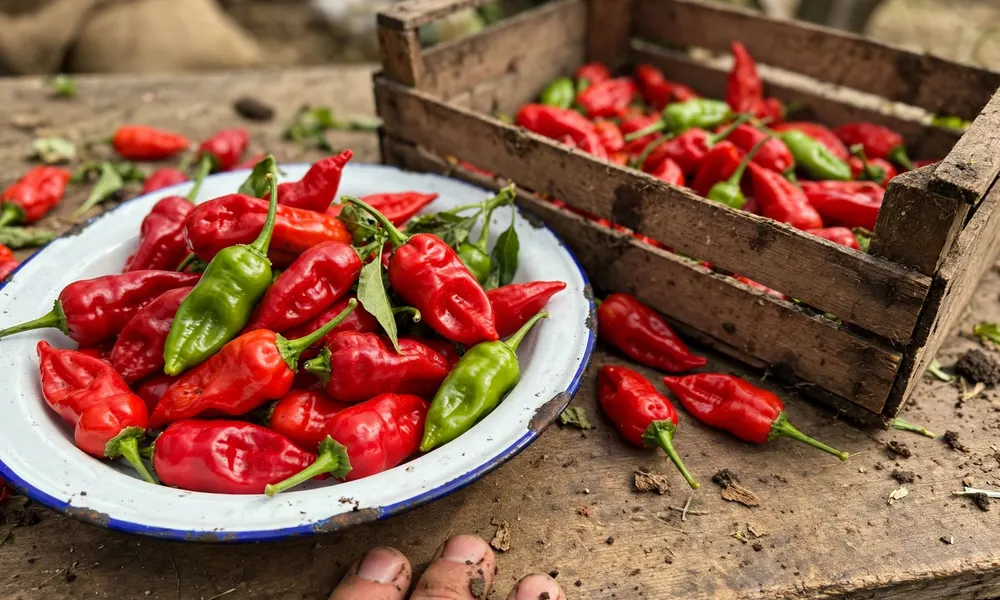
What happens after picking decides how much of the harvest is sold and how much is wasted. A chilli that is picked well but dried badly is a loss; a chilli that is too hot or too small for the fresh trade is still a good sauce chilli. The three tools in this section handle the end of the build — drying the pods that keep, mashing the pods that become sauce, and planning the sauce batches that turn the second-grade harvest into a second income.
ChilliDry Curve AI
ChilliDry Curve AI sets the drying. Dried chillies are the farm’s storable product: they keep for months, travel well and sell when fresh prices fall. But drying is a careful process, not a matter of leaving pods in the sun and hoping. Pods dried too fast go brittle and lose colour; pods dried too slowly go mouldy from the inside; pods dried unevenly end up half crisp and half soft in the same sack. The tool sets a drying curve for each variety — how much air, how much sun or warm air, how long on the rack and when to turn the pods.
The tool works from the weather and the rack load. On a hot dry day it shortens the curve and warns the crew to turn the pods before they scorch; on a damp day it lengthens the curve and suggests moving the racks under cover or into a solar dryer. It tracks moisture in the pods as they dry, so the founder knows exactly when a batch is ready to pack — dry enough to keep, not so dry that it crumbles. It also sizes the drying operation: how many racks the farm needs for a big picking week, how many pods each rack holds, and whether the drying capacity matches the picking capacity.
That last point is the one that saves seasons. A farm that picks faster than it can dry ends up with crates of ripe pods waiting in the shade, and ripe pods do not wait. ChilliDry Curve AI makes the drying capacity visible before the first picking round, so the founder can add racks or stagger the picking before the pile-up happens. Dried chillies are where the farm’s money sits through the winter, and this tool protects it.
ChilliMash AI
ChilliMash AI plans the mashing. Not every pod becomes a dried chilli: the hottest pods, the smallest pods, the ones with a split skin or a bent shape — all of them still carry heat, and heat is what sauce makers buy. Mashing turns those pods into a fermented mash that keeps for months and sells by the jar or the drum. The tool plans the mash from the pods coming in: which varieties go together, how much salt to add, how long to ferment and when the mash is ready to mill into sauce.
The tool’s main job is consistency. A sauce buyer who orders a mash at a set heat wants the same heat next month, and a farm that mixes varieties at random will never deliver it. ChilliMash AI records the heat of every mash batch, blends varieties to hit a target heat, and keeps the fermentation on schedule so one batch does not sit too long while another is rushed. It also tracks food safety basics — clean vessels, correct salt levels, proper storage — because a mash that spoils is a whole week’s picking thrown away.
For a startup, mashing is what turns waste into income. Pods that would have been thrown away become the raw material for the farm’s own sauce line, and the sauce line is a product with the farm’s name on it rather than a commodity sold by weight. ChilliMash AI is the tool that makes that step safe and repeatable.
SauceBatch AI
SauceBatch AI costs and schedules the sauce. Once the mash is ready, the farm has to turn it into bottled sauce, and that is a small factory job: cooking, milling, bottling, labelling and storing, all in batches that have to be planned around the mash supply and the orders coming in. The tool plans each batch — how much mash it needs, how long the cook takes, how many bottles it fills and what it costs — and it schedules batches so the bottling line is never idle and never swamped.
The costing is the part founders get wrong most often. A bottle of sauce carries the cost of the pods, the mash time, the cooking, the bottle, the cap, the label and the labour, and a price set without those numbers is a guess. SauceBatch AI adds up the true cost of every batch and shows the margin at different prices, so the founder can see which sauces pay and which ones are a hobby. It also tracks orders against stock, so a batch is cooked because a buyer is waiting, not because the mash is sitting there.
Sauce is the part of the chilli business that grows beyond the farm gate. A dried chilli is sold by weight to a trader; a bottled sauce is sold by name to a shop, a market stall or an online buyer. SauceBatch AI is the tool that turns the farm’s second-grade pods into a branded product with a margin worth having. The contrast with an aubergine farm installation startup is useful here: aubergines are sold fresh for their size and shine, while chillies earn twice — once dried, once bottled.
Chilli farm startup checklist
- Choose three or four varieties by heat and use, with the grading tool picked before the seed is ordered.
- Lay out beds and paths for hand picking, with room at the field edge for racks and a sorting table.
- Map warmth across the site and put the hottest varieties on the warmest ground.
- Book the picking crew around pod set, not around the calendar, and grade in the field.
- Match drying racks to picking speed so ripe pods never wait in crates.
- Plan the sauce line from the start, so second-grade pods become income instead of waste.
Frequently asked questions
How much heat should a new chilli farm grow?
Grow a range, not a single heat. A new farm does best with one mild variety, one medium variety and one hot variety, plus one variety chosen for drying or sauce. That spread gives the farm three different buyers and protects it if one market goes quiet. The grading tool keeps the heats separate, so a mild buyer never gets a hot pod by mistake.
How often are chillies picked?
Through the hottest weeks, a chilli field is picked every few days. Pods turn at different speeds, even on the same plant, so each round takes the pods that are ready and leaves the rest to turn. A picking round that is too far apart lets pods over-ripen and lose heat; a round that is too close wastes crew days on beds with little to take.
Do chillies need a lot of water?
Chillies need steady water in small amounts, not floods. The soil should stay evenly damp, because a plant that dries out and is then flooded will drop flowers and split pods. A steady drip supply, checked daily in hot weather, keeps the plants setting pods through the season. Overwatering is as damaging as drought, because wet roots in warm soil rot fast.
How long do dried chillies keep?
Properly dried chillies keep for months in a cool, dry store, as long as they are dried right through and packed airtight. Pods that feel dry on the outside but are still soft inside will go mouldy in the sack, so the drying curve matters more than the drying time. A batch that is dried evenly and checked before packing will hold its heat and colour until it is sold.
Is sauce really worth making on a small farm?
Yes, because sauce uses the pods the fresh and dried trades reject. Hot pods, small pods and split pods all carry heat, and heat is what sauce sells. A small sauce line turns that second-grade harvest into bottled product with the farm’s name on it, and the margin on a bottle is far better than the price of a kilo of loose pods.
What is the biggest mistake a chilli startup makes?
Planting before the picking plan exists. A field that is planted without a crew plan, a grading plan and a drying plan will produce pods faster than the farm can pick, grade and dry them, and the harvest will spoil in the crates. The farm that plans picking, grading and drying first, and plants second, keeps its harvest and its margin. The same planning-first lesson applies on a cucumber farm installation startup, where picking speed also decides the season.
The bottom line
A chilli farm installation startup is a heat business: warm beds, hand picking, grading by Scoville level, drying that keeps, and sauce that turns the rest into income. The nine tools in this guide cover that build from seed choice to sauce bottle, and each one earns its place by solving a problem that is specific to chillies rather than borrowed from another crop. Start with the variety choice and the picking plan, build the drying capacity to match the picking speed, and let the sauce line carry the pods the fresh trade leaves behind. Done that way, a small hot field becomes a business with a product buyers come back for.

Keep what speaks to you.
Leave room for your own perspective.