The best AI tools for chicken feeder installation startups in 2026 turn a muddy garden, a roll of wire mesh and a customer who only knows their hens are wasting feed into a booked, priced and finished install before the first bracket is screwed in. A chicken feeder installation startup lives on work that looks simple from the driveway and turns complicated the moment the run is inspected, because a feeder that should take one hour can take a whole afternoon when the ground slopes, the mesh is the wrong gauge for the mounting bracket, or the customer changes their mind about the feeder position halfway through the job. The right tools watch all of that at once, so a small crew can quote honestly, arrive with the right kit, and finish on time while still giving each customer the feeling that their hens are the only job that matters that day.
A chicken feeder installation business is really several small services sharing one van, one phone number and one reputation. Every week brings a different mix of work: treadle feeders that keep rats out of the feed, hanging feeders that stay clear of bedding and droppings, automatic and timer feeders that portion out rations while the owner is away, gravity feeders that hold a week of feed in one fill, and the repair jobs where a rusted hinge, a chewed lid or a feeder mounted at the wrong height needs a professional to put it right. When any part of that mix is handled in a separate notebook, a separate app or a separate inbox, the whole week wobbles. A missed message becomes a lost booking, a crew sent without the right fixings becomes a wasted day, and a quote that forgets the rat-proofing becomes a job that loses money.
This guide compares nine tools that fit a chicken feeder installation startup, from treadle feeders and automatic feeders to mounting, quoting, scheduling and payments. Every tool was judged on the same questions a founder actually asks: does it save time on a real feeder job, does it work from a phone in a garden, does it pay for itself within the first few jobs, and can a two-person crew learn it without a training course. The result is a practical stack, not a wish list, built for a business that earns its money outdoors, in all weathers, one feeder at a time.
Key takeaways
- Start with three tools only: one treadle feeder range, one automatic feeder range and one quoting tool, then add the rest when a real job shows you need them.
- Rat-proofing is the product, not an extra: treadle lids, raised mounting and sealed lids decide whether a customer recommends you or rings to complain about rats.
- Mounting height decides whether a feeder works at all, so measure the hens, the bedding depth and the run floor before you price the job.
- Feed waste is where cheap installs fail, so choose feeders by spill control and lid design, not by the lowest price per unit.
- Keep the human in charge of pricing, hen safety and customer relationships; AI should speed those decisions up, never make them alone.

Best AI Tools for Chicken Feeder Installation Startups at a Glance
| Tool | Best for | Feeder type | Starting point |
|---|---|---|---|
| Grandpa’s Feeders | Treadle feeders and rat-proofing | Treadle | One feeder per flock size |
| RentACoop | Treadle feeders for backyard flocks | Treadle | Small to large flocks |
| Dine-A-Chook | Automatic and weatherproof feeding | Automatic | One feeder per run |
| Little Giant | Hanging feeders for coops and runs | Hanging | One feeder per six hens |
| OverEZ Chicken Feeder | Large gravity-fed installs | Gravity | One feeder per flock |
| KEBONNIXS | Timer feeders for owners who travel | Automatic timer | One feeder per run |
| Harris Farms | Galvanised feeder range and spares | Hanging and trough | One feeder per six hens |
| Jobber | Quoting, scheduling and invoicing | Business tool | Monthly plan |
| Housecall Pro | Booking, payments and customer messages | Business tool | Monthly plan |
What Makes a Chicken Feeder Installation Startup Different
A feeder installer thinks in flock sizes, feed types and rat pressure, not in square metres of timber or rolls of mesh. The first question on every job is how many hens the customer keeps, because a feeder that suits four hens will be empty by Tuesday for a flock of twenty, and a feeder built for twenty will spill and spoil feed for a flock of four. The second question is what the hens eat, because pellets, crumble, mash and mixed grain all flow differently through a feeder, and a treadle that works beautifully with pellets can jam solid with damp mash. The third question is what else eats the feed, because rats, mice, sparrows and squirrels all learn where the food is within days, and a feeder that cannot keep them out is a feeder the customer will blame you for within a month.
Mounting is the part of the job that separates a professional install from a feeder hung on a nail. A hanging feeder needs a bracket or chain that holds it level at the right height, high enough that hens cannot scratch bedding into the tray and low enough that the smallest hen in the flock can reach the feed without stretching. A treadle feeder needs a flat, firm base, because a treadle that rocks on uneven ground either will not open for the hens or will not close against the rats. A wall-mounted gravity feeder needs fixings that suit the wall, because a screw that holds in timber will pull straight out of thin mesh. Every one of those details is a chance to do the job properly, and every one of them is a chance to get called back for free if it is done badly.
The work also sits between two bigger jobs, and a smart startup treats that as an advantage rather than a problem. Many feeder installs follow a new coop build, when the customer realises the feeder that came in the box is too small, too flimsy or too easy for rats to raid, and the crew that fitted the coop is the natural crew to fix the feeding. A feeder install often follows a new run as well, because a run that is finished and fenced is the moment the customer starts thinking seriously about where the feed goes and how to keep it dry. Founders who already follow chicken coop installation startups will recognise the same quoting, scheduling and customer-care habits in this trade, because the feeder is the part of the coop setup the hens use every single day, and it is the part the customer notices first when it goes wrong.
Feed hygiene is the quiet skill that keeps customers coming back. A feeder that holds damp feed grows mould, a feeder that sits in a puddle rusts from the base up, and a feeder that is never cleaned spreads disease through the flock faster than any fox. A good installer leaves the feeder clean, dry and easy to clean, shows the customer how to empty and scrub it, and books a reminder to check it in a few months. That reminder is worth more than any advert, because it turns a one-off install into a relationship, and a relationship into referrals. The tools below cover both halves of that promise: the feeders themselves, and the business tools that keep the diary full and the customers looked after.
How to Choose AI Tools for a Chicken Feeder Installation Startup
Choose by the job you do most often, not by the catalogue you like most. If most of your customers keep six hens in a suburban garden and complain about rats, a treadle feeder range and a quoting tool will earn their money back in the first month, while a timer feeder range will sit on the shelf. If most of your customers keep larger flocks on smallholdings and go away for weekends, an automatic feeder range matters far more than a third treadle size. Write down your last twenty jobs before you buy anything, count which feeder type appears most, and let that count decide where the money goes.
Judge every feeder on five practical tests before it goes on the van. First, can a hen open it and a rat not open it, and have you watched both happen rather than trusting the box. Second, does it keep feed dry in real rain, not just in a product photograph. Third, can it be emptied and scrubbed in under five minutes, because a feeder the customer cannot clean is a feeder that will make hens ill. Fourth, are spare parts available, because a broken lid hinge should be a ten-minute fix, not a whole new feeder. Fifth, does it hold enough feed for the flock it serves, because a feeder that needs filling twice a day is a feeder the customer will resent. Any feeder that fails one of those tests will cost you more in callbacks than it ever saved on the purchase price.
The Best AI Tools for Chicken Feeder Installation Startups in Detail
1. Grandpa’s Feeders: The Best Tool for Treadle Feeders and Rat-Proofing
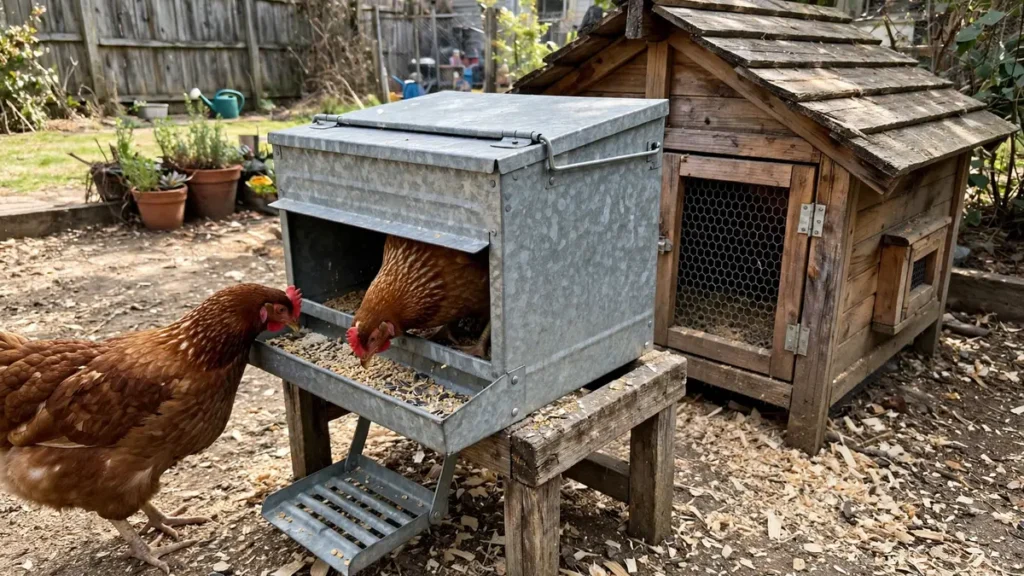
Grandpa’s Feeders makes the treadle feeder that most installers reach for first, and the reason is simple: it solves the problem customers actually complain about. The hen steps onto a treadle platform, the lid opens, the hen eats, and the lid closes when she steps off. Rats are too light to open it, sparrows cannot work the treadle, and the feed stays dry under a lidded galvanised steel body. For a startup, that mechanism is the whole sales pitch in one demonstration, because a customer who watches a hen open the feeder and a rat fail to open it does not need any more convincing.
The range covers small backyard flocks through to larger holdings, with standard and large sizes, and the galvanised steel build survives years outdoors without rusting through. Installation is mostly about the base: a flat, firm patch of ground or a paving slab, level in both directions, with the feeder sitting square so the treadle moves freely. Hens usually need a short training period, and a good installer leaves the treadle propped open for the first day or two, then shows the customer how to close it down gradually. That small piece of aftercare is what turns a working feeder into a happy customer, and it is worth building into every quote as a follow-up visit rather than a phone call.
2. RentACoop: The Best Tool for Treadle Feeders for Backyard Flocks
RentACoop is the American treadle feeder brand that most backyard installers stock alongside Grandpa’s, and it fills a useful gap: a lighter, more affordable treadle feeder in a range of capacities, from small flocks of a handful of hens up to larger backyard groups. The design is the same idea, a hen steps on the treadle and the lid opens, but the build is lighter and the price is lower, which makes it the right recommendation for customers who want rat-proofing without paying for the heaviest steel feeder on the market.
For an installer, the practical difference is weight and handling. A RentACoop feeder is easier to carry up a garden path, easier to position on a slightly uneven run floor, and easier to move when the customer rearranges the run. The trade-off is that it needs more careful siting, because a light feeder on soft ground can shift, and a shifted feeder can leave the treadle sticking. A good installer beds it on a slab or a board, checks the treadle travel before leaving, and shows the customer how to test it with a foot. That two-minute check at handover prevents most of the callbacks this feeder ever generates.
3. Dine-A-Chook: The Best Tool for Automatic and Weatherproof Feeding
Dine-A-Chook is an Australian feeder maker whose automatic and treadle feeders are built for weather that would defeat a lighter product. The feeders are rain-proof, with lids and seals that keep driving rain out of the feed, and the automatic models portion out feed on a schedule so the hens eat through the day without the owner topping up. For customers who work long hours or go away for a weekend, that combination of weatherproofing and automation is the feature that matters most, and it is the feature a founder should demonstrate rather than describe.
Installation is about position and protection. An automatic feeder needs a dry, sheltered spot, ideally under the coop overhang or a run roof, with the feed outlet clear of bedding so damp shavings cannot wick moisture into the mechanism. The installer should set the portion size with the customer present, watch the hens eat from it, and adjust the timing so the last portion lands before dusk rather than sitting overnight for the rats. Those small settings are the difference between a feeder that saves feed and a feeder that simply moves the waste to a different hour of the day.
4. Little Giant: The Best Tool for Hanging Feeders for Coops and Runs
Little Giant, from Miller Manufacturing, is the hanging feeder that most poultry keepers have seen, and that familiarity is exactly why it belongs in a startup range. The galvanised steel and heavy plastic hanging feeders come in sizes that suit a handful of hens through to a full backyard flock, and they hang from a chain or bracket at whatever height the installer chooses. A hanging feeder keeps the feed clear of bedding, droppings and ground moisture, which is the single cheapest improvement an installer can make to a flock that has been feeding from a bowl on the floor.
Mounting is the whole job with a hanging feeder, and it is where a professional earns the fee. The chain or bracket must hold the feeder level, because a feeder that hangs at an angle spills feed from the low side and starves the hens on the high side. The height must suit the smallest hen in the flock, with the tray at about back height, and the fixing must suit the structure, because a hook screwed into thin mesh will pull out under a full feeder. A good installer carries a range of hooks, chains and brackets, drills a proper fixing rather than relying on wire, and checks the height with the hens present before packing up.
5. OverEZ Chicken Feeder: The Best Tool for Large Gravity-Fed Installs
OverEZ makes a large gravity feeder that holds around fifty pounds of feed and mounts on a wall or a stand, and it is the right tool when the customer wants to fill the feeder once and forget about it for a week. The feed flows down by gravity into a tray as the hens eat, the lid seals against rain, and the capacity means a large flock can be fed without a daily top-up. For smallholders and customers with bigger flocks, that capacity is the feature that decides the sale, because it turns feeding from a daily chore into a weekly one.

Installation is a fixing job first and a feeder job second. A fifty-pound feeder full of feed is heavy, and the wall or stand it mounts on must carry that weight without flexing, because a feeder that sags will jam, spill or pull its fixings out. The installer should check the wall, use proper fixings rather than the screws that came in the box, and set the tray height for the flock before the first fill. It also pays to fill the feeder with the customer watching, so they can see how the gravity feed works and how to tell when it needs a refill.
6. KEBONNIXS: The Best Tool for Timer Feeders for Owners Who Travel
KEBONNIXS makes an automatic chicken feeder with a timer and a feed port, and it is the tool for customers who want feeding to happen on a schedule while they are away. The timer portions out feed at set times, the port design keeps rain and rats out of the store, and the feeder can be set to feed several times a day without anyone touching it. For owners who travel for work or take weekends away, that scheduling is the difference between keeping hens and giving them up, and it is a strong story for a founder to tell.
Installation is about power, position and testing. A timer feeder needs its battery or power supply checked and set up before handover, a sheltered position so driving rain cannot reach the mechanism, and a test run with the customer watching so they can see the portions land at the right times. The installer should also show the customer how to change the schedule, how to clean the port, and what to do if the feeder jams, because a timer feeder that the owner cannot adjust is a timer feeder that will be switched off and left in a corner within a month.
7. Harris Farms: The Best Tool for a Galvanised Feeder Range and Spares
Harris Farms makes a broad range of galvanised hanging and trough feeders, and it belongs in the range because it covers the everyday work that the specialist feeders do not. A galvanised hanging feeder is cheap, tough and easy to clean, a trough feeder suits chicks and young birds that cannot reach a hanging tray, and the range means an installer can match the feeder to the age of the birds rather than forcing one feeder to suit every stage of the flock. For a startup, that breadth is valuable, because it turns a single visit into a complete feeding setup rather than a single product sale.
The practical strength of the range is spares and replacements. Hanging feeders lose chains, trough feeders crack, and lids go missing, and a founder who carries Harris Farms spares can fix most of those problems on the spot instead of booking a return visit. The galvanised finish also survives outdoor life better than painted steel, which matters for feeders that live in a run through winter. A good installer checks the finish before fitting, because a feeder with a damaged coating will rust from that spot, and a rusted feeder is a feeder the customer will photograph and send to the founder.
8. Jobber: The Best Tool for Quoting, Scheduling and Invoicing
Jobber is the quoting, scheduling and invoicing tool that keeps a feeder installation startup organised, and it earns its place because feeder jobs are small, numerous and easy to lose track of. A feeder install takes an hour or two, which means the diary fills with many small jobs instead of a few big ones, and a founder working from memory will double-book, forget a follow-up or send a quote late. Jobber turns a site visit into a priced quote on the phone, books the job into the diary, and sends the invoice when the work is done, without any of it living in a notebook.
The quoting side matters most, because feeder jobs are won and lost on the speed of the quote. A customer who has just had a feeder install quoted while the founder is still standing in their garden is a customer who books there and then, while a customer who waits three days for a price has already rung two other installers. Jobber lets the founder build the quote from the feeder, the fixings and the travel, send it before leaving, and follow up automatically if it is not accepted. That speed is worth more than any discount, because it wins jobs at full price.
9. Housecall Pro: The Best Tool for Booking, Payments and Customer Messages
Housecall Pro is the booking, payment and customer-message tool that closes the loop Jobber opens, and it earns its place because feeder customers expect the same easy booking they get from every other trade. A customer should be able to book a feeder install online, get a confirmation message, get a reminder the day before, and pay by card on the day, without ringing the founder at all. Housecall Pro does all of that from the phone, which is where the founder is for most of the working day.
The payment side is the part that changes the cash flow of a small startup. Feeder jobs are small, and a founder who invoices after the job and waits for a bank transfer will spend Friday chasing money instead of fitting feeders. Housecall Pro takes the card payment on site, sends the receipt automatically, and keeps the record straight for the accounts. It also keeps the customer messages in one place, so the question about the treadle spring and the question about the next feed delivery do not get lost between text messages and voicemail.
Building Your Starter Stack for a Chicken Feeder Installation Startup
Start with three tools only: one treadle feeder, one hanging feeder and one quoting tool. Grandpa’s Feeders covers the rat-proofing, Little Giant covers the everyday hanging installs, and Jobber covers the quoting and the diary. That stack fits in one van, costs little to start, and handles most of the jobs a new startup will see in its first month. Everything else can wait until a real job shows you need it, and the founder who buys the whole range on day one will spend the first month learning products instead of fitting feeders.
Add the second wave when the diary fills. Dine-A-Chook or KEBONNIXS covers the customers who travel, OverEZ covers the large flocks, and Housecall Pro covers the bookings and payments once the phone will not stop ringing. Founders who also fit the fences around the feeders will recognise the same trade from chicken run installation startups, because the run is where the feeder lives, and a feeder mounted well in a run that is built well is a job that never comes back as a complaint. Add tools one at a time, measure what each one saves, and drop anything that does not earn its place within a month.
Chicken Feeder Installation Startup Checklist
- Count the hens, check the feed type and ask about rats before recommending any feeder.
- Measure the mounting height, the bedding depth and the run floor before pricing the job.
- Bed treadle feeders on a flat, firm base and test the treadle with the hens present.
- Fix hanging feeders level, on proper fixings, at the height of the smallest hen.
- Show the customer how to fill, empty and clean the feeder before leaving the garden.
- Book the follow-up feeder check before leaving, and send the quote and invoice on the day.
Frequently Asked Questions
What are the best AI tools for chicken feeder installation startups in 2026?
The best tools are a treadle feeder range such as Grandpa’s Feeders for rat-proofing, an automatic feeder such as Dine-A-Chook or KEBONNIXS for owners who travel, a hanging feeder such as Little Giant for everyday installs, and business tools such as Jobber for quoting and Housecall Pro for bookings and payments. Start with one feeder range and one quoting tool, then add the rest when real jobs show you need them.
How much should a chicken feeder installation startup spend on AI tools?
Start with a few hundred pounds or dollars of feeder stock and one monthly business tool, and let the first jobs pay for the next purchase. A treadle feeder and a quoting tool should pay for themselves within the first few installs, because rat-proofing saves the customer feed every week and a fast quote wins jobs at full price. Avoid long contracts and large stock orders until the diary is full and the pattern of jobs is clear.
Can AI tools really choose the right feeder without a site visit?
No, and a founder should never pretend otherwise. Photos and flock counts help narrow the choice, but the mounting height, the ground, the run floor and the rat pressure can only be judged on site. AI tools speed up the quoting, the scheduling and the follow-up, but the feeder choice itself needs a human standing in the garden with the hens in front of them.
Do chicken feeder installation startups need to worry about rats on every job?
Yes. Rats learn where feed is within days, and a feeder that cannot keep them out will cost the customer feed every night and cost the installer their reputation within a month. Treadle lids, raised mounting and sealed lids are the core of the job, not an optional extra, and every quote should explain the rat-proofing in plain language so the customer understands what they are paying for.
What is the best first AI tool for a one-person chicken feeder business?
A quoting tool such as Jobber, because feeder jobs are small and numerous, and the business that quotes fastest wins the most work. Pair it with one treadle feeder range so the founder has something to sell on every visit, and add scheduling and payments once the diary is full. The feeder range and the quoting tool together cover the two things that decide whether a new startup survives its first three months.
Can the skills from chicken feeder installation transfer to other feeder trades?
Yes. The same habits, quoting, mounting, measuring and customer care, carry over to related work, and many founders take on bird feeder installation startups as a second trade, because the jobs are similar in size and the diary fills the same way. The feeder types change, with seed and squirrel guards instead of treadles and timers, but the business behind them is the same.
The Bottom Line
A chicken feeder installation startup succeeds on two things: a feeder that keeps rats out and feed dry, and a business that quotes fast, turns up on time and comes back to check. Start with a treadle feeder, a hanging feeder and a quoting tool, add automation and booking tools when the diary fills, and let every finished job earn the next one. The hens will not thank you, but the customers will, and in this trade that is the same thing.

Keep what speaks to you.
Leave room for your own perspective.


