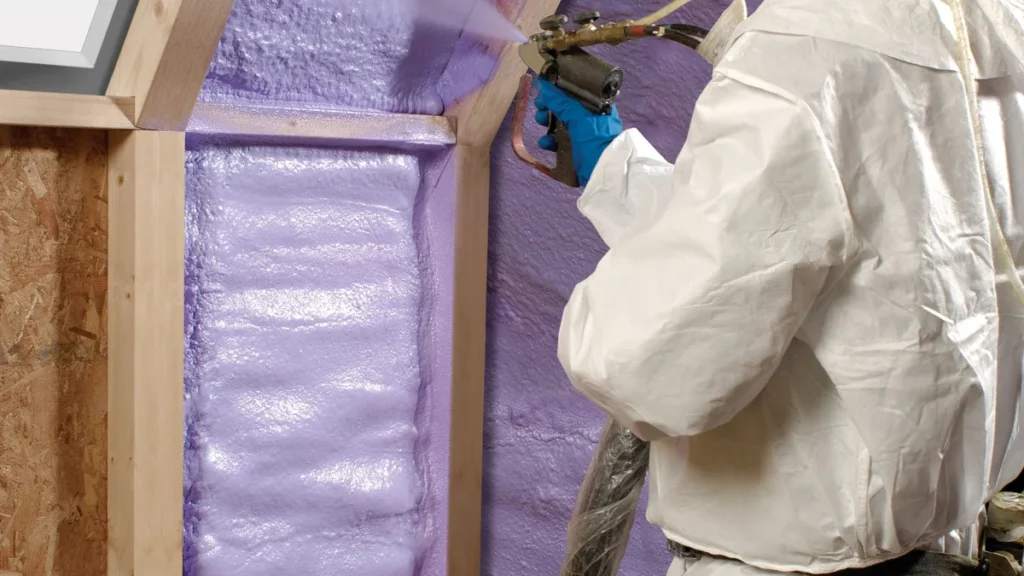
The best AI tools for attic insulation startups in 2026 turn a two-person crew with a blowing machine and a van into a business that can audit an attic, price the job, book the work, and follow up with the customer without hiring an office team first. An attic insulation startup does not win its first jobs by owning the biggest truck or the cheapest material. It wins them by answering first, explaining the attic clearly, quoting a fair price on the same day, and finishing the job without a mess left behind, and that is exactly what the right AI tools make possible for a small team with far more ambition than back-office staff.
Starting an attic insulation company has always been cheap to enter and hard to survive. A blowing machine, a few hoses, protective gear, and a handful of contacts can win the first few jobs, but the business side arrives all at once. Ten enquiries land while you are crawling through a hot attic, a homeowner wants a written quote before dinner, a supplier needs a materials order confirmed, and a past customer leaves a review that either brings in three more jobs or quietly warns the whole street away. The work itself is physical and honest, yet the jobs are won and lost in the hours around the job, not only in the attic.
Attics make the business harder than general insulation work in one important way. Every attic is different, and every attic hides its problems. One house has a low-pitched roof with barely enough room to move, the next has recessed lights, bathroom fans venting into the roof space, old batts compressed flat by years of stored boxes, and air leaking up from the rooms below through every pipe, wire, and hatch. A startup that treats every attic as the same flat surface will underprice the awkward jobs, overpromise on comfort, and lose money on call-backs. The tools below are chosen for that reality: they help a new attic insulation business measure the space, find the leaks, prove the savings, price the blown-in or spray foam work fairly, keep the crew busy, and turn one finished attic into the next five referrals.
Key takeaways
- Attic jobs are won on the audit, not the install: thermal imaging, blower-door testing, and a clear savings report turn a vague complaint about a cold bedroom into a signed job.
- Price the attic you actually visited: blown-in depth, air sealing, baffles, ventilation, and hatch work must all appear in the quote, or the margin disappears on the day.
- Answer every call within minutes, even from inside an attic: AI answering and messaging tools stop the most common way new insulation startups lose work.
- Start with three tools, not nine: an audit and estimating tool, a scheduling and invoicing tool, and a review tool will carry the first year.
- Photograph every attic before and after: dated thermal images and depth photos are the proof that sells the next job and protects the business if a customer complains.

Best AI Tools for Attic Insulation Startups at a Glance
| Tool | What it does | Best for | Attic strength | Price signal |
|---|---|---|---|---|
| Snugg Pro | Home energy audits and insulation proposals | Audit-led attic startups | Attic-specific audit reports and savings estimates | Monthly subscription |
| Ekotrope | Energy modelling and compliance ratings | Startups working with builders | R-value and energy-code calculations for attic upgrades | Per project or monthly |
| Retrotec FanTestic | Blower-door air-leakage testing | Air-sealing attic crews | Proves attic air leaks before and after sealing | Software plus test equipment |
| Seek Thermal | Thermal imaging cameras and analysis | Crews proving hidden heat loss | Finds missing insulation and bypasses in minutes | Camera from a few hundred dollars |
| FieldPulse | Field service scheduling and invoicing | Small attic crews | Job checklists for attic prep and clean-up | Monthly per user |
| Workiz | Booking, dispatch, and customer messaging | Startups with no office staff | Same-day attic bookings from missed calls | Monthly per user |
| Birdeye | Review and referral automation | Startups building local trust | Attic photo reviews that sell the next street | Monthly subscription |
| CallRail | AI call tracking and conversation analysis | Startups spending on local ads | Shows which ads bring real attic enquiries | Monthly per number |
| Thryv | CRM, invoicing, and customer follow-up | Owner-operators growing steadily | Keeps every attic customer in one place | Monthly subscription |
What Makes an Attic Insulation Startup Different
An attic insulation startup is not a general building company, and it is not a whole-house insulation contractor either. The work happens in one awkward, hot, dusty space above the living rooms, and the customer judges the result by comfort they can feel rather than by anything they can see. A homeowner cannot watch the work the way they can watch a new kitchen being fitted. They feel the bedroom warm up in winter, they notice the upstairs staying cooler in summer, and they see the energy bill fall over the following months. That delay between the work and the proof is the central problem of the business, and it is the problem the best AI tools solve.
Finally, attic insulation is a trust business built street by street. Homeowners invite a stranger into their home, through their hallway, and into the space above their bedrooms. They worry about dust, about damage to stored belongings, about whether the material is safe, and about whether the promised savings are real. A startup that photographs the attic before and after, explains the work in plain language, leaves the house clean, and follows up after the first cold month will earn the reviews that fill the next season. The tools that make that proof and that follow-up automatic are the ones that repay their cost fastest.
The 9 Best AI Tools for Attic Insulation Startups in Detail
1. Snugg Pro
Snugg Pro is an energy-audit platform built for home performance contractors, and it fits an attic insulation startup better than almost any general estimating tool because it starts with the house, not with the invoice. The auditor walks the home, records the attic conditions, notes the existing insulation type and depth, flags air leaks, and the software turns that walk-through into a professional report showing the homeowner what is wrong, what the fix will cost, and what the savings should be. For a new attic business, that report is the sales tool: it replaces a verbal promise with a document the homeowner can show a partner and compare with a rival quote.
The attic-specific strength is the way Snugg Pro handles the audit as a story. The report can show the current attic insulation level against the recommended level, the air-sealing work needed before new material goes in, and the expected improvement in comfort and energy use. A homeowner who has lived with a freezing spare bedroom for three winters does not need a lecture on R-values; they need to see their own attic, their own gaps, and their own numbers. Snugg Pro gives a one-person startup that level of professionalism on the first job, without hiring an energy consultant.
2. Ekotrope
Ekotrope is an energy-modelling platform used for home energy ratings and code compliance, and it earns its place for attic insulation startups that work with builders, developers, or homeowners who need a formal rating. Where Snugg Pro sells the job to a homeowner, Ekotrope proves the numbers behind the job: it models the home, calculates the effect of raising attic insulation to a given level, and produces the documentation that builders and energy programmes ask for. A startup that can offer that modelling alongside the installation can win work from builders who need rated homes, not just from homeowners who feel cold.
3. Retrotec FanTestic
Retrotec makes blower-door testing equipment, and FanTestic is the software that turns a blower-door test into a clear, professional result. A blower door is a fan fitted into a doorway that depressurises the house so air leaks show up clearly, and for an attic insulation startup it is the single most convincing piece of proof available. Before the work, the test finds the leaks around the attic hatch, pipe penetrations, and recessed lights. After air sealing and insulation, a second test shows the improvement in a number the homeowner can understand. That before-and-after pair is worth more than any brochure.
Air sealing is the part of attic work that homeowners cannot see and therefore doubt, and it is also the part that makes the insulation perform. Blown-in material laid over a leaky attic floor will not deliver the promised comfort, because warm air keeps escaping through the gaps. A startup that tests, seals, tests again, and then insulates can charge fairly for the sealing work, because the customer has seen the leak and then seen it fixed. FanTestic produces the report that documents both tests, which protects the business if a customer later claims the work made no difference.
4. Seek Thermal
Seek Thermal makes compact thermal imaging cameras that attach to a phone, and for an attic insulation startup they are the fastest way to show a homeowner what is wrong with their attic. Point the camera at the ceiling of the cold bedroom and the missing insulation shows up as a cold patch; point it at the attic floor and the air leaks around pipes and lights glow as warm streaks. The image takes seconds to capture, it needs no explanation, and it turns a technical conversation into a visual one that any homeowner understands immediately.
The attic-specific advantage is speed and portability. A thermal camera that fits in a pocket can be carried into the attic, used in the rooms below, and shown to the customer on the spot, while the auditor is still standing in the hallway. That immediacy wins jobs: the homeowner sees the problem with their own eyes, in their own house, and the quote that follows feels like a solution rather than a sales pitch. The images also become the before-and-after proof that fills the startup’s review pages and social posts, with the customer’s permission.
5. FieldPulse
FieldPulse is a field service platform built for small trade businesses, and it suits an attic insulation startup because it keeps the whole job in one place without the complexity of a large enterprise system. Estimates, scheduling, job checklists, invoicing, and customer records sit together, so the owner can quote an attic on Monday, schedule the crew on Wednesday, and send the invoice on Friday from the same screen. For a two-person crew, that simplicity matters more than a long feature list: the software should be usable from a van, with dusty hands, between jobs.
The attic strength is the job checklist. Attic work has a sequence that must not be skipped: clear the hatch area, protect the hallway floor, photograph the existing insulation, fit baffles, seal the leaks, blow in the material to the agreed depth, insulate and seal the hatch, clean up, and photograph the finished depth. FieldPulse lets the startup build that sequence into every job, so a new installer follows the same steps as the founder, and the customer gets the same careful job every time. The checklist also becomes the record if a customer later asks what was done.
6. Workiz
Workiz is a field service platform with strong booking and messaging features, and it fits an attic insulation startup that has no office staff and cannot afford to miss a call. When a homeowner rings from a cold bedroom and the crew is in an attic, Workiz can capture the enquiry, offer a booking slot, send a confirmation text, and remind the customer the day before the audit, all without anyone picking up the phone. That automation is the difference between a diary that fills itself and a voicemail box that fills instead.
The attic-specific value is the speed of the first response. Attic enquiries are often urgent and emotional: the homeowner has just had a shocking energy bill, or a child is sleeping in a freezing room, and they will book the first company that responds helpfully. Workiz shortens that response from hours to minutes, and it keeps the conversation in one thread, so the quote, the booking, and the reminder all arrive in the same place. The customer feels looked after before the crew has even arrived, which sets the tone for the whole job.
7. Birdeye
Birdeye is a review and reputation platform that automates the ask for reviews, referrals, and survey feedback, and for an attic insulation startup it turns finished jobs into the marketing that fills the next season. The moment an attic job is complete, Birdeye can send the customer a short message asking for a review, with a link to the review site the startup cares about most, and it can prompt the customer to share before-and-after photos. A homeowner who has just felt the difference in their upstairs bedroom is far more likely to leave a warm review in that first week than three months later, and automation makes sure the ask happens every time.
The attic advantage is the visual proof. Attic insulation is invisible once the hatch closes, so the review that carries a photo of the finished attic depth, or a thermal image showing the cold patch gone, is far more persuasive than a line of text. Birdeye helps the startup collect those photo reviews systematically, rather than hoping a customer remembers to post one. Over a season, a wall of local reviews with real attic photos becomes the reason the next street chooses this startup over a cheaper rival, and it supports a fair price rather than a race to the bottom.
8. CallRail
CallRail is an AI call-tracking and conversation-analysis platform, and it earns its place for an attic insulation startup that spends money on local advertising and wants to know what that money actually buys. Every advert, flyer, or online listing can carry a different phone number, so the startup can see exactly which source produced the call, whether the call became an audit booking, and which adverts produced only tyre-kickers. For a new business with a small marketing budget, that knowledge is the difference between spending wisely and spending blindly.
The attic-specific benefit is the conversation analysis. CallRail can transcribe calls and highlight the phrases that matter: a caller asking about blown-in insulation for a cold loft, a caller asking about spray foam for a roof deck, a caller worried about price, or a caller who was put off by a long wait. The owner can listen to the calls that did not convert and hear, in the customer’s own words, where the business lost them. That feedback improves the phone manner, the quote, and the advert itself, and it does so from real conversations rather than guesswork.
9. Thryv
Thryv is a business platform that combines customer records, invoicing, payments, and follow-up messaging for small service businesses, and it suits an attic insulation startup that wants one system for the customer relationship rather than five separate apps. Every attic customer, from the first enquiry to the final invoice and the follow-up message after the first cold month, sits in one record. The owner can see who was quoted and never booked, who needs a reminder about a top-up in a few years, and who has already recommended the business to a neighbour.
The attic strength is the follow-up. Insulation is not a purchase a homeowner repeats every year, so the business depends on referrals and on the quiet seasons being filled by past customers who remember the name. Thryv makes it easy to send a seasonal message before winter, to ask a past customer for a review, or to offer a free attic check to a customer whose insulation is now five years old. Those small, well-timed messages keep the business in mind without a large advertising spend, and they turn a one-off job into a lasting local reputation.
How to Choose AI Tools for an Attic Insulation Startup
Choose the audit tool first, because everything else in the business depends on the quality of the survey. If the audit is wrong, the quote is wrong, the materials order is wrong, and the crew arrives to find an attic they cannot finish in the day. Test the audit tool on three very different attics before paying: a low-pitched attic with poor access, a large attic with old compressed batts, and a spray foam job on a roof deck. If the software handles all three clearly, it will handle the ordinary jobs easily. If it struggles on the awkward ones, it will cost money on exactly the jobs where the margin is thinnest.
Next, choose the tool that answers the phone. A startup with no office staff needs a booking and messaging system that works while the crew is in an attic, and the test is simple: ring the business number during a job and see what the customer experiences. If the caller can book an audit, receive a confirmation, and get a reminder without speaking to anyone, the system is doing its job. If the caller reaches a voicemail that nobody checks until evening, the system is a decoration. The best audit tool in the world cannot save a business that never answers its phone.
Then look at the whole stack as a system, not as nine separate purchases. The audit report should flow into the quote, the quote should flow into the booking, the booking should flow into the job checklist, and the finished job should flow into the invoice and the review request without anyone retyping an address or a price. Every time information is retyped, a mistake enters the business, and attic jobs have no spare margin for mistakes. A new attic business can learn a great deal from how the best AI tools for insulation startups are organised around the audit-to-invoice flow, because the same sequence decides whether an attic startup makes money or merely stays busy.
Building Your Starter Stack for an Attic Insulation Startup
The first ninety days should be deliberately simple. Start with Snugg Pro for the audit and proposal, FieldPulse for scheduling and invoicing, and Birdeye for reviews. Those three tools cover the whole journey from the first visit to the first review, and they can be learned properly in a week rather than half-learned over a season. The crew should be able to run an audit, send a proposal, book the job, complete the checklist, send the invoice, and ask for a review without the owner sitting beside them, and that is the real test of a starter stack.
In the second ninety days, add the proof tools: a Seek Thermal camera for every audit and a Retrotec blower-door test for air-sealing jobs. By then the business will have enough jobs to see which customers doubt the savings and which attics hide the worst leaks, and the proof tools will answer both doubts with evidence. Photograph every attic before and after, save the thermal images with the job record, and file the blower-door results where they can be found in a year, because a customer who rings back with a question deserves an answer from the record, not from memory.
When the diary is full for two weeks ahead, add the growth tools: Workiz for faster booking, CallRail to learn which advertising works, and Thryv to keep the growing customer list in order. The order matters, because growth tools added too early only add cost, while proof tools added too late only add regret. A useful comparison for this stage is the best AI tools for insulation contractors, which shows how larger insulation businesses organise estimating, scheduling, and energy audits once the diary is full, and which of those habits a growing attic startup should adopt next.
Attic Insulation Startup Checklist
- Run a thermal scan and a blower-door test before pricing any attic, and photograph the existing insulation depth at three points.
- Price air sealing, baffles, ventilation, and hatch work as separate lines, so the customer sees what the attic actually needs.
- Answer every enquiry within minutes, confirm every audit by text, and send the proposal the same day as the visit.
- Build the attic job checklist into the scheduling tool, and complete it on site before the crew leaves.
- Photograph the finished insulation depth and the sealed hatch, and save the images with the job record.
- Ask for a review the day after the job, and follow up after the first cold month to check the comfort has improved.
Frequently Asked Questions
How much should an attic insulation startup spend on AI tools?
Most new attic insulation startups spend between one and two hundred dollars a month on software in the first year, starting with an audit tool and a scheduling tool and adding review and proof tools as the diary fills. The honest test is the cost per job: divide the monthly subscriptions by the number of jobs completed, and the figure should be a small fraction of the profit on a single attic. A tool that costs more than the profit of one job a month must win an extra job, save a full day of office work, or prevent a call-back, and if it does none of those things within sixty days, cancel it. Avoid long annual contracts in the first year, when the business does not yet know which tools it will still be using in six months.
Can AI tools really measure an attic accurately enough for a quote?
AI tools can measure, model, and estimate an attic well, but they cannot replace a visit to the attic itself. Energy-modelling software can calculate the effect of raising insulation to a given level, thermal cameras can find the missing patches, and estimating software can price the material, yet only a person in the attic can see the low eaves, the blocked ventilation, the recessed lights, and the hatch that needs sealing. The right approach is to use the tools to make the visit faster and the quote clearer, and to treat any quote written without a visit as a rough estimate, not a fixed price. Homeowners respect a startup that says so plainly far more than one that guesses and then asks for more money on the day.
What is the first AI tool a new attic insulation company should buy?
Buy the audit and proposal tool first, because the audit is where attic jobs are won and where the price is set. A clear report with photographs, a savings estimate, and a priced proposal turns a cold bedroom into a signed job on the same day, while a verbal quote leaves the homeowner to compare prices with a rival who did send a document. The second purchase should be the tool that answers the phone and books the audit, because the best audit tool is useless if the customer has already booked someone else. Scheduling, invoicing, and reviews can follow once the first two are working well, and the energy-modelling and call-tracking tools can wait until the diary is full.
Do attic insulation startups need a blower-door test on every job?
Not on every job, but on every job where air sealing is part of the price. A blower-door test is the only honest way to show a homeowner where their attic leaks and to prove the sealing work made a difference, and it protects the business if a customer later claims the work changed nothing. For a simple top-up of blown-in insulation over an attic that is already well sealed, a thermal scan and depth photographs may be enough. For a full air-seal and insulation job, test before and after, file both results with the job record, and explain the numbers to the customer in plain language. The test costs time on the day, and it repays that time in trust and in fewer disputes.
How do AI tools help an attic insulation startup get more reviews?
Review tools help by asking at the right moment and making the reply easy. A short message sent the day after the job, when the homeowner has already noticed the upstairs feeling warmer, with a direct link to leave a review and an invitation to share a photo, will collect far more reviews than a request made weeks later or never made at all. The tools also track who has been asked, so no customer is asked twice and nobody is forgotten, and they collect the photo reviews that matter most for invisible work like attic insulation. The same habit of careful, documented surveying that wins attic work also applies to neighbouring trades, and the best AI tools for home inspection startups show how audit-led businesses turn thorough inspections into trusted reviews and repeat referrals.
Will AI replace attic insulation installers?
No, and it is not close to doing so. AI can measure an attic, find a leak on a thermal image, write a proposal, book a diary, and chase an invoice, but it cannot crawl through a low attic, fit a baffle at the eaves, seal a hatch, or blow insulation to an even depth without leaving a mess. The physical work, the judgement about a damp patch or a wasp nest, and the care taken in a customer’s home will remain human work for a long time. What AI does replace is the office work that used to need a full-time member of staff: the missed calls, the retyped quotes, the forgotten follow-ups, and the reviews that were never asked for. A startup that uses the tools for the office and keeps people for the attic will beat a rival that tries to do either job without the other.
The Bottom Line
The best AI tools for attic insulation startups in 2026 are the ones that make the invisible work visible: an audit that shows the homeowner their own attic, a thermal image that finds the leak, a blower-door test that proves the seal, a quote that prices the whole job, and a review that carries the photograph of the finished depth. Start with three tools, add the proof tools when the diary fills, and add the growth tools only when the diary stays full. Keep the stack small, the audit honest, the phone answered, and the attic clean, and the business will grow street by street on the only marketing that lasts in this trade: a warm bedroom, a fair bill, and a neighbour who heard about both.

Keep what speaks to you.
Leave room for your own perspective.


