
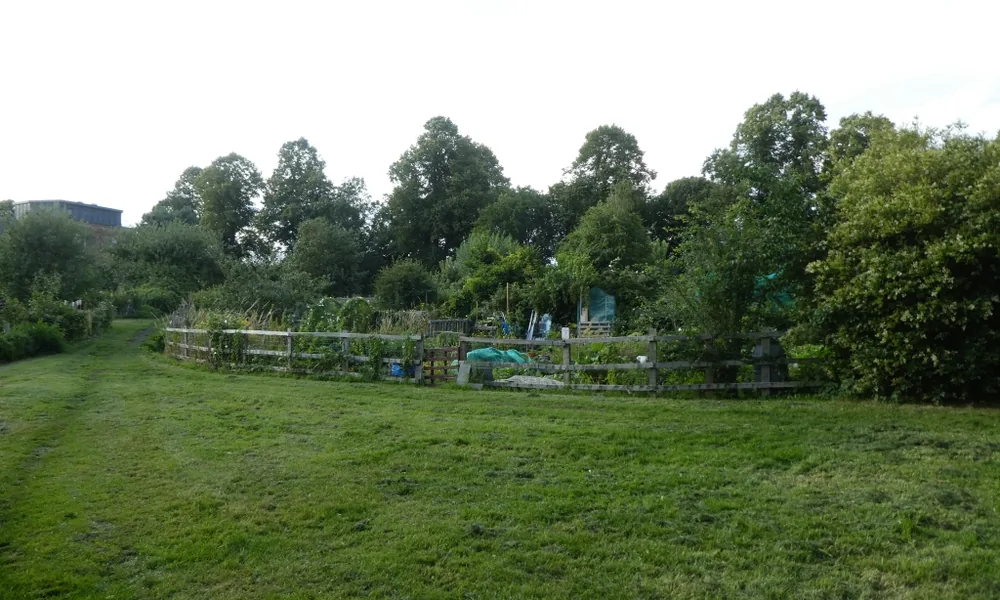
An allotment is not a garden. It is a rented patch of shared ground: a field divided into numbered plots, joined by paths, served by standpipes and water points, and anchored by one communal shed where tools, wheelbarrows and the noticeboard live. Nobody owns a plot outright. Tenants rent one for a season or a year, grow what they like on it, and share everything around it. An allotment installation startup is the business that builds that shared ground from scratch, turning an empty field into a working site that a council, parish or community group can hand over to its first tenants.
The job starts with a walk across rough grass and ends with a site that works without its builder. In between come the survey, the plot layout, the paths, the water supply, the compost bays and the shed. Get the layout wrong and plots flood, paths turn to mud, or half the tenants cannot reach a tap. Get it right and the site runs itself for years, with a waiting list instead of empty plots. That is what the client is buying: not plants, not a pretty border, but a practical site that dozens of strangers can share without getting in each other’s way.
The nine tools in this guide cover the whole build in the order a startup actually uses them. Three measure and design the site, three handle the shared water, waste and shed infrastructure, and three run the quoting, scheduling and money. None of them grows a single vegetable. Every one of them makes the site cheaper to build, easier to explain to a client, or simpler to hand over on the day the first tenants arrive.
Key takeaways
- An allotment startup sells a finished shared site — plots, paths, water points and a communal shed — not plants or planting plans.
- Survey and layout come first: a bad plot plan is expensive to fix once paths are laid and pipes are buried.
- Water points decide whether tenants stay: every plot should sit within a short walk of a tap.
- The shed, compost bays and paths are shared infrastructure, so they need to be tougher than anything in a private garden.
- Nine tools cover the build in three groups — survey and design, shared infrastructure, and running the business.

How an allotment installation startup actually works
The client is almost never a homeowner. It is usually a town or parish council, a housing association, a charity or a community group that owns a piece of land and wants it turned into allotments. They have a budget, a deadline and a waiting list of local people. They do not have a surveyor, a groundworks crew or a plan. The startup supplies all three, and the tools below are how a small team does that work without hiring an office full of specialists.
The build follows the same sequence on every site. First comes the survey: measuring the field, noting the slope, the wet corners, the existing trees and the nearest water main. Then the layout: dividing the field into plots of a standard size, leaving paths wide enough for a wheelbarrow, and placing water points so no plot is far from a tap. Then the groundwork: paths, edging, standpipes and drainage. Then the shared buildings: the communal shed, the compost bays and the fencing and gates. Only at the end do the plots themselves get marked out, numbered and handed over.
That sequence is what separates an allotment build from a home garden job. A private vegetable garden is one household’s beds behind one house, planned around what one family eats. The tools for that job are covered in our guide to AI tools for vegetable garden installation, and they are built around planting plans, crop rotation and watering one household’s beds. An allotment site is different in kind: many tenants, shared paths and water, a communal shed, and a client who needs the whole site documented and handed over in one piece.
It is also different from a cut-flower production build. A cut-flower operation is organised around cutting beds, succession blocks and a conditioning room where stems are cooled and bunched for sale. An allotment site has none of that. There is no crop to harvest, no stems to condition and no buyer waiting at the gate. The product is the site itself: marked plots, solid paths, working taps and a shed with a roof that does not leak. If a tool cannot help with the site, it does not belong in this stack, however good it is at growing flowers.
Money follows the same logic. The startup is usually paid in stages: a deposit on the signed layout, a payment when the groundwork is done, and the balance on handover. Some sites add a small annual maintenance contract for path repairs, tap servicing and shed upkeep. The quoting, scheduling and invoicing tools matter as much as the ones that draw the plan, because a two-person crew can only build one site at a time and cannot afford to lose a week to paperwork.
The nine tools at a glance
| Tool | Best for | What it does on an allotment site |
|---|---|---|
| DroneDeploy | Surveying the field | Flies the site and builds a measured aerial map before any plot is marked. |
| SketchUp | Drawing the layout | Builds the plot, path, water-point and shed plan in 3D for the client to approve. |
| MySoil | Testing the ground | Tests soil from each corner of the field so plots are graded honestly. |
| Netafim | Communal water points | Plans drip lines and standpipes so every plot sits near a working tap. |
| HotBin | Communal compost bays | Supplies hot composters that clear plot waste fast in a small footprint. |
| Tiger Sheds | The communal shed | Supplies a tough shared shed for tools, wheelbarrows and the noticeboard. |
| Buildxact | Estimating the job | Prices paths, pipes, fencing and the shed from the measured plan. |
| ServiceM8 | Scheduling the crew | Books the groundwork crew, tracks each job and keeps the client updated. |
| Xero | Invoicing and accounts | Sends stage invoices, chases payment and keeps the books straight. |
Survey and design: measure the field before you mark a plot
Every expensive mistake on an allotment site is a layout mistake. Plots drawn on a flat paper plan turn out to cross a wet hollow, or the water main ends up at the far end of the field from the taps. The three tools in this group stop that happening. They measure the real ground, draw the real plan and test the real soil, in that order, before a single path is laid.
1. DroneDeploy: the best tool for surveying the field
DroneDeploy turns a drone flight into a measured map of the whole site. The drone photographs the field from above, and the software stitches the photos into one overhead map with real distances on it. A startup can measure a two-acre field, mark the wet corners and check the slope in a single morning, instead of spending two days with a tape measure and a notebook.
That map becomes the base layer for everything that follows. The plot layout is drawn on it, the path routes are checked against it, and the water main route is planned on it. When the client asks why the plots are arranged a certain way, the answer is on the map: the slope, the trees and the wet ground are all visible. The software also stores each flight, so the startup can fly the site again at handover and show the finished allotments against the bare field it started with.
DroneDeploy is a paid subscription with a free trial, and it needs a drone and a licensed operator, which is the real cost. For a startup building several sites a year, that cost pays for itself on the first job that avoids a rework. For a one-off build, hiring a local drone surveyor for a morning is cheaper. Either way, measure the field from the air before marking a single plot.
2. SketchUp: the best tool for drawing the plot, path and shed layout
SketchUp is the drawing board for the whole site. The startup builds the allotment in 3D: numbered plots in rows, paths between them, water points at the path junctions, the communal shed on its concrete base, the compost bays and the boundary fence. The client can walk through the model on screen and see exactly what they are paying for before any ground is broken.
That visual matters because allotment clients are rarely technical. A council committee will not read a groundworks specification, but it will understand a 3D view of its own field with plots, paths and a shed on it. Ready-made components help too: shed, water tank, fence panel and gate models can be dropped into the plan instead of drawn from scratch. The software’s AI-assisted image tool can also turn a plain model view into a more realistic render for the proposal document.
The finished plan does double duty. It goes into the quote, so the price is tied to a drawing the client has approved. And it goes to the crew on site, so the people laying paths and digging trenches are working from the same plan the client signed. When a tenant later asks why their plot is a certain shape, the answer is in the model. SketchUp has a free web version for simple work and paid plans for the full desktop tools, which is enough for a startup to begin without a large software bill.
3. MySoil: the best tool for testing the ground plot by plot
MySoil is a soil testing kit with lab analysis behind it. The startup takes samples from each corner of the field, posts them off, and gets back a report on nutrients, pH and soil type for each sample, with plain-language recommendations. That report answers the question every allotment client asks sooner or later: is this ground actually fit to grow on?
The value is in the honesty it forces. Some fields have one good corner and one patch of rubble-filled ground where an old building once stood. Without testing, the startup discovers that only when tenants complain that nothing grows on plots twelve to twenty. With testing, the poor ground is found before the layout is final, and the plan can put the compost bays or the shed there instead of plots. The report also goes into the handover pack, so tenants start with real information about their soil instead of guesswork.
MySoil is a one-off kit price per sample rather than a subscription, which suits a project-based business. The startup orders a handful of kits per site and charges them to the job. It is a small cost beside the groundwork bill, and it is the cheapest insurance against the most embarrassing failure an allotment builder can have: handing over plots where nothing grows.
Water, waste and the shed: the shared infrastructure
Plots are private, but everything that makes them usable is shared. The water points, the compost bays and the shed belong to the whole site, get used by every tenant, and take far more wear than anything in a private garden. This group of tools covers that shared infrastructure: getting water to every plot, clearing the waste every plot produces, and housing the tools everyone shares.
4. Netafim: the best tool for communal water points
Netafim is a drip irrigation company whose planning tools and digital platform help design watering for a whole site rather than one bed. On an allotment build, that means planning the standpipe network: where the main enters the field, where each standpipe sits, how the pipes run under the paths, and how much water each section of the site can draw at once. The aim is simple and unforgiving: no tenant should carry water far, and the pressure should not collapse when four tenants open taps at the same time.
The planning work matters because water is the most common complaint on allotment sites. Too few taps and tenants queue or drag hoses across other people’s plots; taps in the wrong places and the paths turn to mud around them. Netafim’s approach, including its digital irrigation scheduling platform, helps the startup size the system for real shared use instead of guessing from a single garden tap. Drip lines can also serve any shared beds or hedging, so communal planting is watered without a volunteer rota.
Some allotment sites later add a shared greenhouse or polytunnel, and the water plan should leave capacity for it from the start. The tools for fitting one out are covered in our guide to AI tools for greenhouse installation, but the pipework decision happens now, while trenches are open. Adding a tap later means digging up a finished path, which costs more than the greenhouse itself. Netafim equipment is specified through its dealers and installers, so the startup prices it as part of the groundwork quote rather than buying it off a shelf.
5. HotBin: the best tool for communal compost bays
HotBin makes a hot composter that turns garden waste into compost in weeks instead of the year a cold heap takes. That speed is exactly what a shared allotment site needs. Twenty or thirty plots produce a constant stream of weeds, prunings and spent plants, and a site with nowhere to put it ends up with a fly-tipped corner behind the shed. A row of hot composters at the compost bay keeps that waste moving.
The footprint is the other reason it fits. A traditional three-bay compost area eats a large slice of a small site. Hot composters work in a much smaller space and reach the temperatures that kill weed seeds, which matters when the finished compost goes back onto other people’s plots. The startup can show tenants a working system on handover day instead of pointing at an empty bay and hoping someone builds it later.
HotBin units are a one-off purchase, sized by the number of plots: usually two or three for a medium site, with room to add more. The handover pack should include a one-page guide to what goes in and what stays out, because a hot composter filled with the wrong waste is just an expensive bin.
6. Tiger Sheds: the best tool for the communal shed
Tiger Sheds is a UK shed maker with a wide range of garden buildings, and the communal shed is the one building every allotment site shares. It stores the wheelbarrows, the communal tools and the spare timber. It holds the noticeboard where the site rules and the waiting list live. On many sites it is also the shelter where tenants wait out a shower. It needs to be bigger, tougher and better roofed than any shed a single household would buy.
The startup’s job is specification, not just supply. The shed needs a solid base, a wide door a wheelbarrow can pass through, a lock every tenant can use, and a roof that will not leak in its first winter. Tiger Sheds offers installation with its buildings, which suits a startup that is already managing groundworkers on site: the shed arrives, goes onto the prepared base, and is part of the handover rather than a separate job for the client to organise. Windows, shelving and a workbench inside are worth adding at this stage, when they cost little.
Price the shed as infrastructure, not as an afterthought. A cheap shed that leaks or loses its door in the first storm becomes the site’s most complained-about feature, and the startup that supplied it gets the call. A well-specified communal shed, on the other hand, is the building tenants photograph when they show friends their new plot. It is the visible proof that the site was built properly.
Running the business: quotes, crews and cash
A good site plan does not pay the bills. The last three tools run the business side: turning the measured plan into a price the client can sign, turning the signed price into a scheduled job, and turning the finished job into money in the bank. A two-person startup that gets this group right can build sites back to back. One that gets it wrong spends its weeks chasing paperwork instead of laying paths.
7. Buildxact: the best tool for estimating the job
Buildxact is estimating software built for small builders and trade businesses. The startup enters the measured quantities from the SketchUp plan — metres of path, metres of pipe, fence panels, the shed, the compost units — and Buildxact prices them from a stored list of materials and labour rates. The result is a quote that adds up, instead of a figure guessed on the back of a site notebook.
That accuracy is what wins allotment work. Council and community clients compare quotes carefully, and a quote that is clearly built from measured quantities is easier to defend than one that is not. When the client asks to cut the price, the startup can show exactly what comes out: fewer water points, a smaller shed, gravel paths instead of paved ones. Buildxact also keeps the quote, the variations and the final account in one place, so the price agreed at the start is the price invoiced at the end.
Buildxact is a paid subscription, and it takes a day or two to set up with the startup’s own material prices. That setup is the work that pays off: once the price list exists, each new site quote takes hours instead of days. For a business that lives or dies on how many sites it can price in a month, that is the difference between a waiting list and an empty diary.
8. ServiceM8: the best tool for scheduling the crew
ServiceM8 is job management software for trade businesses: it schedules the crew, tracks each job from first visit to handover, and keeps the client informed along the way. On an allotment build, the job has several stages — survey, groundwork, water, shed, handover — and each stage needs different people on site on different days. ServiceM8 holds that schedule in one place instead of in three notebooks and a group chat.
The client updates are the feature that matters most. A council contact who can see that the groundwork finished on Tuesday and the shed arrives on Friday does not ring to ask what is happening. Photos from site can be attached to the job, so the record of the buried pipework exists when someone digs near it years later. The software also handles the small jobs after handover, like a tap repair, so maintenance work is scheduled instead of forgotten.
ServiceM8 is a paid subscription priced per user, which fits a small crew. The startup starts with one or two accounts and adds more as the team grows. Its value is not in any single feature but in the habit it creates: every site, every visit and every photo in one system, so the business still works when the founder is on holiday or on another site.
9. Xero: the best tool for invoicing and accounts
Xero is cloud accounting software, and on an allotment startup it does the least glamorous and most necessary job: getting paid. The startup raises a stage invoice when the layout is signed, another when the groundwork is done, and the final invoice at handover. Xero sends them, tracks which ones are paid, and chases the ones that are not, without the founder spending evenings on admin.
The bank feed is the part that saves the most time. Payments and material purchases appear in Xero automatically, and its automated matching suggests what each one is. The startup can see at any moment which sites are profitable, instead of discovering the answer at the end of the year. That matters on allotment work, where material costs are high and margins are thin: a busy-looking job can still lose money if the path materials were underpriced.
Xero is a paid monthly subscription, and it is the tool most startups adopt first and keep the longest. It also keeps the accountant happy, which is worth more than it sounds when the business grows from two people to a crew. Combined with Buildxact for pricing and ServiceM8 for scheduling, it closes the loop: price the site, build the site, get paid for the site.
What an allotment installation costs in 2026
The honest answer is that it depends on the size of the field and what is already there. A small site of twenty plots on flat ground with a water main at the boundary is a straightforward job: survey, paths, a handful of standpipes, fencing, a shed and compost bays. A large site on sloping ground with no water connection nearby is a different job entirely, because the water main extension alone can cost more than all the paths put together.
Roughly, the groundwork takes the largest share of the budget, followed by the water supply and fencing, with the shed and compost units a smaller but visible part. The software in this guide is a minor cost beside those physical works: the subscriptions and kits together typically run to a few hundred pounds a year for a small startup. The tools earn their keep by preventing the rework that eats margins — a moved water main, a re-laid path, a shed base poured in the wrong place.
Clients should be quoted from the measured plan, not from a per-plot guess, because two twenty-plot sites can differ wildly in cost. One sits on flat ground beside a road; the other sits at the bottom of a slope with a stream at one end. Buildxact exists precisely so the quote reflects the site in front of the crew. A startup that quotes both sites at the same price will lose money on one of them.
Your launch checklist
Before the first site is quoted, a new allotment installation startup should have these six things in place. Each one is a day’s work or less, and each one prevents a problem that is far harder to fix once a build is under way.
- Survey kit and a drone operator: the ability to measure any field and produce a map the client can understand.
- A standard plot layout: plot sizes, path widths and water-point spacing agreed in advance, so every quote starts from the same template.
- A water plan: a standard standpipe and pipe specification, priced with the groundwork rather than added as an afterthought.
- A shed and compost specification: one shed size and one compost setup, so the quote never starts from a blank page.
- A stage-payment contract: deposit on layout approval, payment on groundwork completion, balance on handover.
- A handover pack template: the site plan, the soil report, the water and shed instructions, and the plot numbers, ready to hand to the client.
Frequently asked questions
How much does it cost to start an allotment installation business?
The main costs are the survey kit, the software subscriptions in this guide, insurance and a vehicle that can carry tools and materials. The physical build on each site is paid for by the client in stages, so the startup does not need to fund the groundwork itself. A realistic starting budget covers the tools, the first few months of subscriptions and enough working capital to bridge the gap between the deposit and the first stage payment.
What is the first AI tool a new allotment installation startup should buy?
Start with the survey and layout pair: DroneDeploy for the measured site map and SketchUp for the plot plan. Everything else — the water design, the quote, the scheduling — depends on having an accurate plan first. A startup that can show a client a measured, drawn layout wins work before it owns any other software.
How is an allotment different from a cottage garden?
A cottage garden is one household’s ornamental planting around one home: dense, informal beds chosen for colour and scent. An allotment is a rented community site of numbered growing plots with shared paths, water points and a communal shed. The builds have almost nothing in common beyond the fact that plants grow in both. The tools for the cottage garden job are covered in our guide to AI tools for cottage garden installation, which is built around planting lists and showing a client the finished look, not around dividing a field into plots.
Do I need all nine tools to start?
No. A one-person startup can begin with the survey and layout tools, a spreadsheet for quotes and a simple invoicing app, then add Buildxact, ServiceM8 and Xero as the order book grows. The nine tools describe the finished stack, not the first week. What matters is the sequence: measure first, draw second, price third, and never start digging before the client has approved the plan.
How long does an allotment installation take?
A small site of twenty plots on easy ground can be built in two to four weeks of site work, once the layout is approved. Larger sites, sloping ground, a long water main extension or planning conditions can stretch that to two or three months. The survey and design stage before that usually takes one to two weeks, including the soil results. Weather is the usual delay: trenches cannot be dug in waterlogged ground.
Do allotment installation startups need to offer maintenance as well?
It helps, and many clients expect it. A simple annual contract covering path repairs, tap servicing, shed upkeep and the compost bays gives the startup steady income between builds and keeps the relationship with the client alive. It also puts the startup first in line when the site expands or a neighbouring field is turned into allotments.
The bottom line
An allotment installation startup builds shared ground: plots, paths, water points and a communal shed, handed over to a community that will use them for years. The tools that matter are the ones that measure the field honestly, draw a plan the client can approve, put water within reach of every plot, and turn the finished site into paid invoices. DroneDeploy and SketchUp start the job, Netafim and Tiger Sheds build the parts tenants touch every day, and Buildxact, ServiceM8 and Xero make sure the business survives to build the next site.
Start with the survey. Walk the field, fly it, test the soil and draw the plan before promising a price or a date. The plots will fill themselves once the site works; the startup’s job is to make sure the site works.

Keep what speaks to you.
Leave room for your own perspective.


