A new patio furniture set can turn an ordinary backyard into the place where your family actually wants to spend time, but the price tags in the showroom can stop that dream before it starts. A decent five-piece set often lists for anywhere from eight hundred to three thousand dollars, and premium teak or cast aluminum collections can climb well past five thousand before you add cushions, covers, or a single umbrella. For many households, that is a major purchase, not a casual one, and it deserves the same careful planning you would give to any other big-ticket item for your home.
The good news is that patio furniture is one of the easiest big purchases to buy well below list price if you know when to shop, where to look, and which corners are safe to cut. Retailers run deep seasonal clearances, floor models sell for a fraction of their original price, and simple choices about materials and set size can save hundreds of dollars without making your patio look cheap. The savings are real, and they do not require you to settle for furniture that falls apart after one summer.
This guide walks through every practical way to save money on a new patio furniture set in 2026, from setting a budget you can actually stick to, to timing your purchase around the deepest discounts of the year. You will learn which materials give you the best value, how to negotiate like a confident buyer, where the hidden deals live online and in local stores, and which mistakes quietly add hundreds of dollars to the final bill. Follow the plan, and you can build an outdoor space you love for far less than the sticker price suggests.
Key takeaways
- Buy at the end of summer or in late fall, when retailers discount patio sets by 40 to 70 percent to clear floor space for holiday inventory.
- Choose weather-resistant materials like aluminum, resin wicker, or acacia wood, which cost less over time than cheap steel sets that rust within a season or two.
- Measure your patio before you shop, and buy only the pieces you will actually use, since a smaller well-chosen set beats a large set with chairs nobody sits in.
- Compare at least three sellers, check floor models and open-box deals, and ask about price matching before you pay full price anywhere.
- Protect your purchase with covers and simple seasonal care, because a set that lasts eight years costs far less per summer than one you replace every two.
Why Patio Furniture Costs So Much
Patio furniture seems simple, just a few chairs and a table, yet the prices surprise almost every first-time buyer. Part of the cost comes from the materials themselves. Outdoor furniture must survive rain, sun, wind, and temperature swings that would destroy ordinary indoor pieces in a single season, so manufacturers use powder-coated aluminum, treated hardwoods, UV-resistant resins, and solution-dyed fabrics that cost more to produce. A cushion that looks plain may be filled with quick-dry foam and wrapped in fabric engineered to resist fading and mildew, and that engineering shows up in the price.
Seasonality is the final driver. Patio furniture is a spring and summer product, so demand peaks between March and June, and retailers have little reason to discount when shoppers are buying anyway. Prices are highest in April and May, when new collections arrive and everyone is planning their outdoor season. Once August arrives, demand falls off a cliff, and stores suddenly need that floor space for other products. That predictable cycle is the single biggest opportunity for a careful buyer, and timing your purchase around it can save more than any coupon or negotiation tactic.
Set a Realistic Budget Before You Shop
The most expensive mistake in patio furniture shopping is walking into a store without a number in mind. Without a budget, it is easy to fall in love with a set that costs twice what you planned to spend, and sales staff are trained to guide you toward the premium options first. Before you browse a single listing, decide the maximum you are willing to spend, including cushions, covers, delivery, and tax. Write the number down, and treat it as a firm ceiling rather than a rough idea.
A practical starting point is to think in terms of cost per summer. A twelve-hundred-dollar set that lasts eight years costs about one hundred fifty dollars per season, while a four-hundred-dollar set that rusts and wobbles after two summers costs two hundred dollars per season and leaves you shopping again sooner. The cheaper set is not always the better deal, and the most expensive set is not always the best value either. The sweet spot for most families sits between seven hundred and fifteen hundred dollars for a complete four-to-six-piece set with cushions included.
Break your budget into parts so you can see where the money goes. The frame and seating usually take sixty to seventy percent of the total, cushions and fabric take fifteen to twenty percent, and covers, an umbrella, and delivery take the rest. If your budget is tight, spend it on the frame first, since a strong frame with simple cushions will outlast a weak frame with luxurious cushions. You can upgrade cushions later, but you cannot upgrade a frame that bends or rusts. For broader money-saving habits that work across every kind of household purchase, the best ways to save money in 2026 offer a useful starting framework before you commit to any single big buy.
Leave a small cushion in your budget for the extras that make a set usable. A waterproof cover costs thirty to eighty dollars and can double the life of your furniture, while a storage box or deck box keeps cushions dry between uses. Delivery fees for patio sets often run fifty to one hundred fifty dollars, and some retailers charge extra for assembly. Ask about those fees before you buy, and factor them into your total so the final bill does not surprise you at checkout.
How Much Should You Expect to Pay?
Prices vary widely by material, size, and brand, but the ranges below give you a realistic picture of what a new patio furniture set costs in 2026. Use them as a benchmark when you compare listings, and be suspicious of any deal that seems far below the range for its material, since it may be a smaller set, thinner frames, or lower-grade fabric than the listing suggests.
| Material | Typical 4 to 6 piece set | Expected lifespan | Best for |
|---|---|---|---|
| Resin wicker | $500 to $1,200 | 5 to 8 years | Comfort and classic style on a budget |
| Aluminum | $700 to $1,800 | 8 to 15 years | Lightweight frames that never rust |
| Steel | $300 to $800 | 2 to 5 years | Short-term use and tight budgets |
| Acacia or eucalyptus wood | $600 to $1,500 | 5 to 10 years | Natural warmth with moderate care |
| Teak | $2,000 to $5,000 | 15 to 25 years | Long-term investment and timeless looks |
| Cast aluminum | $1,200 to $3,000 | 10 to 20 years | Ornate designs and windy locations |
The table makes one point very clear: the cheapest material is rarely the cheapest over time. A steel set at four hundred dollars that lasts three years costs more per year than an aluminum set at nine hundred dollars that lasts ten. When you compare options, always divide the price by the realistic lifespan, and you will see which sets are genuinely affordable and which ones only look that way on the tag.
Size changes the math too. A two-person bistro set can cost under two hundred dollars, while a seven-piece sectional with a fire table can exceed three thousand. Bigger is not better if half the seats go unused, and a large set also costs more to cover, store, and maintain. Count how many people actually sit outside with you on a normal evening, add one or two seats for guests, and buy for that number rather than for the largest gathering you can imagine.
The Best Times of Year to Buy Patio Furniture
Timing is the most powerful money-saving tool in patio furniture shopping, and the calendar works strongly in your favor if you can wait. The deepest discounts arrive in late summer and early fall, when stores clear out seasonal inventory. From mid-August through September, discounts of forty to sixty percent are common, and by October you can sometimes find sets at seventy percent off as retailers make room for holiday merchandise. If you can buy a set in September and store it over the winter, you will pay far less than someone buying the same set in April.
Holiday weekends bring the next-best deals. Memorial Day, the Fourth of July, and Labor Day sales all feature patio furniture prominently, with discounts typically running twenty to forty percent. These sales are good, but they rarely match the end-of-season clearance prices, and the most popular sets often sell out before the holiday weekend ends. If you shop a holiday sale, go early, know your budget, and be ready to buy the same day, since the best stock moves fast.
January and February offer a quieter opportunity. Some retailers run winter clearance events to move leftover stock, and new-season preview sales sometimes include discounts on last year’s models. The selection is thinner, and you may need to order online rather than seeing the set in person, but the prices can be excellent. This is also a good time to check outlet stores and warehouse clubs, which may carry overstock from the previous summer at a steep discount.
One timing trap to avoid is buying in early spring out of excitement. March and April bring the new collections, full prices, and heavy marketing, and waiting even six weeks can save you hundreds. If your old set is usable for one more season, delaying the purchase until late summer is often the single smartest financial move you can make. Patience is free, and in this market it is worth a great deal.
Where to Find the Best Deals
Big-box home improvement stores are the most reliable place to start. They carry a wide range of sets at every price point, run frequent seasonal sales, and often discount floor models at the end of the season. Their house brands can be surprisingly good value, since they use the same factories as name brands but skip the premium markup. Visit the store in person when you can, because floor models and clearance tags are often better in store than online.
Online marketplaces open up far more choice, and they make price comparison easy. You can compare the same style across five sellers in a few minutes, read hundreds of reviews, and catch flash sales that never appear in stores. Watch for free shipping, since delivery fees on heavy furniture can erase a good discount, and check the return policy carefully before ordering a set you have never sat in. Customer photos in reviews are especially useful, because they show how the set actually looks after a few months of real use.
Local options are easy to overlook and often the cheapest of all. Estate sales, moving sales, and neighborhood marketplaces frequently list barely used patio sets for a fraction of retail, and you can inspect the furniture in person before you pay. Patio furniture holds up well when it was stored properly, and a two-year-old aluminum set can be nearly as good as a new one at a third of the price. Just check the frames for rust, sit in every chair, and confirm the cushions are free of mildew before you hand over any money.
Choose Materials That Save Money Over Time
Resin wicker is the most popular budget-friendly choice, and for good reason. It looks like natural rattan, resists rain and sun, and costs far less than teak or cast aluminum. Modern resin wicker is woven over an aluminum frame, which keeps it light and rust-free, and the cushions are usually included. The main weakness is that low-quality wicker can become brittle after years of strong sun, so look for thick, tightly woven strands and a frame that feels solid when you lift it.
Aluminum is the best all-around value for most buyers. It never rusts, it is light enough to move easily, and it lasts a decade or more with almost no maintenance. Powder-coated aluminum resists scratches and fading, and it works well in both humid and dry climates. Cast aluminum is heavier and more ornate, which suits windy patios where lighter furniture might blow around, while tubular aluminum is lighter and usually cheaper. Either way, aluminum gives you the longest life per dollar of any common patio material.
Wood brings warmth that metal and wicker cannot match, but it asks for more care. Acacia and eucalyptus are affordable hardwoods that look beautiful and hold up well if you oil them once a year. Teak is the gold standard: it weathers to a silver gray, resists insects and rot naturally, and can last twenty years or more. Teak costs several times more than acacia, so it only makes financial sense if you plan to keep the set for a very long time. If you love the look of wood but not the maintenance, consider a wood-look aluminum set, which gives you the appearance without the annual oiling.
How to Negotiate and Stack Discounts
Most people never try to negotiate for patio furniture, which is exactly why it works. Furniture has high margins, and store managers often have the authority to discount floor models, bundle items, or waive delivery fees, especially near the end of the season. Ask politely whether there is any flexibility on the price, and mention that you are comparing similar sets at another store. Even a ten percent discount on a thousand-dollar set saves you a hundred dollars for a single question.
Floor models are the best negotiation opportunity in the store. A set that has been sat on by shoppers all summer is still structurally sound, and retailers need to move it before the new season arrives. Ask for the floor model price, and expect a discount of twenty to forty percent off the ticketed price. Inspect it carefully for scratches, stains, and loose joints, and ask the store to include the cushions and any display accessories in the deal. A floor model with minor cosmetic wear is one of the smartest buys in patio furniture.
Stacking discounts multiplies your savings. Combine a seasonal sale with a store credit card signup bonus, a cashback portal, or a price-match guarantee, and the total can be far lower than any single discount. Some stores will match a competitor’s advertised price and then apply their own sale discount on top, so always ask. Check whether your credit card offers extended warranty protection on furniture purchases, since that free coverage can save you from paying for a store warranty plan.
Measure First, Buy Second
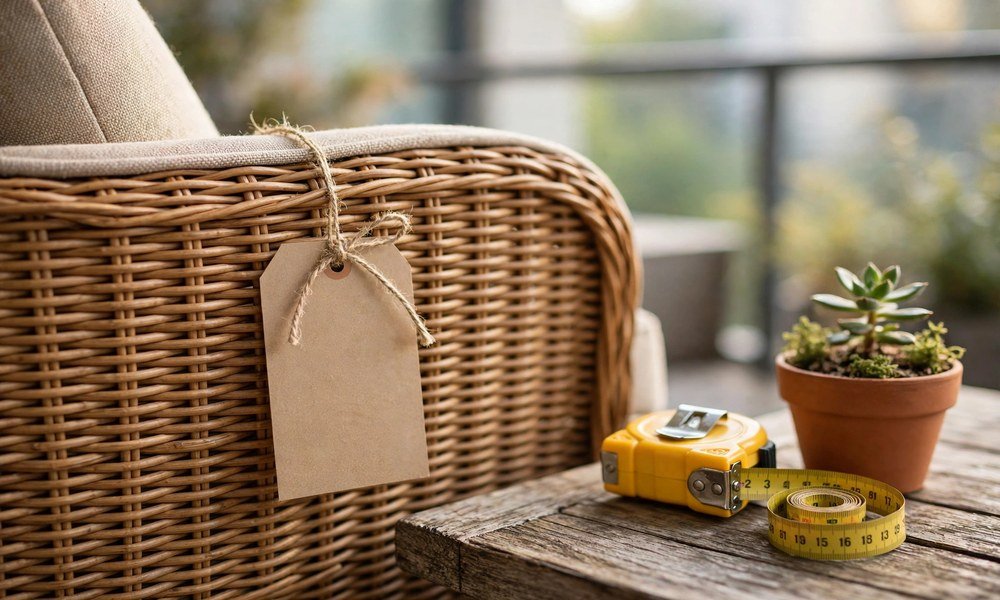
The most common and most expensive patio furniture mistake is buying a set that does not fit the space. A sectional that looks perfect in a huge showroom can overwhelm a small patio, leaving no room to walk around the table or pull out a chair. Before you shop, measure your patio carefully, sketch the layout on paper, and leave at least ninety centimeters of clearance around the table so people can move comfortably. Bring your measurements with you, and compare them against the dimensions listed for every set you consider.
Think about how you actually use the space. If you eat most meals outdoors, a dining-height table with chairs matters more than a deep lounge sofa. If you mostly relax with a book or a drink, a conversation set with low chairs and a coffee table will serve you better than a formal dining set. Matching the furniture to your real habits keeps you from paying for pieces that look impressive in the store but sit empty at home.
Consider traffic flow and storage as well. You need a clear path from the back door to the seating area, and you need somewhere to store cushions when it rains. A set that blocks the door or leaves cushions scattered across the lawn will frustrate you every day, no matter how good the deal was. Measure your storage space too, and check whether chairs stack or fold, since stackable chairs are far easier to store over winter.
Your Pre-Purchase Checklist
Use this checklist before you pay for any patio furniture set, and you will avoid the problems that turn a bargain into a regret.
- Measure your patio and confirm at least ninety centimeters of clearance around the table for chairs and walking space.
- Sit in every chair and test the table height, checking that the set feels comfortable for at least fifteen minutes, not just a quick glance.
- Check the frame material and joints, looking for rust, wobble, thin tubing, or weak welds that signal a short lifespan.
- Read the cushion fabric label and confirm it is fade-resistant and mildew-resistant, with removable washable covers if possible.
- Confirm the warranty in writing, including what it covers for the frame, the fabric, and the finish, and for how many years.
- Add up the full cost, including delivery, assembly, covers, and tax, and confirm the total fits your budget before you commit.
Mistakes That Quietly Cost You Hundreds
Buying the cheapest set available is the most common error, and it is easy to understand why. A three-hundred-dollar set feels like a win until the frame rusts, the wicker cracks, and you are shopping for a replacement two summers later. Spending a little more on a solid aluminum or resin wicker frame usually costs less over five years than buying cheap twice, and you get a better-looking patio in the meantime.
Skipping the cover is the second costly mistake. A forty-dollar cover protects a thousand-dollar set from rain, sun, bird droppings, and pollen, and it can add years to the life of your cushions and frames. Many buyers skip the cover to save money at checkout, then spend far more replacing faded cushions the following year. Buy the cover with the set, and use it whenever the furniture is not in use for more than a few days.
Ignoring the warranty is a quieter risk. A set with a five-year frame warranty and a one-year fabric warranty is a very different purchase from a set with a one-year warranty on everything, even if the prices look similar. Read the warranty terms before you buy, keep your receipt, and register the product if the manufacturer asks you to. A warranty you never use costs nothing, but a warranty you need and do not have can cost hundreds.
Finally, buying for a fantasy lifestyle rather than your real one wastes money. A twelve-seat dining set is pointless if you usually eat outside alone or as a couple, and a fire table is wasted if your evenings are short and your climate is warm. Buy for the life you actually live, and spend the money you save on the things that will genuinely improve your summers, like better cushions or a shade umbrella you will use every day. The same disciplined thinking helps with travel spending too, and the ways to save money on hotels in 2026 show how the same compare-and-time-it approach works when you plan a trip around your new patio season.
Care and Storage That Protect Your Investment
Simple care makes an enormous difference to how long patio furniture lasts. Brush off dirt and pollen weekly, wipe frames with mild soap and water monthly, and clean cushions before you store them for the winter. Most resin wicker and aluminum sets need nothing more than a wash and a dry, and that small effort prevents the grime buildup that makes furniture look old before its time.
Storage is the other half of longevity. If you can store cushions indoors over winter, do it, since cushions suffer most from damp and freezing temperatures. Frames can usually stay outside under a good cover, but in harsh climates, moving them into a garage or shed extends their life further. Stack chairs, remove umbrella fabric, and make sure everything is dry before you cover it, since trapped moisture causes mildew faster than rain ever does.
Frequently Asked Questions
What is the cheapest month to buy patio furniture?
September is usually the cheapest month, with clearance discounts of forty to seventy percent as stores clear summer inventory. October can be even cheaper, but the selection is much thinner. If you can wait until late summer, you will almost always pay far less than you would in April or May, when new collections arrive at full price.
Is it better to buy a patio set or individual pieces?
A set is usually cheaper than buying the same pieces separately, since retailers discount bundles. However, individual pieces make sense if you need an unusual layout or already own part of what you need. Compare the set price against the cost of the individual pieces you would actually use, and buy the set only if it saves you money on pieces you truly want.
How long should a good patio furniture set last?
A good aluminum or teak set should last ten to twenty years with basic care, while resin wicker typically lasts five to eight years. Steel sets usually last two to five years, depending on climate and care. The frame material matters more than the brand name, so check the materials and warranty before you judge a set by its price alone.
Are floor model patio sets worth buying?
Yes, floor models are often the best value in the store, with discounts of twenty to forty percent on furniture that is structurally sound. Inspect the set carefully for scratches, stains, and loose joints, and make sure the cushions and any display accessories are included. A floor model with minor cosmetic wear is a smart buy that can save you hundreds of dollars.
Should I buy patio furniture online or in a store?
Both have advantages. Stores let you sit in the furniture and inspect the quality before you buy, while online shopping offers a wider selection and easier price comparison. A good approach is to test sets in a store, then check online prices for the same or similar sets before you commit. Just be sure to compare the total cost including delivery, and read the return policy before ordering online.
Do I really need covers for patio furniture?
Yes, covers are one of the best investments you can make for outdoor furniture. A good cover costs thirty to eighty dollars and protects your set from rain, sun, pollen, and bird droppings, adding years to its life. Cushions benefit most from covers, but frames last longer too. Buy covers that fit your set properly and use them whenever the furniture will sit unused for more than a few days.
The Bottom Line
Saving money on a new patio furniture set is not about buying the cheapest thing you can find. It is about buying the right set at the right time, from the right seller, and then taking care of it so it lasts. Set a firm budget, measure your space, choose aluminum or resin wicker for the best value, and time your purchase for late summer when the deepest discounts appear. Compare at least three sellers, ask for the floor model price, and check for open-box deals before you pay full price anywhere.
The savings add up quickly. A well-timed purchase can easily save you three to five hundred dollars on a mid-range set, and choosing a durable material over a disposable one can save you the cost of an entire replacement set within a few years. That is money you can spend on the things that make your outdoor space genuinely enjoyable, like comfortable cushions, good lighting, or a shade umbrella for hot afternoons. And if you are furnishing a home on a budget more broadly, the same patient, compare-first mindset applies indoors as well, as the guide to saving money on a new mattress in 2026 shows for another major household purchase.
Your patio should be a place you love spending time, not a source of regret every time you look at the receipt. Take the time to plan, wait for the right moment, and buy once and buy well. The right set, bought at the right price, will give you years of relaxed evenings, family meals, and quiet mornings outdoors, and that is a return on investment no discount tag can match.
Note: Prices and discounts mentioned in this article are typical ranges observed in 2026 and can vary by retailer, region, and season. Always confirm the current price, warranty terms, and return policy before you buy.

Keep what speaks to you.
Leave room for your own perspective.