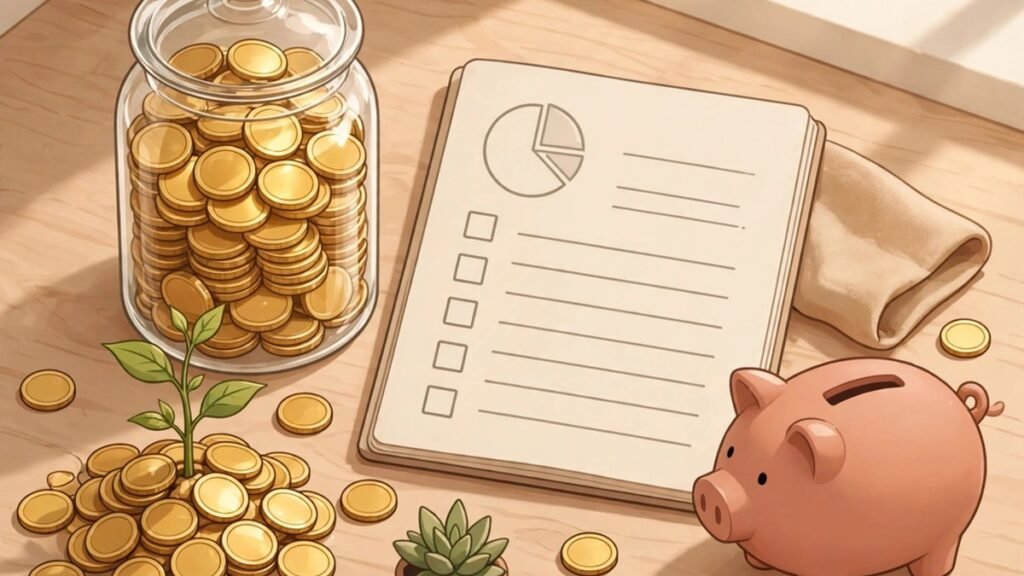
Saving money in 2026 does not require a big salary, a finance degree, or a life of deprivation. It requires a system — a small set of habits that quietly move money from your spending account to your savings before you have a chance to miss it. The best savers are rarely the highest earners. They are the people who decided, once, how much they would save, and then built their daily life around that decision instead of renegotiating it every payday.
The good news is that saving has never been easier to automate. High-yield savings accounts pay real interest again, budgeting apps track every pound and dollar for you, and round-up tools turn spare change into a growing balance. What has changed in 2026 is not the maths of saving — spend less than you earn, and save the difference — but the tools available to make that maths almost effortless. The strategies in this guide use those tools, and they work whether you earn a little or a lot.
This guide covers 25 proven ways to save money in 2026, from the one-hour setup that can save you hundreds a year to the daily habits that quietly add up to thousands. You do not need to do all 25. Pick five, start this week, and add more as each one becomes automatic. By the end of the year, the difference will surprise you.
Key takeaways
- Pay yourself first: automate a transfer to savings on payday, before you can spend it.
- Track every pound for one month — most people find at least 10% of their spending is forgettable.
- Cut the big three first: housing, transport, and food deliver the biggest savings.
- Use a high-yield savings account so your emergency fund earns real interest while it waits.
- Small daily habits compound: a £4 daily saving becomes £1,460 in a year.
1. Pay Yourself First
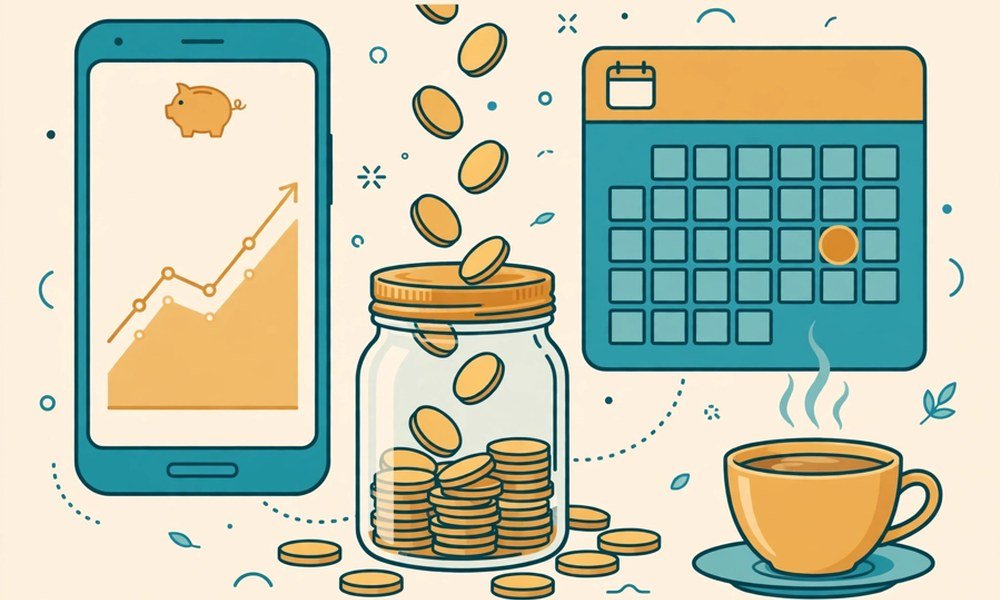
The single most powerful saving strategy is also the simplest: treat savings as a bill that gets paid first, not as whatever is left over at the end of the month. Set up an automatic transfer from your current account to your savings account for the day your salary lands. Start with whatever you can afford — even 5% of your income — and increase it by 1% every few months. Because the money never sits in your spending account, you never have to rely on willpower to save it. People who automate their savings save roughly twice as much as people who save manually, and they report feeling less stressed about money, not more. The trick is to make the amount realistic enough that you never need to cancel the transfer. A modest automatic saving that runs for twelve months beats an ambitious one that gets cancelled in February.
2. Build a Budget That Actually Fits Your Life
A budget is not a punishment; it is a plan for your money before the month begins. The 50/30/20 rule is a good starting point: 50% of your take-home pay for needs, 30% for wants, and 20% for savings and debt repayment. If 20% feels impossible right now, start with 10% and work up. The method matters less than the act of deciding in advance. When you give every pound a job before payday, impulse spending drops because the decision has already been made. If you want a step-by-step walkthrough, our guide on how to create a budget in 2026 covers the most popular budgeting methods and how to choose the one that fits your income pattern.
3. Track Your Spending for 30 Days
You cannot fix what you cannot see. For one month, track every single purchase — the coffee, the app subscription, the late-night takeaway. Most people discover they are spending 10 to 15% more than they thought, and that a surprising share of it goes on things they barely remember buying. Use your banking app’s spending categories, a simple spreadsheet, or a budgeting app; the tool does not matter, the honesty does. At the end of the month, sort your spending into needs, wants, and waste. The waste column is your savings plan. Cut half of it and you have found money you will never miss.
4. Open a High-Yield Savings Account
If your savings sit in a standard current account earning almost nothing, you are losing money to inflation every single day. A high-yield savings account in 2026 can pay several times more interest than a traditional account, and switching takes about fifteen minutes. Keep your emergency fund here — separate from your spending money, easy to reach in a genuine emergency, but not so easy that you dip into it for a sale. Look for accounts with no monthly fees, no minimum balance penalties, and instant or next-day access. Even a modest balance earns meaningful interest over a year, and the psychological separation matters as much as the rate: money you cannot see is money you do not spend.
5. Automate Your Savings Increases
Once your automatic transfer is running, schedule it to grow. Many employers let you split your salary between accounts, and many banks let you set a transfer that increases by a fixed amount each month. A simpler version is the pay-rise rule: whenever your income goes up, save at least half of the increase before your lifestyle absorbs it. If you get a £200 monthly raise, send £100 straight to savings and let yourself enjoy the other £100. You will never feel poorer, because your take-home spending still went up — but your savings rate climbs every year without a single difficult decision.
6. Cancel Subscriptions You Forgot About
The average household now pays for several subscriptions it barely uses: streaming services, cloud storage, fitness apps, magazine trials that quietly converted to paid plans. Go through your last three bank statements and list every recurring charge. For each one, ask when you last used it and whether you would sign up again today at full price. Cancel ruthlessly — you can always resubscribe later. Rotating streaming services is a smarter approach than paying for all of them at once: subscribe to one, watch what you want, cancel, and switch to the next. This single audit typically saves £30 to £60 a month, which is £360 to £720 a year, for about an hour of work.
7. Cook at Home More Often
Food is one of the biggest flexible expenses in any household, and eating out is where most of the money goes. A restaurant meal typically costs three to five times what the same dish costs to cook at home, and delivery apps add fees and tips on top. You do not need to give up eating out entirely — budget for it as a treat, once or twice a week, and cook the rest. Meal planning is the habit that makes home cooking stick: plan five dinners on Sunday, shop once with a list, and batch-cook the base ingredients. A household that cuts takeaway from four times a week to once can save £150 to £250 a month.
8. Plan Meals and Shop With a List
Impulse buying at the supermarket is a quiet budget killer. Shoppers who enter a store without a list spend significantly more than those with one, largely on snacks, drinks, and items they already have at home. Plan your meals, write the list, and stick to it. Shop once a week rather than popping in daily, buy store-brand staples where the quality is identical, and check the price per kilo rather than the headline price. Freezing leftovers and using up what is in the fridge before shopping again can cut a food bill by 20% or more without changing what you eat.
9. Use the 24-Hour Rule for Non-Essential Purchases
Impulse buying thrives on urgency: the sale ends tonight, the stock is limited, everyone else is buying it. The 24-hour rule breaks that spell. When you want something non-essential, wait a full day before buying it. Put it in the basket, close the tab, and come back tomorrow. More than half the time, you will not want it anymore — or you will have found a cheaper alternative. For purchases over £100, extend the wait to a week. This one habit protects you from the two most expensive words in personal finance: “on sale”. A discount on something you did not need is not a saving; it is spending dressed up as a bargain.
10. Negotiate Your Bills Every Year
Internet, mobile, insurance, and energy providers all offer better prices to new customers than to loyal ones — and they will often match those prices if you ask. Set a yearly reminder to call each provider, mention the cheaper deal you found, and ask what they can do. Even a £10 monthly reduction on three bills is £360 a year. Check your insurance at renewal rather than auto-renewing, compare energy tariffs when your fixed deal ends, and ask your mobile provider about retention deals before your contract expires. Loyalty is rarely rewarded in these markets; a polite annual phone call is one of the highest-paid hours of your year.
11. Save on Transport
After housing, transport is usually the second-biggest household cost. If you drive, the savings stack up fast: compare fuel prices, keep your tyres properly inflated, remove the roof box when you are not using it, and service the car on schedule so small problems do not become expensive ones. If public transport is an option, compare the cost of a season ticket against daily fares — the annual ticket often saves 10 to 15%. Walking or cycling short journeys saves money and improves your health at the same time. And before buying a new car, run the numbers on a reliable used one: cars lose a huge share of their value in the first three years, and that depreciation is the most expensive part of owning a car.
12. Cut Energy Costs at Home
Small changes to how you use energy add up to real money. Turn the thermostat down by one degree, use a smart thermostat to heat rooms only when they are occupied, switch to LED bulbs, wash clothes at 30 degrees, and unplug devices that draw power on standby. Draught-proofing doors and windows is a cheap weekend job that pays for itself within a winter. Check whether your energy provider offers off-peak tariffs if you can run the dishwasher or charge devices overnight. A household that takes energy seriously can typically cut its bill by 10 to 20% without feeling colder or less comfortable.
13. Build an Emergency Fund First
Before investing, before overpaying a mortgage, before anything else, build a small emergency fund. Start with £500 to £1,000 — enough to cover a broken washing machine or a car repair without reaching for a credit card. Then build toward three to six months of essential expenses. This fund is the foundation of every other money goal, because it stops emergencies from becoming debt. Keep it in your high-yield savings account, separate from your everyday money, and only use it for genuine emergencies. When you do use it, rebuilding it becomes your top financial priority until it is full again.
14. Save on a Low Income
Saving on a low income is harder, but it is not impossible — and it matters even more, because a small buffer is what keeps a tight month from becoming a crisis. The principles are the same, but the order changes: start with £5 or £10 a week, automate it so it happens even in a bad week, and focus first on the expenses with the biggest impact, like housing and food. Check whether you are claiming every benefit and discount you are entitled to, from council tax reductions to free school meals and energy support schemes. Many people miss out on hundreds of pounds a year simply because they never applied. For detailed, realistic strategies, read our guide on how to save money on a low income in 2026, which covers benefit checks, food budgeting, and side income ideas that work around a full-time job.
15. Use Cashback and Rewards — Carefully
Cashback apps, reward credit cards, and loyalty schemes can return real money, but only if they do not change what you buy. A 5% cashback rate on a purchase you would have made anyway is free money; a 5% cashback rate that tempts you to buy something extra is a loss. Use a cashback card only for planned spending, pay it off in full every month so you never pay interest, and treat the cashback as a bonus that goes straight into savings, not as extra spending money. The same logic applies to loyalty points: collect them passively, redeem them for things you already buy, and never spend extra just to earn them.
16. Buy Second-Hand First
For clothes, furniture, electronics, books, and children’s items, second-hand is often as good as new at a fraction of the price. Charity shops, online marketplaces, and refurbished electronics retailers have made buying used normal and reliable. A refurbished phone from a reputable seller can cost 30 to 40% less than a new one with a warranty included. Children’s clothes and toys, which are outgrown in months, are the easiest win of all. Set a personal rule: before buying anything new, check whether a quality used version exists. You will be surprised how often the answer is yes — and how much you save.
17. Sell What You No Longer Use
Most homes contain hundreds of pounds worth of things that are no longer used: old phones, clothes that do not fit, gadgets replaced by newer ones, books gathering dust. Selling them does two things at once — it frees up space and creates a lump sum that can kick-start your emergency fund or pay down debt. List items on a marketplace, price them to sell quickly rather than waiting for the perfect price, and put every pound you receive straight into savings before it melts into everyday spending. Do a seasonal clear-out twice a year and you will keep the money flowing in the right direction.
18. Reduce Housing Costs
Housing is the biggest expense for most people, so even a small percentage saving is worth a large amount of money. If you rent, consider whether a slightly smaller place, a different neighbourhood, or a housemate could cut your rent by 10 to 20%. If you have a mortgage, check whether remortgaging to a better rate would save you money — even a 0.5% reduction on a large mortgage can be worth thousands over the term. When your fixed rate ends, never drift onto the standard variable rate without comparing deals first. And if you are thinking of moving, run the full cost: rent or mortgage, bills, transport, and council tax, not just the headline price.
19. Set Specific Savings Goals
“Save more money” is a wish; “save £3,000 for a holiday by June” is a plan. Specific goals work because they give your saving a purpose and a deadline, and they let you measure progress. Break big goals into monthly targets — £3,000 by June means £500 a month from January — and track them visibly, on a chart on the fridge or in your banking app. Name your savings accounts after their goals: “Holiday”, “New Car”, “House Deposit”. Research consistently shows that people with named, specific goals save more than people with a single generic savings pot, because every transfer feels like progress toward something real.
20. Use the Envelope Method for Problem Spending
If one category of spending always blows up — takeaways, clothes, nights out — give it a hard limit with the envelope method. Withdraw the monthly budget for that category in cash, put it in an envelope, and when it is empty, the spending stops until next month. The physical limit makes spending feel real in a way that tapping a card never does. A modern version is a separate bank account or a prepaid card loaded with the monthly amount for that category. The point is the same: a visible, hard boundary that you cannot accidentally cross. Use it only for your problem categories, not for everything — you want a tool, not a second job.
21. Learn the Money Habits of Millionaires
Most millionaires are not flashy spenders; they are disciplined savers who live well below their means and invest the difference consistently over decades. The research is remarkably consistent: they track their spending, they avoid lifestyle inflation when their income rises, they buy quality items that last rather than status symbols, and they automate their investing. They also treat learning about money as a lifelong habit, reading books and seeking advice rather than guessing. You do not need a millionaire’s income to copy a millionaire’s habits — you need their patience and their systems. Our guide to the best money habits of millionaires in 2026 breaks down the specific routines that wealthy savers use, and how to adopt them on any income.
22. Automate Round-Ups and Spare Change
Round-up apps automatically round every purchase to the nearest pound and move the difference into savings. A £2.40 coffee becomes £3.00, and 60p goes into your savings pot. On its own, each round-up is trivial — but over a year of daily spending, it typically adds up to £300 to £500 without any effort or sacrifice. Pair round-ups with your main automatic transfer: the transfer builds your core savings, and the round-ups add a steady bonus on top. Some apps let you multiply round-ups by two or five times, which accelerates the effect if your budget has room for it.
23. Avoid Lifestyle Inflation
Lifestyle inflation is the quiet reason so many people earn more every year yet never feel richer: each pay rise brings a nicer car, a bigger home, more expensive holidays, and the savings rate stays exactly the same. The defence is simple and requires only one decision per pay rise: save half of it before your lifestyle adjusts. Keep living roughly as you did last year, and let your savings rate do the growing. This does not mean never enjoying a pay rise — enjoy half of it, visibly and guilt-free, and save the other half. Ten years of that rule transforms a household’s finances more than any single budgeting trick.
24. Review Your Finances Monthly
A monthly money date — thirty minutes, once a month, with a cup of tea — keeps your finances on track. Check your account balances, review last month’s spending against your budget, confirm your savings transfers went through, and look ahead to any big expenses next month. This is also the moment to cancel a subscription you stopped using, move a surplus into savings, or adjust a budget category that keeps failing. Problems caught monthly are small and fixable; problems caught yearly are crises. Make it a fixed appointment, and treat it as seriously as any other bill — because in the long run, it pays more than most of them.
25. Invest the Difference
Once your emergency fund is full and your high-interest debt is gone, the best use of your savings is to invest them so they grow faster than inflation. You do not need to pick individual stocks: a low-cost diversified index fund, held for the long term, has historically been one of the most reliable ways to build wealth. Set up a regular monthly investment, automate it like your savings, and leave it alone through market ups and downs. Time in the market matters more than timing the market. Start small if you need to — even £50 a month invested consistently over decades becomes a substantial sum — and increase the amount as your income grows. Saving is the habit that creates the money; investing is the habit that makes it grow.
Comparing the Best Ways to Save Money in 2026
Not every saving strategy is equal. Some save you hundreds in a single hour, while others build slowly over years. Some need no effort at all once they are set up, while others ask for a daily habit. The table below compares the 25 strategies in this guide so you can see at a glance which ones deserve your attention first — and which ones can wait until the big wins are in place.
| Strategy | Typical yearly saving | Effort to set up | Best for |
|---|---|---|---|
| Pay yourself first | £600–£6,000+ | 15 minutes | Everyone |
| Build a budget | £500–£2,000 | 1–2 hours | Everyone |
| Track spending for 30 days | £300–£1,200 | 10 min a day | Finding waste |
| High-yield savings account | £50–£400 interest | 15 minutes | Emergency funds |
| Automate savings increases | £200–£1,500 | 10 minutes | Pay rises |
| Cancel subscriptions | £360–£720 | 1 hour | Quick wins |
| Cook at home more | £1,800–£3,000 | Ongoing | Families |
| Meal planning and lists | £500–£1,000 | 30 min a week | Grocery bills |
| 24-hour rule | £300–£1,000 | None | Impulse buyers |
| Negotiate bills yearly | £200–£600 | 1 hour a year | Quick wins |
| Save on transport | £300–£1,500 | 1 hour | Commuters |
| Cut energy costs | £150–£400 | A weekend | Homeowners |
| Emergency fund first | Avoids £1,000s in debt | 15 minutes | Everyone |
| Save on a low income | £250–£1,000 | 1–2 hours | Tight budgets |
| Cashback and rewards | £100–£500 | 30 minutes | Planned spending |
| Buy second-hand first | £300–£1,000 | Ongoing | Families |
| Sell what you do not use | £200–£800 once | A weekend | Quick wins |
| Reduce housing costs | £1,000–£5,000+ | Days | Biggest impact |
| Specific savings goals | £500–£2,000 | 30 minutes | Motivation |
| Envelope method | £300–£1,200 | 30 minutes | Problem spending |
| Millionaire money habits | Compounds for life | Ongoing | Long-term wealth |
| Round-ups and spare change | £300–£500 | 10 minutes | Effortless saving |
| Avoid lifestyle inflation | £1,000–£5,000+ | One decision | Career growth |
| Monthly finance review | £200–£1,000 | 30 min a month | Staying on track |
| Invest the difference | Compounds for life | 1 hour | Long-term wealth |
The pattern in the table is clear: the biggest savings come from the biggest expenses — housing, food, and transport — and from the strategies you only have to set up once, like automating your savings and negotiating your bills. The daily habits matter too, but they work best as a support system around those big wins, not as a replacement for them. Start with the top five rows, add the habits that fit your life, and let the rest follow.
Your Saving Checklist
Use this checklist to turn the guide into action. Work through it in order, and tick each item off as you complete it — most people can finish the first four items in a single evening.
- Open a high-yield savings account and set up an automatic transfer for payday.
- Track every purchase for 30 days and find your three biggest wastes of money.
- Audit your subscriptions and cancel everything you have not used in the last month.
- Call your internet, mobile, and insurance providers and ask for a better price.
- Plan next week’s meals, write a shopping list, and shop once with that list.
- Set one specific savings goal with an amount and a date, and name the account after it.
Frequently Asked Questions
How much should I save each month in 2026?
A common target is 20% of your take-home pay, but the right amount depends on your income and expenses. If 20% is not possible right now, start with 5 or 10% and increase it by 1% every couple of months. The most important thing is to start and to make it automatic — a small amount saved consistently beats a large amount saved once and then abandoned.
What is the best way to save money on a low income?
Start small and automate it, even if it is only £5 a week. Focus on the biggest expenses first — housing, food, and transport — and check that you are claiming every benefit and discount you are entitled to. Cooking at home, meal planning, and cutting subscriptions tend to deliver the fastest results on a tight budget, and a small emergency fund should be your first goal.
Should I save or pay off debt first?
Build a small emergency fund of £500 to £1,000 first, so an unexpected bill does not push you back into debt. Then focus on paying off high-interest debt, such as credit cards, before building larger savings — the interest on the debt almost always costs more than savings interest earns. Once the expensive debt is gone, split your money between savings and investing.
Where should I keep my emergency fund?
Keep it in a high-yield savings account that is separate from your everyday spending account. It should be easy to reach in a genuine emergency — within a day — but not so easy that you dip into it for everyday spending. Avoid keeping it in an investment account, where its value can fall exactly when you need it most.
How can I save money without feeling deprived?
Budget for fun deliberately. When you give yourself a fixed amount for treats, eating out, and entertainment, you can enjoy them guilt-free because the saving is already done. Deprivation diets fail for money just as they do for food; the trick is to cut spending on things you do not care about so you can keep spending on the things you genuinely enjoy.
How long does it take to build a good savings habit?
Most people find that automatic saving feels normal within two to three months, because the money never enters their spending account in the first place. The 30-day spending track takes a month by definition, and a meaningful emergency fund usually takes three to six months to build. The habit itself forms faster than the balance grows — and the habit is what matters, because it keeps working for decades.
The Bottom Line
The best ways to save money in 2026 are not secrets and they are not complicated. Automate your saving before you can spend the money, track where it actually goes, cut the big expenses before the small ones, and let time and compound interest do the heavy lifting. Pick five strategies from this guide, set them up this week, and review your progress once a month. A year from now, you will have more money, less stress, and a system that keeps working whether you are thinking about it or not. That is the real goal — not a single clever trick, but a life where saving happens by default.
Note: The figures in this article are typical examples and estimates, not financial advice. Interest rates, prices, and your personal circumstances will vary. Consider speaking to a qualified financial adviser before making major financial decisions.

Keep what speaks to you.
Leave room for your own perspective.


