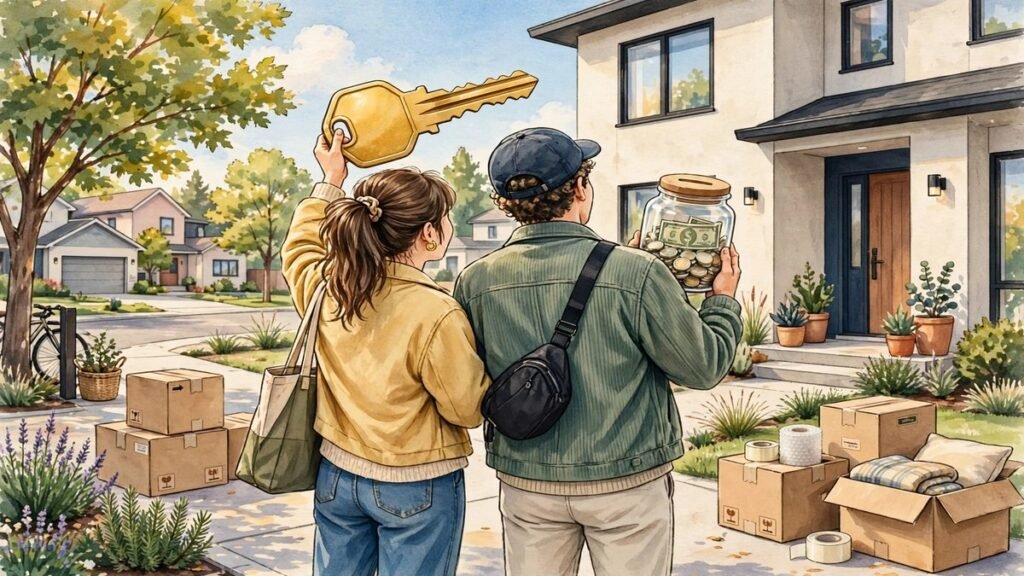
Buying a new home is one of the biggest financial decisions most people will ever make, and in 2026 the stakes feel higher than ever. Prices remain elevated in many markets, mortgage rates move in ways that can add hundreds of dollars to a monthly payment, and the extra costs that sit on top of the purchase price can catch even careful buyers by surprise. Yet thousands of people buy their first new home every month, not because they are wealthy, but because they planned carefully, saved with a clear target, and learned how to cut costs at every stage of the process. Saving money on a new home is not about finding one magic trick. It is about stacking dozens of small, smart decisions into a plan that actually works.
The good news is that almost every part of buying a home has room to save. You can save on the deposit by choosing the right loan type, save on interest by improving your credit score before you apply, save on fees by shopping around for a lender, save on the price itself by negotiating well and choosing the right moment to buy, and save after you move in by budgeting for the running costs that so many buyers forget. None of these steps is difficult on its own. The challenge is doing them together, in the right order, and sticking with the plan long enough for the savings to add up. This guide walks through the whole journey, from the first dollar saved to the day you collect the keys.
By the end of this article, you will know exactly how much you need to save, where the hidden costs hide, which programs can help you, and how to negotiate a better deal without losing the home you love. You will also have a practical checklist you can follow step by step, answers to the questions buyers ask most often, and a realistic sense of what is possible on an ordinary income. Whether you are saving your first thousand dollars or you are nearly ready to make an offer, the strategies below will help you keep more of your money and buy with confidence in 2026.
Key takeaways
- Work out your true total cost first, including deposit, closing costs, moving costs and a safety buffer, before you start house hunting.
- A better credit score can save you tens of thousands of dollars in interest over the life of your mortgage, so improving it before you apply is one of the highest-value moves you can make.
- Compare at least three lenders and negotiate fees, because rates and closing costs vary far more between lenders than most buyers expect.
- First-time buyer programs, grants and low-deposit loans can cut the cash you need upfront by thousands of dollars if you qualify.
- Negotiate the price, the repairs and the extras, and choose your timing carefully, because a patient buyer often pays less for the same home.
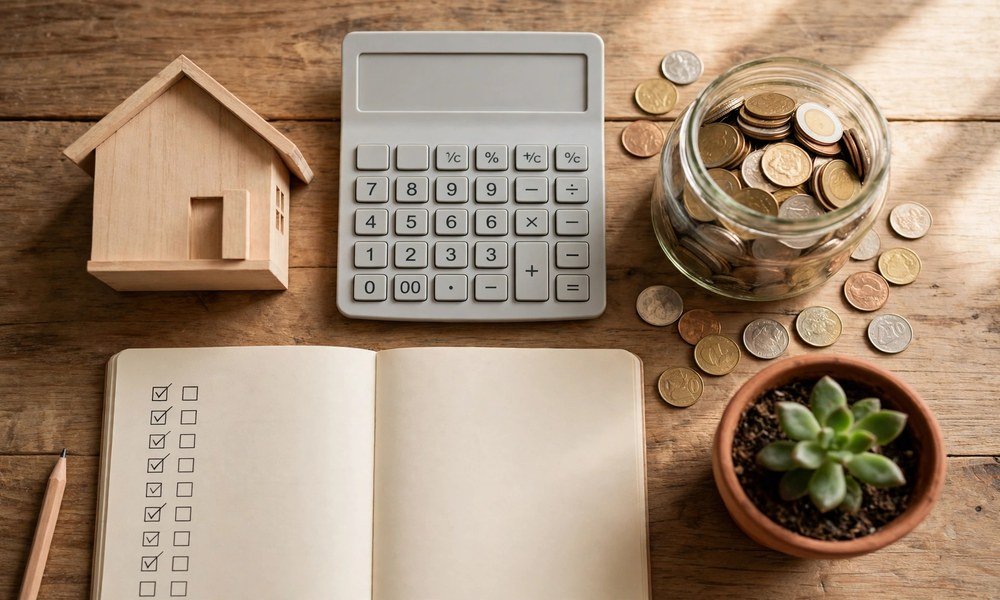
Start With Your True Total Cost
Most people who want to save money on a new home start by asking how much deposit they need, and that is the wrong first question. The deposit is only one part of the total cash you will need. Before you save a single dollar, sit down and work out the full picture, because buying a home with only the deposit saved is one of the most common and most expensive mistakes a buyer can make. When you know the real number, you can set a realistic savings target, choose the right timeline, and avoid the nasty surprise of finding your dream home and then discovering you are several thousand dollars short.
The purchase price is the headline number, but the cash you need on the day you buy is made up of several layers. First comes the deposit, which is usually between three and twenty percent of the price, depending on the loan you choose. Then come the closing costs, which typically run between two and five percent of the price and cover the lender fees, the appraisal, the title search, the legal work and the insurance. Then there are the moving costs, the cost of setting up utilities, and the things a new home almost always needs in the first few months, from curtains and furniture to a lawnmower or a new lock. Finally, you need a safety buffer, because life does not stop while you buy a house, and an empty bank account on moving day is a stressful place to be.
To see how this adds up, imagine a home priced at three hundred thousand dollars. A ten percent deposit is thirty thousand dollars. Closing costs at three percent add another nine thousand. Moving, setup and the first few essentials might cost three thousand more. A sensible safety buffer of three months of expenses could be another six thousand. Suddenly the cash you need is not thirty thousand dollars, it is closer to forty-eight thousand. That is a big difference, but knowing it early is a gift, because it lets you plan honestly instead of discovering the gap when it is too late to fix it. A clear budget is the foundation of every saving strategy that follows, and learning how to create a budget in 2026 will help you turn that total into a monthly savings plan you can actually keep.
Choose the Right Deposit Strategy
The deposit is the largest single sum most buyers need to find, so it deserves a strategy of its own. For decades, the standard advice was to save twenty percent, and there is still a good reason for that number: a twenty percent deposit usually means you avoid private mortgage insurance, you get a better interest rate, and your monthly payments are lower. On a three hundred thousand dollar home, though, twenty percent is sixty thousand dollars, and for many buyers that is years of saving. The good news is that you do not have to wait until you have twenty percent. Several loan types are designed for buyers with smaller deposits, and choosing the right one can get you into a home years earlier while still keeping your costs under control.
A conventional loan with as little as three percent down is available to many first-time buyers with a decent credit score, and a loan backed by the Federal Housing Administration can be had with three and a half percent down and a more forgiving credit history. Veterans and buyers in eligible rural areas may even qualify for a loan with no deposit at all. Each of these options has trade-offs, usually in the form of mortgage insurance or a funding fee, so the cheapest choice on day one is not always the cheapest over ten years. The right move is to compare the total cost of each option over the time you expect to stay in the home, not just the cash needed upfront. A loan with a smaller deposit and a few years of mortgage insurance can still be far cheaper than waiting three more years while prices and rents keep rising.
Improve Your Credit Score Before You Apply
If there is one step that saves more money than any other, it is improving your credit score before you apply for a mortgage. Your credit score is the single biggest factor in the interest rate a lender offers you, and the difference between a good score and a great score can be worth tens of thousands of dollars over the life of a loan. On a three hundred thousand dollar mortgage, the gap between a rate of seven percent and a rate of six percent is roughly two hundred dollars a month, which adds up to more than seventy thousand dollars over thirty years. That is not a small saving. It is the price of a car, or several years of holidays, and it is available to anyone willing to spend a few months preparing.
Next, work on the amount of credit you are using. Lenders like to see that you use only a small part of the credit available to you, ideally less than thirty percent of each card limit, and less is better. Paying down card balances is one of the fastest ways to lift a score, and it has the happy side effect of freeing up monthly cash that you can put towards your house fund. Avoid opening new credit accounts in the months before you apply, because each application can trim a few points from your score, and avoid closing old cards, because a longer credit history usually helps. If you have a card you no longer use, keep it open with a zero balance rather than closing it.
Shop Around for Your Mortgage
Many buyers make the mistake of taking the first mortgage offer they receive, often from their own bank, and never checking what anyone else would offer. That single decision can cost thousands of dollars. Lenders do not all charge the same rate, and they do not all charge the same fees, and the differences are often much larger than people expect. Shopping around is free, it takes only a few days, and it is one of the most reliable ways to save money on a new home. Treat it like any other major purchase: get several quotes, compare them carefully, and negotiate.
Start by getting quotes from at least three lenders, and make them different kinds of lender: a large bank, a credit union, and an independent mortgage broker or online lender. Credit unions in particular often offer lower rates and lower fees to their members, and a broker can compare dozens of lenders on your behalf in a single application. Ask each lender for the same thing, a loan estimate for the same loan amount, the same term, and the same type of loan, so the offers are genuinely comparable. Then look past the headline rate and study the whole estimate, because the cheapest rate is not always the cheapest loan once fees are included.
The loan estimate will show you the interest rate, the monthly payment, the closing costs, and the total cost over the life of the loan. Pay close attention to the origination fee, the application fee, the underwriting fee and any charge for discount points. Some lenders charge high fees and offer a low rate, while others charge almost no fees and offer a slightly higher rate, and which one is cheaper depends on how long you plan to stay in the home. If you expect to move or refinance within a few years, the low-fee loan usually wins. If you plan to stay for decades, paying for a lower rate can pay off. Ask each lender whether any fee can be reduced or waived, because many of them can be, especially if you can show a competing offer. Lenders expect negotiation, and a polite request backed by a better quote is often enough to win a discount.
Cut Your Closing Costs
Closing costs are the least glamorous part of buying a home, and they are also one of the easiest places to save money, because so few buyers ever question them. These are the fees you pay to finalise the purchase, and they typically add two to five percent of the price to your bill. On a three hundred thousand dollar home, that is six to fifteen thousand dollars, which is real money. Some of these costs are fixed, like the government recording fees and the taxes, but many of them are negotiable, and a buyer who asks the right questions can often cut the total by a thousand dollars or more.
The biggest closing costs are usually the lender fees, the appraisal, the title insurance and the legal work. Start by comparing the lender fees across your quotes, as described above, because this is where the largest savings usually hide. Then look at the title insurance and the settlement services. In many areas you are free to choose your own title company, and prices vary, so get more than one quote. Ask your lender which services you are allowed to shop for, because the loan estimate marks them clearly, and get a competing quote for each one. A few phone calls can save several hundred dollars, and the work involved is far less than most buyers fear.
Negotiate the Price Like a Professional
The price you pay for the home itself is the biggest number in the whole transaction, so even a small percentage saved here is worth more than almost any other saving. A five percent discount on a three hundred thousand dollar home is fifteen thousand dollars, which is more than most buyers will save on fees, rates and moving costs combined. Yet many buyers, especially first-time buyers, feel awkward about negotiating and accept the asking price without a serious attempt to bring it down. The sellers expect you to negotiate, your agent expects you to negotiate, and the asking price is very often set with negotiation in mind. A calm, well-informed offer is not rude. It is simply good business.
Good negotiation starts long before you make an offer, with research. Look at what similar homes in the same area have actually sold for in the last few months, not what they were listed for. Your agent can provide these comparable sales, and they are the strongest evidence you have for what a home is really worth. Pay attention to how long the home has been on the market, because a home that has sat unsold for months gives you more leverage than a home listed yesterday with several interested buyers. Look for clues about the seller’s situation too. A seller who has already bought another home, or who needs to move quickly, is often more willing to accept a lower price or to include extras.
When you make your offer, make it credible. A very low offer with no evidence behind it is easy to dismiss, while a fair offer supported by comparable sales, a pre-approval letter, and a clean set of terms is hard to ignore. Think about what matters to the seller besides price: a flexible completion date, a larger deposit, fewer conditions, or a quick decision can all make your offer more attractive without costing you money. And remember that negotiation is not only about the price. You can ask the seller to leave appliances, to pay for repairs found in the survey, to include furniture, or to contribute to your closing costs. Each of these is worth real money, and together they can add up to a substantial saving.
Use First-Time Buyer Programs and Grants
One of the most overlooked ways to save money on a new home is to use the help that already exists for buyers, especially first-time buyers. Governments, states, cities, charities and even some employers run programs designed to make buying a home more affordable, and many buyers qualify for help they never knew about. These programs can cut the cash you need upfront, reduce your monthly payment, or both, and the savings can run into thousands of dollars. The only catch is that you have to find them and apply, because nobody will offer them to you unprompted.
Start with the national programs. Loans backed by the Federal Housing Administration allow a deposit as low as three and a half percent and are designed for buyers with modest credit. Loans for veterans and active service members can require no deposit at all and no mortgage insurance. Loans for buyers in eligible rural areas can also require no deposit. Beyond these, most states run their own first-time buyer programs, often through a housing finance agency, offering low-interest loans, grants towards the deposit, or forgivable loans that you never have to repay if you stay in the home for a set number of years. Many cities and counties run similar schemes, and some are aimed at particular groups such as teachers, nurses, police officers or other key workers.
There is also help available after you buy. Some areas offer tax credits or deductions for mortgage interest, and energy-efficiency grants can help with the cost of insulation, a new boiler or solar panels, which will cut your running costs for years. The best ways to save money for a house in 2026 include checking every program you might qualify for before you start saving, because the answer can change your target completely. A buyer who discovers a grant early can save for months less than a buyer who finds out about it after they have already bought.
Choose the Right Time to Buy
That does not mean you should wait for winter if you have found the right home in spring, because the perfect home at a fair price is still a good buy. It does mean that if you have a choice, the quieter months are worth considering, and that you should avoid getting caught up in a bidding war if you can help it. A bidding war is the fastest way to overpay, because emotion takes over and buyers start offering more than the home is worth. Set your maximum price before you view a home, based on the comparable sales and your budget, and do not exceed it, however much you love the kitchen. The best ways to save money in 2026 include the discipline to walk away from a bidding war and wait for a home where you can negotiate calmly.
Watch Out for Hidden and Running Costs
Many buyers focus so hard on the purchase price that they forget the costs of actually living in the home, and those running costs can make the difference between a home that is affordable and one that is a struggle. Before you make an offer, work out what the home will cost you every month, not just the mortgage. Add the property taxes, the home insurance, the utilities, the maintenance and the cost of getting to work. A home that looks cheap can be expensive if the taxes are high, the heating is inefficient, or the commute is long. A slightly more expensive home in a better location, with lower taxes and lower bills, can be cheaper to live in overall.
Maintenance is the cost buyers most often underestimate. A widely used rule is to budget around one percent of the home value each year for maintenance, so a three hundred thousand dollar home might need three thousand dollars a year, or two hundred and fifty dollars a month, set aside for repairs and upkeep. Some years you will spend less, and some years a roof or a boiler will need replacing and you will spend far more, which is exactly why the fund matters. A thorough survey before you buy is money well spent, because it tells you what is likely to need work soon and gives you evidence to negotiate the price down or to ask the seller to fix it. Never skip the survey to save a few hundred dollars. It is one of the cheapest forms of insurance in the whole process.
Comparing Your Main Saving Options
With so many ways to save, it helps to see them side by side. The table below compares the main strategies, what they can save you, and how much effort each one takes, so you can decide where to focus first.
| Strategy | What it can save | Effort involved | Best for |
|---|---|---|---|
| Improve credit score | Tens of thousands in interest | 3 to 6 months of steady habits | Almost every buyer |
| Compare three lenders | Thousands in rates and fees | A few days of quotes | Almost every buyer |
| Negotiate the price | Five to ten percent of price | Research and a calm offer | Buyers with time to choose |
| First-time buyer grants | Thousands upfront | Research and one application | Eligible first-time buyers |
| Ask seller to pay closing costs | One to three percent of price | One line in your offer | Buyers in slower markets |
| Buy in a quieter season | A few percent, plus less competition | Flexible timing | Buyers who can wait |
| Cut running costs | Hundreds per year, every year | Checking bills before you buy | Long-term owners |
Your New Home Saving Checklist
Use this checklist to keep your plan on track, from the first month of saving to the day you move in.
- Work out your true total cost, including deposit, closing costs, moving costs and a three-month safety buffer, and write the number down.
- Open a separate high-yield savings account for the house fund and set up an automatic transfer on payday.
- Check your credit reports, fix any errors, pay every bill on time, and pay down card balances to below thirty percent of each limit.
- Research first-time buyer programs, grants and low-deposit loans in your state and city, and apply for any you qualify for.
- Get mortgage quotes from at least three different kinds of lender, compare the full loan estimates, negotiate the fees, and lock a rate you can afford.
- Research comparable sales, set your maximum price before you view a home, negotiate the price and the extras, and be ready to walk away if the price is not fair.
Frequently Asked Questions
How much deposit do I need to buy a new home in 2026?
It depends on the loan you choose. A conventional loan can require as little as three percent, a government-backed loan as little as three and a half percent, and some loans for veterans or rural buyers require no deposit at all. Twenty percent avoids mortgage insurance and usually wins a better rate, but it is not required, and waiting years to reach twenty percent can cost more in rising prices and rent than the insurance you would pay. Choose the deposit that gets you a home you can afford, with money left over afterwards.
Can I buy a new home with a low credit score?
Yes, in many cases, though it will cost you more. Some government-backed loans accept scores in the high five hundreds, and some lenders specialise in buyers with imperfect credit. The trade-off is a higher interest rate and, usually, mortgage insurance. If your score is close to the next band up, spending three to six months improving it before you apply is often the best investment you can make, because it can cut your rate and your monthly payment for decades.
How much are closing costs on a new home?
Closing costs usually run between two and five percent of the purchase price. On a three hundred thousand dollar home, that is roughly six to fifteen thousand dollars. The total includes lender fees, the appraisal, the title search and insurance, the legal work, and the prepaid taxes and insurance. Some of these costs are negotiable, some can be shopped around, and in some markets the seller will agree to pay part of them, so always ask.
Is it better to save a bigger deposit or buy sooner?
There is no single right answer, because it depends on prices, rents and rates where you live. In general, buying sooner with a smaller deposit makes sense if prices and rents are rising faster than you can save, and if you can afford the monthly payment comfortably. Waiting makes sense if your credit needs time to improve, if you are close to a bigger deposit that would remove mortgage insurance, or if prices in your area are flat or falling. Run the numbers for your own situation rather than following a rule of thumb.
What help is available for first-time buyers?
Quite a lot, though it varies by location. National loan programs offer low deposits, state housing agencies offer grants and low-interest loans, many cities offer deposit assistance, and some employers and charities offer help too. A homebuyer education course is often required, and it is usually short and inexpensive. Ask your lender, your agent and your state housing agency what you qualify for, and apply early, because some grants are limited each year.
How can I avoid overpaying for a new home?
Research the comparable sales for similar homes nearby, set a maximum price before you view a home, and do not exceed it in a bidding war. Get a thorough survey so you know what repairs are needed, and use it to negotiate. Buy in a quieter season if you can, and remember that you can negotiate more than the price: repairs, appliances, furniture and a contribution to your closing costs are all worth real money. The buyers who overpay are usually the ones who fall in love first and check the price afterwards.
The Bottom Line
Saving money on a new home in 2026 is not about luck, and it is not about being rich. It is about knowing your true total cost, saving with a plan, improving your credit before you apply, comparing lenders, using the help that is available, and negotiating calmly and firmly for a fair price. Each of these steps saves money on its own, and together they can save you tens of thousands of dollars over the years you live in your home. Start today, even with a small amount, because the buyers who succeed are the ones who started before they felt ready and kept going, month after month, until the keys were in their hand.
Note: House prices, mortgage rates and buyer assistance programs vary by location and change over time, so treat the figures in this article as general guidance for 2026 and check the current rates, rules and programs in your own area before you make an offer. If you are unsure about a loan or a legal question, speak to a qualified mortgage adviser or solicitor in your area.

Keep what speaks to you.
Leave room for your own perspective.


