
Money is one of the most common sources of tension in a relationship, yet it is also one of the easiest things for a couple to get right once they build the right habits. The couples who feel calm about money are rarely the ones who earn the most. They are the ones who talk about it regularly, make decisions together, and follow a small set of simple routines that keep surprises out of the bank account and out of the relationship. Good money habits do not require a finance degree, a complicated spreadsheet, or a perfect income. They require honesty, consistency, and a shared plan that both partners actually believe in.
This guide brings together the best money habits for couples in 2026, from the weekly money date to the three-account system, automatic savings, honest debt conversations, and shared goals with real dates attached. These habits work whether you have just moved in together, you are planning a wedding, you are raising children, or you are counting down to retirement. Pick the habits that fit your life, start small, and build from there. The goal is not perfection. The goal is a money routine that makes both of you feel secure, respected, and excited about the future you are building together.
Key takeaways
- Talk about money every week in a short, relaxed money date — consistency beats intensity.
- Use one shared budget with three accounts: yours, mine, and ours, so shared bills are covered and personal freedom survives.
- Automate savings and bill payments so good habits happen even on busy months.
- Agree on spending rules in advance, including a threshold above which big purchases need a joint decision.
- Set shared goals with a number and a date, review progress monthly, and celebrate the wins together.
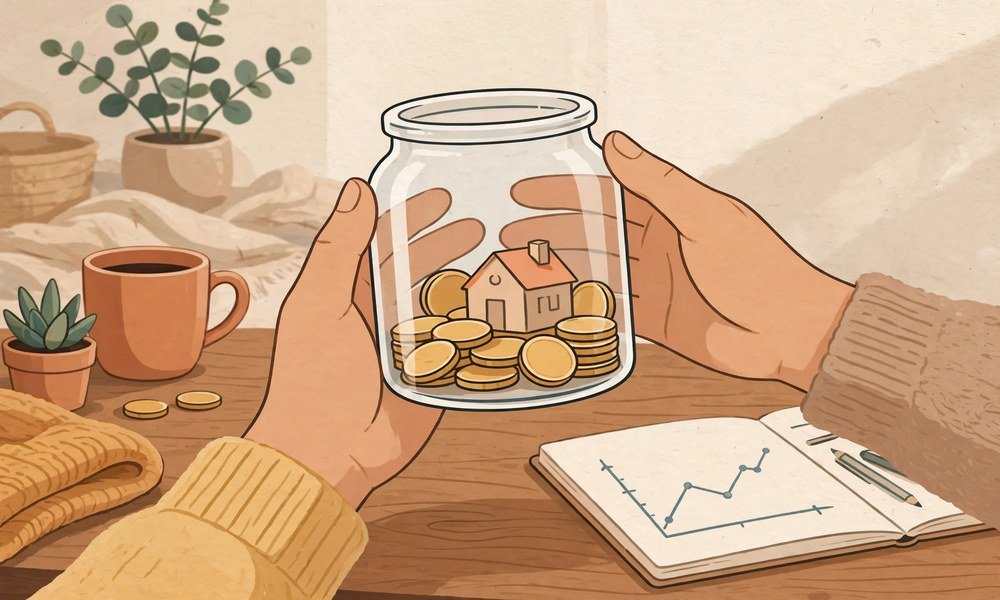
Why Money Habits Matter More Than Income
It is tempting to believe that a higher income would solve every money worry. In practice, couples at every income level run into the same problems: spending drifts upward with pay rises, lifestyle creep eats the extra money, and without a plan the end of the month still feels tight. Research on household finances consistently shows the same pattern. Households that follow a budget, save automatically, and review their spending regularly build wealth faster than households with higher incomes but no system. The system matters more than the salary, because the system is what turns income into security.
Habits matter because willpower is unreliable. A couple that depends on remembering to transfer money to savings, remembering to check the balance, and remembering to discuss a big purchase will eventually forget at the worst time. A couple that automates the transfer, schedules the weekly chat, and agrees on rules in advance does not need willpower. The good decision has already been made, and the routine carries it forward. That is why the habits in this guide are designed to be small, repeatable, and hard to forget.
Finally, habits compound. Saving a modest amount every month, paying a little extra toward debt, and investing steadily will not change your life in a single month. Over five or ten years, the same habits quietly transform a couple’s finances. The emergency fund that once seemed impossible is fully funded. The debt that felt permanent is gone. The holiday, the home deposit, or the early retirement that once felt like a fantasy is suddenly within reach. Couples who start early, even with small amounts, end up far ahead of couples who wait for the perfect moment.
Habit 1: Hold a Weekly Money Date
The single most powerful habit a couple can build is the weekly money date: fifteen to thirty minutes, once a week, at the same time, in a relaxed setting, to talk about money. Make it pleasant. Sit with a coffee or a glass of something you enjoy, away from screens and distractions. This is not a meeting about blame. It is a check-in about the week ahead, the bills coming due, and anything that needs a decision. When money talk happens regularly and calmly, it stops feeling like a confrontation and starts feeling like teamwork.
A good money date has a simple agenda. First, look at what came in and what went out since last week. Second, look at the week ahead: which bills are due, which spending is planned, and whether anything unusual is coming up. Third, make any small decisions together, such as whether to move money between categories or delay a purchase by a week. Fourth, check progress on your shared goals. That is all. Thirty minutes is plenty, and most weeks you will finish in fifteen.
The weekly rhythm matters more than the length of the conversation. A couple that talks weekly catches problems while they are small: a subscription that renewed unexpectedly, a bill that is higher than usual, or a category that is running low. A couple that talks only when something goes wrong discovers problems when they are already expensive. The weekly date also gives both partners a regular, safe moment to raise something they have been thinking about, rather than bottling it up until it becomes an argument.
If money conversations have been tense in the past, agree on ground rules before your first money date. No blame, no bringing up old mistakes, no decisions made while angry. If a topic gets heated, pause it and return to it next week with fresh information. The goal of the money date is to keep you aligned, not to win an argument. Over time, the routine itself builds trust, because both partners see, week after week, that money is something you handle together.
Habit 2: One Shared Budget, Three Accounts
Every couple needs a budget, but the best budget is one that both partners can live with. The three-account system is the simplest structure that works for most couples: one joint account for shared expenses, and one personal account each for individual spending. All shared costs — rent or mortgage, utilities, groceries, transport, insurance, and shared savings — come out of the joint account. Each partner also gets a personal allowance, the same amount for each person, deposited into their own account to spend however they like, no questions asked.
This structure solves the most common budgeting argument: the difference between shared priorities and personal freedom. One partner may love new clothes, the other may love gadgets or nights out with friends. In a single shared pot, every personal purchase feels like it takes money from the household. With personal allowances, each partner has money that is genuinely theirs. The household is funded first, and personal spending is a planned part of the budget, not a leak in it.
Building the shared budget starts with listing every shared expense and adding it up honestly. Include the irregular costs that people forget, such as car servicing, annual insurance, gifts, and holidays, by setting aside a monthly amount for each. If you are not sure where to begin, learning how to create a budget that fits your household is the best first step, because a budget built on real numbers is one you can actually stick to. Once the shared costs are covered, decide the personal allowance together and treat it as non-negotiable, just like any other bill.
Review the budget together every month or two. Life changes: a pay rise, a new bill, a child, a move. The budget should change with it. The point is not to lock yourselves into a rigid plan, but to keep the plan honest. When both partners help set the numbers, both partners feel ownership of them, and the budget stops being one person’s rules and becomes the couple’s plan.
Habit 3: Pay Yourselves First and Automate Everything
Paying yourself first means moving money into savings the moment income arrives, before spending has a chance to absorb it. It is the oldest piece of money advice because it works. Couples who save whatever is left at the end of the month usually save very little, because something always comes up. Couples who move savings out on payday save consistently, in good months and bad ones, because the decision was made in advance and the money is already gone from the spending account.
Automation is what makes paying yourself first effortless. Set up an automatic transfer from your main account to savings on payday, an automatic payment for every regular bill, and an automatic contribution to any investment or retirement account you hold. Check the amounts once a quarter to make sure they still fit your income. After that, the system runs itself. You do not need to remember, decide, or resist temptation, because the money has already moved before temptation arrives.
Start with the amount you can sustain, even if it feels small. A modest automatic transfer that happens every single month beats a large transfer that happens once and then stops. As income rises, increase the automatic amount before lifestyle spending rises to meet it. A good rule is to send at least half of any pay rise straight to savings. You will never miss money you never saw in your spending account, and your future selves will be grateful.
Automation also protects you from late fees and missed payments, which are some of the most expensive and pointless costs a household can face. A single missed payment can damage a credit score and trigger charges that take months to undo. Automatic minimum payments on every account, with manual top-ups where you want them, remove that risk entirely. If you want more ideas for freeing up cash to save, the best ways to save money include many small changes that add up to a meaningful monthly amount when they are automated too.
Habit 4: Agree on Spending Rules Before You Spend
Most money arguments are not about the amount spent. They are about the surprise. One partner comes home with an expensive purchase the other knew nothing about, and the argument that follows is really about feeling blindsided, not about the item itself. The cure is a spending rule agreed in advance, when everyone is calm: any purchase above an agreed threshold needs a joint decision first. The threshold is yours to choose — it might be fifty, a hundred, or two hundred — but once it is set, both partners follow it.
A spending threshold does two things. First, it removes the grey area. Below the threshold, each partner can spend their personal allowance freely, without checking in. Above it, the purchase waits for a quick conversation. Second, it builds in a cooling-off period for large purchases. Many expensive buys feel urgent in the moment and far less appealing after a few days of thought. A rule that says “sleep on anything over the threshold” saves couples from impulse purchases they would later regret.
Agree on rules for the categories that cause friction, not just the amounts. Who handles grocery shopping, and what is the weekly limit? How do you handle gifts for each other’s families? What about eating out, subscriptions, and holidays? None of these need to be complicated. A one-line rule per category, written down where you can both see it, is enough. The written part matters: it turns a vague understanding into a shared agreement that either partner can point to without it feeling personal.
Revisit the rules when your circumstances change. A threshold that made sense when money was tight may feel unnecessarily strict after a promotion, and a generous threshold may need tightening during a lean period. The rules are tools, not laws. The habit that matters is making spending decisions together, in advance, rather than discovering them afterwards.
Habit 5: Build a Shared Emergency Fund Together
An emergency fund is the foundation of financial calm for a couple. It is a pot of money, kept in a separate savings account, that exists for one purpose only: the unexpected. A broken boiler, a car repair, a sudden medical bill, or a gap between jobs. Without it, every surprise becomes a crisis that lands on a credit card and takes months to pay off. With it, the same surprise is an inconvenience you can handle together, without stress and without debt.
Aim to build three to six months of essential expenses, but do not let the size of the target stop you from starting. The first milestone is one month of expenses, then two, then three. Each milestone is worth celebrating, because each one buys your household more breathing room. Keep the fund in an account that is easy to reach in a real emergency but not so easy to dip into for everyday spending. A separate online savings account, away from your daily spending card, is ideal.
Contributing to the emergency fund should feel like a shared achievement, not a sacrifice. Track the balance visibly, perhaps on a shared note or a chart on the fridge, and mark each milestone. Couples who can see their safety net growing feel the progress, and that feeling makes it easier to keep going. The emergency fund is not exciting, but it is the habit that makes every other habit possible, because it means a bad month never has to derail your long-term plans.
Habit 6: Talk About Debt Honestly and Tackle It as a Team
Debt is one of the hardest money topics for couples to discuss, and one of the most important. Hidden debt, whether a credit card balance, a personal loan, or money owed to family, creates a secret that grows heavier over time. The partner keeping the secret feels guilt and stress. The partner who eventually discovers it feels betrayed, even if the debt itself was modest. Honesty about debt is not about blame. It is about facing the numbers together so you can fix them together.
Start with a full, judgment-free inventory. Sit down together and list every debt: who owes it, how much, the interest rate, and the minimum payment. Put it all in one place where you can both see it. The total may be uncomfortable, but knowing the real number is always better than fearing an unknown one. Many couples discover that the total is smaller than they feared, and even when it is larger, having a plan immediately makes it feel more manageable.
Choose a payoff strategy together and stick to it. The avalanche method, paying the highest-interest debt first while making minimum payments on the rest, saves the most money. The snowball method, paying the smallest balance first for quick wins, keeps motivation high. Either method works if you follow it consistently, so pick the one that fits your personalities. What matters is the extra payment: even a small amount above the minimum, paid every month, shortens the life of a debt dramatically.
Agree on rules to stop new debt while you pay off the old. That may mean pausing non-essential spending, cutting up a store card, or setting a rule that nothing goes on credit without a joint decision. It may also mean celebrating milestones, such as paying off a whole card, with something small and free rather than something expensive. Debt freedom is a shared victory, and couples who tackle it as a team often find the experience brings them closer, because it proves they can face a hard problem together and win.
Habit 7: Set Shared Goals With a Number and a Date
A goal without a number and a date is a wish. A couple that says “we want to save for a house one day” has a nice idea. A couple that says “we want thirty thousand for a deposit by December 2027, which means saving twelve hundred a month” has a plan. The number makes the goal real. The date makes it urgent. Together, they turn a vague dream into a monthly target you can track, adjust, and celebrate.
Start by listing your shared goals, then sort them by time. Short-term goals, within a year, might include a holiday, a new car, or building the emergency fund. Medium-term goals, one to five years out, might include a home deposit, a wedding, or starting a family. Long-term goals, five years and beyond, might include retirement, paying off a mortgage, or funding education. Each goal gets its own savings pot, its own target, and its own monthly contribution, so progress on one never quietly borrows from another.
Big life events deserve their own plan. A wedding, for example, is one of the largest expenses many couples face, and it is also one of the easiest to overspend on, because every decision feels emotional and every vendor has an upgrade to sell. Setting a total wedding budget early, then breaking it into categories, keeps the celebration joyful instead of stressful. If a wedding is on your horizon, planning how to save money for a wedding well in advance, with a dedicated monthly amount, means you can enjoy the day without starting married life in debt.
Review your goals every month in your money date. Are you on track? Has anything changed? Do you need to adjust the monthly amount or the date? Adjusting a goal is not failure. Life changes, and a plan that adapts is a plan that survives. The habit is not hitting every target perfectly. It is keeping the goals visible, the numbers honest, and the two of you pulling in the same direction.
Habit 8: Review Progress Monthly and Celebrate Wins
Monthly reviews are where motivation is made. Once a month, sit down together and look at the numbers: how much did you save, how much debt did you pay off, and how close are you to each goal? Write the numbers down and compare them with last month. Progress that is visible feels real. Couples who track their net worth, even roughly, often find that the monthly review becomes something they look forward to, because the line on the chart keeps moving in the right direction.
Celebration is part of the habit, not a reward for finishing. When you hit a milestone — the emergency fund reaches one month of expenses, a credit card is paid off, savings cross a round number — mark it. Cook a favourite meal together, take a walk somewhere beautiful, or simply take a moment to say that you are proud of what you have done together. Celebration reinforces the behaviour. It teaches both partners that saving is not a punishment, but a series of wins worth enjoying.
Monthly reviews are also the moment to fix what is not working without blame. If a category overspent three months in a row, the budget for that category is probably wrong, not the people following it. Adjust the number. If a goal is falling behind, ask whether the target or the timeline needs to change, rather than silently giving up. Honest, regular reviews turn small problems into small adjustments, and they stop small problems from becoming big ones.
Keep the review short and forward-looking. Look back just long enough to learn, then look forward to the month ahead. What is coming up? What needs planning? What are you excited about? A monthly review that ends with a plan for the month ahead leaves both partners feeling in control, and that feeling is the whole point of the exercise.
Habit 9: Protect Fun Money — Spend Guilt-Free on Purpose
A budget with no room for fun will fail, because it asks two people to live like monks indefinitely. The couples who stick to their money plan longest are the ones who build fun into it deliberately. Each partner gets a personal allowance, and the household budget includes money for eating out, hobbies, small treats, and shared fun. This is not wasted money. It is the money that makes the rest of the plan sustainable.
Fun money works best when it is guilt-free by design. Once the bills are paid, the savings are moved, and the goals are funded, the money in the fun category is there to be enjoyed. No partner should feel they need permission to spend their allowance, and no partner should feel guilty for using it. That guilt-free space is what keeps resentment out of the budget. You are not choosing between saving and enjoying life. You are doing both, on purpose.
Plan shared fun as well as personal fun. A monthly date night, a weekend away, a hobby you enjoy together — these are investments in the relationship, and they belong in the budget just like groceries. Couples who budget for fun together also make better decisions about it, because they choose the experiences they value most instead of spending by default on whatever is easiest. A planned night out feels better than three unplanned takeaways, and it usually costs less.
Budgeting Methods for Couples Compared
There is no single best budgeting method. The best method is the one both partners will actually follow. The table below compares the most popular approaches for couples, so you can choose the one that fits your personalities and your life.
| Method | How it works | Best for | Watch out for |
|---|---|---|---|
| Three-account system | Joint account for shared costs, personal account each | Couples who want fairness and freedom | Needs a clear split of shared vs personal |
| 50/30/20 rule | 50% needs, 30% wants, 20% savings and debt | Couples who want simple percentages | Needs adjusting for high housing costs |
| Zero-based budget | Every unit of income is assigned a job | Couples who love detail and control | Takes time to maintain each month |
| Pay yourself first | Savings move out on payday, spend the rest | Busy couples who want automation | Still needs a spending check-in |
| Envelope method | Cash or digital pots per category | Couples who overspend on cards | Less convenient for online spending |
Your Couples Money Checklist
Use this checklist to turn the habits in this guide into action. Work through it together, one item at a time, and tick each one off when it is done.
- Schedule a weekly money date at a fixed time and protect it like any other appointment.
- Open a joint account for shared bills and set up a personal allowance for each partner.
- Automate savings, bill payments, and debt payments so good habits run without remembering.
- Agree on a spending threshold above which big purchases need a joint decision.
- Build an emergency fund in a separate account, aiming first for one month of expenses.
- List every debt together, choose a payoff strategy, and celebrate each debt you clear.
Frequently Asked Questions
Should couples combine all their finances?
There is no single right answer. Many couples find the three-account system works best: shared money for shared life, personal money for personal freedom. Fully joint finances can work when both partners are comfortable with full transparency, and fully separate finances can work when both earn similar amounts and split costs fairly. What matters is that both partners agreed to the structure, both can see the full picture, and neither feels controlled or kept in the dark.
How much should a couple save each month?
A common target is to save at least twenty percent of household income, including retirement contributions and extra debt payments, but the right number depends on your income, costs, and goals. If twenty percent feels impossible right now, start with five or ten percent and increase it gradually. The habit matters more than the starting amount, so review the percentage whenever income changes and raise it before lifestyle spending absorbs a pay rise.
What if one partner earns much more than the other?
Treat household income as shared, regardless of who earned it, and give both partners the same personal allowance. The higher earner does not get more say in shared decisions, and the lower earner or stay-at-home partner does not need permission to spend their allowance. Decisions about shared money should be joint, and the budget should reflect the household’s goals, not one person’s preferences.
How do we start talking about money if we have been avoiding it?
Start small and keep it positive. Pick a relaxed moment, not a moment of stress, and suggest a short weekly check-in focused on the future rather than past mistakes. Begin with one shared goal you both care about, such as a holiday or a home, and build the conversation around that. Agree on ground rules: no blame, no old arguments, and permission to pause a topic and return to it later. The first conversation is the hardest, and after a few weeks it becomes routine.
Should we pay off debt or save first?
Do both, in the right order. First, build a small emergency cushion of one month of expenses so a surprise does not force you back into debt. Then focus extra money on paying off high-interest debt, while still making a small automatic contribution to savings so the habit survives. Once expensive debt is gone, shift the full amount into savings and investing.
How often should couples review their budget?
Check in weekly for fifteen minutes, and review the full budget monthly. The weekly date catches small issues early, while the monthly review is the moment to adjust categories, check goal progress, and plan the month ahead. A deeper review covering insurance, investments, and long-term goals is worth doing once or twice a year, so small drifts never become big problems.
The Bottom Line
The best money habits for couples are not complicated, expensive, or time-consuming. Talk about money every week. Share one budget with room for personal freedom. Automate savings and bills. Agree on spending rules before you spend. Build an emergency fund, face debt together, set goals with real numbers and dates, and celebrate progress every month. Protect each other with insurance and wills, keep learning together, and keep fun in the budget on purpose. These habits will not make you rich overnight, but followed steadily they will make you secure, and they will make money a source of teamwork rather than tension in your relationship.
Start today, and start small. Pick one habit from this guide, agree on it together, and try it for a month. Then add another. A year from now, you will look back at a savings balance that has grown, debts that have shrunk, and a relationship that handles money calmly, because the two of you built a system that works. That is the real reward of good money habits: not just a healthier bank balance, but a stronger partnership and a future you are both excited to build.
Note: This article is for general information and education only. It is not personal financial advice. Every couple’s circumstances are different, so consider speaking with a qualified financial adviser before making major decisions about debt, investing, insurance, or retirement planning.

Keep what speaks to you.
Leave room for your own perspective.